Sahibzada Yaqub Khan

The following are three notes about Major General Sahibzada Yaqub Khan, who passed away January 25th after a long and very eventful life. First and foremost is an article about him that was written a few years ago by Dr Hamid Hussain, a well known, extremely erudite and highly respected chronicler of the British Indian army and its successor armies. The second is from Major Aghan Humayun Amin whose knowledge of military history in general and the history of the Pakistani army in particular, is second to none, and who is not shy of making his opinion known in sometimes salty and direct language. The last one is from Abbas Raza, who runs the famous 3quarksdaily.com and who has written a very personal obituary about a man he clearly greatly admires.


Before we get to any of these notes, let me put out there some questions of my own. Anyone who has answers to these, please let us know in the comments section; you will do a service to history 🙂

My questions are about his actions in March 1971. Unfortunately now that he has passed away without giving his own account of those days, we need someone else to step in with the details.

Sahibzada Yaqub Khan was the martial law administrator in East Pakistan as well as commander Eastern Command. His command had already prepared contingency plans for military action as early as November or December 1971 (“operation Blitz”). In February 1971 Admiral SM Ahsan (Governor East Pakistan) took a stand against the Yahya Khan regime’s actions (Sheikh Mujib had just won a majority in the National assembly, but his becoming Prime Minister was forestalled by Yahya’s decision to delay the national assembly session using various excuses) and Ahsan objected to this policy, then resigned and left Dhaka (in early March). All this is well documented in official records and personal accounts. Later on it became general knowledge that General Yaqub had been similarly courageous and far-sighted and had resigned rather than carry out the poliicy being sent down by GHQ. Once this was mentioned in one or two books, it was re-quoted in other books and by now it is “common knowledge”. But if you look closer, matters are a bit more muddled. It is not clear at what stage  and to what extent he made his opposition known, and no resignation is clearly mentioned. All we know is that he left Dhaka around 5-7 March (as far as I know, no one claims he had resigned before he left Dhaka) and went to Karachi; what happened when he got there? I have heard from junior officers (obviously not direct participants in high level meetings) that Yahya Khan was very angry with Yaqub for “having left his post without permission” and there are claims that General Yaqub was in danger of being court-martialed for desertion. According to Major Amin, he was questioned in the transit camp in Karachi and was then demoted to major General. Where was he posted then? Had he resigned? or was he forcibly retired? A formal inquiry was supposedly held against him for leaving his post, but its contents have never been revealed either (and may no longer be traceable). I am sure that as a highly intelligent person, he very likely opposed the army action being contemplated then by the high command, but the point is, the details of his opposition and actions remain unknown.

So, can someone fill in this gap with direct information or with quotes from written accounts? When did he leave Dhaka? and in what circumstances? Did he offer to resign? Was there an inquiry against him and what were its conclusions? What were his formal postings after that event? Under what circimstances did he eventually leave the army? Did he retain his pension and benefits when he did leave the army?
I hope someone can clarify these points.

By the way, what is clearly documented (by Altaf Gauhar in newspaper articles if I remember correctly) is his positive role in another fiasco: when Zia was President the army considered an early version of the Kargil plan that Musharraf later put into effect. General Yaqub Khan was Zia’s foreign minister at that time and opposed the plan in a cabinet meeting and it was dropped because of his opposition.
He may have been similarly prescient about 1971, but the details remain murky. For the sake of history, it would be good to find out exactly what happened and when..

Of course, Sahibzada sahib’s career as Bhutto’s ambassador to several great powers, as Zia’s foreign minister, then as the establishment’s chosen foreign minister to keep Benazir in check, and then as Musharraf’s envoy to justify his coup, all indicate that he was a solid and upstanding member of Pakistan’s ruling elite and was comfortable with military rule, and with the foreign policy priorities of the Zia and Musharraf regimes (including the jihad in Afghanistan and its softer version in the Musharraf era). He was also highly educated and well read and had an impressive personality that a lot of people remember with awe. And of course, he got high praise from people like Nixon and Kissinger. One imagines that had he been born into the elite of a great power (instead of being born into the fading North Indian Muslim elite) he could have been an Edward Grey, though probably not a Curzon or Palmerston.
I wish he had written his memoirs.


From Dr Hamid Hussain: 

MG ® Sahabzada Yaqub Khan recently passed away.  Last of the generation of officers raised in Raj army and served with successor states armies.  Few years ago, I wrote a piece about him that was published in his alma mater RIMC Dehra Dun magazine.  In addition to profile of Sahabzada, I also took a detour into archaic regimental histories as I found some facts fascinating.  May be this can be a tribute and obituary of the officer and gentleman.  Rest in Peace Sahabzada.

Hamid

Stranger Than Fiction – Lieutenant General ® Sahabzada Muhammad Yaqub Khan 
Hamid Hussain

Sahabzada Muhammad Yaqub Khan is part of that generation of subcontinent that witnessed some of the most exciting events of the last seventy years.  He was not only a witness but active participant in many events of these challenging times.  Some events of his life seem material for a novel rather than real life experiences.  This generation born at the zenith of British Raj in India received the best education that the Raj could offer and joined Indian army during Second World War.  Young lads from different religions and ethnicities were comrades in elite regiments fighting under the guidance of their British mentors.  As Captains and Majors they saw the independence of their land and departure of British.  Some had to leave their ancestral lands that happened to fall on the wrong side of the divide.  Former comrades became foes when their newly independent countries got entangled into prolonged conflict over the disputed territory of Kashmir.  Many fought against each other as Captains and Majors in 1947-48 war in Kashmir, in 1965 war as Brigadiers and Major Generals and in 1971 war as senior commanders of their respective armies.  In case of Pakistan, they saw the successful secession of eastern wing in 1971.  Yaqub is a poster child of this generation of officers.

Yaqub was born in the aristocratic household in the princely state of Rampur.  He studied at Prince of Wales Royal Military College at Dehra Dun.  He joined Royal Indian Military Academy at Dehra Dun and commissioned in Indian army.  He joined elite 18th King Edward VII Own Cavalry of Indian army.  During Second World War, 18th Cavalry left India in January 1941 for the Middle East theatre and landed in Egypt.  Regiment was then commanded by Lieutenant Colonel Howard Fowler (he had just taken over command from Lieutenant Colonel H. M. Tulloch) and senior most Indian Viceroy commissioned Officer (VCO) was Risaldar Major Kapur Singh.  Lieutenant Yaqub was with A Squadron (Hindu Jat) commanded by Captain J. M. Barlow.

18th Cavalry was part of 3rd Indian Motor Brigade commanded by Brigadier E. W. D. Vaughan (later Brigadier Filose) and grouped with  two other elite cavalry regiments; 2nd Royal Lancers (Gardner’s Horse) and 11th Prince Albert Victors’ Own (PAVO) Cavalry.  They were supported by 2nd Field Regiment of Indian Artillery.  Volunteers from all three cavalry regiments of 3rd Indian Motor Brigade formed Indian Long Range Scouts (ILRS).  It was a squadron strength organization commanded by Major Samuel Vallis McCoy and consisting of J (Jat), R (Rajput), M (Muslim) and S (Sikh) patrols.  In May 1942, Italian forces overran 3rd Indian Motor Brigade and large number of Indian officers and men became Prisoners of War (POW).   Yaqub’s comrade in 18th Cavalry was Second Lieutenant Abhey Singh.  Yaqub and Abhey came from similar backgrounds.  Yaqub was from the princely house of Najibabad and his father Sir Abdul Samad Khan was Prime Minister of the princely state of Rampur.  Abhey was from the princely state of Kota where his father Major General Sir Onkar Singh was Prime Minister of the state.   Two other officers of the regiments fighting alongside Yaqub’s 18th Cavalry were also from aristocratic families.  Major Rajendrasinhji Jadeja (he has the distinction of being first Indian officer to win DSO and later rose to become Chief of Staff of Indian Army 1953-55) commanding B Squadron of 2nd Lancers was from the princely state of Nawanagar and Lieutenant Sardar Hissamuddin Mahmud el- Effendi of 11th PAVO Cavalry was scion of the Afghan royal family.  Yaqub and Hissam were later polo buddies (along with Colonel ‘Huskey’ Baig and Colonel Sikku Baig they played at Lahore Polo Club).

Yaqub and Abhey along with the senior most Indian officer Major P. P. Kumaramangalam (2nd Field Regiment) were together in Italian POW camps of Avers and Avezzano.  In the confusing times of 1943 when Italian forces capitulated, these three officers escaped.  Yaqub had learnt Italian during captivity therefore he was leading the pack interacting with Italian peasants to try to reach the allied lines.   They were captured again, this time by Germans and they spent next few years in German POW camp of Braunschweig.  Yaqub learned German during his stay with Germans.  He was repatriated after the end of war in 1945.  1947 Yaqub opted for Pakistan army while his comrade Abhey Singh stayed with Indian army.  Abhey transferred to 17th Poona Horse and led a tank squadron in ‘Operation Polo’ when Indian army moved into the state of Hyderabad in 1948.  In 1965 war, Yaqub’s parent battalion 18th Cavalry managed to reach the Burki Police Station on Lahore front and their commandant Lieutenant Colonel Hari Singh Deora (later Brigadier) had his picture taken in front of Burki police station.  Yaqub commanded 11th PAVO Cavalry in 1952-3; the regiment that was in the same formation when he served with 18th Cavalry during Second World War.  In 1947, Hindu and Sikh soldiers of regiments allotted to Pakistan went to India and Muslim soldiers of regiments allotted to India came to Pakistan.  Muslim elements of 2nd Lancers (along with some elements of 8th Cavalry and 9th Deccan Horse) joined 11th PAVO Cavalry while Sikh squadron of 11th PAVO Cavalry went to 18th Cavalry and thus the circle was completed.

In 1947, Yaqub was Second in Command of Viceroy’s Bodyguards then commanded by Lt. Colonel Peter Hussey.  Indian army regiments were divided between India and Pakistan including Viceroy’s Bodyguards.  This unit consisted of Punjabi Muslims and Sikhs.  Like all other regiments, personnel and equipment of bodyguards was also divided.  Major Yaqub representing Pakistan and Major Gobind Singh (Jaipur Guards) representing India went to the stables of Viceroy’s Lodge to divide the property of the regiment.  Mountbatten’s ADC Lieutenant Commander Peter Howes arbitrated and at one time a coin toss decided about which country will get the gold carriage of Viceroy.   Yaqub came to Pakistan with the Muslim component and their share of the property of one of the oldest regiment of Indian army and became the first commandant of Governor General’s Bodyguards.  Yaqub’s elder brother Sahabzada Muhammad Yunus Khan was commissioned in Indian army from Officers Training School (OTS) at Bangalore and served with Garhwal Rifles.  In Second World War both brothers fought under Union Jack and both earned Indian General Service Medal (IGSM).  In 1947, Yunus opted for Indian army.  Immediately after independence, India and Pakistan went to war in Kashmir.  Yaqub was sent by Pakistan army while Yunus was sent to the same theatre by Indian army.  Yunus was with Garhwal Rifles (most likely 3/18 Garhwal Rifles commanded by a fine officer Lt. Colonel Kaman Singh and a superb senior most JCO Subedar Major Sher Singh Rawat as this unit saw lot of action and 1/18 Garhwal Rifles came to the theatre quite late in July 1948).  Yunus served as Deputy Military Secretary to President of India and retired at the rank of Colonel.

A number of Indian and British officers were captured by Italians in Middle East theatre in May 1942.  All three commanding officers of the regiments of 3rd Indian Motor Brigade; Lt. Colonel Fowler CO of 18th Cavalry, Lt. Colonel De Salis CO of 2nd Lancers and Lt. Colonel P. R. Tathem CO of 11th  PAVO Cavalry were bagged by Italians.  In the Aversa POW camp in Italy, a very strange chapter of Indian military history was recorded.   Italian commander of the POW camp, Colonel Errera appointed several Indian officers for management of prisoners.  These officers of different faiths and ethnicities were fighting under the flag of British Indian army and were now prisoners.  Major Kumaramangalam (2nd Field Regiment) being the senior most officer was appointed commanding officer of the camp.  Captain Yahya Khan (4/10 Baluch Regiment, now 11 Baloch of Pakistan army) was camp Adjutant and his assistant was Lieutenant Shamsher Singh.  Captain Tikka Khan (2nd Field Regiment) was Quarter Master.  Other inmates of the camp were Yaqub Khan (18th Cavalry), Major Ajit Singh (Royal Indian Army Service Corps), Captain Kalyan Singh (2nd Field Regiment), Captain A. S. Naravane (2nd Field Regiment), Lieutenant Abhey Singh (18th Cavalry) and Lieutenant Sardar Hissamuddin Mahmud el-Effendi (11th PAVO Cavalry).  Many officers of this POW camp later played important part in the history of India and Pakistan.  The Italian Colonel of the POW camp could not have imagined that he was holding a whole crop of future high power society.  This camp has the world record of holding so many future senior officers under its roof.  Kumaramangalam escaped from Italy but captured by Germans and was their guest for few years.  He later became Chief of Army Staff of India (1966-69).  Yahya Khan rose to become Pakistan army chief and then President (1966-71).  In 1971, Tikka Khan was Commander of Eastern Command and later became Pakistan army chief (1972-76).  2nd Field Regiment of artillery can be proud to have two army chiefs of rival India and Pakistan.  Yaqub Khan became Lieutenant General and served as commander of Eastern Command during the fateful days of 1971.   After retirement he served as ambassador at several important posts and Foreign Minister of Pakistan.  Hissam rose to the rank of Brigadier in Pakistan army.  Ajit Singh rose in the ranks to become Lieutenant General, Kalyan Singh and Naravane became Major Generals and Shamsher Singh Brigadier in Indian army.

Yaqub left his mark on Pakistan army.  He has many admirers as well as his critics.  Yaqub is pioneer of starting the intellectual life in Pakistan army.  He served as Director Armored Corps as Brigadier, 6th Armored Division commander, Commandant of Staff College and Chief of General Staff (CGS)  as Major General and Corps Commander of East Pakistan at the rank of Lieutenant General .  As Commandant of Staff College at Quetta, he introduced Pakistani officers to the higher direction of war.  He was also instrumental in establishment of National Defence College (now National Defence University) with its two tiered course.  There were not too many thinking generals in Pakistan army at that time.

In view of his aristocratic background and intellectual bent, Yaqub was different in outlook.  He was from the old school of strict adherence to protocol and traditions.  One of his junior officers who served with Yaqub when later was commanding 11th PAVO Cavalry recalls an incident in the mess.  In one of the early days of his command, Yaqub stormed out of the dinning room because his cold meat was not properly dressed and potatoes were not of uniform size.  The officer swears that he saw tears in Yaqub’s eyes.  I can easily visualize that during Second World War, when ready to surrender, Yaqub donning his best cavalry uniform and asking his orderly to polish the boots with extra shine and then put on his cavalry sword and wait for the Italian officer to show up and Yaqub surrendering with full protocol.

Yaqub’s critics point to three incidents pertaining to three different times of his life.  First is when he was in Kashmir war in 1947-48.  Yaqub was ordered to rescue a small picket surrounded by Indians.  He was a thinking officer and kept calculating his own likely action and enemy’s possible reaction.  In the meantime, Indians overran the picket.  Second was when he refused to carry out military action against Bengalis when he was commander of Eastern Command.  Yaqub was sacked from the army for his refusal.  At that time, almost all officers regardless of their rank and social background denounced Yaqub.  Later, with hindsight, some changed their mind and thought Yaqub did the right thing.  Third criticism relates to his post retirement career.  He served at important ambassadorial positions under Prime Minister Zulfiqar Ali Bhutto and later served as Foreign Minister of Bhutto’s executioner General Muhammad Zia ul Haq without any qualms.

In one life, Yaqub has enjoyed every aspect of an adventurous journey.  A long and fulfilling military career was followed by an equally rewarding career of a well respected diplomat.  In addition to these full time occupations, he continued his passion of reading (his grandfather Abdus Salam Khan was an avid reader and kept a large library) with some philosophical bent and played polo.  He is probably the oldest living officer in Pakistan and at the ripe age of 91 he has a treasure chest of memories that can bring a smile as well as a tear or two in the eyes.

Notes:

1- Major General Partap Narain.  Subedar to Field Marshal (New Delhi: Manas Publications, 1999)
2- Major General ® A. S. Naravane.  A Soldier’s Life in War and Peace (New Delhi:  A. P. H. Publishing Corporation, 2004) 
3- Larry Collins and Dominique Lapierre.  Freedom at Midnight (New York: Simon & Schuster, 1975)
4- Charles Chenevix Trench.  The Indian Army and the King’s Enemies 1900-1947 (New York: Thames & Hudson, 1988) 
5- The Tiger Kills (London: Her Majesty’s Stationary Office,1944)
6- M. Y. Effendi.  Punjab Cavalry: Evolution, Role, Organisation, and Tactical Doctrine 11 Cavalry (Frontier Force) 1849-1971  (Karachi: Oxford University Press, 2007)
7- Colonel Abdul Qayyum.  Pakistan Army’s Mosaic of Ideas – I.  Defence Journal, July 2000
8- Hamid Hussain.  Stranger than Fiction – Story of Identity, Loyalty, Sacrifice and Betrayal.  Defence Journal, December 2007
9- Hamid Hussain.  Lest We Forget.  Defence Journal, March 2010

Agha H Amin , Major (Retired) ,
11 Cavalry , 29 Cavalry (attached) , 58 Cavalry , 15 Lancers , 5 IAS (commanded) , 14 Lancers, 15 SP (attached)

From Major Agha Humayun Amin: 

My fascination with Sahibzada Yaqub Ali Khan began in 1975 as I read about him and heard about him from my father.

He descended from Yusufzai Pathans from a village called Maneri near Swabi , who migrated to Raohailkhand as raiders and maruaders in 17th and 18th century .I made it a point to visit Maneri while serving as an instructor at Armour School Nowshera in 1991 . Interestingly I found Maneris fame as a top class village of UJRATIS , paid assasins who in 1991 killed people for as low as 3000 Rs in 1991. My Pashtun friends told me that women of Swabi were notorious or illustrious for being EXCEEDINGLY DOMINATING.

 A similar breed of Shinwaris as Sahibzadas ancestors, from Dur Baba constituted my maternal grandfathers fifth ancestor Mattay Khan a Shinwari from Dur Baba  present day Ningrahar who settled in Sikandara Rao in Aligarh District. Mattay Khan built a Haveli on a hill overlooking a pond (Jouhar) or (Hauli) . The Haveli still exists and the owner was the principal of the High School at Sikandara Rao.

Colonel Salman famous as Ustaad of Ustaads in Afghanistan having taught all the WHOS WHO from Hekmatyar and Ahmad Shah Massoud down to OBL and Mulla Omar belonged to a family who had migrated with Babar from Uzbekistan to Dibai near Sikandara Rao . Salmans father Colonel Ahmad won an MC in Burma while serving in Punjab Regiment and later raised 1 East Bengal. His uncle Aftab Sahib was my maternal uncle Saad Khairis batchmate in the CSP/PFS. Aftabs niece is married to my first cousin. Major General Wajahat also belonged to a village near Sikandara Rao.

When I visited Dur Baba last in January 2015 it was more notorious for being targeted by US drones.

These Shinwaris served in Mugahl Army , army of Nawab of Oudhs  and in Maratha Cavalry as part of various Risallahs of Pathans.They also contributed to all Ten Light Cavalry regiments of Bengal Army from 1780 to 1857. In 1857 Sikandara Rao followed Punjabi Opportunism in staying loyal to English East India Company while major part of Aligarh district was in rebellion against the company. Five of my maternal grandfathers uncles and grand uncles joined the rebellion and simply disappeared after 1858 . But Sultan Khans grandfather remained staunchly loyal although 5th Light Cavalry and Sultan Khans father served as Prosecuting inspector at Hoshiarpur till 1901 or so.Veteran PPP leader ND Khan also hailed from Sikandara Rao or surrounding area.Sikandara Rao had a varied collection of Shinwaris , Yusufzais and Sherwanis who were the leading zamindars and talukdars of Aligarh district.A relative Obaidullah Sherwani rose to rank of Deputy Secretary Establishment in Pakistan retiring in early 1960s. His son in law Mr Karrar served as General Manager of the glorious Midway House owned by KLM for many years from late 1960s to 1980 or so. Karrar Uncles son migrated to UK and married an Italian lady.

He appeared to be an ideal military personality and I quoted him as a high calibre personality in my article Orders and Obedience published in Pakistan Army Journal in March 1991.

I met him in 1994 and met him frequently till 1999 or so.

As I studied Pakistans 1971 debacle Ex Major General Yaqub Ali Khan (demoted to Major General in 1971) appeared a highly overrated character.

When the Sahibzada resigned he was a three star general . He was then demoted to two star and made to sit in a majors office in Transit Camp Karachi which now houses the ISI . His resignation was then accepted a few months later .

A rare case where a Pakistan Army officer resigned which means surrendering all pension and privileges.

Ill informed and poorly read Pakistani journalists fallaciously describe General Jahangir Karamats retirement as resignation while in reality it was forced retirement with the general enjoying all military perks and privilieges including pension.

He was admired for being a strategist but he FAILED to correctly formulate a strategic plan for the Pakistan Army for 1971 war . This includes his successors and all the stewards of strategic planning of Pakistan Army from 1947 to 1971.

While Mr ZA Bhutto was painted as Pakistan Armys scape goat for 1971 Crisis the hard fact is that Pakistan Army was TOTALLY STRATEGICALLY CLUELESS and had no viable STRATEGIC PLAN to deal with Indian Major Attack on East Pakistan.

When Sahibzada Yaqub Ali Khan was ordered to carry out a military crackdown in East Pakistan he refused . His motives are not clear . Whether it was excess of Moral Courage or Irresolution , we do not know and he never made it clear as long as he lived.

A man of all seasons he served in various ambassadorial assignments under various civilian and military governments.

As one who contributed in education of future generations by sharing his knowledge , his role was ZERO as he did not publish any memoirs.

He was an untested horseman in actual operations of war as he never commanded anything in war except as a very juniour officer at Gazala where he was captured by DAK and incarcerated as a PW in Italy.

His role at Chawinda remains controversial and unclear and many allege that he was responsible for the Pakistani rout at Phillora although Sardar Yahya Effendi tried to give him a clean chit.

His conduct as PW was eventless and drab as unlike his fellow prisoner Yahya Khan he never made any attempt to escape.Also another PW in Italy was another overrated general Tikka Khan who later rose to be Pakistan Army chief who also never tried to escape.

It goes to Yahya Khans credit that he made four attempts to escape.After his failed third attempt the Wehrmacht German camp commandant warned him that if he tried to escape again he would have him shot.

Yahya Khan succeeded in his fourth attempt and walked 350 miles cross country , enjoying traditional Italian hospitality in many villages to join the British Indian forces in middle of Italy.

A famous incident about Sahibzada Yaqub Ali Khan  as Commanding officer 11 Cavalry was when he asked the Risaldar Major for 5000 Rupees and when the Risaldar Major gave him 5000 Rs kept searching the regimental accounts for the missing 5000 Rs .

When the Risaldar Major inquired why he remained in office that whole night he told him that he was searching for the 5000 Rs that he gave him .The RM in disgust showed him his cheque book and told him that he had withdrwan 5000 Rs from his personal bank account and the 5000 had nothing to do with PAVO 11 Cavalry Funds.

If Aunty Nunni ( daughter of Nawab Mumtaz Hassan Khan Bangash of Jahangirabad and a descendant of Nawab Shefta Khan Bangash) is to be believed he frequently visited his brother in Rohailkhand in India to settle his share of the properties in India.

In best tradition of Indian Muslims no Nawab from India migrated from UP to Pakistan as this would have disinherited them.Only Nawabzadas , Sahibzadas came who were not entitled to any major share in Talukas or Jageers by law of primogeniture that entitled only the eldest son to the estate).


From Abbas Raza:
At 3quarksdaily.com
A great man and one of the most significant figures in the history of Pakistan has just died. I consider it my great fortune that I came to know him and the idea of a world without him in it is quite unbearable. Here is what I wrote about him more than 10 years ago on 3QD:

Sahabzada Yaqub Khan is the father of one of my closest friends, Samad Khan. He is also probably the most remarkable man I have ever met. All Pakistanis know who he is, as do many others, especially world leaders and diplomats, but to those of you for whom his name is new, I would like to take this opportunity to introduce him.

The first time that I met Sahabzada Yaqub Khan about six years ago, he was in Washington and New York as part of a tour of four or five countries (America, Russia, China, Japan, etc.) relations with which are especially important to Pakistan. He had come as President Musharraf’s special envoy to reassure these governments in the wake of the fall of the kleptocratic shambles that was Prime Minister Nawaz Sharif’s so-called democratic government. Samad Khan, or Sammy K as he is affectionately known to friends, invited me over to his apartment to meet his Dad. I had heard and read much about Sahabzada Yaqub and knew his reputation for fierce intellect and even more intimidating, had heard reports of his impatience with and inability to suffer fools, so I was nervous when I walked in. Over the next couple of hours I was blown away: Sahabzada Yaqub was not much interested in talking about politics, and instead, asked about my doctoral studies in philosophy. It was soon apparent that he had read widely and deeply in the subject, and knew quite a bit about the Anglo-American analytic philosophy I had spent the previous five years reading. He even asked some pointed questions about aspects of philosophy which even some graduate students in the field might not know about, much less laymen. Though we were interrupted by a series of phone calls from the likes of Henry Kissinger wanting to pay their respects while Sahabzada Yaqub was in town, we managed to talk not just about philosophy, but also physics (he wanted to know more about string theory), Goethe (SYK explained some of his little-known scientific work, in addition to quoting and then explicating some difficult passages from Faust), the implications of Gödel’s incompleteness theorem, and Urdu literature, of which Sahabzada Yaqub has been a lifelong devotee.

001

PS: a note from Khalid Hasan regarding SYK:

By the way, now that we are on anecdotes, here is one i heard from an officer who was with him in the armored corps: General Zia (then colonel Zia) was his GSO, but he wouldnt let Zia ride in his car with him…he said Zia puts oil in his hair and it makes his car smell of hair oil. … Darogh ba gardan e ravi 🙂

More “collateral damage” in Bacha Khan University

Taliban terrorists attacked Bacha Khan university in Charsadda in Northwest Pakistan 2 days ago and killed at least 22 students and faculty. The same group that claimed responsibility for a horrendous school massacre in December 2014 has claimed responsibility for this one.  The attack should not come as too big a surprise, since Umar Mansoor, the “Khalifa” of the Taliban group that claimed the first attack had vowed after that attack to attack more schools and universities. You can see his statement in the video below.

After the last attack, the Pakistani army claimed it had killed those involved in planning and facilitating the attack and stopped talking about Umar Mansoor until he showed up a few months later to claim some new attack. Even then, he would be in the news for a day or two and then disappear from the radar. He is now back in the news. In a few days, he will again disappear from it.
So it goes.

Meanwhile, Pakistan’s incredibly efficient and competent “Inter-Services Public Relations” (ISPR) department (headed by a three star general, probably the only military PR department in the world, perhaps the only one in history, to be led by a three star general; we may not produce Guderians and Rommels, but we do produce Bajwas, Mashallah) was on air within minutes to make sure we all understood how:
A. The army had reacted extremely competently to the attack and the attackers had been killed in short order (this claim has some credibility; our mid-level officers and soldiers are indeed competent, brave and aggressive and deserve some credit. They are certainly more competent than their Indian counterparts and in Pakistan, that may be all that matters. The university’s security staff and the police may or may not deserve some credit as well, but we will likely never know, since Police-ISPR and Chowkidar-ISPR are not as well funded as the army’s ISPR).

B. The attackers came from Afghanistan and may have had foreign backing (hint hint cough RAW cough cough), so dear contrymen, we are off the hook. WE didnt do it and neither did OUR proxies.

C. The army chief is flying around as we speak, raising morale, calling the Afghan president for a chat and generally doing stuff (and need we say, the civilians have no clue).

But what this ISPR effort (and the concurrent appearance of multiple military proxies on TV channels, all claiming that India was behind this attack) really tells us is that the game remains the same. Even as we were being told that we are the victims of cross-border terrorism and that this was intolerable and no state could allow its neighbors to harbor terrorists who come across the border and kill innocents, OUR terrorists (the good Taliban) proudly claimed responsibility for killing another group of innocent civilians in Kabul. And of course, this comes just weeks after another party of “good terrorists” had attacked an Indian airbase in Pathankot, and of course we need not go back all the way to another group of “good terrorists” who shot up civilians in Mumbai train stations and hotels several years ago.
And so it goes.

General Asad Durrani, ex-chief of the ISI and proud “intellectual soldier” said it best; the deaths of hundreds of innocent students in Pakistan are the collateral damage of our successful strategy of “winning” in Afghanistan. Great nations have to be willing to make small sacrifices. And what are a few lies between friends?

Watch at 9 minute mark onwards. Please do. You will not regret it.

 What more can one say?
There are, literally, no words.

But the people are beginning to lose their patience.

Pakistan and India 2016. To talk or not to talk?

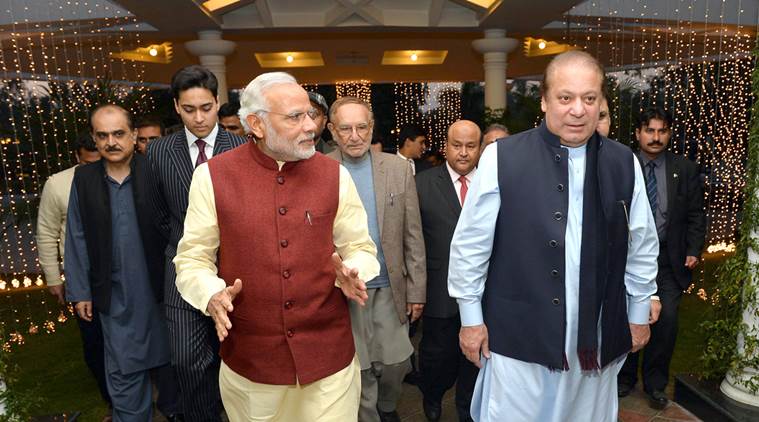
Terrorists attacked an Indian Air Force base in Pathankot in a New Year strike that threatens to derail yet another attempt (this time on Prime Minister Modi’s initiative) at improving relations.

Some of the terrorists’ fellow operatives in Pakistan have been identified in the media (as expected, they are university graduates unhappy at the Picketty-inequality they see around them), take a look:
Embedded image permalinkEmbedded image permalink
Embedded image permalink

Myra Macdonald has summed up the strategic situation around this attack very well in this excellent piece and it should be read in its entirety as background for this post. As the piece makes clear, the situation is not too optimistic and it may well be that it will get worse. On the other hand, Pakistan has not gone into its habitual denial mode and may even take some action against some of the terrorist networks involved. But some action may not be the same as enough action and enough action may not even be possible for the current regime in Pakistan. The question then arises, why should India bother to continue any talks with Pakistan? Since I remain in favor of such talks (albeit at mid-level and with clear and specific aims), I get a lot of heat on social media from Indians (as well as some Pakistanis) on this topic. I will try to explain some of my reasoning by trying to re-enact the sequence in which a pro-talks position can seem reasonable (at least for now), and as usual, I will have to start quite far back:


1. I take it as a given that partition was a poor solution to a real problem and has only served to perpetuate and strengthen Hindu-Muslim differences in the Indian subcontinent. But what has happened has happened, and history has moved on. Borders have been in place for decades and even though Bangladesh separated from West Pakistan, the basic formula of separating Muslim majorities at the Eastern and Western extremities of the subcontinent from the modern state of India remains in place and is unlikely to be reversed in the foreseeable future. This is recognized not just be those who cooked up the original two-nation theory, it is also recognized by most Indian nationalists and Hindutvadis (a smaller core may continue to harbor dreams of reuniting all of Indian civilization in one Hindu-dominated country, but even the dreamers do not see this as an imminent possibility; some of them even see partition as a painful but necessary first step in defanging India’s Muslim minority, but this is all a discussion for another day).

2. The Two-nation theory (TNT) in its full Pakistan military academy format (a format that really took hold well AFTER the theory was used to create Pakistan) is a dangerous theory and a recipe for endless war. This theory implies (though not all adherents are conscious of this implication) that ALL Indian Muslims became “un-Indian” the day they became Muslim. Anywhere that they are in majority, they deserve to be formally separated from secular (or Hindutvadi) India so that they can live in their new and true desired state of Islamic Pakistan.  Anywhere that they are in a minority, they are only staying in India because it is not feasible to separate YET.
Kashmir, being a Muslim majority state (though including two large infidel-majority regions within it) therefore belongs to Pakistan and must be reunited with it. Arguments about rivers and communications are added to provide secular cover for this theory. That is the project which our Jihadist policy is supposed to accomplish. This obviously means conflict with India is not resolvable until Kashmir is handed over to Pakistan. Since it is abundantly clear that no Indian government will accept that solution, conflict will be endless until one side wins.

3. It is the historic task of the Pakistani bourgeoisie to give up on the two-nation theory so that they can stop this endless war and make a reasonable peace with India,  with its associated peace dividend for the great mass of Indians and Pakistanis (and those beyond the two countries who pay for our proxy wars, as in Afghanistan and to a lesser extent, Bangladesh, Nepal and even Sri-Lanka).

4. As the Jihadist project grew, it also grew to be a threat to other nations (USA, China, Iran, and everyone everywhere) and to the people, and then even the elite, of Pakistan itself.  Since the project involved setting up and supporting a vast infrastructure of Jihadist Sunni Islam, it has been poison for all non-Sunni residents of the nation (this is simply a given because radical Sunni Islam prescribes very harsh conditions for the survival, if any, of heterodox sects and other religions; and no survival at all for atheists). As armed gangs proliferated they learned to do other things armed gangs normally do. They extort, rob, kill for payment, etc. etc.  Even the United States (initially a major supporter and patron of the Jihadi project) switched sides and is no longer tolerant of most (and some will claims, of all) such gangs. The toll exacted by their depredations on the economy and the social fabric needs no further explanation.

5. In this setting many in the civilian elite (especially those whose main concern is making money) are willing to give up on the Jihadi project if that is the only way to get peace and international patronage. The deep state has been more obstinate. They have given up bits and pieces of the project when pushed very hard, but they have not given up on its core: the “good jihadis” who target India. This has opened a bit of a gulf between the civilian politicians (most of whom, except the explicitly Islamist parties) are willing to give up the project, and the deep state, which still clings to its original Indian phase (and for that matter, with greater circumspection, even to its Afghan phase) of this violent and nihilistic project.

6. India (at least for now) does not have decisive military superiority and cannot simply impose war on Pakistan to force its will on Pakistan (not without risking unacceptable casualties and setbacks to its economic dreams). When an attack happens, it has to look for other levers, short of outright war. Many such levers probably exist, but the international community will not cooperate with India in this regard unless attacks cross some internationally accepted red line. Currently that red line does not include low casualty attacks. This irks many Indians no end (and understandably so), but the real point is that this may change in the future. Until it does so, India’s options are limited, but when it changes, they become much more plausible and threatening to Pakistan.

7. If and when the narrative shifts decisively against Pakistan (and unfortunately for GHQ, it is shifting rather fast), more and more of these levers will become usable. This is the crucial point: India can do more right now, but it is risky and may reverse its own international standing and economic progress in the process. But if and when the narrative shifts decisively in its favor, its freedom of action will expand.

8. By clearly taking the initiative for peace, India is resetting at least one part of that international narrative. It is making it harder to blame Indian intransigence for the failure of peace moves. By continuing to talk (albeit at mid-level and with very clear demands) it may also exacerbate the civil-military conflict within Pakistan.
It would be a mistake to think that the security establishment simply does what it pleases in Pakistan. It does not, and it faces increasing rifts within the elite. When someone like Ashraf Jahangir Qazi (a pillar of the sane deep state) writes like this, it means they face very real resistance. In time (and this time is not infinite, we are talking relatively short term), this makes it harder for the security establishment to maintain its own red lines within the country and outside it. Outside powers increasingly see an establishment at odds with its OWN elite. Domestic groups see it as being dangerous and even suicidal. Perceptions matter. It is in the interest of India as well as of the peace lobby (which is really the “anti-hard-TNT” lobby) in Pakistan to change perceptions and create a clear separation between the civilian ruling elite and the security establishment if the security establishment refuses to change policy. 


9. This may not work at the first level, i.e. at the level of “peace talks succeed, peace breaks out”, that may not happenIn fact, it may even be LIKELY that it will not work in this way and the security establishment will sabotage peace moves or will be unable to deliver peace even if it changes its mind and wants to act sanely.  But even if the initiative fails at this level, it will work to change the international narrative decisively in India’s favor (and by this, I don’t just mean the PR side of things, though that too matters to a small extent. I mean how the great powers actually perceive the situation and what options they support or tolerate). i.e. it will help change the “narrative” in favor of India’s position and make the next red line easier to enforce.

10. I obviously hope it works at the first level. As a Pakistani, I would much prefer that the security establishment comes to its senses and the country manages to get out of the jihadi violence cycle (none of which will be easy in any and every imaginable scenario). I don’t think war is in the interest of the Pakistani OR Indian elite or their long-suffering common people. Very narrow sections of the elite may believe it is in their benefit to stoke conflict, but they are narrow sections in both countries…that is exactly the reason why there is an opening.
That may be hoping for too much. But miracles are possible. I am afraid that the core Islamicate region is in the throes of a major civilizational crisis. As a major Islamic state, we share in that crisis, over and above our India-centric adventures. But we are also part of Indic civilization and our divorce from that civilization is not complete. If we can move back into that orbit (NOT back into the Indian state, just back into Indian orbit) we will have many problems to solve (the largest collection of really poor, malnourished, poorly governed people in the world for example) but at least we will not have to solve the Islamic political crisis just to continue living. That will be a major relief and a huge step forward. For that to happen, we need to make peace with India. For that to happen, both India and Pakistan will need to try (even at the cost of transiently looking bad to their own nationalist constituency) some very patient and competent maneuvers. That sounds like a tall order.
But we have to hope.
narendra modi, modi pakistan visit, modi lahore visit, modi sharif meet, modi nawaz meet, modi twitter, india news, latest news

Images

Modeling ISIS chances in your country..

This is just a random thought. I just wondered if more capable people may comment on this:

Can we construct a simple model using only 2 variables (yes, many other variable are relevant; the whole point is, can we still make a good guess based on just these two):

1. Strength of affiliation of Muslim population with Sunni classcial shariah (determined by polling results?)
2. Strength of state security institutions (determines by ??)

This model to predict whether a serious ISIS threat is coming to country X in the near future.

e.g. Malaysian Muslims are very strongly in favor of classical Sunni Shariah. But Malaysia is also a strong state, with effective institutions of law enforcement, intelligence, internal security, what have you. So, maybe not a serious ISIS threat. In the short term.

Azeri Muslims do not have a very strong Shariahist affiliation. Also pretty strong state security institutions. So low threat.

Pakistan has strong shariah affiliation in the population, and areas where the state is very weak (and security institutions are compromised by infiltrators?), so a serious threat.

Bangladesh has moderately strong shariah affiliation, moderately weak security institutions. High risk or moderate risk?

Iran has no Sunnis to speak of, and strong institutions. So very low risk..

Egypt has strong shariah affiliation, and areas where the state is weak, so high risk?

Saudi Arabia has VERY strong shariah affiliation, but also strong security institutions. So risk is still lower than Egypt?

And so on.

Are there some other “two variable models” that do better?

Just a random thought (and yes, I put no numbers out there, so hardly a mathematical model. But can it be one??)

Roger Scruton on the Postmodern Turn

Even if we do not have a very deep connection with Scruton’s own loyalties and ideals, this essay has some excellent insights.
Excerpts:
“..And reflecting on this I noticed certain peculiar and recurring features of all the literature that I have mentioned. First it is literature directed at an enemy. All of it is devoted to describing the ruses and machinations that maintain the existing order in being, and also to describing that order as oppressive, machine-like, and in some deep sense alien. Secondly, the nonsense, although it cannot be deciphered intellectually, in terms of the true and the false or the valid and the invalid, can be easily deciphered politically. It is directed nonsense, and it is directed at the enemy. It is not just the existence of the enemy that is under attack. The assault is aimed primarily at the language through which the enemy lays claim to the world, the language that we know as rational argument and the pursuit of truth. ‘The love of truth,’ declared Jacques Lacan, ‘is the love of this weakness whose veil we have lifted; it is the love of what truth hides, which is called castration.'[6] The love of truth, therefore, has no independent validity, being merely a disguise worn by the weaker party. There is no real commodity at issue save power: the enemy shoots out words, and so do we. And victory is brought by the magic wand, the square root of minus one which, waved in the face of the enemy, reveals that he has no balls.
Two other features of the 68 literature deserve mention. First there was an extraordinary agreement among all the writers concerning the nature of the enemy. The enemy was the bourgeoisie, the class that had (according to the Marxist caricature of history) monopolised the institutions of French society since the Revolution of 1789, and whose ‘ideology’ had spread through all the channels of communication since then. Behind the patriarchal family excoriated by de Beauvoir, behind the institutions of the prison and the madhouse debunked by Foucault, behind the ‘machine désirante’ of Deleuze and Guattari and the norms of heterosexual respectability mocked by Sartre in Saint Genet stood the same force, both economic and spiritual and too vast and pervasive to be identical with any merely human group, the force of the bourgeoisie. The amateur revolutionaries to whom I would speak were very unclear, as a rule, as to what they hoped to put in the place of the ‘system’ and the ‘structures’ that they were intent on destroying. But they were united in their conception of the enemy, and in the determination to destroy him or it. The inimical bourgeois was an all-pervasive abstraction, which could be encountered anywhere, and whose presence was proved precisely by the sudden eruption into consciousness of an implacable desire to attack. If the impulse arose to turn over a car and set fire to it, then this car was a symbol and a possession of the bourgeoisie. If you were stirred to anger by the sight of a couple respectably dressed and walking arm and arm through the street, then that proved they were members of the bourgeoisie. If the sight of a policeman led you to pick up a stone, then that was because policemen in general, and this one in particular, are bourgeois agents. If a book, a picture or a piece of music offended you, then that was a proof of its bourgeois origins, and if you could not pass a priest without mocking and insulting him, this was the clearest sign that religion is a bourgeois institution. Defoe wrote at the time of Queen Anne that the streets of London ‘were full of stout fellows prepared to fight to the death against Popery, without knowing whether it be a man or a horse’. So was it true of the Paris of my youth, that its streets were full of young people prepared to fight to the death against the bourgeoisie, without knowing whether it be an idea or a uniform, and certainly not knowing that, by any reasonable understanding of the term, they themselves were it.
One other feature of the literature of 68 deserves mention, because it bears on the lasting influence that this literature has had, especially on academic studies in America. Behind all the flamboyance and the nonsense it was possible to discern the vestiges of previous ideas – ideas that had been alive at the end of the war, when Paris was a centre of serious intellectual debate and when the post-war generation was attempting to shake off the memory of occupation and betrayal, and to conceal the bad things that it had felt and done. The discussions of the Prague school of linguistics, members of which had sought refuge in France in the 1930s, and who had been inspired by the work of Saussure, were absorbed into those of academic Marxism and literary Freudianism, to produce the peculiar synthesis that we find in the work of Roland Barthes. The distinctions between ‘signified and signifier’, between langue and parole, between phoneme and morpheme, entered the new language, alongside the theories of base and superstructure, use value and exchange value, production and exploitation taken from Marx and the theories of repression and the libido borrowed from Freud. The distinctions and theories were stirred together in the great cauldron that sat in the revolutionary fire, and extraordinary and exciting results often followed, such as Lacan’s proof that ‘schizophrenia’, and I quote from one of the great man’s followers, ‘designates a purely metonymic form of desire untrammelled by the metaphoric associations of equivalence and meaning imposed on desire by social and/or linguistic codes operating in the name of the father’.[7] Or Guattari’s proof that, by getting beyond the signifying semiologies in which we have hitherto been bound to become ‘a-signifying semiotic machines’ we will ‘free desire-production, the singularities of desire, from the signifiers of national, familial, personal, racial, humanist, and transcendent values (including the semiotic myth of a return to nature), to the pre-signifying world of a-semiotic encodings’.[8] The monsters of unmeaning that loom in this prose attract our attention because they are clothed in the fragments of theories, picked up from the aftermath of forgotten battles – the Marxist theory of production, the Saussurean theory of the signifier, the Freudian theory of the Oedipus complex, all I should say, thoroughly refuted by subsequent science, but all somehow retrieved by the Parisian scavengers, and given a ghoulish after-life in the steam above the cauldron.

….These tell us that the world is in the hands of the Other; that the other is capitalism, bourgeois society, patriarchy, the family, in other words, the array of traditional power-structures from which we must be liberated; that we can understand and decipher the secrets through which these structures are maintained in being; and that by understanding the Other we empower the self. In short, the metaliterature that has arisen in the wake of 68 consists of spells, with which to subdue an alien world and open a path to liberation. And that is why it has secured its extraordinary following.
To me this is the most important cultural fact: not that nonsense should survive and propagate itself. This is nothing new, as we know from the history of alchemy and ‘esoteric doctrine’ – the history of dullness, as Pope called it, in a satire as pertinent today as it was more than two centuries ago. Even if we lack a plausible epidemiology of nonsense,[13] there is no mystery in the fact that nonsense, once introduced, has a natural capacity to reproduce itself.

The answer, I believe, is membership. There are broadly two motives for embracing an intellectual movement: one is the love of truth, the other the need for membership. Religions pretend to address the first of those motives, while in fact recruiting the second. Science ignores the second and promotes the first. But the humanities have always been caught in an awkward position between the two. The common sense curriculum frames the study of art and literature in the language of truth: it asks you to collect the data, to evaluate them, to draw conclusions as to their lasting worth and their place in the wider scheme of things. It does not promise to make sense of the world, to bring companionship or love, still less does it bring an offer of redemption. Young people are drawn to the humanities, however, because they have felt in themselves the need for something other than bare truth and argument. They are drawn by a primal human need, which is for the rite of passage, the transition into the community. The existence of this primal need was one of the major discoveries of French anthropology at the turn of the 20th century. And what quickly became clear in the wake of thinkers like Arnold Van Gennep and Claude Lévi-Strauss is that modern societies don’t provide for it. Rites of passage, in post-industrial society, are truncated or non-existent, and this is one reason why so many people find the escape from adolescence so hard.

Take a sentence like this (from an essay on Deleuze): ‘social production is not contraction on a progressive, historical continuum or a subject-orientated linearity, but is a resonation of the virtual as a fractal attractor.'[16] Taken out of context that sentence is nonsense; but so, you will discover, is the context. On the other hand it is futile to complain that the sentence does not mean anything, or that there is no way either to refute or to confirm what it says. For that is its point. By writing in this way the author is displaying her membership: she is showing that she has undergone the ordeal of initiation, in which her mind was stripped of the old and oppressive meanings, and offered a new and purer way of thinking, in which truth has no voice, as sin has no voice in the mind of the born-again Christian.

Take a sentence like this (from an essay on Deleuze): ‘social production is not contraction on a progressive, historical continuum or a subject-orientated linearity, but is a resonation of the virtual as a fractal attractor.'[16] Taken out of context that sentence is nonsense; but so, you will discover, is the context. On the other hand it is futile to complain that the sentence does not mean anything, or that there is no way either to refute or to confirm what it says. For that is its point. By writing in this way the author is displaying her membership: she is showing that she has undergone the ordeal of initiation, in which her mind was stripped of the old and oppressive meanings, and offered a new and purer way of thinking, in which truth has no voice, as sin has no voice in the mind of the born-again Christian.

But what is the salvation that this community offers? The freedom to ‘speak in tongues’ has a certain value, certainly; but in itself it is no lasting consolation. The born-again soul requires solidarity, immersion in a cause, the sense of standing side-by-side with fellow initiates in the indestructible phalanx of the saved. Politics enters the liturgy as the binding promise of redemption, the thing that holds the community together in defiance of the world. If you ask why the politics should be invariably left-wing, and subversive of the ‘power structures’ of the bourgeois order, then surely the question, conceived in this way, will answer itself. The membership that is offered is one of repudiation – a defiance of a social order that has offered no clear path to inclusion, and which makes no obvious space for an academic leisured class. Of course, there will be schisms and heresies, just as there are in Marxism, Freudianism and the other subversive movements of recent times. But there will also be a shared posture of negation. Academies are in the business of defining themselves as another space outside the ‘bourgeois’ order, a space in which old hierarchies, customs and rites of passage have no authority, and into which young people can be recruited at the very time of life when recruitment has become an urgent need – a need of the blood.

By the way, I think there is another aspect that this particular essay does not touch upon: and that is the important role played by “postcolonialism” and the various native informants recruited into the postmodern academy; it is these (generally super-elite westernized, left-wing) intellectuals that give the postmodern turn some bare-minimum legitimacy and a certain frisson that can only come from actual occupation, imprisonment, cultural imperialism, appropriation and shedding of blood. Something that narcissistic bullcrap alone could not have managed to carry off on its own steam forever. I am not saying postcolonial BS is all true. Clearly a lot of it is just BS, or consists of facts shorn of context, or cherry picked shamelessly (or ignorantly; never ascribe to malice what can be explained by ignorance).. But at least it still contains traces of real events. Actual invasions, decapitations, floggings, caged displays and hangings. Without them, where would the postmodern turn go?
I like to think that our elite desi intellectuals, by their brave willingness to “witness” and regurgitate the nonsense generator, and to generously donate some facts to it, have provided some of the fuel that keeps this crap alive; We are owed more professorships than we have got 😉
Image result for gayatri spivakImage result for scruton
Image result for postmodernism art

Saudi TV Host and Islamic Militant

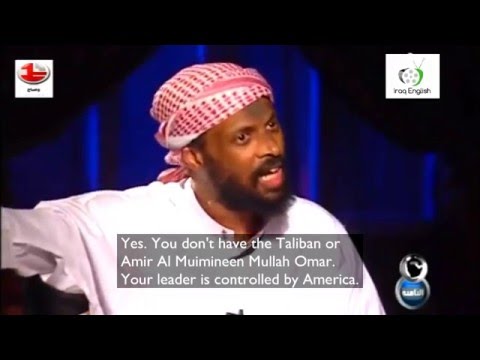
Watch this and note that the Saudi host has no logical argument against the articulate Jihadi sitting in front of him. Once you accept the basic Wahabi ideology (which is really just classical Sunni Islam taken to its logical conclusions without compromise of any sort), it is very hard to see why the militant is wrong and the host is right.
Tough.

Indian Islamist Zakir Naik is by no means unique in thinking grave worship is wrong. You do not have to be a wahabi to think that. But they do take it to its logical conclusion.
Logic is the enemy. Seriously.

A Story from 1971

The following story was narrated by a dear friend and he didnt want to use the captain’s name. I felt it should be preserved, even if without names. So here is my friend’s verbatim account, with names and punjabi curses redacted:

I met a retired army officer (let’s call him captain X) while stationed in a small town in Punjab in the 1990s. People said he had been traumatized by 1971 and it had changed his life, but he didnt like to talk about it. As we became better acquainted, I asked him about that period. At first he wouldn’t talk about it, but one day after chatting about many things, he agreed to tell me his story:

The retired captain was a young army officer in early 1971 when he was informed that he was being posted to East Pakistan. His father was a retired (senior) army officer and a coursemate of General Z, who was a two-star general in Dhaka. He called General Z and mentioned that his son was coming over and to “take care of him”. General Z said “I will do more than that for you old friend, I will put him on my staff, he will be totally safe”.

Captain X arrived and joined Generaz Zs staff in Dhaka. His main job was to manage General Z’s various appointments and to arrange an endless series of lunches and dinners for the senior officers at Dhaka garrison. In the course of these duties, he became very familiar with the catering staff at Dhaka Intercontinental hotel. Life was easy and pleasant until December 1971, when bombing began in earnest and the war finally reached Dhaka. On the 16th of December, Eastern command surrendered to the Indian army and like everyone else in the Pakistani army, young captain X was depressed, sad and angry; but like everyone else, he gave up his side arm and became a POW. Initially the Indians were very disciplined and well behaved and the young officers were simply put under guard in their own officers mess. The General meanwhile had shifted to the Intercontinental hotel.

By the next day, the Indian officers were getting drunk and some became rowdy and verbally misbehaved with their prisoners, but nothing too serious happened. That evening two young Indian officers showed up at the mess and asked for him by name. They had learned that he used to handle catering arrangements and they were planning a big celebratory lunch the next day and wanted him to help with arrangements. He told them that catering used to come from the Intercontinental hotel, so they put him in their staff car and headed that way. He was in the front seat with a driver and the two officers (both mildly drunk) sat in the back. On the way, the car got stuck in a mob of Bengalis shouting Joy Bangla and looking for collaborators and sundry enemies. When one of the officers (a Sikh) stuck his head out of the car, he was recognized as an Indian and the crowd started cheering and shouting slogans for the Indian army. As the crowd pressed around the car, the Indian officers thought they would have some fun and they told the crowd “this man is a Pakistani officer, how does he look now?”. The crowd immediately grabbed hold of captain X’s hair and several people slapped him and spat upon him. He held on to the door handle and fought for dear life as some of the crowd tried to pull him out. This went on for a few minutes and he was badly beaten around the head and neck but he held on to the handle and they could not open the door.

After initially laughing at his discomfort, the two Indian officers thought things were getting out of hand and told the driver to move on and pushed the crowd back. At the same time an older Bengali in the crowd started berating the crowd and saying “don’t kill the poor man, he is only a kid”.  Pro-Indian feeling was high, so they got their way and managed to pull away. As they drove off, the Indian officers joked that “this is only a trailer, maybe we will bring you back tomorrow and watch the crowd finish you off”.

Captain X was shaking with terror and humiliation. His clothes were torn and his face swollen. He was bleeding from several cuts. They got to the hotel and stopped at a side gate and he managed to ask the guard to call xyz from catering. As he was standing there waiting (the hotel being a declared safe zone, was off limits to most Indian soldiers) he suddenly spotted General Z standing at the main gate a 100 feet away, chatting with some people. The main gate was open and was only guarded by a hotel guard. There seemed to be no Indian soldier there. Thinking “these officers will probably kill me tomorrow”, and still stunned and bleeding from his beating, captain X saw his chance and took off for the main gate, shouting “General Z, General Z, please save my life, these Indians will kill me”.

The Indian officers, taken by surprised, were a few yards behind him as he ran for dear life.
General Z looked up, saw the captain, grasped the situation.. and ran. He ran inside the gate and shouted to the guard to close the gate. By the time captain X got there, the gate was closed. He stood banging helplessly at the gate, watching General Z running into the hotel as he screamed “Sir, they are going to kill me, Sir, please help!”.

The two Indians caught up with him and gave him another thrashing. Then they took him back. He was never taken into the city again and spent the next year in captivity, dreaming of nothing else except the day when he would get back to Pakistan and kill General Z.

When he got back, his friends (who had heard him say as much hundred of times) told his father about his plans. His father forcibly took him home and got him out of the army and made him promise never to see General Z again in his life. And of course, he broke off all relations with General Z. General Z called his father several times and even wrote to him to say “please listen to my side of the story first” but dad was done with General Z.

Until one day, 10 years later, General Z, now retired and holding a senior civilian position (that being the norm in the army) came to their town. His staff showed up at their house, insisting that General Z wanted to meet for lunch. General Z himself called and spoke to Captain X’s mother, who was unable to say no and agreed to have General Z come over for lunch. Dad then searched his son’s room, found a pistol and took it away and locked him in the room, forbidding him to come down. Mom made him promise on her life not to do anything stupid. There was a very cold lunch, with dad absolutely refusing to say or hear anything about 1971. General Z came and left. They never met again.

Captain X says if it was not for his mother making him promise on her life not to carry out his threat, he would have strangled General Z at that lunch with his bare hands.

And so it goes.

Many stories about East Pakistan are now recorded in various books written by Pakistani officers who served there, but this particular incident has not made it into history. In somewhat redacted form, I hope this post will preserve it for posterity.

1971: From East Pakistan to Bangladesh

This excellent article was written in 2002 by the redoubtable Dr Hamid Hussain. Still relevant.

Demons of December —
Road from East Pakistan to Bangladesh

Columnist Hamid Hussain makes an excellent analysis of events leading to 1971.

Introduction

Great blunders are often made, like large ropes, of a multitude of fibres. 
Victor Hugo’s Les Miserable

December is the anniversary month of the independence of Bangladesh and break up of Pakistan. The memories of that critical period of the history of the two countries are very painful for everyone who was affected in one way or the other. There has been very little attempt to dispassionately and critically analyze various aspects of that period. Most of the writings have been limited to accusations and counter-accusations and mud slinging. In the absence of a serious government or academic inquiry, most of the facts have been clouded in only opinionated rhetoric. Some have picked up on one person and blamed him for the whole disaster. Others have tried to defend their favourite and passed the buck to someone else. Various individuals have played an important role during that critical time period and everybody had their share in the outcome. Most of the discussion has been limited to the last act of the play, which was played in 1971, ignoring the whole historical context. At the end stage of a crisis when the powerful currents of history are in full swing, as one commentator has correctly pointed that an individual cannot alter the movement of historical forces, which are far stronger than any individual actor.1

Several ethnic sub-groups in Pakistan, in addition to the clash on material issues have jealousies, deep-rooted prejudices and stereotypes about each other. In this environment of mistrust of each other and absence of conflict resolution models, open clash between various groups including use of violence becomes the general rule rather than exception. The ruling elite of Pakistan views the political consciousness of ethnic groups as subversive. They have tried to use ‘the twin instruments of Islam and the state to overcome this subversive force’.2 The state’s assertiveness to impose an artificial unity from above, where the ruling class is composed of a dominant ethnic group results in an expected response from other ethnic groups. They perceive it as imposition of the value system of the dominant ethnic group and loss of their own ethnic identity.3 This creates a vicious cycle, where every attempt to centralize control over periphery results is hardening of the attitude of the one’s at the receiving end. The threat to state’s territorial integrity ‘tends to arise out of local reaction to the centre’s heavy handed imposition of uniformity on diverse communities in the first instance, and the violent repression of subsequent local dissent’.4 This is the essential component of the whole affair. Bengalis had genuine grievances against the Western wing, but ‘their success came, when it did, not because their assumptions were more accurate than those permeating the Pakistani elite-culture but because their strategic alliance with Delhi and Moscow gave them an advantage Islamabad was unable to match’.5

Historical Background


‘You at least are not a Bengali’. Three different delegates from West Pakistan starting their conversation with Karl Von Vorys during All Pakistan Convention of Basic Democrats in 1962 6
The prejudice against Bengali Muslims has a long history and was quite prevalent long before Pakistan emerged as an independent state. Muslim intellectuals, elites and politicians, which belonged to northern India, had the picture of a Muslim as tall, handsome and martial in character. These characteristics were applicable only to Muslims of northern India. As Bengali Muslims didn’t fit into this prejudiced and racist picture, therefore they were ignored at best and when even allowed to come closer, were considered inferior. Bengalis were shunned despite their political advancement and strong resentment against oppression and tyranny. A large portion of Bengali Muslims was converts from Hindu low castes. The ‘noble borns’ of Bengal claimed foreign ancestry (Syed, Afghan, Mughal). The majority of Bengali Muslim population which had customs common with Hindu peasantry and had a proud sense of their language was not considered as ‘proper Muslims’ by some Bengali ‘nobles’ and almost all of West Pakistan. This perception later influenced the official decision to ‘Islamize’ and ‘purify’ East Bengali culture in Pakistan after 1947.7 The British theory of ‘Martial Races’ was generally well received by the natives in this background. The British classification considered Bengalis as part of ‘feminine races’. They were considered ‘feeble and spineless but clever’.8

In later part of nineteenth and early part of the twentieth century, several important Muslim leaders advocated division of India on the basis of separate Muslim identity. The prejudice against Bengali Muslims was so prevalent and widespread, that no body cared about them and did not consider them as part of Indian Muslim community. In fifty years, about 15 such schemes were proposed but not even a single one mentioned Bengal or Bengali Muslims.9 Sir Muhammad Iqbal who proposed the idea of Pakistan in his famous Allahabad address in 1930 did not include Bengali Muslims in his scheme. Chaudry Rehmat Ali who coined the word ‘Pakistan’ for his new country did not bother to fit the majority population of future Pakistan in his name. Generally speaking, Muslims of northern India considered themselves superior and more pure blood and despised Bengali Muslims, which they seem to equate more with Hindus rather than accepting them as brothers in faith. The Bengali leader, Fazlul Haq who presented the Pakistan Resolution in 1940 was forced to resign from Muslim League in September 1941. The Muslim League leadership never trusted Hussain Shaheed Suharwardy, who was the elected Chief Minister of Bengal. He was not given a seat at Working Committee of All India Muslim League. Upper class elite dominated Bengal Muslim League. It got political support from Khawaja Nazimuddin, financial support from Mirza Abul Hassan Ispahani and media support from Maulana Akram Khan.10

In 1947, when the new state of Pakistan emerged, there was a very unique and difficult dilemma facing the new nation. More than a 1000 miles of hostile territory of India separated the two wings. East Pakistan contained more than half of the population but only one-sixth of the land. In Eastern wing, population was more homogenous ethnically and linguistically while Western wing had five clearly diverse groups (Punjabis, Sindhis, Baluch, Pushtuns and newly immigrated Muslims from India called Muhajirs). In eastern wing, the non-Muslim population was 23% while in western wing only 3 %. Peasant proprietors dominated agriculture sector in Bengal compared to large feudal estates in West Pakistan.11 Bengalis were the most politically conscious group of Pakistan. In addition, there was a long tradition of strong leftist presence in Bengal. Literacy rate was 30% in East compared to 20% in West Pakistan.12 In 1950, East Bengal Provincial legislature passed a landmark bill called East Bengal State Land Acquisition and Tenancy Act of 1950. This law abolished the permanent settlement, which ended the Zamindari system that supported the landed elite. The land holding was limited to 100 Bighas (about 33 acres) which affected both Hindu and Muslim landlords.13 In my view this little known single piece of legislation was a crucial factor which would impact the future course of relationship between the two wings. This law rang the alarm bells in West Pakistani ruling elite, which was dominated by the landed aristocracy.

The demand for Pakistan had a ‘millennial appeal, which, for a while, covered up the deep divisions within the Muslim community’. After the emergence of Pakistan, there were demands for clarity as to what it stood for, and fissiparous tendencies began to set in.14 This is the historical context of the events up to independence in 1947, which is very important in understanding of the events, which plagued the country later.

Second Class Citizens of the New Nation
Your music is so sweet. I wish to God, you Bengalis were half as sweet yourself. Field Marshal Ayub Khan to his Bengali friend.

After independence, several factors contributed to the gradual widening of gulf between the two wings. The fundamental factor was the difficulty of West Pakistani elite to accept Bengalis as equal partners. The rapid alienation of Bengalis was partly due to the fact that Bengali elite’s access to power had traditionally been through political mobilization and not bureaucracy. In the absence of a democratic culture and stark absence of Bengalis from the two most important decision making bodies, civilian bureaucracy and military, made the Bengali apprehensions acute. The establishment of a highly centralized regime in 1958 and banning of political parties effectively cut them out of the national scene with no voice at national level.15

Poorly thought out decisions made by a small clique, which were either made in total ignorance of ground realities or with deep-seated prejudice against the Bengalis contributed to increasing Bengali alienation. In the absence of detailed thought out policies, which are discussed at various forums, resulted in total ignorance on part of the general population of West Pakistan what was being done to the Bengali majority in the name of national unity. The initial discontent was based on the language issue, when Pakistan government decided that there will be only one national language and that will be Urdu. Even Bengali Muslim League leaders (Tajuddin Ahmad and Abu Hashim) expressed their apprehensions about the neglect of Bengali and its consequences. In September 1947, government of Pakistan printed currency notes, issued coins, printed money orders and post cards in English and Urdu only. In 1947, the circular of Pakistan Public Service Commission had made provision of Urdu, English, Hindi, Sanskrit, Latin and other languages but made no provision of Bengali. In an attempt to ‘purify’ Bengali culture of Hindu influences, Pakistan government decided to change the script of Bengali. In total disregard of the local sentiments and even constitution itself, central government set up centres teaching Bengali in Arabic script.16 The Bengali protest started on this language issue. Pakistan government was forced to acknowledge Bengali as one of the state language in 1954 due to overwhelming Bengali demands but in the process, the gulf between two wings further widened.
Every genuine demand by Bengalis was denounced as a conspiracy to destroy Pakistan. The ruling elite dubbed the Bengali advocates of their rights as ‘anti-state’ and ‘anti-Islam’ and used epithets like ‘dogs let loose on the soil of Pakistan’. Suharwardy was threatened with the loss of his citizenship.17 The Punjabi Governor of East Pakistan, Firoz Khan Noon described the Bengali voice of dissent as a conspiracy of ‘clever politicians and disruptionists from within the Muslim community and caste Hindus and communists from Calcutta as well as from inside Pakistan’.18 These ill-thought policies of central government further hardened the Bengali attitude.

The debates about the future constitution of the country further revealed the different thought process prevalent among the representatives of the two wings. A very important fact, which has been overlooked, is the membership of first Constituent Assembly. It had 44 members from East Bengal, 22 from Punjab, 5 from Sindh, 3 from North West Frontier Province and one from Balochistan. In 1949, the Basic Principles Committee submitted its report and recommended a federal democracy for the new nation. The members from Punjab objected that just because of being larger in number, Bengalis should not be allowed to have a dominant position (a similar stand taken by Zulfikar Ali Bhutto in 1971 when he stated that the bastions of power are Punjab and Sindh). They probably had a different idea about parliamentary democracy. If this view is accepted then this means that ‘certain citizens are more equal than others’.19 Bengalis accepted the principle of parity in the legislature on the assumption that same will apply to Bengali representation in other areas including economic, civil service and military. Fearing the prospects of Bengalis joining hands with smaller provinces of the Western wing to press for their demands, Ayub Khan (who was C-in-C and also Defence Minister) came with the idea of ‘Unification of West Pakistan’ and initiated the process of merger of four provinces.20 After the 1958 coup, Ayub held the firm control and ran all affairs with the help of civilian bureaucracy. Ayub’s own hand picked cabinet members from East Pakistan (Muhammad Ibraheem, Abul Qasim Khan and Habib ur Rahman) demanded greater autonomy during discussions on Constitution and warned of grave dangers of a highly centralized government. Several 4:3 votes (there were four members from West Pakistan and three from Eastern wing) during these deliberations clearly indicated a genuine different thought process and different perspective among ministers from the two wings.21 Ayub’s response to the arguments of ministers from East Pakistan was that after the promulgation of the constitution, he dropped all three from the cabinet.22 This shows that Ayub kept these three Bengali ministers during the deliberations to show that the Bengali view was being considered while actually, he resented their views. As expected, the promulgation of 1962 Constitution resulted in massive protests in Eastern wing led by the students.

Similarly, economic issue was also a thorny one. The central government kept avoiding this on one or other pretext but was forced to address it as there was a unanimous consensus of Bengalis on the economic issue. In 1951, Sir Jeremy Reisman was invited to evaluate the existing allocation of revenues and recommend any changes. His recommendations were accepted as an Award. The results of this award gave credence to Bengali point of view. The revenue deficit of East Pakistan came to Rs. 7 million in 1952-53 from Rs. 40 million in 1951-52.23 The highly centralized rule of Ayub Khan further alienated the Bengalis as their representation in military and civilian bureaucracy was very low. The Bengali disaffection was obvious even to a blind man but the rulers chose to ignore it. In July 1961, Intelligence Bureau (IB) report about the feelings of Bengali population clearly stated that, “The people in this province will not be satisfied unless the Constitution ensures them in reality equal and effective participation in the management of the affairs of the country, equal share of development resources and, in particular, full control over the administration of this province. The intelligentsia would also like to see a directive principle in the Constitution to increase speedily East Pakistan’s share in the defence services as well as equal representation of East Pakistanis in the central services”.24 Alas, a mid-level police official of IB was more farsighted than the rulers of the country.

Face To Face
‘Does it not put you to shame that every bit of reasonable demand of East Pakistan has got to be secured from you at tremendous cost and after bitter struggle as if snatched from unwilling foreign rulers as reluctant concessions’. Awami League’s Leader Sheikh Mujeeb ur Rahman, 1966

1971 did not occur in a vacuum. It was the logical outcome of the trends, which were operational for at least few decades, and no attempt was made to address the fundamental issues. The initial Bengali attempts were to get their due share in the country’s decision-making process. It later evolved into Bengali nationalism and moved from greater autonomy to finally into struggle for complete independence. Every ill-thought step taken by the central government from banning the poetry of Rabindranath Tagore on national media to administrative and economic measures radicalized the Bengali population one step further. Even thirty years later, with all the hindsight, Pakistan is unable to comprehend the root causes of Bengali alienation. In 1998, a retired Lt. General is of the view that, “Bengali nationalism was only incidental, fostered by India to serve her purpose and larger interests in the region’.25 Major General (r) Rao Farman Ali (the political advisor of the military regime in East Pakistan and most informed person about the crisis) with all the hindsight has this to say about the landslide victory of Awami League in 1970 elections, “Total 37% votes were polled. Of this 20% were polled by Hindus from India, Awami League got 15% and Jamaat-e-Islami 2%”.26 Another commentator views the poor relations between Pakistan and Bangladesh due to the ‘stubbornness of Indian lobby in the bureaucracy of BD (Bangladesh)’ and this according to him is due to the ‘self-assigned objectives of keeping both the brothers apart’.27 Complete lack of understanding about the basic facts about their own society and paucity of information is quite evident from such assumptions.

Bengali politics was not monolithic. The Muslim League leadership consisted of landed elite and cosmopolitans from Calcutta. Later, vernacular leadership (Fazlul Haq and Maulana Abdul Hameed Bhashani) based on support from rural masses came to limelight. 1954 provincial elections were a watershed in the history of Pakistan. The United Front (consisting of Fazlul Haq’s Krishak Sramik Party and Suharwardy’s Awami League) swept the elections. United Front won 223 of the 237 Muslim seats and had many allies among the 72 non-Muslim elected members. Muslim League was wiped out of the East Bengal during this election. West Pakistani ruling elite’s apprehensions about the new Bengali leadership were re-enforced by the international politics and Pakistan’s attempts to join US sponsored military pacts against the Communism. Now a complex set of factors including domestic, personal and class interests, regional and international came into play which impacted the nascent democratic process of the new nation. When the defence treaty with United States was announced in February 1954, there was a general protest in East Bengal. Several demonstrations were held and newly elected assembly members signed a protest statement. This signature proved to be the death sentence of the provincial assembly. The ruling group in Karachi (Governor General Ghulam Muhammad, C-in-C General Ayub Khan and Defence Secretary Sikander Mirza) saw this situation as a grave threat to their vision for the country and future relationship with US, which would be a foundation stone of this policy. They concluded that to show to Washington that Pakistan was a serious ally and in full control of its house, East Pakistan’s political process has to be checked. On May 19, 1954, the mutual defence agreement was signed in Karachi between US and Pakistan and eleven days later, Governor General dismissed East Bengal Provincial Assembly on the flimsy charge that Fazlul Haq had uttered separatist words to Indian media. One day before the dismissal of the assembly, Pakistani Prime Minister while confiding with the US Charge, told him that Governor rule was planned for East Pakistan to route the communists. He revealed that the matter was not even discussed with the cabinet or Chief Ministers as information may be leaked to Peking and Moscow via Fazlul Haq.28 The central government sent two of its most notorious bureaucrats as Governor (Sikandar Mirza) and Chief Secretary (N.M. Khan) to East Pakistan to bring Bengalis in line. The plan was not for a short- term scuttling of the political process but a long-term as Ayub Khan confided with US ambassador. Pakistani decision makers always feel more at home with foreigners rather than their fellow countrymen. Ayub very candidly told the US ambassador that, “it would be necessary to keep military rule in effect in East Pakistan for a considerable length of time”.29
Ayub’s rule from 1958 to 1969 with banning of political activity and running of government through a strong central authority pushed Bengalis further in the background. The protests continue to simmer throughout this period, which finally exploded in Ayub’s face in 1969. By that time, Awami League under the leadership of Mujeeb was the dominant force. The major base of League’s support was in urban areas but Mujeeb was successful in getting the support of rural areas also, which markedly strengthened his position. The central government co-opted few Bengalis to give a facade of Bengali participation. Ministers and Governors belonging to East Pakistan held their offices at the pleasure of ruling elite. They had no popular base. Out of 16 East Pakistanis who served as ministers in Ayub government, 4 were from civil services and one journalist. The remaining 11 members were secondary leaders of Muslim League, 8 of whom had contested and lost the election of 1954 (the only election held in East Pakistan on the basis of adult franchise). The governor of East Pakistan, who held the office for seven long years, had lost so heavily in 1954 elections that his deposit was forfeited.30 This is the brief account of fundamental differences between the two wings which lasted for 24 years before the day of reckoning dawned in December 1971.

Dance of Death
The excesses committed during the unfortunate period are regrettable. General Pervez Musharraf writing in the visitors’ book at Savar Memorial for the Martyrs of 1971 in Dacca, July 2002 31
When Yahya Khan took control of the state in 1969, the country was effectively divided on all known fault lines. The separation between the two wings had been completed at the psychological level. The wisdom of Solomon was needed at that time to avoid a civil war but the only commodity in abundance was ignorance mixed with raw emotions and rhetoric. The military elite failed to understand the dynamics of their own society. They embarked on an ambitious but un-realistic goal of higher level of national cohesion in the absence of genuine participation. In March 1971, they took the fatal decision on the basis of their thoughts that the conflict is an artificial one and they will control it by attacking it directly and with brutal force. In this assumption, all the civilians of West Pakistan (including civilian bureaucracy and all political parties) were in agreement with the military’s point of view.

In the background of general mistrust and prejudice against Bengalis, when Bengali demands increased, so was the anger against them. The phenomenon was universal in West Pakistan affecting both civilians and army officers. By early 1971, there was a general consensus among the military leadership with probably very few exceptions (Lt. General Sahibzada Yaqub Khan was one) that the only solution left was the use of force. Yahya Khan called a meeting of Governors and Martial Law Administrators (MLAs) on February 22. Lt. General Yaqub Khan recalled the thought of Yahya Khan about use of strict measures. “He thought that a ‘whiff of the grapeshot’ would do the trick and reimposition of the rigours of martial law would create no problems”.32 To be fair to Yahya, he was not alone in this assessment. Almost all civil and military leadership was of the same view. To understand the decisions taken by the leadership, one has to understand the thinking of the senior officers at that time. Niazi explaining the apprehensions of West Pakistanis states, “They were also apprehensive about the Hindu influence on Bengali politics… The government would be formed by Bengalis, the iron fist in the velvet glove would be that of Hindus. To ensure that the Hindu was nullified, the parity system was evolved… This was aimed at protecting the interests of the West Pakistanis from exploitation by the Hindu-controlled Bengalis”.33 After the sweeping victory of Awami League in 1970, Yahya’s intelligence Chief, Major General Akbar Khan stated that, “we will not hand over power to these bastards”.34 In June 1971, in a divisional commander’s meeting, almost all generals disapproved negotiations with Awami League and stated, ‘we must finish this thing’.35 During a visit to Dacca during the March 1971 operation, a close associate of Yahya stated, “There can be no political settlement with the ‘Bingos’ till they are sorted out well and proper”.36 The civilians of West Pakistan in general had the same thinking. Bhutto had claimed that the bastions of power of Pakistan were Punjab and Sindh. The civil service held the general idea that, “a taste of the danda — the big stick — would cow down the Bengali babu’.37 The civilian bureaucrats serving the regime, like Information Secretary Roedad Khan were advising the generals about ‘putting some fear of God’ in Bengalis and how to purify Bengali race and culture by Arabising the Bengali script.38 The ruling elite was totally lost and the events were moving too fast for any of them to fully comprehend, let alone respond in any meaningful way. The rulers were now really suffering from delusions, unable to see beyond their boots. When the Bengali soldiers, police officials, diplomats and airline pilots were defecting en masse, the members of the regime were re-assuring the Pakistani envoys (Major General Ghulam Omar, Information Secretary Roedad Khan and Foreign Secretary Sultan Muhammad met with Pakistani envoys in Tehran and Geneva) that everything was under control and the majority of Bengalis were with Pakistan.39 This was being told when they could not get a single Bengali to work at Dacca radio station and in an ironic twist, Pakistani representative (Abu Saeed Chowdhry) attending a human right conference at Geneva had defected. They really thought that the world is blind.

This general thought process was not limited to only senior level. In soldier’s mind when conclusion was reached that Bengalis are traitors then the next line of action was quite obvious. You don’t negotiate with traitors, you finish them off to save the country from their ravages. Soldier was now ready, mentally prepared to deal with a group who was seen as coward and only to be dealt with force. A Pushtun ex-cavalry officer has eloquently expressed this thinking. During a conversation in early 1971, he dismissed Bengalis as cowards and predicted that they will run when first shot is fired. He confidently stated, “Do you know what an armoured regiment can do in Bengal? It will go through the Bengalis (he used the derogatory term ‘Bingo’) like a knife through the butter”.40 In March 1971, when the military action started, most officers and rank and file justified their actions on the basis of whatever seems plausible to them. At 16th Division HQ, Anthony Mascarenhas was told, “we are determined to cleanse East Pakistan once and for all of the threat of secession, even if it means killing off two million people and ruling the province as a colony for 30 years”.41 At 9th Division HQ at Comilla, Major Bashir justified the military action by stating that Bengali Muslims were “Hindu at heart” and this was a war between pure and impure. His superior Colonel Naim justified the killing of Hindu civilian population to prevent a Hindu take over of Bengali commerce and culture.42 A senior officer in Khulna told Maurice Quintance of Reuters, “It took me five days to get control of this area. We killed everyone who came in our way. We never bothered to count bodies”.43 Captain Chaudhry commented after the March operation that, “Bengalis have been sorted out well and proper — at least for a generation”. Major Malik agreeing with this assessment, remarked that, “Yes, they only know the language of force. Their history says so”.44
Secessions and civil wars are brutal and very violent. They run their course in a vicious cycle. The March 1971 military operation resulted in deaths of a large number of civilian Bengali operation. Bengalis being not in a position to tackle the well-organized army, turned their rage at the non-Bengali community amidst them. A vicious campaign of murder, rape and utter destruction was unleashed against the civilian non-Bengali population. These atrocities in turn brought the ire of the army, who simply went out of control in extracting a heavy price from the Bengalis for their rebellion. This orgy of bloodshed and outrageous atrocities against non-combatants is the most shameful and painful part of the collective history of the peoples of the two wings. Wanton murder committed by anybody should be condemned. It becomes critically important in case of organizations, which are held to higher standards than mobs. On Bengali side, some have given exaggerated accounts of atrocities, while on Pakistan side there has been total denial, which has resulted in much confusion. Now there is enough evidence to suggest that there was a planned and systematic killing of civilians, especially educated elite and Hindu civilians.45 Information provided by senior Pakistani officers points towards that. Niazi on his assumption of command in East Pakistan, issued a secret directive to all formations which stated, “Since my arrival, I have heard numerous reports of troops indulging in loot and arson, killing at random and without reason in areas cleared of the anti-state elements. Of late, there have been reports of rape… There is talk that looted material has been sent to West Pakistan through returning families”.46 A former Brigadier stated that Farman Ali was the principle architect of the plan to crush the Bengalis with force and was directly involved in the Hindu Basti massacre.47 Niazi also admits that a ‘scorched earth policy’ was carried by Tikka Khan and his orders of ‘I want the land and not the people’ was carried out in letter and spirit by Major General Framan and Brigadier Jehanzeb Arbab in Dhaka’. He also admitted that tanks and mortars were used against university students and 7th Brigade under Arbab not only killed people in Dacca but also resorted to looting banks and other places.48 The figures may be disputed by different parties but the fact remains that large scale death and destruction ensued since March 25 army operation. Enough information from Pakistani side and from Bengali side has emerged to support this conclusion.

Military Aspect
The military by its nature is excessively sensitive to criticism, which makes the task of learning from its mistakes and inadequacies very difficult for it.49
The defence policy of Pakistan was shaped by small group of senior officers without any serious debate and discussion. The idea of ‘defence of East Pakistan from West Pakistan’ adopted by West Pakistan dominated senior military elites had its roots in the British traditions. The British C-in-C of Indian forces prior to partition, Field Marshal Claude Achinleck considered East Pakistan as ‘strategically useless’. This assertion was based on the observations that the country was flat and easy target for invasion, Bengalis had few martial traditions and the lands possessed few natural resources and no valuable industries. He, therefore, concluded that it was not prudent to invest in the defence of East Pakistan.50 In April 1947, Achinleck wrote about the defence concept of East Pakistan, “ the effort involved in providing adequate defence against aggression for this region would seem to be out of all proportion to its economic or strategic value”.51 From a colonial standpoint, this assessment may be correct but for an independent country to adopt such a policy of defence, where the region with majority population is considered useless, was simply absurd. By adopting this policy, essentially, one wing of the country was telling the other that ‘you are worthless and indefensible’, therefore we will allow the enemy to occupy your land and subjugate you while we defeat him somewhere else and then on the negotiating table we will try to win back your freedom. It will be very hard to find such an absurd examples in military history. Achinleck was highly regarded by almost all senior officers, many of whom had worked under him and his words and ideas were gospel truth. This one example shows the lack of independent thought and critical analysis among the senior officer corps regarding vital issues. Any serious discussion about this concept was discouraged by Ayub. (He wrote an angry letter to Prime Minister about the naval chief Vice Admiral H. M. S. Chaudhry and suggested his removal because he wanted to discuss this issue). In the absence of Bengali officers in the higher ranks, no one was there to challenge the idea and present an alternative view about defence of that area by someone who considered the area his homeland. At General Headquarters (GHQ), there was no well-thought out plan of how Pakistan will respond, if India attacked East Pakistan. With all the hindsight, a former Pakistani general in 2001 still insists that the policy of defence of East Pakistan from West Pakistan was a sound policy. The reason he gives is that West Pakistan was the ‘heartland’ and ‘hub of industrial and military power’.52 These esteemed and patriotic soldiers fail to understand the basic fact that no group of a country wants to see itself as ‘strategically useless’ or ‘gateway’ and hence dispensable while others elevating themselves to the ‘core’ and ‘heartland’ of the state worth fighting and dying for. 1965 war with India brought to open the hollowness of the idea of defence of East Pakistan from West Pakistan. On the Western front, the war was a stalemate despite better Pakistani equipment with no significant territorial gain. East Pakistan had only an under-strength division (14th Division commanded by Major General Fazal Muqeem Khan) and 15 Sabre jets. All communications between the two wings were cut off and East Pakistan was vulnerable. This heightened the sense of insecurity among the Bengalis along with the bitterness that they have been put at risk of Indian occupation to take Kashmir territory.53 The cost of 1965 war was not military but political. In my opinion, it was after the 1965 war that Bengalis in general started to question the viability of union of two wings under a single central government.
In early 1971, the rapidly deteriorating situation in East Pakistan forced the Pakistani GHQ to send two divisions (9th and 16th ) to the eastern wing. These two divisions were the strategic reserve of the country. Two more divisions were raised to replace the reserve divisions sent to East Pakistan. Thus, when the war came in November 1971, the strategic reserve divisions were in their infancy. ‘Pakistani GHQ had a naively simplistic attitude towards Bengali separatism. They did not realize that political problems could seriously compromise the strategic equilibrium of the army’.54 The military problems of East Pakistan had been clearly seen by US consular at Dacca as early as 1958, several months before the Ayub Khan’s coup. In his telegram to State Department on May 29, 1958, he wrote, “To hold East Pakistan, a dictator would have to strengthen army here, now one under-strength division, including two Bengali battalions which might mutiny. To strengthen army here means to weaken it in West Pakistan. Army here is thought capable of maintaining internal security, but this estimate is based on prospect of riots and local disturbances, not an open revolt aided in all likelihood by another country. Civil war is bitter and unrelenting as we know from our own experience and that of other countries”.55 Such foresight would be a very rare commodity in Pakistani leadership.

In a multi-ethnic state, the composition of the armed forces has both negative and positive impact on the society at large. This becomes especially important when military as an institution is involved in the direct running of the state as is the case of Pakistan. Pakistan army is the continuation of the army of the Raj. Both factors of low inclination of Bengalis towards soldiering and British theory of ‘Martial Races’ were responsible for almost no Bengali representation in the armed forces of Pakistan at the time of independence. In view of dominance of few ethnic groups in the military, it is viewed ‘as the instrument of specific regional interests’ and when armed forces assume the country’s leadership, this image is exacerbated.56 The country’s founder, Muhammad Ali Jinnah ordered the raising of Bengali regiment. The first battalion of East Bengal Regiment (EBR) was raised in February 1948. It was popularly called Senior Tigers. The second battalion of EBR was raised in December 1948. This policy of incorporating the Bengalis was done half heartedly in the beginning as by 1968, there were only four Bengali regiments. There were several reasons for that. In a multi-ethnic society, where one dominant group defines the parameters of national security and proper code of patriotism, the group, which has different opinion, is seen as less ‘patriotic’. If the Bengali is less inclined to join the armed forces (which may have historical, social or cultural reasons), then it is assumed that he is less patriotic and his allegiance to the state is suspect. This will mean that he is not welcome in the institution when he decides to join. The general principle in this situation becomes that ‘groups that are less allegiant to the state or the regime have to be enlisted — but enlisted as late as possible and in such a fashion that the political cost is not intolerable for the elite’.57 This is exactly what Pakistani leadership did in case of Bengalis.

The British theory of Bengalis being non-Martial was also prevalent among the Punjabi and Pushtun officers (the dominant groups in Pakistan army). In Air Force and Navy, the numbers of Bengalis were steadily increased. There were several reasons for that. Compared to army, these two arms of armed forces are less politically involved in coups. Second, these two arms require more technical skills and higher education standards to run state of the art machines and Bengalis were able to perform these functions. In the military academy, Kakul, the Bengali cadets were considered inferior to the ‘Martial Races’. One former instructor at the academy in 1950s stated that Bengalis were generally given poor grades and seldom given any higher appointments. Many of them were shunted out as ‘Duds’.58 The gulf between Bengali and non-Bengali officers was as wide as between the general populations of the two wings. The total disregard of Bengali sentiments can be gauged by one incident which one Bengali cadet experienced during his stay at Kakul in 1970. At a dinner night, Major Shabbir Sharif (a good and well-respected officer of 6 Frontier Force Regiment who died in action in 1971 at Suleimanki sector) was sitting at the table with the Bengali cadet. He commented about the recent devastating cyclone in East Pakistan that more than hundred thousand people have perished. He then added that there were so many Bengalis that ‘I’m sure they will not be missed’. The young Bengali cadet was shocked to hear these words from an officer who was the role model for young cadets and everybody aspired to emulate him.59

In 1969, Yahya Khan ordered the raising of new Bengali regiments but like all other decisions it was too late. Bengalis have been too politicized and too alienated by that time. Compared to other regiments in West Pakistan, the EBRs were not mixed with other ethnic groups. The single class Bengali regiments assured that whenever the Bengali units decide to revolt, it will be en masse, and that is what happened in March 1971. Whenever a EBR revolted, the first thing they did was to kill their officers who were from West Pakistan. This would mean ‘no return’ for everybody and would keep even the reluctant ones in line. This is strangely reminiscent of the rebellion of the native sepoys of Indian Army in 1857. The Bengali officers and soldiers who were stationed in East Pakistan revolted en masses after the March 1971 operation and left with whatever equipment they could get their hands on. They later formed the core of Mukti Bahini. 1 EBR at Chandpur was significantly reduced in numbers. The regiment was moved to Jessore, where it was disarmed but some soldiers succeeded in escaping with arms. 2 EBR at Joydebpur rebelled on the night of March 28-29 and escaped with their arms and equipment. Two companies of 3 EBR at Ghoraghat and Gaibanda after rebellion moved to Hilli area. 4 EBR at Brahmanbaria and Shamshernagar after rebellion moved to Sylhet area to join rebels. The trainees at East Bengal Regimental Centre at Chittagong
(9 EBR was being raised at the time) rebelled on the night of March 25-26. There were also desertions in 10 EBR (another newly raised battalion which was National Service Battalion) while the remaining trainees were sent on leave. Of the total strength of 17,000 of the paramilitary force, East Pakistan Rifles (EPR), only 4,000 could be disarmed while the remaining decamped with their arms.60 Indian army organized the Bengali military, paramilitary and police personnel. The activities of the Mukti Bahini were code named “Operation Jackpot”. The country was divided into eight military sectors, each commanded by a Major, who had deserted from Pakistan Army. When India attacked East Pakistan, Bengali forces were organized into three brigades and attached to Indian forces in different sectors.61

There were about 28,000 Bengali armed forces personnel in West Pakistan. This group was caught in the middle of a very difficult situation. Some officers deserted and slipped into India. Pakistan army now was in a dilemma. It could not trust any Bengali officer but at the same time it could not act against anyone unless they have shown any sign of mutiny. The result was decisions, which were not practical. In one case, a Bengali officer was given the command of a platoon on the frontline where he will be charging the Indian forces but not given a personal weapon. When he asked about this unusual practice, the embarrassed commanding officer told him, “You have all the machine guns and anti-tank weapons under your command. Why do you need a personal weapon?”. He failed to give any reason of why all other non-Bengali officers of the regiment were keeping their personal weapons.62 After the ceasefire, they were imprisoned although they have not been guilty of any crime except being present at the wrong place at wrong time. They were later used as pawns in negotiations with India.

Strict adherence to professionalism and improved training with broader horizons for the senior brass are essential. Institutional control mechanisms should be in place to check any aberrant behaviour. Rhetoric, hyperbole and irrational thinking has no place in any institution let alone in the armed forces, which are involved in life and death situation. I’ll give few examples of the thinking of the senior brass regarding tactics and strategy and let the readers make the judgment. The commander of Eastern theatre, Lt. General Amir Abdullah Khan Niazi’s plan which he presented to the central government in June 1971 (when he was facing a full blown rebellion of his own population with no heavy equipment and air force), in his own words was, “… I would capture Agartala and a big chunk of Assam, and develop multiple thrusts into Indian Bengal. We would cripple the economy of Calcutta by blowing up bridges and sinking boats and ships in Hoogly River and create panic amongst the civilians. One air raid on Calcutta would set a sea of humanity in motion to get out of Calcutta”.63 In summer of 1971, when Niazi was asked what will be his strategy in case of war, he had these words, which he uttered in the presence of senior military officers, “Have you not heard of the Niazi corridor theory? I will cross into India and march up the Ganges and capture Delhi and thus link up with Pakistan. This will be the corridor that will link East and West Pakistan. It was a corridor that the Quaid-e-Azam demanded and I will obtain it by force of arms”.64 A former Air Force Chief, Air Marshal Jamal Ahmad Khan while commenting about the pathetic performance of the air force in 1971, boasted that, “if India was not supported by Soviet Union, Pakistan Air Force would have crippled Indian air force”.65 These words are uttered by a former chief of air force in the presence of stark facts that Pakistan has evacuated all its fighter pilots (total of 14) from East Pakistan on December 8 and 9, seven days before the surrender as no airfield was functional. In the Western wing, air force was unable to give any meaningful support to the army or adequately protect its cities due to paucity of resources.66 Total lack of responsibility for one’s actions and severe compromise of professionalism of the senior brass due to involvement in non-military ventures is quite evident from this thinking.

The most difficult part in Pakistan is holding uniformed officers accountable for their acts of commission and omission. The severe decline in respect for army is the direct result of this approach where individuals are protected at the cost of the institution. The tragic part is that no one was held accountable let alone punished for the tragedy. Zulfikar Ali Bhutto became the powerful chief executive of the country in the aftermath, therefore who was going to question him about his role? Many civilian bureaucrats close to regime enjoyed the same immunity. None of them felt any remorse or acknowledged even a grain of responsibility for their actions. Information Secretary of Yahya Khan, Mr. Roedad Khan continued to climb the ladders of promotions and retired with all perks and privileges from the senior most post. Mr. Ghulam Ishaque Khan weathered the socialism of Bhutto and Islamization of Zia very smoothly and ended up occupying the President House for quite a while. The military as institution also failed in this regard. Even if one accepts the notion that a particular individual has not committed any wrong, decency demands that in the wake of such a disaster, one should honourably leave the scene quietly and let others take charge. Rather than held accountable, many key players in 1971 tragic drama rose in ranks and held cushy appointments after retirement. Yahya Khan died while he was confined to his house. To his credit, when the time came to face the truth and informing the nation about ceasefire, he said, “The responsibility is mine and I am not going to shift it to anybody else. Whether it is popular or not, I will do it”.67 Chief of General Staff (CGS) Lt. General Gul Hassan became C-in-C for a while and after being fired from the post accepted the ambassadorial assignment in Austria. Air Force Chief Air Marshal Rahim Khan became ambassador to Greece. Lt. General Tikka Khan (the architect of Operation Searchlight in East Pakistan) rose to become Chief of Army Staff (COAS). Major General Rahim Khan (he was accused of deserting his command and escaping in a helicopter to Burma hours before surrender at Dacca) became CGS after his return from Burma. After retirement, he served as Defence Secretary and later Chairman of Pakistan International Airline. Major General Rao Farman Ali (Political advisor of the regime in East Pakistan) became Managing Director of Fauji Foundation. He also served in the election cell set up by General Zia in July 1977, to utilize his skills of political manoeuvring which he had sharpened in East Pakistan. Director General of Inter Services Intelligence (DG ISI) Major General Akbar Khan served as High Commissioner to United Kingdom. Director General of Military Intelligence (DG MI) Major General Iqbal Khan rose to become a four star general and Chairman of Joint Chiefs of Staff Committee (JCSC). Major General Ghulam Omar (Secretary of National Security Council) served as Chairman of National Language Authority after retirement. Director General Military Operations (DGMO) Major General Majeed Malik was promoted to Lt. General. After retirement, he served as ambassador to Morocco and later Minister of Kashmir Affairs. Lt. General Niazi states that he sent back Brigadier Jahanzeb Arbab to West Pakistan on charges of corruption.68 Arbab rose to become Lt. General, Corps Commander and Governor of Sindh province. After retirement, he served as ambassador to United Arab Emirates. Niazi after his release from India, became a politician for a while and started to address public rallies. The in charge of Khulna Naval Base, Commander Gul Zareen took a gunboat and escaped towards sea, where he was picked by a foreign ship. This occurred on December 7, nine days before the surrender. It is not known what action, if any, was taken against this officer. 

General Musharraf’s comments about accountability of officers accused of misconduct in 1971 is not correct. He stated, “It was a tragic part of our history but the nation should move forward rather than living in the past. We should leave the matter to history. As a Pakistani, I would like to forget 1971’.69 If the nation forgets 1971, it is more likely that the mistakes will be repeated. Many actors of 1971 have died. It is the moral duty of those who are living to honestly admit about their role. The duty of a soldier in this regard is critical to rehabilitate the image of the institution. Admitting one’s mistake is a sign of greatness and not weakness. In the strict legal sense, everybody is innocent as no one has been tried in a competent court of law and convicted. There are more higher values, which need to be upheld. The code of conduct of a soldier and moral law necessitates that those individuals who are still alive should come up with the truth rather than attempting to save their distorted sense of ‘honour’.

Conclusion
In a multi-ethnic society like Pakistan, where all ethnic groups are not represented in the institution of armed forces can result in a very complicated situation when army takes control of the state. The military’s ‘seizure of power have the effect of ethnicization of areas of politics not formerly ethnically salient and/or intensifying ethnic awareness where it already exists’.70 This is a prelude to a violent showdown between the state and the aggrieved ethnic group. The country has seen this with Bengalis, Baluchs, Sindhis and Muhajirs. The success of Bengali nationalism ‘with direct Indian intervention, was the most extreme example of the links between domestic repression, regional intervention and extra-regional competition’.71

The social problems of Pakistan are multi-factorial and need a long term planning and working. If past is any guiding light, it amply teaches us that the solution to present dilemma is a representative form of government, where every member of the federation feels that it is part of the decision-making process. The participation at grass-root level of local representatives to address their problems is critical. Just a symbolic figurehead of the government from a minority ethnic group would not solve the problem. Until this fact is brought home to the ruling groups, the central authority of the state will be in permanent conflict with one or the other group in the periphery, keeping the state off balance perpetually. It should be remembered that, ‘it is the dominant elite’s own goals and behaviour that threaten to bring about disintegration’.72 If Hamood-ur-Rahman Commission was published thirty years ago, the nation would have closed that chapter. The reason of opening of old wounds thirty years later is the tragic fact that the nation and its leaders refuse to face the facts. As a nation, the first step for Pakistan is to admit its mistakes and tender apology to Bengalis for the conduct in 1971. For a fresh start, it is essential that all skeletons in the closets should be taken out. Unless, all old demons are taken out from darkness and exorcised, they will keep haunting the nation forever.

Neither to laugh, nor cry, just to understand — Spinoza

Notes
1Amin, A. H. The Western Theatre in 1971 — A Strategic and Operational Analysis. Defence Journal (Karachi. Online Edition. All further references are from online edition), February 2002
2Binder, Leonard. Islam, Ethnicity, and the State in Pakistan in Banuazizi, Ali and Weiner, Myron (Ed.) The State, Religion and Ethnic Politics: Pakistan, Iran and Afghanistan (Lahore: Vanguard Books, 1987), p. 265
3Hussain, Asaf. Ethnicity, Identity and Praetorianism in Pakistan. Asian Survey, Vol. XVI; No: 10, October 1976, p. 925
4Ali, Mahmud. The Fearful State (London: Zed Books, 1993), p. 252
5Ibid, p. 249
6Von Vorys, Karl. Political Development in Pakistan, (Princeton, New Jersey: Princeton University Press, 1965)p. 155
7Murshid, M. Tazeen. A House Divided: The Muslim Intelligentsia of Bengal in Low A. Donald (Ed.) The Political Inheritance of Pakistan (London: MacMillan, 1991), p. 147
8Metcalf, Barbara D. & Metcalf, Thomas R. A Concise History of India, p. 111
9Rahman, Hafizur. Why was Bengal Ignored? The News (Lahore. Internet Edition), February 17, 2001
10Murshid, Tazeen. A House Divided, p. 159
11Talbot, Ian. Pakistan: A Short History (New York: St. Martin’s Press, 1998), p. 24-25
12McGrath, Allen. The Destruction of Democracy in Pakistan (Karachi: Oxford University Press, 1996), p. 4-5
13Baxter, Craig. Bangladesh: From Nation to a State (Boulder, Colorado: Westview Press, 1997), p. 72
14Murshid, Tazeen. A House Divided, p. 159
15Talbot, Ian. Pakistan, p. 163
16Zaheer, Hassan. The Separation of East Pakistan (Karachi: Oxford University Press, 1994), p. 24
17Murshid, Tazeen. A House Divided, p. 165
18Zaheer. The Separation, p. 26
19Jafferlot, Christopher. Nationalism Without a Nation: Pakistan Searching for its Identity (London: Zed Books, 2002), p. 18
20Zaheer. The Separation, p. 38
21Von Vorys, Karl. Political Development in Pakistan, p. 218
22Gauhar, Altaf. Ayub Khan: Pakistan’s First Military Ruler (Karachi: Oxford University Press, 1996), p. 100-101
23Budget Speech of Finance Minister in Constituent Assembly (Legislature) of Pakistan Debates (CALD), Vol. 1; No:2 (15 March 1952), p. 44 cited in Hasan, Zaheer. The Separation, p. 51
24Gauhar, Altaf. Ayub Khan, p. 98-99
25Lodhi, Sardar F. S. Lt. General (r). Security Concerns of Pakistan. Defence Journal, December 1998
26Salasal, Jalees. Court Martial, p. 232
27Siddique, A. Pak-Bangladesh Relations. The Nation (Lahore: Online Edition. All further references from online edition)), August 03, 2002
28Prime Minister’s meeting with US Charge, Emmerson on May 29, 1954 in Karachi. Foreign Relations of the United States (FRUS). 1952-1954 Volume XI. Department of State Publication 9281 (Washington: U.S. Government Printing Office, 1983), p. 1864, hereafter referred as FRUS
29The ambassador in Pakistan (Hildreth) to Department of State on subject of conversation with General Ayub Khan on July 15, 1954 (Secret). FRUS, p. 1856
30Maniruzzaman, Talukdar. Group Interests and Political Change: Studies of Pakistan and Bangladesh (New Delhi: South Asian Publishers, 1982), p. 86
31The Nation, July 30, 2002
32Lt. General Sahibzada Yaqub Khan’s conversation with Hasan Zaheer in Zaheer, Hasan. The Separation, p. 141
33Niazi, Amir Abdullah Khan. Lt. General (r). The Betrayal of East Pakistan (Karachi: Oxford University Press, 1999), p. 34
34Interview of Major General Rao Farman Ali who was present in that meeting cited in Hassan, Ali. Pakistan: Generals aur Siyasat, Urdu (Pakistan: Generals and Politics) (Lahore: Vanguard Books, 1991), p. 167
35Major General M. I. Karim’s account of the meeting in Zaheer, Hasan. The Separation, p. 346
36Salik, Siddique. Witness to Surrender (Karachi: Oxford University Press, 1977), p. 107
37Akhund, Iqbal. Memoirs of a Bystander (Karachi: Oxford University Press, ), p. 211
38Siddiqi, A. R. Brigadier (r). Military in Pakistan: Image and Reality (Lahore: Vanguard Books, 1996), p. 195
39Zaheer. The Separation, p. 310-311
40Akbar, Ahmad S. Pakistan, Jinnah and Islamic Identity: The Search for Saladin (London: Routledge, 1997), p. 238
41Mascarenhas, Anthony. The Rape of Bangladesh (Delhi: Vikas Publications, 1971), p. 117
42Loshak, David. Pakistan Crisis (New York: McGraw Hills Book Company, 1971), p. 112
43Ibid, p. 108
44Salik. Witness, p. 78
45For details of eyewitness accounts of killing of Bengali university professors, see Malik, Amita. The Year of Vulture (New Delhi: Orient Longman Ltd., 1972), p. 75-77 and Kabir, Mafizullah. Experience of an Exile at Home: Life in Occupied Bangladesh (Dacca: Asiatic Press, 1972), p. 35, 40 & 41
46Confidential instructions sent from HQ Eastern Command to formations dated April 15, 1971, provided by Niazi to his interviewer cited in Salasal, Jalees. Court Martial, p. 187
47Ali, F. B. Brigadier (r). Good, Decent Men, But… The Frontier Post (Peshawar. Online Edition), August 25, 2000
48Niazi. The Betrayal, p. 46 & Herald (Karachi), September 2000, p. 29
49Masood, Talat. Lt. General (r). Pitfalls of the Military’s Over-Stretch. Dawn (Karachi. Online Edition), August 20, 2001
50‘The Military Implications of Pakistan’, memorandum by Claude Achinleck attached to a letter from Achinleck to Mountbatten, 24 April 1947, Jonh Ryland’s University Library of Manchester, Achinleck MSS, File 76, No:1224b, 2 cited in Wainwright, Martin A. Inheritance of Empire: Britain, India, and the balance of power in Asia, 1938-55 (Westport, Connecticut: Praeger, 1994), p. 74
51Hamid, Shahid. Major General (r). Disastrous Twilight, Appendix IX, p. 335
52Arif, Khalid M. General (r). Khaki Shadows: Pakistan 1947-1997 (Karachi: Oxford University Press, 2001), p. 125
53Jahan, Rounaq. Pakistan: Failure in National Integration (New York & London: Columbia University Press, 1972), p. 166-67
54Amin. The Western Theatre
55FRUS. Publication 1996, p. 649-50
56Malik, Iftikhar H. State and Civil Society in Pakistan: Politics of Authority, Ideology and Ethnicity (Lahore: M. Anwar Iqbal for MacMillan Publishers, 1997) p. 79
57Enloe, Cynthia. Ethnic Soldiers: State Security in Divided Societies (Athens, Georgia: University of Georgia Press, 1980), p. 52
58Malik, Tajjamal Hussain. Major General (r). The Story of My Struggle (Lahore: Jang Publishers, 1992, Second Edition), p. 29
59Author’s interview with a former Bengali officer of Pakistan army, October 2002
60Zaheer. The Separation, p. 169-70
61Heitzman, James & Worden, Robert L. (Ed.) Bangladesh: A Country Study. Federal Research Division, Library of Congress. (Washington, D.C: Government Printing Office, 1989), p. 209-211)
62Author’s interview with a former Bengali officer of Pakistan army, October 2002
63Niazi. Betrayal of East Pakistan, p. 66
64Akbar, Ahmad. Pakistan, Jinnah, p. 239
65Interview with Air Marshal Jamal Ahmad Khan in Salasal, Jalees. Court Martial (Urdu) (Karachi: Al-Jalees Overseas Publishing Svc., 1999), p. 218
66Indian jets had attacked oil refinery in Karachi and sent sorties to different cities. On Sindh border, Indian pilots had a field day of target practice, where half of a tank regiment (22 tanks) was knocked out of action.
67Zaheer. The Separation, p. 424
68Herald, September 2000, p. 29
69The Nation, September 12, 2000
70Enloe, Cynthia. Ethnic Soldiers, p. 129
71Ali, Mahmud. The Fearful State, p. 14
72Ibid, p. 252

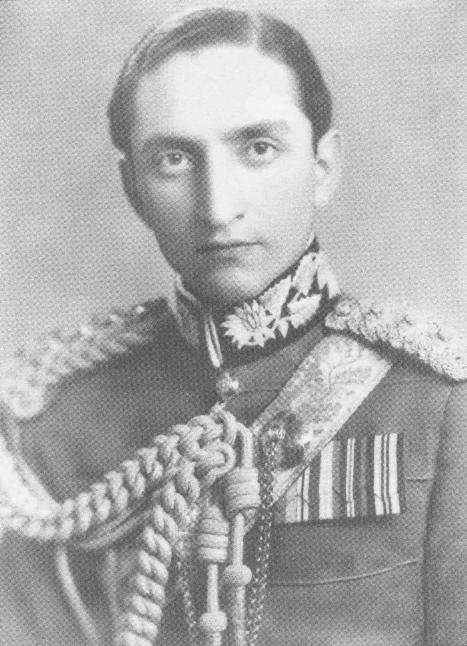
Peshawar: Massacre of the Innocents.

This post was originally posted last year the day after the massacre. What parts are now irrelevant and what remain unchanged? judge for yourself.

 ہے زلزلہ زمیں کو گہن میں ہے آفتاب / بارش ہے خون کی چشم فلک اشکبار ہے 
 ہے عنقریب پھونکے سرافیل صور کو / بس حکم کبریا کا فقط انتظار ہے

The Earth is shaking, the sun eclipsed, the sky is raining blood
The time is nigh when Israfeel will blow his trumpet (to end the world). 
All that is awaited is a signal from God… (Mir Anis)

I saw a pair of big black boots coming towards me, this guy was probably hunting for students hiding beneath the benches.
My body was shivering. I saw death so close and I will never forget the black boots approaching me – I felt as though it was death that was approaching me.
I folded my tie and pushed it into my mouth so that I wouldn’t scream. The man with big boots kept on looking for students and pumping bullets into their bodies. I lay as still as I could and closed my eyes, waiting to get shot again.
When I crawled to the next room, it was horrible. I saw the dead body of our office assistant on fire.
She was sitting on the chair with blood dripping from her body as she burned.
(a surviving student’s account)


7 men drove up to the Army Public School in a high security area fo Peshawar. They poured petrol on the car and set it on fire, then entered the school and started shooting people. They were not psychotic loners. They were trained soldiers, fighting for a cause.They were “moral” men. They were following rules and making distinctions. According to their handlers, they had been told not to kill underage children and in this they were following Sharia law (the example of the massacre of the Banu Qurayza was specifically mentioned). They cold-bloodedly went from room to room, shooting school children cowering under their desks (per one journalist, most of the dead had been shot once….in the head). And while students were shot calmly and the assassins may even have confined themselves to older children, some teachers faced a more horrendous fate. A couple of them seem to have been set on fire in front of their students. Whether before or after they were shot is not clear. Perhaps because they were female. 
This is not a psychotic loner going nuts and shooting up a kindergarten. It is not even the same as Chechen terrorists taking a school hostage and causing the deaths of hundreds of children in the subsequent firefight and explosions (started accidentally or during the rescue attempt). This is atrocity at the Nazi level. People following orders, systematically and ruthlessly, for many hours. Shooting school kids. Burning teachers. 
And proudly accepting responsibility and promising to do more. 
They were also talking to their handlers all the time. The last time they called, the terrorist told his handler “we have killed all the children in the auditorium, what do we do next?”

These are the attackers, posing before they go to kill kids 

  
There has been an explosion of outrage in Pakistan. Even Imran Khan managed to condemn the TTP by name (though PTI’s offical account still tweeted that “Whoever” did this, did something awful). The Pakistani state has reportedly stuck back already at Taliban targets. The PM and the army chief have promised action (and are likely sincere, as far as that goes). The media has condemned the attack. Social media has been on fire. So far so good. 
But within hours, the narrative has already started to fracture. First the media groups managed to invite people like Hamid Gul, Hafiz Saeed and Maulana Abdul Aziz (of Red mosque fame) to comment on this terrorist attack. And they managed to muddle the issue with references to the Indian hand and the eternal enemies of Pakistan (Afghanistan, Jews, America, that sort of thing). And on ARY (the most pro-army of Pakistan’s many pro-army channels) the anchors themselves have been leading the charge. Mubasher Lucman, for example, angrily demanded that the first step needed at this time was to ban Indian overflights to Afghanistan! Top Military propagandist Ahmed Qureshi and loonies like Zaid Hamid have been busy blustering about how India will be made to pay for this latest atrocity. 
The more things change. .

I wrote a piece three and a half years ago about the Pakistani anti-terror narrative and it’s confusions and it is depressing to find that little or nothing needs to be changed in that article. The entire piece, unedited, is pasted at the end of this post. 

There is a lot of talk about how this particular horrendous event is SO horrendous that now things really HAVE to change. Maybe. But do keep in mind that this is not the first mass casualty attack. There have been attacks on the Marriot hotel, an Ahmedi mosque, a volleyball match, a meena bazar, a church, even a mosque near GHQ (where the son of a corps commander was among the civilian victims killed in cold blood). And of course there have been countless massacres of Hazara and other Shias. Literally thousands of people have died in these attacks. But until now, there is no evidence that the army has changed it’s basic “good terrorist/bad terrorist” policy. Terrorists who kill schoolchildren and shoot up railway stations in Kabul and Mumbai are good. Terrorists who kill children in Pakistan are bad. That policy has not worked for 13 years. It is not going to start working now. 

How can we tell that GHQ is really changing policy: 

1. Ahmed Qureshi and Zaid Hamid are suddenly out of a job and publicly disowned by the army. 

2. Omar Saeed Sheikh, who was sentenced to death years ago for the killing of Daniel Pearl (a terrorist act he may not have committed, though he has surely committed many others). He has not been hanged. In fact there are intermittent reports of him living it up in prison. If he is hanged, that will be a sign of change. Especially since his handler was the famous brigadier Ejaz Shah (a close associate of the father of the double game, Pervez Musharraf himself). 
3. Mumbai attackers rapid trial and punishment. Outside of Pakistan, everybody and their aunt knows that a group of ten terrorists from Pakistan landed in Mumbai in 2008 and cold bloodedly killed a 168 innocent people. In a famous picture, one of the attackes is calmly walking down the platform at Mumbai Railway station, shooting random civilians sitting on the platform. 

Because of international pressure, the FIA (federal investigation agency) in Pakistan actually carried out a very thorough inquiry in Pakistan and identified several people who arranged things for the killers, who trained them, who sent them on their way. The FIA may not have reached all the way to the top, but they certainly made a case against some of the lower level people involved. But 6 years have passed and the trial of these terrorists has not moved forward. The prosecutor has been shot dead. And the supposed military mastermind (Zaki ur Rahman Lakhvi of the JUD/LET) is living it up in prison, and reportedly even got married and conceived a child in prison. If the army has changed it’s mind about terrorism, then the trial of these terrorists has to move forward. 


Unless you see some of these happenings, things will go back to “normal” ….

A dissenting note about the double game from a friend on facebook: 
no, not a double game any more. they are being played by the taliban now, manipulating the internecine fault-lines inside the ISI and the army. they don’t mind a few casualties in the mountains, if that is the price (in fact their foot-soldiers welcome the chance for martyrdom). they have the indomitable resolution of a madman doing god’s work, while the army has the emptied ideology of a failed religious state being devoured by corruption. by day the generals pay hollow homage to the motherland and at night send tithes to their new fathers in the mountains, hoping to buy personal protection from the next suicide attack for themselves and their families.

more sober take from the redoubtable Ahsan Butt on Five Rupees. 

POSTSCRIPT: it is not looking good for those who thought some great sea change is coming. The script on the media has changed on PTV and to some extent on GEO, but remains the same on other channels and especially on the army’s favorite channels like ARY and Dunya….. Blame India, CIA and the Jews. Invite Hafiz Saeed, Hamid Gul and other similar jokers to fog everything up. Bomb someone in the tribal areas and generate suspiciously exact body counts. 
Until the next bombing.
Unfortunately it does look like the song remains the same…

Postscript2: Got some feedback from people focused on the role of Islam in these outrages. I would like to emphasize that while various forms of Islamism are causing problems in many parts of the world, Islam is NOT the proximate cause of the choices made by the Pakistani establishment. Hard Paknationalism is the primary driver. Someone like Musharraf (father of the infamous double-game) was not too bothered about Islam. What caused him to maintain the Taliban and other Jihadist groups was Paknationalism; specifically the “hard paknationalist” belief that we have to defeat India and to do that we need certain force multipliers/strategic-assets/deniable-non-state-actors and the Jihadis are the only people who will do that job. It is this belief that drives the “good-taliban/bad-Taliban” policy and the double games it entails. Commitment to fundamentalist Islam has little or nothing to do with it. (though of course, no Islam, no partition in the first place, so there are other turtles below the first one)…

Postscript3: Lakhvi granted bail by anti-terrorism court. He many not actually walk free if tremendous pressure comes from Uncle Sam, but signals are (or are being misread in Pindi) that Uncle Sam is OK with India-specific terrorists. Lets wait and see…

Postscript 4: Some explanation is needed of two positions that seem contradictory to some people. 
1. I seem to imply that the Pakistani establishment is not going to change, at least not soon. 
2. I objected to right-wing Indians who wanted to shut down “IndiaStandsWithPakistan” because they felt sympathy for a terrorist-supporting nation was unjustified or naive. 

I tried to explain this on twitter with limited success. So trying again:

1. Simple human empathy caused most humans (EVERYWHERE) to feel intense sympathy for the parents of those whose children were so callously and brutally murdered in one of the most awful and bone-chilling atrocities, even in a world filled with atrocities. That simple human empathy is worth preserving and should not be dismissed. Without it, what will be left?

2. Pakistan is a state in crisis. It’s core establishment is fracturing. There is a very real constituency for changing course. That constituency is not just in the so-called liberal parties like the PPP, ANP, MQM etc (not to speak of the tiny but culturally significant Marxist and Post-Marxist Left) but even (and sometimes more so) in mainstream civilian parties like the PMLN and even the JUI. The paknationalist hardcore (defined by complete loyalty to the “hard-paknationalist” agenda of permanent war against India, colonization of Afghanistan, dreams of power projection in Central Asia, etc etc) is still in control of key policy areas, but has to FIGHT to stay in control. Among the civilians, they mostly get their way via manipulation of media, pakstudies brainwashing, taking advantage of the foolishness of young PTI supporters and so on. True ideological clarity is limited to a relatively small faction of the army, it’s pet journalists and think-tankers and touts like Sheikh Rasheed.

3. That fracture will increase with time anyway (since the Paknationalist hardcore cannot deliver what most pakistanis want: peace and development) but it is helped, not hindered by gestures like “IndiaWithPakistan”. I suspect that some understanding of this lay behind the Modi government’s willingness to express sympathy and make positive human gestures. Of course, they are also human, so some real human sympathy was probably involved. But beyond that, the cynical calculation is also in favor of such gestures.

4. When and if the hard-Paknationalist establishment spits in their face by doing something like bailing out Zaki Lakhvi, the fact that they made the gesture only goes in their favor. It does not hamper any other action they may or may not take.

5. With Uncle Sam desperate to get out and save face, options are limited. Planning has to be long-term.

Makes sense?

 
“Dark house, by which once more I stand
Here in the long unlovely street,
Doors, where my heart was used to beat
So quickly, waiting for a hand,

A hand that can be clasp’d no more –
Behold me, for I cannot sleep,
And like a guilty thing I creep
At earliest morning to the door.

He is not here; but far away
The noise of life begins again,
And ghastly thro’ the drizzling rain
On the bald street breaks the blank day.” 
― Alfred TennysonIn Memoriam


My older post from 2011…unedited. Original at 3quarksdaily.com

The Narratives Come Home to Roost

by Omar Ali

Most countries that exist above the banana-republic level of existence have an identifiable (even if always contested and malleable) national narrative that most (though not all) members of the ruling elite share and to which they contribute.  Pakistan is clearly not a banana-republic; it is a populous country with a deep (if not very competent) administration, a very lively political scene, a very large army, the world’s fastest growing nuclear arsenal and a very significant, even if underdeveloped, economy.  But when it comes to the national narrative, Pakistan is sui-generis.  The “deep state” has promoted a narrative of Muslim separatism, India-hatred and Islamic revival that has gradually grown into such a dangerous concoction that even BFFs China and Saudi Arabia are quietly suggesting that we take another look at things.
The official “story of Pakistan” may not appear to be more superficial or contradictory than the propaganda narratives of many other nations, but a unique element is the fact that it is not a superficial distillation of a more nuanced and deeper narrative, it is ONLY superficial ; when you look behind the school textbook level, there is no there there. What you see is what you get. The two-nation theory and the creation of Pakistan in 712 AD by the Arab invader Mohammed Bin Qasim and its completion by the intrepid team of Allama Iqbal and Mohammed Ali Jinnah in the face of British and Hindu connivance is the story in middle school textbooks and it turns out that it is also the story in universities and think tanks (this is not imply that no serious work is done in universities; of course it is, but the story of Pakistan does not seem to have a logical relationship with this serious work).
This lack of depth and sophistication dooms this narrative to a cardboard existence and removes it from the ranks not only of the story of America or the history of that sceptered Isle north of France, but also of the “5000 year old civilization of China” and “Eternal India”. Some intellectuals are aware of these shortcomings and half-hearted attempts to remedy the situation have been made, but I think it is fair to say that nothing has yet brought home the (halal) bacon; the story does not fit the post-enlightenment liberal notions of the world and does not even offer an alternative that claims to go beyond the ruling paradigm. Instead, the claim of an alternative system is being used to create just another nation state in a world of Westphalian nation-states. The working part of the state is entirely within the world norm, the supposed ideology has almost no connection to that norm, and problems were bound to arise at some point.  This statement will sound strange to many people since in polite company it has been usual to ignore the contradictions between the two-nation theory and liberal notions of national identity; to the point that even liberal Pakistanis are not conscious of their own unusual and unique position. This willful blindness is not without precedent in our world and can in fact be said to be just another “normal” facet of the world we live in, but there are contradictions and then there are contradictions. Ours have reached breaking point and will no longer hide quietly in the background. This is, of course, my opinion and may or may not make sense to everyone, but let it sit around in your mental living room for a few months;  it may start to seem worth a look.
I would add that a superficial and even contradictory national narrative is not necessarily the road to ruin. Life goes on, even in countries with less than convincing “national narratives”. Pakistan is a country, it exists, it is located at a strategic location, it encompasses very productive land, it is blessed with many bounties of nature and a talented and resourceful population, and it has an ancient and resilient culture.  It can succeed (and success is being defined here as nothing more than “normal” existence in the world of today, all problems of capitalism and nationalism fully included) in spite of its creation myth since human beings can apparently hold several contradictory ideas in their head at one time (it is even “normal” to do so). So this is not a claim that it is bound to fail, just that it can succeed in spite of its myths, not because of them.  If someone wishes to argue that myths and hot air are being overvalued in my piece today, they may be right. But it is my claim that realpolitik and narrative have intersected with great force in Pakistan today, and while the “deep state” faces many very “real” problems that will take years to solve, the narrative is itself a problem that is making all the other problems much harder to solve.
Let us quickly review some history: In 1954, the ruling elite found its international partner (not without some effort) and Pakistan joined SEATO and CENTO. While Pakistan was happy to be part of the international anti-communist alliance, its elite saw India as the primary enemy. But when they launched an adventure in 1965 that ended in war with India in September, SEATO and CENTO were nowhere to be found.  This started a narrative of American betrayal (a narrative that no American took too seriously) that was accentuated in 1971 when the Indian liberation of Bangladesh proceeded with little more than symbolic American intervention on the Pakistani side. The estranged lovers (estrangement being mostly one-way; the relationship was rather asymmetrical as Uncle Sam never seems to have paid too much high level attention to the hurt feelings of their “ally”) made up in 1980 in order to bleed the Soviets in Afghanistan.
But there was now a new element in the relationship since  Pakistan was led by more ambitious and intelligent people at this time, and managed the relationship with greater independence and “agency”.  The simple-minded and childish notions of the 1950s and 1960s were left behind and the Pakistani high command was able to use American aid while building nuclear bombs and planning for a future projection of Jihadist forces into Kashmir and Afghanistan and beyond.  Whether the American side understood what was going on and ignored it for devious reasons of their own, or whether their arrogance prevented them from seeing that their agents had a mind and plans of their own, the fact remains that the United States was no longer the sole creator of policies and projects in this era.  After the US left the region with “mission accomplished” in Afghanistan, their ally did not allow this to interrupt their glorious work of arming and training Islamist armed groups. Rather they accelerated the process, eventually arming and training half a million young men to fight in the cause of Islam. By the mid-1990s, Pakistan had established a somewhat unruly client regime in Afghanistan and Pakistan and Afghanistan became “Jihad central”; the “go-to place” for any young Muslim dreaming of a new caliphate. This growing network was supported by the intelligence agencies of the state and a wider network of international funders and political supporters built around some favored Madrasahs and the existing Islamist political parties like the Jamat e Islami.
 When some of these warriors took the fight to the West and triggered a much larger war (justified or not is another argument) Pakistan’s military establishment decided to dump its more unruly friends (the “bad jihadis”) but either through lack of capacity or lack of will, did not wish to go after the good jihadis (the ones who target India and Afghanistan).  Unwilling or unable to find a narrative that justified their sudden change from pro-jihad to anti-jihad, GHQ opted for a short-cut. Bad Jihadis were described as agents of evil powers (mainly CIA, RAW and Mossad). Many of the Taliban killed in Pakistan were said to be uncircumcised Hindus. India was said to have 14 consulates in Afghanistan from where they and their American friends were running this vile operation.  Military-affiliated websites like paknationalists.com and rupeenews.com provided a narrative that may seem fantastically improbable to outsiders but that fit in well with previous military psyops efforts and was smoothly accepted by many middle class Pakistanis.  When losses in this new civil war accelerated, another element was added to the narrative. Now we were innocent victims of America’s “so-called war on terror”. This narrative could also draw upon liberals in the West who had their own suspicions about their ruling elite and served as a rich source of  talking points for the military’s favorite propagandists.  
This narrative of “we are fighting America’s war” cleverly excluded any mention of our own role in bringing this menace to our shores. That America (and not just America) may have picked on Pakistan because Pakistan’s own armed forces had worked hard to make it the world headquarters of jihadist terrorism was not part of the story that was put together. Instead, it was all America’s fault. They brought the jihadis here, they dumped them on us and left. They were now using the jihadis as an excuse to attack us unfairly and with mala fide intent.  The mala fide intent was usually presented as an American desire to “steal our nuclear arsenal”, but other theories like “imposing Indian hegemony” or protecting Israeli interests (the last being an activity that the US has long performed at great cost to itself, so it was not a claim without any foundation) were also cited.
This story, while useful in the short term since it got the armed forces off the hook and preserved the possibility that the mullah-military alliance could be revived once the Americans left, is now turning out to be too clever by half. The crucial assumption in this scheme was that America would leave and let us return to status quo ante prior to our being overwhelmed by the confused civil war we are fighting in the interim. This fine balance also required that the Americans remain indifferent to the narrative and don’t take counter-measures in the media-management field. Finally, it assumed that the US could be alternately pressured and pleasured forever without seriously rupturing the relationship. Unfortunately, the plan did not factor in Seal Team Six and Obama’s willingness to risk a unilateral operation that simultaneously humiliated and pressurized the military high command while putting them in a very uncomfortable position in front of their own people.
Only time will tell if the net effect of this operation will be positive or negative. In the early weeks, the only thing that is clear is that GHQ had not anticipated any such operation and may not even have known about Osama’s presence half a mile from their military academy. The Pakistani leadership (which in this case means not just the military leadership but also the political leadership, who have been handed an unexpected opportunity to play a role beyond being the military’s human shield) initially reacted by trying to find some backup from China and Saudi Arabia and even Russia. But early indications are that neither China nor Saudi Arabia is willing or able to bail them out if they continue with their past policies. The word is that the Chinese have told the Pakistani leadership that they are our bestest, fastest, deepest friends and the entire politburo prays for our health every day, but as far as budget support is concerned, it may be a good idea to apply to the IMF and Uncle Sam. The half-hearted effort to wave a Russian offer in America’s face is even more of a joke as both the Russians and the Pakistanis are just blowing hot air in an attempt to get Uncle Sam’s attention and neither is likely to get very far. Meanwhile, the jihadis are not rolling over and playing dead either, which complicates matters further.
In short, in the real world, the second coming is not about to happen and the black flags from Khorasan are not going to drive the infidels into the sea. Pakistan will have to live within its current boundaries and will have to make a serious effort to go after any transnational terrorists based in our territory. Even the India-specific terrorists will have to be told the game is over. For the deep state, this is not an easy news bulletin to deliver to its own people because they have been telling a very different story for a very long time.   Most people in Pakistan do not even know that Pakistan was world headquarters for international Jihad for so long and that our own intelligence agencies set up most of the militant organizations and trained most of the terrorists we are now fighting. Most Pakistanis probably believe that 9-11 was an “inside job” and Mumbai was staged by some rightwing Hindu colonel. This amazing level of denial and disinformation has been carefully cultivated by the deep state, but is now coming home to roost. With the US plucking Osama a stone’s throw from PMA Kakul and with the jihadis attacking our most cherished institutions (GHQ, the Sri-Lankan cricket team, now Mehran airbase) the narrative is coming home to roost with a vengeance.
What will happen next? As an eternal optimist, I think things will slowly get better after several years of civil war in which the state will be pitted against the very people it created and lionized not too long ago. While the initial phases of this civil war were fought while telling our own people that our enemies are Hindus and Jews and their uncircumcised agents in the tribal areas, this clever scheme will have to be abandoned because it is impossible to fight one set of jihadis while working with another set as friends and allies. They all see each other as friends and they can see (even if some people in GHQ cannot) that this war can only mean that the state is abandoning its jihadi dreams in exchange for membership of the capitalist globalized world led by Chimerica. To them, this means war and it means war to the finish. This would be a very hard war to fight even if we know what is going on; it an impossible war to fight when our own people don’t know who is fighting whom. Which is why the narrative will have to be altered and a start has already been made by the generally pro-army anchor, Kamran Khan.  It will not be an easy job and there will be much resistance from within GHQ’s own propagandists, some of whom have such serious psychological issues with India that this realignment threatens to fry their fragile eggshell mind. But there is no choice. Slowly but surely, the times they are a changing…
 I may have been too optimistic. There are some other pieces too

http://www.3quarksdaily.com/3quarksdaily/2014/02/pakistan-negotiations-and-operations-and-islamicate-rationality.html

http://www.3quarksdaily.com/3quarksdaily/2013/03/pakistan-and-its-stories.html

http://www.3quarksdaily.com/3quarksdaily/2012/12/the-state-withers-away-in-pakistan-.html

see more at http://www.3quarksdaily.com/3quarksdaily/MondayMusings.html (scroll down a lot till you see my articles listed)

Trial by Trump: Testing Times for the Republican Party

Wouldn’t you know it, Donald Trump has finally done said
something that everyone
except
his few million supporters
– finds morally
reprehensible
, unhinged, un-American,
deeply
bigoted
, fascistic,
contrary
to our values
, against
everything we stand for
, &c, as well as disqualifying,
racist
and unconstitutional.
His dramatic
call to keep Muslims from entering the United States
undermines national
security
, puts
our soldiers and diplomats in danger
, alienates
the Muslim communities we need to work with to defeat terrorists
, and plays
into the hands of ISIS
. All this is apt and accurate as far as it goes, and
it is good to see quite a bit of it coming from Republicans who have been complicit
in enabling their party’s slide past the rightmost fringe of reality. However,
this is a moment far more profound than a few tweets or statements can address.
For the Republican Party, it is a test of character. Is the party of Lincoln still
willing to accept Donald Trump as its Presidential nominee if he prevails
through the primary process? Republican leaders and Presidential candidates have
repeatedly been asked the question, and have either answered in the affirmative
(Ryan
and McConnell
) or simply scurried away (e.g., Priebus
and Cruz).
But the question will not go away. If Trump is indeed a fascist, as the quickly
developing consensus from Stephanopoulos
to Krauthammer
seems to indicate, is the Republican Party willing to own him, and therefore
become the first major fascist party in American history? It is an issue of
character over politics. The Party has only two choices at this point: Either disown
Trump based on his views now and save the Party, or let him go on and risk the
f-label. The “strategy” seems to be to let him go on for now and hope that he
will disappear of his own accord. That is probably a vain hope, and the
consequence of this denial may well be an infinitely worse situation in a
few months, with brickbats flying at the Republican convention in Cleveland,
plus incalculable damage to the Party’s image. However, disowning Trump now
will almost certainly result in the Republicans losing the 2016 Presidential
election. Most likely, a jilted Trump will run as an independent and siphon
away the most energized part of the Republican voter base. Or he may sulk off
in a huff, leaving behind millions of furious supporters who will not vote in
2016 out of anger. Both scenarios spell disaster for the Republicans, but which
path will they take?
In spite of my utter lack of faith in the character of the
modern Republican Party, I believe they that will eventually cut Trump off – perhaps
sooner rather than later. If it isn’t his latest remark about excluding
Muslims, it will be his next remark that will be even more outrageous. And if
anyone thinks that Trump has reached the limit of his outrageousness now, I
have a
tall tower at 725 5th Ave, New York, NY
to sell you! The pressure on Reince
Priebus and co. from the media and other Republicans running in 2016 will grow
so much that they will be forced to dissociate the Party from Trump – with the
aforementioned consequences. If Trump does run an independent campaign, he will
lose, as will the Republican nominee, and Hillary Rodham Clinton will return in
triumph to the White House. The only scenario in which Trump could actually win
is if other Farooks and Tashfeens decide to perpetrate fresh horrors against
innocent people. Then all bets are off. Perhaps that’s what Trump is counting
on.
It is good to remember that the Democratic Party too faced a
similar moment once on an even more important issue – equal rights for
African-Americans. When President Lyndon Johnson signed the Civil Rights Act
of 1964
ending Jim Crow laws in the South, he famously – though perhaps apocryphally
– said that this would cause the Democratic Party to lose the South for a
generation. But Johnson did not let this political calculation keep him from
doing what was right. In 2015, as Democrats still remain locked out of
political power in the South because of that fateful choice in 1964, one may
ask if it was the right one. All decent people – and history – would answer
with a famous quote from another recent Republican icon, “Ya betcha!”
Let’s see if the Republican Party meets its test of
character.
Brown Pundits