PSLV defies Gravity

“…Gravity. I
am told the cost of sending an Indian rocket to space is less than the
money invested in making the Hollywood movie,” ……
Experts say the secret is India’s ability to copy and
adapt existing space technology for its own needs….

As the West evolves it will produce more and more expensive science fiction movies which attempt to show us how civilization will end if we do not mend our high carbon-footprint ways.

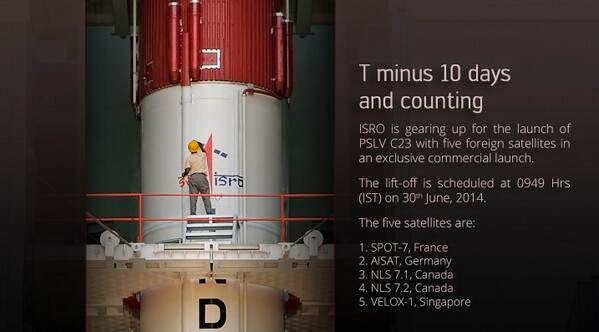
OTOH, poor but technically proficient nations like India should be able to show us how low cost technology can improve human lives, even that of westerners. The Polar Satellite Launch Vehicle (PSLV-C23) today helped launch French, German, Canadian and Singaporean satellites. Modi has also spoken about a South Asian (SAARC) satellite. This will be an excellent confidence building measure.

At the end of the day our goal should be to leave behind a world that treats the next generation more humanely than previous ones. Technology can solve many of the problems but in our opinion we have to find new ways of conflict management at the personal, society, national and global level. The human touch is often free of cost but the most valuable. While developing technology let us not ignore the human touch.
…………….

Prime Minister Narendra Modi hailed India’s low-cost space
technology on Monday, saying a rocket which launched four foreign
satellites into orbit had cost less to make than the Hollywood film
“Gravity.

“India’s domestically-produced Polar Satellite
Launch Vehicle (PSLV) blasted off Monday morning from the southern
spaceport of Sriharikota, carrying satellites from France, Germany,
Canada and Singapore.

“India has the potential to be the launch
service provider of the world and must work towards this goal,” Modi
said from the site one month after coming to power at the head of a
right-wing government.

Satellite launch industry revenues totalled
$2.2 billion in 2012, according to the US Satellite Industry
Association, and India is keen to expand its modest share of this market
as a low-cost provider.

“I have heard about the film Gravity. I
am told the cost of sending an Indian rocket to space is less than the
money invested in making the Hollywood movie,” Modi added.

The
budget of the British-American 3D sci-fi thriller, starring Sandra
Bullock and George Clooney, was about $100 million, according to
industry website IMDb.

Last year, India launched a bid to become
the first Asian nation to reach Mars with a mission whose price tag was
the envy of space programmes world-wide.

The total cost at 4.5
billion rupees ($73 million) was less than a sixth of the $455 million
earmarked for a Mars probe launched shortly afterwards by US space
agency NASA.

Experts say the secret is India’s ability to copy and
adapt existing space technology for its own needs, and the abundance of
highly-skilled engineers who earn a fraction of their foreign
counterparts’ wages.

Modi said the country must be proud of its space programme, developed in the face of “great international pressure and hurdles”.

Western
sanctions on India after the nation staged a nuclear weapons test in
1974 gave a major thrust to the space programme because New Delhi needed
to develop its own missile technology.

…….

Link: http://www.dawn.com/news/1116107/india-hails-rocket-cheaper-than-hollywood-film-gravity

……

regards

Dragon slayer

We think islamists (both dictators as well as non-state actors) are monsters for having killed a few million kaffirs. Those numbers pale in comparison to the 40-50 million Han Chinese who were murdered by Mao. There were sons who snitched on their mothers (who were never heard of again). The Chicoms are ever-ready to roll tanks over civilians. All of this happens without the benefit of a dot of remorse or awareness. If anything they are rather proud of their omlette making skills.

Frankly speaking, everything about China/Chinese scares the shit out of the rest of us. The way the Chicoms can lay down dictates (in the next decade birth rate shall be xxx) and the way the people manage to follow such dictates is scary. The way they declared the entire China sea as their property is scary. The way they performed 400 mil abortions by force (essentially eugenics in all but name) is scary.

Just the thought that someone can beat them is a fantasy. Because in order to do so you must stop feeling scared. You must persuade yourself to NOT drop your rifle (metaphorical or not) and run away at the mere sight of the “yellow peril.”

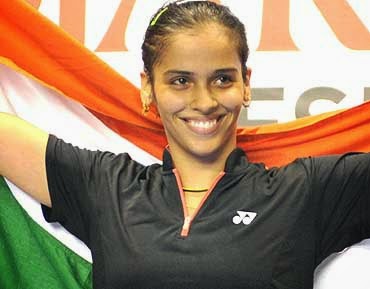
But if you beat them just one time, beat them at their own game, it is like a tiny blob of light that shines out through the fog. Suddenly the fear is gone (even if momentarily). Well done to Sania for having done the impossible.

There is a message in this for India as well. Both Sania and now Smriti Irani (the new education minister) have noted that their families were unhappy with them being born. Just think about that. Abort the world-beaters and you will remain a third-class country for ever. Treasure the girl child and there may yet be some hope to spare. 
……
India’s
Saina Nehwal became the first non-Chinese shuttler to win a women’s
singles Super Series title in 2014 after clinching the Australian
Badminton Open at the State Sports Centre on Sunday.


The
Olympic bronze medallist defeated Spain’s Carolina Marin 21-18, 21-11 in
43 minutes to win her first Super Series crown in 20 months, after
coming out on top in the Denmark Open in October 2012.

The
$750,000 tournament in Australia was the eighth Super Series tournament
this year. The previous seven have all been taken by the top Chinese
shuttlers.

World No. 3 Yihan Wang won in South Korea and
Singapore, World No. 2 Shixian Wang came out victorious at All England
and India while World No. 1 and reigning Olympic champion Li Xuerui won
in Malaysia, Japan and Indonesia.

This was the Hyderabadi’s second title of the season after winning the India Grand Prix Gold in Lucknow in January.

The next Super Series on the circuit is the $500,000 Denmark Open to be held in Odense Oct 14-19.

…..
Ace
Indian shuttler Saina Nehwal stands just a win away from clinching her
second title of the year after she stunned world number two and top seed
Chinese Shixian Wang in a gruelling three-game semifinal contest of the
$750,000 Star Australian Open Super Series here on Saturday.

Sixth-seeded Saina prevailed 21-19, 16-21, 21-15 in a marathon match, which lasted an hour and 16 minutes.

“Beat world number 2 Wang Shixian in a tough 3 game match. Through to
the final of the Australian Open super series!” tweeted the Indian after
recording her fifth overall win against the Chinese nemesis, which took
their head-to-head record to 5-3.

Saina, who had ended up on
the losing side in their previous two encounters — the most recent
being the All England Championships, showed tremendous grit to outsmart
the top-seeded Wang.

As expected, it was evenly-contested battle between the two players, who are pretty familiar with each others tactics.

In the opening game, it went neck and neck till 19-19 before Saina broke away to seal the issue in her favour.

Not the one to give up easily, Wang roared back in the second game. The
two players were even till the 16th point but Wang broke off from that
point to draw level with Saina.

However, Saina proved in the
final battle of attrition and won the deciding third game rather
comprehensively to enter the final.

Saina had earlier this year won the India Open Grand Prix Gold in Delhi.
 
……

Link: http://timesofindia.indiatimes.com/sports/badminton/Saina-Nehwal-first-non-Chinese-to-win-Super-Series-in-2014/articleshow/37454532.cms

……

regards

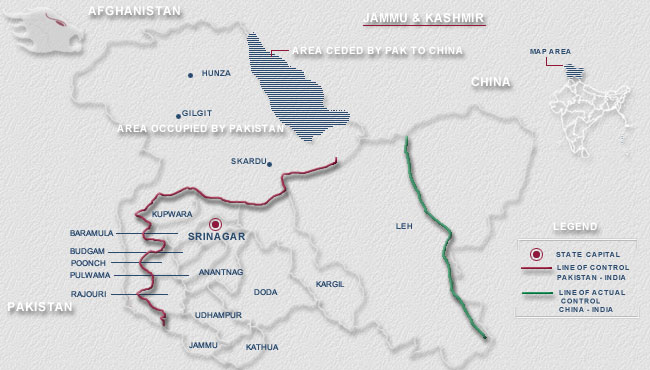
Kashmir: End of Militancy but not of Militarisation

A decade back, More people were dying every month in militancy-countermilitancy associated violence in J&K than there are now in entire year! Total casualties have fallen to the level when militancy began (1988-89) and  unlike the bad old days, most casualties nowadays are of the militants (and not civilians).
Incidents
Civilians
Security Force Personnel
Terrorists
Total
1988
390
29
1
1
31
1989
2154
79
13
0
92
1990
3905
862
132
183
1177
1991
3122
594
185
614
1393
1992
4971
859
177
873
1909
1993
4457
1023
216
1328
2567
1994
4484
1012
236
1651
2899
1995
4479
1161
297
1338
2796
1996
4224
1333
376
1194
2903
1997
3004
840
355
1177
2372
1998
2993
877
339
1045
2261
1999
2938
799
555
1184
2538
2000
2835
842
638
1808
3288
2001
3278
1067
590
2850
4507
2002
NA
839
469
1714
3022
2003
NA
658
338
1546
2542
2004
NA
534
325
951
1810
2005
NA
521
218
1000
1739
2006
NA
349
168
599
1116
2007
NA
164
121
492
777
2008
NA
69
90
382
541
2009
NA

55

78

242

375

2010
NA
36
69
270
375
2011
NA
34
30
119
183
2012
NA
16
17
84
117
2013
NA
20
61
100
181
2014
NA
10
16
42
68
Total*

47234

14682

6110

22787

43579
*Data till June 22,
2014 (Source: South Asia Terrorism Portal) 

In an
ideal scenario, end of militant violence ought to be followed by
demilitarisation and a political settlement with the weakened militant
elements. The script has been played out in Bodoland, Nagaland and Mizoram with
decent results (though inter-ethnic/tribal violence is yet end in Nagaland and
Bodoland). There has indeed been less visible military presence in Valley’s cities. But, right now, prospects of complete demilitarisation or any significant ‘drawdown’ from Valley’s internal cities seem
dim for several reasons:
  1. Elections and a cautious
    Indian State:

    Kashmir Valley recorded the lowest regional turnout in Indian
    Parliamentary elections. Barring Kupwara district and a few Shia/Gujjar
    dominated pockets; Separatists largely succeeded in ensuring a boycott in
    Valley- at places (Srinagar’s Bemian, Sopore) through genuine sympathy for
    Hurriyat’s call; and at other places (rural South Kashmir) through
    assassination of Panches & creating a fear-psychosis. This has been a slap on the face for Indian State. Now, the State assembly elections are
    due later this year. Usually, State and Panchayat (unlike National)
    elections, record decent turnout in Valley. Given the ignominy faced in
    Parliamentary polls, Indian state would not like to do anything radical,
    that holds the potential to spoil the state elections (and discredit
    itself further).
  2. BJP in Centre: With BJP in Power, even Article 370, is no longer a holy cow. 
    Defence Minister Jaitley has already made trips to Srinagar,
    mainly to assess the Security preparedness against Terrorist
    threats. Modi will do the same in early July.  
  3. Kashmiri Pandit Repatriation:
    There have been some
    overtures by Central and State Government, for resettling Kashmiri Pandits
    in Valley. Whether these overtures materialise or not, talk for the same
    means there will have to be Central security forces in valley to reassure
    Pandit community.
  4. Af-Pak muddle next door and
    ISIL, Al-Shabab, Boko-Haram adventures in far off lands:
    Requires no further elaboration.
There is
little doubt that in past, Central Governments in Delhi have acted in a
autocratic manner (spark for insurgency itself was started by a rigged state
assembly election in 1987) and there exists a really huge and horrible laundry
list of rights violation by the security forces stationed there with virtually
no convictions. At times, Kashmiri students have also been attacked by their
hypernationalist college mates in North India.
Having
said that, It has to be recognised that (unlike her esteemed neighbors) as of
today; Kashmir is free of polio, and (unlike Syrians, Afghans, Sri Lanka’s
Tamilians and Pakistan’s Ahmedis/Shias) Kashmiris are not jumping onto
overcrowded boats in Indian ocean or crossing over to neighboring countries for
political or religious asylum (infact many
who did cross LoC, at peak of militancy, now wish to return home
).
Nor do Kashmiris go around blowing themselves in mainland Indian cities. Also
despite out-migration of Valley’s Pandits and multiple attacks by separatist
militants in Jammu’s temples and pilgrims in past, by and large, Jammu region’s
communal harmony has been retained (leaving aside 1947 killings). Things could have been a lot  worse. Credit (be it
to the local culture or the Security forces) must be given, where it is due.
Or is it a case of Confirmation Bias? I am
no longer in immediate demilitarisation camp
A year
back, I would have backed complete demilitarisation of Valley and handing law
and order entirely to Local Police. But events in Iraq, Nigeria and Pakistan
have turned me into an agnostic inclined towards holding one’s ground. Given the existing popular disenchantment amongst
the Sunni Kashmiri majority and presence of significant Islamist firepower in region; there
is a very realistic chance of many a cities
falling into the hands of Islamist militants as soon as Central
military/para-military forces withdraws- assuming here that J&K State
police is no better than State Police elsewhere in India and like Iraq- if push
comes to the shove, Police may very well switch sides or simply run away
This, in my view, will
not be followed by any dawn of Azadi. Instead like Waziristan, Northern Sri Lanka, and now Tikrit; Fighter Jets and heavy artillery may end up bombing the
entire place to retake cities, causing major civilian casualties and mass
migrations. Kashmiri separatists, even with Pakistani assistance, are too small a lot to defeat India by force. How all of this will impact with Jammu’s (if not rest of India’s)
multireligious settlements is anybody’s guess. What looks certain is that, end
result could very well be far far worse than the present ground situation and
would take decades to heal. For long-lasting peace and prosperity in Kashmir Valley, A popular
political reconciliation/settlement in a hate free environment has to be the
goal; but at the moment, priority, has to be not allowing Kashmir to descend into
a Syria/Afghan level hellhole.

Indian Navy on watch at the Gates of Hell

The old man implores comrades to repent…”Look at me, I am digging my own grave…”. The video ends abruptly with what
looks like the swish of a blade falling upon the victim and a
one-word caption: “slaughtered”.

It is starting to look like a real Grapes of Wrath scenario. Indian warships have now moved to the Persian Gulf and emergency evacuations may be ordered. Last time such mass scale evacuations happened were the Libyan war in 2011 and the Israel-Hezbollah war in 2006 (when 2,500 Indians, Sri Lankans and Nepalese migrants were evacuated from Lebanon).

Our heart goes out to the hundreds of men (also women) who must be in mortal danger from these all-out loonies. A serious suggestion for people who are in touch- please request the captives to convert to Islam. It may mean the difference between life and death. Nothing matters apart from survival- you do not want to be digging your own grave.
….

An Indian naval warship reached the
Persian Gulf on Saturday as part of New Delhi’s contingency plans for a possible
evacuation of Indians stranded in Iraq.
The navy has deployed INS Mysore, a
6,900-tonne guided missile destroyer, in the Persian Gulf to cut down on
reaction time if orders for evacuation are given.
A navy source said there was no
official word on a possible evacuation but the warship had been put on standby.
“We have assets deployed in the western Arabian Sea and these could be
used to bring back Indian nationals if required,” he added.
INS Mysore was among the warships
involved in evacuating Indian nationals from Libya more than three years ago.
 
Another
warship, INS Tarkash, is in the Gulf of Aden. Though INS Tarkash is
there for anti-piracy operations, it is ready to take on any new task,
sources said.

The navy had evacuated more than
2,500 Indians and foreign nationals from Lebanon in July 2006 following the war
between Israel and the Hezbollah.

….
As jihadists storm through the
Sunni heartlands of Iraq towards Baghdad, where a Shi’ite
government they regard as heretic clings on, they have lifted
the veil on deep sectarianism which has also stoked the fires of
Syria’s civil war and is spilling over into vulnerable mosaic
societies such as Lebanon.

The sectarian genie is now well out of the bottle, eclipsing
traditional inter-state rivalries that plague the Middle East –
even if these still play a part in the drama.


..
“There is no sense of common identity and therefore wherever
there is a division of power like in Lebanon, Syria, Iraq and
Bahrain they end up fighting over who wins. It has become a
winner take all situation,” said Middle East academic and former
State Department official Vali Nasr, also a Senior Fellow at
Brookings Institution.
“This is being driven from both top down and bottom up.”


Glimpses of the savagery of this sectarianism have
multiplied as the Islamic State in Iraq and the Levant (ISIL),
an al Qaeda splinter group which aims to carve out a Caliphate
in the heart of the Middle East, captured a string of north and
central Iraqi cities in June.


One video posted by ISIL shows its fighters storming the
house of an old man and accusing him and his two young sons of
fighting in the Iraqi army under Nuri al-Maliki, the Shi’ite
Islamist prime minister.


As the captives dig their own graves, a fighter taunts them,
“You’re tired, Yes? Dig, dig more, where is Maliki to come and
save you? Why did you join Maliki’s army?”


The old man implores comrades to repent and break ranks with
the army, saying: “Look at me, I am digging my own grave, they
came to my home and took me”. The video ends abruptly with what
looks like the swish of a blade falling upon the victim and a
one-word caption: “slaughtered”.


An ISIL leader reached by Reuters via Skype makes clear this
brutality is a considered policy as his movement builds its
cross-border Islamic State.


“We will deal with Maliki’s followers and his filthy state
according to righteous Islamic law”, he says. “Whoever comes to
us repentant before we have the upper hand upon him, will be one
of us; but the one who insists in fighting us and on his
infidelity and apostasy, he’ll have to face the consequences”.


Disowned even by al-Qaeda, ISIL has taken hate speech to a
new level in Iraq, denouncing Shi’ites as “dogs of Maliki”, or
as “reviled and impure rejectionists (rafadah)”.


They proclaim that “death is the only language the Shi’ite
Marjaiyah (clerical leaders) and their rotten gangs understand”.


The Shi’ite side has responded in kind, posting videos of
Sunnis being executed. In one, groups of men shot randomly, some
in the head, lie next to each other in what appears to be a room
with blood splashed on the wall and bullet holes everywhere.


….
Religion, many analysts say, is being deployed as a weapon
to galvanise rival interests, but is taking on a virulent
sectarian life of its own, sometimes escaping the control of
those wielding the weapon.


“National identities in these countries are eroding and
sectarian identities are becoming more prominent,” Nasr said.


….
In Iraq, says Professor Charles Tripp at London University’s
School of Oriental and African Studies, the process began in the
1990s when Saddam Hussein, the dictator toppled in 2003, started
a “piety campaign” to solidify support for his otherwise secular
regime in the face of crippling international sanctions.


….
This indiscriminate encouragement of Sunni Salafism and
Shi’ism encouraged “sectarian entrepreneurs who found it very
profitable to mobilise people around religion or sect”.


….
In a process which continued under Maliki, the poison of
sectarian prejudice hardened into bigotry, exploited by leaders
who fell into “an awful bidding war” to claim religious
legitimacy, Tripp says. Regional players also cloaked their
pursuit of geopolitical advantage in religion, he adds.


While enmity between Islam’s two competing sects has often
been fierce and bloody, it now spreads over huge swathes of
territory from the eastern Mediterranean to Iraq, the Gulf and
Yemen.


“It is neither solely religious nor purely political; the
two mix and feed upon each other, with personal interests and
geopolitical confrontations pouring petrol on the flames,” said
Tarek Osman, author of the “Perilous Scenario in the Eastern
Mediterranean.”


Sectarian wars, Osman says, are also occurring at a time
when Arab societies are undergoing a transformation from the old
political order following the ousting of autocratic leaders, who
have ruled for decades to a new, as yet undefined, order.


And for the first time in the last 150 years, the region is
witnessing the emergence of highly assertive, well-armed,
jihadist groups that are dominating the plains from eastern
Syria to western Iraq, and gradually carving for themselves
quasi-statelets that they aim to have as permanent entities.


“If that happens, it will not only be a peril to all
sovereign states in this part of the world, not only to
religious minorities, but to all of the societies,” Osman said.


On the ground, it is hard to imagine Maliki regaining Sunni
provinces he lost to ISIL with Iraq’s army, a force which exists
more on paper than on the ground. But regaining it with
Iranian-trained Shi’ite militias such as Asa’ib Ahl al-Haq is
also a recipe for sectarian slaughter, experts say.


Many predict the fighting will go on until all sects – from
Syria to Iraq – Shi’ites, Sunnis, Kurds and Alawites carve up
their own fiefdoms even if they stay within the same
international borders.


The clearest emerging enclave is the northern Kurdish
autonomous region, which has been more than 20 years in the
making and which experts say could be permanent.

….

Link (1): – http://www.hindustantimes.com/world-news/iraqonthebrink/indian-navy-deploys-warship-in-persian-gulf/article

Link (2): http://in.reuters.com/
….

regards

Animal carers, please beware!!!

The first lesson of driving that we remember is what to do when you encounter a deer on the road (upstate New York is full of deers and too many related accidents).

Now we have a duck(ling) lover who parks her car recklessly and goes looking for the mother of the little ones…as a result a father and daughter will never come back home….now the animal lover gets a life sentence….so many wrongs will never add up to make a right. 

A
Canadian woman who parked her car on a highway to help a group of
ducklings on the side of the road was found guilty of causing the deaths
of a motorcyclist and his passenger daughter who slammed into her car.


Emma Czornobaj was convicted by a jury on two counts of criminal
negligence causing death, a charge that carries a maximum life sentence,
and two counts of dangerous driving causing death, which comes with a
maximum of 14 years in jail.


The 25-year-old was charged with the deaths of Andre Roy, 50, and his
daughter Jessie, 16. She wiped away tears when the verdict was
delivered to a packed courtroom in Montreal.  

Quebec Superior Court
Justice Eliane Perreault said the 12 jurors voted unanimously.


Roy’s motorcycle slammed into Czornobaj’s car, which was stopped in
the left lane of a highway south of Montreal in 2010. Czornobaj, a
self-professed animal-lover, told the court that she did not see the
ducklings’ mother anywhere and planned to capture them and take them
home.


Defence lawyer Marc Labelle said his client was stunned by the jury’s decision.

“The fact that she was involved in the accident in the first place
was a hard experience for her,” he said. “The fact that she had to go
through a trial with a lot of publicity was tough and to be confirmed by
12 citizens, the jury, that the conduct was criminal is a hard blow.”


Pauline Volikakis, whose husband and daughter were killed in the
collision, briefly fought back tears when she left the courtroom. “I
don’t wish misfortune on anyone,” Volikakis said. “It’s time that we go
on. This will not bring (back) my loved ones.”


Prosecutor Annie-Claude Chasse had a warning for motorists: “What we
hope is that a clear message is sent to society that we do not stop on
the highway for animals. It’s not worth it.”

…………………

Link: http://www.scmp.com/news/world/article/1537916/canadian-woman-guilty-causing-deaths-after-parking-car-help-ducks

…..

regards

“I felt shocked, surprised, dazed”

“You ..will lose all of us. We may never
associate ourselves with you again. Please cancel this event. We will
all stick together.” 

The cultural Left was probably stronger (and more ruthless) when it was dominated by upper-class (super-caste) marxists.  However with their political fortunes evaporating marxists are losing out in the cultural stock market as well.

The Lenin-Mao devotees are now being supplanted by Ambedkar worshipers, with upper-class neo-dalits such as S Anand in leadership roles (somethings will never change). Such an organic (and indigenous) movement will hopefully be more resilient against the forthcoming right-wing onslaught.
……

Dear Ranvir Shah and friends at Prakriti Foundation, Chennai


Recently (19 June 2014), when I received the latest email invitation
from Prakriti for a book launch, I almost did not register what I was
seeing. Then I asked myself “who is this poet Ravi Mantha and why does
he look like Modi?” It took me a minute to figure out he was actually
the translator of Modi’s so-called poems, published as A Journey by Rupa. I felt shocked, surprised, dazed.


Modi and poetry? And Ranvir Shah/Prakriti launching this? Does
Ranvir believe there’s any merit in Modi’s verse—described as “poems on
love and longing, devotion to god and nature”—as translated by Ravi
Mantha?
 

Since Prakriti has hosted themed documentary festivals (one of which I had curated in 2007) and since Prakriti has curated an annual poetry festival
in which scores of young and old poets, men and women, of all castes
and religions, of all languages and regions, of all sexual
orientations, artists of varying talents and factions, of different
races and nations, have read their work, I find your promotion of
Modi’s book of poems deeply disturbing. 

Especially since you said in an
interview:
“My own inspiration has come from celebrated names in poetry,
including Walt Whitman, A.K. Ramanujan and Arvind Krishna Mehrotra, who
have moved me immensely.” Do we need to remind you what happened to
Ramanujan’s book in Delhi University, and the forces that were behind it?


….
Since I have known you personally, and since you have supported
Navayana’s work earlier, I thought I should keep an open mind and talk
to you. Did you really see merit in this book? And that’s why I called
you. I just wanted to ask you why you were doing this.  I am sure you
had thought this through, but I still wanted to hear you out. 

Your
defence shocked me more. You said, this was just a “marketing tactic”
and you said you were doing this so that more people come to your Amdavadi Snack House
in Chennai, and eat your dhoklas and theplas. “If Modi’s poetry will
bring them in, so be it.” I could not believe this. I felt angry and
even betrayed.


I kept asking whether you saw any merit in Modi’s poetry.
You never answered that question. After my call, you said you
understood my concerns and anxieties and said you will write a mail to
me. That mail has not come, despite reminders; it may never be written. 

So I am asking you now, in public, through this open letter to you,
especially since I feel I can speak for the many poets
whose work I love and respect (some of whom Navayana has
published)—Ranjit Hoskote, Meena Kandasamy, Sukirtharani, N.D.
Rajkumar, Shaikh Yakoob, Prabodh Parekh,Cheran, the late Dilip Chitre,
Kynpham Sing Nongkynrih, Kutti Revathi, Michael Creighton, K.
Satchidanandan, Jerry Pinto, Karthika Nair, Tenzin Tsundue, Vivek
Narayanan, Nirupama Dutt, Nabina Das, Danish Hussain, etc.—poets who
have read their works at your poetry festival, poets who have read the
works of dead and living poets that they have taken the pains to bring
alive through translations. Poets, artists, academicians, filmmakers and
many citizens who have not participated in or attended any Prakriti
event will also wonder why.


I told you, “You may get people who think Modi can write poetry to
visit your snack house. But you will lose all of us. We may never
associate ourselves with you again. Please cancel this event. We will
all stick together.” You of course made it clear you will not do that. I
am also not sure if I can speak for others who may continue to attend
your festivals, learn to move on, etc. 

Much earlier, Chandrahas Choudhury, the fiction and poetry editor at Caravan
magazine, wrote about “the surprising poignancy of Narendra Modi’s
poetry”. That was an individual writing in a public blog, and this
largely went unnoticed, though I meekly expressed my amusement.
The translator, now your guest, even thanked Choudhury for “looking at
these poems largely through literary eyes”. I suppose such
ground-clearing exercises have led us to this moment of reckoning.


….
Believe me, I—and many like me—would have been as upset had you
organised a launch for Kapil Sibal’s poems. But perhaps, yes, we would
have been also a little amused. But with Modi, not so much. One of the
things you told me on the phone was: “Anand, I am not political.”But as I
said, the very act of hosting a launch for Modi’s book of poems is
political; and I reminded you that Navayana and the work I do are indeed
intensely political. Neutrality is the most vulgar political position,
especially when the most bigoted partisans are calling the shots and you
want to play along, and even host them.


….
You are helping the launch of a book whose author has a missionary friend called Dinanath Batra, who has been targeting one book after another and seems to have a huge list. (Megha Kumar’s ‘withdrawn’ book is about Ahmedabad
—will you help her launch it at your Amdavadi if someone finally
manages to publish it?) His other friends at the RSS, one of India’s biggest NGOs , have been trying to smuggle in their bigoted version of history into textbooks . 

And as I write this, yet another Shubha Mudgal concert has been cancelled, in Banaglore this time. She was also bullied recently by a ‘Modi fan’. And academicians are being denied visas to India, NGOs and civil society groups are being targeted.


And now you say you just want to just sell dhokla through what passes for poetry. I hope we can induce you to rethink.

……

Link: http://www.outlookindia.com/printarticle.aspx?291154

…..

regards

Sarees are beautiful (but no forcing)

The ruling is quite correct in our opinion, even if we do happen to love sarees- a thumbs down for the patriarchy, howsoever insignificant is always welcome. A kurta-jeans combination probably works best for both working men and women.

Speaking of sarees it would be nice if the elite class – the one which moves from air-conditioned house to a/c car to a/c shop to a/c workplace – patronizes the dress a bit more. The working class really cant afford that simple looking but elegant cotton saree @ 5,000 rupees. Such patronage will help keep the small-scale saree weavers solvent. Certainly the ladies can afford to do a bit for the artisan class, no?
…………………………….

Objecting to wife wearing Kurta and
Jeans and forcing her to wear saree amounts to cruelty inflicted by
husband and can be a ground to seek divorce, a family court here has
ruled.


The wife pleaded that after marriage in December 2010, her husband did
not buy her any clothes and therefore she had purchased Kurta and Jeans
from her salary earnings. However, the husband did not allow her to wear
them, saying she should wear only sarees.


In her order was passed on June 24, Principal Judge of Family Court, Dr
Laxmi Rao, granted divorce to the wife on the ground of cruelty as
defined under section 27(1)(d) of Special Marriage Act, 1954.


“In view of the averments made in the petition which have gone
unchallenged, it can be said that the petitioner has proved her case,
hence, she can be granted divorce as prayed by her. Her plea that she
was restrained from wearing jeans and Kurta amounts to cruelty as
defined under the Act,” the judge held.


The wife further alleged that her husband and in-laws had asked her to
bring Rs one lakh from her house or face dire consequences. They also
asked her to quit her job but she had refused to toe their line.


The wife alleged that she was tortured and humiliated as a result of
which she suffered mental depression and her life became miserable. She
also alleged that her in-laws harassed her on one pretext or the other
and warned that if she failed to bring dowry she would face dire
consequences.


The wife told the court that on March 15, 2011, she was thrown out of
her matrimonial house as she failed to bring the money. Since then till
date she is compelled to stay at her parents house at their mercy as she
is now jobless.


The petitioner said that her husband had never made attempts to bring
her back home in Ambarnath town of Thane district where the couple
lived. On the contrary, he sent vulgar SMS messages to her and her
parents on their mobile phones in a bid to harass them and damage their
reputation.


The wife said she had lodged a police complaint against her husband who
worked in a BPO in suburban Malad and earned Rs 28,000 per month. 

“I find that she has made out a case for divorce as contemplated
under section 27(1)(d) of Special Marriage Act, which contemplates that a
divorce can be granted if respondent has treated the petitioner with
cruelty,” the Judge observed.


However, the court, while granting divorce, rejected the wife’s plea for
permanent alimony of Rs 10,000 because her application for maintenance
is pending in the court. The Judge also asked the husband to pay Rs
5,000 to wife towards cost of litigation.

…….

Link: http://www.outlookindia.com/news/printitem.aspx?847068

…….

regards

The man without a face

Rumor has it that Mediène receives visitors with his back turned,
and that if you see his face, it’ll be the last one you ever see.

Most people are (understandably) impressed by the workings of the #1 secret service in the world. But the account below of the man who heads the Algerian secret service DRS is awe-inspiring as well.
….
The most powerful man in Algeria has no public face.
His name is
Mohamed Lamine Mediène. Everyone calls him “Toufik.” Another nickname
is the “God of Algiers,” supposedly because he’s more powerful than the
president.


No official photograph of Mediène has ever been made public.
The pictures of him that do exist are few and blurry, and may be decades
old. Rumor has it that Mediène receives visitors with his back turned,
and that if you see his face, it’ll be the last one you ever see.


An Algerian dissident who blogs under the name Baki Hour Mansour
analyzed several photos that claimed to represent Mediène and found them
all lacking: “Finding Toufik has
become a Where’s Waldo-type game: whenever a film or an archive emerges
and an unknown face is seen among senior officials, the Algerian
blogosphere hastens to declare it a new Toufik face,” he wrote.  

Does
Mediène actually exist? Experts say yes. 

As head of Algeria’s
multitentacled DRS, or intelligence and security department, Mediène is
in charge of le Pouvoir, a shadowy cabal of generals, politicians and spies that constitutes Algeria’s deep state.
 

Mediène has led the DRS since 1990, which, according to some sources,
makes him the longest-serving intelligence chief in the world. He is 73
years old, spritely in comparison with the ailing president, Abdelaziz
Bouteflika, who is 76. There are pictures of Bouteflika, but usually
only from the waist up. (He spent the summer in a Paris military
hospital, convalescing from a stroke.) 

In some ways, the secrecy
surrounding Mediène is just “built into the profession,” says Dr. Chuck
Cogan, a retired CIA official at the Belfer Center, part of Harvard’s
John F. Kennedy School of Government.
 

Also, Algeria is among the largest
remaining muhkabarats , or police states, in the world. Though
political repression has lightened somewhat since the 1990s, many
Algerians still view their neighbors and strangers as potential “snakes,” or spies, and there is a widespread culture of suspicion. 

Where is this man?

But
Mediène’s invisibility also has roots in Algeria’s battle for
independence against France, which lasted from 1954 to 1962. It was
largely a guerrilla campaign, complete with noms de guerre and moles and
infiltration techniques.


When Medèine and his peers came to rule, they
held on to the rebel mindset, says Lazare Beullac, editor in chief of
the Maghreb Confidential,
a Paris-based newsletter on the region aimed at investors, diplomats
and security officials. “Everything was very secret, and that secrecy
was imported into the FLN [the leading political party], the army and
the intelligence services.”

Vish Sakthivel, a fellow at the Washington Institute for Near East Policy,
says that secrecy fortifies Algeria’s deep state and shields it from
critique. The theory is: “Stay out of the forefront of people’s minds,
and if bad things happen, then Bouteflika can take the blame.”

There is probably a lot to be blamed for. In addition to political repression and economic discontent
— some 70 percent of Algeria’s population is under the age of 30, and
many are unemployed — there is also a critique that the state isn’t
doing enough to ward off Islamists. 

The In Amenas hostage crisis of
January took the regime by surprise and showed Algerians that le Pouvoir
wasn’t as savvy as it had claimed. The regime’s reaction was swift,
blunt and brutal. At least 38 hostages and 29 Islamist militants were killed along the way. 

Despite
revolutions throughout the region in recent years, Algeria remains
stable largely because of public spending, analysts say. And the country
has some $200 billion in oil and gas reserves, which can go a long way
toward forestalling revolution.


But le Pouvoir
is so old that it is nearly decrepit, and with elections due in 2014,
there are serious questions about what will happen next in Algeria. Last
month, after returning from medical treatment in France, Bouteflika shook up the DRS, taking much of le Pouvoir away from Toufik and resettling it with the military.

Longtime
Algeria watchers are not quite sure what to make of the move. 

“If you’d
told me this would happen two months ago, I’d have said it’d be
impossible — but it literally happened with the stroke of a pen,” says
Jeremy Keenan, a professor at London’s School of Oriental and African
Studies and an expert on the region. He says that it’s one of the
biggest political shake-ups in the region, but that it’s hard to tell
why it’s happening. “In my view, there’s nothing left to the DRS other
than its name,” says Keenan. “With the result that Mediène is left with
nothing.” Keenan also says he has heard from two independent and reliable sources that Mediène is in a Swiss hospital.

Which
points up another theory as to why Toufik’s face is a state secret: He
doesn’t want the world to know how old he is. “It’s good to be old, but
it’s important to appear youthful and able,” says Sakthivel. The regime
is often accused of being a gerontocracy, and Algerians are wont to
opine what might happen when the country’s leaders finally die off. “And
they don’t want people to have those conversations,” she says.

….


….
 
regards 
 

Who should win the next Noble?

The next Nobel
Peace Prize … should go to the thinker or leader who develops a model of
constitutional theocracy giving Muslim countries a coherent way of
recognizing yet limiting the authority of religious law and making it
compatible with good governance.

The way we interpret the article, Mark Lilla (sort of) regrets the fact that communism (which had all the good theories but bad practices) has been replaced by islamism (bad theory as well as bad practice). He is also clear that the goals of American foreign policy (more democracy everywhere) and European foreign policy (neo-liberalism everywhere) are badly flawed as applied to majority of non-democratic nations.

According to Lilla, Middle East North Africa will only be liberated when a giant (muslim) thinker/leader comes forward with a set of (divinely inspired but realistically best-fit) rules that will work for the diverse societies that call themselves muslim (he admits that such a great man is not yet amongst us). Till then he advises the world to be patient (and presumably watchful). 

Not a bad advice at all (especially if it cuts down on the war-making). However it is important to admit upfront that such an attitude/policy spells doom for the non-muslim minorities (as well as many muslim ones). If Lilla advocates generous asylum considerations for such people he should say so. If anti-immigrant sentiment in the West prevents such accommodation then the West and Westerners should abandon the holy high ground and quit the holier-than-thou talk. No one is impressed by the tall hat and short cattle initiatives – it may well be that foreign aid does more harm than good – least of all the bloody monsters that are thick on the ground.

A couple of points that are not addressed in the article:
(1) This strategy of (not so) benign neglect on behalf of the West ignores the ongoing and pernicious influence of (to a smaller extent) Iran and (the primary villain) Saudi Arabia. The question is how to stop the petro-dollars from causing so much strife, especially since the West relies on the Saudis to sell oil and buy armaments.  
Here we should recognize that Carlotta Gall was wrong, the right country to fight is neither Afghanistan nor Pakistan but S.A. (the real/spiritual home of the 9/11 perps).


(2) What happens to muslims in non-muslim countries who get radicalized by all the killings and sufferings of innocent muslims (that we are supposed to silently tolerate from a distance)? If the war comes to the West (and non-West countries as well) how do we handle that?  

……

But in the mind of America’s political and journalistic classes, only two political categories exist today: democracy and le déluge.
If you assume that democracy is the only legitimate form of government,
that is a perfectly serviceable distinction.
“What should not be,
cannot be,” wrote the German poet. Unable or just unwilling to
distinguish the varieties of non-democracy that exist today, we instead
speak of their “human rights records,” which tell us much less than we
think they do. 

….
We turn to organizations such as Freedom House, a think
tank that promotes democracy and publicizes human rights abuses around
the world. It produces an influential annual report, Freedom in the World,
which claims to quantify levels of freedom in every country on Earth.

It gives them marks on different factors (rights to political
participation, civil liberties, the press, etc.) and then combines those
figures into a composite index number that indicates whether that
country is “free,” “partly free,” or “not free.” 
The document reads like
a stock report: “this marks the seventh consecutive year in which
countries with declines outnumbered those with improvements.” In 2013,
readers were confidently told that, based on the numbers, the “most
noteworthy gains” in freedom in 2012 had been in Egypt, Libya, Burma,
and Côte d’Ivoire.
One hardly knows where to begin. 
Clearly,
the big surprise in world politics since the cold war’s end is not the
advance of liberal democracy but the reappearance of classic forms of
non-democratic political rule in modern guises. ….
The break-up of the
Soviet empire and the “shock therapy” that followed it produced new
oligarchies and kleptocracies that have at their disposal innovative
tools of finance and communication; the advance of political Islam has
placed millions of Muslims, who make up a quarter of the world’s
population, under more restrictive theocratic rule;
tribes, clans, and
sectarian groups have become the most important actors in the
post-colonial states of Africa and the Middle East; China has brought
back despotic mercantilism. 
….
Each of these political formations has a
distinctive nature that needs to be understood in its own terms, not as a
lesser or greater form of democracy in potentia. The world of nations remains what it has always been: an aviary. 
….
But
ornithology is complicated and democracy-promotion seems so much
simpler. After all, don’t all peoples want to be well governed and
consulted in matters affecting them? Don’t they want to be secure and
treated justly? Don’t they want to escape the humiliations of poverty?
Well, liberal democracy is the best way of achieving these things.  
That
is the American view—and, true enough, it is
shared by many people living in non-democratic countries. But that does
not mean they understand the implications of democratization
and would
accept the social and cultural individualism it would inevitably bring
with it.  
No peoples are as libertarian as Americans have become today;
they prize goods that individualism destroys, like deference to
tradition, a commitment to place, respect for elders, obligations to
family and clan, a devotion to piety and virtue.
If they and we think
that they can have it all, then they and we are very much mistaken.
These are the rocks on which the hopes for Arab democracy keep
shattering.

….
The truth is that billions of people will not be living in
liberal democracies in our lifetimes or those of our children or
grandchildren—if ever. This is due not only to
culture and mores: to these must be added ethnic divisions, religious
sectarianism, illiteracy, economic injustice, senseless national borders
imposed by colonial powers … the list is long.
 

….
Without the rule of
law and a respected constitution, without professional bureaucracies
that treat citizens impartially, without the subordination of the
military to civilian rule, without regulatory bodies to keep economic
transactions transparent, without social norms that encourage civic
engagement and law-abidingness—without all of
this, modern liberal democracy is impossible.


So the only sensible
question to ask when thinking about today’s non-democracies is: what’s
Plan B?
 

….
Nothing reflects the bankruptcy of today’s
political thinking more than our unwillingness to pose this question,
which smacks of racism to the left and defeatism to the right (and both
to liberal hawks).
But if the only choices we can imagine are democracy
or le déluge, we exclude the possibility of improving
non-democratic regimes without either trying forcibly to transform them
(American-style) or hoping vainly (European-style) that human rights
treaties, humanitarian interventions, legal sanctions, NGO projects, and
bloggers with iPhones will make a lasting difference. These are the
utterly characteristic delusions of our two continents.
…..
The next Nobel
Peace Prize should not go to a human rights activist or an NGO founder.
It should go to the thinker or leader who develops a model of
constitutional theocracy giving Muslim countries a coherent way of
recognizing yet limiting the authority of religious law and making it
compatible with good governance. This would be a historic, though not
necessarily democratic, achievement.
…..
No such prize will
be given, of course, and not only because such thinkers and leaders are
lacking. To recognize such an achievement would require abandoning the
dogma that individual freedom is the only or even the highest political
good in every historical circumstance, and accepting that trade-offs are
inevitable. It would mean accepting that, if there is a road from
serfdom to democracy, it will, in long stretches, be paved with
non-democracy—as it was in the West. 
….
I am
beginning to feel some sympathy for those American officials who led the
occupation of Afghanistan and Iraq ten years ago and immediately began
destroying existing political parties, standing armies, and traditional
institutions of political consultation and authority. The deepest reason
for this colossal blunder was not American hubris or naïveté, though
there was plenty of that. It was that they had no way of thinking about
alternatives to immediate—and in the end, sham—democratization.
Where should they have turned? Whose books should they have read? What
model should they have relied on? All they knew was the prime directive:
draft new constitutions, establish parliaments and presidential
offices, then call elections. And after that, it was the deluge indeed.

…..

Link: http://www.newrepublic.com/article/118043/our-libertarian-age-dogma-democracy-dogma-decline

…..

regards

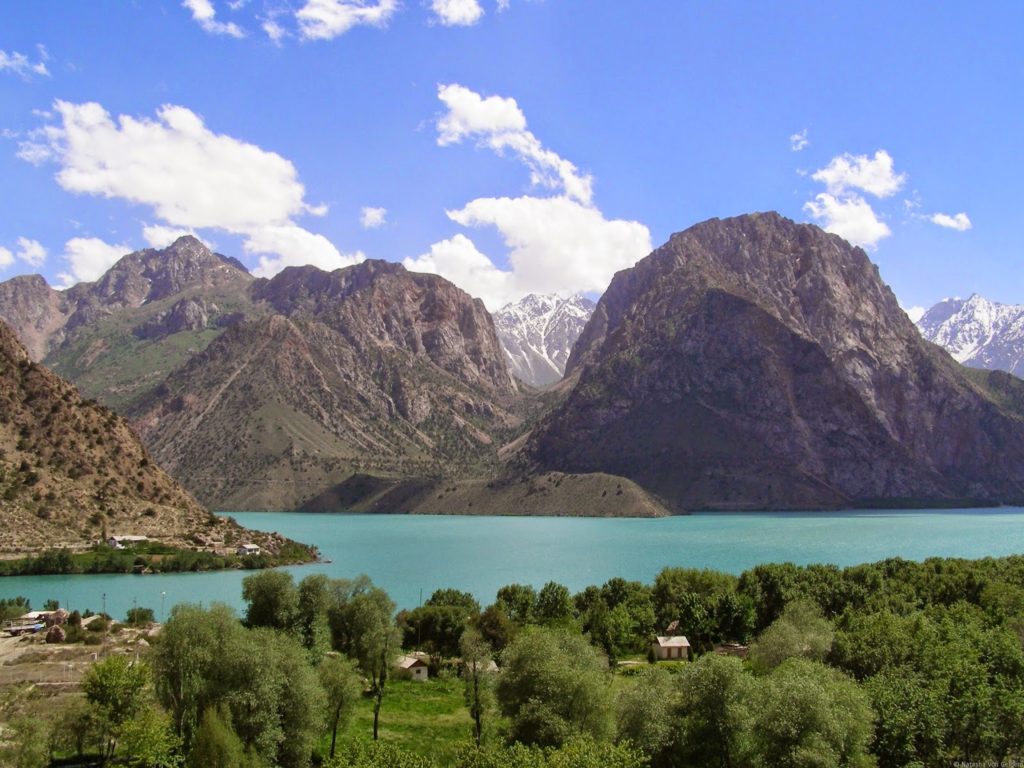
Mt. Aga Khan – highest peak of the Pamirs

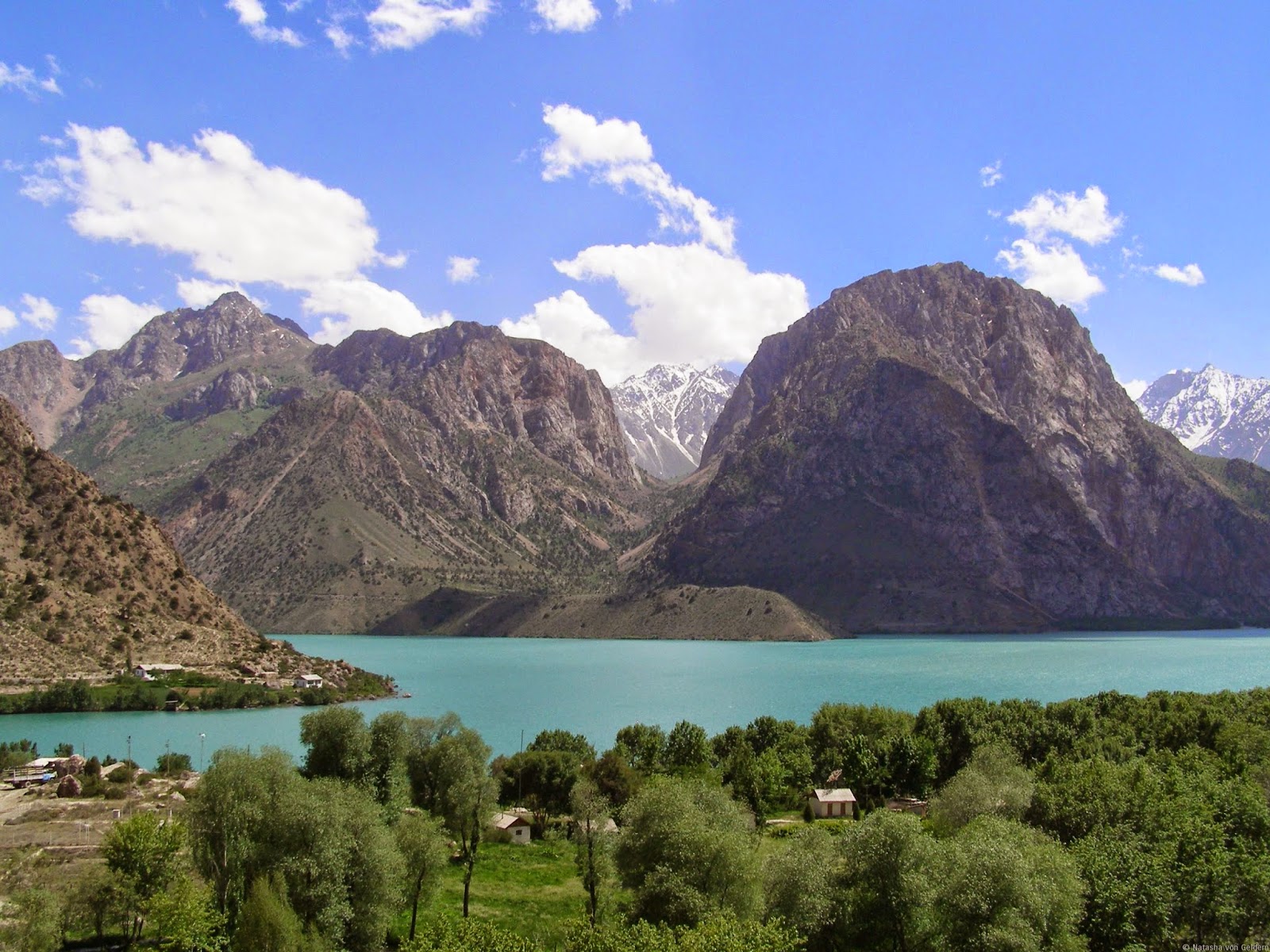
In Buddhist/Hindu doctrine/mythology the gods reside on mountain tops. Hence
it was a tradition amongst Himalayan climbers not to step on the last
peak-inch. Apparently in the Pamir plateau-land of Tajikistan it is Aga
Khan (for background see wiki reference below) who inspires a similar devotion amongst the people.

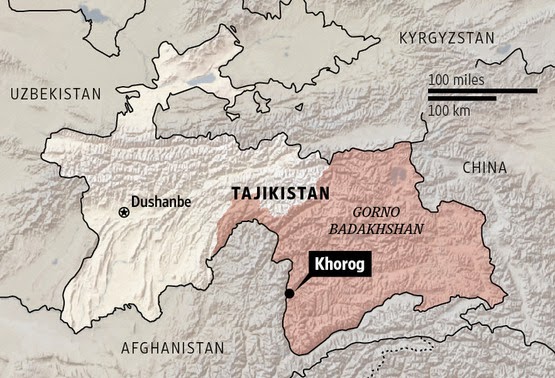
Geographically, Khorog (capital of Pamir/Gorno Badakshan) borders north-eastern Afghanistan and is not so much distant from Gilgit and Kargil. Is it just a coincidence that the mountain people are in general, followers of a less-followed (religious) path than the plains-people? At any rate, when the going gets tough (and it is already extremely tough), the thugs from the plains will find the terrain to be very rough indeed. Let God (and Aga Khan) give strength to the dissenters to fight for justice (and truth).

….
The Pamirs are home to the
Pamiri people, who speak a different language from other Tajiks, and
follow the Ismaili branch of Shiite Islam (most Tajiks are Sunni). 

Many
of Tajikistan’s roughly 135,000 Pamiris have come to see themselves as
victims of a chauvinistic dictatorship that wants to suppress their
culture. Pamiris are among the strongest opponents of President Emomali
Rahmon, whose 22-year rule over Tajikistan has become more and more
kleptocratic and nepotistic.

….
In
the summer of 2012, after a local security official was killed near
Khorog, which is by the Afghan border, the government undertook a
military operation there. Ostensibly aimed at capturing several
commanders it blamed for the official’s death, the operation’s scale and
intensity made it seem more like an attempt to finally get the Pamirs
under control. Snipers stationed on the two steep ridges that encase the
town fired indiscriminately at residents, backed up by mortars and
helicopters.
….
If
anything, though, the operation cemented the commanders’ position as
defenders of the Pamiris. When I visited Khorog last summer, I found a
town united in its opposition to the government. One resident who had
previously opposed the commanders told me that when the fighting started
in 2012, “I didn’t think twice about which side I was on; these were
invaders.” Unexpectedly strong resistance from the Pamiris forced the
military to retreat.
….
The
conflict then mostly lay dormant, at least until May of this year, when
protests broke out in Khorog after police officers shot at a car of
suspected drug dealers in the city center. Residents took to the streets
for several hours and set fire to some government buildings.
….
The
government blamed outside forces for the instability. A top
presidential adviser, Sherali Khairulloyev, said that the protests had
been orchestrated by foreigners — whom, bizarrely, he claimed to have
spoken to by phone in Dushanbe and yet would not identify. A member of
Parliament suggested that NATO and Saudi Arabia were fomenting rebellion
in the Pamirs. The head of the G.K.N.B., the state security agency,
accused the foreign security services of unnamed “big countries” of
working with local criminal groups to destabilize Tajikistan. When the
British ambassador traveled to Khorog earlier this month, he was
prevented from meeting with local activists.

It
was in this atmosphere that on June 15 Mr. Sodiqov went to Khorog for
field work for a project, run by the University of Exeter, on conflict
management in Central Asia. The next day he was interviewing a local
opposition politician, Alim Sherzamonov, in the city’s central park when
plainclothes officers interrupted the meeting and took him away.
…..
Mr.
Sodiqov is now believed to be in the custody of the G.K.N.B. He has not
been seen since his arrest, except in an interview broadcast on local
television that was heavily edited in an apparent attempt to discredit
both Mr. Sherzamonov and the Aga Khan, the Ismaili spiritual leader,
whom the government fears as an alternate source of authority among the
Pamiris. As of June 25, close to 1,900 Central Asia scholars had signed
an open letter
expressing concerns over Mr. Sodiqov’s safety. He is 31 years old and
married with a young daughter. If convicted of treason and espionage, he
faces 20 years in prison.
….
And
all that because, as the political scientist Parviz Mullojonov wrote
last week in the Tajik newspaper Asia Plus, Mr. Sodiqov became a victim
of the government’s “search for external enemies” to explain its
internal problems.
…..
Some
of Tajikistan’s suspected enemies, incidentally, are among its most
important partners. The United States and Russia, for example, have
provided substantial aid to the government, believing that Tajikistan is
a linchpin of stability in Central Asia and that maintaining order in
the region outweighs concerns about Mr. Rahmon’s arbitrary and
occasionally violent governance.
….
The
United States has given Tajikistan $278 million in military assistance
since 2001, and has helped train and equip the G.K.N.B. for
counterterrorism and counternarcotics operations. As Western troops
prepare to withdraw from Afghanistan, Russia has promised substantial
support to the Rahmon government. This is part of a deal that extends by
three decades Moscow’s lease on a Soviet-era military base in
Tajikistan, but it is also a measure of the Russian government’s fears
that radical Islamism could bleed north from Afghanistan.
….
And
yet, with Mr. Sodiqov’s arrest, the Tajikistan government is once again
blaming outside forces for destabilizing the Pamirs, all the while
intimidating independent researchers from seeing for themselves what
actually is happening there. That only portends an escalation of the
conflict, and Tajikistan, rather than be a bulwark against instability
in Central Asia, may well become part of the problem.

……..

Aga Khan is a name used by the Imam of the Nizari Ismailis
since 1818. The current user of the name is Shah Karim who claims to be
the 49th Imam (1957–present), Prince Shah Karim Al Husseini Aga Khan IV (b. 1936).

According to Farhad Daftary, Aga Khan is an honorific title bestowed on Hasan Ali Shah (1800–1881), the 46th Imam of Nizari Ismailis (1817–1881), by Persian king Fath-Ali Shah Qajar. During the latter stages of the First Anglo-Afghan War (in 1841 and 1842), Hasan Ali Shah and his cavalry officers provided assistance to General Nott in Kandahar Province and also to General England in his advance from Sindh to join Nott. 

He was awarded the status of “Prince” by the British government’s
representatives in India and became the only religious or community
leader in British India granted a personal gun salute.

When Hassan Ali Shah, the first Aga Khan, came to Sindh from
Afghanistan, he and his army were welcomed by Mir Nasir Khan of
Baluchistan. In 1861, the Aga Khan won a court victory in the High Court of Bombay in what popularly became known as the Aga Khan Case, securing his recognition by the British government as the head of the Khoja community. In 1887, the Secretary of State for India acting through the Viceroy of India, formally recognized the title Aga Khan.

[ref. Wiki]
……

Link: http://www.nytimes.com/2014/06/27/opinion/the-tajiks-forgotten-war.html

…..

regards

Brown Pundits