Written by Hamid Hussain on this 30th anniversary of the operation:
Operation Blue Star
Hamid Hussain
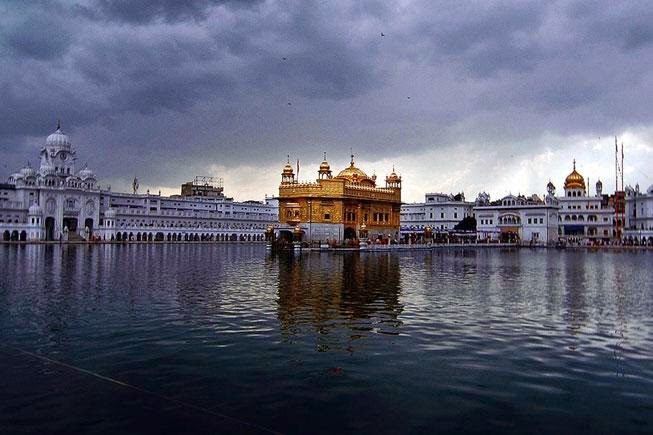
June 05 is the thirty year anniversary of the Indian army operation to clear militants from the Sikh religion’s holiest temple in Amritsar. This was the culmination of chain of events simmering for several years. In late 1970s, conflict between center and Punjab, internal power struggle among Sikh political elite, poor economic conditions of rural Punjab and assertion of Nirankaris (a sect of Sikhism considered heretic by orthodox Sikhs) resulted in rapid escalation of violence in Punjab. In early 1980s, Sikh agitation took an ugly turn and a group of militant Sikhs under the leadership of a charismatic leader Jarnail Singh Bhindranwale upped the ante. In December 1983, fearing arrest, Bhindranwala with few hundred armed supporters moved into the Golden Temple complex. Armed militants occupied many buildings of the Golden temple complex. Many wanted militants found refuge in the temple and in April 1983, in an audacious move militant shot dead Deputy Inspector General (DIG) of police Jullundhar range Avtar Singh Atwal inside the temple. Several police officers including Inspector Bicchu Ram and Deputy Superintendent Police (DSP) Gurbachan Singh were also assassinated by militants. In June 1984, Indian government decided to send troops to the Golden Temple complex to clear it out of militants. After a bloody fight, temple was cleared resulting in heavy casualties.
Count Down to Conflict
Prime Minister Indira Ghandi, two Sikhs in Delhi; President Giani Zail Singh and Union Home Minister Buta Singh, Punjab Chief Minister Darbara Singh, Akali Dal leaders Harchand Singh Longwal and Parkash Singh Badal, Gurcharan Singh Tohra; head ofShiromani Gurdwara Parbandhak Committee (SGPC); an organization responsible for the administration of Sikh houses of worship and militant leader Jarnail Singh Bhindrawale were key players in this conflict. Former Chief Minister of Punjab Zail Singh and Sanjay Gandhi supported Bhindrawale to weaken Akali Dal. When Bhindrawale was arrested on charges of inciting murder, Zail Singh now Union Home Minister arranged for his release without due judicial process. Bhindrawale was now seen as a hero who had won a showdown with the center and his views hardened as his popularity increased. Zail Singh also thwarted Chief Minister Darbara Singh’s efforts to curtail militant activities. Bhindrawale’s opponent Sikh leaders were now fearful for their lives. Longwal fearful for his life especially when Bhindrawale moved to the Golden Temple complex hostel which also housed offices of Akali Dal and SGPC, used another splinter militant group Babbar Khalsa to push Bhindrawale’s followers from the hostel into Akal Takht. When law and order situation deteriorated in Punjab, Punjab Chief Minister was sacked and President Rule was imposed in Punjab.
Militant Leadership
‘The best place to die is the highest place of your religion and a place connected with your ancestors and this place where we are standing has got both the qualities, so this is the best place to die.’ Major General ® Shahbeg Singh at Golden Complex
Three to six hundred supporters of Jarnail Singh were the core group of militants and most radical. Small number of Sikhs belonging to Babbar Khalsa, All India Sikh Student Federation (AISSF) led by Amrik Singh and Dashmesh Regiment were also armed. There were about one dozen close confidants of Jarnail Singh and they were assigned different tasks. Rachpal Singh was Bhindrawale’s secretary and Dalbir Singh political advisor. An inner security ring of about half dozen hard line militants guarded Bhindrawale and Gurmukh Singh was in charge of weapons. Four deserters from Punjab police Kabul Singh, Gurnam Singh, Sewa Singh and Amarjit Singh joined Bhindrawale at Golden Temple complex. Near the end of 1982, more than 5000 ex-servicemen gathered in Golden Temple for a convention. More than one hundred and seventy above the rank of Colonel including retired Major Generals Shahbeg Singh and Jaswant Singh Bhullar were among the ex-servicemen. Majority of ex-servicemen were advocates of use of non-violent means to achieve objectives but few like Shahbeg and Bhullar came under the influence of Bhindrawale. Bhullar left India just before the operation but Shahbeg was in Golden Temple at the time of operation. He was responsible for the fortifications and placement of machine guns and snipers at strategic positions at Golden Temple.
Civilian Administration
In early 1980s, central government responded to deteriorating situation in Punjab by changing top positions of provincial administrative machinery. From 1981 to 1984 there were six governors; Jaisukh Lal Hathi (September 1977 – August 1981), Aminuddin Ahmad Khan (August 1981 – April 1982), Marri Chenna Reddy (April 1981 – February 1983), Anant Prasad Sharma (February 1983 – October 1983), Bhairab Dutt Pande (October 1983 – June 1984) and K. T. Satarwala (June 1984 – March 1985). In the same time period the top police post of Director General of Punjab Police was shuffled four times; Birbal Nath, C. K. Sahni, Pritam Singh Bhinder and K. S. Dhillon. In four year time period, Senior Superintendent of Police (SSP) of Amritsar post was shuffled six times; A. S. Atwal (September 1981 – April 1982), Surjit Singh Baines (April 1982 – July 1983), Sarabjit Singh (July 1983 – October 1983), Ajay Pal Singh Mann (October 1983 – March 1984), Sube Singh (March 1984 – June 1984) and Bua Singh (June 1984 – August 1985).
Former Cabinet Secretary and West Bengal Governor Bhairab Dutt Pande was transferred to Punjab and he became head of the government as province was under President’s rule. New Delhi appointed four advisors to governor including Shivandar Singh Sidhu, Harbans Singh, P. G. Gavi and Gajjala Jagathpathi. However, all four advisors either quit or recalled as they advocated a political settlement rather than use of force. Later, Chief of Staff (COS) of Western command, Lieutenant General Ranjit Singh Dayal was appointed Security Advisor and Surendranath of Indian Police Service (IPS) advisor of law and order to governor.
Provincial bureaucracy of Punjab was headed by Chief Secretary K. D. Vasudeva, Amrik Singh Pooni was Home Secretary, Deputy Commissioner (DC) of Amritsar was Gurdev Singh and city magistrate was S. S. Dhillon. Army was suspicious that Gurdev had sympathies with militants therefore he was replaced on June 03, 1984 with Ramesh Indar Singh. Ramesh was a Bengal cadre officer then serving as director of rural development in Punjab and this was his first district appointment (later he was transferred to Punjab cadre and served as Principle Secretary to Chief Minister and Chief Secretary). Director General Police (DGP) of Punjab was Pritam Singh Bhinder and Inspector General (IG) of Criminal Investigation Department (CID) was Harjit Singh Randhawa. Police officers of Amritsar district included Superintendent Police (SP) Sital Das, Deputy Superintendent Police (DSP) city Opar Singh Bajwa, SP CID Harjeet Singh, DSP CID Sudarshan Singh and M. P. S. Aulakh was Assistant Director Intelligence Bureau (IB). Director General (DG) Central Reserve Police Force (CRPF) was Ram Swarup Sharma, Inspector General (IG) Border Security Force (BSF) was B. K. Tirpathi, Director General (DG) BSF was Birbal Nath and DIG BSF in Amritsar was G. S. Pandher (he was sent on leave on June 05 due to his objections to the operation and replaced by Chaturvedi). By early 1984, civilian administration was completely ineffective due to political inertia, interference and collapse of police morale.
In Delhi, a group of serving and retired senior intelligence officers of Research & Analysis Wing (RAW) was advising Prime Minister Indira Ghandi. This group included chief security advisor Rameshwar Nath Kao (first Chief of RAW), N. F. Santook (former head of RAW) and Girish Chandar Saxena (head of RAW). Political leadership provided legal cover to security forces by passing several acts. These included National Security Act 1980, Punjab Chandigarh Disturbed Area Act 1983, Armed Forces (Punjab and Chandigarh) Special Power Ordinance in October 1983, Terrorist Activities and Disturbed Areas (TADA) Act 1984 and Terrorist Affected Areas (Special Courts) Act 1984. No Sikh political leadership could acquiesce with centre’s plan therefore Punjab was put under direct center rule in October 1983.
Army Action
‘We went inside with humility in our hearts and prayers on our lips’. Lieutenant General K. Sunderji
Chief of Army Staff (COAS) was General A. S. Vaidya and he assigned the operation to GOC-in-Chief Western Command Lieutenant General K. Sundarji. Western Command with its headquarters at Chandimandar planned and conducted the operation. Chief of Staff (COS) of Western Command Lieutenant General Ranjit Singh Dayal was the architect of the operation. Western Command consists of three Corps; II with headquarter at Ambala in Haryana, IX at Yol; Himachal Pardesh and XI with headquarter at Jallandhar. XI Corps commanded by Lieutenant General Gauri Shankar and consisting of 7 Division based in Ferozpur, 9 Division based in Meerut and 15 Division based in Amritsar was assigned the task of internal security of Punjab.
There were three components of the military operation. The main operation was to clear the Golden Temple complex and it was supported by two other operations. One operation was focused on clearing other Gurdwaras in the state where militants had taken refuge. Operation Rose Wood was aimed at sealing of Indian border with Pakistan to prevent escape of militants across the border and prevent any assistance to militants from Pakistan side. However, neither political leadership prepared the army nor army leadership prepared its own troops to reorient for internal security duty. In April 1984, XI Corps went ahead with its normal Corps exercise and troops were in training area when exercise was shortened and on May 27, troops were ordered back to their permanent locations. 9 Division commanded by Major General Kuldip Singh Brar was given the task of clearing the Golden Temple and he was informed about the operation only few days before the planned date. Brar’s Deputy GOC was Brigadier N. K. ‘Nikki’ Talwar and Colonel Administration was Colonel E. W. Fernandez. Jallandhar based 350 Infantry Brigade consisting of 9 Kumaon, 10 Guards, 12 Bihar and 26 Madras and commanded by Brigadier D.V. Rao was assigned the task of clearing temple complex. Brigade was supported by paratroopers from 1 Parachute Regiment and Special Frontier Force (SFF). 15 Division commanded by Major General Jagdesh Singh Jamwal was in support role in Amritsar and along with other troops sealed the border with Pakistan in Operation Wood Rose. Deputy GOC of 15 Division was Brigadier ‘Chikky’ Diwan, GSO Intelligence was Lieutenant Colonel Adarsh K. Sharma and Colonel Administration was Colonel Onkar Singh Goraya.
Troops involved in the operation belonged to 1 Parachute Regiment commanded by Lt. Colonel K.C. Padha, 10 Guards commanded by Lt. Colonel Israr Rahim Khan, 12 Bihar commanded by Lt. Colonel K.S. Randhawa, 26 Madras commanded by Lt. Colonel Panniker, 9 Kumaon commanded by Lt. Colonel K. Bhaumik, 15 Kumaon commanded by Lt. Colonel N.C. Pant, 9 Garhwal Rifles and 10 Dogra,. All infantry battalions belonged to 9 Division with the exception of 9 Garhwal Rifles from 15 Division. Artillery was commanded by Colonel E. W. Fernandez, Armored Personal Carriers (APCs) and BMPs of 8 Mechanized Battalion and tanks of 16 Cavalry were used in the operation. Paramilitary troops of Border Security Force (BSF), Central Reserve Police Force (CRPF) and Special Frontier Force (SFF) also participated in the operation. SFF was commanded by Lieutenant Colonel Chowdhury and controlled by Cabinet Secretariat. 15 Kumaon and two companies of 9 Garhwal Rifles under the command of Deputy GOC of 15 Division Brigadier A.K. ‘Chikky’ Dewan were reserve.
General K. Sundarji established his tactical headquarters at Chandimandar. 9 Division tactical headquarters was on the rooftop of a building near Golden Temple. Later, Sunderji moved to the division tactical headquarters. 350 Brigade headquarters was established at Kotwali and later moved to Brahm Buta Akhara when it was cleared of militants. Military operation consisted of three phases. Phase I was to clear militants from buildings surrounding the complex and this phase started on June 03. Phase II code named SHOPS was to eliminate or capture militants from the complex. This phase also included plans to quickly extinguish fires and repair any structural damage to the holy site. This is supported by the fact that three fire assault teams from 60 Engineer battalion were assigned for this task. Phase III code named FLATS was mopping up remaining pockets of resistance all over the state. A separate operation code named METAL was to secure the holiest place of Harmandar Sahib. A group of commandos was to swim through the sarowar (sacred pool that surrounds the holiest place) and secure Harmandar Sahib.

Map is from Golden Temple Complex website; http://www.goldentempleamritsar.org/images/guide-map-of-golden-temple-amritsar.jpg
12 Bihar commanded by Lt. Colonel K.S. Randhawa and troops of BSF and CRPF were used to seal all entry and exit points to the complex and provide cover to all assaulting troops. All formations assembled at their launch positions around 7:30 pm and operation was launched around 10:30 pm (about half an hour late than original time of 10:00 pm). The operation at Golden Temple complex was divided into three phases. Phase I was main assault to neutralize militants, Phase II mopping up and Phase III securing of hostels and complete control of the complex and handing over all prisoners to other units. Different units were launched from different entrances to kill or capture militants. 26 Madras from southern (Langar side) entrance to secure southern and eastern wings, I Para from eastern Ghanta Ghar entrance to secure Akal Takht (later this objective was taken away from 1 Para and it was tasked to only secure Darshni Deodi and Harmandar Sahib), 10 Guards from eastern Ghanta Ghar entrance to secure Akal Takht and northern wing and SFF from main north-western entrance to secure Akal Takht and western wing.
Akal Takht was heavily fortified and manned by hard core militants associated with Bhindrawale. Major General ® Shahbeg Singh had placed observers and snipers on high towers and placed gun positions at multiple levels in such a way that it created a wide kill zone. The assault by 10 Guards and 1 Para came to a standstill with heavy casualties. One of the first casualties was a Sikh officer of 10 Guards Captain Jasbir Singh Raina who lost his both legs. The plan of Operation METAL by commandos was abandoned as they could not move forward to swim through sarowar to secure Harmandar Sahib. Akal Takht was taken out of 1 Para responsibility and they were now assigned the task of securing Darshni Deodi right in front of Akal Takht. Advance of 26 Madras was stalled due to heavy fire from machine guns placed on lungar hall and Gurdwara Manji Sahib. Militants belonging toBabbar Khalsa and some from AISSF were manning these positions. When troops found themselves in a kill zone due to well placed militant gun positions and their advance stopped, then tanks and APCs were requisitioned. Initially main purpose was not to use the firepower but to use headlights of tanks to blind the militants and use APCs and BMPs to provide cover for troops. Total eightVijayanta tanks of 16 Cavalry then part of 15 Division were used. Four tanks supported commandos while four supported 26 Madras. Eleven APCs/BMPs of 8 Mechanized Regiment were used. Four BMPs supported 10 Guards and commandos and three APCs and four BMPs supported 26 Madras. The lamps of tanks didn’t last long and one APC was hit by a Rocket Propelled Grenade (RPG) and disabled.
Militants were posted on few high buildings overlooking the entire area especially water tower and two high towers; Ramgarhia Bungas. Sniper fire from these positions caused significant casualties of security forces. Neutralization of these commanding positions required use of heavy weapons. In view of stiff resistance from militants and slow progress, around 11:30 pm, an ad hoc force consisting of the reserve of two companies each of 15 Kumaon and 9 Garhwal Rifles along with elements of 26 Madras was launched from western Atta Mandi Gate. In the meantime, about thirty commandos under the command of Major P. C. Katoch tried to secure Darshni Deodi in front of Akal Takht but suffered many casualties. A second assault by another team of thirty commandoes led by commanding officer of 1 Para was launched which also suffered heavy casualties. Of the sixty five commandos seventeen were killed and thirty one injured but they were able to secure Darshni Deodi . SFF team of about fifty also suffered heavily losing seventeen. A company commander of 15 Kumaon Major B. K. Misra was killed while B Company retreated after suffering seven killed and twenty three wounded. By that time, Brar had received authorization from Delhi to use tank fire to neutralized militants entrenched in Akal Takht. Brigadier Chikky Diwan asked for one more chance to clear militants before the use of tanks. A small ten man team of 26 Madras led by Lieutenant Jyoti Kumar Dang was divided into two teams. One team was led by Subedar K. P. Raman Ravi. When this effort also failed with only three members of team surviving, then it was decided to use tank fire. Two tanks fired about twenty shells at Akal Takht that silenced the opposition. The remainder militants trying to escape from Akal Takht were killed and several surrendered. When the firing finally stopped, Bhindrawale and Major General ® Shahbeg Singh laid dead along with scores of militants and large number of innocent civilians caught in the firefight.
Tank fire resulted in fire at Sikh archives where other treasures were also kept. Colonel Goraya was aware of the importance of securing this Sikh heritage but not sure about troops operating against the militants. There was only one Sikh regiment in Amritsar; 2 Sikh Light Infantry (SLI) commanded by Lieutenant Colonel D. D. Singh. Goraya called the commanding officer and arranged for a ten man guard of 2 SLI under the command of a Naib Subedar to guard the Sikh treasures. Goraya’s concern was not unfounded as later it was discovered that some men of 26 Madras were engaged in looting. Later, Major General Jamwal made sure that all items returned.
Hostel complex around lungar hall had hundreds of rooms. 9 Kumaon and two companies of 15 Kumaon were assigned the task of clearing hostel complex. Major H. K. Palta; a company commander of 9 Kumaon escorted Akali leaders from Guru Ram Das Sarai to a MES bungalow.
Later, 10 Dogra relieved 9 Kumaon and continued the mopping up operation. In an unfortunate incident 10 Dogra’s medical officer Dr. Captain Rampal was snatched by militants while attending to injured soldiers. 10 Dogra tried a rescue mission but Rampal was killed by militants. In the phase III of the operation, 19 Mahrata Light Infantry (MLI) commanded by Officiating Commanding Officer Major Jagjit Singh (he was later arrested and tried by court martial for hiding weapons) arrested militants at Damdami Taksal without violence. 10 Assam commanded by Lieutenant Colonel S. K. Sharma arrested militants from a Gurdwara in Talwandi without any bloodshed.
The exact number of causalities is controversial. Army suffered significant casualties due to frontal assault and well placed defenses of militants in the buildings creating ‘kill zones’. Security forces suffered eight three killed including four officers, four Junior Commissioned Officers (JCOs) and seventy five other ranks. Two hundred and forty eight were wounded including thirteen officers, sixteen JCOs and two hundred and nineteen other ranks. 10 Guards suffered nineteen killed and fifty three wounded, 1 Para seventeen killed and thirty one wounded, 26 Madras fourteen killed and forty nine wounded and 15 Kumaon seven killed and twenty three wounded. The exact number of Sikhs both militants and civilians killed in the operation is hotly debated. Indian government claimed that four hundred and ninety two were killed including thirty women and five children and eighty six wounded. Sikhs claim that thousands were killed.
Militarily, there was poor planning and coordination at several levels. Two main commanders on the spot; Brar and Jamwal were both from the same battalion 1 Mahrata Light Infantry but didn’t get along well. Jamwal’s division was based in Amritsar and familiar with the operational area but he probably saw it as a slight that operation was assigned to 9 Division. 9 Division was chosen as government wanted a Sikh officer to lead the operation to avoid the allegation that Hindu soldiers were attacking the holiest place of Sikhs. 9 Division was not familiar with the operational area as there was no time for preparation, briefing or reconnaissance about a very difficult and unconventional task. A delicate balance was needed where Sikh troops were not used for the fear that they may refuse to attack their holiest place but two Sikh officers; Brar and Dayal were put in the forefront. In defense of Brar, he was not given the option of taking his time for planning and reconnaissance before launching the operation.
Many criticized the conduct of military operation with the benefit of the hindsight. Main objections include;
– Timing of the operation
– Conduct of operation
– Use of tank fire
– Failure to anticipate reaction of Sikh soldiers
June 05 was the martyrdom day of a Sikh guru and large numbers of devotees were inside the temple. Sikh leadership had called for non-payment of taxes from June 05 and army feared that Bhindrawale may announce establishment of Khalistan on that day. Army had to finish the operation quickly as they feared that thousands of angry Sikhs from villages may descend on Amritsar on hearing the news of attack on Golden Temple. Many suggest that army should have cut off water and electric supply of the Golden Temple and forced militants to surrender. Thousands of devotees visit Golden Temple and such action was bound to cause reaction. Few months earlier in Moga, police laid siege to a cluster of Gurdwaras and cut off water and electric supply when they were fired upon from these Gurdwaras. Sikh leaders had threatened to send ‘martyr squads’ to free these Gurdwaras. One can easily imagine the kind of reaction from a prolonged siege of Golden Temple. Army used tank fire only against heavily fortified Akal Takht and after suffering heavy casualties. Some Sikh officers suggest that if army had briefed army commanders about operation, they could have talked to Sikh soldiers to allay their concerns. The dilemma for any army commander is how much to share. If he shares information with large numbers, he risks losing the element of surprise and if he restricts information, others are surprised from the fall out.
Post Operation
Fall Out for the Army
Operation Blue Star enraged Sikh community and discontent quickly spread to the army. 9 Sikh stationed at Ganganagar; Rajhastan mutinied on the night of June 07, 1984. Soldiers broke into the armory and fired in the air near officer’s residential quarters forcing the officers to hunker down. Over 400 mutinous soldiers commandered battalion’s vehicles including Commanding Officer Lieutenant Colonel I. S. Sabarwal’s jeep and headed to Punjab. Soldiers forced through an armed constabulary check post at Rajhastan-Punjab border killing a constable. 11 Rajputana Rifles and 94 Field Regiment were given the task of intercepting these rebellious Sikhs and they were able to arrest few and later near Govindgarh a clash resulted in many casualties. Over 200 made it to Moga where they were surrounded in a Gurdwara. A force consisting of 3 Garhwal Rifles, 15 Garhwal Rifles, 12 Grenadiers, APCs of 9 Mechanized Regiment and few tanks of 20 Lancers under the command of Brigadier A. S. Bans surrounded the Gurdwara. After tense negotiations soldiers surrendered without further violence. The battalion was disbanded on April 1, 1985.
On June 10, around 1500 Sikh recruits of Sikh Regimental Center at Ramgarh, Bihar mutinied. Subedar Major ran to Commandant Brigadier S. C. Puri’s home to inform him. Puri got in the car along with Subedar Major and on the way picked up Deputy Commandant Colonel Jagdesh Singh and battalion commander Lieutenant Colonel H. S. Cheema. When the jeep came to the center, it was fired upon injuring all occupants. Driver drove the jeep to the hospital where Brigadier Puri died from his wounds. Cheema was not severely wounded and he returned to the center and tried to rally soldiers. Mutinous soldiers and recruits commandeered civilian vehicles and headed towards Amritsar. Near Vernasi, they divided into two groups for their onward journey. Indian army dispatched 21st Mechanized Infantry Brigade along with an artillery unit to put fear of God in Sikh recruits. Second group of rebels was tackled by 20th Infantry Brigade along with some artillery. In the ensuing firefight, thirty five soldiers were killed and others arrested.
In Jammu, one hundred and thirty soldiers of 18 Sikh deserted but later captured by 2 Grenadiers without violence as most deserters were unarmed. One hundred and thirty three soldiers of 14 Punjab Regiment in Pune deserted with their weapons. 13 Mahar intercepted the deserters and later 2 Kumaon clashed with deserters killing many. On June 11, over two hundred soldiers of 3 Sikh stationed in Tripura deserted. They drove their vehicles to train station to head towards Punjab. They had carried with them all the liquor. At the station, most of them got drunk. Commanding Officer Lieutenant Colonel G. S. Kalhoun persuaded them to return to the lines. He allowed them to keep their weapons with them at night and next morning they deposited the weapons and 5 Mahar took charge of the quarter guard. There was unrest in two artillery regiments with significant number of Sikhs. Ninety soldiers of 166 Mountain Regiment stationed in the east and twenty seven soldiers of 171 Field Regiment stationed in Alwar deserted. Soldiers of 5 Sikh (nick named Dastori) were disturbed. Commanding Officer Lieutenant Colonel Gurcharan Singh Brar spent lot of time with soldiers and calmed them down. His main argument was that soldiers should not do anything that could harm century old traditions of the battalion. There was no act of disobedience from Sikhs of armored corps but army leaders were concerned as mutinous armored troops could cause much more damage than infantry troops. 46 Armored Regiment commanded by Colonel B. S. Sandhu sent a tank squadron under the command of Major G. S. Ghumman outside Amritsar with orders to shoot any tanks trying to enter Amritsar.
In the aftermath of the mutiny of Sikh troops, there were two opinions in the army. Non-Sikh officers especially COAS General Vaidya suggested stern measures against mutinous soldiers (an exception was a Sikh senior officer then GOC-in-Chief of Southern Command Lieutenant General T. S. Oberoi) while Sikh officers and some others suggested a lenient approach. Five retired senior Sikh officers including Lieutenant Generals Jagjit Singh Arora (2nd Punjab Regiment), Harbaksh Singh (5/11 Sikh), J. S. Dhillon, M. S. Wadalia and Sartaj Singh protested that the case of mutinous Sikh soldiers was a special one and they should be dealt differently. They met President Zail Singh to convey their feelings. Zail Singh while understanding their concerns suggested that he had no power in this matter. General Vaidya ordered mixing of some single class regiments and in this process 13 Sikh was reconstituted with Sikh, Dogra, Garhwali and South Indian companies. These battalions were nick named ‘Vaidya Battalions’ and later this trend was reversed to some extent.
The Fight Continues
General anger among Sikhs at the desecration of their holiest place provided new recruits for the militants. Later, several small scale operations were carried out primarily by police and paramilitary troops to dismantle militant infrastructure. On April 30, 1986 Operation Black Thunder I under the direction of Director General of Police Punjab J. F. Rebeiro cleared some militants from buildings around Golden Temple. In 1988, some militants again started to take refuge in Golden Temple. Deputy Inspector General (DIG) of CRPF Sarabdeep Singh Virk was shot and wounded and in 1990, SP (Operations) Taran Taran Harjit Singh was assassinated in a bomb blast. On May 06, 1988 Operation Black Thunder II under the command of Director General of Police Punjab K. P. S. Gill swept through Golden Temple complex to flush out militants. In this operation National Security Guards (NSG) under the guidance of its head Ved Marwah (native of Pakistani border town of Peshawar and a career officer of Indian Police Service) and Ajit Doval of IB played the crucial role. A thousand strong Special Action Group (SAG) of NSG participated in the operation. In 1990-91 Operation Rakshak I & II was launched. The most affected areas were Amritsar, Taran Taran, Majithia, Batala and Gurdaspur.
Militants retaliated by targeting police officers and several officers lost their life. In 1987, SSP Arvindar Singh Brar, SP Kanwar Ranbir Singh Gill, DSP Harpal Singh, DSP Tara Chand, DSP Gurcharan Singh and DSP Om Parkash were assassinated. In 1988, Senior Superintendent Police (SSP) Patiala Avindar Singh Brar and Superintendent Police (SP) Headquarters K.R.S. Gill were assassinated by Sikh militants on a jogging trail. In 1988, in Patiala, SSP Sital Das and SP (Detective) B. S. Brar were killed in office. In the same year, DSP Faridkot H. S. Gill was also assassinated. In 1989, DSP Gopal Singh Ghuman was assassinated. In 1990, Commandant 75 Punjab Armed Police battalion Gobind Ram was killed in a bomb blast. In the same year, DSP Baldev Singh and DSP Harjit Singh were assassinated while DSP Surjit Singh Ghuman was killed along with his wife and two guards. In 1991, DIG Border range Ajit Singh was killed in an encounter in Taran Taran and SP of Ropar Jogindar Singh Khaira was assassinated. In 1992, SP (Detective) R. P. S. Teja and DSP Ram Singh and DSP Rupindar Singh were assassinated. There were also life attempts on DGP Julio Rubeiro and Governor Shankar Roy. In August 1985, Harchand Singh Longwal was assassinated and in 1995, Chief Minister of Punjab Beant Singh was killed in a car bomb. This operation was organized by Balwant Singh and Dilawar Singh acted as suicide bomber.
During his two stints in Punjab as head of police, Gill put in place some tough police officers giving them a free hand to tackle the militants. The list included SSP Taran Taran Ajit Singh Sandhu, SSP of Amritsar Izhar Alam, SP Bathinda S.K. Singh, SP Gurdaspur Vivek Mishra and DSP of Taran Taran Jaspal Singh Khalra. In such situations, problems with morale due to target killing of police officers and government’s concern about potential of sympathy of some police officers with their co-religionist militants prompted induction of several officers of paramilitary forces (mainly CRPF and few from BSF) in Punjab. The list includes S.S. Virk, Rakesh Chandra, S.K. Singh, A.K. Pandey, Khubi Ram, S.P.S. Basra, R.C. Sethi and S.K. Sharma. Several of these officers served at SP rank during most troubled times in areas heavily infiltrated by militants at great personal risk. They were later absorbed in Punjab police in 2006 and rewarded with promotion to DIG rank.
Police used many controversial tactics including extra judicial killings. Some former low level police officials with criminal record were quietly hired for the job of infiltrating and in some cases eliminating militants in the countryside. The case of Dalbir Singh is a good example of benefits and risks of this approach. Dalbir was a constable in Punjab police in dismissed in 1983 on criminal charges. In 1986, he was quietly re-hired for a different task and worked undercover. He helped in arrest and elimination of some high profile militants. He was promoted Assistant Sub Inspector (ASI) and earned hefty amounts of head money of militants. He started to engage in criminal activities including extortion and even robberies. After investigation into these allegations, it was decided to remove Dalbir from the force. He was asked to report to the police station in civil lines and interviewed by senior police officers. Dalbir pulled his gun and after killing SSP Sital Das and SP Brar shot himself.
Militancy was finally tackled by Punjab police and this success was due to strengthening of police in numbers, proper equipment and training and selection of good officers to lead the campaign. Punjab police numbers increased from 35,000 to 65,000 by the end of 1989, better weapons and communication equipment were provided and policemen were trained for the job. Punjab police was also strengthened by 6000 special police and 20’000 home guard. Amritsar, Taran Taran, Majithia, Batala and Gurdaspur were the worst affected areas. In Taran Taran alone, about 200 policemen, Special Police and home guard members lost their life. Punjab police and their families paid the price and in the years 1988-92, about 1600 policemen were killed in the line of duty. In addition more than sixty family members of policemen were killed by militants in revenge attacks.
Like any crisis, there were examples of bad handling of a given situation but also many cases where volatile situations were handled by competent men professionally at great risk to their own lives. In Ludhiana, an angry crowd of Sikhs was demonstrating in the immediate aftermath of Operation Blue Star. Brigade commander Brigadier M. M. Lakhera was inclined to fire at the crowd to disperse them. Deputy Commissioner K. R. Lakhanpal dissuaded him and handled the situation at great personal risk.
The human side of the conflict is highlighted by two stories. Bhindrawale’s brother was Subedar Major Harcharan Singh Rhode then serving with 61 Engineers stationed at Jallandhar. Harcaharn visited Akal Takht in his uniform right after the death of his brother at the hands on Indian army. A young boy named Bashir Muhammad joined Punjab police and served as guard of DSP Sukhdev Singh Chahal. Punjab police needed to infiltrate Sikh militant groups and Bashir was chosen for the task. He was allowed to grow hair and beard and then a fake story was leaked that he had escaped from jail with arms and ammunition. He managed to join Babbar Khalsa and started to send reports back to police. He was influenced by the dedication and religious zeal of leaders of the group and decided to convert to Sikhism. He came clean and informed leaders of Babbar Khalsa that he was a police informant but now wanted to join the Sikh cause. He was baptized Sikh and named Lachman Singh Babbar. He was now operating on behalf of militants against security forces. However, Punjab police finally arrested or killed many militants and broke the back of militancy. In view of the precarious situation, Lachman Singh moved to Calcutta with his wife. Police arrested a colleague of Lachman and during interrogation he gave up Lachman’s address. In May 1993, SP Bathinda S.K. Singh and DSP Chahal with two other policemen went to Calcutta and shot and killed Lachman and his pregnant wife in his apartment. This incident caused a row between Punjab and West Bengal provincial governments as these officers went on their own without informing West Bengal police.
Conclusion
Conflict in Punjab evolved over several years resulting from clashes between central and provincial political leadership, internal power struggle of Sikh leaders and especially use of religion for political purposes. The outcome of clash of such volatile forces is never in doubt and Punjab proved to be no exception. Law and order situation was initially not tackled for political expediency and when it spun out of control fear and inertia settled in starting from the top and seeping all the way down. Finally, when government decided to tackle the issue, a short term use of brute force was thought to be the answer. Vicious cycle of incremental increase in force and predictable response of further alienation of Sikhs resulted in a conflict that lasted over a decade. On part of Sikhs, silence of priests of the Golden Temple, political leaders and civil society partly from sympathy and partly due to fear resulted in no vocal opposition to gathering of armed militants and military style fortifications inside the holiest place of Sikh religion. These gave militants wide room for maneuver and expand their influence. Even thirty years later, no Sikh is willing to talk on record against Bhindrawale and he has attained a cult status among a portion of Sikhs.
Operation Blue Star and anti-Sikh riots of 1984 left a deep scar on Sikh psyche. Elimination of militancy and continued political participation in the last two decades brought Punjab back to normalcy but 1984 still evokes deep emotions even among a younger generation of Sikhs born after 1984 especially among Sikh Diaspora.
|
Dramatis Personae
Indira Gandhi – In 1984, she was Prime Minister of India and ordered army to flush out extremists entrenched in Golden Temple. On October 31, 1984, she was killed by her two Sikh bodyguards. Beant Singh was killed on the spot while Satwant Singh was later convicted of murder and hanged in 1989. Indira’s assassination enraged Hindus and mobs attacked Sikhs. The worst riots occurred in Delhi where Hindu mobs attacked Sikhs and some estimate that about 3000 Sikhs were killed. Sikhs alleged that many Congress party office holders were directly involved in these attacks. Member of parliament from Delhi Lalit Makan and City Counselor and friend of Rajiv Gandhi, Arjun Das were alleged to have a role in anti-Sikh riots. Makan was married to Gitanjali; daughter of former President of India Shankar Dayal Sharma. On July 31, 1985, Makan and his wife were gunned down near their house and in September 1985, Das was assassinated in his office.
Lieutenant General Srinavas Kumar Sinha – He was commissioned from Officer Training School (OTS) at Belgaum in 1942. He was the best cadet of his course. He was commissioned in 6/9 Jat Regiment. In 1952, he was transferred to 3/5th Gorkha Rifles and he commanded the battalion in 1964. In 1983, he was G-O-C-in-Chief of Western Command. He had objected to the planned operation against Sikh militants in Golden Temple and wanted a different approach. In 1984, he was Vice Chief of Army Staff (VCOAS) and as the senior most officer expected to become Chief of Army Staff (COAS) on retirement of General Krishna Rao. In an unexpected move, government announced appointment of G-O-C-in-Chief of Eastern Command Lieutenant General A. S. Vaidya as new COAS superseding Sinha. Sinha was retired and later served as governor of Assam and Jammu & Kashmir.
General Arun Shridar Vaidya – He was a cavalry officer and commanded Deccan Horse in 1965 war. He was a well decorated officer winning Maha Vir Chakra (MVC) in 1965 war and bar to MVC in 1971 war. In 1984, he was COAS. He retired in January 1986 and moved to Pune. On August 10, 1986, he was driving his car coming back home from the market when two gunmen ambushed his car pumping several bullets in the car and killing him on the spot. In 1986 Sukhdev Singh and in 1987 Harjindar Singh were arrested and charged with murder of Vaidya. Both were convicted and hanged in 1992.
General Krishnaswamy Sundarji – He was commissioned in Mahar Regiment and commanded 1 Mahar. He was G-O-C-in-Chief of Western Command in 1984. He served as COAS from 1986 to 1988. He died of natural causes in 1999.
Lieutenant General Ranjit Singh Dayal – Dayal was a well decorated officer from 1 Parachute Regiment winning MVC in 1965 war. He was Chief of Staff (COS) of Western Command in 1984 and planned Operation Blue Star. In 2005, two Sikh militants were arrested for planning to assassinate Dayal. He died from cancer in January 2012. In 2013, his local Gurdwara refused Dayal’s family request to hold prayers on his death anniversary.
Lieutenant General Kuldip Singh Brar – Brar nick named ‘Bulbul’ is from a military family with three generations serving in Indian army. His grandfather Honorary Captain and Subedar Major Hira Singh served in Indian army. His father Major General Digambar Singh Brar was commissioned from Sandhurst and served with 5/5 Mahrata Light Infantry . Bulbul was commissioned in 1 Mahrata Light Infantry (MLI). In 1984, he was GOC of 9 Division and spearheaded the operation. He retired as Lieutenant General. Sikh militants had sworn that they will kill those involved in Operation Blue Star and Bulbul was on top of the hit list. In India, he is provided extra security protection called Z category protection. On October 02, 2012, when he was walking on a London street, he was assaulted by three Sikhs who tried to slit his throat. He survived and his three assailants Mandeep Singh, Dilbagh Singh and Barjindar Singh were later convicted. He is moved to a secret location and now under Z plus category protection. He is the last surviving among the group targeted for assassination.
Krishan Pal Singh Gill – He is IPS officer of 1957 batch from Assam cadre. He served most of his career in northeast rising to the post of DGP Meghalaya. He also served as IG Punjab Armed Police (PAP), IG BSF – Jammu and DG CRPF. In 1988, he was brought to Punjab to tackle militancy. He served two tenures as Director General of Punjab Police 1988-89 & 1991-95. He crushed militants with ruthless efficiency. He survived at least five assassination attempts. In 1999, Richpal Singh was arrested with explosives in Delhi for planning to kill K.P.S. Gill.
Major General ® Shah Beg Singh – His life story is amazing and provides a window to changing borders and loyalties. He was a graduate of Government College Lahore and commissioned in 2nd Punjab Regiment during the Raj. He joined the elite paratroopers (Ist Para Battalion) as Indian citizen and participated in every war which his country fought. In 1947-48, he fought against Pakistan army in Nawshehra area of Kashmir. In 1962, Indo-China war, he was GSO-Intelligence at IV Corps headquarters. In 1965, Indo-Pakistan war, he commanded 3/11th Gorkha Rifles in Haji Pir sector of Kashmir. Later he commanded 19 Infantry Brigade in Jammu & Kashmir. He also served as Deputy GOC of 8 Mountain division during Naga counter-insurgency operations. In 1971 war with Pakistan, as a Brigadier, he was given charge of Delta sector with headquarters at Agartala to train Bengalis fighting against Pakistan. He was instrumental in organizing Bengali officers and soldiers, who were his former enemies and new friends to help them achieve their independence. He was promoted Major General and served as GOC of Bihar & Orissa. Senior Pakistani POWs were interned at Jabalpur under his command. He got in trouble with Indira Gandhi when he refused to get troops involved in arrest of Jay Prakash Narain agitating against government. He was posted out to UP area Head Quarters where he got into trouble with army authorities. Kumaon Regimental Center was in his jurisdiction and he found that commander of Kumaon military farm gave large sum of money to COAS General Tappy Raina. Court of inquiry found that Tappy received about two hundred thousand Rupees to meet the expenses of his daughter’s marriage. Shahbeg asked Tappy to return the money. Shahbeg was immediately relieved of his command and an inquiry started against him. Later he was charged with various infringements including charges that when he left Jabalpur area headquarter, he received a commemorative plaque worth 2500 Rupees, allowing sale of some items at canteens and cultivated some produce on the grounds of his official residence. He was dismissed from army one day before his retirement date of May 01, 1976 and he was a bitter man.
He joined Jarnail Singh Bhindranwale and present at Golden Temple when Indian army launched operation in 1984. He was gunned down by the bullets of the same Indian army which had earlier awarded him two medals of bravery (Param Vashist Sewa Medal and Ati Vashist Sewa Medal). Ironically, his own 1 Para was at the forefront of the assault. He joined British Indian army and fought against Japanese in Burma. In this fight, Punjabi Muslims and Pathans serving in his regiment were his comrades. When India and Pakistan achieved independence, his former comrades became his enemies and he fought against them in 1947-48 and 1965. In 1971, the scene suddenly changed. Now he found new comrades (Bengalis) among his enemies (Pakistanis). He trained Bengalis and helped them fight for their independence. He ended up taking arms against the same flag which he had so proudly carried in so many battlefields. His life was ended not by bullets fired by Japanese, Pakistanis or Bengalis but by the soldiers of the same army which he had so proudly served. What a change in only one lifetime.
|
Acknowledgements: Author thanks many for valuable information and corrections. However, author is solely responsible for all errors and omissions.
There are many sources about Operation Blue Star looking from different perspectives. Works by security personnel present their point of view while several works especially videos are sympathetic to militant point of view. A partial list includes;
– Lieutenant General ® Kuldip Singh Brar. Operation Blue Star: the Untold Story.
– K.P.S. Gill. Punjab: The Knights of Falsehood.
– K.P.S. Gill. Endgame in Punjab 1988-1993 in Fault lines, Vol. 1 No. 1
– Julio Ribeiro. Bullet for Bullet: My Life as a Police Officer
– Kirpal Singh Dhillon. Time Present and Time Past: Memoirs of an Unorthodox Top Cop.
-Brigadier Onkar Singh Goraya. Operation Blue Star & After: An Eyewitness Account.
– S. Mahmud Ali. Sikh Separatism in East Punjab in The Fearful State: Power, People and Internal War in South Asia
– Mark Tully. Amritsar: Mrs. Gandhi’s Last Battle
– Cynthia Keppley Mahmood. Fighting for Faith and Nation: Dialogue with Sikh Militants.
– Apurba Kundu. The Indian Armed Forces ‘Sikh and Non-Sikh Officers’ Opinion of Operation Blue Star. Pacific Affairs, Vol. 67, No. 1. (Spring, 1994), pp. 46-49
– Sumit Ganguly and David P. Idler. India & Counterinsurgency: Lessons Learned.
-Hartosh Singh Bal. The Shattered Dome in The Caravan May 2014.
– Lieutenant Colonel Vivek Chadda’s Low Intensity Conflicts in India: An Analysis.
-Kanwar Sandhu’s documentary about Operation Blue Star released in 2013 is a detailed analysis of the operation. http://www.youtube.com/watch?v=HhO5BRsTfl8
Hamid Hussain
May 29, 2014