Polio free!!! but many “question marks” remain

Yay!!!

Congratulations to all 10 countries who passed (India, Nepal, Bangladesh, Maldives, and Sri Lanka are the SAsian nations, also Burma, South Korea, Indonesia, Thailand, and East Timor).

Given India’s pathetic condition it was considered to be the last frontier for polio. The fact that the job was done at all is nothing short of a miracle.

However celebrations need to be tempered with caution. Polio has now spread westwards to Syria from Af-Pak (via jihadis who plan to set up a drone-free forward base from which to attack Europe/West), it can just as easily spread eastwards as well.
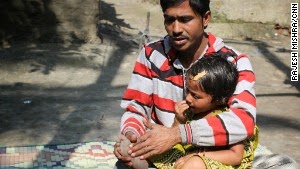
The symbol for polio eradication is Rukhsar Khatun the last victim who still needs treatment and (as noted below) her “future is still a question mark.” 

Not to mention, question marks for millions of Rukhsars living a virtual death sentence as dictated by the merchants of death

……………….


She has become the
greatest symbol of India’s valiant — and successful — effort to rid
itself of a crippling and potentially deadly disease. Rukhsar, 4, is the
final documented case of polio in India.


Her face has appeared in
newspapers and on television. She’s been invited to national events by
Rotary International, the organization that led the effort to rid India
of polio. She is a literal poster child, an inspiration, a symbol of a
feat that no doctor or health official thought possible even a few years
ago.


Apart from the publicity, though, Rukhsar’s life has hardly changed, her future still a question mark.


She is used to seeing
health officials and reporters arrive on foot at her home in Shahpara, a
village in the Indian state of West Bengal. On the day we visited, she
dressed herself in a long green printed dress, marred only by a tear at
the shoulder. She oiled her hair and pulled it back with plastic
barrettes.
She did it all herself when she learned we were on our way.


Her parents, Abdul Shah,
32, and Shobejan Begum, 30, blame themselves for their child’s
suffering. They had their other children vaccinated, but not Rukhsar.
She was a sickly child, in and out of hospital with liver infections and
diarrhea. They thought it safer not to subject her to more medication.


It wasn’t until little
Rukhsar’s right foot swelled and twisted in early 2011 that her parents
took her to a hospital in nearby Beleghata for tests.
She was just 18
months old when doctors confirmed the worst: Rukhsar had polio.


Polio is caused by a
virus that attacks the brain and spinal cord cells that move joints and
muscles.  
About one-third of those who contract polio in India are left
paralyzed — as was Rukhsar.


“Everything was our fault,” explains her father. “I thought she would never walk again.”

….
The World Health Organisation officially certified India and
10 other Asian countries free of polio on Thursday, a milestone lauded
as a “momentous victory” over an ancient scourge.

The
Southeast Asian region, which includes India but excludes Afghanistan
and Pakistan, was certified by a panel of experts after the countries
went three years without reporting a single new case.

The WHO said
the certification meant 80 per cent of the world’s population lived in
polio-free regions and was an important step towards global eradication
of the crippling disease.

“This is a momentous victory for the
millions of health workers who have worked with governments,
nongovernmental organisations, civil society and international partners
to eradicate polio from the region,” said WHO Southeast Asia regional
director Poonam Khetrapal Singh.


The
certification is particularly significant in India, home to 1.2 billion
people, and which until 2009 still accounted for half of all cases
globally.

The certification confirms one of India’s biggest public
health success stories, accomplishing something once thought
impossible, thanks to a massive and sustained vaccination programme. India
celebrated the milestone on January 13 – which marked three years since
the last reported new case in the country, that of a teenage girl in a
slum in the eastern city of Kolkata.

India reported 150,000 cases
of paralytic polio in 1985, and 741 new infections that led to paralysis
in 2009. In following year, the number of new victims fell to double
figures before the last case in January 2011. 

India’s poor
sanitation, mass internal migration and dilapidated public health system
made many experts believe it would be the last country to eradicate the
disease, if at all.

The countries certified Thursday were India,
Bangladesh, Bhutan, South Korea, Indonesia, Maldives, Myanmar, Nepal,
Sri Lanka, Thailand and East Timor.

……………..
regards

Indian Muslims (USA) prepare for Gallipoli

The Association of the Indian Muslims of America (AIMA) approves of this message in support of the one and only AK-272

One hundred years following the original Great War and the launch of the famous Gallipoli campaign, the muslim regiments must be prepared for jihad (once again).
 
In these times of clear and present danger, the muslims of India (150 million official, probably 200 million including all migrants)- after decades of blind devotion and service from the heart- must abandon the sinking Congress ship. 

All regiments to be mobilized under the supreme leadership of Rt. Hon. Kejriwal – a honest to good re-incarnation of Lt. Col. Kemal (plus a muffler for local color).

Remember folks, this election is undoubtedly the most important one in decades. Defeat the M… Monster now and the beleaguered minorities in India will be able to breathe safely once more.

In other (weird) election news, Karuna-nidhi has decided to forgive and support Congress (but only after the election???). The old guard is fighting hard to keep the boat floating for the next generation(s).

At the moment it appears to be a bit of a lost cause (and the muslims know it as much as anybody else, hence the advert below).

The skullduggery (mass corruption) that triggered this whole mess is likely to turn the poor princes into paupers.


Arvind Kejriwal’s Aam Aadmi Party, which is already under attack from within
and outside, is facing a new quandary from one of its supporters – a non-profit
group from US – that has issued an advertisement in a community newspaper
appealing the Muslim voters to support the AAP.

The ad that appeared in the 1-15 February issue of Milli Gazette is doing
the rounds on the internet. While the party has denied issuing any such ad on
the social media, the advertisement appeared on Milli Gazette’s Facebook page
has put the Aam Aadmi Party in a spot.

The ad issued by the Association of Indian Muslims of America reads: “An
Appeal to Indian Muslim citizens and voters to support Aam Aadmi Party to
remove the ills of: corruption, influence peddling, abuse of religion and
caste, money power, denial of justice, police brutality, from the society at
large in the country. 

These ills have resulted from gross abuses by most
political parties. The majority of Muslims being deprived people are hurt more
than others from these ills. Hence, Muslims in large numbers should support AAP
that is comprised of good people, and that is trying to cleanse the national
political and governance system.
We appeal to all to campaign for AAP, raise
funds for them and vote for AAP candidates in the upcoming parliamentary
elections.”


regards

“Autism begins in the womb”

Scary but hopeful at the same time.

Also re: 0.7mil estimated count (UK) suffering from autism– that is 1.2% of  the population– part propaganda, part over-diagnosis perhaps?

Scientists say they have new evidence that autism begins
in the womb.


Patchy changes in the developing brain long before birth may cause symptoms
of autism spectrum disorder (ASD), research suggests.


The study, in the New England Journal of
Medicine, raises hopes that better understanding of the brain may improve
the lives of children with autism.


They used genetic markers to look at how the outermost part of the brain,
the cortex, wired up and formed layers.
Abnormalities were found in 90% of the children with autism compared with
only about 10% of children without.
The changes were dotted about in brain regions involved in social and
emotional communication, and language, long before birth, they say.

The researchers, from the University of
California, San Diego and the Allen
Institute for Brain Science in Seattle, say their patchy nature may explain
why some toddlers with autism show signs of improvement if treated early enough.


They think the plastic infant brain may have a chance of rewiring itself to
compensate.


“The finding that these defects occur in patches rather than across the
entirety of cortex gives hope as well as insight about the nature of
autism,” said Prof Eric Courchesne, a neuroscientist at the University of
California San Diego.

Dr Thomas Insel, director of the National Institute of Mental Health, said:
“If this new report of disorganised architecture in the brains of some
children with autism is replicated, we can presume this reflects a process
occurring long before birth.
“This reinforces the importance of early identification and
intervention.”


Carol Povey, director of the National
Autistic Society Centre for Autism, said the study shed light on a complex
and often misunderstood disability.
 
“Better understanding of the early brain development of children with
autism could help us find new and more effective ways to support the estimated
700,000 people living with the condition across the UK,” she said.
 

….
regards

Chinese missile blows away Indian battalion

Susan Su, the chinese missile has destroyed the careers and future of a
few hundred (rich? clueless???) Indians. Plus a bit of slavery and
perjury thrown in.

A silver lining of justice colored the dark clouds when the Kalpana (Iron Dome) Anti-Missile weapon was eventually unleashed.

Since public memory is very short people will soon forget this tragedy and (not) hopefully a new set of victims will be sacrificed at the altar of greed and corruption (all parties involved).

If there  was a hero it was Indian-American attorney Kalpana Peddibhotla who fought dilligently on behalf of the students and even persuaded US immigration to remove ankle-bracelets (aka dog-chains) from people who may be innocent victims.
….

Immigration attorney
Kalpana Peddibhotla, who handled the cases of several former Tri-Valley
students, told India-West after the verdict was announced: “Today’s verdict
against Susan Su is an important day of closure for the hundreds of
international students that were duped by her and wasted countless dollars and
time as a result of her fraudulent school, Tri-Valley University.” 


“This trial substantiates
that students were also victims of her fraud and that they deserve justice.
While I am happy about today’s verdict, I still have concerns about how our
government regulated TVU in the first place,” said Peddibotla.


“Susan Su’s intentional
fraud, coupled with the lack of early government intervention and oversight,
has permanently impacted the personal lives and careers of many former TVU
students,” added the Indian American attorney, who – shortly after the ICE raid
– persuaded the U.S. government to remove the ankle bracelets that were
shackling detained Tri-Valley students. 


…..
The
founder of California-based Tri-Valley University in the US, who
destroyed the academic careers of several hundred Indian students, has
been convicted on 31 counts including visa fraud by a federal grand
jury.

Susan Xiao-Ping Su’s sentencing is scheduled for June 20.
The guilty verdict followed a three-week jury trial before the Jon S
Tigar, US District Court Judge in San Francisco.

Through her
illegal operations involving visa fraud and wire transfers Su made over
$5.9 million through her operation of Tri-Valley University (TVU),
prosecutors said.

About 90 per cent of TVU’s students were from
India. She engaged in seven money laundering transactions using
proceeds to purchase commercial real estate, a Mercedes Benz car, and
multiple residences, including a mansion on the Ruby Hill Golf Club in
Pleasanton, California each in her name.

The investigation began in May, 2010 following a tip to federal investigators pertaining to irregularities at TVU.

Su was indicted by a federal grand jury in November, 2011. She was
charged with wire fraud, mail fraud, conspiracy to commit visa fraud,
visa fraud, use of a false document, false statements to a government
agency, alien harbouring, unauthorised access to government computers,
and money laundering.

Evidence at trial showed that Su, 43,
engaged in a two-year scheme to defraud the Department of Homeland
Security (DHS) by submitting fraudulent documents in support of TVU’s
petition for approval to admit foreign students and, after having
obtained such approval, fraudulently issued visa-related documents to
student aliens in exchange for “tuition and fees”.

In her
petition, Su made material false representations to DHS regarding TVU’s
admission requirements, graduation requirements, administrators,
instructors, class transferability, and agreed to comply with federal
regulations.

Three purported TVU professors testified that they
never authorised Su to use their credentials in connection with the
university. Multiple TVU employees testified that the university had no
requirements for admission or graduation, and that Su routinely
instructed her staff to fabricate fraudulent transcripts.

In
carrying out the scheme, Su made additional false representations to DHS
through TVU’s use of the Student and Exchange Visitor Information
System (SEVIS), which the US government uses, in part, to monitor the
F-1 student visa programme, the Justice Department said.

Through her false representations, Su was able to unlawfully obtain and
issue F-1 visa-related documents without regard to the students’
academic qualifications or intent to pursue a course of study required
to maintain a lawful immigration status.

Su admitted and maintained student aliens in exchange for tuition and other payments, the justice department said.

The jury also convicted Su of harbouring two TVU student employees to
assist her in making the false representations to SEVIS. One of the
harboured student employees testified that Su asked him to paint her
house and to move furniture. 

….

Immigration
attorney Kalpana Peddibhotla, who handled the cases of several former
Tri-Valley students, told India-West after the verdict was announced:
“Today’s verdict against Susan Su is an important day of closure for the
hundreds of international students that were duped by her and wasted
countless dollars and time as a result of her fraudulent school,
Tri-Valley University.”
“This trial substantiates that students were also victims of her
fraud and that they deserve justice. While I am happy about today’s
verdict, I still have concerns about how our government regulated TVU in
the first place,” said Peddibotla.
“Susan Su’s intentional fraud, coupled with the lack of early
government intervention and oversight, has permanently impacted the
personal lives and careers of many former TVU students,” added the
Indian American attorney, who – shortly after the ICE raid – persuaded
the U.S. government to remove the ankle bracelets that were shackling
detained Tri-Valley students.
“While some certainly have been able to move forward, pursue their
education and careers, others I have known and represented have had to
return back to India after spending years trying to come out from under
the TVU closure,” Peddibhotla told India-West.

Read more at http://www.indiawest.com/news/17850-tri-valley-univ-founder-convicted-of-multiple-counts-of-visa-fraud.html#Sd6uYeBpWYLMVfWO.99

regards

The new un-touchables are rising

A new caste rises in India- comprising of political dynasties who cornered 29% of the seats in 2009, 9% more than 2004. They are the new un-touchables, not because they have too little power, but too much. And people love them and accept this as a natural phenomena.  

Thus even as Brahmins fade away, Brahmanism will  survive in India cutting across all barriers. This includes even the Dravida Munnetra Kazhagam (Hindus are thieves and Hindu rituals are kaatumirandithanam- barbaric) and the Majlis-e-Ittehad-ul Muslimeen (Hindus are impotent). They abhor the Hindu caste pyramid in theory, but insist that they should be the top caste in practice (kind of like how the British were the royal caste before 1947).

The voters are fine with this, because they accept the basic logic of the caste system, that of the parampara, by which a father teaches his son (and on rare occasions the daughter) the tricks of the trade. It is perhaps unfortunate that the list is headed by an under-performing son (perhaps the daughter would have been a better choice).

Carnegie professes to be shocked by this but they should note the list of presidents in the USA (excepting Obama) of late reads as Bush, Clinton (twice), Bush (twice) and is expected to revert to Clinton in 2016 (and perhaps after that, Jeb Bush from Florida). In a pure meritocracy that is the USA is this truly kosher?
….A poll released by the Washington-based Carnegie
Endowment for International Peace confirmed recent surveys pointing to a
strong showing by the Bharatiya Janata Party (BJP) after a decade of
rule by Gandhi’s Congress Party.

Gandhi, 43, whose father,
grandmother and great-grandfather were all Prime Ministers, is the
candidate from the Congress Party in elections starting on April 7,
going against the BJP’s Narendra Modi, the son of a tea-stall owner.

But the poll did not support suggestions that Indians have rejected
hereditary candidates. Instead, 46 per cent of voters said they
preferred politicians who hail from dynasties. 
 “What we found was kind of shocking,” said Milan Vaishnav, an associate at the Carnegie Endowment’s South Asia programme. “Nearly one in two Indians say, if I had a choice, I would prefer to
vote for a candidate who has a family background,” he said.

The
vast majority of voters who preferred dynasties said they thought such
candidates would be more adept or likely to succeed, with only 15 per
cent saying that their main motivation was an expectation of patronage.

Twenty-nine per cent of Indian lawmakers elected in the last election
in 2009 succeeded family members or have relatives also serving in
Parliament, a figure that rose by nine per centage points from the
previous vote in 2004, Vaishnav said.

The survey, conducted
with the University of Pennsylvania’s Center for the Advanced Study of
India, took opinions from 65,000 households as part of a project that
will examine changing trends.

When asked about voting
preferences in late 2013, 31 per cent sided with the BJP-led alliance
and 23 preferred the Congress-led coalition, in what would amount to a
reversal of fortunes since the last election.

..  regards 

Uma and Maya face an uncaring world

How many of you have little daughters (children even)?  

How would you react if you knew that they were lost? Would you hope and pray for some kind stranger to show up? Would you be worried about “stranger danger.” Our advice for the children is to holler, (as is clear from the article) just standing and looking forlorn may not suffice.

What about the stranger himself? If he is a man, our advice is to look for a woman (or a cop). Doing nothing is not an answer.

….
One little girl was clutching her favorite toy while her younger
sister was sucking her thumb – and both looked utterly lost and forlorn. The girls stood for
an hour on a Saturday morning in a busy shopping arcade looking for
‘help’, as part of a social experiment for television.

Hidden cameras recorded Uma, seven, and Maya, five, who took it in turns to look lost.

Astonishingly,
over the whole hour only one person, a grandmother, took a moment to
find out if there was a problem. All of the 616 other passers-by
completely ignored the girls.


ITN researchers chose Victoria Place shopping centre, next to London’s bustling Victoria Station, to test the British public. Maya
and Uma agreed to help and were brought along by their mother Reshma
Rumsey, who watched from behind a nearby pillar with a presenter. Uma
went first, standing alone in the middle of the concourse, holding her
pink  doll and putting on a good act of being scared and vulnerable.

Under the gaze of the hidden cameras 25 yards away, dozens of
shoppers and travelers bustled past. A mother with a pram manoeuvred
around her, then a group of women pulling suitcases turned a blind eye. After
20 minutes, not a single person had stopped to ask the seven-year-old
if she was all right, even though some of them had plainly seen her.

Next,
it was her five-year-old sister’s turn. Maya stood sucking her thumb,
and then tried kneeling down, gazing up forlornly at passing shoppers,
but she too seemed to be invisible. Eventually, a pensioner gave her a concerned look. At first, Pearl
Pitcher, of Kent, who is in her seventies, carried on walking, but she
soon turned around and came back to ask Maya if she was waiting for
somebody.

Mrs Pitcher said later: ‘She had stood too long by
herself and no parent or friend came up to see her. I was very hesitant
to come and ask her, and I walked past but I thought I must come back –
just in case.
‘I think the older generation would stop, but very
cautiously, a bit like I was. I don’t know about the younger generation.
A lot of people walked by and didn’t take any notice at all.’

Mrs Rumsey said she was ‘gobsmacked’ by seeing her daughters ignored by more than 600 members of the public. The 39-year-old journalist said: ‘When you see that little face looking so lost, and people are walking past, it is awful. ‘I
did not expect so few people to stop … it’s shocking that people
noticed a child on her own and they just walked past, whether it’s
through fear or because they didn’t care or because they didn’t notice.
As a mother, to watch your child on their own, looking lost and needing
help and watch people walk past is heartbreaking.’

Experts said
the reluctance of the passers-by was partly explained by people being
busy, and partly a fear – especially among men – of any help they offer a
child being misinterpreted.
 

But the NSPCC said a child’s welfare was more important than worrying about being labelled a ‘stranger danger’. A
spokesman said: ‘We have got to get a message out to adults that they
have a responsibility to protect children and that must supersede any
concern you have for other people’s perception of why you are reaching
out to help that child.’

* Little Girl Lost: A Police 5 Special will be shown on Channel 5 at 6.30pm tomorrow.

regards

Double century not out

BP has registered 200 posts for March- the Big Chief was gracious enough to run the 22 yards for the 200th one. An above-average effort for sure, and more still yet to come.

Speaking from the desk-clerk’s desk we only have a hazy idea about who the readers are, what they like (and dont like) about BP. Please feel free to add your comments or better yet, step up and pen down those great thoughts. As a very wise man has noted:

An idea that is not expounded or written, is as good an idea that never was

Just one (redundant) observation if we may, the readers still hang on to every word (a bit infrequent alas) penned by Dr Omar (hint: yeh dil mange more). While the good old days (and good old friends) may never come back it is reassuring to know that some things will not change.

Heart-felt thanks to the blog-owners for letting us have a good time.

warm regards

Recent pieces by my Dad

The truth is so bitter – iqbal.latif
The parallels between the stories of Enkidu/Shamhat and Adam/Eve have been long recognised by scholars. A man is created from the soil by a god, and lives in a natural setting amongst the animals. He is introduced to a woman who tempts him. In both stories the man accepts food from the woman, covers his nakedness, and must leave his former realm, unable to return. The presence of a snake that steals a plant of immortality from the hero later in the epic is another point of similarity. **

Lessons from History: Putin the Oil trader, the Oligarchs and the Opium Wars – An account of why Russians always need a Czar like Putin – iqbal.latif
They [US and EU] want to make Putin a pauper, and it is personal.  Putin may soon realise that these sanctions are personal now; when one has large business interests to protect, one cannot have large national ambitions to disseminate. Putin is not only the Russian popular le …

“An idea that is not expounded or written, is as good an idea that never was…” – iqbal.latif
I handle evils within me. I don’t like to point fingers at others when the other three point back towards me. Look at your burdens before you point fingers at my sins. You cannot hurt me anymore; you have already tried hard to break me. I am now pain-free. ______________________ …

Why our Islamic history is so bloodied – iqbal.latif
  No one kills the grandsons of their prophet with a kind of impunity that you did; and you are proud of it? There was no CIA agent in ‘Haqifah Bani Saydah” when rights were usurped. The seizure of the rights from day one and Islam never came out of that schism. The hatred …

Hinduism: is it only sex (and death)?

A critique of Doniger which steers away from the Hindutva-secular fight and asks some pertinent questions, one of which is: does the distinguished professor know (or care) about what is special (or unique) about Hinduism?
….
Such a shared core may well be close to, among other ideas, the
Upanishadic monism that crystallized in the seventh century CE into the
non-dualistic Vedanta of Shankara who established it both by
interpreting the classical texts and by refuting the competing
philosophical schools of the day. Early evidence of an incipient monism
is mentioned, for example, by Mohanty (2007, p. 24):  While the Vedas contain a myriad of different themes, ranging from
hymns for deities and rules of fire sacrifices to music and magic,
there
is no doubt that one finds in them an exemplary spirit of inquiry into
“the one being” that underlies the diversity of empirical phenomena, and
into the origin of all things.  

If this core truly pervades popular belief today then it cannot be
easily explained as a late nineteenth and twentieth century product of
colonialism as many on the left try to do.
This is not to deny the
presence of other orthodox and heterodox traditions in this core, only
to say that such a monism’s mass appeal must surely have preceded
colonial times. Doniger and her supporters never acknowledge this wider
humanity in their arguments and so end up attacking a straw man.
 

For instance, Vamsee Juluri’s essay
articulates an attitude that may be widely shared by modern practicing
Hindus. He clearly differentiates it from militant Hindutva by making
plain the diverse and plural heritage of Hindu thought. But he
simultaneously argues against Doniger by saying her interpretations
flagrantly contradict the lived experience of devout Hindus.
This
dialectical argument raises many difficulties for both sides, and sets
up a tension between Hinduism seen as an intellectual object and as a
sacred practice. 

Second, however, it may be asked, shouldn’t the lived experience of
religious symbols and myths be part of what is explained by inquiry?
That is, shouldn’t the external, intellectual stance account for the
internal, experiential facts? For example, if one holds that the Shiva
lingam represents Shiva’s erect penis, how does this square with the
interpretive community’s view (e.g. possibly something abstract like
Shiva’s sexual and creative power or just Shiva himself)? In a parallel
situation, is it right to describe the Holy Communion in Christianity as
a cannibalistic rite?
Certainly there is a connection between a penis
and a Shiva lingam as there is between the body and blood of Christ and
the ritual bread and wine, but do these connections involve the literal connotations of “penis” and “cannibalism”? 

Doniger’s book is not about revelatory insights into the Hindus but
generally about completely worldly things like sex, death, and material
pursuits.
While Eros and Thanatos are undoubtedly powerful forces in
human lives and while material pursuits are indispensable to survival,
Doniger succeeds only in clarifying that the Hindus, like other humans,
were and are part of the animal kingdom.
 

Much of what she says is
probably true—the Brahmins did eat beef early on, for example—
and the
Hindus who have been offended by such facts ought to recognize that
religious values are not eternal but emerge through history. But, for
her part, Doniger fails to make sufficiently salient how unique and
humane the impulse of vegetarianism was as a response to the barbaric
conditions of material life
in all early human civilizations. She passes
up such opportunities over and over again.


For the aims she chose, her cultural history needed to
have been more of an intellectual history. She never explores what the thinkers
of Indian civilization did—whether Brahmins or non-Brahmins, men or
women—when they confronted conceptual problems like the origins of the
world and how we might come to know it.
No logic of inquiry or
argument is described as it would have to be if one wanted to “show the
presence of brilliant and creative thinkers entirely off the track.” 

Indeed, there is hardly any speculation about the metaphysical instincts
of the Hindus at all.
Her materialism, while right in spirit, is
summoned too soon and all one gets is the subterfuges and stratagems of
the ancients. No doubt these existed as they are an inevitable part of
human nature and no doubt they played some role in the worldviews of the
Hindus, but do they constitute what is special and unique about Indian
civilization, or any civilization for that matter?

regards

Brown Pundits