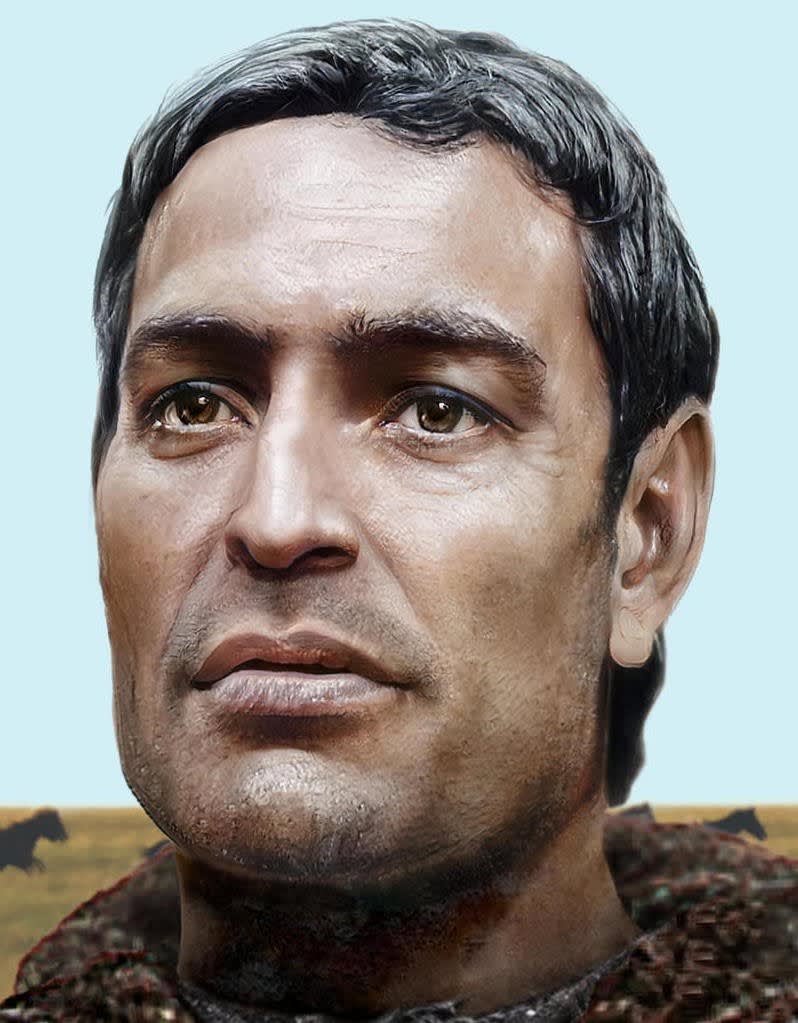
Agriculture and the Indo-Europeans – Steppe and South Asia

Proto-Indo-Europeans were farmers and not pastoralists

It is interesting to note that while a couple of decades ago and perhaps more, agriculture was not considered a part of Proto-Indo-European culture, it is now no longer the case. It was mistakenly believed that the Indo-Iranians must not have practiced agriculture because apparently the Indo-Iranians did not share an agricultural vocabulary with the rest of the Indo-Europeans (i.e. the European IE). However, more recent research has clearly shown this to be an error and it is now well accepted that the Indo-Iranians shared quite a significant amount of agricultural vocabulary with the other Indo-Europeans, sufficient enough to posit agriculture at the Proto-Indo-European stage.

The overall pattern of agricultural terms has been a persistent topic in IE studies, much of which has been stimulated by the observation that while stockbreeding terms appear to be widespread across the entire range of IE stocks, agricultural terms tend to be confined more closely among the European stocks and are, from a traditional point of view at least, scarce in the Indo-Iranian languages

However,

there is no case whatsoever for assuming that the ancestors of all the Indo-European stocks did not know cereal agriculture. While there may have been speculation in the past as to whether some terms might have applied originally to the gathering and processing of wild plants, terms for the plow, cultivated field, and techniques appropriate to the processing of domesticated cereals whose home range lay outside of most of Europe, suggest that all the earliest Indo-Europeans knew agriculture before their dispersals. (Encyclopedia of Indo-European Culture. Mallory & Adams, 1997).

The term that is cited as the major culprit for this error denotes a cultivated field in European languages while in Sanskrit it simply means a plain.

The second term (*haegˆros) has caused much discussion as the European cognates indicate a cultivated field (e.g. Lat ager, OE æcer [> NE acre], Grk agro´s, Arm art, all ‘field’) while the Skt a´jra- means simply ‘plain’ with no indication of agriculture. This divergence of meaning led to the proposal that the Indo-Iranians separated from the Europeans before they had gained agriculture so that we might posit a pastoral Indo-Iranian world and an agricultural European. Such a distinction is not borne out by the abundant evidence that Indo-Iranians also shared in an agricultural vocabulary… (The Oxford Introduction to Proto-Indo-European and the Proto-Indo-European World. Mallory & Adams, 2006).

the Proto-Indo-Europeans possessed an economy based on domesticated livestock and domestic cereals. Earlier models such as those developed in detail by Wilhelm Brandenstein (1936) that suggested a marked dichotomy between arable Europeans and pastoral Indo-Iranians (or Tokharians) cannot really be sustained (Mallory 1997b) and despite a considerable number of differences there is still a substantial amount of shared agricultural vocabulary between European and Asian languages (Table 1 and 2). While the lists of cognates can certainly be criticized in certain specifics and they may well be an over-optimistic summary, I fear that there would still be a sufficient assemblage of words to indicate that both Europeans and Asiatic Indo-Europeans shared inherited words for both livestock and arable agriculture… (Twenty-first century clouds over Indo-European Homelands. Mallory 2012).

Continue reading Agriculture and the Indo-Europeans – Steppe and South Asia
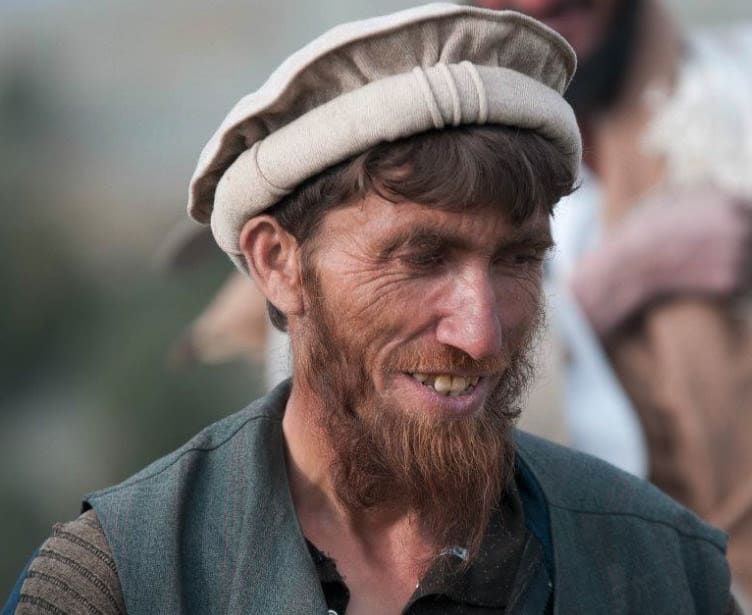
Hinduism in Afghanistan

An argument has been made that there was no Hindu Afghanistan. This is unfortunately wide off the mark. Afghanistan was not just Buddhist but Hindu and Buddhist and Hinduism was the other major religion of the region besides Buddhism.

The evidence of Hinduism in Afghanistan is quite overwhelming and it begins to appear already during the Indo-Greek period, and continues during the Kushan period, the Kidara, the Hephthalite and the Kabul Shahi period.

The earliest evidence of Hinduism in Afghanistan among the Indo-Greeks is as old as 180 BCE and it comes north of the Hindu Kush for good measure.

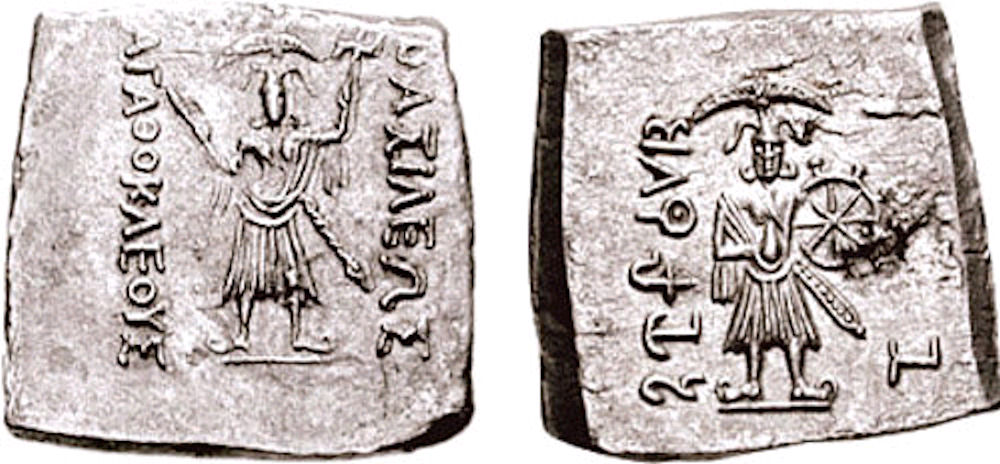
The first known bilingual coins of the Indo-Greeks were issued by Agathocles around 180 BCE. These coins were found in Ai-Khanoum, the great Greco-Bactrian city in northeastern Afghanistan, but introduce for the first time an Indian script (the Brahmi script which had been in use under the Mauryan empire). The coinage depict various Indian iconography: KrishnaVasudeva, with his large wheel with six spokes (chakra) and conch (shanka), and his brother SankarshanBalarama, with his plough (hala) and pestle (masala), both early avatars of Vishnu.[22] The square coins, instead of the usual Greek round coins, also followed the Indian standard for coinage. The dancing girls on some of the coins of Agathocles and Pantaleon are also sometimes considered as representations of Subhadra, Krishna’s sister.

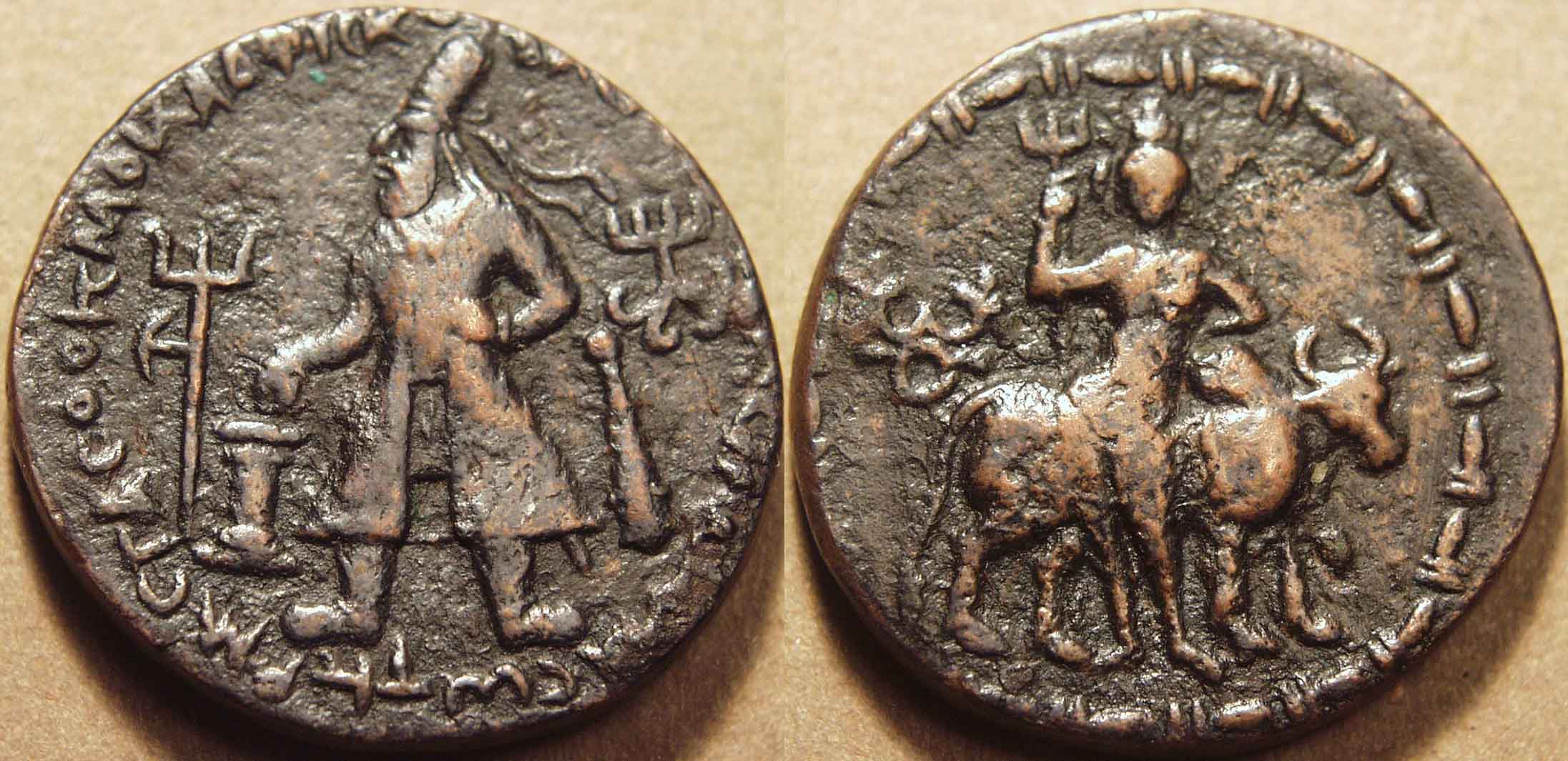
Hinduism is also evident in Afghanistan during the Kushan period. The first great Kushan king or emperor was Kujula Kadphises and he never ruled any territory east of the Indus. Yet he is already shown on his coins as a devotee of Shiva.

Contrary to earlier assumptions, which regarded Kujula Kadphises as Buddhist on the basis of the epithet of the ‘satyadharmasthita’ epithet, it is now clear from the wording of a Mathura inscription, in which Huvishka bears the same epithet satyadharmasthita , that the kingdom was conferred upon him by Sarva (Shiva) and Scamdavira (Candavlra), that is, he was a devotee of the Hindu God Siva. It is striking to see that Kujula Kadphises has already adopted the worship of Siva and the use of Kharosthï script at such an early date.

A coin of Vima Kadphises with Shiva standing before a Nandi on the reverse.


Hinduism was either practiced or patronised by all later Kushan emperors but then they were also rulers of much of North India in addition to Afghanistan and parts of Central Asia. The last of the Great Kushans was named Vasudeva. This is as Hindu as it can get.

The Kushans were succeeded by the Kidarites, after a brief interlude when Sassanians captured Kushan homeland Balkh, who claimed descent from the Great Kushans. The Kidarite or the Lesser Kushans, had little political control beyond Indus or Punjab. But they are credited with spread of Hinduism in Sogdiana no less. Have a look at this –

https://sogdians.si.edu/dancing-shiva/

Although largely faded, the once–bright blue colors used to depict the body of the Hindu deity Shiva still dominate this image. Framed by a decorated arch supported by two half-columns, this complex representation of Shiva depicts the deity with a halo, poised in what some scholars believe is either a dancing or an alidhasana stance, with one leg bent at the knee and the other stretched forcefully to the side.

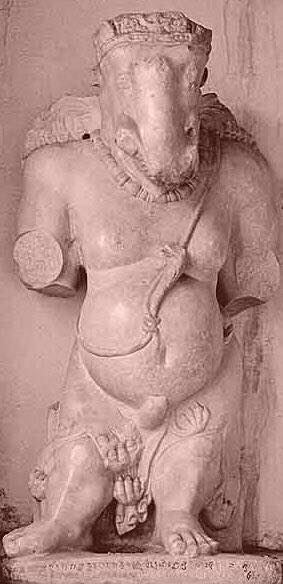
This is a Ganesha statue from Afghanistan which was installed by a king known as Khingila, whose identity is a matter of debate. Scholars speculate that he may have been from the Turki Shahi dynasty but the dating is uncertain and therefore the statue or Murti is dated anywhere between 6th to 8th century CE.

Hinduism lasted in Afghanistan as a major religion right upto the conquests of Mahmud of Ghazni.

The Zunbil and Kabul Shahis were connected with the Indian subcontinent through common Buddhism and Zun religions. The Zunbil kings worshipped a sun god by the name of Zunfrom which they derived their name. André Wink writes that “the cult of Zun was primarily Hindu, not Buddhist or Zoroastrian”, nonetheless he still mentions them having parallels with Tibetan Buddhism and Zoroastrianism in their rituals.

“During the 8th and 9th centuries AD the eastern terroritries of modern Afghanistan were still in the hands of non-Muslim rulers. The Muslims tended to regard them as Indians (Hindus), although many of the local rulers and people were apparently of Hunnic or Turkic descent. Yet, the Muslims were right in so far as the non-Muslim population of eastern Afghanistan was, culturally linked to the Indian sub-continent. Most of them were either Hindus or Buddhists.”

I think this brief information should be sufficient for understanding that Hinduism was a major religion in Afghanistan for at least a 1000 years before the coming of Islam. It is only natural to expect this as Afghanistan south and east of Hindu Kush was always a part of the Indian subcontinent geographically, culturally, politically and genetically.


Afghanistan was never “Hindu”


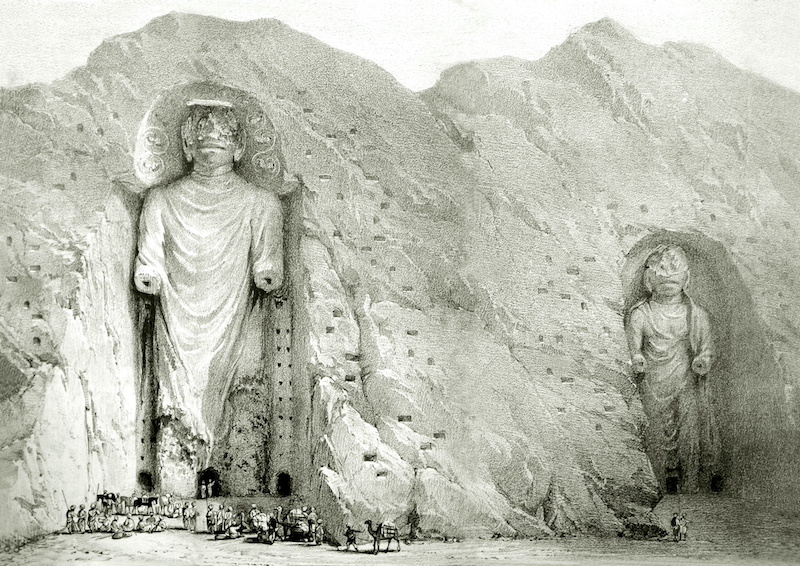
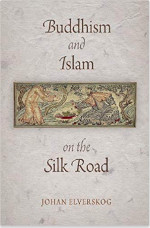
Buddhism and Islam on the Silk Road has an extensive section on Afghanistan. The Bamiyan Buddhas reminds us what the texts make clear: up until 900 AD the highlands in an around modern Afghanistan were heavily Buddhist. The Turki Shahi kings of Kabul seem to have patronized Buddhism. In contrast, their successors, the Hindu Shahi kings, seem to have tilted toward what we would call Hinduism.

Because I’m posting a Substack on Afghanistan soon the civilizational and cultural identity of Afghanistan is on my mind. After my reading and reflection, I’ve come to the conclusion that the area and the people can be thought of as a crossroads between Persian, Central Asian, and Indian. Central Asia includes both Iranic and later Turkic cultures, while the Persian influence reflects a deeply west Iranic sensibility. Finally, it has hard to deny that India and much of southern and western Afghanistan are deeply connected geographically, biologically, and culturally.

And yet some Indians keep claiming that “actually Afghanistan use to be Hindu…” This is false. At least by any comprehensible definition of “Hindu.” It is true that Afghanistan was once heavily Buddhist, but Buddhism is not Hinduism. It is true that there have long been Indians in Afghanistan, but there have been Indians in Southeast Asia as well. It is true that the Iranian pagans, like the Nuristanis, worshipped gods and practiced traditions that descend from one’s affinal to the Vedic Aryans, but the pre-Vedic religion of the Indo-Aryans was not Hinduism as we’d understand it.

To a great extent, this sort of cultural imperialism is harmless and cringe. But it’s a bit on the insensitive side given what’s going on in Afghanistan, where ironically Indian-origin Deobandi Islam is is reigning supreme…

Nepali Brahmins tend to have Tibeto-Burman ancestry


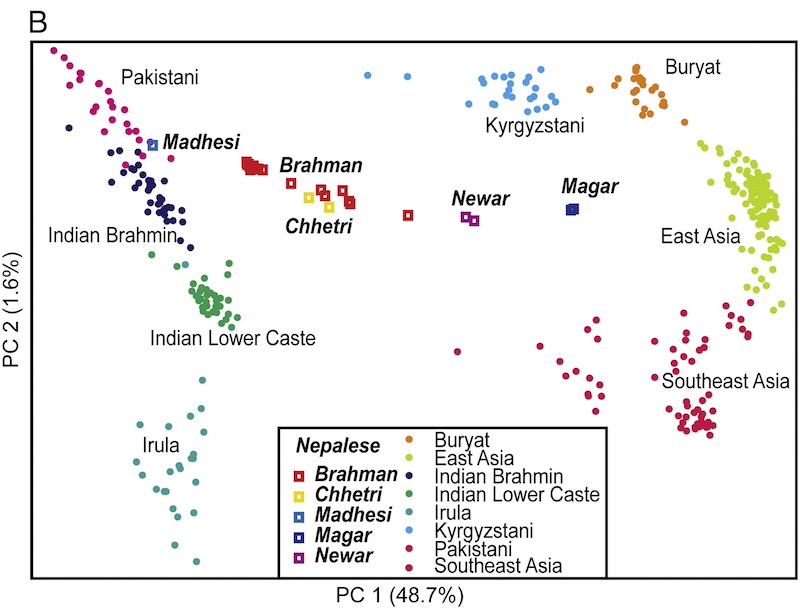
I ran a Clubhouse last night on Nepalese genetics. I said something to the effect that most Nepalese Brahmins have Tibetan admixture. A Nepalese Brahmin came up on stage to tell me this was inaccurate, and that they did not intermarry with native people.

To give the benefit of the doubt I went back and double-checked, and Toward a more uniform sampling of human genetic diversity: A survey of worldwide populations by high-density genotyping, which has a diverse set of Nepalese. What you see on the PCA is pretty straightforward. Except for the Madeshi, who is presumed to descend from recent migrants from India, all the Nepalese are Tibetan shifted.

The rank order is what you’d expect, with the Magar being mostly Tibetan, and the Brahmins being mostly non-Tibetan. But the Nepalese guy was totally full of shit. I’m sick of listening to people contradict genetics when it’s so clear.

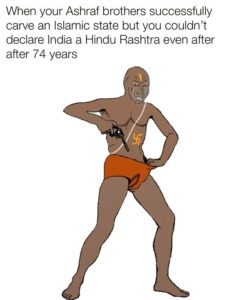
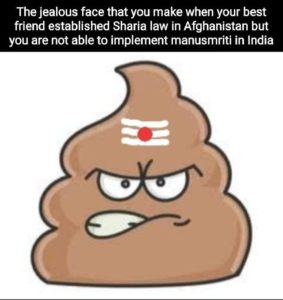
What do Hindu nationalists think of the Taliban? Do they envy them?

I saw theses on some Instagram political meme pages (don’t ask, Herald and Newsline aren’t around and this is how satire gets passed around once the world and the economy make magazines un-viable) and I was left with some questions.

My query was:

Are Hindu nationalists jealous of the Taliban’s success?

How do they really feel about the Taliban taking over Afghanistan?

Browncast: Major Amin on the Age of Strategic Anarchy in Afghanistan

Another BP Podcast is up. You can listen on LibsynAppleSpotify, and Stitcher (and a variety of other platforms). Probably the easiest way to keep up the podcast since we don’t have a regular schedule is to subscribe to one of the links above.

This episode was recorded over the phone, so please excuse some minor audio issues. As many of our readers know, we posted an article from Major Amin a few days ago, arguing that the US had made a brilliant strategic move out of Afghanistan (even though the disengagement has been handled poorly). In this podcast, he repeats this view and has a few salty words about this and related topics.. Enjoy.

Comments welcome.

Btw, my own random amateur views can be found at this link. 

Postscript 1: Several friends have said that they cannot take his views seriously if he thinks “lower middle class” is such an insult, etc. But I no longer use that particular filter too much. I think people can have very “problematic” AND insightful views simultaneously. If we are interested in learning (and not just in virtue signaling) then we can filter them out and still find something useful. Of course, friends will do that all the time with each other, but I admit that it is a more complicated question when we talk with strangers online, so if you feel strongly about this issue, this may not be the podcast for you.

Postscript 2: Is there anything in the podcast that I should have objected to during the conversation? I think yes, there is. I should have suggested that we cannot really say “the only good Chinese is a dead Chinese”. Other than that, I have no regrets 🙂

Onward on the steppe!


After a long delay, I’ve dropped part 4 of my continuing series on the Eurasian steppe and its history (I am currently planning on going down to the 13th century AD…so this should take me into 2022 since I’ve barely made it beyond 2000 BC as of now). The next installment is planned to be on the early Indo-Iranians and their connection to the Fatyanovo–Balanovo culture, and subsequent expansion in the Andronovo expansion (this will compliment my two pieces on India from last January).

Afghanistan; Graveyard of Western Policy Wonks (but certainly NOT the graveyard of empires)

I had posted an earlier blog post with the somewhat tongue in cheek title “America’s brilliant strategy in Afghanistan”. This was basically a note (and an audio version of the same) from Major Amin, arguing that strategically a US exit was a brilliant move as it ensured that this tar baby is now the problem of Pakistan, China, Russia and Iran (and to some extent, India), and not an expensive American headache. The thought is strategically sound (if very cynical and cold blooded), but I have some doubts about whether the US is consciously trying to do this (they may indeed end up doing this, and could even emerge stronger, with their rivals weaker, as a result, but that may not have been the conscious intention).  Anyway, here, in no particular order, are my random thoughts on this topic:

  1. There are no grounds for thinking that the same damn  people who created the disaster and were wrong about it at every step for 20 years are now suddenly these Machiavellian geniuses who will trap Pakistan and its patron China (not to mention Russia and Iran) in Afghanistan. It is far more likely that the geniuses are still dreaming of “engagement”, only now instead of engaging with Musharraf and the anti-Taliban Afghans, they will engage with General Bajwa and the Taliban. These geniuses will now sell new kool aid about how the new government they have helped to install will ensure security and crackdown on alqaeda and whatever bogeyman the Americans are now supposed to be scared of. And of course, to do this the new “anti-terror allies” will need aid (part of which will be stolen by corrupt Americans at step one, the rest to be stolen locally by these new allies, with a small trickle making it to starving afghans). Meanwhile, these new allies, not new to the game themselves, will make sure a steady supply of “alqaeda number threes” are handed over to be housed in Guantanomo or wherever. They will also make sure there are enough terror incidents and threats to keep the show going forever. We will of course get mucho dinero from the EU as well, since that is the only way refugees can be kept out of fortress Europe (or at least, this is the line that will be sold on TV). Now, this may NOT come to pass fully like this because Western powers are still democracies, there will be debate and the best laid plans of mice and thinktankers may be thwarted by bad publicity and “aid fatigue”, but NOT by their own planning. In short, the US and the West may indeed end up leaving the tar baby to less gentle caretakers, but they will do so unwillingly and in spite of themselves, NOT because this (sensible) plan is what they have opted for now that the first (nonsensical) grand strategic plan has failed and they have well and truly lost the war.
  2. The failure in any case is not a failure of Democrats or Republicans, it is a systemic failure of the entire postmodern Western establishment. And the systemic failure starts from the vast gap that exists between Western civ and the rest of the world. For better AND for worse, the West has moved very far from where most humans were a century ago. Leaving aside all questions of whether this is good, bad or ugly, or whether this is sustainable or not, the fact remains that at this point in time the average ivy league educated “analyst” is bound within so many layers of WEIRD assumptions and habits that he or she (maybe especially she, since she will not have hormonal access to the patriarchal and macho world of men outside the West; though this is by no means a general rule; some Western women can also know men AND women and their quirks very well) has no framework for even beginning to see what is going on. Garbage in, garbage out is always true, but it is also worth remembering that there CAN be a machine that converts good information into garbage. If the software is faulty, then non-garbage going in will also become garbage on the way out. This should not be forgotten. 
  3. Some people say that Western corporate capitalism has become so powerful that it has now eaten through whatever older human paradigms were operating (and are still operating at some level) in Western societies. If this is indeed the case then the questions become all about who profits and who loses? but the twist here is that the usual Lefty answers are also mostly propaganda. War is profitable, but so is peace. Peace is actually MORE profitable for more corporations than war is. But if war profits alone were (and are) driving policy choices, then the issue becomes one of how SOME corporations and individuals (who DO profit from war) have managed to capture institutions to such an extent that their profits drove policy to invade Afghanistan? and their profits will determine what comes next? People have strong opinions on this, but I find that most of the opinions turn out to be emotional outbursts or propaganda on close examination. There is almost certainly SOMETHING to this angle of attack, but I still think, not as much as advertised; because I think they make money when they get the chance, but getting the chance was not something they planned in detail.. eg, “corporations” (who would that even be?)  did not blow up the towers just so they could go to war. Other human concerns (race, religion, identity, national interest, individual madness, individual desire to do good, plain stupidity, error, chance, etc) are still driving us.
  4. The whole notion of “non-state actors” is a huge red herring. There ARE non-state actors, and states usually defeat them. They are mostly a police issue, not a military issue. A really serious insurgency (Vietcong, Taliban, Kashmir, etc etc) needs overt or covert state support. Conversely, the really cost-effective counter (provided you have the conventional forces to have such an option) is to confront the states supporting them. The notion that the USA is helpless in front of some ragtag gang of Islamist mujahids is just bullshit. At some point, the US could be up against sponsors that the US cannot go to war with (China, Russia) and would then have to settle for other measures, but to fail to get countries such as Afghanistan, Iran or Pakistan to change their behavior (short of being under the a full Chinese or Russian umbrella) is a choice, not a given.
  5. The Taliban are going to rule all of Afghanistan now because the US chose to give them the country (whether as part of some Machiavellian scheme or just because Khalilzad and Trump were idiots), but they will not do so in some mythical “inclusive” or “moderate” fashion. They will not last long if they do anything that stupid, and they are not stupid. Their asabiya comes from Islam and their core supporters are committed to a very jihadist and harsh version of Islam. They can certainly be smart enough to act moderate or to include non-taliban in their govt because of considerations of realpolitik and their fighters have enough discipline and their ISI minders have enough influence that this can be done. But just as the Chinese communists included many non-communists in their national reconciliation councils or whatever, but never lost sight of the need for unity of command and clear authority over all aspects of national life, so will the Taliban. if they dont, they will fall quicker than expected. That said, they will not enjoy a free run. There will be many groups trying to undermine them. There will be criminals There will be smugglers. There will be local warlords. They will have to be harsh, they WILL be harsh, but they still wont enjoy enough tranquility to start giving out mining concessions to Shenyang Mining corporation number five or whatever. The US may eventually get out of the region (with think tankers kicking and screaming about “failure of engagement” all the way) and then will be able to enjoy the show from a safe distance. But with so many intelligence agencies and agents operating at every level, peace is not likely. Neither is it likely that the Taliban regime (even if it stabilizes) will totally eliminate all the various terrorists who are still holed up in Afghanistan. Ideologically, they cannot. Practically they cannot.
  6. There will be massive economic disruption in Afghanistan very very soon. The whole place was running on American taxpayer money (and smaller contributions from the EU and others). Even though the think-tankers will try their level best to keep the manna flowing, it is not likely to reach even a tenth of the levels achieved in the corrupt war years. Neither China nor Russia believe in throwing money into tar pits. So who will pay? The afghan people will pay, by moving abroad (mostly to Pakistan and Iran, luckier ones further West), by living on less, by selling what drugs they can (though most of that profit goes to middlemen and smugglers, not to the growers). Pakistan will pay what it can, which is not a lot. There is no way there can be a sudden turnaround and prosperity and mining contracts raining down on Kabul. None.
  7. But can there be a longer term recovery? Can China do what the USA could not? build a viable Afghan state? I doubt it. I doubt that they will even try. At best, they will give some money to Pakistan to have a go, but it will not be American level cash, it will be strictly “cash on delivery”. Can Pakistan deliver them a functioning Afghanistan? Our entire past record suggests we cannot. For the sake of the Afghan people, I hope I am wrong.
  8. India mostly gets to sit tight and hope that their “balakot deterrence” still holds after Pakistan has so decisively defeated the great Satan. It could. We will see. Mostly, I think India comes out of this relatively OK. Their main issue is whether this will embolden Pakistan to restart the kashmir Jihad. It may. It may not.
  9. Major Amin has also raised another interesting question: this one for Pakistani think tankers who think they have won some grand victory by defeating the USA. His thought is “what if our boys actually succeed”?  ie what if the Taliban.  actually stabilize their government and become a viable state? The think tankers in Pakistan maybe missing the possibility that these “grains of sand” (the Afghans) could come together to form a solid mass at some point. And at that point, they will start thinking about strategic depth in Pakistan. After all, if Islamic zeal is what gave them victory, then why not export that zeal to Pakistan? and who better to do it than Afghans? I believe the crucial point here is that Pakistanis (especially our Punjabi and Mohajir elites) have this misconception that just because they (through no great gifts of their own) are inheritors of the Sikh conquests and the administrative machinery and mercenary army of the Raj, they are somehow eternally meant to lord it over the Afghans. This is NOT how any Afghan (Leftist, Rightist, whatever) sees themselves. They are down and out right now because the Sikhs drove them out of the trans-Indus districts and the British created a modernish state in the region that is much more sophisticated and capable than the Afghan state (which was not very advanced to begin with, and whatever it was, we managed to utterly destroy in the first CIA Jihad in the 1980s). But this is not some sort of eternal historic truth. A truly stable Afghanistan will want those districts back and will export true Islam to Pakistan as the means with which to get their way. The current arrangement, with Pakistani officers issuing (or at least, trying to issue) orders to Afghans is only because the Taliban lack many things that only a modernish state can supply and we are that supplier. Let them get settled in, and they will start to look East. We cannot afford to let them win in the way Sethi sahib thinks we want (and hope to).
  10. From the last post: Some people have asked if this was not inevitable. I think it was not. I think there was a slim chance in 2002 to make it work. But it involved two very difficult (but doable) things; 1. A more competent American occupation and transition. and 2. Pakistan decisively switching sides and abandoning Jihad in Kashmir and Afghanistan (since the one is our justification for the second, both had to go). 1 in retrospect seems near impossible. 2 may have been more doable than 1,  So putting the primary blame on Pakistan may be a bit unfair now. (Until a week ago, I might have blamed Pakistan first; though i saw the American effort as hugely corruption ridden and frequently incompetent, even I had not idea HOW incompetent it was. THAT effort was never going to succeed. Though it did not have to end in giving the country to the Taliban. It could still have ended with the US leaving a pro-US govt behind, who would likely have held on to some areas if given some money and support. Anyway, after what we have seen of american incompetence and cynical abandonment of friends, I think 1 (US incompetence and strategic and tactical blindness) is the more important reason this failed. Without Pakistan the Taliban could not have retaken the country. Without US incompetence, neither could have won their respective victories.

See the older post for more random thoughts and predictions.

Sethi sahib’s optimistic takes are here:

Brown Pundits