Does Indian history matter ?

Across the internet, and even in the broader public discourse, Indian history is a point of contention in a way that not many other civilization’s past is. Whether it is the question of early Central intrusions and their links (or lack thereof) to Hindu synthesis and propagation, or the era of Muslim political rule, narratives of history in India carry get emotional valence.

However, there is a bigger question here. In what way does Indian history matter ? The past is literally that, the past. To matter, history must continually provide relatable reference points and rich contexts to understand the present and beyond. On first glance, as a record of a civilization that failed to industrialize and reach enlightenment values autonomously, Indian history might not seem to hold much intrinsic value.

Where Indian history becomes more relevant for today and tomorrow is when it starts responding in a innovative and creative ways in response to the industrialized West. There is a reason why the Indian Constitution out enlightens most Western founding documents. This response comes from India’s specific cultural and moral values, but these attributes are totally divorced from genetic profiles and who had the throne in Delhi, when. They rely instead on deeper currents of folklore

The Mantle of Victimhood

It is an undeniable fact that the last 1000 years of its history has not been great for the Indian civilization. We have seen the steady erosion of Indian cultural influence across Central Asia, East Asia and South East Asia. Within the subcontinent itself, the native Sanskritic high culture was replaced over the vast majority of its expanse by a Persian high culture imported from Central Asia & Iran. And this has never really been reversed up until now. When the Persian high culture was swept away, the Sanskritic or Hindu high culture did not come in its wake but what we had instead was the imposition of another foreign high culture, that of the English.

That we have had such a mighty fall is often not emphasised or even brushed aside by some intellectually dishonest historians. They even try to disingenuously argue that the destruction and plunder, often of great Indian temple cities, by Mahmud of Ghazni, was just par for the course in Indian history since apparently Hindu kings also invaded the kingdoms of other neighbouring Hindu kings and took away the idols of their presiding deities from their main temples.

But what the invasions of Mahmud Ghazni did to India is rather glowingly mentioned by the scholar Al-Biruni himself,


Yet read as per this post on Encyclopedia Brittanica,

Maḥmūd’s conquest of northern India furthered the exchange of trade and ideas between the Indian subcontinent and the Muslim world.


Browncast: North India 700 to 1200 AD.

Sindh 700ad.jpg

Another Browncast is up. You can listen on LibsynAppleSpotify, and Stitcher (and a variety of other platforms). Probably the easiest way to keep up the podcast since we don’t have a regular schedule is to subscribe to one of the links above!

The history podcast returns to North India. Gaurav, Omar and Jay are in conversation with Maneesh about the changes in the North Indian landscape as the Islamicate invasions of India begin, first with the Arab colonization of Sindh, then heating up with the Turkic plunder raids of Mahmud of Ghazna and the gradual colonization of the Northwest by Turkic and Afghan raiders.


A good, wide-ranging interview with Romila Thapar   (original link is broken, I am not sure what it was, but this video is around the same time (and i posted another one below this post)

I did have a few random thoughts of FB and just copy and paste them here. Not well formulated, but you may get the drift (or I may learn something from any comments):

I have no argument with a lot of the history or the ideal of the neutral, skeptical, inquiring historian.., as far as it goes. But something is missing; her own overall worldview. It is frequently said (mostly by her enemies?) that her basic framework is Marxism. But as far as I know, she does not explicitly claim this. Is it? and if she does not like to claim it, why not? And even if it is, there are so many subcults within Marxism by now, we may need to know more specifics.. But anyway, let us assume it is some sort of Marxism, but Marxist Chinese and Russians ended up with very strong (and expansive) nationalist visions of Russia and China. What is her vision of India? and what is that identity based on (what is “India” in her mind? in her worldview?). Maybe she should lay it out more instead of relying on the understanding and sympathy of others who hold equally vaguely Marxist views?
Let us assume she has a vision of India that requires India to be India (the specific modern state that exists) and not part of the greater Ummah (or ten separate warring states for that matter) but she seems to take it for granted. Maybe she thinks it doesnt need to be contested, it is so obvious and clear. But maybe she should put it out there. Let us judge how solid it is. Maybe it IS very solid. Maybe it will turn out to be rather thin. Or standing on ground that is more “colonial” than her fans would like to admit?
Doesn’t she seem to assume the liberal secular democratic state exists without its own legitimating narrative, common culture, foundation, history, development, challenges and responses? And even economy?

And what about the economy? Supposedly the economy changes and the narratives (mostly half-imaginary) will follow? isnt that what the “Vulgar Marxists” (the only ones who actually ran states) used to say? But it is interesting that those Marxist states remained true to older identities and borders, frequently with a vigourous (and even vicious) nationalism that their Manchu or Romanov or Khmer ancestors would have been proud of…. But anyway, doesnt that raise the problem of her wider circle of supporters and fellow travelers having picked the “wrong” economics? Or does she still think those are the right economics? Maybe she does, but I find that most leftists don’t argue very deeply and firmly about that these days, preferring the easier and more superficial BS about postcolonialism and intersectionality or whatever. This too needs some work..and some discussion.

Anyway, she could be right about ALL the factual details of this raja, that monument, that battle…and still have said little that is deep/insightful about how all that evolved into modern India and where it may/will/should evolve next..or why THIS fact/line in book matters more than that fact/line in book?

That all those movements and kingdoms and conquerors will not fit into the neat categories and stories of various nationalist or religious parties is hardly a great discovery. In India it is sometimes claimed that Hindutvadis are the main mythmakers about the past, but obviously there are as many mythmakers as there are parties contending today. We may need to examine her foundational myth in more detail. Which means she may have to lay it out in more detail..

PS: I would prefer a secular democratic liberal Indian state. But even such a state needs a legitimating narrative, , Look at China or the USA: there is a central culture that is in charge and confident of its place (this last thing may not apply fully to all sections of Western academia but still applies far more than “the sky is falling” critics sometimes claim.. though how that may eventually shift is an interesting question) and it incorporates Muslims into society just as it incorporates other cults, as long as they are law-abiding…otherwise there is trouble. India is far from that ideal, but that IS the ideal. But it presupposes a dominant common culture. Or so I think. Maybe I am wrong. But we may need to debate this more explicitly than she ever does..I am just not sure she has enough to say about the development of that ideal, and the challenges that stand in its way today, in India, in any deep sense. ..
Of course, whatever it is, I dont expect it to make me happy necessarily. Happiness being a whole separate issue, much smaller in scale most of the time.

India’s lost decades: A failure of discourse

Plot of world gdp growth versus Indian gdp growth

There is much historical work on the Indian economy under British rule. The top line summary is indicated in the graph above, while the world grew quickly from 1800 to 1950 (per capita gdp more than tripling), India stayed exactly where it was. Plenty of reasons have been offered, but India’s troubles in this time come down to two reasons:

  1. A lack of natural resources necessary for industrial growth.
  2. British racial attitudes that deemed Indians unworthy of human investment.

The period I am more interested is the time between 1965 and 1982. The world experienced a surge in output in this time. South Korea went from around the same GDP per capita as India, to 7 times India’s output.


The Earth’s Lost Industrial Heart

After our discussion on industrialisation in India, I began to wonder: if the Earth were one country, one government, one infrastructure grid, one economy, where would its industrial heart lie?

Geographically, the answer is obvious. The natural centre of the world, for energy, labour, and trade routes, isn’t London, New York, or Beijing. It’s the triangle between the Persian Gulf, the Indo-Gangetic plain, and the Red Sea.

Deserts rich in hydrocarbons. River basins dense with labour, water, and grain. Seas that touch every continent. If the world were united, this belt, Arabia to India to the Nile, would be the Ruhr, the Great Lakes, and the Pearl River Delta combined.

The Natural Order of Geography

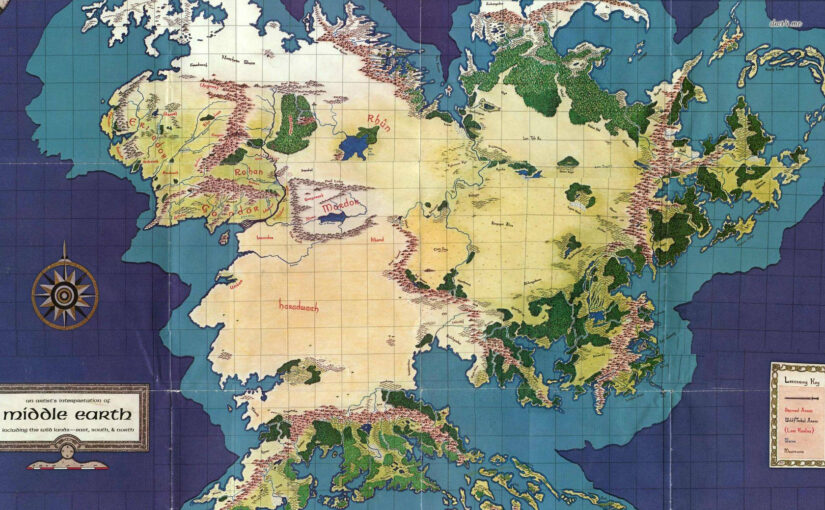
Before empire, this region was the planet’s connective tissue. Spices, silk, horses, and steel moved from India to Arabia to Africa. Energy, grain, and knowledge flowed through the Red Sea and the Persian Gulf like the arteries of the Earth. It was not the “Middle East”; it was Middle Earth. Continue reading The Earth’s Lost Industrial Heart

Sunday reads

I recently read a piece I’d like to share: about the life of Bacha Khan and how he initiated an anticolonial school, the Azad School in Utmanzai, in 1921. It was a Pashto-medium institution where Manmohan Singh, the former Prime Minister of India, also studied. Nehru and Gandhi visited the school as well — Nehru in 1937 and Gandhi in 1938 — delivering speeches and spending time there. Due to his dissent against the British, he had to spend about 37 years in jail out of his 93-year life.

The Genius of Bacha Khan

“Most geniuses have one masterwork for which they are famous.  For Che and Fidel, that work was surely the Cuban Revolution and its international humanism, just as it was for Lenin, the Russian.  For CLR James, we can list “The Black Jacobins” as an extraordinary work of genius, as well as the underground Marxist group he co-led, known as the Johnson-Forest tendency.  For Selma James and many other women of the 1970s Marxist Feminist movement, it was about recognizing the economic contributions of housework and children and establishing organizations that advocated for fair compensation for caring and reproductive labor.  Their slogan, ‘invest in caring, not war’, remains the blueprint. For Spivak, it has been to chart a path for activism while working beyond Eurocentric Logocentrism.

The list is long, but I never thought that a tall, six-foot-three, broad-shouldered, soft-spoken Khan from Utmanzai, Hashnagar, a mere graduate of King Edward’s School, Peshawar, would, before he turned 30, have three works of genius to his name. Abdul Ghaffar Khan, honorifically known as Badshah Khan (King of the Khans) and also Bacha Khan, a title bestowed upon him at the mere age of 27, created three masterpieces. In order of creation, they were: Anjuman-i-Islahul Afaghina (The Society for the Reform of the Afghan), Pakhtun magazine, and the greatest non-violent organization the world has yet known, the Khudai Khidmatgar.  Here I want to write only of the first, Anjuman-i-Islahul Afaghina. “

Continue reading Sunday reads

New writing ideas

G’s future posts:

« I am thinking on a longish post on how the Hindu Epics actually made Geographical India into cultural India – more than wars of Ashoka or Gupta’s or Mughals. »

A very high Signal Comment by G again:

Guys discussing high HDI and Low HDI of North and South without discussing coastal connectivity?

All states which have a sea barring Odisa are doing well. Bengal used to do well but has gone to shit due to 70 years of Communist and bad economic strategies.

Among “Northern” states GJ has a long coastline.
HR PJ are doing fine due to connectivity to capital and extremely high irrigation and other stuff.

The only places which comprise the “backward” north are UP,Bihar – badly governed since independence and landlocked and JH and CH which have extremely difficult terrains and very very dense forests along with being landlocked.

Geography, historic and economic reasons often supersede cultural though people who want always focus on those.

Brown Pundits