Bharat Needs No Validation

I’ve been following the usual commentary, the BP quadrant: Indosauras, Nivedita, Kabir. And I read Kabir’s offhand remark that the Ramayana “didn’t resonate” the way the Iliad or Odyssey did. That casual dismissal is telling.

The Ramayana is not just literature,  it is scripture, memory, and civilization encoded in verse. It has shaped the moral and cultural landscape of over a billion people for millennia. To compare it, then downplay it and to do so so glibly reveals less about the text and more about one’s own civilizational estrangement.

Let’s be honest: that kind of language would never be used for the Quran or Islamic texts. And the fact that it is used for Hindu epics by brown intellectuals raised in the shadows of colonial categories says everything about how deeply colonized the Pakistani mind remains. Pakistan is, in truth, an Urdufied Punjab insufficiently imagined, a fragment that lost its civilizational compass in the act of imagining itself apart. The fact that the Ramayan being Pakistani heritage is such a novelty speaks volumes.

Today I sat at Stratford Westfield, eating Dubai Hot Chocolate ice cream, and the man next to me clearly Pakistani asked me, in Urdu, “if I was in the queue?” His wife spoke Punjabi-inflected Urdu. It struck me how London has become the real unifying Punjab. Ten percent of Britain is now Desi. And outside of the subcontinent, the fractures of 1947 heal in ways that remain impossible back home.

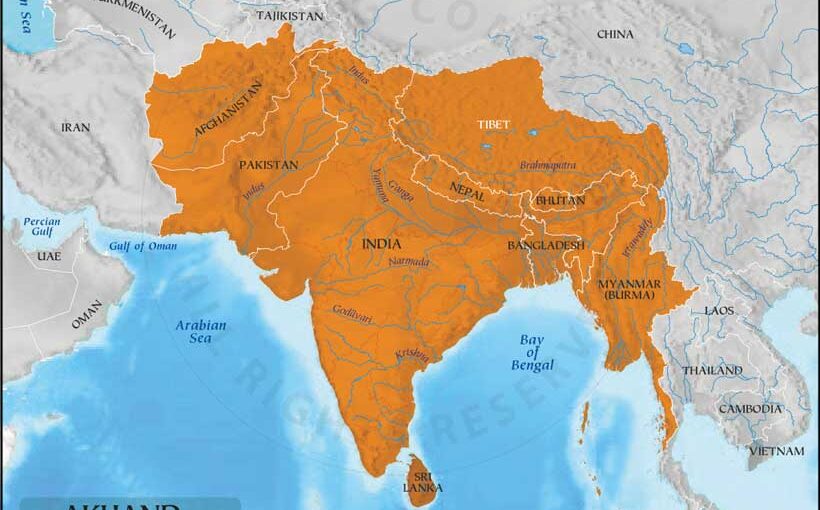
We speak of South Asia. But the term is bureaucratic; no one identifies with it. India is real. Bharat is civilizational. Aryavarta stretches from the Hindu Kush to the Indian Ocean — just as France is the Hexagon, Bharat is the Triangle. Partition clipped its wings, but its soul remains intact.

And look at the reality today: Indian Muslims are thriving in the mainstream. The title song of the upcoming film Sarai — written, composed, and directed by three Muslims: Ishaq, Fahim, and Arsalan. The leading lyricist is Javed Akhtar. This is a country that refused bitterness. A country whose largest minority chose Partition, and yet was never cast out, a unique precedent and testament the pluralism of Dharma.

Bharat needs no validation. It doesn’t need the approval of its neighbours or the heirs of partitioned imagination. It only needs to walk — and it is flying. Toward its own authenticity, on its own terms. And the world is watching.
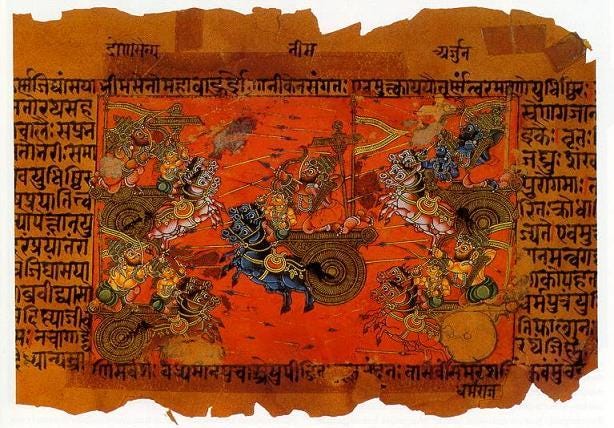
The Mughals Were Not an Indian Dynasty — They Were a Dynasty in India

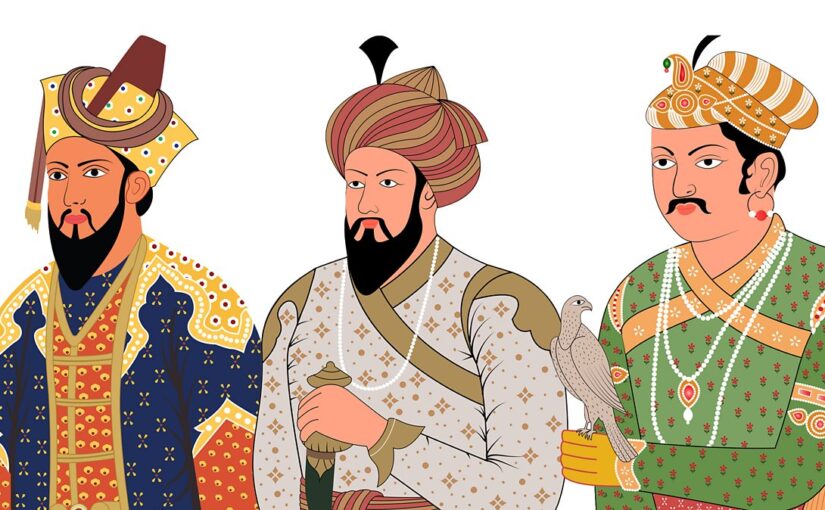
The Mughals were not an Indian dynasty in the civilizational sense. They were a dynasty in India — rooted in the Persianate ecumene that stretched from Anatolia to Bengal, but distinct from the indigenous Indic civilizational framework.

Richard Eaton’s India in the Persianate Age captures this well. The Mughal elite, like other Turko-Mongol polities across the Islamic world, operated through a tri-layered framework: Arabic religion, Persianate high culture, and Turko-Mongolian kingship. This pattern held from Egypt to Samarkand — and India was no exception.

But here’s the distinction: while in places like Iran, Central Asia, and even parts of Anatolia, the ruling elite and the subject populations often shared linguistic, religious, or cultural proximity, in India the Mughal court sat atop a society whose foundational worldview — Dharma, Sanskritic cosmology, ritual plurality — was wholly different.

Yes, the Mughals were cosmopolitan. Yes, Akbar attempted synthesis. But at their core, the Mughal dynasty retained its sense of separateness — not just politically, but civilizationally. Persian remained the language of court and culture, their aesthetics leaned West, and their ethos remained imperially aloof. Their legitimacy was not drawn from Indian sacred geography but from Turanic, Persian, and Islamic claims of kingship.

Contrast this with the Suri dynasty, which, despite being devoutly Muslim, left a remarkably grounded imprint. Sher Shah Suri ruled in Hindavi. His administrative and infrastructural legacy felt local, even national. In some ways, paradoxically, he felt more Indian than the Mughals did.

This isn’t about Islam being foreign to India. Islam has deep roots in the subcontinent — from Kerala to Bengal to Kashmir. It has been deeply indigenized across regions. But when Islam arrives twinned with Persianate high culture, it becomes something else: a hybrid elite formation, distinct both from Sanskritic Hinduism and from vernacular Islam.

The British Raj, too, was alien — but ironically, its later administrators localized many elements of their rule. The Mughals, by contrast, represented a more refined foreignness: imperial, hybrid, and between worlds.

It’s telling that the most influential women of the Mughal court—Noor Jahan, Mumtaz Mahal, and Hamida Banu Begum—were all of Persian origin. They wielded real power: issuing firmans, shaping court politics, commissioning architecture. In contrast, the Hindu-indigenous consorts—Jodha Bai, Anarkali, even Aurangzeb’s Hindu Rajput lover—were celebrated in romance, not governance. They were symbols, not strategists. Influence, in the Mughal world, came not with local integration but with Persian pedigree. That, in itself, says a great deal.

So no — the Mughals were not an Indian dynasty. They were a dynasty in India. That distinction matters.

Born in Blood: a relook at the final act of Parv

Please find the earlier review of the same novel i wrote a few years back: Parva (Marathi): An epic masterpiece | by Gaurav Lele | Medium

Spoilers ahead

The futility of war really comes through in the retelling of by SL Byrappa in the final act. A very brief summary of the final act with climax I had missed the first time around.

Bhima goes over to Hidimba forest, only to find out that some of his fellow Arya have burned up the forest like the Pandavas had done all those years ago in the Khandav-Van. Life comes a full cycle for him, like Takshak killing Parikshit in the original epic. We descendants of Vaidik Aryas must swallow a bitter pill as we look back with Bhimasen at the ways in which our forefathers brought forest land under cultivation.

अ॒ग्निमी॑ळे पु॒रोहि॑तं य॒ज्ञस्य॑ दे॒वमृ॒त्विज॑म् । होता॑रं रत्न॒धात॑मम् ॥ (RV 1.1)

Kṛṣṇa looks at the tsumani swallowing his Dwarka, as the alcohol fueled Yadava fratricide looms.

Continue reading Born in Blood: a relook at the final act of Parv

The Myth of the British-Made India

Six years ago, I wrote an outraged post on BP when a British historian casually claimed that “the British created India” (we had a very thriving commentariat then); a breathtaking erasure of one of the world’s oldest civilizations.

Today, reading Francis Pike’s piece in The Spectator, I feel the same cold disdain. Pike repeats the same old colonial fantasy: that India was a “patchwork of principalities,” and that Nehru and Gandhi “invented” the myth of Indian unity. Let’s be clear: this is not history. It’s imperial nostalgia dressed up as analysis.

“India’s first prime minister, Jawaharlal Nehru, and Mahatma Gandhi both propagated the myth that India had always been a unified country.”

“More reflective commentators knew that this was hogwash.”

“It was the British who… for the first time introduced the rule of law and a democratic form of government.”

This is colonial gaslighting at its most refined. Continue reading The Myth of the British-Made India

Cheap Catharsis, Expensive History

Sathnam Sanghera recently alluded to a moment from his 2019 Channel 4 documentary The Massacre That Shook the Empire. In it, the great-granddaughter of General Dyer, the man responsible for the 1919 Jallianwala Bagh massacre, is brought face-to-face with descendants of the victims.

In the clip, Dyer’s descendant calls the massacre victims “looters” and praises her great-grandfather as an “honourable man.” Twitter was predictably outraged. KJo chimed in. Think-pieces bloomed.

But why does her opinion matter?

This wasn’t justice, it was television. And like most televised reckonings with Empire, it was a performance. One more entry in the growing archive of aspirational brown catharsis, where the goal is not transformation but temporary relief; therapy instead of revolution.

Yes, the Jallianwala Bagh massacre was horrifying. No one disputes that. But to repeatedly stage these moments of inherited guilt and symbolic outrage is to substitute emotional spectacle for actual change.

Britain is not closer to redress. The Commonwealth isn’t inching toward reparations. British Asians are not about to own a fairer share of land, institutions, or equity. But we are expected to feel healed by the awkward mutterings of a descendant who’s not even sorry; just embarrassed that another cousin openly defended their ancestor.

This is not about historical accountability. It is about managing the mood of postcolonial subjects. Keep us emotional. Keep us visible. Keep us grateful.

But don’t give us power.

That is the unspoken logic of these curated moments: mourn the wound, not the cause.

And it works — because so many of us still seem to want respect more than justice. To be seen, included, affirmed.

But history will not be rewritten through awkward Channel 4 moments. It will only be reckoned with through real structural change.

Until then, let the Twitter mobs rage. But some of us will remain quietly asking the harder question:

What are we really performing here?

Constitutional Preambles in South Asia

an old article from our archive that has become hard to find, so reposting.

Most Countries around the world have a single consolidated written document as their Constitution (UK, New Zealand, Israel and Canada being notable exceptions here) and among these, a great many also have a preamble- a brief introductory text, preceding the main body of the written constitution. Preamble is essentially a polemic/set of guiding principles/visionary statement on the part of Constitution makers, before laying the foundation of a State in the main body. While it is of little consequence in day to day workings of a State, a Preamble does give us a fascinating insight into the ideals and cultural-historical myths propagated by a State- the context, the bigger picture, THE purpose behind that particular State’s existence.
Japan’s post-war preamble, for instance, vouches for International Peace and affirms that people of Japan shall never again be visited by horrors of war due to Government actions. French Preamble recalls Declaration of the Rights of Man and of the Citizen from 1789 and establishes France as a secular and democratic country. Likewise, North Korean Preamble promises a self-reliant socialist state that has realised the ideas and leadership of Kim Il Sung and Kim Jong Il.
And what do South Asian Preambles say? All 7 South Asian Countries
have a written constitution and all, but Maldives, have a preamble. Here’s the list:

Continue reading Constitutional Preambles in South Asia

How precision farming in Rajasthan’s desert is turning farmers into millionaires

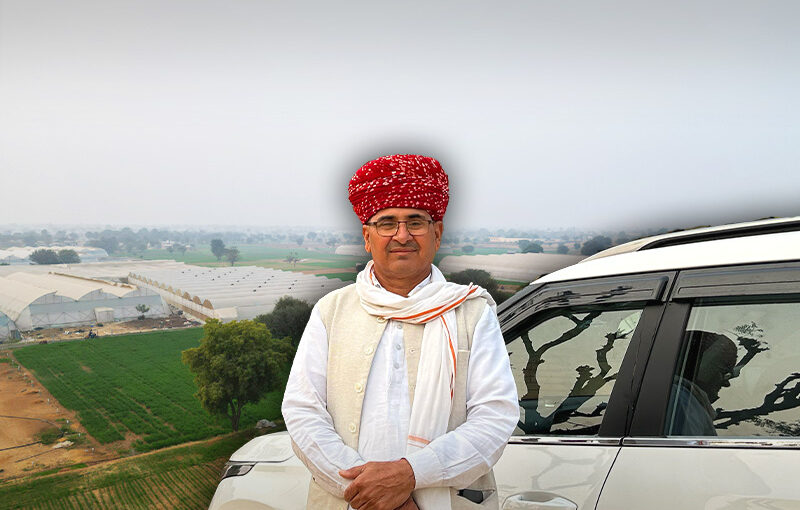
In the vast aridity of Rajasthan, winter brings relief from the scorching heat, but also an eerie stillness. Life here moves to the rhythm of sand and shrub.

On early mornings of late December, Jaipur, like any large city in north India, quivers in a silvery film of pollution. As you drive past the city’s last high-rises and elevated roads, the atmosphere is an emulsion of dust and smoke. Every movement lifts the earth into the air.

Dawn comes, but not day. The dim, silver sun in an aluminum sky offers little heat or light. The fields are a naked beige after the monsoon groundnut crop has been dug up. The first green shoots of winter wheat and bajra have barely broken through the soil.

In a census of lifeforms here, trees would be an inconsequential minority. Among the trees, neem and khejri (also known as shami in most of north India and vanni, banni and jammi in the south) dominate. When I say dominate, they average two-or-three an acre.

The shami is considered a symbol of kshatriya valour. Legend says the Pandavas hid their weapons in a shami tree. Now, these trees, pruned and sheared for the season, resemble charred limbs raised in silent prayer. By summer, the khejri would yield nutritious pods called sangri used in the Rajasthani dish ker-sangri.

A wonder in the desert

Once we reach Gurha Kumawatan, a village 40km to the west of Jaipur, the transformation is startling. The fields are suddenly green and scurry with life. The raw sting of the air carries the red-wattled lapwings’ shrill and quirky ‘did-he-do-it’ call.  Towering above the farmland, giant semi-circular enclosures—like Amazon warehouses—dot the landscape.

These are polyhouses, industrial-scale farms that allow farmers to produce up to ten times more food than in open fields. Using a technique called protected farming, they require only a fraction of the water, fertilizers, and chemicals needed in traditional agriculture even on poor soil and climate that’s oppressively extreme.

Read the full story https://theplate.in/how-polyhouse-farming-in-rajasthans-desert-is-turning-farmers-into-millionaires/

Watch the video here: https://youtu.be/0ClJa5ICJpY?si=ouZZtPtl-bU9thQL

Capsule Review: The World. A Family History of Humanity

The World by Simon Sebag Montefiore is a huge and wonderful book. I listen to the audiobook on long drives and it is a LOT of fun. chock full of interesting anecdotes and touching on everything from ancient Egypt to the Kennedys. There is no obvious grand plan or theory, just lots of facts and the author’s cheery interjections. I think it works very well for someone who drives a lot and is interested in history and wants to jump in at random points and listen to fun stories and interesting facts. It was so much fun that I got it on kindle as well and now read random pieces at lunch.. the book does presume some background knowledge and the more you know about the particular time period, the more fun the book is. There is no attempt at finding some sort of grand theory behind history (here it is taken for granted that it is one damn thing after another, though you could say his world weary and somewhat cynical amusement is itself a theory of life and power). These are just stories, really interesting and fascinating ones.  And yes, lots and lots of sex. Simon sahib does not stint on the sexual escapades of rulers and conquerors and clearly believes that the few powerful people who did NOT have dozens of partners are the abnormal ones; normal humans who get power, want sex. Usually a lot of it.
Well worth buying and keeping and digging in whenever you feel like it.

Gana Sangha and Rajatantra in Ancient Bharat

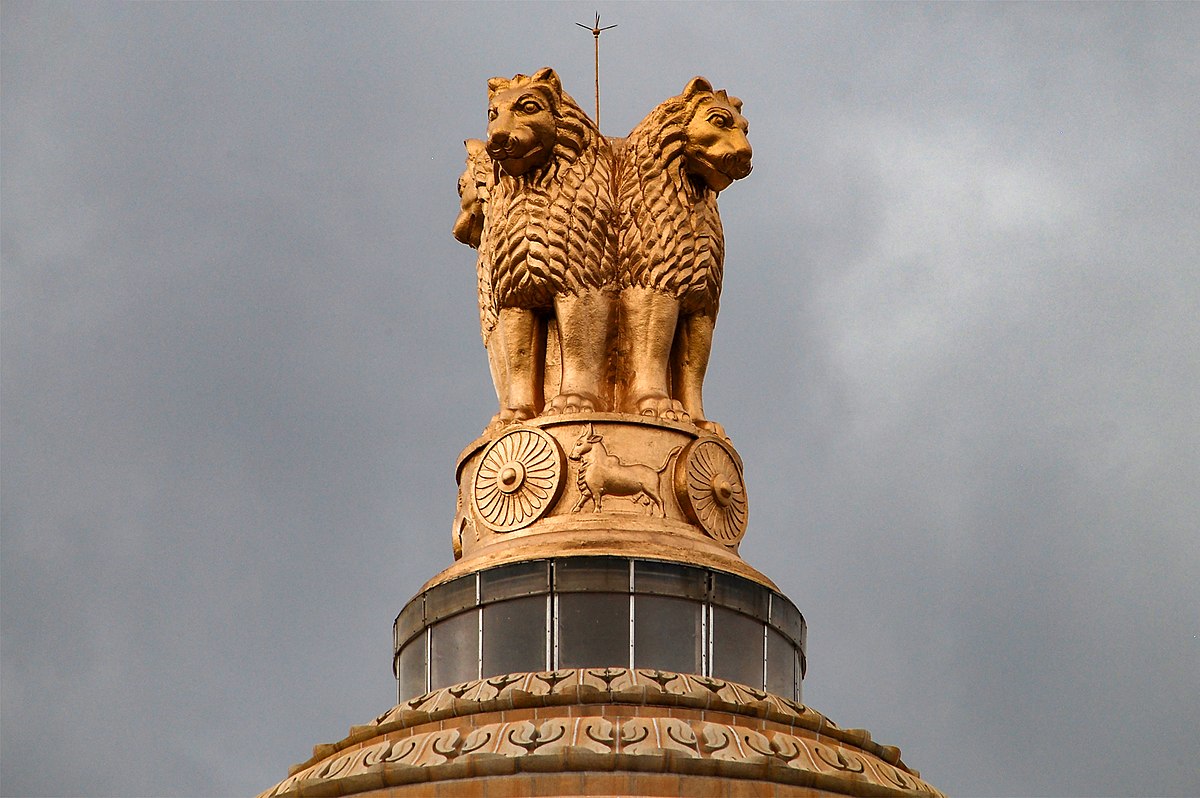
Lion Capital of Ashoka, Vidhana Soudha

Script for the Youtube Video:

Around the time of Mahavir and Gautam Buddha, a powerful ancient monarch named Bimbisar reigned on western side of Ganga.
On the east lay the ancient Vrjji Gana-Sanghas – Sakya Malla Licchavi Videha –
The lands to the east of Ganga had no Kings but were ruled by leaders of various Kshatriya clans in an assembly where every family had a voice.
As part of his strategy, Bimbasara married a princess of Videha and to her was born Ajatashatru – the one without any enemies.
When Ajashatru ascended to the throne of Magadha, he formed staging post on the western bank of Ganga and waged a terrible war against the Vrjji Republics lead by the Licchavis and won.
This staging post would be called Pataliputra and serve as the seat of the Magadhan Monarchs like Mahapadma Nanda, ChandraGupta Maurya and Ashok Maurya.
800 years later when Ancient Bharat lay fragmented and scattered after centuries of Yavana, Shaka and Kushana invasions, a Small King called Chandra entered a matrimonial alliance with the same Licchavis marrying Kumara Devi.
His fine golden coins carried images of both him and his queen.
His young son who called himself Licchavayah – to emphasise the backing of the prestigious Licchavis in the Gupta Game of thrones. This young man would go on the reshape Bharat with his sword and help usher in the Golden Age of Ancient India.
His name of Samudra-Gupta – which means Protected by the Sea because his sword had added the Southern coastal kingdoms into his Raja-Mandala.
But this Golden Era of Ancient India also meant the fight between the ideas of Gana-Sangha and Rajatantra was almost settled in the favor the Chakravatri in the ideal of a fearsome conquerer like the Licchavi Dauhitra – Samudragupta

Hydronyms don’t contradict Aryan migration: a European comparison

An increasingly popular argument amongst Out-of-India-Theory (OIT) advocates (Koenraad Elst for example) is that is that the Indo-Aryan etymologies of rivers in the Rig Veda disprove an Aryan migration into India. They claim that native river names would have survived post-migration.

Some of the proffered etymologies for Vedic rivers are rather flimsy, but no matter. There is a much more fundamental issue with this line of argument: the evidence shows that migrants often do not adopt indigenous river names. In fact, Indo-European migrants to Western Europe used names with clear Indo-European etymology for most major rivers.

If OIT advocates believe that Indo-Aryan etymologies for rivers in North India prove the Indo-European languages originated in India, then they must explain why nearly all the major rivers of Europe have such solid Indo-European etymologies:

Thames: Old English Temes, from PIE *tm̥Hes, cognate with Sanskrit támas

Loire: Gaulish *liga, from PIE *legʰ

Seine: Latin Sequana, from PIE *seykʷ, cognate with Sanskrit siñcáti

Rhine: Gaulish Rēnos, from PIE *h₃reyH, cognate with Sanskrit riṇā́ti

Po: Latin Padus, from PIE *bʰudʰmḗn, cognate with Sanskrit budhná

Elbe: Old German *albī, from PIE *h₂elbʰós, cognate with Sanskrit ṛbhú

Danube: Celtic *Dānowyos, from PIE *déh₂nu, cognate with Sanskrit dā́nu

Dnieper: Sarmatian *dānu *apara, from PIE *déh₂nu + *h₂epero, cognate with Sanskrit dā́nu + ápara

Dniester: Sarmatian *dānu *nazdya, from PIE *déh₂nu + *nésdyos, cognate with Sanskrit dā́nu + nédīyas

Don: Sarmatian *dānu, from PIE *déh₂nu, cognate with Sanskrit dā́nu

Vistula: Latin Vistula, from PIE *weys

Brown Pundits