The airstrikes

Indian Jets Strike on Pakistani Side of Kashmir Line:

Indian warplanes conducted airstrikes in the Pakistan-controlled side of Kashmir on Tuesday, Pakistani officials said, in an escalation of tensions between the nuclear-armed nations after a suicide bombing against Indian troops in the disputed region this month.

If confirmed, it would be the first time that Indian aircraft had crossed the Kashmir Line of Control to strike in years. But it was unclear what, if anything, the attack jets hit on the Pakistani side, raising the possibility that India was making a calculated bet to assuage public anger but minimize the risk of a major Pakistani military response.

Curious about value-add thoughts….

Is Pakistan (or Pak sponsored group) responsible for the attacks?

This is not the LOC of the 80s or 90s. India with Israeli know-how has put in place high tech equipment monitoring equipment. Its practically impossible to smuggle men and goods across the LOC without the BSF finding out.

I have Kashmiri friends (Pandits & Muslims) who wouldn’t identify themselves as being Pakistani or Indian.

A friend of mine writes the above. He’s a credible source as he’s a East Asian pilot (half Pak). I was trying to find out more information on whether the top paragraph is true about the flow of men and goods across the LOC.

This doesn’t preclude the possibility of funding crossing the border.

As for the second paragraph I would hazard a pro-Independence Pandit is a bit like a “Palestinian Jew.” Both are naive as the possibilities of Muslim majority countries.

I want to give a personal disclaimer that I find the whole situation absurd. Pakistan needs to just stand down and we need an economically integrated Punjab. But then I see two very intransigent mindsets (oil & water) and without sounding grandiose; I feel I’m am an ambassador to two very alien nations.

The elephant in the room is Islam. People forget that Imran Khan is an extremely liberal Pakistani but even spouts the line of “Madinat Islam.” Mind you I was just the same before my epiphany on Hazrat Asia. Unless Islam is broken in the same way Christianity, Judaism, Buddhism, Hinduism and Zoroastrianism has been; we won’t see resolution in the Muslim world.

What India must do to Kashmir-

Very sad news emerging out of Kashmir.

Vidhi was saying that India should retaliate whereas I think it should be a more subtle response along the Israeli lines in the West Bank.

(1.) Everytime there are protests in the Valley, India should randomly select a sample of the protestors (maybe a third or so), strip them of their citizenship and bus them to the border so they can join Pakistan. Continue ad nauseam which will help demographics and instil enough fear to dampen potential rioters.

(2.) Abolish Section 377 and bring only the Valley under Central Rule (keep Jammu & Ladakh as it is). India should actively encourage Hindu (not just KP) immigration into Srinagir. Encourage KPs (who are India’s most endangered minority not the Parsis) to breed like rabbits (or like Muslims) and make them agents of the Indian state. Both the tepid tweets by Mehbooba Mufti & Omar Abdullah show the huge disconnect Muslim Kashmiris have with the rest of the Indian State.

(3.) India should begin to demilitarise in Kashmir and retreat to defensible borders on the LOC. With an effective and ongoing occupying force it can keep the Valley sedated with only a fifth of its standing army instead of the current million strong component. The geographic trade of Pakistan conquering Srinagir is losing half of Sindh so Pak won’t engage in conventional warfare.

(4.) BJP’s shameful backtracking on the Citizenship amendment shows the bankruptcy of democracy. The BJP should simply not allow the “new citizens” to settle in NE states, which understandably want to opt out. The “new citizens” should be redirected towards Kashmir & other sensitive regions of India, one million Bangladeshi Hindus in Srinagir will help sort things out.

No one will cry for the Muslim Kashmiris; their cause isn’t as emotive as the Palestinian one. I personally can’t understand the Kashmiri Muslim problem; they are one of the few people in India lucky enough to have Urdu as the official language of their state. They have the unique position of being cultural Pakistanis who have access to the Indian economy so they should buckle down and stop making a fuss.

It is obvious that it’s the Cult of the Holy Pedophile, also known as Muslim menace, behind it all and why it’s so important that Bharat use sickle & all to castrate Islam & its sick ideology once & for all.

The immense success Israel has had in the past two decades demonstrates that tough actions bear fruit and it’s time for the Muslim Kashmiris to step up. The Palestinian cause is far more secular (much less Muslim) than the Kashmiri one and therefore much more worthy.

Major General Akbar Khan

From Dr Hamid Hussain. A short note on Major General Akbar Khan (of Kashmir Jihad and Rawalpindi conspiracy fame)

Akbar Khan (1912-1994) was a Pathan from Charsadda area of Khyber-Pukhtunkhwa.  He was from the pareech khel clan of Muhammadzai tribe that inhabits the village of Utmanzai.  Akbar was from the last batch of Indian officers commissioned from Royal Military College Sandhurst in February 1934.  Lieutenant General B.M. Kaul ‘Bijji’ was his course mate at Sandhurst and they became friends during their service.  Officers commissioned from Sandhurst were called King Commissioned Indian Officers (KCIOs).  Akbar joined 6/13 Frontier Force Rifles (FFRif.).  This battalion is now One Frontier Force (FF) Regiment of Pakistan army.  He fought Second World War with 14/13 FFRif. (now15 FF).  This was a new war time battalion raised in April 1941, at Jhansi.  In new war time raised battalions, officers and men were posted from different battalions, usually from the same regimental group.  Lieutenant Colonel Arthur Felix-Williams, DSO, MC of 1/13 FFRis. was the first Commanding Officer (CO).  There were fourteen officers in the battalion and Akbar at the rank of Major was the senior most of the four Indian officers of the battalion.   Lieutenants H. H. Khan, Fazl-e-Wahid Khan and A.K. Akram were other Indian officers (Wahid won MC).  Battalion was part of 100th Brigade (other battalions of the brigade included 2 Borderers and 4/10 Gurkha Rifles) of 20th Division commanded by Major General Douglas Gracey.  Continue reading Major General Akbar Khan

Biryani Night

I swear I’m not spamming but it so happened last night the Cambridge South Asian Forum hosted an event (biryani was the reward) about the Kashmiri docu-film Harud. This was after the Kashmir play last Saturday night.

It was a slow film done in the Persian style (the lead actor’s father was actually Persian but had flawless Urdu).

As an aside this is the second time I’ve seen an Iranian actor (the Nargis character in Sacred Games is actually an Iranian) and their command of the Urdu language is flawless. Contrast this to Katrina Kaif who still needs to be dubbed.

I’ll bullet point my observations:

(1.) the post-modern India literati is simply scathing. I cannot imagine Pakistanis academically discussing the secession of Baluchistan.

(2.) I made a very controversial comment last night at the round table (there were 25 of us; no Muslims all upper castes except me and I was the only Pakistani) saying India can’t understand her Muslim minority.

(3.) I also made points about the very high cultural affinity between Kashmiri Muslims and Pakistan (we are all part of the Indus Valley). Did not go down well; when I saw Srinagar it reminded me of one of our cities on the Indus..

(4.) Yesterday one of my friends made the spectacular suggestion that South Asia needs a Good Friday Agreement. We can all accept the current borders if they become (much) softer.

(5.) Europe spent 50 million lives and a century of war (hot & cold) and now the EU is interlocking the continent into one unit. Why can’t India do the same about SAARC ex Pakistan?

(5a.) Why doesn’t South Asia have free movement of capital, good and people beyond the troublesome northwestern bits.

(6.) Prosperity and cultural autonomy can go a very long way to alleviate tensions in the region; the Indo-Pak corner is simply one area. Why can’t rich Indians do lavish weddings in Sri Lanka or the Maldives instead of Thailand or Italy?

How India own-goaled itself on Kashmir

A Kashmiri pandit shares a story about his family’s tragic exile. It just makes me wonder what was India’s end-goal on J&K especially with regard to the Valley.

Also an amazing thread on the Deoband-Barelvi dynamics (interesting both are from the Urdu heartland imported into the Punjab)

https://twitter.com/napoha_/status/1063119568514793472?s=21

Of course Britain is in the midst of Brexit convulsions so at the moment I’m more of a “Brexit Pundit.”

As an interesting aside since we were discussing about skin colour earlier; it’s so evident to see the well-groomed lean and Normanesque Tory MPs set off against the portly Anglo-Saxonish Labour members. I know it’s difficult to quantify somehow but the ghost of the Normans is so evident in the social classes of England.

As for skin colour in the Subcontinent I think we have 3 divisions.

(1.) The AASI’s, which are sort of co-equivalent to the Negritos and Anadamese Islanders (one of the first coastal waves out of Africa that somehow also ended up in the Amazon). It’s interesting that they are substrate to every South Asian population (I think there are trace amounts in Central Asia, Afghanistan and even Iran).

(2.) the “Dravidian” farmers out of Iran. They are probably related to the J1/J2 types and might be an olive skinned population. Prominent in Sindh and Southern Pakistan through to South India (high % in Gujarat – must have been a locus of some sort).

(3.) our beloved Aryans who are especially prevalent among Brahmins, the Punjab and Haryana (though arguably the Haryanvis and East Punjab descend from Scythians to some extent). These look “European” but it’s a very different look to #2.

The Aryans are conventional European (light eyes, light hair, white skin) the ancient Dravidians would have (probably) looked like Middle Easterners (olive skin, dark hair dark eyes) and the AASI looks like Papua New Guineans.

Of course India being an ancient region these populations have all compounded to varying degrees but it explains why the Pathans & Brahmins look European but the Sindhis (Muslims mainly/ Sindhi Hindus are Punjabi Khatri migrants) and Gujarati (non Brahmin) have a browner Olive look.

Some controversial thoughts on Remembrance Day & Kashmir

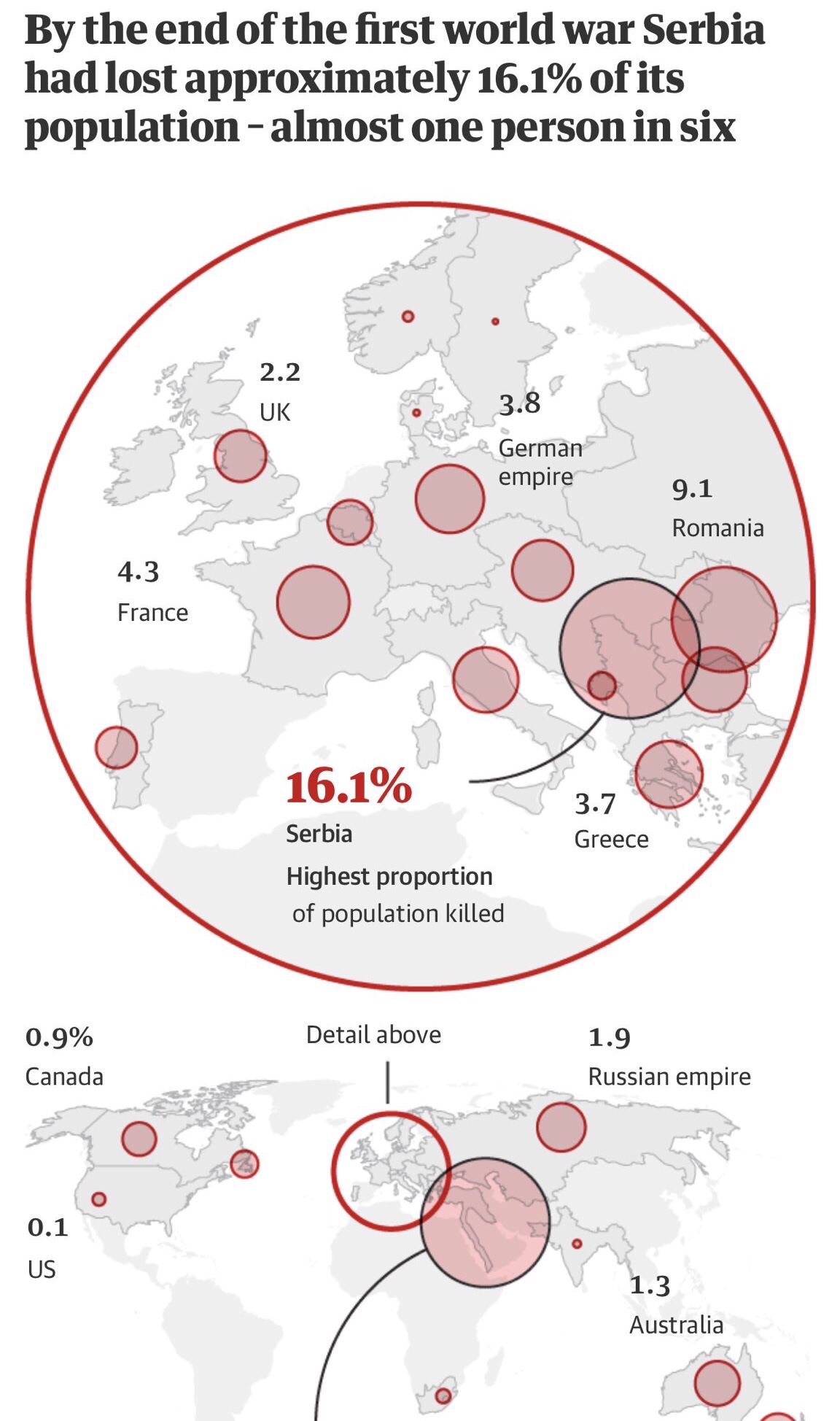
For our Serbian Comrade, Milan.

Britain of course is Ground Zero for Remembrance Day.

I find it a bit tiresome as to how both World Wars are constantly spun as being for “freedom.”

It’s a bit like how Mel Gibson retconned history in the Patriot so that a slave was fighting for the Americans as opposed to the British.

1.5mm Indians fought for the Empire in WW1 and after that war, as well as WW2, we were still subjects (slaves) of a foreign king.

It doesn’t matter that the British Empire was, by and larger, more benevolent than other Empires of its ilk but Freedom is Freedom. WW1 & WW2 weren’t fought in my name (my grandfather was a medic-doctor on the Burmese in the Second War) and while I respect the observation; I suspect it’s near hysterical commemorations.

Thankfully I can express these thoughts on BP since we have space here for privacy and nuance. However when I moonlight as a “Social Justice Ghazi” I notice the almost persistent humble brag of WASP civilisation.

History is always written by the conquerors especially English history. It’s probably a reflection of my deeply colonised mind that I can only read, write and think deeply in the English language; I’m short of any other perspective.

These thoughts sit squarely on this play I saw last night “the Djinns of Eidgah.” It’s about Kashmir and it was extraordinarily powerful. Incidentally it was written by a Bengali Hindu (Abhishek Majumdar) and the script was sterling.

I was surprised by how anti/India it was and of course as I saw the play my part-Pakistani blood, always latent always poisonous, was steaming in solidarity with my Kashmiri kin-folk.

There were some extraordinarily powerful scenes but having a blond girl play an Indian soldier and exclaim she is “Marathi” stretched incredulity. Another part was where the Arab actor (playing a Kashmiri youth) was pronouncing the lead “Bilal’s name in an Arabic rather than desi accent.

Kashmir of course is the Palestine of the Sub-continent. The Kashmiris are an arrogant, attractive and resilient people and their conflict is the zeitgeist that tends to overshadow other perhaps even equally worthy causes (Tamils, NorthEasterners, Baluch etc).

As a counter-factual if Kashmir had been joined to Pakistan (as it should have been) would there even have been a whisp out of that region today? I suspect not because the Muslims of Kashmir would have melded into Pakistan without trace or incident.

These are slightly unvarnished thoughts and I’m sympathetic that India can’t “retreat” from Kashmir without a huge loss of face. But it’s increasingly clear that Pakistan is a peripheral player in the India-Kashmir dynamics; the local Kashmiris are themselves in revolt.

The play “plays” on the tendency of the Kashmiris to refer to the Indians as “Indians.” The fact that India is seen as an entirely separate entity to Kashmir reflects that Freedom is a difficult quality to define and sometimes so is nationhood.

The Wani exception

When I came across news of slain Kashmiri militant Burhan Wani, I was struck by his last name. I had known for a while that Kashmiris had castes or as they call it ‘krams‘, like most other people of the subcontinent. And the Wanis are the kram of converts from the mercantile castes of Kashmir. On the wikipedia page linked above, Burhan Wani is listed as the only notable Wani. To understand how odd this is in the broader context of the subcontinent’s mercantile castes, imagine a (fictitious) militant ‘Altaf Agarwal’ being the only notable Agarwal or ‘Afzal Singhania’ being the only notable Bania.

To reflect further on the oddness of Kashmir’s Wanis, note that conversions of upper caste Hindus (Brahmin, Kshatriya, Vaishya) to Islam, although not completely absent, were quite rare. For example, in Punjab, Dr. Gopal Krishan (Punjab University) tells us,

Conversion was negligible from the higher castes such as Brahmins, Aroras, Khatris and Aggarwals.

There seem to be two major exceptions to this rule. The first are Sindhi, Punjabi and Kashmiri Rajputs (Soomra, Janjua, Bhatti, Rathar), who converted heavily to Islam. The other, less talked about exception are the Vaishya Wanis of the Kashmir valley. I have never heard of a Hindu Wani and the conversion to Islam seems near total. Such a total conversion of mercantile castes to Islam is not seen in any other region of India.

It would be interesting to know what explains the exceptional status of Wanis. This is not just interesting from a historical perspective, but could also be important in understanding contemporary developments. Consider the issue of Kashmir’s industrialization. A crude model of India’s early industrialization would be Brahmin technical/management education + Bania enterprise. Indeed, Aakar Patel points to the Brahmin-Bania complex as a hegemonic force in the economy of modern India,

HDFC is run by a Bania (Deepak Parekh), Hindustan Unilever is run by a Brahmin (Nitin Paranjpe), ICICI Bank is headed by a Brahmin (K.V. Kamath). Jaiprakash Associates is run by a Brahmin (Yogesh Gaur), L&T is run by a Brahmin (A.M. Naik), NTPC is run by a Brahmin (R.S. Sharma), ONGC is run by a Brahmin (also called R.S. Sharma). Reliance group firms are run by Banias (Mukesh and Anil Ambani), State Bank of India is run by a Brahmin (O.P. Bhatt), Sterlite Industries is run by a Bania (Anil Agarwal), Sun Pharma is run by a Bania (Dilip Shanghvi) and Tata Steel is run by a Brahmin (B. Muthuraman).

More examples are given in the linked Aakar Patel article. We can see that the Bania-Brahmin complex is spread across India, from South to North, West to East. In more recent years, there has even been a diffusion of skills and attitudes, with Brahmins moving into entrepreneurship and Banias into higher studies. In important ways, urban Brahmin-Banias are merging into a single caste.

Is it possible that the religious schism between the Kashmiri Brahmins and Wains possibly precluded such a complex from forming ? One could conjecture that this played an important part in slowing the industrialization of the region, and its economic integration with the rest of India.

In summary, what explains the total conversion of Kashmiri trading castes to Islam, a pattern not really seen anywhere else in the subcontinent ?

Did this effect industrial growth in Kashmir, and provide more reasons for the emergence of an insurgency there ?

Kashmir

The government in Kashmir has fallen. What’s next for this troubled province?

As an aside my own preference is the LOC is a soft border between India and Pakistan. I don’t want any redrawing of the map whatsoever. I would rather Fawad Khan and Mahira Khan be able to act in Bollywood and Pakistani players play in the IPL. I can understand that for some Kashmir is a hot topic but I’m far too invested in Rising India as it is.

However if I see this post degenerate into low quality jingoism on either side; I’ll arbitrarily delete comments.

Comments are free but facts are sacred. If I see unnecessary emotionalism I’ll just remove it- the BP threads have turned into an Indo-PAK flame war and I have stayed my hand but in my own threads I’m going to be much more pro-active.

Shashi Tharoor on Kashmir

My wife sent me this link, exultant in how her fellow countryman triumphed in this particular Indo-Pak exchange. I know better than to disagree with her though I’m quite ambivalent on the K-issue.

The whole Indo-Pak issue seems interminable especially when the future of the world has shifted over to the technocratic West Coast.

https://www.youtube.com/watch?v=8PNBm0kCNQE&feature=share

Off-topic words that start with C tends to be quite powerful (it prefigured heavily in Vidhi’s life) but that’s just my bias after seeing Shashi rhapsodise about how India forged a national consensus out of different castes, creeds, colours, costumes, customs & cuisines (he could have added communities but who’s counting).

Other c-words that have a descriptive/identitarian nature; countries, counties, creatures, cretins..

Brown Pundits