Two of my recent essays

I have two pieces of writing I want to share. The first is an essay I wrote on Iqbal for his birthday (9th November), exploring how we have misread him, and how, in a way, he misreads himself.

https://inkelab.substack.com/p/iqbal-an-uninteresting-poet

The second piece discusses how book reviews can nudge critical readership in Pakistan. It includes a situational analysis of reading habits in the country, the role of reviews and sugarcoating, and the emerging Bookstagram and BookTok communities.

https://dunyadigital.co/books/jumpstarting-critical-reading-the-power-of-a-book-review

Would love to know what you people think about both. Thanks!

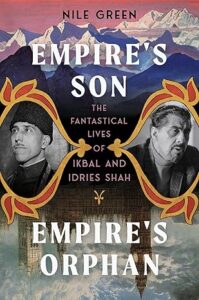
Book Review: Empire’s Son, Empire’s Orphan. Ikbal Shah and Idries Shah (of Sufis fame)


Idries Shah (1924-1996), a British citizen of Afghan and Indian origin, became world famous with his books about Sufi-ism (especially his magnum opus, “The Sufis”), selling over 15 million copies worldwide. In the course of this career, he also hinted (more than hinted, he wrote several books under other names in which he built up these claims about himself) that he was a sufi master himself, descended from an ancient and aristocratic family of Afghan Sufis who trace their descent to the Prophet Mohammed and are now bringing this ancient wisdom to the western public. His father, Syed Ikbal Shah, had settled in England and written several books about the esoteric east, but the careers of both father and son were dogged by accusations of making up stories and exaggerating their depth of knowledge about these matters. Professor Niles Green (who is the Ibn Khaldun Endowed Chair in World History at UCLA) has spent a long time researching both father and son and has now written a biography to settle this controversy and tell us who they really were.

So we learn that Ikbal Shah was a descendant of Jan Fishan Khan (famous indian actor Naseeruddin shah and retired general Zamiruddin Shah are also descended from him), an afghan who had sided with the British expedition to Kabul in the first Afghan war, and who escaped to india with the survivors of that expedition. For his loyalty, he was given a small estate in Sardhana, near Delhi. In 1857 Jan Fishan Khan again proved loyal to the British and was rewarded with the title of Nawab. It is here that Ikbal Shah grew up, and somehow decided to travel to Edinburgh to study medicine just before the first world war.

In Scotland, Ikbal fell in love with a Scotswoman and they married against the wishes of his dad, who therefore cut him off. Ikbal Shah proved to be a capable and energetic person who managed to make a life for himself in England as an expert on Afghanistan (where he had never been) to various branches of British academia and the British govt. Nile leaves us in no doubt that Ikbal Shah was a serial fantasist who made up wild stories about Bolsheviks and their operations in Afghanistan to British officials who sort of knew he was fake, but found him useful. To his credit, he was able to sell enough stories about the exotic east to survive in England and even joined the BBC during WW2 to make propaganda broadcasts for the British empire.

Ikbal Shah had three children (Omar Ali Shah, Idries Shah and Amina Shah) who grew up in the UK and Idries Shah followed in his dad’s footsteps to become an expert on the mysterious east (Omar Ali Shah also sold himself as a sufi teacher). Starting as an expert on “oriental magic”, he soon invented himself as a Sufi master and acquired several high profile fans, including the poet Robert Graves and the writer Doris Lessing. His book on sufism remains a bestseller and he wrote dozens of other books on various aspects of sufi-ism, all of which continue to sell. Nile Green regards this as more or less the result of gullible people being fooled by Shah, but the fact is that if you read the books in question (I have read several of them), they do seem to have genuine insights into human psychology and the various “teaching stories” Idries Shah claimed to have collected do indeed have the capacity to teach useful lessons for life. From within his own world, he can claim that what looks like fakery is just how this esoteric knowledge works in this world. After all, we are talking about sufi-ism and it is by no means clear how one can distinguish a sufi charlatan from a real sufi, since “genuine sufi-ism” itself thrives on mystery and misdirection, almost by design.

The fact that the brothers Idries and Omar Ali Shah falsely claimed at one point to have the oldest manuscript of the rubayat of Omar Khayyam (Professor Green makes a solid case that they made up the whole story) is itself enough to condemn them as charlatans, but as Professor Rawlinson once said ” Shah cannot be taken at face value. His own axioms preclude the very possibility.” If Sufis are enlightened beings who possess some esoteric knowledge that is not available to ordinary mortals, and if they are supposed to help you by telling you what you need, not what is “true” or false, it is by no means clear that this book and its careful examinations are the end of the matter. As Idries Shah’s epitaph states: “Do not look at my outward shape, but take what is in my hand”.  The story continues..

By the way, the title “empire’s son, empire’s orphan” is a good indicator of the fact that the professor also has to labor under the limitations of his own field. Basically, it means nothing, but if you are into postcolonial writing then it is the fashion to connect every biography to “empire” and its discontents. It adds nothing to the story, but luckily it also takes nothing away.

Review: The Anarchy, by WIlliam Dalrymple

The glossary at the end gives two meanings for “Alam” – the world, and the battle standard used in Muharram by Shi’as. In fact, these are two different words: ‘aalam عالم = world ‘alam علم = standard BTW, ‘alam refers to battle standards in general.

Also in the glossary, “firangi” is translated as “foreigner”. In fact, the term refers only to Europeans, and is derived from “Frank”. Non-European, non-white foreigners would never be called “firangi”..

A truly startling error in the translation of the term “Id” عید in the glossary, which says that “Id-ul-Zuha” (actually “Id-al-Azha”) “commemorates the delivery of Isaac”. Muslims celebrate the deliverance of Isma’il (Ishmael), NOT Isaac…..

Again in the glossary, “Masnavi” is defined as “Persian or Urdu love lyric”, which is incorrect. “Masnavi” refers purely to the form of a poem, where both lines of each couplet rhyme with each other but each couplet has its own rhyme…..

The term comes from “ithnan”, the Arabic word for “two”, indicating the dual rhyme pattern. The most famous Masnavi in the world – by Rumi – is emphatically NOT a “love lyric”. The Shahnameh of Ferdowsi is also a masnavi, but not a love lyric…..

There are fanous masnavis in Persian by Nizami, Khusraw, Jami and many others. In Urdu by Mir Hasan, Daya Shankar Naseem and Nawab Mirza Shaoq. All these great masnavis are book length poems, which is the typical use of this genre …..

“Muharram” is not a “great Shi’a festival”; it is the first month of the Islamic calendar. Shi’as (and many Sunnis) mourn the martyrdom of Inam Hussain in this month, but not as a “celebration” and certainly not with “gusto”! It is a solemn – if often passionate – occasion…..

There are many short masnavis in Urdu, notably Iqbal’s “Saqi Nama”. Ghalib wrote a whimsical masnavi on mangoes, and another one complaining about his financial problems. Offhand, I can’t think of any masnavis that can be considered love lyrics, though there must be some….


The Hidden Migrations of Bahá’ís in Northern Iran: Ayyám-i-Há Reflections

Today marks the beginning of Ayyám-i-Há, a time of generosity, renewal, and joy in the Bahá’í calendar. While speaking in Farsi with a local Bahá’í friend in the Boston-Cambridge area, she mentioned she was born in Gonbad-e-Kavus, a town near the Turkmenistan border. I had never heard of it before, but as we spoke, the connections began to form.

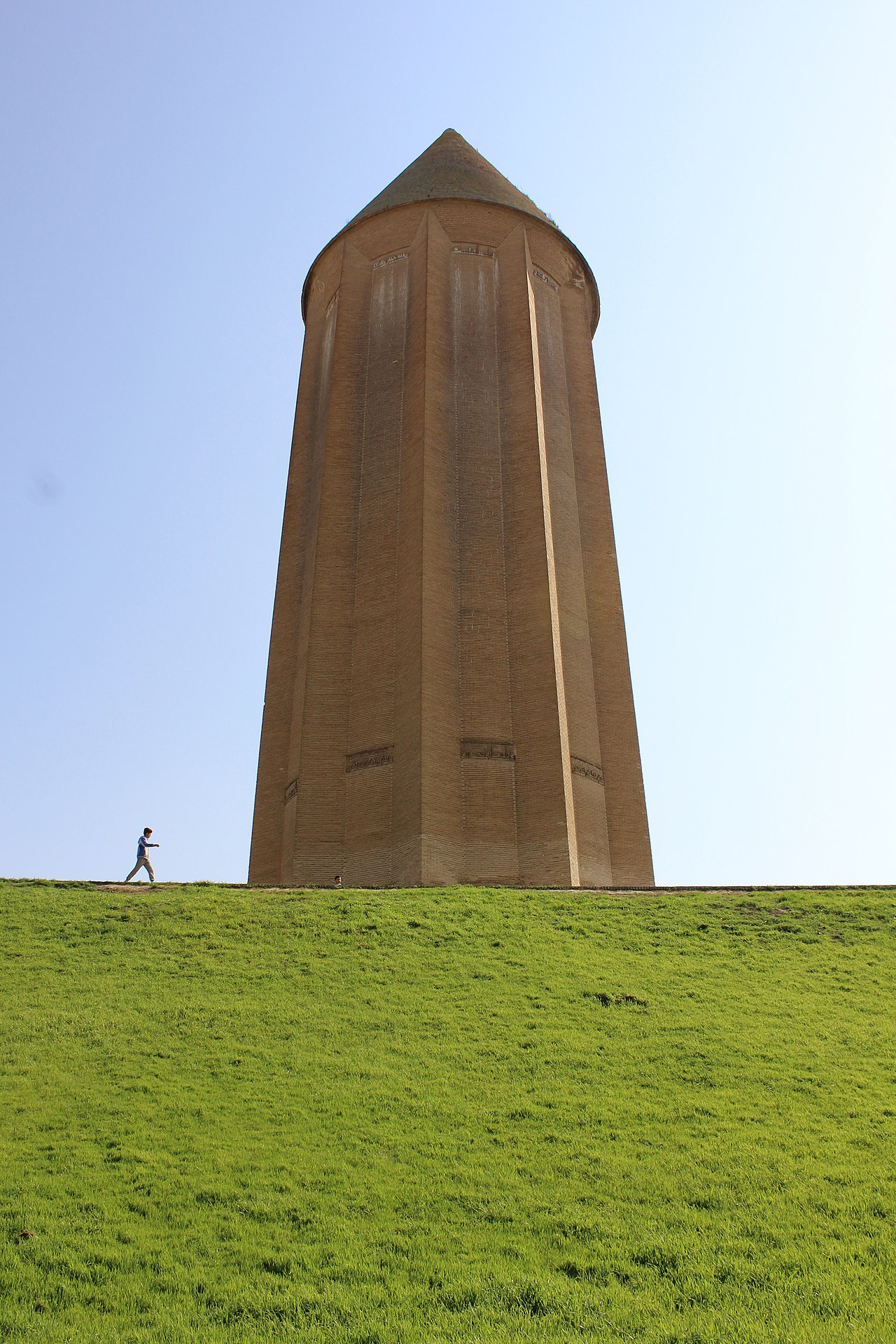
The UNESCO Gonbad-e-Qabus (Tower of Qabus)

A Lost Bahá’í Connection

Just across the border in Turkmenistan (then part of the Russian Empire) lies Ashqabad, one of the earliest Bahá’í settlements—a city where, in the 1920s, Bahá’ís openly practiced their faith, established institutions, and flourished.

But what struck me was that this Bahá’í woman had roots in Semnan Province, a region historically associated with the Faith. How did her family end up in Gonbad, a town that, in my ignorance, had no known Bahá’í presence?

Her answer unveiled a hidden chapter of Bahá’í migration—one that reflected centuries of adaptation, resilience, and survival in the face of persecution.

Continue reading The Hidden Migrations of Bahá’ís in Northern Iran: Ayyám-i-Há Reflections

April 21st: Flowers, Flags, and the Fight for Names

Saadi, Riḏván, Azizam, and the Architecture of Memory


Today marked a strange and layered convergence: the 1st Day of Riḏván, Saadi Day in Iran, Easter Vigil, and the release of Ed Sheeran’s Persian-coded “Azizam”.

Each moment—spiritual, literary, liturgical, and algorithmic—carries its own weight. But taken together, they tell a deeper story:

A story about naming, memory, and the silent wars over cultural survival in a world addicted to erasure.

Three Gardens


For Bahá’ís, Riḏván commemorates Bahá’u’lláh’s divine declaration in the Garden of Najibiyyih—truth revealed under the shade of roses.

In Iran, thousands gather around the tomb of Saadi Shirazi, who composed the Gulistān in 1256—a literary garden of parables, ethics, and eternal couplets.

And then, in a third garden—Instagram—Ed Sheeran drops the word Azizam, surrounded by Googoosh, Andy, and the digital applause of a million exiles.

Three gardens.

Three registers of meaning.

All still blooming.


Team Jesus, Westminster, and the Persian Schism


That night, I found myself at Easter Vigil in Westminster Cathedral—an accident of scheduling, but also a moment of clarity.

One of the baptisms was a name I recognized: Mahyar Tousi, a conservative Iranian YouTuber, publicly announcing:

“Team Jesus assemble for Easter Vigil ✝️ I’m getting officially baptised tonight with the very sound @andrejpwalker as my Godfather.”

The incense hadn’t faded. The Latin still echoed. And yet this moment felt unmistakably Persian—a spiritual pivot made visible under the vaulted English sky.

Meanwhile, back in Iran, the pendulum swings harder:

Gharbzadegi—Westoxification—pulls one half of the diaspora toward performative Westernization. The homeland, meanwhile, is doubling down on Shi‘ism.

There is no “middle way.”

Just a widening chasm between the aesthetic and the absolute.

Memory Isn’t the Problem. Misnaming Is.

A viral tweet this week sneered at a Tajik child reciting the Qur’an by heart:

“This is our intellectual culture: just memorization, no critical thought. And we wonder why we fall behind.”

But this critique misunderstands what’s happening.

The problem isn’t memory.

The problem is dislocated memory.

Not rote—but rootless.

Not repetition—but removal.

A child reciting scripture is not a failure of pedagogy—it’s a civilizational act.

What fails us is when memory becomes performance, and performance becomes currency.


The Dupatta, Rebranded


This week, a Nordic fashion label released pastel “Scandinavian shawls.”

They’re clearly dupattas—drained of history, rebranded without context.

A thing is renamed.

The origin is erased.

The prestige is reassigned.

It’s not homage.

It’s aesthetic laundering.

Civilizations like India and China can survive this.

Smaller ones disappear.

Naming is power.

When you lose your name, you lose your story.


The Iranian Line Holds


Here’s something I’ve always noticed:

Iranians don’t venerate their conquerors.

Hazrat ‘Umar is not a hero in Iran.

Hazrat ‘Ali is exalted. Yá ‘Aliyyu’l-A‘lá is whispered in every corner of the soul.

This matters.

It means Iran has retained civilizational self-respect in a way many post-colonial nations—especially Pakistan—have not.

Pakistan’s endless identity crisis can be suffocating.

But it also allows a kind of flexibility—a permeability I benefit from, writing this from a Pakistani-owned dessert café, scrolling through Persian-coded reels on Instagram.

I’m not confused.

I’m multilingual in civilizational memory.


Ed Sheeran and the Algorithmic Garden


Let’s be honest: Ed Sheeran is strategic.

He didn’t just throw in a Persian word for fun.

By invoking Azizam and featuring Googoosh and Andy, he tapped directly into nostalgic Persianate elite longing. The pop version of Persian soft power.

What the Shah once wanted for Iran—recognition through elegance—Sheeran delivers via a viral reel.

It’s not appropriation.

It’s diplomacy, dressed as a duet.

But still:

Is it possible to be seen without being renamed?


The Long Decline and the Rejected Prophet


Sometimes I wonder:

Had colonization not derailed the Islamic world, how far would Islam have gone?

Manila was a Muslim sultanate. Islam reached the Balkans, sub-Saharan Africa, India’s courts.

Would salāt have matched the cross in global scope?

We’ll never know.

What we do know is that Islamic decline has been swift. And for those of us in the Bahá’í Faith, there’s an explanation:

The rejection of the Báb and Bahá’u’lláh wasn’t just religious.

It was civilizational.

And decline often follows refusal.


A Juxtaposition on Persian Identity


In the wake of my co-writer’s piece on the Pakistani bourgeoisie, I’ve been struck by how much Iran has held the center. Not just geopolitically—but culturally.

Persian identity today splinters into three visible currents:

  1. Reform Shi‘ism – Grounded in Iran, adapting slowly.

  2. The Western Converts – Catholics, exiles, seekers of Rome and respectability.

  3. The Azizam Crowd – Secular, stylish, steeped in Googoosh-era nostalgia.


I straddle none of these cleanly.

Bahá’í by faith, Persian by blood, Hindu by philosophy—my life has become a braid of paths.

Not a crisis.

A choice.


As Anandamayi Ma once said:


“Everyone is right from his own standpoint.”

“All paths are my paths. I have no particular path.”

There is freedom in that.

But also responsibility.

Because to walk a path, you must name it.

And to name it, you must remember where it began.


The Day of Gardens, and the Naming of Things


So today, we honor:

  • Riḏván: the divine garden of truth revealed

  • Gulistān: the literary garden of ethical beauty

  • Instagram: the algorithmic garden of cultural remix


And we ask:

Can memory survive translation?

Can identity survive remix?

Can sacred names remain sacred when said by strangers?


The Persianate world hasn’t answered these questions.


But it’s asking them—urgently, beautifully, painfully.

And sometimes, the most radical act is simply this:

To grow new roots, in soil of your choosing.

The Earth’s Lost Industrial Heart

After our discussion on industrialisation in India, I began to wonder: if the Earth were one country, one government, one infrastructure grid, one economy, where would its industrial heart lie?

Geographically, the answer is obvious. The natural centre of the world, for energy, labour, and trade routes, isn’t London, New York, or Beijing. It’s the triangle between the Persian Gulf, the Indo-Gangetic plain, and the Red Sea.

Deserts rich in hydrocarbons. River basins dense with labour, water, and grain. Seas that touch every continent. If the world were united, this belt, Arabia to India to the Nile, would be the Ruhr, the Great Lakes, and the Pearl River Delta combined.

The Natural Order of Geography

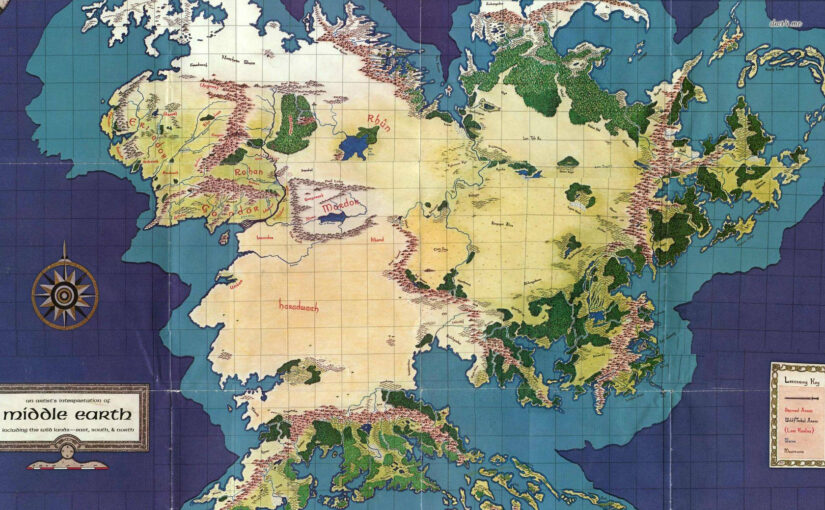
Before empire, this region was the planet’s connective tissue. Spices, silk, horses, and steel moved from India to Arabia to Africa. Energy, grain, and knowledge flowed through the Red Sea and the Persian Gulf like the arteries of the Earth. It was not the “Middle East”; it was Middle Earth. Continue reading The Earth’s Lost Industrial Heart

Syriac Echoes: From the Mountains of Lebanon to the Coasts of Kerala

It is somewhat understood that the Christians of Lebanon and Kerala, though separated by 4,000 miles of land & sea, belong to the same ancient linguistic and theological world. Both descend from the Syriac-speaking Christianity that once stretched from Antioch to the Malabar Coast, and both have wrestled with what it means to be indigenous after centuries of empire, conversion, and cultural layering.


1. The Syriac World

Before Latin or Arabic ruled their respective shores, both Lebanon and south western India were part of an Aramaic Christian zone. The language of Christ, Syriac, a dialect of Aramaic, became the scriptural and liturgical medium for Christians from Edessa to Mylapore. From this matrix emerged:

  • The Maronites of Lebanon; Chalcedonian Syriac Christians who accepted the Christology of Constantinople but maintained their own monastic independence in the mountains.

  • The Nasrānīs (Saint Thomas Christians) of Kerala; East Syriac Christians under the Church of the East in Persia, who never knew Byzantium but shared the same liturgical ancestry.

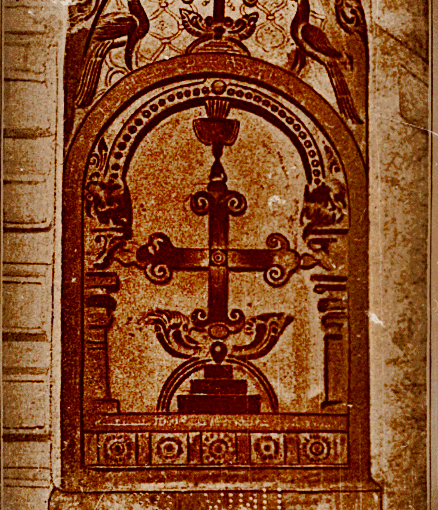
In both regions, Syriac liturgy defined the faith long before Latin, Greek, or Malayalam translations appeared. To this day, Maronite and Keralite priests still whisper “Qadishāt Alohō”, Holy God, in the same ancestral tongue.


2. Lebanon; A Christian Mountain Built on Shiʿite Soil Continue reading Syriac Echoes: From the Mountains of Lebanon to the Coasts of Kerala

Brown Pundits