L’Opéra, Iran, and the Post-Hindu Condition

A Meditation on Revolution, Secularism, and South Asia’s Futures


Inspiration arrives in the strangest of places.

Recently, I found myself deep in yoga, settling deeper roots in Cambridge, Massachusetts. It’s not clear whether this will be our long-term home yet but even so time to lay down the contours of a life (our main life of course still remains Cambridge, UK while Chennai, India is a must thrice yearly ensconcement).

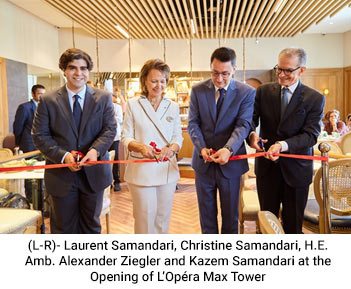
In the midst of this personal flux, a video Nivedita just shared with cut through the noise: a YouTube interview about Iran before and after the Islamic Revolution, told through the eyes of a Baha’i couple who fled Iran and went on to create a French patisserie empire in India, L’Opéra.

Continue reading L’Opéra, Iran, and the Post-Hindu Condition

The Aryan Cleft: Pakistan as the Cradle and Cusp of Indo-Iranian Civilisation

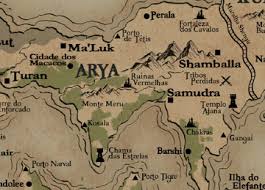
The traditional Mercator worldview slices our imagination. It distorts the unity of the Indo-Iranian zone; a civilizational belt that has resisted rupture, even across millennia of empire, religion, and state.

May be a graphic of map and text

And yet, if you look again, linguistically, genetically, geographically, the facts are harder to ignore. Pakistan sits at the inflection point. Continue reading The Aryan Cleft: Pakistan as the Cradle and Cusp of Indo-Iranian Civilisation

Ghalib for Gen Z

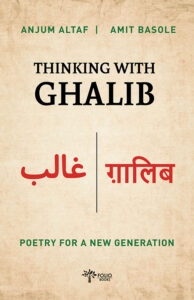
This review was originally published at The Friday Times.

Publisher: Folio Books

Publishing date: 2021

Authors:  Anjum Altaf & Amit Basole


“For Ghalib, life is an unending search. Neither the holy of holies in Mecca nor even the attainment of paradise is the end of it.” ~Ralph Russell

We’ve all heard of that crooked genius, Mirza Asadullah Beg Khan Ghalib — whether through our school Urdu courses (unfortunately encountered at an age when our consciousness is still unripe) or through pop culture. Sometimes it’s his well-known fantasy for mangoes; other times it’s when someone shares a couplet whose slightly convoluted vocabulary immediately earns it the label of “a Ghalib shayr”; and other times, his destitution and scrambling for a pension.

As a Gen Z myself, I can say that most of today’s youth are largely alienated from the Urdu language, let alone Persian. And of course, this doesn’t mean we’re reading Byron or Eliot instead; rather, it’s the excess of TikTok. Decoding Ghalib feels like a Herculean task for us. This dilemma not only distances us from a rich poetic tradition but also from the timeless lessons it has nurtured.

Continue reading Ghalib for Gen Z

Why Indian English Loves Long Sentences

If China endured a century of humiliation, India has lived through a thousand years of it. Invasions and exploitation left it poor in wealth but rich in culture; intricate, adaptive, and resilient. That depth shows in Desi English, which often favours long, ornate sentences over plain ones.

This habit echoes Persian’s former role in the subcontinent: a prestige language whose mastery signalled rank. Even Ghalib’s vast Persian verse drew less love than his Urdu. In India, Persian was the colonial language of power; today, English plays that part.

In Iran, Persian changes fast. Slang, borrowed terms, and foreign tones reshape it so quickly that many in their forties struggle with teenage speech. My own Persian, kept alive in Kuwait and India, is closer to Shirazi and Tehrani standards than to the language my ancestors spoke. I’m self-conscious with Iranians, but with diaspora Persians, I speak freely; we share a looser, accented form of speech. Continue reading Why Indian English Loves Long Sentences

Dead Poets of Pakistan

After Kabir exited the WhatsApp group, the conversation between the Manavs and Furqan (who I have made Editor to encourage more DPPs) drifted, inevitably, to poetry and Punjabi. Furqan has already made two excellent contributions, A flying peacock and Lord Ganesh in a confectionary mill. Kabir did a great job in diversifying the Authorial voices on BP.

As we shape the future of Brown Pundits, I keep returning to one submerged voice in the Persianate world, particularly in Pakistan. A voice that is Westernised, undercapitalised, and culturally adrift. These are not the clerics, generals, or capitalists. These are the middle-gentry, the in-betweeners; fluent in English, wired to the internet, but uncoupled from patronage and power.

Like much of the Muslim world, Pakistan remains profoundly hierarchical. And I suspect its creative pulse, its latent genius, lies in that Westernised fringe of the lower elite: the zone between the bourgeoisie and the establishment. The boundary class. Half-in, half-out.

In a strange way, Pakistan’s obscurity may be its shield. Unlike India, an excavated society with every civilizational layer being rapidly monetised (Saiyaara is breaking records), Pakistan is a half-formed splinter. It doesn’t face the same pressures of internal reckoning. That may be a blessing.

Across the Persianate world, from Anatolia to Delhi, we are witnessing a civilizational scatter. The old cosmopolis of the Gunpowder Empires (Ottoman, Safavid, Mughal) has collapsed, leaving behind cultural debris. The Persianate polity, once a unified Empire of the Mind, is now a broken archipelago.

India, by contrast, benefits from its post-colonial majority. Like Israel, it is 80% one faith; with all the confidence and coherence that brings. It has the numbers, the market, and a dominant civilizational script. The Sanskrit world, if not unified, is at least centrally anchored.

In this context, Kabir represents one pole of the Pakistani elite: articulate, English-speaking, confidently liberal but also capable of drowning out the marginal voices he’s adjacent to. And yet sadly, I don’t think Pakistan is headed for any Hindufication. The trajectory is different.

Pakistan is not returning to India. It is, perhaps, becoming the lowlands of the Iranian plateau; a bridge nation once again, neither fully Arab nor Indic. Suspended between worlds, it may rediscover itself in that liminality.

Because sometimes, the dead poets are not gone. They’re just waiting for the right silence.
Open Thread: From Flattery to Fatigue — What the Iranian Diaspora Can’t Admit

On July 14, I wrote about Ta’arof ; the millennia-old Persian art of flattery, refusal, and ritualised courtesy. It’s often misunderstood in the West as “saying no three times,” but it’s really about emotional high-context negotiation, reading the room before the room speaks.

The next day, on July 15, Sharghzadeh posted a powerful video, calling it Iranian Diaspora Fatigue. A searing takedown of the Iranian Diaspora’s toxic racial insecurities, internalised Islamophobia, misogyny masked as modernity, and cultural denialism. He’s mostly right.

What he calls fatigue, I’d call poisoned flattery turned inward. Because Tehranglos are no longer performing Ta’arof to honour guests or elders. They’re doing it to whiteness itself. Hoping if they refuse our own identity long enough, maybe the West will say: “Yes, come in.”

That’s not assimilation. That’s exhaustion. And the worst part? Even the racism feels borrowed; against Arabs, against Afghans, against Iranians back home. It’s not even Iranian. This isn’t just about cringe TikToks or awkward panel guests. It’s about who gets to narrate Persian culture. And what gets flattened when tradition becomes product. I was stunned when Zachary Newman — one of the most prominent Persian-Jewish American chefs — endorsed Netanyahu’s strikes on Iran. That moment crystallised something.

Sharghzadeh and I are saying the same thing: Persian culture is being gentrified by its own children. What survives isn’t tradition. It’s content. It’s vibes. If Iran is an unreadable poem, diaspora is turning it into a slogan. If Iran is lived, diaspora is increasingly just captioned. And they wonder why they’re tired. Is the Persian diaspora preserving a culture, or just performing it for the algorithm?

Pakistaniat & Urdu from Qasim to Quaid

UP’s very long shadow:

As I board my flight back to the UK after a brief but productive trip, I find myself reflecting on a language that continues to haunt and inspire me: Urdu.

It is a tongue caught between paradoxes. The language of courtesans and qawwals, of sacred supplication and sly seduction. It carries within it the scent of jasmine and blood, of Delhi’s dusk and Lahore’s lingering grief.

The Beloved Guardian of the Baha’i Faith once noted that while most Baha’i texts should be translated from English, Urdu alone is trusted for direct translation from Persian and Arabic. That proximity, that spiritual siblinghood with Persian, the language of kings, and Arabic, the language of God, renders Urdu magical.

Sanskrit, of course, is the language of gods, but Urdu, its stepdaughter of sorts, captures the longing of poet to partisan.

There’s a reason the Bahá’í prayer I share below is so piercing in Urdu. So here, before I cross back into another timezone, I offer this prayer—without commentary, without translation. Just Urdu, as it was meant to be heard.

And I wonder: perhaps this is what Pakistan truly is—a project in transcending the local. Not rooted in soil, but in sentiment. A place where Punjabis, Pathans, and Muhajirs are asked to shed skin and commune in Urdu. Where Pakistaniyat, for all its fractures, has succeeded in producing a common idiom: of piety, pride, and pain. Continue reading Pakistaniat & Urdu from Qasim to Quaid

Ta’arof & The Art of Flattery


Because Tarof isn’t about numerical formulae. It’s not just “no means yes after the third try.” It’s not a knock-knock joke.

Onunchi, Ta’arof, and High-Context Societies

Tarof is best understood as high-context negotiation within deeply hierarchical and emotionally attuned societies; a kind of cultural Onunchi (온눈치), for those familiar with Korean sociolinguistics. It’s the art of reading the room before the room speaks. More than etiquette, Tarof is a performance of dignity through flattery, deferral, and intuition.
And that’s precisely what’s being lost; not just in Rainn’s version, but in the Westernisation of diasporic Persian culture more broadly.


Read More Here

Why Pakistan Is a Colonial Project & India a Civilizational One

Over the past few months, I’ve noticed a marked improvement in the quality of conversation on BP. A large part of this, I suspect, is due to eliminating trigger-response dynamics; as seen when I barred Q on a technicality. It created space: suddenly, the commentariat was thinking, not reacting. In that quiet, something became obvious.

Whenever Kabir invokes “neutral experts,” they always seem to be Western, usually venerably white, often from institutions directly involved in the colonial rape of India. And yet these same voices are elevated as if they were impartial or above it all. They aren’t. They are the architects, not the observers. This is the paradox at the heart of Pakistan. Continue reading Why Pakistan Is a Colonial Project & India a Civilizational One

Brown Pundits