The Mughals Were Not an Indian Dynasty — They Were a Dynasty in India

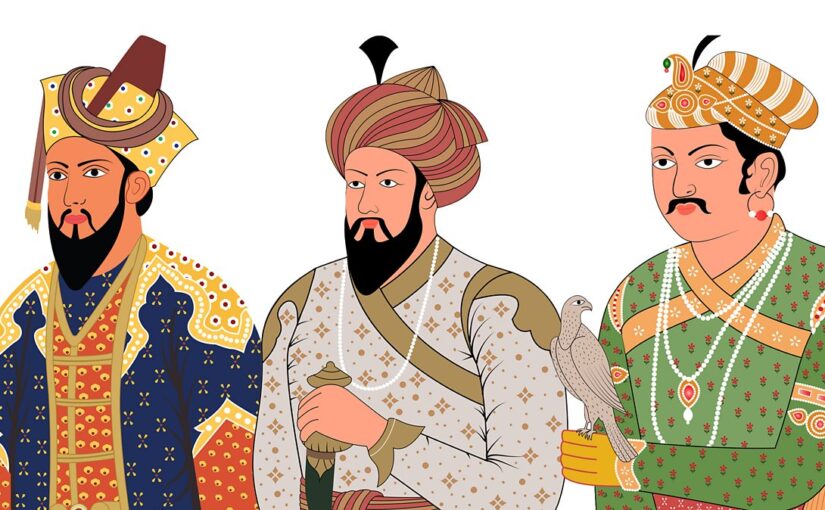
The Mughals were not an Indian dynasty in the civilizational sense. They were a dynasty in India — rooted in the Persianate ecumene that stretched from Anatolia to Bengal, but distinct from the indigenous Indic civilizational framework.

Richard Eaton’s India in the Persianate Age captures this well. The Mughal elite, like other Turko-Mongol polities across the Islamic world, operated through a tri-layered framework: Arabic religion, Persianate high culture, and Turko-Mongolian kingship. This pattern held from Egypt to Samarkand — and India was no exception.

But here’s the distinction: while in places like Iran, Central Asia, and even parts of Anatolia, the ruling elite and the subject populations often shared linguistic, religious, or cultural proximity, in India the Mughal court sat atop a society whose foundational worldview — Dharma, Sanskritic cosmology, ritual plurality — was wholly different.

Yes, the Mughals were cosmopolitan. Yes, Akbar attempted synthesis. But at their core, the Mughal dynasty retained its sense of separateness — not just politically, but civilizationally. Persian remained the language of court and culture, their aesthetics leaned West, and their ethos remained imperially aloof. Their legitimacy was not drawn from Indian sacred geography but from Turanic, Persian, and Islamic claims of kingship.

Contrast this with the Suri dynasty, which, despite being devoutly Muslim, left a remarkably grounded imprint. Sher Shah Suri ruled in Hindavi. His administrative and infrastructural legacy felt local, even national. In some ways, paradoxically, he felt more Indian than the Mughals did.

This isn’t about Islam being foreign to India. Islam has deep roots in the subcontinent — from Kerala to Bengal to Kashmir. It has been deeply indigenized across regions. But when Islam arrives twinned with Persianate high culture, it becomes something else: a hybrid elite formation, distinct both from Sanskritic Hinduism and from vernacular Islam.

The British Raj, too, was alien — but ironically, its later administrators localized many elements of their rule. The Mughals, by contrast, represented a more refined foreignness: imperial, hybrid, and between worlds.

It’s telling that the most influential women of the Mughal court—Noor Jahan, Mumtaz Mahal, and Hamida Banu Begum—were all of Persian origin. They wielded real power: issuing firmans, shaping court politics, commissioning architecture. In contrast, the Hindu-indigenous consorts—Jodha Bai, Anarkali, even Aurangzeb’s Hindu Rajput lover—were celebrated in romance, not governance. They were symbols, not strategists. Influence, in the Mughal world, came not with local integration but with Persian pedigree. That, in itself, says a great deal.

So no — the Mughals were not an Indian dynasty. They were a dynasty in India. That distinction matters.

Why Iran Is Not Iraq

These reflections are evolving, and may shift without warning. The winds of change—Divine or otherwise—do not move by human forecast.

In the Western imagination, the idea that Iran could somehow be “dealt with” like Iraq is a dangerous illusion—one rooted not just in hubris, but in historical illiteracy.

Yes, Iraq was once the cradle of civilization. From Ur to Babylon, and later Baghdad under the Abbasids, its glories are undeniable. But geopolitically, Iraq is a lowland nation—deeply enmeshed within the Arab Mashreq, itself a corridor between Egypt and the Persianate world, susceptible to invasions, internal fragmentation, and competing powers.

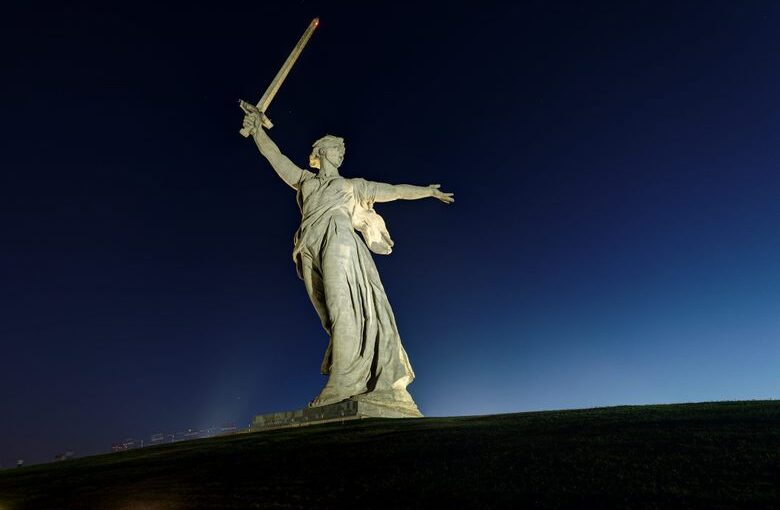
Iran, by contrast, is a fortress civilization.

Continue reading Why Iran Is Not Iraq

On Moderation, Minoritization, and the Elite

Pulse: The Threads We Weave —

Lately I’ve wondered whether I over-curated the threads. Things feel quieter. Maybe too quiet. But perhaps that’s the cost of raising the bar—of asking for dialogue instead of dopamine. Still, this lull has me reflecting not just on moderation but on why some arguments no longer move me.

Take the Indo-Pak conflict: once electric, now strangely inert. That shift reflects my own evolution over two decades. I no longer inhabit that binary. I carry a layered identity—a South Asian Bahá’í sensibility shaped by Persian aesthetics, grounded in British institutions, and fluently navigated through English. That complexity is my compass. It’s why I care less about flags and more about forces.

And the real force that shapes our lives? The elite. Not as a pejorative, but as a structural reality. I see it as nested tiers: Continue reading On Moderation, Minoritization, and the Elite

Norouz or Nowhere: The Identity Pakistan Can’t Claim

Let’s unpack Kabir’s comment. Credit where it’s due; his opinions inspire more of my posts. Perhaps it’s time he rejoined as a contributor.

“That may well be true. But you can’t deny that it is the liturgical language of Hinduism. There is zero reason for any Muslim to identify with it (unless they are specifically interested in languages). You could make a case for Pakistanis learning Persian since our high culture is Persianate. The same case cannot be made for Sanskrit.”

If Persian is truly the high culture, then why do ignore the one holiday that defines the Persianate sphere, Norouz? Afghanistan, Tajikistan, Iran, the Kurds, all speak different tongues, yet Norouz unites them. It is the civilizational cornerstone of Persian identity, the cultural “Jan. 1” across centuries of shared memory. But in Pakistan, Norouz is invisible. Not because Pakistan is un-Persian. But because Pakistan is post-colonial. The elite curate rupture, not heritage. Distance, not descent.

And let’s be honest: the erasure didn’t start with the British. Aurangzeb, still lionized by most Pakistanis (his fanaticism and Hinduphobia a plus point), abolished Nowruz as part of his Islamic “reforms,” replacing it with religious festivals. So how can one claim Persianate lineage while revering the very figure who uprooted it?

Continue reading Norouz or Nowhere: The Identity Pakistan Can’t Claim

Are You Sri Lankan?

Notes on Identity, Gharbzadegi, and the Azizam Effect

Yesterday, a Persian friend casually asked me if I was Sri Lankan. I wasn’t offended. Startled, yes — but not offended. I take pride in being Desi. And truthfully, there isn’t a stark difference between many South Asian and Persian phenotypes at the human level. But the interaction stayed with me.

Because while I can understand a Scandinavian confusing Indians and Iranians — my Danish friend, for example, couldn’t reliably tell them apart — it hits differently when Persians, especially non-Muslim, Westernised Persians, make the same mistake.

Immediately, another half-Indian, half-Iranian friend interjected:

“Zach doesn’t look Sri Lankan at all.”

For what it’s worth, when I was in Colombo over New Year’s, I fell in love with Sri Lanka — the island, the people, the everything. Also the phenotype range in Sri Lanka is extensive since there is so Dutch, Portuguese & Moorish ancestry in addition to the native ones. Some Sri Lankans even thought I was Sri Lankan myself. Truly, it is Serendib.

Continue reading Are You Sri Lankan?

Sizdeh Bedar, Identity Whiplash & the Gandharan Delusion

It’s been a minute—I’ve been quietly recovering from Sizdeh Bedar, the thirteenth day of Norouz when you’re meant to go outside and shake off bad luck. I chose to take it literally: less screen, more sky.

To be fair I did go for two consecutive daily outdoors runs, which I haven’t properly done since the late pandemic but instead of the customary picnic; I went to the Afghan restaurant, Helmand, which was excellent- Afghani cuisine is truly the dark horse of the Indo-Persianate world.

In the meantime, Razib’s dropped two excellent posts—one on Tibetans, the other on Great Men: is Trump the product of his age, or did he make the age what it is? It’s the kind of question that haunts our era, especially as 2024/25 starts to feel historically charged.

Meanwhile, the above is courtesy of Anand on our Global Politics chat & over on Twitter, a post’s been circulating about how South Asians are desperate to leave the desh, but the moment they do—they long for it obsessively.

It’s complicated. I love the homeland (Chennai is my vibe), but I’m 1.5 generation: I migrated at 14, but had spent meaningful time in the West beforehand. So what am I? Not quite immigrant, not quite native. That liminal space is familiar to many of us. It’s a tension you carry everywhere—between passport and memory, practicality and nostalgia.

On cue, our resident Pundit is once again being spammed by Pakistanis “discovering” they are the last Gandharans and telling a Kashmiri Pandit to back to the “Ganges” (the last Kashmiri Pandits who did come from the Ganges founded South Asia’s most prominent and enduring political dynasty so I guess that’s a wish for us to be under good Brahmin rule again).

Now, as a rule, you should never intellectually duel with a thrice-born. It rarely ends well. But here we are: Pakistan, in search of yet another usable identity, this time reaching deep into the vault and pulling out Gandhara. Continue reading Sizdeh Bedar, Identity Whiplash & the Gandharan Delusion

Dr Manzur Ejaz. 1949-2025


Classical Poets: Understanding Mian Muhammad Bakhsh - Dr Manzur Ejaz with Wajid Ali Syed

Leading Punjabi intellectual and writer Dr Manzur Ejaz passed away at his home in Virginia on 3/30/25. Dr Ejaz was born in a village (chak 60/5-L Burjwala, Sahiwal) in central Punjab shortly after the creation of Pakistan. He contracted polio as a child and was partially paraplegic as a result, but he never let this hold him back. Familiar with traditional rural punjabi culture from his very traditional home, he became a left wing activist in college and remained active in Left wing politics all his life.

He did his masters in philosophy from Punjab University in 1970 and joined the same as a lecturer in philosophy. He remained a committed Marxist and also developed the idea that oppression took many forms and one of its forms was the denial of the language of the common people in favor of imperial languages that were used to impose a new imperial reality on the people. He always insisted that the cause of Punjabi language must be a central concern for any Punjabi Leftist and there could be no working class politics that did not include the defense and promotion of the only language in which that class was able to fully express themselves.  It was at this point that Dr Manzur Ejaz and other Punjabi activists led by Najm Hussain Syed (the most famous Punjabi critic and writer of our age) started a weekly meeting (the “sangat”) to promote the modern study of classical Punjabi literature. They tried to hold their meetings in the university but this was the era in which the jamiat (student wing of the Jamat e Islami) was taking over Punjab university and they created hurdles such that the meeting was moved to Najm Sahib’s house and met there regularly until the Covid era, when it was converted to a virtual meeting. Around that time Dr Ejaz also met his future wife (he said the first time was at a bus stop) and Attiya Kokab and Dr Manzur got married in the late seventies and remained together ever since. Continue reading Dr Manzur Ejaz. 1949-2025

Twelve Days of Norouz

A Little Glimpse into our Norouz

Before diving into reflections, here’s a short clip from our Norouz gathering—a moment of rhythm, light, and quiet joy.

We cut the cake at exactly 9:01:30 PM, the precise moment of the vernal equinox. That instant—when day and night are perfectly balanced—is when Norouz truly begins. Not just a date on a calendar, but a celestial pivot point.

Spring Equinox, 2025 - Civilsdaily

I’ve yet to attempt a full Haft Sin, but this year, I symbolized each element in a cake and cut it at that moment of cosmic symmetry. It felt right: a gentle innovation on tradition, one that reflects the layered nature of Norouz for me—part-Persian, Bahá’í, and of distant Zoroastrian descent. My festive rhythm has long leaned toward the latter part of the year—from Halloween to Epiphany, with near-weekly celebrations—but this year, Norouz found its center.

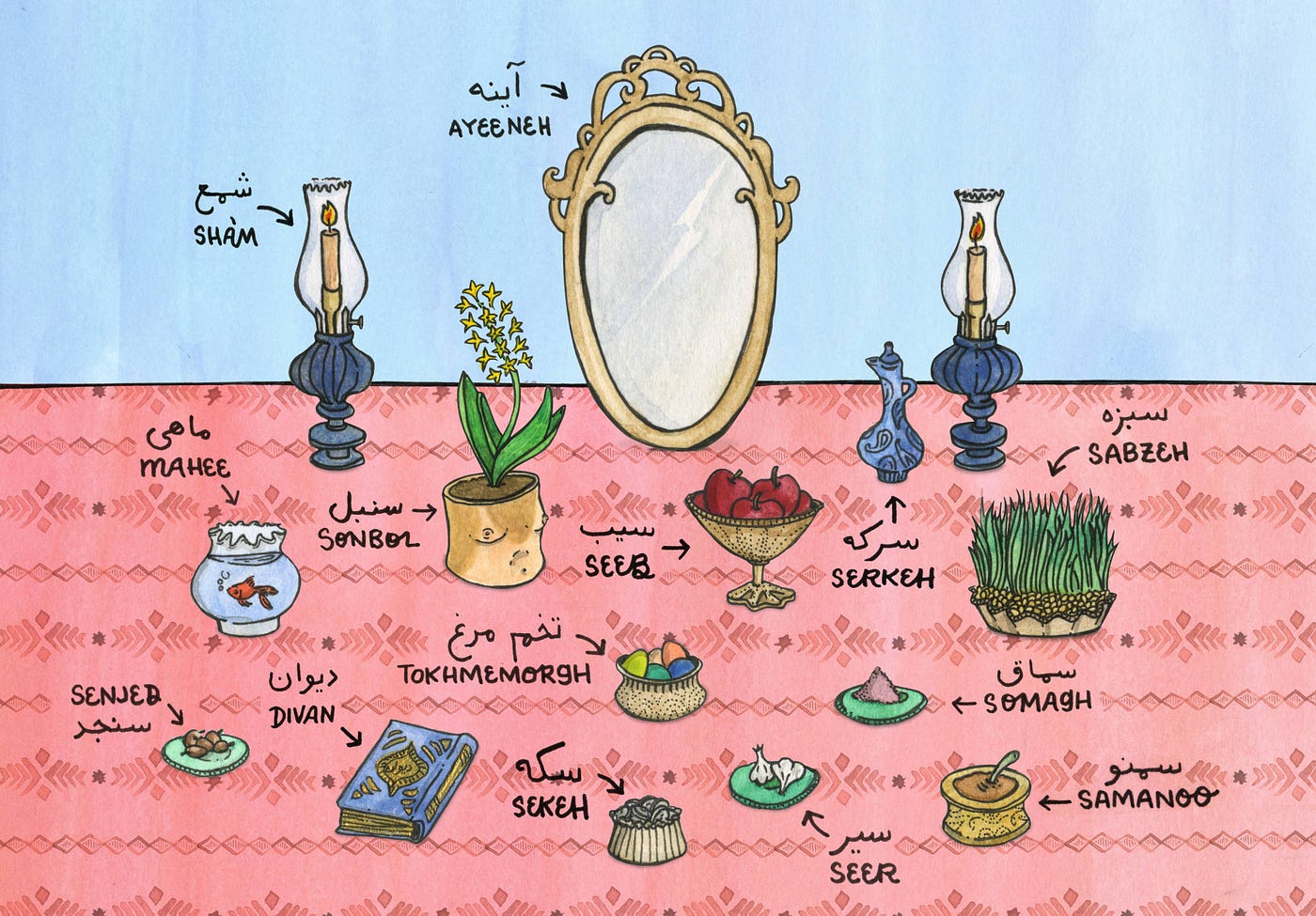
Seven Seens of Haft Seen. an illustrated guide to an Iranian ...

As I write this, it’s also Laylat al-Qadr—the Night of Power in the Islamic calendar, believed to hold the weight of a thousand months. A rare convergence: Bahá’í and Muslim fasting overlapping, Ramadan and Norouz intertwining. From next year, they’ll decouple again, but for now, the alignment feels sacred.

The camera caught just a sliver: flickering candles, a circle of loved ones, rhythmic clapping, and a moment more felt than spoken.

Sometimes, a few seconds of joy carry the weight of an entire season. Continue reading Twelve Days of Norouz

The Twitter Trap

I deleted Twitter. Not as a gimmick, but as a necessity.

Fasting

I’m fasting and traveling, which makes March the perfect month to reset. Every year, this is when we rebase our Trans-Atlantic geography—shift locations, rethink habits, and take stock. The Bahá’í Fast has turned Naw-Rúz (Persian-Bahá’í New Year) into a household signifier—a time for reflection and goal-setting. September is the other critical point in the year, marking the start of the academic calendar, when the intellectual reset happens.

But even though I’m technically exempt from fasting while traveling, skipping it feels like cheating the day. There’s something about the discipline of fasting that forces a mental reset—one that I’ve realized Twitter was actively working against.

Politics, and the Return of Old Ideas

The Trump election caught me by surprise. Not in its inevitability, but in how much it reawakened political instincts I had in my youth—beliefs I had let atrophy in my petty bourgeois years of professional and marital stability. Ideas I thought I had outgrown came roaring back.

There’s something about this election cycle that feels like the politics of passionate young men mellowing in their 40s. J.D. Vance is four months older than me, and his transformation from progressive skeptic to ideological warriorreflects something deeper happening on the Right.

But back to my main topic—why I’ve left Twitter.

The Mirage of Exoticism & The Curse of the Almighty Dollar

I was drafting an email to the author of a fascinating piece on Terra Nullius, “Lost in Google Translation,” but as I fleshed out my thoughts, I realized I had more to say—so here we are.

There’s something fascinating about how Japan represents the pinnacle of exoticism for many Westerners. A country deeply integrated into the global system, yet still cloaked in an aura of mystery and cultural otherness. But when I think of places that feel genuinely distinct, my mind doesn’t go to Japan—it goes to the Persianate world.

Iran, Afghanistan, and Pakistan share a cultural continuum that, despite centuries of globalization, still retains an unmistakable distinctiveness. In many ways, these places remind me of Cuba, Venezuela, and North Korea—not in their governance, but in how they have remained insulated from Western homogenization.

Commodification vs. Authenticity Continue reading The Mirage of Exoticism & The Curse of the Almighty Dollar

Brown Pundits