A few months ago I happened to watch the film Meet the Patels. Though you do meet all the “Patels”, the film centers around the love life, or lack thereof, of the actor Ravi Patel.
Filmed by his sister, the documentary predates Patel’s current modest fame by many years (he has a small recurring role in Aziz Ansari’s Master of None). As his life has changed in many ways, perhaps his views and outlook have too. The comments I’m making in this post are not about Ravi Patel, but rather about the views he expressed many years ago in this documentary at a particular point in his life, and how it reflects a thread of South Asian American nostalgia and romanticism of our cultural roots.
Like many young Indian Americans Patel and his sister grew up between worlds. Their parents arrived in the United States among the very first wave of Indian immigrants, which today makes them somewhat unique, as there has been a huge migration since the 1990s from India due to the H-1B visa program. At one point the matriarch of the small American Patel clan bemoans how Americanized her children are compared to many other Indian Americans, who arrived later, when various South Asian American communities were more mature.
But Ravi and his sister are not entirely Americanized. Or they weren’t. Both avoided the conventional dating rituals of American life deep into their 20s, and as of filming Meet the Patels Ravi had had only one girlfriend, Audrey. Attractive, and depicted as level-headed and kind, on paper Audrey seems to have been the perfect girlfriend. But there was a major problem with her biodata: Audrey is a white American.
Eventually Ravi broke up with Audrey because of his confusions as to what he wanted in his life, and whether she belonged in it. Did he want what all his friends had? The American dream of love and marriage. Or, did he want what his parents had? An Indian arranged marriage with commonalities of culture.
But there is more to the Patels than just an Indian arranged marriage. Ravi Patel’s parents want him to marry someone from the same subcaste of Patels from the region of Gujarat that they come from. This is entirely typical of Indian culture. But it is rather peculiar in an American context. Though in some ways Ravi finds this all strange, some part of him also entertains the idea that his parents have a mutual comfort, a cultural identity, which he envies. At one point he goes back to Gujarat to a celebration of his people, his subcaste of Patels, and he looks around at wonderment at the safety and security of being among his his kith and kin. A sense of belong clearly has come over him.
As far back as Herodotus Indian society seems to have been characterized by caste. Genetically the castes, and more precisely jatis, are very distinct. And their persistence on the Indian scene suggest some level of functional utility.
Realistically Ravi could never recreate what he felt in Gujarat in the United States because such a community does not truly exist. Yes, there is kinship among Patels, as recounted by stories about Ravi and his family on the road, staying at Indian owned motels. But in the United States the Patels are a Diaspora, an archipelago of families scattered across the 50 states.
The romantic notions that Ravi airs in Meet the Patels about group solidarity, and cultural affinity of the sort his parents have, would seem creepy and disturbing if you posited it in the context of an upper middle class WASP from New England. But the strong group cohesion evident among the Patels of Gujarat, and many Indian communities, also generates as a byproduct the sort of exclusion illustrated in the 1970 film Love Story.
And the exclusionary tendencies of middle class Gujaratis is reflected in part on the social-political nature of the state of Gujarat. It is in this state that the current prime minister of India, a tribune of lower middle class Hindu nationalism, grew up, and originally came to power and prominence. It is in this state in the early 2000s that communal riots occurred, and accusations of organized genocide against Muslims have been leveled.
The connections between liberal Democratic Indian Americans and right-wing Hindu nationalism in India have been extensively discussed. That is not what I am getting at. Meet the Patels is not a political film, it is a personal one. There is no reason that Ravi should address political topics in the documentary, and much of what I am saying here would be implicit to any South Asian watching Meet the Patels. But to many Americans these darker realities would not be visible or implied in the cultural practices which Ravi admires.
The attitudes expressed in Meet the Patels is no different from pining for the “good old days.” The reality is that the old days were often not so good. Or they weren’t how you remembered them. And just as some people pine for the days of yore, others romanticize the “homeland”, where everyone was your uncle, and the aunties took care of you when your mother was a way. But this world is in many ways fundamentally regressive and constrained, and the benefits of communal responsibility are often correlated with inter-communal tension and conflict.
Again, there is no reason that Meet the Patels should have gone into this. But I wanted to put into the record what was unsaid so that those who see in it purely a charming inter-cultural story comprehend the other dilemmas latent within the narrative.
Brown Pundits Archive · May 20, 2016 · No comments
I have been busier than usual, been reading more than before (trying to avoid Jaun Elya’s barb: “he was writing when he should have been reading”) and spending more time on Twitter than ever before, so blog posts have been few and far between. And with “products” due at work, things are not likely to change soon. So I thought I would try something different. Once a week or so, I will do something like an open thread. Just a few short comments on a few stories, most of them copied and pasted from comments I wrote on different internet sites. So here goes..
We Are Not Your Asian American (Political) Sidekick Razib Khan has a post up about “..(using Asian Americans) as a prop, often in a mendacious manner.” . Read the whole thing. When I did, I had a thought about why some Asian-Americans (mostly in left-liberal academia and it’s media periphery) are so eager to embrace a certain “we, the oppressed POCs of America” theme:
I would add that while Asian Americans in general suffer from discreet (or not so discreet) anti-Asian quotas that are put in place to limit their numbers in elite institutions, the kind of Asian-American intellectuals who write books about “POC solidarity” and run blogs called “racialicous” are in a different category; they are net (niche) beneficiaries of the “Asians as picked-upon-POC” framework they promote about Asians in America and this provides an obvious motivation for them to stick to it… For example, it gives them victim status in a social and academic setting where victim status is a very desirable good.
I understand that Asian Americans are not getting jobs on diversity quotas in most places, but the victim status still has clear psychological and social benefits and I strongly suspect that it also protects mediocre work (or whatever passes for work in the social sciences) from criticism OVER AND ABOVE the protection enjoyed by their White colleagues. Imagine 5 equally mediocre bullshitters who happen to be critical studies faculty at a liberal institution. They are not all equally protected. The White faculty member may benefit from connections and “White privilege”, the Jewish faculty from Jewish networking, but what defends the Asian guy? He or she has to rely on the POC card. Maybe they are still at a disadvantage versus equally mediocre Jews or Whites, but it is better than nothing. My point is that this motivation cannot be excluded when we think of WHY some Asian-American intellectual is pushing X or Y crap. In fact, I can think of examples of Indian-American writers and intellectuals who are clearly not being held to very high standards by the New York Times types and I suspect that successful manipulation of White guilt/POC privilege plays a part..
Of course, then there are those (few) intellectuals who are genuinely committed to a specific vision of world revolution and their views about the karma of brown folk follow naturally from that framework. Just to be clear, I am not thinking about them when I think of over-priviliged Asian-American kids blogging on Racialicious. Though both parties are happy to use each other, they are not the same. But truly committed revolutionary Marxists are few and far between. They can be criticized on other grounds, but psychological satisfaction and postmarxist postmodern BS are not their basic framework.
A commentator on another Razib Khan post (a post that touches on the touchy question: “Why Not Close Humanities Departments?”) wondered if shutting down the humanities would not take away a safety valve, one where ” the left was effectively “tamed” in the U.S. They became part of the establishment through being allowed a little safe space away from capitalism. .”
I disagreed as follows:
Your argument rests on the assumption that college humanities departments have no real-world consequences at all, so it is safe to put leftists there and let them spout endless reams of pure bullshit….. But while they may not have immediate consequences, they may still have longer term consequences, no?… after all, they do set the intellectual agenda to some extent. ..it may be enough to matter. (This is my favorite theory for why a smart person like Edward Said spewed so much nonsense; he knew it was nonsense, but he was fighting a war and all is fair in love and war. He was doing nothing less than bringing down Western civilization, opera and all. Samson option)
On the other hand, there is always the possibility that social change happens a few years (at least) ahead of any effort to conceptualize or understand it. So if we are doomed, we are doomed. ..in this theory, it may still be possible for scattered individuals to grasp what is going on in some limited area and take advantage of foreknowledge, but even they only know a few things, not the overall picture. It is what it is, nobody is in control and nobody can consciously alter the big picture… Fate rules everyone.
It is a cheery thought somehow 🙂
The New York Times has a piece about the rise of the Right (Austria’s Election Is a Warning to the West) which is remarkable for its total lack of self-awareness. The writer seems completely oblivious to the possibility that the endangered liberal consensus may have itself have some issues that have led it to this pass; maybe parts of the liberal framework are not very realistic? (as in “aligned with the world as it actually is”) Could it be that one reason a buffoon like Trump has a serious shot at becoming president is because the mainstream liberal worldview contains some elements that seem far too unreal/laughable/wrong to far too many people?
Anyway, the sky may not be falling. Or at least, not completely so. I remain in the “weirdly optimistic’ camp. There will be crises, but there will also be recoveries and new roads to new places..not necessarily recovery of specific parties or specific forms of liberalism… but the arc of history bends towards individualism and autism and more technology, with decreasing everyday violence in the more developed countries… Some places may crash and burn though…
Last but not the least, the BJP appears to be replacing a moribund Congress as India’s “national” party . I posted this article from respected (liberal, not pro-BJP) columnist Siddharth Vardrajan on Twitter with the comment ” I am not too optimistic abt a soft-landing for Hindutva (not all their fault btw, but bottom line= hard”. I was asked to explain what I meant, so I will try: I mean that the BJP includes many people who are nationalist and pro-capitalist but whose “soft Hindutva” is willing to imagine an India that is a country of laws, where non-Hindus (even Muslims) have rights and protections just like everyone else (though not more than anyone else). This is a vision that could be workable. And I would not mind at all if it was made to work, even imperfectly. But there are many things working against it. An obvious one is the “hard Hindutva” band, who really cannot conceive of an India with 200 million Muslims and X million Christians (the “non-dharmic faiths”) living as equal citizens (of course this group regard this fact as the fault of Muslims and Christians, who are seen as followers of alien ideologies that aim to undermine and eventually replace the ancient (Hindu) civilization of India, etc etc). This group is not easy to keep in check, especially if BJP comes to enjoy greater power, unfettered by alliances with “secular” forces. This particular threat to a peaceful and harmonious Indian future is frequently mentioned and is never too far from the mind of liberal commentators and this alone may prevent a “soft landing”, but there is more; there is the fact that Muslims do in fact include elements who are also unwilling to aim for a truly secular India. There are going to be jihadis and suicide bombers in India’s future, and as we have seen elsewhere, the very presence of groups this bigoted and this willing to kill can shift the entire culture towards sectarian warfare and “back to basics” civil war. There is also a very concerted Christian missionary effort that may not match the transnational loyalties of the ummah, but that does have money, modernity and Western support behind it and trouble (justified or not) is easy to imagine. Then there is capitalist disruption and India’s not so ready for prime-time infrastructure, state and intelligentsia.. and last but not the least, there is India’s Westernized postMarxist Left. Enuff said.
A soft landing will need visionary leadership and lots of luck. Need i say more?
With that cheery thought, i look forward to next week 🙂
PS: Here is Aasem Bakhshi on Lesley Hazelton’s book about the Shia-Sunni split (and about popular history writing in general).
And don’t miss Aqil Shah’s excellent piece, which blows away the “drone blowback” theory so beloved of the regressive Left.
And memories of Josh Malihabadi for fans of Urdu poetry
and to show that I am not completely lacking in self-awareness about what I am doing here, a quote from Nate Silver’s mea culpa about his Trump predictions:
“Without a model as a fortification, we found ourselves rambling around the countryside like all the other pundit-barbarians, randomly setting fire to things…”
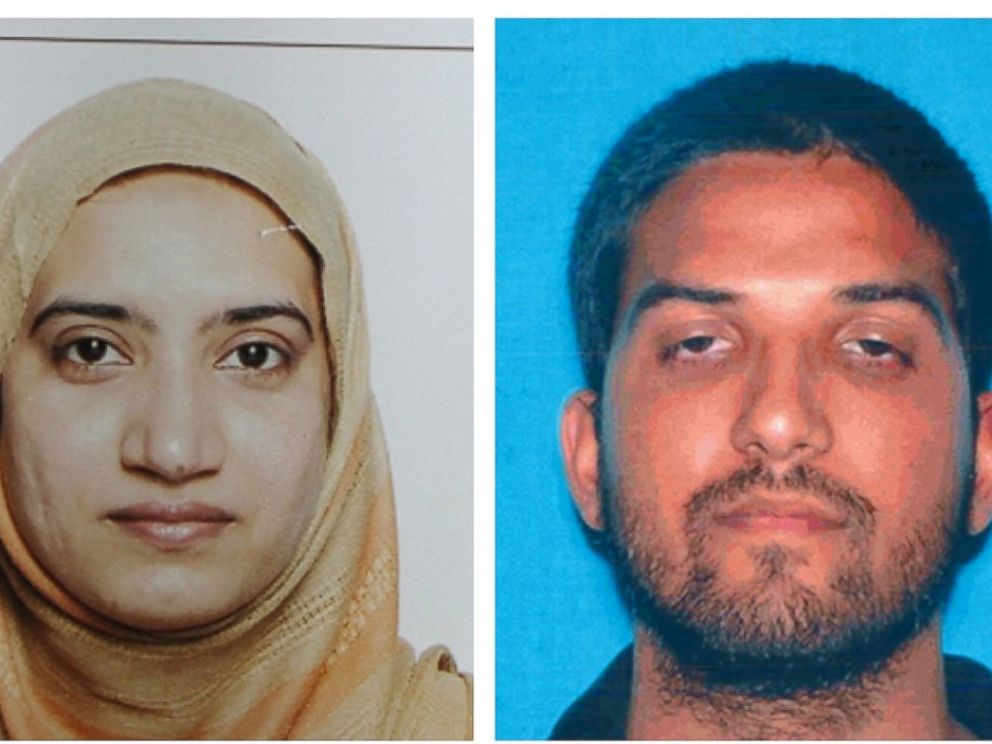
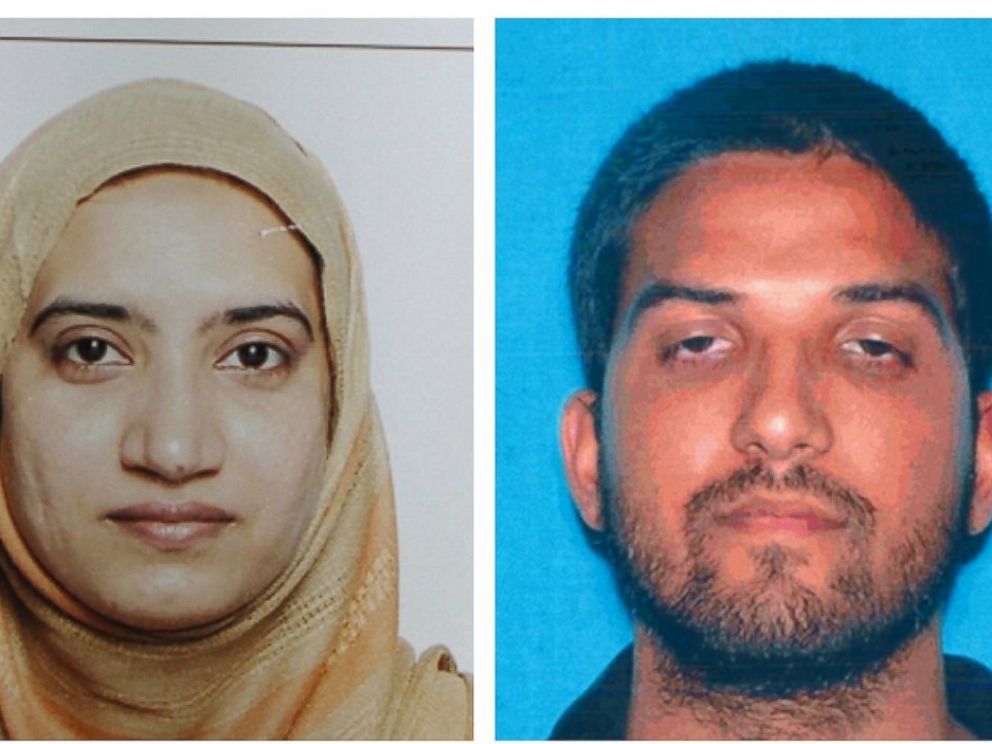
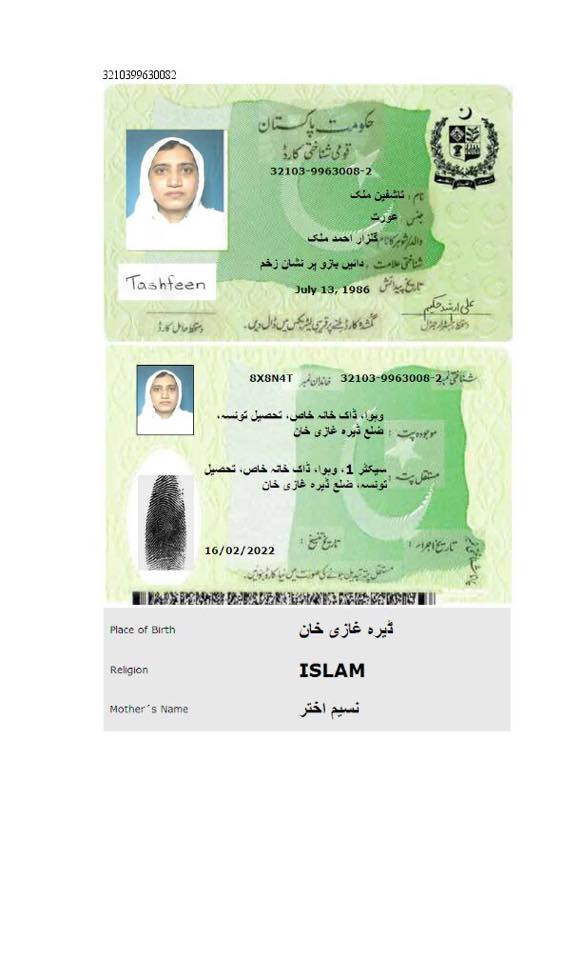
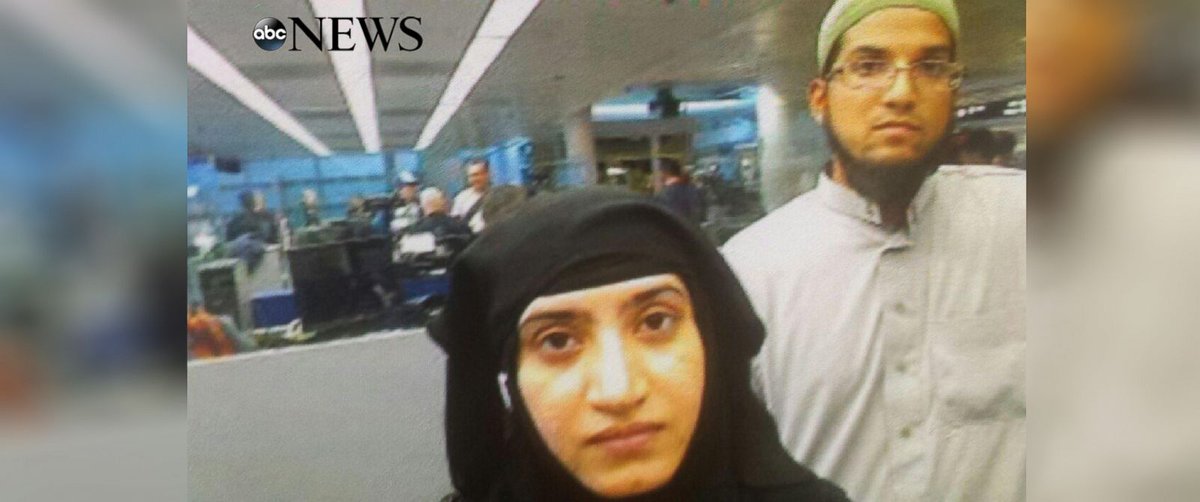
On December 2nd 2015 Syed Farooq Malik, a young
American of Pakistani origin (born in Illinois) was attending his workplace holiday party in San
Bernadino. He left the party early (it is not clear if there was an argument of
some sort before he left) and then returned with his wife, Pakistani-American
Tashfeen Malik, and the couple opened fire on his coworkers and left after 4
minutes. 14 people were killed, 21
injured. It has since emerged that the couple had 2 assault rifles, thousands
of rounds of ammo and several pipe bombs. They had also rented a Ford
Expedition SUV a few days before the attack and used it for the attack as well
as in the subsequent chase and confrontation with the police. Though they managed
to escape the scene of the crime, they were eventually shot dead after an
exchange of fire with the police. They had left their 6 month old baby girl with
her grandmother on the morning of the attack. Sometime after the shooting,
Tashfeen Malik also reportedly posted a “pledge of allegiance to ISIS” on her
facebook page.
It has since emerged that Farooq Malik had a “normally religious” upbringing but
had become “more religious” in the last two years. According
to his (estranged) dad, he was obsessed with Israel and “shared the
ideology of ISIS leader Abu Bakr al-Baghdadi”. And it seems that his wife was brought up in
far more Islamist fashion than he was. Her father is a Pakistani who works in Saudi
Arabia and supposedly became “more religious” there. She lived in both Pakistan
and Saudi Arabia and was a full-time niqabi when she attended Bahauddin
Zakariya University’s pharmacy department.
After marriage, she did not show her face even to her father-in-law and
her brother-in-law and stayed in seclusion in her California apartment. She did
not attend the baby shower thrown by her husband’s coworkers (the same people the couple later went to
shoot) and it is very likely that she
was more “radical” than her husband. It seems likely that the two of them decided
to kill people because they wanted to strike a blow for their version of Islam,
but the actual choice of target (i.e. where a group of people would be murdered) may still have involved
some “workplace grievance” (though no convincing grievance has yet been revealed).
Reaction to the shooting has included some predictable
themes: Left-liberal Americans have tended to focus on the gun control aspect
and some (but not all) of them have downplayed the religious element (or at
least made the reasonable point that whatever the motivation for this
particular shooting, the high death toll was facilitated by the easy
availability of assault weapons in the United States). They are also pointing
out that Muslims commit a vanishingly tiny percentage of mass shootings in the US
and victims of “gun-violence” far outnumber the number of people killed in
terrorist incidents., etc. etc.
Right wingers meanwhile have focused completely on the Jihadi
terrorism aspect and deny that gun laws or the cowboy “pro-gun” culture of the
United States had ANY connection with the event. The usual suspects think Obama is “coming for
our guns” and is failing to take action against Muslim hordes bent on migrating
to America to blow it up.
“Moderate Muslims” either downplay (or deny) the Jihadist aspect, or
focus on the fact that the Jihadi-bride was “radicalized” in Saudi Arabia, the
supposed sole font of all Jihadism in contemporary Islam. Many Pakistanis back
home, mistrusting all “official accounts” and Western sources on principle, are
not even sure this happened as described and are happy to entertain conspiracy
theories that say this is probably yet another false-flag attack to “defame Islam”. Even senior anchors educated in the West are
ascribing this to “endemic American workplace violence” and “American
gun-culture”. And the Pakistani government has even tried to suppress media investigation of the Pakistani background of Tashfeen Malik. None of this is surprising, but a lot of it is wrong or only
half-true even on elementary inspection, so I thought I would try to put out
some of these facts and alternative viewpoints. I look forward to constructive criticism:
A. The Result of “American Gun-culture” or “Spontaneous Jihad”?
The short answer is “both”. I have no doubt
that Jihad was a major (in fact, primary) motive in this case, but easy
availability of guns surely helped. It is likely that a “self-starting” jihadist in a less “gun-friendly” society may
have had some difficulty obtaining 2 assault rifles and thousands of rounds of
ammunition. I emphasize “self-starting”
because (as the Paris terrorist attack makes clear), organized terrorist groups
(and organized criminals in general) can obtain very impressive arsenals even
in Europe, where gun-control is much stricter than it is in America. Mass
shootings in America are mostly “Black on Black gang violence” (and so occur
below the radar of Americans who live outside the specific neighborhoods where
such crime is commonplace. Most liberals only notice them only when they tote up the figures for “355 mass shootings in America this year”), but those that do make headlines tend to the ones
where more peaceful parts of the country are targeted by some shooter. Most of these are carried out by loners (some
motivated by right-wing militia type propaganda, most just motivated by
personal slights and paranoia, etc.) and it is possible that similar loners in
other countries may have some difficulty doing the same amount of damage
(Brevik in Norway being the obvious HUGE exception). A few have been carried out
by Muslims undergoing “spontaneous Jihad syndrome” (e.g. Fort Hood, Chattanooga) and it is possible that more gun-control may damp down the number of
casualties caused by such attackers. Certainly the London
subway stabber could have killed
more people if he had a gun, but then again, he may just have been a very
incompetent person. Muslims in China have managed to kill up to 170 people
using nothing more sophisticated than cleavers and knives. So a more detailed look does suggest that more gun-control may have made the shootings less deadly, but not
necessarily. In the short term, gun-control has very little to offer.
But in the long term it may still be
significant. Not because it will make guns disappear (it is almost impossible to
imagine that in a country with 300 million guns and porous borders), but because its
enaction would itself indicate a significant shift in America’s gun-happy culture. Countries like Canada are not gun-free, but they do
have a culture that does not glorify loners with guns and personal violence in
the way American culture frequently does. But this seems more significant if one has not yet corrected our second misconception. See next.
B. America’s rising epidemic of gun-violence.
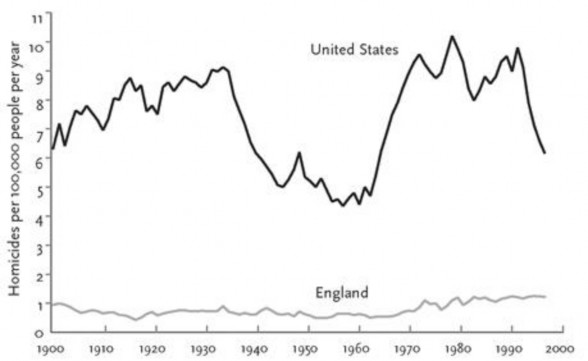
This one is obviously NOT true. Violent crime in the US
has been dropping steadily for decades and is very far below its 1970s peak (a
time no doubt remembered as the “good old days” by many people J). There are specific
areas (mostly inner cities) where violence is indeed horrifyingly endemic and
affects practically all citizens on a daily basis, but outside of those areas,
America is a relatively safe country (though this safety is associated with excessive police violence and truly horrendous incarceration policies). Even when taken as a whole (thus including
the inner cities in the figures) the US is not as safe as Denmark or Japan (poster-boy for monoculturalism by the way), but
it is not as violent as Mexico or Jamaica or even Russia and Lithuania! Especially of note, the crime
rate in “safe neighborhoods” (a large proportion of American neighborhoods) is in the much idealized European,
Canadian or Western European range. Media hype is a different matter.
C. Saudi Arabia and Wahabi Islam are the source
of Jihadism
Short answer: yes. Long answer, not
necessarily in the way you think. First for the theological issue; Wahab did
not invent the notion of pure Islam or the desire to kill in its name. The
Kharijites came up with the theological justification for killing Muslims who
are not sufficiently Islamic way back in the mid-seventh century CE. And
mainstream Sunnis of the classical age were insistent on the duty of Jihad
(though much less tolerant of the notion of killing fellow Muslims). Even the relatively
hard-line version created by Wahab owed much to the earlier writings of Ibn
Taymiyah and are not as far outside the realm of Sunni Islam as modern
apologists and Karen Armstrong-educated Westerners are prone to believe. More details in
this post I wrote earlier, but I will past some excerpts about the sources of modern Islamism here:
1.
Sunnis. These were the ones who thought the rising Arab empire was best led by the
consensus of the elite. They had a tendency to rally around whoever had managed to
fight his way to the top, provided he paid lip service to religion, patronized
the rising ulama class and (most important) kept his eyes on the ball as far as
managing and growing the empire was concerned. While Sunni clerics developed
what seems to be a theory of politics (who is a just ruler? who has the right
to rule? what do the people owe their ruler? etc.) on closer inspection it
turns out to be pretty much divorced from actual politics. Rulers and their
courts had more in common with past Roman, Persian and Central Asian traditions
than anything specifically Islamic. Rulers usually grabbed power by force. Dynasties rose and fell with little concern for theological rules.
No “Muslim church” acquired a tenth of the influence of the Roman
Catholic church. This tradition is not ISIS-like in detail, but it also paid
lip service to ISIS-like ideals that ISIS can and does fling in the face of “court
clerics” who happily go along with whoever happens to be the ruler. Sunni tradition is not ISIS in practice,
but it trains and teaches children using ideals that ISIS may aspire to more
strongly than the Sunni rulers do themselves. This hypocrisy-crisis is a recurrent
feature of modern Islamicate politics. And it is the reason why “moderate
Muslims” (aka mainstream Sunnis) regularly fall prey to “Wahabism”. They are
not falling prey to a new religion, they are falling prey to a more distilled
and internally consistent version of what they have been taught as their
own religion.
2.
Shias. Those who felt there was something special about the family of the
prophet and in particular, the family of Ali and developed theologies that
included varying combinations of the charismatic Imamate and its heritage of
revolt against Sunni authority. Since Shias are a majority in only a few
places, (most important, Iran) and their history includes long periods of
conflict with mainstream Sunni rule, they are more or less immune to the appeal
of Sunni revivalists, whether they are the milder Maudoodi types or the harsher
ISIS types. They have set up their own theocracy in Iran (much more effectively
so than any Sunni revivalist has managed to do) but they are not ISIS. For the purposes of this post
(i.e. for outsiders who dont have to live in Iran), they are “objectively
liberal”.
3.
Khwarij. The Khwarij insisted that neither the elite, nor the family of the
prophet had a special right to rule. Only the most pious, the most thoroughly
“Islamic” person could do that. Muslims who committed major sins or
failed to meet their standard of Islamic fervor were as much the enemy as any
infidel. Even more so in fact. The Khwarij were always small in number and they
were repeatedly defeated by both Shia and Sunni rulers, but their tendency has
never completely gone away. Something within Islamic tradition keeps them
alive. Mainstream Sunnis may pay only lip service to Jihad and the
harshest punishments of shariah law (particularly in modern times), but these
ideals are present in their theology.
And ideals can effect some people. True believers
arise, and in times of anarchy and state collapse, they may be the lowest
common denominator, providing a framework around which the asabiya of Islam can
cohere and in which the community can see hope for a return to a
commonly-imagined (though mostly imaginary) golden age.
Groups like the Wahabis, Lashkar e Tayaba,
the Taliban and ISIS are simply combining the waters of 1 and 3, usually with
more 3 than 1. But they are NOT relying on some new ideology invented out of
whole cloth by Wahab or some other evil Saudi. They are (in their own mind and in the mind of many idealistic Muslims)
simply purifying actually existing Sunnism.
Just as an aside: What about Sufism? In many cases Sufis can simply be described
as mainstream Sunnis with mystical or humanistic instincts; trying to get the
most good out of religion while leaving out most of the imperialist and
legalistic baggage. In some cases, they
may be more akin to a secret society (like the Freemasons), influencing much
from behind the scenes, but by definition, it is not really easy to disentangle myth (and self-promotion)
from shadowy reality in this scenario. In other cases,
they may think of themselves as the
perennial philosophy, operating within Islam as it operates in all true religions.
And in some cases, they are hardline Sunni Jihadists with a “master and novice”
framework added to it, rallying the troops for holy war and conversion of the
infidels. Take your pick. But do remember that Sufism is not really a sect with any single reasonably well-defined theology.
Second,
and equally important: the Saudi Royal family is not the source of religious ideology in Saudi Arabia. They allied with
this religious movement to gain power, but at crucial points, they have been
willing to go against the wishes of their Wahabi base. It is the people of Najd
(the wahabi heartland, so to speak) and specially their religious scholars, who
are the real fanatics in Saudi Arabia. A democratic Saudi Arabia would likely
be more Wahabist than the royal
family. Incidentally the main oil reserves are located in
the (relatively small) Shia region of Saudi Arabia. This region became part of
Saudi Arabia by conquest (not by
imperialist manipulation or “Sykes-Picot”; Brown people have agency, their leaders can
conquer people too). American companies (invited in by Al Saud because he, quite rationally, feared the British imperialists more) found oil there. Soon the world war accelerated oil demand and the US became an ally of the
Saudi Royal family, which it remains to this day. For a long time, the US ignored and
sometimes (most egregiously, in
Afghanistan and Pakistan) actively encouraged the export of Jihadist Islam
from Saudi Arabia. This was short-sighted and morally wrong, but it was based
on a serious under-estimation of the potential of jihadism as an ideology, as
well as a prioritization of anti-communism over good sense. Note that contrary to Eurocentric Left-wing propaganda, Saudi support for pan-Islamic causes was not primarily initiated by the US. It was the “push” of their own religious motivation plus the “pull” of demand for pan-Islamism in newly minted “Islamic” countries like Pakistan that drove most of this effort .
In any case, I really do not see
the US as actively encouraging this process after
9-11. The Saudi Royal family has also slowly
(too slowly for most of us) moved away from unrestrained support for the most extreme international Jihadists, but continues
to support many Islamic causes worldwide (not just Wahabi causes, but mainstream Sunni causes that it hopes to coopt) and continues to support “moderate Sunni Jihadis” in their regional war against
Shia Iran and its allies. And of course, they continue to impose ISIS-like
punishments (cutting off hands and feet, beheading etc) for crimes including the crime of apostasy
(all of which are a standard part of mainstream Sunni Shariah, and that
therefore have the theoretical, but
not always the practical, approval of mainstream Sunnis). This causes many liberals in
the West (and elsewhere) to insist that the US should break its alliance with
Saudi Arabia and even bomb them. But
what happens then? Will they become less jihadist or more? And who gets the oil?
Iran? Russia? China?
The point is this: there is a quick and direct way to
weaken Saudi power and the hardline shariah-based Islam they encourage, but it
requires taking the oil away from them (since oil wealth is the source of their
power). This can be done. The local population is historically Shia. Maybe Iran can capture the oilfields and set up a Shia-client state and defend it
against Saudi attack? Or Russia Or China can do this job? Or the US can do it
itself; but such a grab would be a naked imperialist military intervention, and it would surely require shooting any Wahabi who shows up in the oil-region. There is no pretty
way to do it. If the US just breaks off relations, the Saudis will look for a
new protector. Pakistan, China, maybe even Russia could be tempted. But Jihadism does not come solely (or now, even mostly) from the US alliance, and will not go away if that
alliance breaks. It likely can be moderated if the Royal family is pressured,
but it will be moderated against the wishes of the people of Saudi Arabia, not
on their behalf. And it will be moderated by an authoritarian regime willing to
use torture and violence to impose its will on a hardline Islamic population
(at least in the Najdi heartland). If all this is not clear, then the appeals
to “break off our alliance” are just liberal posturing and virtue-signaling,
not real policy.
By the way, any such invasion and
occupation to impose liberalism and good 21st century behavior would
also invite the ire of all pro-Shariah-true-believer Sunnis in the world. Prepare
for that too. Otherwise, the Royal family is the best bet in Saudi Arabia and
that is simply the ugly unpalatable truth.
D. Any Muslim can become radicalized and fall
victim to spontaneous jihad syndrome at any time.
This is the right-wing fringe’s mirror-image of the
liberal belief that Islam never causes jihad and all of it can be explained by “inequality”
or “Sykes-Picot” or some such story. Both
mirror-images are clearly false. The real situation is that we can look at the Muslims of the world and
see several disparate groups; Shias, Ismailis and Ahmedis are outside the Sunni
Jihadist universe and so are not going to spontaneously take up arms in the war
between shariah-based Islam and other civilizations. They are all relatively small minorities, but
they are the most obvious examples of “Muslims who will not get radicalized and
join the Sunni Jihad, foreign policy, Israel, Sykes-Picot and Picketty notwithstanding. These supposedly powerful motives for hating America will not cause these groups to go postal. There is a lesson in there somewhere.
Coming to Sunni Muslims, we have a very large number are “moderate
Muslims”, which is shorthand for Muslims who were not brought up in
shariah-compliant households and who do not practice that kind of Islam. Their numbers vary from country to country, but one
can say with a lot of confidence that they are not spontaneous jihad material
either. They can covert, but it is a slow process, it is observable and even preventable (if they are kept away from hardline preachers). Then there are the shariah-compliant Muslims who believe that the Shariah’s
orders for Jihad are meant for very specific situations where a Sunni state has
declared Jihad and those situations (fortunately) do not exist. So they get on
with life in all parts of the world. Many of them are model citizens because they
avoid intoxicants, deal honestly and follow the law. A very tiny fraction of
them may “radicalize” but most will not. The same applies to converts. So yes,
about these (small) groups one may say “they can radicalize” , but very rarely. And even then, there are warning
signs and it is never an overnight process. Finally, there are the true-believer
Jihadists. They have obvious links with Jihadist schools, groups and teachers. They are
small in number and they are not hard for the community to identify, if is so chooses. And they are indeed high risk. Liberals see none of them,
right-wingers see too many. Both are wrong.
I guess what I am saying is that notions of Muslim hordes just waiting for a chance to attack are far outside the bounds of reality. Common sense can actually be a guide here. There is
no need to throw the baby out with the bathwater and equally there is no need
to be willfully blind to warning signs. Biased agenda pushers on BOTH
sides of this debate have obscured common sense options. And while Liberals may
underestimate or misrepresent the threat from radical Muslims, conservatives frequently generalize the threat to all Muslims.
Last but not the least, all
nutcases cannot be stopped beforehand. Some surprises will always happen in a large and complex society . There
is no risk-free society, with or without Muslims. But this is not World-War
Three. Not in the United States. In parts of Europe the proportion of jihadists is likely higher (for various reasons, including racism and multiculturalist liberalism). Meanwhile, in the core of the Muslim world itself, all bets are off. There is no
well-articulated theology of liberal Sunnism. Other organizing ideologies (like
Marxism and pan-Arab nationalism) have manifestly failed. The authoritarian regimes that exist are (for now) the only game in town. These authoritarian elites, who disproportionately
benefit from the modern world, impose their will using a combination of force, persuasion and foreign support.
But they lack a deep legitimating ideology. This crisis of ideology is extremely
serious, and it may devour some of those countries (though the survival of Jordan is a good example of the fact that even the most arbitrary modern states have more strength than we sometimes imagine). Those Muslim states that are further away from the Arab heartland (and the Israeli-Palestinian conflict) may do better. They can frequently rely on other identities to maintain the legitimacy of their states and new Islams can arise in them with time. But even they will not be compltely free of Jihadist conflict. No state is completely free of conflict of course, and many conflicts unrelated to Islam or Jihad could easily kill millions and destroy whole countries. But predominantly Islamic countries do have the added burden of the conflict of Classical Islamic ideals with modern civilization (not justWestern civilization), and it will take time to resolve this conflict.
Hold on tight.
Brown Pundits Archive · March 17, 2015 · No comments
My friend, Shoaib, and I have started a new blog called New Pundits. The main advantage of NP is that it’s WordPress, which I prefer much more to Blogger. At any rate NP is still very much in it’s infancy. I believe we started BP around Christmas time 2010 so it’s almost years on and still going strong. I’m a very big fan of the UNZ review, which is really becoming a staple of the alternative media scene and there is no reason in my mind why the fledgling Desi Diaspora shouldn’t have something similar to that.
Last night at dinner I was mentioning to some friends that London was now becoming so Asian that segregation is now an entrenched phenomenon. It’s best seen in social groupings of the prime demographic (20’s & 30’s); very few of them are mixed in any real sense. Class has always been a huge determiner in Britain (which school did you go to?) and a friend of mine once told me “Asians can never be upper class.”
Now I remember this statement very distinctly as it was said in a mixture of remorse & bitterness. At the moment I deeply disagreed with the statement but now that I think of it, it is true that the British Asian (Sikh & Hindu community especially) is merging into the middle classes (just as the Muslim community, for the large part the Mirpuri & Tower Hamlet contingents, are floating between the working and reckless classes).
However I’ll end this slight meandering on this note. I know of a Sindhi lady who fell in love with an Englishman in the 40’s and as a result of familial disapproval, eschewed her love and stayed single. She did mention that in those days many Indian girls liked Englishmen because they were so dapper and looked good (obviously in a subcontinent that venerates fairness, Northwest Europeans would have some advantages). However what was interesting to me is that apart from the early generations of the East India Company (mixtures which created the Anglo-Indians) we don’t really think of Europeans and Indians mixing (especially after the British disbarred royal intermarriage in the fear that the Indian Royalty would go the way of the Aga Khan and be fully Europeanised in a few generations).
Perhaps the reason why British Asians stand apart from the class structure is simply because the culture of intermarriage is so weak compared to any other global culture (East Asians embrace it with alacrity and even black population mix in Europe).
Brown Pundits Archive · February 21, 2015 · No comments
(1.) you actually start becoming punctual
(2.) your schedule runs months into advance
(3.) you stop socialising nearly as much
(4.) you start saying Christ inadvertently
(5.) when you and your other half are the only dark-haired (let alone dark-skinned) people in the room
(6.) your friends are based on shared hobbies
(7.) your social calendar revolves around societies
(8.) you would never dream to drop into other people’s homes as you used to
(9.) seeing people once a year is more than enough to sustain a friendship
(10.) Christmas becomes a BIG thing and you start thinking about bona fide Easter Eggs lol.
Bonus 11:
(11.) your ethnic identity becomes a very valuable tool to differentiate yourself from the white bread upper middle class, who are very homogenous & metropolitan at times.
Brown Pundits Archive · February 13, 2015 · No comments
Just some random thoughts trigerred by a question that Razib asked and a post on FB.
The question:
“Why are all South Asian American websites so Left? Any thoughts? It’s a consistent tendency that explicitly South Asian (de facto Indian) websites tend to have a Left inflection. This means that they’re soaked in critical race theory assumptions, but also genuflect to broader Left liberal concerns and priorities (e.g., “black lives matter” or the boycott of Israel). My hypothesis is that it’s a selection bias in the type of people who set up these websites, and read these websites. Though the average South Asian American is a liberal Democrat, they’re not that political, and too busy to know much about “intersectionality.” There are conservative South Asian Americans in the public intellectual space, but they are people like Avik Roy or Reihan Salam, whose focus is rarely on South Asians (though Reihan brings up his Bangladeshi background now and then).”
I think (and I think Razib would agree) that not ALL South Asian websites have a Left inflection. For example, I am sure there are a number affiliated with Hindutvadis/RajivMalhotra types that are explicitly anti-Left wing. And I am sure there are a number affiliated with various Muslim groups that are in their own world, impossible to classify as left or right, just not-WEIRD. But that being said, there IS a very distinct leftward tilt in the highly educated westernized South Asian crowd. Since this is exactly the crowd one finds in universities and “serious” media and arguing in “intellectual” blogs and so on, their visibility is far beyond their actual numbers. And it is not just about visibility. Most people (in some sense, almost ALL people) get their views and opinions ready-made from a relatively small group of opinion-makers. The extraordinary dominance of some (not all; some process of meme-selection does go on) left wing tropes in this highly educated and influential group therefore translates into wide (mostly uncritical and superficial) acceptance of many of these tropes within the larger South Asian community.
Which then brings us back to why? I have a few thoughts:
1. Victimhood bonus. I really think this is the single most powerful motivator. Many highly educated Indians (and Pakistanis, Bangladeshis, etc) come from an elite background and any reasonably consistent left wing analysis would have them feeling guilty about their position back home. But suddenly, here in Columbia university, you can get to play victim at no cost (and with some benefits..especially if you stay in the humanities, in which case career choices and peer groups will reinforce and support that choice). It is a VERY tempting offer and only the most churlish and obstinately pig-headed can pass it up. Racialicious is delicious. And this bonus is on offer from the Left, not the Right. That fork in the road and the choice to be made are therefore completely clear and impossible to resist.
2. Marxism from back home. Marxism was really the default ideology of the first anti-colonial generation in Asia and Africa. In some places, where real Marxist revolutionaries tried armed violent revolution and got put down (as in Malaysia) or were pre-emptively slaughtered by CIA-supported generals (Indonesia) the situation was more muddled, but in the Indian subcontinent the educated elite was highly influenced by Marxism. Most of us brought that vague left wing symnpathy with us to the West (it was not very deep. But then, it never is, anywhere; most left wing parties have 3 ideologues who actually try to read Capital, the rest are lucky if they can read the manifesto) and therefore naturally gravitated to the left in the West. The Left in the West had meanwhile moved on to post-Marxist pomo poco bullshit and that actually proved more attractive to most elite-origin desis than the more “economist” and organized revolutionary Marxism of the old days. No need to be poor, no need to be hunted by the FBI, and all the benefits of being on the right side of history. Who could resist?
3. Racism. Obviously there really IS a substratum of race conciousness and of explicit, or now mostly implicit, racial superiority in European and North American civilization. This is owned and massively condemned by the new Left (in fact, it has almost become the default organizing principle of the new Left, in place of proletarian revolution) and denied or (on the fringes these days) owned and honored by the Right. The choice is clear.
4. Ignorance. Never underestimate the ignorance of the educated human specimen. Since, unlike our working class fellow immigrants, we are mostly ignorant and simultaneously proud of our vast erudition, there is little chance we can spot blind spots, misrepresentation or total muckups in the Left wing post-marxist world after we move into it. We read the correct books, follow the correct opinion makers and become more and more ignorant and more and more proud of our vast knowledge. The clear choice is then reinforced. No surprise.
5. Truth. And last (and maybe least, or am I being too harsh?) there are elements of truth in the left wing position. The fetishization of individualism and guns and whatnot on the Right in America for example is just not very appealing. Environmentalism, healthcare, education, social justice, tolerance…on so many things the claim is that the left has the humane, reasonable and progressive position. And this claim has enough truth in it to keep the left the default setting for most educated immigrants. There is a “thinking right” and there are great inconsistences and even idiocies in the actual details of the “Left” once you get into it, but once you step ashore on the left side of the beach, you rarely even get to see those… So you keep going. Something like that.
Finally, and at a tangent to this whole business. The young people so tragically shot in N. Carolina. Some of our friends were naturally concerned that this reflects a new level of Islamophobia in this country. I had posted a link to a story about lynchings in the deep South (a century ago, things have changed a lot, even in the South) and a good friend commented that now they are lynching Muslims. My first muddled thoughts were (as usual? I am beginning to suspect I am sometimes just contrarian for the sake of being contrarian? maybe so) to deny that this is a lynching. I am copying my FB comments here without editing (you can figure out the context pretty easily) just to get thoughts from other better informed (and perhaps wiser) commentators:
Me: The “Muslim Lynching” in N Carolina, while a huge tragedy for those three good people and their grieving families, was NOT a lynching at all. That was my point. Actually this thought first came to me several years ago in LA. I was at an award ceremony for a (good) South Asian social work organization and some of the speakers were laying it on about their struggle against oppression and racism. I happened to be sitting next to a Black lady and after I told her that I did not think our experience had ANYTHING in common with the Black experience, she felt permitted to open up…and she did. She said she was happy to work in solidarity with people like us, but for us to somehow claim victimhood in the same ranks as Black Americans was, frankly, very very irritating to her. I agreed with her completely and we parted in perfect harmony 🙂 . Since then, I have had other reasons to get irritated by the “social justice warrior” types and have had occasion to think that Neitzsche (PBUH) may have had a bit of a point about such things. As a non-aristocrat (and unlike you, not much of a Roman General at heart 😉 ) I am not exactly pining for the return of aristocratic values, but I cannot help the occasional thought that White people who write for “The Nation” and whine about White supremacy and the poor huddled masses of Brown people being fooled by their superiors are, in some sense, in the happy position of whining about being so bloody superior..and of course, there are other more substantive problems with the whole identity politics run amuck thing.. .anyway, I am not sure it reflects well on us….this thought needs more serious elaboration and is liable to massive misunderstanding, so I will leave it here, but no, I dont think Carolina was ANYTHING like a lynching. It’s not a lynching when the local community goes around trying to be nice to the lynched..
To which a friend responded: It’s a terrible tragedy what happened in NC. I’m sure the victims’ faith had something to do with it, but it’s also important to realize that it’s extremely hard to demand an understanding and compassionate attitude from the non-Muslim US public when the later has been witnessing unimaginable scenes of carnage running on a daily basis from the Muslim quarters of the world—beheading, burning people alive, rape, and plunder, being done systematically and in keeping with the ideological framework of Islam. I believe this was a random act of terror and doesn’t represent the mainstream American attitude. Comparing this tragedy by invoking lynching of black people is disingenuous or rather simplistic. In these trying times one has to be mindful that If only 10% of the Muslims are to be the extremists type, the number is higher than this, we are talking about 150 million strong diehard army which is glad to slay and get slain in their march to subjugate the entire world to their god, as per their holy book, surah 9111. It’s a staggering number indeed that’s diffused globally, and not to mention a good 50% of their sympathizers, the useful idiots, the clueless moderates. Eventually if moderate Muslims don’t accept this as a reality they are the ones who will be the next victims, either at the hands of the extremists or the hate crimes that’s bound to shoot up in the wake of atrocities which are too many to count. Islam has the crisis of ideology, an ideology that is intertwined with Muslims identity. Ultimately, it’s a crisis of Muslim identity. It’s not looking good for a very long time to come.
Me: I will take the opposite tack and suggest that the “fear of Muslims” and their impending clash with civilization is itself exaggerated. I think IS type atrocities will mostly occur in Muslim countries. Most European Muslim tourists-killers going to IS will get blown up by barrel bombs and go on to meet their houri quota rather soon. Few will make it back to explode in Europe and VERY FEW will make it to America (two oceans and Canada, alhamdolillah). Neither the terrorist campaign nor the backlash will be as huge as we sometimes fear. Or at least, that is my guess for today. Tomorrow, I may be in a different frame of mind…
Him:Technically you are correct. Omar Ali. But humans are not that objective when it comes to matters pertaining to faith and scenes of daily brutality committed in the name of religion. Perception is what matters in these situations.
Me: My thought was that we may see those scenes and think about them more than the average American. Most people have already classified “those barbarians” as barbarians. But then they have a life to live and I dont find most Americans obsessing about it…Maybe I am wrong, but that is how it seems right now.
Him: Those ‘barbarians’ carry a black flag inscribed with the first kalimah. Images like these make it very easy for the mind to associate.
Me: again, my thought was that the kalima and so on are more OUR crisis and OUR problem. Hardly worth notice for most Americans…
Brown Pundits Archive · February 9, 2015 · No comments
Any thoughts? It’s a consistent tendency that explicitly South Asian (de facto Indian) websites tend to have a Left inflection. This means that they’re soaked in critical race theory assumptions, but also genuflect to broader Left liberal concerns and priorities (e.g., “black lives matter” or the boycott of Israel). My hypothesis is that it’s a selection bias in the type of people who set up these websites, and read these websites. Though the average South Asian American is a liberal Democrat, they’re not that political, and too busy to know much about “intersectionality.” There are conservative South Asian Americans in the public intellectual space, but they are people like Avik Roy or Reihan Salam, whose focus is rarely on South Asians (though Reihan brings up his Bangladeshi background now and then).
Brown Pundits Archive · January 17, 2015 · No comments
“So, in Bosnia, the case was there were white, blond-haired, blue-eyed Muslims who were being slaughtered and identified as Muslims. That really touched me.”
The great brown hope for every British Pakistan, local Essex lad Maajid Nawaz, talks about how Animal Farm turned him away from extremism (he needs to join a post-apocalyptic book club).
Brown Pundits Archive · January 9, 2015 · No comments
This sentiment emerged in conversation with a fellow Pakistani where I said “it’s not the fault of Pakistan, it’s the fault of Pakistanis.”
I’ve moved on with my life and live a fairly acculturated integrated life in blighty (where I think about rocks and climbing a bit too much for my own good). Even so I’m more interested in the pink pages of the FT than the broadsheets of the Daily Telegraph. However I have to see that we are simply seeing a meltdown in the Ummah.
Does it affect me personally? Not especially since I’m ensconced in the West and the only real connections I have to Islam are my surname, my descent from Hazrat Ali & the fact that the Baha’i Faith find it’s ultimately origins in the Shakyh sect.
However I feel pity and sad that the mental shackles of the people of the Ummah blind them to the message of unity and peace that the rest of the world has already embraced (to varying degrees). It is the responsibility of Muslims in the West (who like all Diasporas eventually have outsized roles of influences) to really lead the drive to modernize tradition.
When children are being picked off in schools, when journalist offices are shot down with impunity and now the ongoing hostage crisis in Paris emerging it seems that things are only getting worse and worse. Maybe I am too idealistic, perhaps I should take off my rose-tinted glasses from time to time (but experience has taught me life has so much to do with perspective) and it is too late for the gradual ongoing cultural exercises I used to embark on a couple of years ago.
The BritPak community needs to cultivate home-grown, authentic leaders who can bridge the gulf between civilisations. I don’t know who this cadre is but someone has to issue the call and it has to be a broad-based ecumenical effort. I’m on the UKIP-Tory spectrum because I believe in Britain & British values are resilient & adaptable enough for a modern world. However I always take heed in John Major’s mangled Orwellian quote:
Fifty years on from now, Britain will still be the country of long shadows on cricket grounds, warm beer, invincible green suburbs, dog lovers and pools fillers and, as George Orwell said, ‘Old maids bicycling to holy communion through the morning mist’ and, if we get our way, Shakespeare will still be read even in school.
Those who believe in the above are always welcome to join Britain and the British enterprise.

 As far back as Herodotus Indian society seems to have been characterized by caste. Genetically the castes, and more precisely jatis, are very distinct. And their persistence on the Indian scene suggest some level of functional utility.