What does Ajit Pai’s race have anything to do with net neutrality?

Not a surprise that Hari Kondabolu goes there. The problem with making everything about racial dynamics is that more white people in the United States might take a page from that. I don’t wish to encourage that.

Also, believe it or not racializing a topic that the majority probably agrees with you on might make it less popular. But if you now talk to people who just agree with you all the time on these things you might not remember that.

Muslim aggression

We were walking the little doggo (who is mA a cutie & constantly admired) down the road and we crossed this Muslim couple. The couple got so anxious that the husband barked out “save your Dog.”

Now I have no idea what that actually meant except that he was a recent immigrant judging from his grasp of the language & dress.

What did shock me was his hubris; the fact that as a recent immigrant he found no need to understand the societal mores of a dog-loving society.

I’ve constantly seen this with hijabi Muslims that as soon as they see the doggo they start going into a panic. I blame lefty WASP liberals who make no attempt to encourage this angry population to integrate into the mainstream.

Home – Lost, Found and Imagined

One of Brown Pundit’s commentators, Ruchira, wrote a wonderful piece (titled similarly to this post) on her sadly discontinued still archived but profound blog, Accidental Blogger, in 2007 about being an NRI. It was really very well-written and I thought I would reproduce it here for its 10+ year anniversary. For someone like myself who has such diverse origins and is also “peripatetic” (it’s always nice to have to google words to refresh on their exact meaning); this piece really resonated with me.

This is one of the few personal essays Ruchira had written on her blog and her father-in-law, mentioned below, passed away last year in 2016. I have excerpted & italicized a particularly moving passage on him as he was a noted Urdu writer.

It is bittersweet that Urdu, an exalted melange borne of poets, warriors & nomads, is cursed to wrestle with death every few generations in the bloodiest of circumstances (1857, 1947, 1971). Truly a tongue more suited for war than peace, for pain than pleasure but then perhaps that is what makes it so achingly beautiful and ephemeral.

A noted Urdu writer, my father-in-law has written extensively on his experience and that of others during these traumatic times. One of his most acclaimed books tells the story of Indian Muslim refugees in Pakistan transforming their new domicile in Karachi into the Indian city of Lucknow from where they were displaced, brick by brick in their dreams. His literary account of the losses on both sides of the border vacillates between regret, fear and doubt – sometimes harshly critical, sometimes sadly sentimental and always nostalgic. Unlike my own family, my husband’s parents have visited Pakistan several times – until fairly recently. I have often wondered why my father-in-law couldn’t let go of the memories while my own parents were able to. Was it because he made the partition his literary genre and therefore it remained on his mind long afterwards or conversely, did he write about it because he couldn’t get over the loss?  Could it be that the carnage he witnessed was so etched in his mind that he bears a far greater sense of betrayal? I don’t know.

All in all a very wonderful and lyrical piece, which I’m very happy to share below.

Home – Lost, Found and Imagined

More than twenty six years ago, I left New Delhi, India to follow my peripatetic husband on a journey that would take us across two new continents and four different cities. Until then my birthplace Delhi, was the only home I had known.  Most of my family and all my friends lived there and frankly, I had never imagined leaving that comfortable zone of familiarity except for travel and tourism. In the years since the initial uprooting, the idea of home has undergone dramatic changes in my mind, as has the definition of comfort zone. What exactly is home for any one of us?  Where the heart is or where the hearth is? Is it the place we ourselves grew up in or where we bring up our children?  Do we define it by the food, the smells, the climate or the faces around us? Or is much of it in our minds?

For ages humans have left their homes in search of food and adventure, as also in fear. They have set down new roots in unfamiliar landscapes . Having done so, they have surely at one time or another reflected back on that decision and wondered if their lives were better or worse for having left. Good and bad fortunes are both ascribed to the decision to leave one’s homestead.

Severing ties with once familiar surroundings can come about in two ways – voluntarily and involuntarily.  For some it is a deliberate choice of a new life in a new place. Others leave under the threat of natural or man made disasters. There is no doubt that the initial trauma and the feeling of helplessness is much greater for the latter group. But after years, when things have settled down and a modicum of normalcy returns, do things even out?  Do those who are violently uprooted from their nests continue to pine for their loss longer and more keenly than those who leave peacefully? During WWII did European Jews fleeing the horror in their homeland miss Poland, Germany, Hungary and Lithuania once they found safe haven elsewhere? Or were they able to shed their attachment for the “home” that didn’t accord them dignity and provide sanctuary? Will Palestinian refugees ever accept a peace settlement with Israel without a “right of return” clause?  Are displaced persons from war torn regions more or less nostalgic about their homes than immigrants such as myself who chose to relocate under placid circumstances? Or is it all in our head, how rooted or uprooted we feel in one place or another?

Both of my parents and my father- in-law lost their ancestral homes during the partition of India to what was to become Pakistan (east & west). My own parents came from the eastern wing of partitioned India which saw far less sustained violence than the western part to which my husband’s family belonged. My parents’ side of the family lost considerably more in material wealth and social standing than did my in-laws. Yet there was a dramatic difference in the way the two families chose to remember their loss. Although their circumstances had been seriously and even brutally altered, my parents and other close relatives went on to live reasonably comfortable lives in India, going about their business in a forward looking manner. They explained the partition in terms of politics, history and the perfidy of the British. Their progeny (me included), born in independent India in safe and peaceful circumstances heard their stories and in their imagination, often conjured up a sense of loss more wrenching than the refugees themselves felt. But that is always the peculiar burden of subsequent generations – to feel more helpless, more enraged and more emotionally bereft for the sufferings of their elders. The victims themselves who live through the terror and the humiliation manage to often remember their experience with aloofness and perhaps even triumph, looking back at discrete events which they managed to survive against all odds.

Like my family, my father-in-law too did well for himself in east Africa (he left India soon after the partition) and in India where he returned several years later. But to this day, he remains very sentimental about his interrupted life and his erstwhile home from where he and his family escaped with little more than the shirts on their backs. He witnessed widespread violence during the bloody mayhem that accompanied India’s wrenching territorial partition and population exchange. A noted Urdu writer, my father-in-law has written extensively on his experience and that of others during these traumatic times. One of his most acclaimed books tells the story of Indian Muslim refugees in Pakistan transforming their new domicile in Karachi into the Indian city of Lucknow from where they were displaced, brick by brick in their dreams. His literary account of the losses on both sides of the border vacillates between regret, fear and doubt – sometimes harshly critical, sometimes sadly sentimental and always nostalgic. Unlike my own family, my husband’s parents have visited Pakistan several times – until fairly recently. I have often wondered why my father-in-law couldn’t let go of the memories while my own parents were able to. Was it because he made the partition his literary genre and therefore it remained on his mind long afterwards or conversely, did he write about it because he couldn’t get over the loss?  Could it be that the carnage he witnessed was so etched in his mind that he bears a far greater sense of betrayal? I don’t know.

Last month I came across the poem, “How Do You Like Austin?” by Maurice Leiter at Brian Leiter’s blog. It is apt to quote a few lines from the poem here.

How do you like your new home? …

But isn’t it different from New York?

I am different from them both.
Once the sightseeing is done,
There is really no place
That is not home.

After initial few years of slight disorientation (especially the two years in Germany), like Maurice Leiter, I too no longer fret about where “home” is. It now is a state of mind that transcends  geography. I have found wonderful friends and a rhythm of life that I can enjoy almost everywhere I have lived. In the early days when I visited Delhi, I felt I was going “home.” Gradually as the years went by, the return flight to the US began to acquire the feel of “coming home.”  Since the death of my parents, Delhi, which I still love to visit, feels less and less like the home I knew.  Also, I am now much less connected to the political / social reality in India, a connection which for me, is vital to feeling at home. Delhi will never fully cease to be “home” for me – it is thoroughly integrated in my memory and my imagination. But “home” now no longer evokes a single concrete image as it did in my youth. Several others vie for that honor – places where I have been, where I am now … and hopefully  also where I will be in the future. I can now go back and forth physically between these spaces at different times and emotionally inhabit them simultaneously.  All feel equally comfortable and I don’t have the need to transpose one upon the other to create an illusion of the perfect “home.”

To be brown is to be a civilization


Though I often disagree with him, I do enjoy Zach’s perspective on things because they are different from mine, though we exhibit similarities (e.g., both of us generally align with the center-Right in Anglophone societies). Zach may be one of the first cosmopolitan desis in his pedigree; he, himself of part-Persian heritage, marrying a South Indian Sindhi, probably to raise a family in England. In contrast, I may be the last brown person in my pedigree for a while, fading into legend and myth (or infamy!).

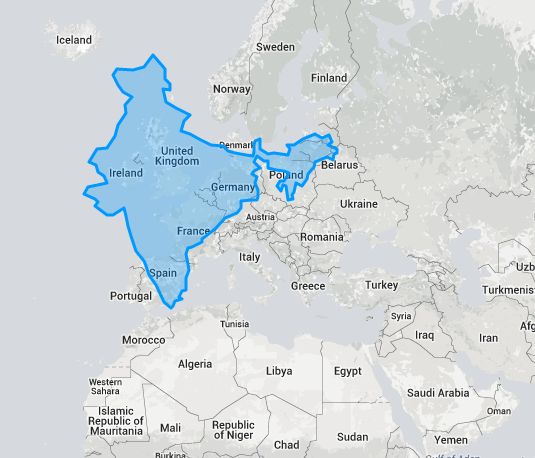
But one of the things I think is important to emphasize is South Asia is a civilizational entity straight-jacketed for historical reasons into a few nation-states. Though India and China are often compared together, they are totally incomparable insofar as the Han majority of China exhibit a racial and linguistic unity which South Asians do not (even though southeast Chinese dialects are unintelligible with Mandarin, the written language is the same).

By and large, I am predisposed to agree that someone like Zach is more prototypically South Asian than I am. Despite his religious heterodoxy his cultural rootedness in the Northwest quadrant of the subcontinent does put him at the “center of the action,” so to speak. In contrast, my own family’s recent origins are on the far eastern fringe of recognizably desi territory…. That is, my family is from the eastern portion of eastern Bengal (my grandmother was almost killed by the crazy elephant of the maharani of Tripura!). It’s interesting that 3,000 years after the emergence of Iron Age South Asian cultures the fulcrum of South Asian identity is where it began all those millennia ago (there was a period between the Mauryas and the Guptas when Bihar was the center).

Talking about what is more prototypically desi is like talking about what is more prototypically “European.” Being French or German is more prototypically European than being Albanian or Russian. We could argue why, but in your heart you know it’s true. There are definitions of Europeans which exclude Albanians and Russians (even though I’d disagree with those personally), but no plausible ones which exclude French and Germans.

Finally, I do think it indicates the limits and flexibility around race and brown identity. As Zach has said repeatedly he is very light-skinned (and part Iranian to boot). Myself, I don’t think anyone would describe me as either light-skinned or dark-skinned; I’m pretty much the average South Asian in complexion. Brown. Not light brown. Or dark brown. Literally just brown. But that doesn’t really weight much in terms of who is “more desi” or not. I have never watched a Bollywood film all the way through. That matters more.

Why Brown Pundits?

This post is in response to Zach and Zimriel.

Why Brown Pundits? Why this blog? And why do I post here, as opposed to Gene Expression or Secular Right, or various other venues which I have access to?

To a great extent the origins of this blog for me go back to the early 2000s, when I began to have some discussions with a few South Asian friends/readers through carbon copy emails. Two of those individuals later went on to co-found the Sepia Munity weblog.

Growing up in an overwhelmingly white America my understanding of South Asians was parochial and superficial, or at least academic, until I entered adulthood. At that point I met various South Asian Americans, and formed some friendships of some durability, and began to see how they viewed the world. How their experiences differed from mine, and how they were similar.

There was, and is, a lot of diversity. But I didn’t see too much of my own perspective being represented. Books such as the Karma Of Brown Folk reflected what I think the most dominant and “hip” element of American South Asian subculture, which is culturally left-wing, and aspires toward what has become bracketed under the term “intersectional.”

I’m not saying that these people are the majority. Just that they vocal, and active, and the ones who are likely to agitate and organize around a South Asian American identity (as opposed to local particularistic identities, such as being a Tamil Brahmin, or a more general identity, such as being a liberal Democrat or conservative Republican).

This blog is a way to get some more heterodox and diverse views out there. For example, I am a libertarian leaning conservative who is an atheist, whose children are “white presenting” as they would say today. I am Bengali by birth and upbringing, but it is unlikely that my descendants will be Bengali in anything but distant lineage. That’s a statement of fact, and neither positive or negative. It probably influences my negative attitude toward fashionable anti-white poses struck by gentry left-wing American South Asians (poses struck in solidarity with other “PoC”), as anti-white prejudice impacts my family directly.

As for what I post here vs. what I post elsewhere: if I’m not aiming toward generality of inference or lesson I’ll post them here. A South Asian illustration of a general principle can be posted elsewhere, but sometimes issues and questions exhibit strong South Asian particularities, and they belong here.


What is Brown Pundits?

Even since I’ve relocated to the Shires and inspired by my wife’s intense focus on her PhD I’ve been trying to write a science fiction novel. It’s going well and it’s sort of something as a bucket list thing to do. One thing I’ve realised as a “writer” is that distractions are lethal.

Therefore virtually all of my activities have been trimmed down so that I can write more. However writing isn’t a linear activity; it’s not only related to time but inspiration.

At any rate how does this all relate to Brown Pundits? I was of course involved in the original Brown Pundits (in the winter 2010/spring 2011) but not so much in this reboot. It’s also difficult to actually pin down what Brown Pundits is about.

Do we talk cricket, no there’s cricinfo for that. Do we talk desi politics, there’s NDTV for that and we don’t really comment on films or popular culture (I watch Hindi films & Urdu drama but my commentaries on it never really get picked up). Also I don’t accept that Brown Pundit is a Sepia Mutiny successor.

The Devil wears Brown

I find the answer lies in the Devil Wears Prada. In one iconic scene an icy Meryl Streep lectures a dowdy Anne Hathaway about how MS’s Haute Couture decisions percolates through every pore and layer of fashion until it reaches to the bottom of Anne’s bargain basement collection.

BP in some ways is like that; we aren’t the High Culture of Brownitude (not by any stretch of the imagination) but the High Intellect of it. We won’t discuss Kashmir necessarily but rather the underlying pattern of conversion to Islam among Kashmiris and how that led to the situation that is today. We aren’t academic specialists by any means because we trade depth for breadth.

Of course each Punditeer has a different style; Razib is precise & knowledgeable, Omar has a ideo-political framework whereas I’m much more hazy and experiential. We also now have Slapstick with his interest in his Kashmiri Pandit history & politics.

I don’t know if I have given a clear definition but I would like to think the intellectual discourses we have here about South Asia and diaspora percolates, even in a tiny way to the rest of Desidom.

What does it mean to be “Brown?”

I have never liked the word Brown (too much of a New World term) but I much prefer Desi.

I don’t actually know what desi means (I think it’s rustic & rural combined) because its haziness is what makes it so compelling. It’s a shorthand for the children of Mother India but doesn’t extend to South East Asia, the term attenuates somewhat in Sri Lanka (who have their own cultural peculiarities) and Nepal (because of their physical resemblance to the East).

Desiness fades off somewhere in KPK/Afghanistan; exactly where is a matter of choice because the historical boundary with Greater Iran begins somewhere in the Hindu Kush. The Indo-Gangetic plan is the beating heart of Desiness; the three rivers constitute the lifeblood of desiness.

Desiness connotes shared food, a Hindustani vernacular, Bollywood, an Urdu-Mughal High culture set off against Sanskrit religion, a local & earthy UP-Punjabi culture, PIR & Guru worship, a feeling of physical & geographic unity that extends to South Asia. It’s also a sentiment and a state of being rather than a fixed characteristic. Some desis are not so desi and sometimes you can turn up and turn down the Desiness, not so with Brown (unless you use some nasty bleach products).

Of course in the migration to the New World the stark complexities of what it means to be desi sort of strips away into “Brown.” For instance do Brown people like Urdu dramas & Hindi films? Desis usually like one or the other (and the smarts ones both 🙂

When we call ourselves Brown Pundits is there really much of a common ground in this matter? Is there anything that really unites Brown people beyond the colour of their skin; there are brown Cambodians and Turks.

Desiness of course is earthiness fused with a sumptuousness and lavishness that is almost unparalleled (look at a desi wedding as an example). Persia and her strong aesthetic influence have historically percolated through the Sub-continent via the medium of Muslim/Mughal High Culture (thanks to the Brits who ensured the two became synonymous). The interplay between the Sanskritic pushback and the Persian advance has contributed to so much of our cultural heritage (try as they might Urdu is not dead yet; in exile from its UP homeland to find refuge & succour in the Punjab and a bastardised existence as lyrics in Bollywood films).

But at the end of it all Desiness somehow captures the magic & mystery of India; a culture that has persevered despite all the odds. A millennia of foreign Pardeshi rule but India has somehow managed to preserve her traditions, her religion and her culture; no mean feat.

Even Persia was reborn of an Arab rape in a way that India was not. There are several orders of magnitude more continuity between the Rig Veda and modern day India than there is with the Avesta & Iran-zamin (Zoroastrianism is memory fused with myth; Hinduism is a living reality ready to tame Islam at a moment’s notice, in fact Hinduism derives her strength by not being Islam).

Brown doesn’t really do justice to what is a highly complex and evolving civilisational space. Even if India & Pakistan make an ass of themselves on the world stage battling one another (and Pakistan always threatening defection to be a sweeper in th Minarets of the Middle East) it doesn’t mean it’s not a fascinating Sub-continent. When I compare India, Pakistan & Iran; India has retained that hue & joy of paganism that the stark monotheists have long abandoned (Islam has had such a problematic relationship with music for instance).

Of course Desipundits doesn’t have as good a ring to it as Brownpundits so I guess we’ll have to suffice with Brown.

Too light-skinned to be Pakistani?

We had a Pakistani Dinner late and it was quite a laugh (even though I’m quite Indianised these days & constantly rant about Muslims, I do love my Pakis). One of my friends brought along a white lady who joined us. As we left the dinner she asked me if I was fully Pakistani because I was lighter than the rest and they looked “more Indian.” She then mentioned that I could pass off as a Spaniard, which frankly was BS ???.

I was much annoyed (not faux-annoyed because it seemed like she was giving me a compliment) because I’m instantly taken for an Indian (& happily so) whereever I am in the West (not Arab not Middle East not even Persian). I am usually seen as Indian or Muslim (especially when I wear a beard, which is what I am, the collision of the Ummah & Mother India) in an all-white context; it takes a very discerning white person to see me as anything other than those.

A good rule of thumb is that the rounder my face the “desier” I look, the leaner the more Persian I get (an Iranian friend told me that and it makes sense).

What I found interesting is that in an all-desi context (which has been a while) my “otherness” admittedly did jump out (I felt it myself but then this was a predominantly salt of the earth Punjabi table, where the Urdu spoken has a nasal quality to it).  If I had been with Muhajirs (of the KGS strata) or Pathan-Punjabi mixes it wouldn’t have felt so stark; this was a case of regional rather than national differentiation. But Punjabis own Pakistan and good for them, some compensation for the horrid they had to undergo at partition.

I find this bestowing of “light privilege” by white people to be ridiculous and micro-aggressive (microaggression is a thing!).
It’s not that we don’t have our colour fixations in South Asia (and the Middle East) but colour is a spectrum/gradation rather than a stark barrier. There are dark Brahmins after all (even though I once heard a quip in Kampala that never trust a dark Brahmin lol) the Aryans seemed much more partial to mixing & mingling than Southern Slaveholder Landlords.

The divide & rule concept with which goras have categorised and classified coloured people borders on the ridiculous. One can be considered coloured if they have two or more of the following; dark hair, dark eyes and dark skin. The distinction between Meds & Middle Easterners (swarthy Sicilians are essentially like Levantines) does get more hazier but I do have to agree with Ta-Nehisi Coates that I find the concept of “white” to be more of a political than a racial construct. Human societies have always grappled with light & dark (with preference for the former usually but then with few exceptions invaders tend to stem from the icy north) but black & white is a distinction that seems to have arose in the slave-holding societies in the New World (don’t take my word for it I’m not a scholar!)
Adios (gotta practise my Spanish now)
Ps: while my wife has done a very good job in Indianising me; as soon as I am in a Pakistani crowd my Pak-narrative conditioning kicks in and I blend in like a chameleon (that’s what my best friend calls me since I like to constantly blend in). I’m such a Munafiq!

When all you have is postcolonial theory everything is about the white man

Recently I read a piece, Confronting White Supremacy in Christianity as a Christian South Asian, which is interesting from an anthropological perspective. After all, I don’t know what it’s like to be a progressive South Asian Christian, which is the perspective of this author. But as I read the piece I felt that it elided and conflated so much. A much deeper and richer story was being erased so as to serve up another illustration of the primacy of white supremacy.

If you read From the Holy Mountain: A Journey Among the Christians of the Middle East you know that how white American Christians treat non-white Christians can be rather ridiculous. One of the stories I recall is of an Arab Christian waiter in Jerusalem who wore a cross, and was very irritated with white Americans with strong Southern accents would inquire when he had converted to Christ. This person of course privately scoffed, and reflected that when his ancestors had been Christians for centuries his customer’s ancestors were still worshipping pagan gods.

Here is a passage from the above piece which I think really confuses:

Christianity in India highlights a violent history of white supremacy through colonization and mass conversion by Europeans including, the Portuguese, Irish, Dutch, Italian, French, and English many of whom hold cultural influence that has remained to this day in places like Kerala, Pondicherry, and Goa. Similarly, there doesn’t appear to be much of a difference in the diaspora. For instance, my family converted to Christianity while living under the Apartheid regime in South Africa, an entire system of white supremacy supported by ‘Christian’ values.

The writer is a young Canadian woman whose family is from South Africa of Indian heritage. Additionally, though she never is explicit about it, her family seems to be evangelical Protestant. This is an interesting perspective, but it is a totally different one from that of South Asian Christianity.

Bracketing Kerala with Pondicherry and Goa is simply misleading. Christians are nearly 20% of the population of Kerala, and most are St. Thomas Christians, whose origins predate European contact with India by many centuries. Originally part of the territory of the Persian Church of the East, modern St. Thomas Christians have splintered into numerous groups with varied affiliations, in part due to the trauma of contact with Portuguese Catholicism. But through it all they maintain an indigenous Christian identity which is distinct from any colonial imprint.

Second, large numbers of India’s Christians are converts from Dalit populations, or, tribal peoples in the Northeast who are racially and culturally distinct from other South Asians. The framing in the piece is that South Asian Christianity has to bear the cross of colonialism, but a good argument can be made that for Dalit converts and tribal groups in the Northeast Christianity is the vehicle for resistance to oppression, assimilation, and colonialism on the part of the dominant South Asian cultural matrix.

This is not to say that the piece does not speak to a real dynamic. North American white evangelical Protestantism is inordinately freighted with racialized baggage. And it is easy to reduce into the Manichaean framework of postcolonial theory, where whites are the sole agents of action in the world. But to the generality, Indian Christianity has many disparate threads, and this sort of reduction is misleading.

Hasan Minhaj and Aziz Ansari: your race defines you and it doesn’t

Today I watched Homecoming King, a comedy show by Hasan Minhaj. Honestly I wasn’t going to watch it, because Minhaj’s political schtick at The Daily Show was not geared toward someone like me. That is, it’s funny to laugh along with him, but it is much easier if you agree with him politically. To me this is a major contrast with Aziz Ansari, who probably shares most of the politics of Minhaj, but who does not seem to foreground it as much.

Some of this is happenstance. Minhaj blew up on The Daily Show, which focused on politics with a liberal slant. Ansari became more well known through episodic television. That’s going to impact the sort of comedy they put out there.

But after watching Minhaj outside of The Daily Show context, and comparing his routine to Aziz Ansari’s (I’ve also watched much of Master of None), I think it is notable how differently they come off despite the likelihood that on the fundamentals they probably agree about much in American society. In short, Minhaj’s experience and recollection of racism seems much more raw to me than Ansari, who seems to have taken it more in stride.

I was encouraged to watch Homecoming King  in part because Minhaj grew up in Davis, California. I lived there for five years and one of my closest friends during my undergraduate years is a Davis native. In fact I went to her wedding in Davis during Minhaj’s senior year in high school. The centerpiece of Homecoming King happens to be about an event before prom which involved racism of a subtle but hurtful form that traumatized him in a very deep fashion. He’s talked about this incident extensively so you can Google it. But it colors all of Homecoming King.

But there are some differences between Ansari and Minhaj which I think require highlighting. Ansari is 5’6 feet tall, while Minhaj is 6’0 feet tall. Ansari is also darker-skinned, and I think I can say he is less conventionally attractive than Minhaj (readers who are attracted to men can correct me here). Finally, Minhaj grew up in very liberal Davis, California, situated between the Bay Area and Sacramento. Ansari grew up in a small town in South Carolina. I suspect that Ansari probably faced more racism than Mihnaj when he was growing up if I had to bet.

And yet of the two Aziz Ansari seems to be less deeply impacted by the banal ubiquity of white American racism. He acknowledges that it exists, sometimes in a pointed fashion. But he does not seem to let it define him.

In  Homecoming King Minhaj’s trauma from his abortive relationship with a white girlfriend scars him so much that he says he could not date white girls after that. I’m sure Ansari has experienced some level of racism against him on the dating scene. Especially in the South where when he was growing up interracial relationships were probably more taboo than in Davis. It comes up a few times in Master of None, but it’s not defining in any way. He keeps on trying to find someone he can connect with no matter their race, even if “on paper” they should be out of reach for a short dark-skinned guy.

Finally, this is a minor thing, but Ansari is more explicitly disconnected from his Muslim background. He has stated he is an atheist to the media. One episode of Master of None involves him eating pork in front of his parents. Minhaj in contrast seems to own his Muslim identity much more (albeit, of a very liberal cultural variety).

Rather than being exemplars of young brown men in the United States, the subtle differences between Ansari and Minhaj show that there isn’t one way to be brown, and that we aren’t impacted in the same way by how society views us. Like Minhaj I went to high school where I was the only brown kid. Also, like Minhaj I was called Saddam Hussein. Unlike Minhaj my town was overwhelmingly conservative, while his was overwhelmingly liberal. While my town was over 90 percent white (actually more than 95 percent when I went to high school since I’m about 10 years older than Minhaj), his was about 70 percent white. What was the difference between us? A lot of it comes down to personality.

Some liberals of a minority background feel besieged by the white majority. In contrast, many of us who are more conservative accept racism is part of life, but move on, and don’t believe it is as determinative as liberals assert. Much of this comes down to personality differences, rather than race differences. Minhaj and Ansari are both successful politically liberal Indian American comedians from a Muslim background. But how they experienced American society and present themselves still differs because they are still individuals with all the differences that entails.

Brown Pundits