since Sbarrkum writes on Dravidians, Dalits & Aryans; I wanted to leave a short comment (for now)
What is
since Sbarrkum writes on Dravidians, Dalits & Aryans; I wanted to leave a short comment (for now)
What is

A fellow TamBram writes about it; https://nereview.com/article/the-trials-of-subu-vedam.
The word Brahmin is mentioned 4 times in the non-paywall foreword.
Subu’s father was an academic, a physics professor and materials scientist at Penn State, who would have blended seamlessly with my parents’ friends in North Carolina, who were all vegetarian and spoke Brahminical Tamil with its idiosyncratic conjugations and vocabulary.
Dr. V
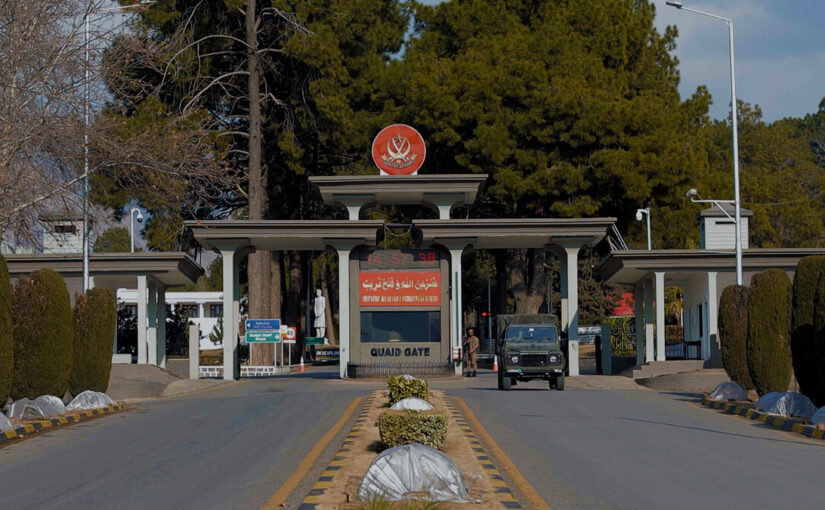
This idea came to me randomly when two people, separately, asked why they should pay taxes if half the budget supposedly goes to the army—a claim that is factually untrue. I am here trying to play devil’s advocate. While writing this, I consulted people to understand why the proposition, “The establishment is the root cause of every Pakistani problem,” is so widely taken for granted, especially after Imran Khan’s exit.
By “establishment,” I am specifically referring to the military, the way it is colloquially understood nowadays, not the “elite” in the class or socioeconomic sense. I presented sector-wise facts to them, and most had no answer. That prompted me to pen this piece. Since mainstream discourse now often takes an anti-establishment position, I decided to challenge that perspective.
https://www.thenews.com.pk/latest/1354698-wag-the-dog
I sent this email to the CoFounders of the Blog (Omar | Razib) and tomorrow I will send through the Monthly Author Report.
On popular request — or curiosity. Two recent studies are making the rounds:
Kashmiris and Central Asians: Nature – February 2025
Sri Lankans and South Indians: Nature India – February 2025
I’m generally skeptical of population genetics papers, what is their point exactly? But presumably this will awaken the Commentariat, who have been quieter lately.
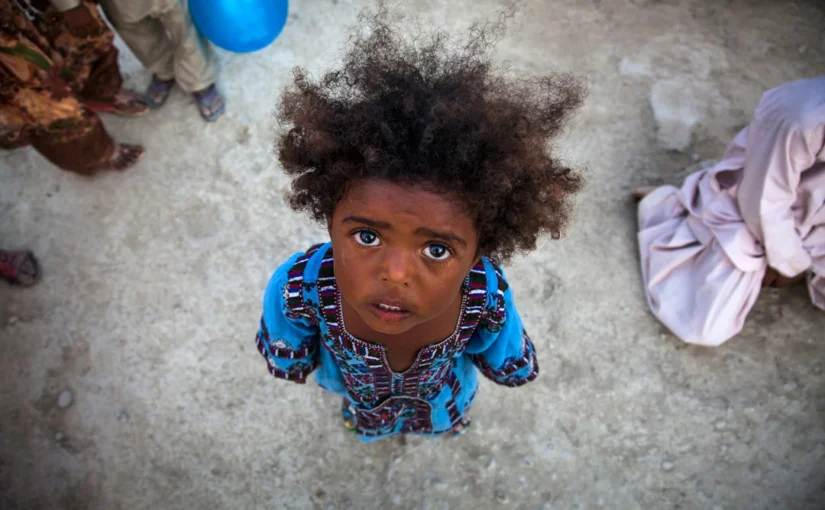
If nothing else, consider it intellectual cake; open to everyone, rich in speculation. As an aside the young girl featured is a Baloch.
After our discussion on industrialisation in India, I began to wonder: if the Earth were one country, one government, one infrastructure grid, one economy, where would its industrial heart lie?
Geographically, the answer is obvious. The natural centre of the world, for energy, labour, and trade routes, isn’t London, New York, or Beijing. It’s the triangle between the Persian Gulf, the Indo-Gangetic plain, and the Red Sea.
Deserts rich in hydrocarbons. River basins dense with labour, water, and grain. Seas that touch every continent. If the world were united, this belt, Arabia to India to the Nile, would be the Ruhr, the Great Lakes, and the Pearl River Delta combined.
The Natural Order of Geography
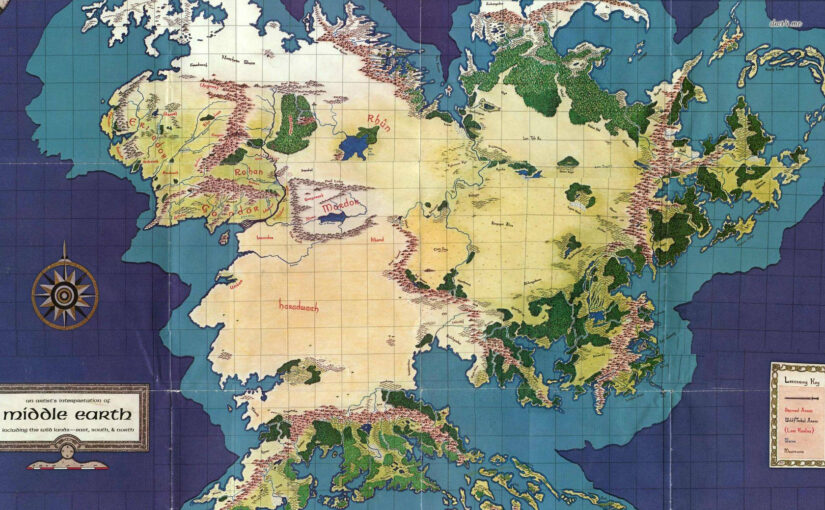
Before empire, this region was the planet’s connective tissue. Spices, silk, horses, and steel moved from India to Arabia to Africa. Energy, grain, and knowledge flowed through the Red Sea and the Persian Gulf like the arteries of the Earth. It was not the “Middle East”; it was Middle Earth. Continue reading The Earth’s Lost Industrial Heart
Hello everyone! I would like to thank Omar Sb for providing me this platform. Some of you may know me as the guest poster at BP or as @Saiarav on X. One of my earliest posts on BP was on Yogi’s economic track record – an unflattering take which got me a fair bit of grief from Yogi supporters on X. But fact is, I am not really a Yogi hater – I just went where the economic data led me. I am actually modestly constructive about Yogi. He has got a herculean task on his hands, turning around a mammoth state (UP would be the 5th or 6th most populous country if it was an independent country) which has a historic record of being terribly governed. In my now suspended avatar on X , I had written about Yogi government’s phenomenal performance in dramatically changing the educational outcomes in government schools – a highly critical area which has scarcely received any attention, as his supporters obsess over more “sexy” issues like infrastructure & economy and law & order. As I keep pointing out, Yogi’s record on economy is highly overrated. What about law & order? Is the hype justified? The data on crime appears to suggest that Yogi has indeed brought in significant improvement to L&O in the state and especially has been extremely effective in clamping down on riots, which has traditionally been a major bane in the communally charged polity of UP.
(I plan to do a follow up post on Yogi’s economic record and Yogi’s performance in the education sector, but that is for a later day)
UP, of course has the image of being a lawless badland swarming with bahubalis of dominant communities, with the writ of the State being quite tenuous. The general perception among political watchers is that the Samajwadi Party is especially terrible at enforcing the law whereas the Dailt CM, Mayawati is seen as relatively better. Yogi supporters have, for long claimed that, he has totally transformed the L&O situation in the state with his tough-on-crime policies and zero tolerance for bahubalis. There is obviously an element of exaggeration in this narrative considering UP BJP itself houses bahubalis. So what does data say about how much the situation has changed on the ground since Yogi took over as CM in 2017?
I look at the data on crimes from the National Crime Records Bureau’s annual reports for some clues. I pick the data for the last year of governance by Maywati (2011) and Akhilesh (2016) to assess their record as CM for 5 years. For Yogi, I look at the change in crime levels between 2017 and 2023 (the latest year for which data is available). Admittedly, the analysis is seriously constrained by the high degree of under-reporting of serious crimes with the scale of under-reporting varying significantly over time. Take cases of kidnapping, for example. Up reported only 3,318 cases of kidnapping during calendar year 2006. By 2011, the last year of Mayawati’s rule, that figure had jumped to 8,500 and by 2016, the figure had moved up to ~16,000. Clearly, a case of improving reporting of kidnapping rather a 5x increase in kidnapping over a 10 year period. I therefore focus on some specific categories of violent crime, where arguably, there is lesser scope for underreporting. Continue reading The hype over Yogi’s L&O record is justified
He also brokered the fragile ceasefire between Thailand and Cambodia after deadly border clashes earlier this year – he stepped in after Trump threatened to impose tariffs on both sides if the fighting didn’t stop.
Some called it a diplomatic victory for Malaysia, while others said Anwar was simply in the right place at the right time – this year, it was the Malaysian PM’s turn to lead Asean.
Two Theravada Buddhist neighbours go to war over a Hindu Temple Complex and come to peace because of a Muslim & Christian President.
I know the Commentariat – Saffroniate are a bit miffed by my sudden change of tone; but as you can see I would be intellectually dishonest if I didn’t cover all sides of the story. This is where Dharmic civilisation, which is ordinarily peaceful, had to be *helped* by Abrahamic one.
On closer interrogation; I think when the Blog becomes dominantly “one-tone”, I then flip to ensure we maintain a parity of sorts.
G’s future posts:
« I am thinking on a longish post on how the Hindu Epics actually made Geographical India into cultural India – more than wars of Ashoka or Gupta’s or Mughals. »
A very high Signal Comment by G again:
There are actual leftists and other folks who don’t regurgitate PakMil propaganda – of this I’m aware. But even amongst those, illiteracy on India is rife. I laugh with bemusement at the number of times self-appointed Pakistani intellechawals sagely nod their heads and compare Zia-Era Pakistan to present-day Hindootva. I ‘get’ that such comparisons soothes Pakistani insecurities vis-a-vis its larger, democratic neighbor, but it really destroys their credibility.
Kabir removed three of Dave’s comments, and while I felt it was over-moderation, I’ve kept my promise not to interfere unnecessarily in his threads.
The excerpt above, though, is interesting — the comparison between Zia’s Pakistan and Modi’s India. What’s striking about both is the twin emphasis on capitalism and cultural conservatism: the promise of economic growth wrapped in moral revival. It raises a deeper question — whether right-wing politics are, paradoxically, the only antidote societies find to extreme inequality.
Class, even more than caste or creed, is the fundamental distinction in any society. The bottom half ultimately has more in common with each other than with the top half. Yet society endures only when that bottom half is so compromised that it cannot mount effective resistance. When the Establishment promise uplift but depend on the passivity of the lower half, then the “distribution of prosperity”, twinned with ideology, itself becomes the subtlest form of control.