On the eve of Independence Day, I thought it would be a good opportunity to share what I believe are the 80 undeniable achievement of the Modi government for my first post. Feel free to add more in the comments.
1) Accepting things like Aadhar and GST devised during UPA era.
2) Monetizing many govt services for better use like railways and defense exports.
3) Improving our overall port capacity.
4) Making India self sufficient in ammunition production.
4) Not letting ideology dictate policy, as seen in overtures to Pakistan till Pakistan closed the doors.
5) Trying their best to keep a wide circle of friends in a heavily polarized world.
6) Connecting all state grids into a single national grid.
7)Signing a slew of FTAs with many western countries.
8) Development of Brahmos and our own multi artillery defense system.
9) Formalizing our border enclaves with Bangladesh as much as possible.
10) Taking advantage of the reduction of cost in renewable energy to make our grid 55% dependent on renewable energy.
11) Supporting investment in hydrogen based fuel cells.
12) Supporting research in making cow dung based fuel valuable.
12) Increasing the number of airports.
13) Made significant efforts to bring back Indian cultural artifacts like the Leiden plates.
14) Construction of tap and toilet facilities till 99% of the country has either a tap connection or a toilet in their home.
15) Increase in ethanol blending to secure our fuel supply.
16) Increase in mobile phone assembly facilities.
17) Increase in semiconductor manufacturing facilities.
18) Bringing much needed investment in high quality manufacturing to states like Assam.
19) Enabling private telecom operators to provide cheap data to almost all parts of India.
20) Better export opportunities for Indian toy makers.
21) Vande Bharat trains launched.
22) Bullet trains though they should have started with Hyderabad to Bangalore and Hyderabad to Mumbai/ Pune to begin with.
23) Increase in overall tree cover.
24) Increasing the number of electricity available to 22 hrs from 12 he’s through national grid, renewable energy capacity generation and reduction of losses.
25) Exporting tigers to other countries.
26) Bringing cheetahs back to India from Africa.
27) Promotion of yoga through world yoga day.
28) Worlds largest vaccine drive during covid.
29) Successfully conducting the mahakumbh and kumbh mela many times.
30) Production linked initiative scheme helping advance in mobile cell manufacturing
31) Production linked initiative scheme helping manufacturing for electric mobility, power electronics and advanced safety systems.
32)Production linked initiative scheme helping in development of biosimilars,monoclonal antibodies and medical devices.
33) Production linked initiative scheme helping in domestic polysilicon manufacturing.
34) Production linked initiative helping in over 2.16 lakh crore cumulative investment,exports of 8.3 lakh crore,and almost 14.39 lakh direct/indirect jobs.
35) Creation of over 500 million accounts through jan dhan yojana.
36) Depositing over 2 lakh crore in jan dhan yojana accounts.
37) Reducing leakage through direct benefit transfer.
38) Construction of 3 crore houses under PM Awas Yojana through both rural and urban schemes.
39) Empowering women by registering the houses built under their name.
40) Providing 10.58 crore gas connections to poor women under Ujjwala Yojana.
41) Approving 25 lakh new connections in 2025-26.
42) Reducing indoor air pollution by 74% through Ujjwala yojana.
43)Increase port capacity to 2818 million tonnes per annum till 2025-26, from 1400 million tonnes per annum in 2013-14.
44) Increasing cargo handling capacity to 1668 million tonnes per annum in 2025 26 from 972 million tonnes in 2013-14.
45) Increasing inland waterways to 32 operational in 2025 to 5 in 2014.
46) Increasing operational length of inland waterways to 4894 km in 2025-26 from 2716 km in 2013-14.
47) Increase in food grain production to 357.7 million tonnes in 2025-26 from 265 million tonnes in 2013-14.
48) Increase in horticulture production to 369.1 million tonnes in 2025-26 from 277.4 million tonnes in 2013-14.
49) 2900 climate resilient varieties of crops released since 2013-14.
50) Agricultural exports raised to 51.1 billion dollar in 2025-26 from 34.5 billion dollars in 2013-14.
51) Increase in fish production to 197.7 lakh tonnes in 2025-26 from 95.8 lakh tonnes in 2013-14.
52) Increase in shrimp production to 11.8 lakh tonnes in 2025-26 from 3.2 lakh tonnes in 2013-14.
53) Increase in milk production to 239.3 million tonnes in 2025-26 from 137.7 million tonnes in 2013-14.
54) Increase in egg production to 130 billion in 2025-26 from 75 billion in 2013-14.
55) Increase poultry production to more than 4.2 million tonnes.
56) Launch of Indias first solar observatory in 2023 through Aditya L1 mission.
57) Launch of Chandrayaan-2.
58) Commissioning of INS Vikrant, Indias first indegenously built aircraft carrier.
59) Launch of new metros in 21 cities including many 2 tier cities.
60) Increase in operational length of metro rail to 940 km from 248 km.
61) 900 km of metro under construction.
62) National highway is now 1,46,572 km from 91287 km.
63) 4 lane highways increased to 46179 km from 18387 km.
64) 2636 km of expressway completed from 93 km expressway in 2014.
65) Rural roads up to 7.5 lakh km from 5 lakh km.
66) Rural roads now connect 99% of all villages.
67) Freight growth to 1600 million tonnes in 2025-26 from 1050 million tonnes.
68) Route km is 71000 km in 2025-26 from 65000 km.
69)60000 km electrified in 2025-26 from 21000 km in 2013-14.
70) Dedicated Eastern freight corridor of 1337 km and western dedicated freight corridor of 1504 km nearing completion.
71) Freight lines have 100 km/h speed lowering freigh costs and boosting business.
72) Reduction in infant mortality from 40 per 1000 live births in 2013-14 to 25 per 1000 live births in 2013-14
73) Under 5 mortality decreased from 48 in 2013-14 to 25.
74) Neonatal mortality fell from 28 in 2013-14 to 17 in 2025-26.
75) Free maternal and child healthcare through Ayushman Bharat.
76) Expanded vaccine coverage through universal immunization program.
77) Presided over a drop in total fertility rate to 2.0 overall.
78) Overall tax revenue is 40.78 lakh crore in 2025-26 from 11.39 lakh crore in 2013-14.
79) GST collection is 2.43 lakh crore in 2026
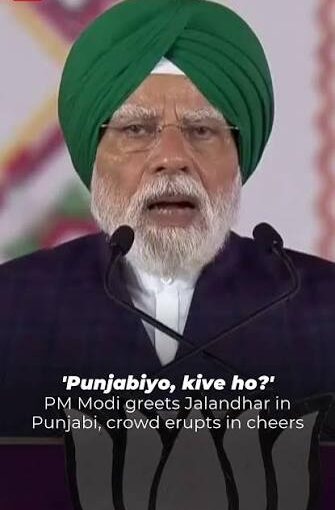
80) Modi is the most popular, modern leader for many years running.