Secularism (no exceptions please)

Indian secularists supposedly have a soft spot for muslims (sweet), while ignoring other minorities such as Sikhs (why? perhaps because they are successful and can look after themselves). Thus we have honest liberals like Mukul Kesavan (reluctantly) white-washing the 1984 anti-Sikh pogrom (as opposed to the 2002 anti-muslim one). MK makes the case that Congress kills because of opportunity while BJP kills because of ideology. Yes…..but so what?

Meanwhile, in Saharanpur three Sikhs (officially) have just been butchered by a muslim mob (led by an ex-Congressman) and the predictable Twitter wars have been launched.
………

….
When people are murdered do they really feel better that they are being killed on account of ideology or because of opportunity? How about the claims for justice, in which case are they more (or less) valid? Is it really true that the appointment of Man Mohan Singh as Prime Minister (who then issued a mealy-mouthed apology) is all that is required to wash away the blood-stains?
….
We do not see the difficulty in laying blame equally on opportunity and ideology. And we see considerable virtue in not suppressing the truth and being impartial. Thus when Hindus kill Muslims or Muslims kill Sikhs, such actions should be condemned with equal intensity.

We already know how the bigots will behave. If left-liberals also choose to be economical with the truth, they will lose credibility. People will then feel free to ignore their bleatings the next time the big bad wolf shows up at the door..
……
Even before Indian politicians could cause the Saharanpur riots to
snowball into a secular party versus communal party war, guess who took
their spot? The country’s media. A day after riots in the Western UP
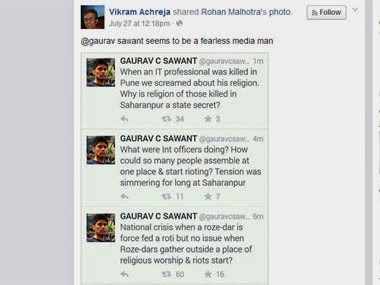
town claimed four lives, Gaurav Sawant, a journalist with English news
channel Headlines Today tweeted questioning the reportage of the riots
by the mainstream media

He asked why the victims in the Saharanpur riots were not identified by their religion.

He also questioned why, while there had been a huge furore over a Shiv
Sena MP shoving a roti into a fasting Muslim worker’s mouth, there had
been no anger over fasting Muslims gathering to pray and leading to a
riot.

His comments kicked off a Twitter storm with people lining up on either side of the debate.

Twitter then saw a series of  squabbles over allowing him to carry on
his job as a journalist. Several petitions and counter petitions were
filed in the course of the day, with colleagues and friends tweeting
pictures in support of the journalist.


…….
This is how a Facebook friend responded to the exit polls predicting an
easy victory for Modi:  

“One good thing about Modi becoming PM will be
the daily opportunity to dissent.”

He seems to have missed the
daily opportunity to dissent provided by the Manmohan Singh-led United
Progressive Alliance’s second term. UPA-2 did a lot of things people now
fear a Modi government will do.
 

There was the corruption of the
Commonwealth Games, they blamed the auditor for exposing the telecom
scam, they put Anna Hazare in jail for asking for a Lokpal and even
killed a Baba Ramdev supporter making the same demand. Students came out
to protest against rape and they responded with tear gas. 

They passed a
draconian anti-terrorism law and put Muslims in jail for fake terrorism
cases. They hanged Ajmal Kasab and Afzal Guru to appear strong, weren’t
able to do anything about anti-Muslim violence in Congress-ruled Assam,
let the situation in Kashmir deteriorate,
allowed the economy to
tumble, let Maoists get the better of them, slapped sedition cases
against people who didn’t want a nuclear power plant next to their
homes, put people in jail for criticising the government online, and
created a Central Monitoring System to snoop on all phone and internet
communication. Acts like this, if committed by a BJP government, will be
more vehemently opposed in the name of fascism.

To each crisis,
the Congress leadership responded with arrogance, compounding their
mistakes, losing the trust of the judiciary and the media, reviving the
moribund BJP. Had it not been for the self-destructive performance of
UPA-2, Modi would arguably not have chosen this election to make a bid
at the top job. If the independent Left sees Modi as a problem, it
should criticise the factors that encouraged the BJP leader’s rise in
2013-2014: the failure of Sonia Gandhi, her son Rahul and her chosen
Prime Minister Manmohan Singh.

Instead, when Modi was sharpening
his knives, Left-leaning intellectuals and activists were attacking the
Anna Hazare-Arvind Kejriwal-led Jan Lokpal movement. They said that the
Lokpal movement was a Rashtriya Swayamsevak Sangh conspiracy to make the
Congress look bad, as if the Congress needed any help with that.
 

Over
the past three years, I have seen more bile, fear and frustration over
Hazare and Kejriwal on my social media timelines than over Modi. Rants
about how the Lokpal movement was proto-fascist and full of RSS workers
all served to show how the Indian Left is still traumatised by the Babri
demolition.

Perhaps it is only fair that the Hindutva brigade
gets to rule a country whose liberal intelligentsia has shown such great
poverty of political imagination as to trap itself in the Congress-BJP
binary, ceding altogether the once-vibrant space for anti-Congressism to
Hindutva supporters, and thus falling into their trap.

One thing
is clear. The Left still matters. While the party Left â€“ the world’s
first communists to contest democratic elections â€“ have been in
self-destruction mode, the independent Left plays a crucial role in
shaping political discourse. They used that power to the hilt to
discredit the Hazare movement.
 

They propped up dalit politician Udit Raj
to suggest that dalits are opposed to the Lokpal bill. (Udit Raj has
since joined the BJP.) They said the Lokpal movement was not questioning
corporate corruption but then Kejriwal took on the Ambanis. They said
Kejriwal was not speaking against BJP corruption but then he took on the
BJP president, Nitin Gadkari, accusing him of a scam that forced him to
resign from his post.

It was only when Kejriwal demonstrated in
the Delhi assembly elections that he could take on the BJP that secular
intellectuals started showing sympathy for the Aam Aadmi Party. A “No
More” campaign on Facebook has argued for tactical voting to elect the
candidate who can defeat the BJP in every constituency. Leftist
activists from across the country descended upon Varanasi to tell the
people to not vote for Modi.

This is the wrong way to go about
it: simply backing the candidate that can keep the BJP out is not going
to take them anywhere. Keeping the BJP out cannot constitute an entire
political imagination. The Left needs an agenda, an idea, a cadre.
Perhaps the AAP is not that option either, but India does need a
substitute for the Congress. 

The Congress will keep making mistakes,
keep showing its elitist arrogance and being blasé about corruption, and
the BJP will keep exploiting its mistakes. This is how the BJP first
came to power, defeating Narasimha Rao after he liberalised the economy
and put it on the right track. And that is repeating itself. The party
that opened the gates of the Babri Masjid cannot be the guardian of
secularism.

……

The stock response of the Bharatiya Janata
Party to the argument that Godhra makes Narendra Modi politically
untouchable is “What about 1984?” There are several inadequate comebacks
to that question and the best of them is that no one should use one
pogrom to justify another.

The problem
with this response, though, is that it doesn’t answer the questions that
fly in close formation behind the “What about 1984?” question, namely,
“Why is the BJP worse than the Congress?” and, relatedly, “Why is
Narendra Modi any worse than Rajiv Gandhi?” specially given the latter’s
infamous comment, “When a big tree falls, the earth shakes,” which
seemed, retrospectively, to rationalize the systematic killing of Sikhs
in the days that followed Indira Gandhi’s assassination.

These are
important questions regardless of who asks them. The fact that they are
often asked by Narendra Modi’s unlovely supporters isn’t a good reason
for not taking them seriously.

1984 had two
major consequences. First, it radically undermined the Congress’s claim
to being a secular party that respected the political tradition of
pluralism pioneered by its colonial avatar and consolidated by Nehru in
the early years of the republic. The willingness of the Congress under
Indira Gandhi to use sectarian issues for political ends had been
evident before 1984 but the party’s willingness to sell its pluralist
soul for immediate political advantage was most vividly illustrated in
the days and months after her death.
The Congress, after 1984, stood out
more and more clearly as a party that couldn’t even be accused of not
having the courage of its convictions because it didn’t have any
convictions at all. Pluralism and its traditional opposition to
majoritarianism became labels that the Congress used for brand
management in particular political contexts, not as principles that
shaped its political agenda.

Let us
return to our question, namely, “What makes Modi and the BJP worse than
the Congress and its dynasts, given the horror of 1984?” The answer is
simple and unedifying. 
The Congress, by a kind of historical default, is
a pluralist party that is opportunistically communal while the BJP is
an ideologically communal (or majoritarian) party that is
opportunistically ‘secular’.
The difference between the Congress and the
BJP doesn’t lie mainly in the willingness of the former to express
contrition about pogroms it helped organize; it is, perhaps, best
illustrated by the fact that twenty years after the 1984 pogrom, the
Congress assumed office with a Sikh at the helm who served as prime
minister for two terms.

Try to
imagine a BJP government headed by a Muslim ten years from now. It
doesn’t work even as a thought experiment. And the reason it doesn’t
work is that the BJP’s ideology is essentially the encrustation of
prejudice around an inconvenient and irreducible fact: the substantial
and undeferential presence of minority communities in the republic,
specially Muslims who, for the sangh parivar, are the unfinished
business of Partition. The idea that the BJP might appoint a Muslim head
of government (as opposed to, say, the nomination of President Kalam to
titular office) is unthinkable.

It doesn’t
follow from this that Manmohan Singh’s prime ministership is a sign of
the Congress’s political virtue; it isn’t. It is, if anything, a symptom
of the dynastic dysfunction that has diminished the Congress. But the
reason his prime ministership is possible is that the Congress isn’t
ideologically committed to anti-Sikh bigotry (despite 1984) in the way
that the BJP is committed to Hindu supremacy and the subordination of
Muslims. That’s why Narendra Modi so excites the sangh parivar’s
rank and file: the Gujarat Model is the BJP’s test run for India, and it
isn’t the economics of it that sets the pulses of its cadres racing.

So the
reason the dynastic Congress isn’t as dangerous as Modi’s BJP is
dispiriting but straightforward: while the Congress is capable of
communalism, it isn’t constituted by bigotry. With Modi, even when he’s
talking economics and good governance, we get the “burqa of
secularism” and Muslims as road kill. It’s not his fault; from the time
that Golwalkar sketched out his vision of an India where religious
minorities were docile helots, bigotry has been Hindutva’s calling card.

…..

Link(1): http://www.firstpost.com

Link (2): http://scroll.in/article/664400/Why-the-Indian-Left-wants-Narendra-Modi-to-be-prime-minister

Link (3): http://www.telegraphindia.com

The Indo-Europeans (Jats, Ezhavas)

…Ezhavas are brown Caucasians……Jat Sikhs are a lot fairer……only thing they
have in common is a martial tradition…..study asserting
that the two communities – that have never mixed and live thousands of miles
away – are close genetically……

….
 

 …
India is full of interesting people and Jats are of special interest now that we have a Jat as a Chief of Army Staff (COAS). What came as a shock (to us) is the commonality between Kerala Ezhavas (the dominant shudra community) and Punjabi Jat Sikhs (the dominant shudra community).

(Lt) General Dalbir Singh Suhag (Jat but not Sikh), the 26th COAS who took over from General Bikram Singh (Sikh, most likely Jat), has a grand life-story to tell (see below), rising from a humble farm-hand background to be the highest ranked officer of the land, via the Gurkha regiment.

Our best wishes to General Singh and our hope is that we can maintain a “cold peace” in the sub-continent and that our civilian leaders will guide us accordingly.
…………….
DNA samples taken from thousands of Indians
have been compared with population groups from other parts of the world,
particularly Europe and Central Asia.

The latest one is from Kerala, which
is my home state on India’s south-western coast. According to the study, two
entirely different castes – Ezhava, also known as Thiyya in northern Kerala, and
Jat Sikh of Punjab – show remarkable genetic similarity.


In fact, Ezhavas showed more genotypic
resemblance to the Jat Sikh population of Punjab, Turks and Germans than to
East Asians, says the study by the Department of Biotechnology &
Biochemical Engineering at the Sree Budha College of Engineering in Pattoor,
Kerala. 

It was conducted by department head Dr Seema Nair, Aswathy Geetha and
Chippy Jagannath under the aegis of Dr K. Sasikumar, the chairman of the
institute. It has also been published in the Croatian Medical Journal.


Before we jump into the study, here’s a
little note about genetics. For various reasons, DNA material undergoes slight
alterations or mutations in the course of time. The mutations then become
characteristic of the line of descendants. These mutations, or genetic markers,
are organised into categories called haplotypes. Basically, your haplotype is your
genetic fingerprint.


The Sree Budha study examined DNA from
the Y chromosome, which is also known as the male chromosome because it is
found only in males. More specifically, it examined Y Short Tandem Repeat (Y
STR) DNA present in the Y chromosome. As these DNA sequences are passed from
father to son, it is also useful in forensics and paternity testing.


The Ezhava population was compared
with other Indian populations and with selected world populations in order to
investigate the pattern of paternal contributions. Nair’s team examined 104
haplotypes among the Ezhavas. Ten were found identical to the Jat Sikhs, which
is the highest number among Indian populations, and four to the Turkish
population, which is the highest among European populations.


“The comparison suggests a genetic
link between the populations,” says Nair. Ezhavas, she argues, are genetically
more similar to Europeans (60 percent) than to East Asians (40 percent).


My interaction with Nair, who comes
across as witty and erudite, was primarily fuelled by my search for my own roots.
I belong to the same Ezhava community, which is at the centre of this research.


….
The Ezhavas have an intriguing
history. The most persistent belief is that they are the original people of
Kerala – the soldiers of the Villavar (archer) community which founded the
Chera kingdom. It is a measure of their martial traditions that among the
Ezhavas are the Chekavar – the only kamikaze group of fighters known in Indian
history.


What is intriguing about the study is that
the Ezhavas, a Dravidian group, are now being described as closer to Jat Sikhs,
Europeans and Central Asians.


In terms of physical appearance, the
Ezhavas are brown Caucasians. However, typical of many Indian communities,
there are plenty of very dark and very fair people among them.


On the other hand, the Jat Sikhs who
live 3000 km up north are a lot fairer. Plus, Jat Sikh surnames such Mann,
Bader, Brar, Dhillon and Virk have an uncanny Germanic resonance.


Indeed, it is worth mentioning the
during the early part of the 20th century Sikh immigrants to the US convinced
the Immigration & Naturalization Service to grant them white status. Those
days only white Europeans were allowed to enter the United States as
immigrants. However, later the INS wised up to the fact that the Sikhs “weren’t
that white” and again categorised them as Asian.


….
So there you have it. One group of
Indians, the Ezhavas, and another group, the Jat Sikhs. The only thing they
have in common is a martial tradition. And yet you have this study asserting
that the two communities – that have never mixed and live thousands of miles
away – are closer genetically than to communities that live close by.


….
Meanwhile, down south Nair and
Sasikumar say the first report on the Y-STR profile in Kerala population is
just the beginning. Expect the unexpected.

…….
General
Dalbir Singh Suhag, who took over as the 26th Chief of Army Staff
(CoAS) from General Bikram Singh on Thursday, tilled his land in a
remote Haryana village in his childhood.

General Dalbir Singh
was born in Bishan village in Haryana’s Jhajjar district on December 28,
1954. Many in the village, including his father and uncles had served
in the infantry and cavalry units but few would have imagined that the
boy who started his education in the two-roomed village primary school
would go on to lead the Indian Army one day.

According to
sources close to General Dalbir Singh Suhag, the rooms of the school
were used for senior classes and he along with his classmates took their
lessons under trees.

During his spare time, the young Dalbir
would lend a helping hand to his family in tilling his field. This help
was crucial during the harvest season. “This was crucial learning for
any child. By working the fields, they developed a deep sense of respect
for the motherland that bore them their daily bread,” the source said.

…It was
in 1961 that a development took place which would remodel the life of
this boy from Bishan. That year, the Government of India set out to
establish Sainik Schools across the country. Chittorgarh in Rajasthan
was one of the locations. Dalbir’s granduncle was an equestrian
instructor at this school and he suggested that the boy study there.
Dalbir joined the school on January 15, 1965.

His teachers from
the Sainik School days are elated. “I feel that I am 18 again,”
remarked K S Kang, a teacher who is in his 90s. H S Rathi, another
teacher, described Dalbir as: “a very sincere, hard working and obedient
student. He was also very good in sports and a gifted basketball
player.” His English teacher J N Bhargava described him as: “He managed
his studies very well. He was humility personified, a man of
determination, speed and tenacity of purpose and would do any job
assigned to him most obediently.”   

He
went on to join the National Defence Academy and in June, 1974, was
commissioned to the 4th Battalion of the 5 Gorkha Rifles (Frontier
Force). He is the third Army chief after Field Marshal SHFJ Manekshaw
and Gen G G Bewoor who was either commissioned into or associated with
the Brigade of Gorkhas. “It was a conscious choice I made as I wanted to
join only the infantry,” says Gen Dalbir Singh of his choice to seek
out the Gorkha Regiment, whose soldiers are among the finest in the
world.

After serving in Sri Lanka and Jammu & Kashmir, Gen
Dalbir Singh raised and commanded a Rashtriya Rifles Battalion in
Nagaland and later an Infantry Brigade deeply committed to intense
Counter Insurgency Operations in the Kashmir valley.

Gen Dalbir
Singh also commanded a Mountain Division in the Kargil-Drass sector. He
also served under the Cabinet Secretariat as an Inspector General,
Special Frontier Force. Subsequently, he was appointed Eastern Army
Commander from June 16, 2012 to December 31, 2013, and later to the post
of Vice Chief of the Army Staff (VCOAS) on January 1, 2014.

…..

……

………
Link (1): http://timesofindia.indiatimes.com/india/Indias-26th-Army-chief-General-Dalbir-Singh-tilled-land-as-a-child/articleshow/39372366.cms

Link (2): http://in.rbth.com/articles/2012/06/06/europeans_and_indians_divided_or_united_by_dna_15923.html

Link (3): http://sepiamutiny.com/blog/2011/04/22/the_genetic_ori/
…..

regards

Save Gaza is lovely….but not enough

“Sisi
is worse than Netanyahu, Egyptians are conspiring against us
more than the Jews” …. “They finished the Brotherhood in
Egypt, now they are going after Hamas”
“There
is clearly a convergence of interests of these regimes with
Israel” …the Egyptian
fight against political Islam and the Israeli struggle
against Palestinian militants were nearly identical….“Whose proxy war is
it?”…..

……

…. 
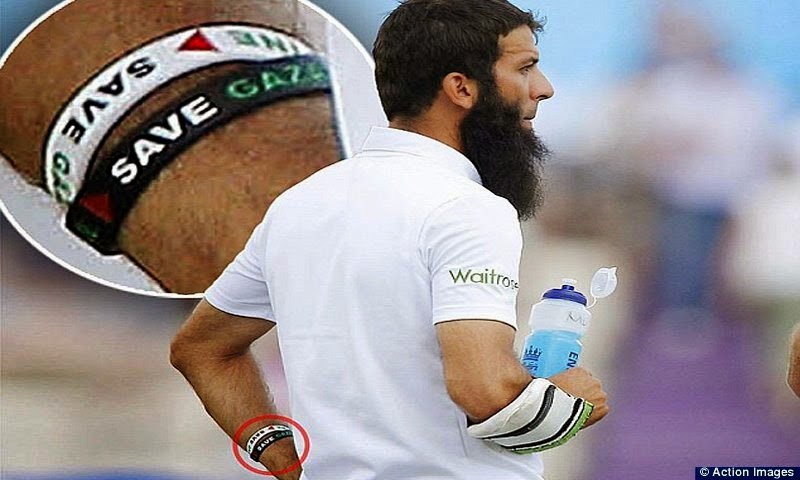
Brit-Pak cricketer Moeen Ali who helped England crush India in the third Test match with a six-wicket haul was reprimanded by the International Cricket Council (ICC) for wearing a wrist-band in support of the people of Gaza. Malaysian cyclist Azizulhasni Awang has also been threatened with a ban by Commonwealth Games officials in Glasgow, Scotland.
……


The Hindu-Brotherhood is supposedly in favor of a “robust response” from Israel – enemies of Islam/Muslims worldwide, unite!!! Israelis are asking (and inviting Indian solidarity) what would happen if thousands of rockets were launched from Pak-administered Kashmir on Indian civilians?

That question has been answered before, not once, but many times and was crystal clear in India’s response to 26/11 attack on Mumbai. Not even a finger was lifted in anger. Hafiz Saeed is happily surviving with a 10 mil dollar bounty on his person.

There are two important lessons here which point to a single conclusion. 
……
First, there are credible reports that a section of the Arab leadership is not too bothered with Israel giving Hamas a kick (see below). Given the dislike (hatred?) of the Muslim Brotherhood AND Iran, it appears that the Saudis, Egyptians and Jordanians are condoning mass murder of Palestinians (and brother Arabs). It appears that not only there is no Ummah, but pan-Arab solidarity is also a myth.

Second, Israel today is in effect, a “Jewish democracy” where Arabs may live as second class citizens. It can also be argued that Pakistan is a “Sunni-Islamic democracy” where non-Sunni folks may live as second class citizens. How are the Shia/Ahmadi targeted killings materially different from the targeted killings in Gaza?? Where are the “Save the Shias” or “Save the Ahmadi” arm-bands??  Why is the quality of mercy so strained?

The true evil is majoritarianism whether in South Asia (or Middle-East or Indo-China). Today muslims are being oppressed in India. But the Hindu majority is not an unified whole. Indeed in Gorkhaland (Bengal) and in Telengana, Hindu-on-Hindu fighting has been going on and can be quite bloody. 

The majority needs to make sure that the minorities live in peace. Otherwise a day will come when they too will live in terror. 

……….
Battling
Palestinian militants in Gaza two years ago, Israel found itself
pressed from all sides by unfriendly Arab neighbors to end the fighting. Not this time.
After
the military ouster of the Islamist government in Cairo last year,
Egypt has led a new coalition of Arab states — including Jordan, Saudi
Arabia and the United Arab Emirates — that has effectively lined up with
Israel in its fight against Hamas, the Islamist movement that controls
the Gaza Strip. 
 …………
That, in turn, may have contributed to the failure of
the antagonists to reach a negotiated cease-fire even after more than
three weeks of bloodshed.
“The
Arab states’ loathing and fear of political Islam is so strong that it
outweighs their allergy to Benjamin Netanyahu,” the prime minister of
Israel, said Aaron David Miller, a scholar at the Wilson Center in
Washington and a former Middle East negotiator under several presidents.
“I
have never seen a situation like it, where you have so many Arab states
acquiescing in the death and destruction in Gaza and the pummeling of
Hamas,” he said. “The silence is deafening.”

Although
Egypt is traditionally the key go-between in any talks with Hamas —
deemed a terrorist group by the United States and Israel — the
government in Cairo this time surprised Hamas by publicly proposing a
cease-fire agreement that met most of Israel’s demands and none from the
Palestinian group. Hamas was tarred as intransigent when it immediately
rejected it, and Cairo has continued to insist that its proposal
remains the starting point for any further discussions.
But
as commentators sympathetic to the Palestinians slammed the proposal as
a ruse to embarrass Hamas, Egypt’s Arab allies praised it. King
Abdullah of Saudi Arabia called President Abdel Fattah el-Sisi of Egypt
the next day to commend it, Mr. Sisi’s office said, in a statement that
cast no blame on Israel but referred only to “the bloodshed of innocent
civilians who are paying the price for a military confrontation for
which they are not responsible.”
“There
is clearly a convergence of interests of these various regimes with
Israel,” said Khaled Elgindy, a former adviser to Palestinian
negotiators who is now a fellow at the Brookings Institution in
Washington. In the battle with Hamas, Mr. Elgindy said, the Egyptian
fight against the forces of political Islam and the Israeli struggle
against Palestinian militants were nearly identical. “Whose proxy war is
it?” he asked.
The
dynamic has inverted all expectations of the Arab Spring uprisings. As
recently as 18 months ago, most analysts in Israel, Washington and the
Palestinian territories expected the popular uprisings to make the Arab
governments more responsive to their citizens, and therefore more
sympathetic to the Palestinians and more hostile to Israel.
But
instead of becoming more isolated, Israel’s government has emerged for
the moment as an unexpected beneficiary of the ensuing tumult, now
tacitly supported by the leaders of the resurgent conservative order as
an ally in their common fight against political Islam.
Egyptian
officials have directly or implicitly blamed Hamas instead of Israel
for Palestinian deaths in the fighting, even when, for example, United
Nations schools have been hit by Israeli shells, something that occurred
again on Wednesday.
And
the pro-government Egyptian news media has continued to rail against
Hamas as a tool of a regional Islamist plot to destabilize Egypt and the
region, just as it has since the military ouster of President Mohamed
Morsi of the Muslim Brotherhood one year ago. (Egyptian prosecutors have
charged Hamas with instigating violence in Egypt, killing its soldiers
and police officers, and even breaking Mr. Morsi and other Brotherhood
leaders out of jail during the 2011 uprising.)
The
diatribes against Hamas by at least one popular pro-government talk
show host in Egypt were so extreme that the government of Israel
broadcast some of them into Gaza. “They
use it to say, ‘See, your supposed friends are encouraging us to kill
you!’ â€ Maisam Abumorr, a Palestinian student in Gaza City, said in a
telephone interview.
Some
pro-government Egyptian talk shows broadcast in Gaza “are saying the
Egyptian Army should help the Israeli Army get rid of Hamas,” she said.
At
the same time, Egypt has infuriated Gazans by continuing its policy of
shutting down tunnels used for cross-border smuggling into the Gaza
Strip and keeping border crossings closed, exacerbating a scarcity of
food, water and medical supplies after three weeks of fighting.
“Sisi
is worse than Netanyahu, and the Egyptians are conspiring against us
more than the Jews,” said Salhan al-Hirish, a storekeeper in the
northern Gaza town of Beit Lahiya. “They finished the Brotherhood in
Egypt, and now they are going after Hamas.”
Egypt
and other Arab states, especially the Persian Gulf monarchies of Saudi
Arabia and the United Arab Emirates, are finding themselves allied with
Israel in a common opposition to Iran, a rival regional power that has a
history of funding and arming Hamas.
For
Washington, the shift poses new obstacles to its efforts to end the
fighting. Although Egyptian intelligence agencies continue to talk with
Hamas, as they did under former President Hosni Mubarak and Mr. Morsi,
Cairo’s new animosity toward the group has called into question the
effectiveness of that channel, especially after the response to Egypt’s
first proposal.
As
a result, Secretary of State John Kerry turned to the more
Islamist-friendly states of Qatar and Turkey as alternative mediators —
two states that grew in regional stature with the rising tide of
political Islam after the Arab Spring, and that have suffered a degree
of isolation as that tide has ebbed.


But
that move has put Mr. Kerry in the incongruous position of appearing to
some analysts as less hostile to Hamas — and thus less supportive of
Israel — than Egypt or its Arab allies.
For Israeli hawks, the change in the Arab states has been relatively liberating.
“The
reading here is that, aside from Hamas and Qatar, most of the Arab
governments are either indifferent or willing to follow the leadership
of Egypt,” said Martin Kramer, president of Shalem College in Jerusalem
and an American-Israeli scholar of Islamist and Arab politics. “No one
in the Arab world is going to the Americans and telling them, ‘Stop it
now,’ â€ as Saudi Arabia did, for example, in response to earlier Israeli
crackdowns on the Palestinians, he said. “That gives the Israelis
leeway.”
With
the resurgence of the anti-Islamist, military-backed government in
Cairo, Mr. Kramer said, the new Egyptian government and allies like
Saudi Arabia appear to believe that “the Palestinian people are to bear
the suffering in order to defeat Hamas, because Hamas cannot be allowed
to triumph and cannot be allowed to emerge as the most powerful
Palestinian player.”
Egyptian
officials disputed that characterization, arguing that the new
government was maintaining its support for the Palestinian people
despite its deteriorating relations with Hamas, and that it had grown no
closer to Israel than it was under Mr. Morsi or Mr. Mubarak.
“We
have a historical responsibility toward the Palestinians, and that is
not related to our stance on any specific faction,” said a senior
Egyptian diplomat, speaking on the condition of anonymity because of the
sensitivity of the talks. “Hamas is not Gaza, and Gaza is not
Palestine.”
…………………………. 
However, there are a large number of people both within and outside
Israel who believe that what Netanyahu is doing is perhaps the only, and
the correct, path to take. “Israel is dealing with a situation that no
other democratic cou­ntry has had to face in recent years,” says Shira
Loewenberg, director, American Jewish Centre (AJC), Asia-Pacific
Institute. “Try to imagine that a neighbour of the US or India has
smuggled or assembled thousands of missiles with a range of hundreds of
miles, and that neighbour has declared a goal of inflicting the greatest
possible damage on our countries. What would our governments do?”
Historian Shlomo Avineri, who teaches at Hebrew University, Jerusalem,
forwards a similar argument. “Imagine how India would have reacted if an
Islamist fundamentalist organisation, based in
Pakistan-occupied-Kashmir, would have fired for years hundreds of
missiles at India’s civilian population,” he says.


But as parallel and differing narratives come out of Israel and
elsewhere to explain the current violence in Gaza, many experts say that
to understand the present situation one needs to go back to 2006, when
Hamas entered the scene as a legitimate stakeholder on the Palestinian
landscape. One could in fact go back even further, to the beginning,
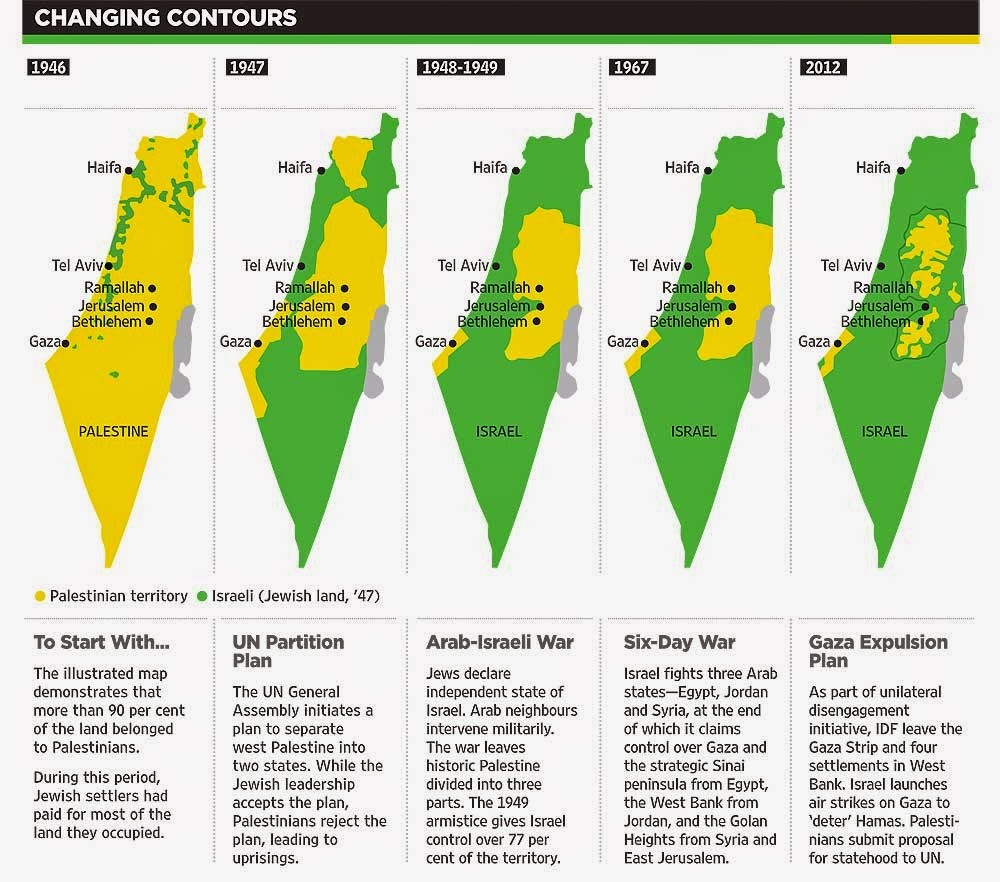
circa 1948, when Palestine was partitioned to create Israel. Between
then and now, the Palestinian share of the land has shrunk (see graphic),
while that of Israel has increased consistently and substantially.
Israel, for all practical purposes, remains the occupying force in
Palestine.

  • 1949 Armistice declared. Israel gains more than 50% territory promised.
  • 1959 Yasser Arafat establishes his political outfit, Fatah
  • 1948 Israeli state is created. Egypt, Syria, Jordan, Saudi Arabia, Iraq, Lebanon reject the partition, declare war.
  • 1964 Birth of Palestinian Liberation Organisation
  • 1967 Israel wins Six-Day War declared by neighbours, occupies large territories they hold
  • 1972 Palestinian group Black September kidnap, kill 11 Israeli athletes at the Munich Olympics
  • 1973 Egypt, Syria lose Yom Kippur War
  • 1979 Egypt signs peace treaty, gets back Sinai, but is boycotted by Arab countries
  • 1982 Lebanon invaded. Israel-backed Christian militia mass­acres Palestinian refugees.
  • 1987 Palestine declares intifada
  • 1988 Palestinian State declared. Is recognised by 130 countries, including India.
  • 1994 Arafat, Yitzhak Rabin and Shimon Peres share Nobel Peace Prize
  • 2000 At Camp David, Clinton offers Palestinians territories in Gaza and West Bank. Arafat rejects it.
  • 2004 Arafat dies, arsenic poisoning by Israelis suspected
  • 2005 Mahmoud Abbas becomes Palestinian Authority chairman
  • 2006 Hamas wins Gaza in parliamentary election, is legitimate stakeholder. Israel rejects the idea.
  • 2008 Israel launches Op Hot Winter in response to Hamas rockets
  • 2009 1,000 people die in Op Cast Lead, 900 Palestinian civilians
  • 2010 Turkish activists try to break Israel naval blockade of Gaza but face IDS. Nine die.
  • 2011 Bus bombings in Israel even as PA moves UN to have statehood recognised
  • 2012 Israel’s ‘Pillar of Defence’ destroys Hamas’s arms depots, govt facilities
  • 2013 Hamas kidnaps, kills Israeli soldier
  • 2014 Israel launches military action on Gaza to destroy tunnels, killing some 800 people.
………….
Link (1): http://www.nytimes.com/2014/07/31/world/middleeast/fighting-political-islam-arab-states-find-themselves-allied-with-israel.html?_r=0
Link (2): http://www.outlookindia.com/printarticle.aspx?291513
…….
regards

Shah-Jahan-Abad rises from the ashes

…the victory of the
British East India Company signaled the end of Purani Dilli…..For over 200 years the Red Fort and neighbouring areas housed both
Mughal nobility and ordinary citizens…..
The capture of Delhi in 1858 led to Shahjahanabad being changed forever…..city was torn apart by the British….Muslims were hounded out….their properties looted and destroyed…..
……


 …….
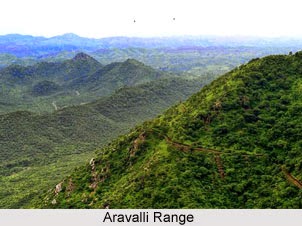
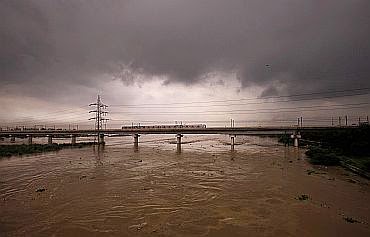
From the (mythical???) all-glass capital of Indraprastha (Pandavas, Mahabharata) to the modern times and modern-day New Delhi, the valley marked by the Yamuna river to the east and the Aravalli hills to the West and South-West has been privileged as the seat of political power in India.
…..


Take any train that terminates in the old (original) Delhi station (for example, Mussorie Express from the eponymous Hill Station) and at journey’s end you cross the river and trundle past the magnificent Red Fort. You will not easily forget the experience (we promise).
….

….
Shah-Jahan-abad is being gentrified one public toilet at a time. We would not really recommend shopping in Chandni Chowk. Try Pahar-Gunj instead, for cheap hotels and cheap finery, a brief walk from the New Delhi Railway terminus (modern one). The Delhi Metro is a wonderful thing, so you can get lodgings in posh Ramakrishna Puram (RK Puram) or Vasant Vihar and still manage to catch the sights, sounds (and most importantly flavors) of the old city. But remember what the old lady had warned about- please be home by night-fall.
…….
After over seven years of bureaucratic apathy, confusion,
indifference and lack of long-term planning to revive the once Mughal
capital, work on the redevelopment of Shahjahanabad has begun.


The name ‘Shahjahanabad’— the place itself laid out by the Mughal
Emperor in the middle of the seventeenth century
—might conjure romantic
images of a bygone era, but the reality is far more cruel. A walk down
Chandni Chowk makes this no easier to accept. Except for tourists, both
foreign and domestic, most of those in New Delhi look down upon Old
Delhi as a crowded and noisy place that is best avoided. 

Their lack of
an emotional connection with a part of the city that was for over 200
years the actual capital can be blamed on the fact that successive
governments of independent India have looked at Shahjahanabad the same
way it was viewed by the British colonial government.


From the Red Fort, one has to cross the busy Netaji Subhas Marg
towards Gauri Shankar Mandir; hopping over piles of garbage and pools of
urine that have leaked out of broken public urinals and onto the uneven
and broken pavements that have long since given way under pressure of
encroachments and temporary stalls selling everything from unbranded
inner-wear to footwear and flowers. One has to negotiate one’s way while
getting elbowed by eager buyers, pushcarts and rickshaws, with motor
cars honking wildly to get past the chaos and confusion under the
decaying facades of Mughal-time and Art-Deco structures made uglier by
the hoardings and billboards of umpteen commercial outlets.


In 1911, King George V announced that the capital of British India
was to be shifted away from Calcutta, at an extravagant Delhi Durbar
held in what is now Coronation Park next to Nirankari Sarovar in north
Delhi. 

The monarch had desired that a new capital—called New Delhi— be
built, one that would be contiguous with the Mughal city of
Shahjahanabad. His wish, however, was never fulfilled as the team of
architects found the area in north Delhi marshy and full of swamps. They
instead suggested that the area around Raisina and Malcha be developed
into the new capital.


But, even as New Delhi arose in the 1930s, Shahjahanabad remained the
main shopping area for Indians living in the city, while the upcoming
Connaught Place would have stores selling imported food and wines to
English administrators. New Delhi looked antiseptic and devoid of colour
and life. 

My mother, now in her mid eighties, recalls visiting Chandni
Chowk with her own mother in the early 1940s, travelling from Pusa
(where her father was heading the Imperial Agriculture Research
Institute), to shop for clothes and groceries. “The driver was
instructed to get back to Pusa before sundown as the area between Old
Delhi and Pusa was a jungle where jackals and hyenas lived,” she
recollects.


….
The end of Mughal rule hastened the end of Shahjahanabad in many ways. ‘Dilli’,
the capital of Mughal India, would soon witness a brutal transformation
that would not just change its demographics but also its geography,
social norms, language and cuisine. In a sense, the victory of the
British East India Company signalled the end of the primacy of what has
come to be known as Old Delhi or ‘Purani Dilli’ today. For over 200 years before this change, the Qila
(renamed the Red Fort) and the neighbouring areas that housed both
Mughal nobility and ordinary citizens, together with the kilometre-long
Chandni Chowk from the Qila to Fatehpuri Masjid, had been the veritable centre of India.


….
The capture of Delhi in 1858 led to Shahjahanabad and Chandni Chowk
being changed forever. The city was torn apart by the British army and
its administrators as they unleashed a vendetta against the people.
Makeshift gallows in front of what is today the Sis Ganj Gurudwara were
set up, and large numbers of men, both Hindu and Muslim, were hanged for
their ‘complicity’ in the uprising of 1857. Muslims were hounded out of
the Mughal city and their properties looted and destroyed, while many
mosques were ruined. A few that were spared—like the Fatehpuri Masjid—
were sold off to Hindu traders like Lala Chunna Mal.


….
The exodus of a large number of Muslims from the Chandni Chowk and
Chawri Bazar areas saw Hindu traders buying and then occupying their
properties. In the early decades of the 20th century, a loan waiver
announced by the government of undivided Punjab led many Hindu traders
to settle down here as well.


…..
According to official records, most of the British officers stationed
at the Red Fort garrison sought early retirement after this posting.
Being posted at the Qila meant that treasures like royal
turbans, illustrated manuscripts, royal furniture and the like were all
up for grabs; and officers and soldiers had the entire fort and its
palaces at their mercy. After the Red Fort was pillaged and royal
artefacts looted, auctions were held for days on end in what is called
Meena Bazar today.


….
The palace of the last Mughal ruler, Bahadur Shah Zafar, was
demolished along with several other buildings; and in its place was
built an army barracks, which, until recently, was occupied by Indian
Army soldiers. A visitor to the Red Fort today will see standalone
buildings that remain disconnected and offer little idea of what a
thriving royal city was like. 

Few know that not a single piece of paper
was left by the British that either mapped or located the royal palaces
inside. Even the Diwan-i-Khas, where Mughal emperors once sat on the
Peacock Throne and presided over an empire that included most of modern
South Asia, was first converted into a courtroom for the trial of Zafar,
and later, to denigrate the memory of Mughals, converted into an
Officer’s Mess. Sepia tinted photographs of the period chronicle the sad
decline of the Fort.


….
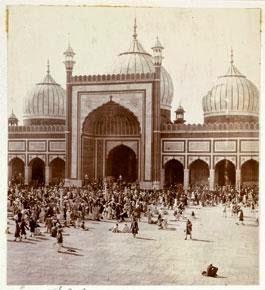
Even outside the fort, the character of Shahjahanabad was changed
when the minarets of the mosques that dotted the skyline were pulled
down one after the other. Some overzealous Englishmen were keen to pull
down the Jama Masjid as well, to build a Christian cathedral in its
place. While Muslims remained persona grata in the area for
over a decade after 1857, Englishmen themselves fancied the vast
courtyards of Jama Masjid as a probable party area, holding frequent
evening parties and balls.


….
Documents well preserved in a little known building of Delhi’s
Archives reveal the city redevelopment that the British had planned.
Official orders of the Delhi Commissioner dating to middle of 1858 state
that Darya Ganj and Dariba (areas containing silverware shops) were
drastically altered. Shops and encroachments were cleared to make way
for roads. 

In fact, the road in front of the Red Fort was created after
the capture of Delhi. Soon, the road connecting the Red Fort to
Fatehpuri Masjid—now called Chandni Chowk—was targeted for a makeover.
Divided into four parts (Urdu Bazar, Phool Mandi, Jauhari Bazar and
Chandni Chowk), the area boasted single storeyed shops on either side of
a tree lined water channel. This is the place where Mughal nobles went
to shop in the evenings, and according to an English traveller writing
before 1857, cheetahs and handsome boys were on offer for nobles to buy.


….
The water channel was covered up to ease movement of traffic, while
the octagonal pond was demolished. In its place came up a clock tower
and, in true Victorian style, a railway station that took shape on the
ruins of a royal garden right next to the Red Fort. The beginning of the
Calcutta-Kalka train service in 1861 and the building of a railway
station changed the skyline and look of the medieval city.


….
The introduction of trams soon saw tracks criss-crossing what we know
as Chandni Chowk. Gurbaksh Kaur, now in her eighties, recalls the
excitement among students as they hopped onto modern trams and visited
Paranthe Wali Gali to tuck into stuffed paranthas. Two of the eateries still selling paranthas
are over a hundred years old and find prominent space in tourist
brochures, but this trip is not for the faint hearted as the rundown
look of the area is hardly inviting.


….
Over the years, Chandni Chowk and other historic areas have been
allowed to degenerate. Unlike many old cities across the globe where
both government and local communities join hands to preserve and
conserve the past, there has been no such success here. The
Shahjahanabad redevelopment plan needs to ‘think local’, and municipal
agencies need to be made accountable. After all, basic cleaning services
do not require any parliamentary or executive decision. Shopkeepers
have to be made responsible for waste disposal, pavements have to be
repaired and made user-friendly. 

Unlike VIP areas controlled by the
NDMC, which, flush with funds, re-lays pavements regularly to justify
its budget, Chandni Chowk has quite possibly never seen basic repair
work take place despite tens of thousands of people visiting and living
in the area. Prime Minister Narendra Modi has rightly identified garbage disposal
as a major challenge, and the Government has promised to take steps to
boost tourism. Chandni Chowk, visited by every tourist entering Delhi,
could be the place to start with. 

Like in the UK, India needs stringent
laws on heritage conservation and the creation of a single window agency
for locals who need to rebuild in heritage areas. The exteriors of
buildings in Chandni Chowk need to be restored and protected; and for
this, any rebuilding or renovation required should be allowed within
reason, in keeping with the requirements of modern life. This has been
successfully undertaken in historic London. In this manner, the historic
nature of the area and its buildings would be preserved while letting
people living within it create new spaces.


….
The absence of public toilets needs to be addressed as well. Many a
foreign tourist can be seen clicking away at men lining up outside a
rundown urinal at Chandni Chowk where little is hidden from public view.


….
At the same time, surely no Delhiwala or Indian proud of her heritage
would like the more-than-300-year-old city of Shahjahanabad to be
replaced by hideous multi-storeyed commercial buildings. Government
intervention and strong accountability are urgently needed. Excuses of
population density and pressure from the local business community cannot
be bandied about by corrupt, inefficient and incompetent government
agencies while an important slice of India’s heritage is destroyed.

…..

Link: http://www.openthemagazine.com/article/nation/power-and-glory

…..

regards

Nirvana: Viagra, plus a glass of bubbly

 ….traditional herbs…huge industry worth Rs 9,000 crore..Naxal- ridden district of Bastar in
Chhattisgarh…..champagne and a local form of Viagra….
after you eat it for three or four months, that your wrinkles have
lifted…..Tribals have lived longer and
better ….using the abundant herbs and
roots to stay vital and virile.
…..

………
Here is (hopefully) a bright idea. Grant safe passage and visiting fellowships to Maoists crouching in the jungles of Bastar (and other parts of central India) to travel to Mecca (China) and see for themselves how/why it is “glorious to be rich.” 
………….


Cheap talk you say. How can the poor tribals ever hope to get rich. Here is another bright idea- by selling herbal Viagra to the Chinese!!!
………


In turn, the Maoists can persuade the Chinese to not destroy all the tigers and rhinos and other wildlife in the search for the perfect penile care solution. What a win-win-win situation will that be. 
…….
And the best part of all this is that we have a wise, witch-doctor to show us the way, a Tripathi Brahmin no less (one who has memorized three Vedas). Long time back the denizens of the Hindu Rashtra had shown us the divine path of the Kamasutra, now with natural Viagra (plus a glass of Bastar Champagne) will surely come un-natural bliss. Jai, Raja-ram ji ki Jai!!!
………………….
Mythologised, problematised, proselytised, traditional herbs are a
national (and international) obsession and a huge industry worth around
Rs 9,000 crore, according to National Medicinal Plant Board of India
estimates. From the verdant, Naxal- ridden district of Bastar in
Chhattisgarh where Bastar champagne (a rare beverage made from the sulfi
tree) and tasty fruits called kurlu are found, a
much-publicised local form of Viagra (a rare indigenous variety of safed
musli) has made a name for itself—through a man who has been
translating the bounties of the jungle for more than a decade.


….
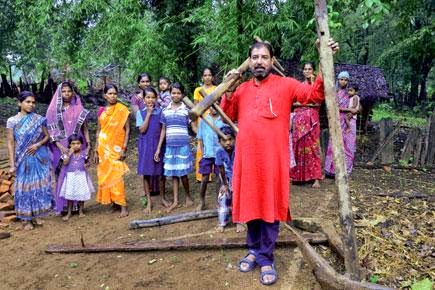
“They call me ‘The Father of Safed Musli’,” says 50-year-old Rajaram
Tripathi, a strapping figure in kurta and jeans, pale and
Brahminical-looking in publicity shots from a couple of decades ago, now
tanned and very much a son of the soil. “It combats diabetes, and
rejuvenates your entire system, reverses metabolism.

….
People will slowly
say, after you eat it for three or four months, that your wrinkles have
lifted.” Big talk? Local Tribals are said to have lived longer and
better on traditional health practices, using the abundant herbs and
roots at their disposal to stay vital and virile.


“I felt like Alice in Wonderland,” Tripathi says of his first
experience with the jungle’s potent flora, when we meet him on one of
his 10 farms. We walk through long, vertiginous rows of trees in his
ethno-medico forest, stopping to pluck some sarpagandha (Rauvolfia serpentina,
used to create blood pressure drugs) off the plant; look at a velvety-
leaved plant which cures stomach problems; identify annatto (Bixa orellena), richest source of vitamin E. He rattles off Latin names like they are actresses’ names or stock market darlings.


Tripathi, a bank worker turned agricultural entrepreneur and Bastar
boy born and raised, has turned a cottage industry with one farm into a
10 acre, Rs 40-crore-a-year (Rs 10 crore domestic) herbal empire in
Kondagaon district: the aptly named Maa Danteshwari Herbal Products
(MDHP), extending as far as Ethiopia, Gulf countries and the
Netherlands. (The Tribal nature goddess Danteshwari is worshipped in the
area.) Functioning as a collective, MDHP employs 300 Tribal families
and works with around 22,000 farmers over 1,000 acres.


….
It all began with a rare variety of safed musli (Chlorophytum borivilianum),
a herb with lanceolate leaves found in natural forests from east Assam
to Gujarat and abundant here, its roots used medicinally as a source of
virility (through the saponins and alkaloids they contain), setting him
on a path of 17 years of “organic herbal medicinal and aromatic
farming”.


….
“The biodiversity of this place is so great, endangered species thrive here. There are 60 varieties of safed musli,
of which one endangered species grows here [MDB-13 and 14]. I only work
with this one,” says the entrepreneur, who has taken bare land back
into the folds of the jungle. “I got organic certification from Germany,
and Japanese agriculture [authorities] gave me certification that
Ecocert [an inspection and certification body established in France in
1991] was not providing at that time.” The products rely on natural pest
controls like neem and spiders, and feature ‘gold’ varieties.


….
Winning the Royal Bank of Scotland Earth Hero Award in 2012 and
various national prizes such as the Desh Seva Ratna Award, Tripathi has
been honoured by former President Abdul Kalam and has met the BJP’s LK
Advani and Rajnath Singh, his self-devised PR package proclaims. Trained
in natural ingredients in Rotterdam and invited to speak at nature
expos in Dubai, participating in herbal trade conferences everywhere
from Jhansi to Japan, this single-minded businessman farmer is
constantly at work.


….
Officials and local media in Chhattisgarh’s capital Raipur applaud
Tripathi’s industry not just on its own merit, but because it offers an
option to Tribals trapped in India’s so-called ‘red corridor’, even if
they are critical of his PR. For, not much has changed in the way of
infrastructure for Tribals in the last decade or so; rampant Naxalite
guerilla warfare gathers many of the disaffected into its grip, seeking
control of their lands.


….
“Bastar has historically been an under- served area in terms of
health services. Kondagaon district contains some of the most remote and
forested areas in the district,” says Sulakshana Nandi, a healthcare
worker of the Jan Swasthya Abhiyan, the Indian circle of the People’s
Health Movement (a worldwide movement for health and equitable
development), who has worked for 12 years in this area. “People are poor
and are rapidly losing control of natural resources like forests that
they have depended upon for generations. This exacerbates the poor
status of health in that area.” Tripathi’s effort is one of the few to
bring Tribals together in a sustainable collective asserting their
connection to the land.


“Naxalites are the excuse for much that doesn’t happen in Bastar,” he
says, speaking to media coverage around violence in this region of
about 10,000 sq km. ‘This is the only sustainable solution for Bastar
and other [similar] regions,’ he says in his mission statement. It cites
the 6,000 to 7,000 Indian medicinal plants used in Ayurveda, Siddha,
Unani and Homoeopathy practices; about 960 species in trade, 178 of them
annually consumed in excess of 100 tonnes for an output of about Rs
10,000 crore, exports being upwards of Rs 1,000 crore. (World figures
are projected to reach trillions by 2050). Of course, violence is
reported daily and there are unexploded bombs people fear discovering,
but this doesn’t mean people shouldn’t visit this beautiful part of the
world, he opines, hinting at a resort in the works.


One of seven brothers, Tripathi and his extended family, 40 or so of
them, are all farmers. He was a State Bank of India (SBI) probationary
officer in 1989, a college professor in the past, he says. “I had lots
of jobs. After three years, a promotion was waiting for me at SBI. I was
a good officer, there were good career prospects. People said, ‘People
are committing suicide in agriculture and you are joining?’ But when I
was at the bank, I saw the economic viability of krishi
(agriculture). If you take the price of land, you have to classify this
as expenses. And if there is debit, there is credit.” He chose the
Grameen Bank model and studied 17 conventional crops, showing the
results to National Bank for Agriculture and Rural Development (NABARD).
Loans resulted, and steady if slow growth.


Every year, 20 million tonnes of produce is stored in various storage
sheds on Tripathi’s 10 farms; his processing unit is 100,000 sq ft.
Agriculture Information, an online and print agrarian resource, mentions
Tripathi’s work with varieties of lemon grass (MDL-14) and stevia (MDS-
13 and 14) as well, and boasts of Tripathi’s tie-ups with multinational
companies. 

His Ethiopia project is in its first phase: 14,000 acres for
high-value herbal farming, with the Lootah group of companies. Tie-ups
with American and European companies are in the works, he says.
A
guestbook is signed by visitors from the US, Japan and other countries,
not to mention countless visitors from all over India, usually in large
groups; the company provides consultancy services to corporate entities
that want to develop high value herbal farms.
A tissue culture lab
continues his experimental laboratory work; species like Guggul (Commifora wightii) and Vacha (Acorus calamus) were commercialised here.


….
“There were 15 years of mistakes,” says Tripathi, who was born in
Kaknar, Jagdalpur, to a family which suffered the misfortunes farmers
are vulnerable to. “Tribals have one guru with 20 students; I had 20
gurus.” Abundantly educated— he has earned a BSc and an LLB in corporate
law, MAs in Economics, Hindi and History, an Ayurved Ratna from
Allahabad, an Ayurved Bhishgacharya from the World Academy of Ayurved
(WAA)—he seems endlessly ambitious. His small bedroom, in a humble yet
relatively affluent home decorated with Bastar’s ubiquitous wrought iron
work, is lined with books. “Those books I have read,” he says, pointing
to shelves of academic- looking botanical books in Hindi, “and those I
am going to read”—another section of faded covers.


….
“He was top in everything,” says wife Shipra, who had a “love cum
arranged” marriage with the man she met at university. A Tribal of the
Kamar community (Gonds are also populous here), she doesn’t call her
husband by name, like many here, though her children are studying in
Raipur and they have some of the trappings of modernity: computer,
phone, rough terrain car. Tripathi is saved as ‘Father ji’ on her phone.
Part of MDHP’s management, Shipra is secretary of Samagra Adivasi
Medicinal Plant Development Association (SAMPDA), a green NGO Tripathi
founded ‘for total herbal revolution’, and involved with local women’s
groups. Except for her features, her Tribal identity seems vestigial,
like with many here; only older women go without sari blouses and bear
tattoos.


….
Tripathi has raised several other commanders in his green army. He
says he employs five experts who have studied medicinal plants at the
doctorate level or are biotech engineers, 14 marketing experts and 10
managers. When more manpower is needed, all members pitch in to make up a
workforce of around 1,000 people. “We don’t have a fixed salary,” he
explains. “We distribute weekly or monthly honorariums to all our team
members, including me, as per our work and responsibilities; from Rs
6,000 to 10,000 monthly. ‘Employees’ is not a suitable word. We say
‘associate tribal families’; 1,500 people are getting their livelihood
from this farming.”


….
Dasmati Netam, from Keyoti 10 km away, leads a production team; an
ambitious 36-year-old woman, she is head of MDHP’s All Tribal Women
groups and President of SAMPDA. Unlike the other Tribals, known for
their reticence, she has studied outside the state and speaks up often
about her work, taking us home for rice wine. As the apparent leader of
her village, she exudes confidence. “I’d like to go outside again,” she
says, already seeming to have left its crude wooden fences behind.


……
What is Tripathi’s biggest challenge, aside from the need for more
land? “Marketing. In India, until Amitabh Bachchan or Aamir Khan eats
these things, people don’t.” Indeed, his main marketing platform is
Central Herbal Agro Marketing Federation of India (CHAMF-INDIA); a far
cry from Organic India domain. “And the next step is backward linkage,”
he continues. “Our fight is with middlemen. Now we have negotiation
power—ashwamgandha , for example, no one will sell less than
100 kg. If they do, we will blacklist them. 

We have to control the
market. If everyone grows safed musli, who will buy it?”

Tripathi is set to launch ‘certified organic food supplements’ in
select towns of Chhattisgarh before taking these to other parts of
India. He projects sales of Rs 6 crore for these ‘value-added’ products.
His teas and powders may look a little too rustic for the urbane
consumer, but they are tasty and seem to find takers among the believers
they are aimed at; the sales figure may well be realised.


….
With success, however, has come criticism. MDHP’s annual growth rate
may be upwards of 14 per cent, but there are rumours of loans that were
defaulted on, say sources in Chhattisgarh who feel he is encroaching on ‘jungle wala zameen’
(forest land); Tripathi refutes this, saying he paid the loan off two
months ago. Tribals who have farmed for many years can get patta
(legal registration papers), but he is not one, say others. Yet,
Tribals may have found their most viable leader in the bank worker who
put his hands to work on the land of his birth.


….
In his mission statement, Tripathi offers 10 acres for a pilot
conservation project across neighboring states. Will the rumble spread
through his jungle? Time may prove harsh, but for now he is effusive.
During our walk, he spots a long- tailed bird and we crouch till it
takes off, feathers streaming. He asks us to close our eyes for two
minutes, and while the gesture is stagey, the sound of green is
unadulterated. “Take two deep breaths,” he says, beaming.

……..

Link: http://www.openthemagazine.com/article/nation/lord-of-the-jungle-and-the-magic-potion

…….

regards

Eye in the Sky. US, Pakistan, U2 etc

Dear Omar;
When he have plenty of free time on hand and nothing else to do then you can go over the following piece of a chapter of cold war history.
Hamid
Eye in the Sky – United States, Pakistan and Reconnaissance during Cold War
Hamid Hussain
‘Being a friend of the United States is like living on the banks of a great river.  The soil is wonderfully fertile, but every four or eight years the river changes course, and you may find yourself alone in a desert’.  Pakistan’s army chief and President General Muhammad Zia ul Haq to CIA director William Casey, 1983 (1)
United States and Soviet Union were engaged in a worldwide competition for dominance after the Second World War.  Intelligence gathering was an important part of this power struggle between the two super powers.  In the pre-satellite era, high altitude reconnaissance by special aircraft and signal interception were key components of intelligence gathering.  In 1950s and 60s, these operations were conducted from United States as well as from bases all around the globe. 
A variety of equipment was used to gather intelligence including static electronic monitoring facilities on the borders of Soviet Union, high altitude reconnaissance aircraft such as U-2 and RB-57 to collect electronic (ELINT), signals (SIGINT), photos (PHOTOINT), telemetry (TELEINT) and air sampling for detection of radiation emanating from nuclear test sites.  Several agencies including Central Intelligence Agency (CIA), Strategic Air Command (SAC) of United States Air Force (USAF), United States Air Force Security Service (USAFSS), United States Army Special Security (USASS) and National Security Agency (NSA) were involved in these wide ranging intelligence activities.
Main focus of these operations was monitoring of missile and nuclear test sites, location of bombers, missile sites and radars and eavesdropping on Soviet communication system.  The general agreement between United States and Pakistan was that in return for Pakistan’s cooperation in such activities, United States would modernize Pakistani armed forces.  Pakistani part of the deal included provision of facilities for U.S. intelligence gathering operations as well as cooperation in some aspects of the operation.  Both parties entered into these agreements looking at their own interests.  United States saw Pakistan as a window through which to peep into Soviet Union’s backyard and Pakistan saw this cooperation as a shortest possible way of modernizing its armed forces. 

U-2
‘The U-2 was a flaming javelin unwittingly thrown into the dry forest of suspicions and misperceptions that surrounded American-Soviet relations in May 1960’.  (2)
U-2 was a specially designed aircraft for high altitude flights for reconnaissance.  It had electronic surveillance equipment for monitoring and recording radar and radio frequencies and a specialized camera for high resolution photographs.  These flights monitored radars, air defenses, rocket launches and military and industrial sites.  (3) It was a joint operation run by CIA and USAF.  CIA paid for the development of the aircraft and Strategic Air Command (SAC) trained the pilots.  (4) Most missions were flown along Soviet borders and over international waters and not over Soviet air space.  Missions from Wiesbaden base in Germany covered northern and western parts of the Soviet territory while flights from Turkey covered southern parts.  (5) U-2 flights also operated from Alaska, Japan and Australia. 
President Dwight Eisenhower was fully aware of the potential impact on relations with Soviet Union as far as over flight missions were concerned; therefore he kept a tight control on U-2 operations.  He was told by CIA that planes were undetectable by Soviet radar system which proved to be wrong.  In 1956, first two U-2 planes were transported to United Kingdom (UK) but UK pulled out of the project at the last minute and planes were shipped backed to Germany.  (6) In July 1956, first four U-2 missions over Soviet air space were flown from Wiesbaden base in Germany in ten days period.  Soviet radars detected the intrusion but could not identify the plane nor could intercept it.  (7) Soviets sent a strong protest note to Washington with specific dates and times of intrusions forcing Eisenhower to order termination of additional flights.  Information from these early flights was so valuable that United States could not resist and second mission was conducted in November 1956 from Incirlik base in Turkey.   Later, U-2 flights were flown from Alaska, California, Texas, Germany, Turkey, Japan, England, Australia, Brazil, Norway and Pakistan.  (8) Most of these flights were flown along Soviet borders and were not over flights.  Deep penetration flights were personally approved by the President.  In four years, only 24 such deep penetration flights were approved by the President.  (9) Most over flights originated from Turkey as it covered large area of Soviet Union including Kapustin Yar testing site, bomber fields and military and industrial targets in Caucus, Ukraine and major cities along Volga.  (10)
Pilots chosen for U-2 were reserve officers with exceptional ratings, top secret clearance and extra hours on single engine, single place aircraft.  (11) Pilots resigned from the air force and worked under an eighteen month contract for CIA with much higher pay and no loss of service time in USAF when they returned back after completing the contract.  (12) In the early stages, it was decided to use non-U.S. citizens for U-2 flights over Soviet territory.  The argument made by Eisenhower was that if a U.S. pilot or a member of U.S. armed forces was shot down over Soviet territory, in strict legal sense it could be considered an act of war.  Some non-U.S. citizens were trained; however the idea was dropped for two reasons.  First, the operation could not be kept highly classified in view of a large number of foreign pilots on the roll and secondly most of the pilots could not sustain very stringent criteria of training for missions at such heights.  Four Greek pilots were brought for training in 1956 but none of them completed the training (they were later known as ‘Greek Washout).  In view of keeping the secret, CIA kept them in United States sending them to colleges at government expense.  (13) Later, Royal Air Force (RAF) pilots were also brought into the mission.   In case of Pakistan, when U-2 planes started to operate from Pakistan, no Pakistani air force personnel were involved with the project with the exception of liaison, logistics and administrative assistance in running the operations.  (14) In 1956, when Washington approached Pakistan for U-2 flights from Pakistan, Pakistani government hesitated and complained about the slow current rate of military assistance.  Since 1954, relations between two countries have been strained due to disagreements on defense assistance issue and lengthy delays due to bureaucratic wrangling in Washington.  On January 10, 1957, National Security Council approved enhanced program of military assistance to Pakistan (NSC 5701).  The estimated cost of this enhanced program was $410 million for military assistance and $374.7 million for defense support for the three year period of 1957-1960.  (15) U.S. committed to raise and support four infantry and one and a half armored division of Pakistan army, absorption of additional 40’000 soldiers in Pakistan army as well as equipment for air force and navy. 
 In January 1957, Eisenhower approved a three year increase in military aid and next month a restricted area of Peshawar base saw construction to welcome U-2.  Richard Bissell was in charge of U-2 program at CIA.  His assistant, James Cunningham negotiated with Pakistan army chief General Muhammad Ayub Khan.  (16) Peshawar and Lahore were two sites from where U-2 was flown over Soviet territory.  A Pakistan Air Force liaison officer was assigned to U-2 program operating from Pakistan.  (17) There was no permanent stationing of U-2 planes on Pakistani soil.  Detachment 10-10 based at Incirlik base near Adana in Turkey flew missions from Pakistan.  Usually, for security reasons, pilot and some essential crew members were flown a night before in a C-130 plane from Turkey.  U-2 flown by standby pilot would bring in the plane so that there was least amount of exposure.  (18) Main target of flights originating from Pakistan was Tyurtam missile testing site and cosmodrome in Kazakhstan as well as military installations along Trans-Siberian railways and down range radar array that was a terminal site for missile firings from Kapustin Yar.  (19) The first U-2 flight from Pakistan flew over Soviet Union and landed at a small desert airstrip near Mashhad from where it went back to Turkey.  (20) There were total of twenty four U-2 over flights over Soviet Union from 1956 to 1960.  Out of twenty four, ten were launched from Pakistan.  First five flights originated from Lahore and the remaining five from Peshawar.  The first Soviet over flight from Pakistan took off from Lahore on August 05, 1957. (21)
In early 1960, CIA Director Allen Dulles and Bissell were worried about a new ballistic missile launch site in northern Urals and wanted to send some U-2 flights to check this out.  Eisenhower was reluctant to authorize the flights in view of upcoming summit in Paris in June 1960.  He finally agreed and on April 09, 1960, a U-2 took off from Peshawar for a Soviet over flight.  The plane flew over Tayurtam launching site, nuclear testing site of Semipalatinsk and air defense missile site near Saryshagan.  Soviet leader Nikita Khrushchev was in Crimea and when informed about the U-2 flight was furious and threatened that if the next intruder was not shot down, he would severely punish several generals.  (22) Soviet leadership appointed a commission after this incident to investigate why Soviet air defense systems were not able to target these aircrafts.  Colonel Alexander Orlov then serving on the staff of Air Defense Forces was member of this commission.  According to Orlov, many shortcomings were discovered and rectified.  (23) In Washington, Dulles and Bissell asked for another mission as photos of suspected long range missile site near Plesetsk were not good.  (24) Soviet defense had also progressed during these years.  In early 1960, Soviets had inducted P-30 radar system that could detect aircraft at high altitudes, SU-9 Fish pot high altitude interceptor aircraft and S-75 and SA-2 Guideline missile system capable of reaching a target at approximately 80’000 feet.  (25)
The Francis Gary Powers fame U-2 flight that was shot down over Soviet Union on May 01, 1960 originated from Peshawar.  Powers arrived by a C-130 plane along with some ground crew members in Peshawar on April 27.  U-2 was flown by stand by pilot from Incirlik base in Turkey, however it had to return on April 27 and 28 due to inclement weather over Soviet Union. (26) Planned mission was a long flight over Soviet Union covering a distance of about 3800 miles and landing at Bodo, Norway.   Flight path after take off from Peshawar was to fly over Afghanistan then over Dushanbe proceeding to Tayurtam cosmodrome.  From there plane was to fly over Chelyabinsk and then over the industrial hub of Sverdlovsk.  Soviet main atomic research site was located near Sverdlovsk.  The plane was to go over Kirov then to Plesetsk which was a base for the new SS-6 intercontinental ballistic missiles.  (27) U-2 was to fly over Archangel then White Sea and finally making a turn around Barents Sea and land at Bodo in Norway.  Soviet radar system was tracking the plane the moment it entered Soviet air space.  According to Khrushchev, he got a phone call from Minister of Defense Marshal Malinovsky at five o’clock in the morning when U-2 entered Soviet airspace from Afghanistan.  (28) A Soviet SU-9 Fish pot high altitude interceptor took off from Sverdlovsk air field and was able to reach the desirable altitude but didn’t see the target.  (29) Soviet Air Defence commander Marshal Sergei Biryuzov along with deputy chief of operations for Air Defense Command Colonel Georgi Mikhailov from their command center informed Khrushchev that ‘there is no rocket site ready until it gets to Sverdlovsk.  At Sverdlovsk, we can try our luck’.   This U-2 was shot down near Sverdlovsk when a SA-2 (Soviet name for this was C-75) surface to air missile burst near its tail. (30)
Washington had a general agreement with all host governments including Pakistan that in case of an incident United States would declare that it was flying U-2 without the permission of host government.  Hugh Cumming was head of State Department’s Bureau of Intelligence and Research and was chief liaison with CIA.  When news of U-2 crash in Soviet Union was confirmed, a prepared cover story written several years ago was discussed at the meeting.  This story stated that a NASA U-2 weather plane flying from Turkey had accidentally over flown Pakistan without permission after the pilot reported mechanical problems by radio.  There was debate about mentioning of Pakistan.  Cumming insisted that Pakistan’s name should be deleted from the cover story.  The problem was that by removing the Pakistan name, they had to come up with a new cover flight plan.  Technicians using their tools drew a new triangular flight plan for the new cover story.  (31) The reason for removing Pakistan’s name from the story was the impression in Washington that Pakistan might not be able to take the heat from the Soviet Union compared to Turkey. 
President Ayub Khan was in London when London CIA station chief gave him the news of downing of U-2.  Pakistan’s former Foreign Secretary Mohammad Ikramullah who was accompanying Ayub issued the statement that his country had no information that the U-2 had stopped off in Peshawar.  (32) Ayub Khan told reporters that ‘The Americans are our friends.  These planes come and visit our country.  How do we know where they go after they leave our country?’  (33) On May 07, 1960, Khrushchev addressed the meeting of the Supreme Soviet.  Angry Khrushchev thundered, “from the lofty rostrum of the Supreme Soviet, we warn those countries that make their territory available for launching planes with anti-Soviet intentions: Do not play with fire, gentlemen! The governments of Turkey, Pakistan and Norway must be clearly aware that they are accomplices in this flight 
 If these governments did not know – and I allow in this case they were not informed – they should have known what the American military was doing in their territory against the Soviet Union”.  (34) Two days later, Khrushchev confronted Pakistani ambassador Salman Ali at Czechoslovakia embassy reception and warned that ‘Peshawar had been marked on a map and pinpointed by Soviet rockets’.  (35) On May 13, Soviet foreign minister formally summoned Pakistani envoy along with his counterparts from Turkey and Norway and ‘threatened military attack in revenge for their complicity in the U-2 flights’.  (36)
In 1967, Ayub Khan in his memoirs noted that ‘in the U-2 incident we were clearly at fault, but the whole thing had been as much of a shock to us as it was to the Soviet Union’.  (37) This statement is only half true as Ayub Khan was fully aware of the nature of the project from the beginning and what he admitted in 1967 was well in line with the secret agreement between Pakistan and United States that in case of downing in hostile territory, United States will state that they have been flying U-2 without Pakistan government’s knowledge.  No further over flights over Soviet Union were carried out by U-2 after the May 01, 1960 incident.  In reference to the downing of U-2, Ayub Khan in his diary wrote ‘Gary Cooper’ confusing Francis Gary Powers name with then famous Hollywood actor Gary Cooper.  (38) Another interesting fact is that Francis Gary Powers mission was codenamed ‘Operation Grand Slam’.  In 1965, Pakistan also gave the codename ‘Operation Grand Slam’ to its offensive in Kashmir.  Both missions didn’t live up to their illustrious titles. 
No
Date
Origin
Pilot
Target
1
August 05, 1957
Lahore
Eugene ‘Buster’ Edens
Tyurtam missile facility
2
August 12, 1957
Lahore
Not Known
Not Known
3
August 21, 1957
Lahore
Not Known
Semipalatinsk nuclear facility
4
August 22, 1957
Lahore
Jim Cherbonneaux
Semipalatinsk nuclear facility
5
August 28, 1957
Lahore
E K Jones
Tyurtam missile facility
6*
July 09, 1959
Peshawar
Marty Knutson
Saryshagan & Semipalatinsk
7
December 06, 1959
Peshawar
Robbie Robinson
Tyurtam & Kapustin Yar
8
February 05, 1960
Peshawar
John MacArther
Bomber site at Kazan
9*
April 09, 1960
Peshawar
Bob Ericson
Saryshagan, Semipalatinsk
& Tyurtam
10
May 01, 1960
Peshawar
Francis Gary Powers
Tyurtam & Chelyabinsk
TABLE: 1    U-2 Over flights from Pakistan. * Flights No 6 and 9 originating from Peshawar landed at Zahedan in Iran.  The longest U-2 over flight covering 4’200 miles originating from Cubi point base in Philippines landed at Dhaka on May 15, 1959.  (39)
RB-57
‘Though I fly through the valley of death , I shall fear no evil, for I am at 50,000 feet and climbing.’
RB-57 was a modified version of B-57 for reconnaissance.  In 1959, Pakistan received B-57 bombers from United States.  These planes were from 345th Tactical Bomber Wing of USAF based at Langley Air Force Base in Virginia.  This wing was deactivated in June 1959 and bombers given to Pakistan.  (40) After shooting down of U-2 over Soviet Union in 1960, U-2 over flights were discontinued.  Various models of RB-57 were developed for high altitude reconnaissance.  RB-57B had a ceiling of 65’000 feet and RB-57 F had a ceiling of 80’0000 feet. United States provided two RB-57 B models to Pakistan in early 1960s. These planes were optimized for PHOTOINT and ELINT. In 1965, two state of the art RB-57 Fs (nick named droopy due to their enormous wing span of 200 feet) were also provided to Pakistan.  The droopy was exclusively an electronic intelligence gathering and photo reconnaissance platform that could cruise at altitudes up to 80,000 feet above sea level and thus stay well beyond the then air defense capability if flying at maximum heights. RB-57F was used for PHOTOINT through a special high altitude cameras as well as equipment for ELINT and SIGINT.  In view of curtailment of over flights over hostile territories in the aftermath of the May 1960 shooting down of U-2 over Soviet Union, new equipment was developed.  State of the art side looking camera installed on RB-57 could take detailed pictures from nearly sixty miles away allowing the planes to fly over international waters as well as inside the host country airspace. 
Four RB-57s were part of then classified No 24 Intelligence Squadron of PAF based in Peshawar.  (41) Two were RB-57 Fs for high altitude reconnaissance and two were RB-57 Bs used for electronic intelligence gathering (ELINT) and signal interception.  These planes were provided to Pakistan with an understanding that they will be used for surveillance against Soviet Union and possibly China.  Two British Royal Air Force pilots trained in Texas were associated with some of the RB-57 missions originating from Pakistan.  PAF pilots took over RB-57 missions and the names of at least two pilots are known; Squadron Leader Muhammad Iqbal and Squadron Leader Rashid Mir. 
This author has not been able to confirm that PAF pilots were involved in over flight missions over Soviet Union.  PAF pilots flew RB-57s over Pakistan’s northern areas which border Afghanistan where a narrow strip of Wakhan separates Pakistan from Soviet Union.  Pakistan’s northern areas also share border with China.  ELINT, SIGINT and TELINT equipment was probably used to obtain information from the bordering areas of Soviet Union and China without directly flying over the territory.  U.S. technical staff installed the surveillance equipment prior to the flight and removed it after the mission (42) Initially, Pakistani crew was not briefed about the missions and simply given the route of their flight.  One navigator protested and demanded that they be briefed about the missions and after this protest Pakistani pilots were briefed about the missions. (43) Commander of 215 Intel Analysis Squadron, a Wing Commander rank Pakistan Air Force officer coordinated with Americans.  American technicians after deciphering all information from the equipments installed in the RB-57s would share some information with Pakistani liaison officers.  Most likely this information was related to India.  (44)
It is very difficult to confirm whether Pakistani pilots flew over flight missions over Soviet territory as two known pilots associated with RB-57s are not alive.  If Pakistan was involved in over flight missions, that would tantamount to ‘recklessness’ on part of Pakistan’s higher decision makers.   Pakistan took enormous risk as this act would be considered direct provocation of then super power Soviet Union.  The enormity of the risk is highlighted by the fact that after the 1960 shoot down of U-2, Soviet Union had clearly warned Pakistan of dire consequences in case of use of Pakistani territory for such operations. 
In 1965 when tensions increased between Pakistan and India, United States wanted to move some of its ‘expensive toys’ out of the hot zone.  Pakistan resisted these measures to use these state of the art planes against India.  One RB-57 F returned to United States prior to the start of all out war in September 1965.  Second RB-57 F was damaged by Indian air defense during a mission on September 15, 1965 but Squadron Leader Rashid Mir landed the damaged plane safely at Peshawar.  It was repaired and later returned to United States.  One RB-57 B flown by Squadron Leader Muhammad Iqbal was shot down by friendly fire during the war.  The lone remaining RB-57 B (tail number 3934) was destroyed during an Indian Air Force air raid on December 05, 1971 at Mauripur base thus ending the RB-57 chapter of Pakistan air force.  (45) Details of RB-57 operations in Pakistan are still classified in United States.  In Pakistan not many people are alive who were intimately involved with the project and an odd one or two with some detailed knowledge are not willing to talk about it.  This makes any detailed and meaningful analysis very difficult. 
Badaber Base
‘In God we trust, all others we monitor’.  Intercept Operator’s motto.  NSA Study, Deadly Transmissions, December 1970 (46)
In 1950s, United States ringed Soviet Union with several listening posts.  Ground stations listening to Soviet communications were set up at Samsun and Trabzon in Turkey, Germany, Scotland, Philippines, Crete, Taiwan and Japan.   (47) These operations were run by NSA and intelligence arm of United States Air Force then designated United States Air Force Security Service (USAFSS).  NSA also provided equipment to be installed in U-2 planes that recorded emissions from Soviet radar, microwave and ground communications.  (48) Soviet radar installations communicated with each other through high frequency circuits.  These high frequency signals bounce between earth and ionosphere, therefore right equipment can pick these signals thousands of miles away.  (49)
In 1958, United States and Pakistani governments started negotiations to set up an American listening post in West Pakistan.  In 1959, a ten year lease was signed between Pakistan and United States.  United States Air Force Security Service (USAFSS) chose a site near the village of Badaber on the outskirts of Peshawar and the ‘Project Sandbag’ was started.  The unit assigned was designated 6937 Communications Group also known as Peshawar Air Station (PAS).  (50) The first commander of the unit responsible for setting up the infrastructure was Colonel Ethyl Branham.  Badaber base was an electronic surveillance facility primarily run by NSA.  No aircraft were involved in this operation.  It monitored Soviet air defense systems and tracked the path of the surveillance flights but aircraft were not flown from this facility.  They monitored Soviet reaction to reconnaissance flights but were not directly involved with the operations of these flights.  The primary mission of Badaber facility was monitoring events at the Tyurtam missile test center and its downrange tracking stations.  The facility had remote transmitter and receiver sites for high frequency teletype communications with the US military communications network.   (51)

There were Pakistani liaison officers attached to the facility for coordination but they were not allowed in operational areas.   When Francis Gary Powers U-2 was shot down, at an unclassified Commanders Call, the Americans stationed at the base were told that the 6937th had no knowledge of the U-2 mission. (52) No Pakistani officer directly participated in any capacity in these operations; however a Wing Commander rank Pakistan Air Force officer coordinated with Americans.  Only a handful of high ranking Pakistani military officials including C-in-C of the army and air force chief were taken into confidence.  No Pakistani civilians were allowed in the facility.  Zulfiqar Ali Bhutto who was then serving as acting foreign minister on his visit to Peshawar requested to visit the Badaber base.  Peshawar deputy commissioner Roedad Khan conveyed this request to American base commander Colonel Thomas C. Hyde.  The reply came that Bhutto ‘would be welcome to visit the cafeteria where he would be entertained and served coffee and sandwiches’ and that he would be allowed to visit only the cafeteria and no other part of the base.  (53)
Sometimes Pakistani officials exaggerated their contribution to the alliance with United States to extract more concessions especially military hardware.  In the fall of 1963, Ayub jotted down talking points in his diary in preparation for his meeting with Secretary of State George Ball.  In reference to American facilities on Pakistani soil, he wrote, ‘the facility provided to the Americans to establish a major satellite and rocket launching center in Badaber which exposed Pakistan to the wrath of the Russians’.  (54) It is not clear whether Ayub wanted to exaggerate Pakistan contribution as a bargaining tool or was not fully aware of the nature of the project at Badaber.  Badaber base was only an electronic listening post and had nothing to do with any satellite reconnaissance and definitely not a rocket launching center.  There were no U.S. rockets or missiles based on Pakistani soil.  It is not known whether Ayub shared this thought with Ball and if he did it would have left a poor impression of Ayub.  However, knowing very well that his bargaining position was strong, Ayub argued that by allowing U.S. facilities to operate, Pakistan was increasing its own exposure to Soviet retaliation.  During Eisenhower’s visit to Pakistan in December 1959, this was the main argument used by Ayub to get a squadron of F-104s with Sidewinder missile.  (55) In 1964, CIA’s own analysis concluded that ‘The Pakistani President knows that the strongest card he holds is the US communications facilities at Peshawar’.  He almost certainly calculates that closing the facilities would bring a drastic reduction in the US military and economic assistance on which Pakistan is so heavily dependent and for which there is no alternative in sight’.  (56)
In early 1960s, United States and Pakistan started to drift apart from their alliance in view of increased American support to India in the aftermath of Sino-Indian conflict of 1962.  Pakistan got alarmed at these developments and started to repair its relations with Soviet Union.  Ayub Khan visited Soviet Union in 1965 and gave Soviet leaders indication that when ten year lease of Badaber base ended in 1969, he would not renew it.  He also suggested a quid pro quo between issues of U.S. bases in Pakistan and Soviet Union’s veto on Kashmir resolutions and suggested that ‘the matter could be negotiated and the two sides could come to a reasonable arrangement’.  (57) Washington got alarmed and angry by Ayub’s visit to China and Soviet Union and while Ayub was still in Soviet Union Washington announced that Ayub’s upcoming visit to United States in April 1965 was rescheduled due to President Johnson’s busy schedule.  Pakistan approached Soviet Union for arms but Soviet leaders were lukewarm to the idea.  Ayub was thinking about using increased ties with Soviets as a bargaining chip and wrote in his diary on September 26, 1966, ‘It is in our interest that our relations with the Soviets should gain depth.  We can then develop greater leverage with the United States and India’.  (58)
Ayub visited Soviet Union again in September 1967 and gave firm commitment to Soviet leaders about his decision not to renew the Badaber lease next year.  In 1968 Pakistan informed Washington of its decision about closure of Badaber base at the termination of the lease that pleased Soviets.  American ambassador sought an urgent interview with Ayub and conveyed ‘the great disappointment of his government.  (59) On April 06, 1968 Pakistan gave notice to United States government that Pakistan will not be renewing the lease and on April 17 Soviet Prime Minister Aleksi Kosygin arrived in Pakistan for wide ranging talks.  Soviets agreed to help Pakistan in various projects including atomic power plant, steel mill and radio link between Soviet Union and Pakistan.  (60) In 1969, U.S. winded up its operations from Badaber base and officially the operations ended on January 07, 1970 when base was handed over to PAF. 
China Factor
‘We may lose Pakistan, unless we can convince Ayub that he can’t have his cake and eat it too’.  National Security Council aide Robert Komer’s advice to President Lyndon B. Johnson regarding Pakistan’s expanding relations with China, April 22, 1965 (61)
Soviet Union and China were closed societies and it was very hard for American or any other Western intelligence agency to run covert programs on the ground.  Both countries were shut off to the outside world and Soviet Union earned the nickname of ‘Iron Curtain’ while China was called ‘Bamboo Curtain’.  In 1950s and 60s, United States was supporting Tibetan guerrillas fighting against Chinese control.  United States worked with both India and Pakistan to run these covert operations in Tibet (Operation St. Circus).  Main operating hub of these operations was from India.  Pakistan provided transit facilities to American aircraft and personnel in East Pakistan in support of the rebellion in Tibet.  (62) Pakistan concluded a border agreement with China in 1963 and pulled out of the covert operations supporting Tibetans. 
U.S. approach towards over flights over mainland China was radically different than its operations against Soviet Union.  Foreign pilots were associated with some U-2 surveillance programs such as Operation Diamond Li and several nationalist Chinese pilots were trained and they flew missions over mainland China.   Taoyuan base near Taipei was jointly run by 35th Black Cat Squadron of nationalist Chinese pilots and U.S. personnel of Detachment H.  In the fall of 1959 first batch of five nationalist Chinese pilots was trained, however first over flight mission over China was carried out in January 1962.  (63) Over flights over China continued up to 1974 and during these years many U-2 were shot down by Chinese air defense forces.  
U.S. high altitude reconnaissance of Chinese military and nuclear targets was coordinated mainly from Taiwan.  Local CIA station Chief Ray Cline coordinated with U-2 operations conducted from Taiwan.  From 1961 to 1964, at least four U-2s were shot down over mainland China.  (64) Main Chinese targets were missile range in Kansu province and nuclear test site at Lop Nur.  Neither Pakistan nor United States have acknowledged that any surveillance activity against China was conducted from Pakistan.  A former Director General of Inter Services Intelligence (DG ISI) Lieutenant General Javed Nasir disclosed in 1998 that in 1960s CIA painted Pakistan International Airlines (PIA) planes with special chemicals to detect radiation from Chinese nuclear test sites.  (65) PIA was one of the few commercial airlines flying regularly to China at that time.  No American or Western airline was flying commercial flights to China.
In 1957, United States had started High Altitude Air Sampling Program (HASP) by flying planes over its own nuclear test sites to improve the system of analyzing air samples for nuclear activity (other modalities such as acoustic, seismic and static radiological monitoring systems such as ground filter units were also used).  (66) RB-57s based in Pakistan were probably part of Operation Little Cloud which conducted missions of downward air sampling of nuclear debris as Chinese nuclear test site was at Lop Nur in Xinjiang province which is close to Pakistani border and in 1963-64 Chinese were conducting tests at this site.  These operations were likely over Pakistani territory and not over flights over Chinese airspace.   If this assertion is true, the time frame is probably 1962-64 when U.S.-Pakistan relations were still robust while relations between Pakistan and China were not yet very strong.  By mid 1960s, relationships between Pakistan and China have taken a strategic dimension and Pakistan probably stopped cooperation as far China was concerned.
 It is not likely that Pakistan would have risked this crucial relationship especially in view of estrangement from U.S. in the context of increased U.S. support to India after Sino-Indian conflict of 1962.  This conclusion is based on the fact that on November 10, 1964, U.S. ambassador Walter McConaughy , Chief of CIA directorate of Plans for South Asia James Critchfield and Karachi CIA station chief John Shaffer met with President Ayub Khan in Karachi.  China had conducted its nuclear test few weeks earlier.  Critchfield asked for a ‘standing permission’ to conduct air sampling missions over Pakistan territory against China but Ayub refused stating that ‘we can not afford to make anymore enemies’.  (67) From Pakistani side, Director General of Inter Services Intelligence (DGISI) Brigadier Riaz Hussain and Director General of Foreign Office Salman Ali were also present at this meeting.  Who could know the perils of such adventures better than Salman Ali?  Ali was Pakistan’s envoy to Moscow in 1960 when Khrushchev pulled him aside at a diplomatic reception and threatened Pakistan with dire consequences in the aftermath of shooting down of Francis Gary Powers U-2. 
Pakistan pursued its own national interest of building solid relations with China.  In early 1965, Ayub Khan was given a warm welcome in China and Prime Minister Zhou Enlai conducted him to different cities.  President Johnson expressed his displeasure by sending a note to Pakistan’s ambassador to Washington that ‘I don’t relish the sight of my friend Ayub breaking bread with my enemies’.  (68) Johnson had earlier abruptly cancelled Ayub’s upcoming visit to Washington in April 1965 on the issue of Ayub’s visit to China.  Ayub met President Johnson in Washington in December 1965 and Johnson bluntly told Ayub that future Pakistan-U.S. relations will depend to a great extent on Pakistan’s willingness to curtail its ties with China.  Later, Johnson sent a letter to Ayub stating that ‘the old slate had been wiped clean in South Asia’.  (69)
Pakistan disappointed by its relations with United States expanded its relations with China and pursued its own interests.  By mid 1960s, Pakistan and United States were drifting apart mainly on the issue of China.  U.S. with its involvement in Vietnam saw China as a serious immediate threat and Washington’s ambassador to Pakistan Walter P. McConaughy was the leading expert on Chinese affairs.  He had served as director of China affairs at State Department, served as ambassador to Burma and Korea and briefly served as assistant secretary of state for Far Eastern Affairs prior to his appointment to Pakistan.  (70) India-Pakistan war of 1965 finally put a stop to a decade long defense relations between United States and Pakistan.  Pakistan gradually drifted away from American sphere of influence and moved more closely towards China in its quest for security against India.  Pakistan tried to use its relations with Russia and China as a bargaining chip and in November 1966, Ayub in his meeting U.S. ambassador Eugene Murphy Locke told him that Pakistan will get some weapons from China and if U.S. didn’t provide the military aid, Pakistan will approach Soviet Union for weapons.  (71) Pakistan was not successful in its efforts and relations between Pakistan and United States remained low key as both parties were disappointed.  
Handshake in the Shadows
‘The trouble is that the Americans are trying too hard to save their money.  The fools don’t realize that our strength one day will be of immense value to them’.  Pakistani C-in-C General Muhammad Ayub Khan, July 1958 (72)
‘Pak policies have now succeeded in alienating two Presidents; if the Paks aren’t careful, they may kill the goose that lays the golden egg’.  Robert W. Komer, South Asia aide to National Security Council, July 24, 1964 (73)
The opinions are quite divergent about the contribution of intelligence operations conducted form Pakistani soil.  Most Pakistanis consider them highly valuable to U.S. national security while Americans downplay its significance in the global context.  High altitude reconnaissance operating from Turkey and Pakistan provided crucial information about Soviet military and nuclear facilities.  Vital information about Soviet military capabilities uncovered by these flights resulted in refutation of ‘bomber gap’ and ‘missile gap’.  In addition, Soviet nuclear test sites at Novaya Zemlya and Semipalatinsk, weapons plant near Alma Ata and defensive missile site at Saryshagan were discovered by U-2 flights.  (74) Tayurtam launch site was accidentally discovered when a U-2 pilot flying over Soviet Turkistan deviated from his designated course to look at an interesting site.   Later, photo interpreters built the whole model of Tayurtam site.  (75) U-2 flights not only obtained photographs but also carried intercept equipment capturing signals of Soviet radar systems.  (76) This provided a layout of Soviet air defense systems to U.S. military planners.  Table 2 gives the details of Soviet sites monitored through intelligence operations run  from Pakistan.  (77) Eisenhower’s dilemma was that he could not share secret information provided by U-2 over flights with Congress.  However, armed with the information provided by U-2 ‘enabled him to withstand formidable pressure from the military-industrial complex and its supporters on the Hill for massive increases in arms expenditure’.  (78)
Pakistan was worried about the potential risks it was taking by allowing U.S. intelligence gathering missions from its soil.  In CIA’s Deputy Director of Intelligence Robert Amory’s words ‘The Pakistanis were always worrywarts’.  (79) Field Marshal Ayub Khan was directly involved in negotiations and he rightly felt that he had got a good deal for Pakistan and its armed forces by hard bargaining with Washington in return for cooperation with U.S. on intelligence against Soviet Union.  Ayub stressed this point in his meeting with Secretary of State George Ball in September 1963 stating that, ‘You have been good friends and helped us in many ways, but we too have been very good friends and in doing so incurred lots of risks and odium’.  (80) One thing that Ayub could not comprehend at that time was that Washington clearly knew that high altitude reconnaissance flights as well as ground installations were only a transient stage as with satellite technology (which Washington was pursuing with full speed) the whole ball game will change.  Washington was clearly expecting that U-2 flights will end in the next few years.  On part of Ayub, ‘if permission to fly the U-2 from Pakistan was part of the quid pro quo, then his power to demand renewed aid would be diminished’.  (81)
Fathers of U-2 were very clear from the beginning about the narrow window of opportunity before Soviets caught up with their efforts.  Allen Dulles and Richard Bissell told Eisenhower that ‘with advances in Soviet fighter planes and ground-to-air missiles, the U-2 would probably be able to fly safely over Russia for only two to three years’.  (82) Eisenhower was also clear in his mind and had told the CIA that ‘U-2 flights should be held to a minimum pending the viability of this new equipment’.  (83) This ‘new equipment’ was satellite technology.  It was calculated that once United States had acquired satellite reconnaissance capability, then the strategic value of overseas bases would be diminished.  Thus Pakistan’s cooperation was crucial for only three to four years.  (84) During all these parleys, Soviet Union was not sitting idly and was trying to keep itself informed of Pakistan’s foreign policy by recruiting agents in Pakistan’s foreign ministry and diplomatic corps.  (85)
Soviet Union fully aware of the U.S. intelligence operations conducted from Pakistan was not sitting passively.  It was working overtime to get as much information as possible.  Soviet Union was able to get some crucial information by recruiting some highly placed agents in Pakistan.  Some of these high profile agents included senior officers of ministry of foreign affairs including an ambassador (this helped Soviet to decipher large part of Pakistan’s diplomatic correspondence) and an officer at military’s communication center at Rawalpindi.  (86)
In the aftermath of 1965 war, when United States stopped all parts and supplies to Pakistan, Pakistani leadership was enraged.  Soviet Union’s secret service KGB chipped in to widen the gulf between Pakistan and United States.  It passed forged documents to Pakistan government which showed that U.S. ambassador Walter McConaughy was plotting to overthrow Ayub Khan (Operation REBUS).  In July 1966, Operation SPIDER was another attempt by KGB to convince Ayub Khan that United States was using West German press agency Tarantel to discredit him due to his close relations with China.  (87)
Several factors contributed towards Pakistan’s drift from close relations with United States in 1960s.  Poor handling of the crisis in the aftermath of shooting down of U-2 over Soviet Union created serious doubts in Pakistan’s mind about American competence to handle a crisis.  Economic assistance to India and in the aftermath of Sino-Indian war of 1962 increased military assistance alarmed Pakistan.  The final blow to U.S.-Pakistan relations was Indo-Pakistan war of 1965 when United States stopped all military supplies that affected Pakistan much more than India.  Pakistan interpreted this act as an outright betrayal and increased its efforts to repair its relations with Soviet Union and upgrade its relations with China. 
No
Site
Major Activity
1
Tayurtam
Missile testing site, cosmodrome for space research & Inter Continental Ballistic Missile (ICBM) base
2
Kapustin Yar
Missile testing and launch site
3
Saryshagan*
Air defense missile base and Anti Ballistic Missile (ABM) test station
4
Semipalatinsk
Main nuclear testing site
5
Plesetsk
SS-6 ICBM base
6
Sverdlovsk
Major industrial hub and uranium enrichment facility for nuclear weapons
7
Kazan
Soviet bomber base
8
Chelyabinsk
Plutonium production facility for nuclear weapons
9
Novaya Zemlya
Nuclear testing site
10
Severodvinsk
Submarine shipyard
11
Murmansk
Naval base
12
Yurya
ICBM base then under construction, later home of 8th Missile Division
Table: 2 Soviet sites for reconnaissance flight originating from Pakistan and Turkey.  *Soviets used Kapustin Yar site for firing the missiles and Saryshagan site to test ABM to intercept them.
Conclusion
‘You take five years to think about a problem and then three years to act 
 You are always too late.  You are going to loose many things.  You are going to link us up in the mess too’.  Pakistan’s Governor General Ghulam Muhammad to C. L. Sulzberger, 31 January 1955 (88)
‘The military commitment to Pakistan was perhaps the worst kind of a plan and decision we could have made.  It was a terrible error, but we now seem hopelessly involved in it’.  President Dwight Eisenhower, January 1957 (89)
Defense relations and intelligence cooperation between United States and Pakistan during 1950s and 60s had benefits and side effects for both countries.  It evolved over a decade and by 1964, although there was significant strain on the relations both parties saw benefit of continuation of the relationship though at a much smaller scale.  ‘Pakistan still required U.S. aid for critical development and defense priorities; and the United States still valued the intelligence-collection facilities that Pakistan permitted it to operate’.  (90) Despite many shortcomings and significant heartburn on both sides, there were some benefits to both sides.  United States obtained significant strategic intelligence against Soviet Union from its operations in Pakistan.   This contributed towards huge savings to United States exchequer as ‘bomber gap’ and ‘missile gap’ theories were proven wrong through high altitude reconnaissance.  President Eisenhower in possession of this information was able to hold defense spending down despite strong pressures from military and Congress.  Pakistan on its parts revolutionized its armed forces in less than a decade from large scale defense assistance from United States. All three services jumped from World War II era to modern age of warfare with state of the art war equipment and first rate training to use equipment.  In many areas such as armor, artillery, Special Forces and air force, Pakistani armed forces became one of the best in the world.  This could not have been achieved through indigenous resources in such a short period of time.
‘The ambivalence, misunderstandings, tensions, and unfulfilled expectations’ affected Pakistan and United States relations during this time period.  (91) Both parties were disappointed in their relationship in 1950s and 60s.  United States expected that by training and equipping Pakistan’s armed forces, it had earned the right that Pakistan should completely align its interests with United States foreign policy including helping in quarantine of China.  Washington expected that Pakistan will earn the enmity of three of its powerful neighbors; India, Soviet Union and China in return for assistance.  In addition, United States expected that all the firepower provided to Pakistan was solely to be used against communists and not against India.  These objectives were quite unrealistic.  It was very clear from as early as 1947 that Pakistan saw its main security threat from India and all its efforts to modernize its armed forces were with the sole objective of confronting India.  It was naĂŻve on part of Washington to expect that Pakistan would embark on a policy that would put it in direct conflict with both Soviet Union and China.  Similarly, the assumption that in case of an all out war with India, Pakistan will keep its new shiny armor in depots defies any logic. 
Pakistan on the other hand also had unrealistic objectives.  Privately, Pakistan’s leaders starting from the nation’s founding father consistently presented themselves as bulwark against communism ignoring ground realties and their own limitations.  They used this line to extract maximum defense and economic aid from United States.  They expected that Washington would equip and train and modernize all of their three services without any questions asked.  They signed secret agreements that clearly stipulated that the objective of military assistance was against communism but they had no intention of fulfilling the obligations.   They thought that they could indulge in adventures against India and expected that Washington would not only keep the weapon pipeline open but give them diplomatic cover in international arena.  This showed complete lack of understanding of global interests of United States on part of Pakistan’s higher decision makers.  In McMahon’s words, it is not clear whether Pakistan’s ‘expectations were a product of wishful thinking, cultural misperceptions, preoccupation with the enormity of Pakistan’s internal and security needs, a simple blindness to reality, or a combination of all those factors’.  (92) Pakistan’s close defense alliance with United States was one of the factors that pushed Soviet Union towards close relations with Pakistan’s archrival India as well as Afghanistan; a reality never completely comprehended by Pakistan.   
Fifty years down the line and Pakistan and United States are again engaged in wide ranging defense and intelligence operations in the context of fight against extremism.  One lesson that can be learned from the past such endeavourers is that each party should be realistic in its objectives as well as fully comprehend its own as well as other party’s limitations.  Exaggerated expectations will invariably result in huge disappointments on both sides.  Every one understands that some intelligence operations need to be classified, however overall relations between the two countries and general defense relations should be discussed at different forums so that a more practical and somewhat transparent relation focusing on common interests is established.  One simple fact which is missing in most discussions is that no policy can be pursued without minimum consensus from the population.  Conducting all transactions in dark simply adds more suspicion and confusion and dividends are usually marginal in the long run. 
“One rarely has the luxury in diplomacy of being able to choose a course of action which is all on the ‘credit’ side of the ledger and entails no ‘debits’ at all”. Secretary of State John Foster Dulles to Chester Bowles, January 1954 (93)
Notes:
1-Quoted in John E. Persico.  Casey: The Lives and Secrets of William J. Casey: From the OSS to the CIA  (New York: Penguin Group, 1990, p. 313
2- Quoted in Michael R. Beschloss.  May Day: Eisenhower, Khrushchev and the U-2 Affair (New York: Harper & Row Publishers, 1986), p. 381
3- For detailed discussion of development of U-2 program and its operations see Gregory W. Pedlow & Donald E. Welzenbach.  The CIA and the U-2 Program, 1954-1974 (History Staff Center for the Study of Intelligence, CIA). Center for the Study of Intelligence, 1998 and Chris Pocock.  From the Shadows – Early History of the U-2. Code One Magazine, Volume 17, No 1, January 2002
4- John Ranelagh.  The Agency: The Rise and Decline of the CIA (New York: Simon and Schuster, 1986), p. 311 & 314
5- Francis Gary Powers and Curt Gentry.  Operation Over flight (New York: Holt, Rinehart and Winston, 1970), p. 46
6- Powers.  Operation Over flight, p. 44
7- Alexander Orlov.  The U-2 Program: A Russian Officer Remembers.  Studies in Intelligence, Winter 1998-99
8- Powers.  Operation Over flight, p. 68
9- Frederick J. Ferrer.  The Impact of U.S. Aerial Reconnaissance during the Early Cold War.  Posted at Cold War Museum website http://www.rb-29.net/HTML/06CWMConn/LinksPgs/01.IUSARECW.htm)
10- Beschloss.  May Day, p. 139
11- Powers.  Operation Over flight, p. 4
12- Powers.  Operation Over flight, p. 6-7
13- Powers.  Operation Over flight, p. 37
14- This conclusion is based on information to the author from Pakistani and American sources familiar with the project during that time, April & May 2010.
15- M. S. Venkataramani.  The American Role in Pakistan, 1947-1958 (Lahore: Vanguard Books, 1984), p. 334-35
16- Beschloss.  May Day, p. 145
17- Powers.  Operation Over flight, p. 66 and Ranelagh.  The Agency, p. 317
18- Powers.  Operation Over flight, p. 75
19- Beschloss.  May Day, p. 147
20- Beschloss.  May Day, p. 147
21- For details of individual U-2 flights from Pakistan see Table 1. http://www.spyflight.co.uk/u2.htm
22- William Taubman.  Khrushchev: The Man and his Era (New York: W. W. Norton & Company, 2003), p. 444-445
23- Orlov. The U-2 Program
24- Beschloss.  May Day, p. 237-41
25- Orlov.  The U-2 Program
26- Powers.  Operation Over flight, p. 74-75, details provided in The Trial of the U-2 (Chicago: Translation World Publishers, 1960) and Walter J. Boyne.  When the U-2 Fell to Earth.  Air Force Magazine, Vol. 93, No 4, April 2010, p. 44-47
27- Ranelagh.  The Agency, p. 319
28- Khrushchev Remembers:  The Last Testament (Boston:  Little, Brown and Company, 1976), p. 504
29- Orlov.  The U-2 Program
30- For Soviet narrative of this episode see Khrushchev Remembers, pp. 504-511, General Georgi Mikhailov interview in David Wise.  The Russian Behind the Downing of Powers U-2.  Los Angeles Times, April 30, 1995  and Orlov.  The U-2 Program.  For American narrative see the autobiography of the U-2 pilot, Powers.  Operation Over flight.
31- Beschloss.  May Day, p. 33
32- David Wise & Thomas B. Ross.  The U-2 Affair (New York: Random House, 1962), p. 113
33- Quoted in Becshloss.  May Day, p. 268
34- Quoted in Beschloss.  May Day, p. 60
35- Wise & Rose.  The U-2 Affair, p. 122
36- Beschloss.  May Day, p. 267
37- Ayub Khan. Friends Not Masters (London: Oxford University Press, 1967), p. 171
38- Altaf Gauhar.  Ayub Khan:  Pakistan’s First Military Ruler (Karachi: Oxford University Press, 1996), p. 142
40- Communication to author from a retired Air Commodore of Pakistan Air Force, June 2010.
42- This was confirmed by a Pakistani navigator who was involved with these missions, March 2010 and a U.S. staff member who was stationed in Pakistan in 1960s, April 2010.
43- Communication from a PAF officer with direct knowledge of the events, April 2010.
44- Communication to author from a retired Air Commodore of Pakistan Air Force familiar with the operations, April 2010.
45- The information about RB-57s stationed in Pakistan is based on communication to author by five retired Air Commodores of Pakistan Air Force, March, April & May 2010.
46- Quoted in James Bramford.  Body of Secrets: Anatomy f the Ultra-secret National Security Agency (New York: Doubleday, 2001)
47- Harold P. Myers and Gabriel G. Marshall.  A Continuing Legacy: Freedom Through Vigilance.  USAFSS to AFISR Agency 1948-2009 posted at AFISR Agency website. http://www.afisr.af.mil/shared/media/document/AFD-091130-022.pdf
48- Beschloss.  May Day, p. 158 and Bramford.  Body of Secrets, p. 47
49- Bramford.  Body of Secrets, p. 48-49
50- For some of the details of the operation see, Colonel George L. Singleton.  West Pakistan 1963-65: U-2 Duty.  Cold War Times, Vol. 10, Issue 2, May 2010.http://www.coldwar.org/text_files/ColdwartimesMay2010.pdf and website of the alumni of 6937 http://6937th.50megs.com/
51- Communication to author from an American who served at the facility in 1960s, April 2010.
52- Communication to author from an American who served at the facility in 1960s, April 2010.
53- Roedad Khan.  A Dream Gone Sour (Karachi: Oxford University Press, 1997), p. 16
54- Gauhar.  Ayub Khan, p. 142
55- Robert J. McMahon.  The Cold War on the Periphery: The United States, India and Pakistan  (New York: Columbia University Press, 1994), p. 268
56- cited in McMahon.  The Cold War on the Periphery, p. 320
57- Altaf Gauhar.  Ayub Khan,, p. 189 & 193
58- Diaries of Field Marshal Mohammad Ayub Khan 1966-1972.  Edited and Annotated by Craig Baxter (Karachi: Oxford University Press, 2007), p. 12
59- Gauhar.  Ayub Khan, p. 291
60- Gauhar.  Ayub Khan, p. 290-91
61- cited in McMahon.  The Cold War on the Periphery, p. 326
62- For the most authoritative account of this little known chapter of the other cold war, see S. Mahmud Ali.  Cold War in the High Himalayas: The U.S., China and South East Asia in the 1950s (New York: St. Martin’s Press, 1999.  Ayub Khan also noted this in his diaries, Gauhar.  Ayub Khan, p. 142
63- For details of these operations see General Hsichun Mike Hua.  The Black Cat Squadron.  Air Power History, Spring 2002 and Major General Jude BK Pao.  U-2 Spy Plane in Taiwan, 10 February 2002 posted at Road Runners Internationale site http://area51specialprojects.com/u2-pao.html
64- Beschloss.  May Day, p. 148 & 392
65- Lt. General Âź Javed Nasir.  Ghauri and Its Aftermath.  Defence Journal, May 1998
66- For details of these now declassified documents see Documents on the U.S. Atomic Energy Detection System posted at National Security Archive website http://www.gwu.edu/~nsarchiv/NSAEBB/NSAEBB7/nsaebb7.htm
67- U.S. Embassy Karachi telegram 980 to Department of State dated November 18, 1964. National Archives, Record Group 59, U.S. Department of State, Central foreign Policy Files, 1964-1966, File DEF 18-8 US posted at National Security Archive website.
68- Gauhar.  Ayub Khan, p. lii
69- McMahon.  The Cold War in the Periphery, p. 335
70- McMahon.  The Cold War on the Periphery, p. 309
71- Diaries of Field Marshal Ayub Khan, p. 23
72- Gauhar.  Ayub Khan, p. 57
73- Quoted in McMahon.  The Cold War on the Periphery, p. 319
74- Beschloss.  May Day, p. 155
75- Ranelagh.  The Agency, p. 317
76- Bramford.  Body of Secrets, p. 44-47
77- For the list of Soviet sites monitored with reconnaissance flights originating from Pakistan see Table 2
78- Christopher Andrew.  For The President’s Eyes Only: Secret Intelligence and the American Presidency from Washington to Bush (New York: Harper Perennial, 1996),  p. 243 
79- Beschloss.  May Day, p. 145
80- Gauhar.  Ayub Khan, p. 142
81- Beschloss.  May Day, p. 145 
82- Beschloss.  May Day, p. 160
83- Beschloss.  May Day, p. 323
84- Venkataramani.  The American Role in Pakistan, pp. 337-38
85- Christopher Andrew and Vasili Mitrokhin.  The World was Gong Our Way: The KGB and the Battle for the Third World (New York: Basic Books, 2005), p. 341
86- Andrew & Mitrokhin.  The World Was Going Our Way, p. 342
87- Andrew & Mitrokhin.  The World Was Going Our Way, p. 343
88- Quoted in Venkataramani.  The American Role in Pakistan, p. 313
89- Memo of discussion at NSC meeting, January 03, 1957, FRUS, 1955-1957, 8:25-28 and FRUS, 1955-1957, 19:397cited in McMahon.  The Cold War on the Periphery, p. 207
90- McMahon.  The Cold War on the Periphery, p. 320 
91- McMahon.  The Cold War on the Periphery, p. 190
92- McMahon.  The Cold War on the Periphery, p. 191 
93- Cited in McMahon.  The Cold War on the Periphery, p. 174
Author’s Note about Sources:
U.S. Sources:
    – The CIA and the U-2 Program 1954-1974.  This is history of the program based on CIA’s own declassified documents and deals with the subject quite comprehensively. 
    – Michael R. Beschloss.  May Day: Eisenhower, Khrushchev and the U-2 Affair (New York: Harper & Row Publishers, 1986).  This is the most authentic and comprehensive account of the U-2 affair based on extensive research and interviews with many key participants. 
    – David Wise & Thomas B. Ross.  The U-2 Affair (New York: Random House, 1962).  This work is remarkable in the sense that it was published in 1962; just two years after the U-2 incident when no declassified documents were available.  Author’s diligent although limited research provided some of the early information about a secret program. 
    – Frederick J. Ferrer.  The Impact of U.S. Aerial reconnaissance during the Early Cold War.  Cold War Museum.   This is a very informative account of early reconnaissance from an author familiar with the subject due to his own work in the area. 
    – Encyclopedic account of the history of NSA with good account of early years is provided by James Bramford’s Body of Secrets: Anatomy f the Ultra-secret National Security Agency (New York: Doubleday, 2001)
    – John Ranelagh.  The Agency: The Rise and Decline of the CIA (New York: Simon and Schuster, 1986).  This book provides a good segment on CIA’s early programs such as U-2. 
    – Robert J. McMahon.  The Cold War on the Periphery: The United States, India and Pakistan (New York: Columbia University Press, 1994).  This is an excellent account of U.S. relations with Pakistan and India in the period 1947-1965.  It gives a unique perspective of how U.S. decision making process was influenced by cold war, regional conflicts and nightmare task of balancing relations with Pakistan and India. 
    – M. S. Venkataramani.  The American Role in Pakistan, 1947-1958 (Lahore: Vanguard Books, 1984).  This work looks at Pakistan-U.S. relations from Indian point of view.  However, it is a very good account of the evolution of Pakistan-U.S. defense relations in the formative years of 1947-1958 based on author’s painstaking research using original declassified documents of various U.S. agencies. 
Soviet Union Sources:
–        Alexander Orlov.  The U-2 Program: A Russian Officer Remembers.  Studies in Intelligence, Winter 1998-99.  Colonel Orlov provides the first hand account from Soviet air defense side.  He was member of the commission set up by Soviet leadership to find the drawbacks of air defense in targeting U-2 just prior to the shooting down of Francis Gary Powers plane in May 1960. 
–        The Trial of the U-2 (Chicago: Translation World Publishers, 1960).  This work is translation of court proceedings of the trail of Francis Gary Powers before Military Division of the Supreme Court of the U.S.S.R., Moscow, August 17-19, 1960. This work provides detailed information about U-2 which was presented by Soviet authorities at the trail.
–        Khrushchev Remembers:  The Last Testament.  Translated and Edited by Strobe Talbot (Boston:  Little, Brown and Company, 1976). Khrushchev’s account is based on his secret tape recordings during his last few years when he was quarantined.  These tapes were later smuggled to the west and translated and published.
–        In 1995, David Wise interviewed General Georgi Mikhailov in Moscow which was published in The Los Angels Times, April 30, 1995.  In 1960, Mikhailov was Colonel and deputy chief of operations of air defense command and was in the room with his commander when U-2 was shot down.  He flew to the crash site the same day and was responsible for collecting all parts of the crashed plane.  Later, he served as Military AttachĂ© in Washington and in 1977 attended Francis Gary Powers funeral at Arlington in private capacity.  He later became head of the GRU, Soviet military intelligence in 1980s. 
–         A valuable source from Soviet side is encyclopedic archives of KGB published in two volumes when KGB archivist Vasili Mitrokhin was extricated by British intelligence from Russia in 1992 after the break up of Soviet Union.  These two volumes; Christopher Andrew and Vasili Mitrokhin.  The Sword and The Shield: The Mitrokhin Archive and The Secret History of KGB (New York: Basic Books, 1999) and Christopher Andrew and Vasili Mitrokhin.  The World was Gong Our Way: The KGB and the Battle for the Third World (New York: Basic Books, 2005) provide a window to KGB operations during the Cold War. Mitrokhin spent thirty years at KGB and was responsible for transferring the archives to the new facility.  He maintained a large data base of KGB files, transcripts and notes.  I could not find any significant reference to U-2 and other high altitude reconnaissance activities in the archives except a note about exchange of Francis Gary Powers with Russian spy Rudolph Abel.   In the second volume of The World Was Going Our Way, one gets a fair idea of how super powers fought their battles in Third World countries. 
Pakistani Sources:
–        Several retired Pakistan Air Force officers provided Pakistani side of the story.  Two pilots known to have flown RB-57 missions; Squadron leader Muhammad Iqbal and Rashid Mir are not alive.  One navigator of RB-57 who flew on the missions provided valuable information.  Unavailability of declassified documents of Ministry of Defence and Foreign Affairs prevents a more detailed understanding of Pakistani perspective. 
–        Ayub Khan, Pakistan’s C-in-C and later President of the country was instrumental in many negotiations with Americans and his diaries give a glimpse of the thought process from Pakistan side.  Three valuable works in this regard are: Ayub Khan. Friends Not Masters (London: Oxford University Press, 1967), Altaf Gauhar. Ayub Khan:  Pakistan’s First Military Ruler (Karachi: Oxford University Press, 1996) and Diaries of Field Marshal Mohammad Ayub Khan 1966-1972.  Edited and Annotated by Craig Baxter (Karachi: Oxford University Press, 2007).
Chinese Sources:
–        There are no official Chinese government sources available to researchers.  Two senior nationalist Chinese officers directly involved in U-2 operations against mainland China wrote the most authentic account of the operations from direct participants.  These two works are General Hsichun Mike Hua.  The Black Cat Squadron.  Air Power History, Spring 2002 and Major General Jude BK Pao.  U-2 Spy Plane in Taiwan, 10 February 2002 posted at Road Runners Internationale site.  http://area51specialprojects.com/u2-pao.html
Acknowledgements:
Special thanks to retired Air Commodore Sajad Haider for his valuable input, insight and corrections.  He was instrumental in writing this article as conversations with him prompted me to research about the subject.  Author also thanks many Pakistani air force officers as well as Americans for valuable information and corrections.  Special thanks to a source with in depth knowledge about U.S.-China relations for his insightful comments.  All these sources wish to remain anonymous.  Special thanks to Francis Gary Powers; son of U-2 pilot shot down on May 01, 1960 who runs the Cold War Museum for his assistance and introduction to some sources who served in Pakistan during that time period. 
Hamid Hussain
August 29, 2010

Culture and Open Defecation

A couple of weeks ago The New York Times ran a front-page story on the widespread prevalence of open defecation and malnutrition in India. This bit caught a lot of attention:

Open defecation has long been an issue in India. Some ancient Hindu texts advised people to relieve themselves far from home, a practice that Gandhi sought to curb.

You can read rebuttals here and here.

This is the author himself defending the story on twitter.

Finally, “Hindu-phobia” allegations here and here. (I have a feeling we’ll see much more of these in the future)

I suppose it is too much to ask people to focus on the fact that:

A child raised in India is far more likely to be malnourished than one from the Democratic Republic of Congo, Zimbabwe or Somalia, the planet’s poorest countries. Stunting affects 65 million Indian children under the age of 5, including a third of children from the country’s richest families…

Half of India’s population, or at least 620 million people, defecate outdoors. And while this share has declined slightly in the past decade, an analysis of census data shows that rapid population growth has meant that most Indians are being exposed to more human waste than ever before.

Communalism pays in votes [Data Stories Update]

The previous elections were highly polarized in riot-hit Muzzaffarnagar and Western Uttar Pradesh in general:

What was apparent was that many,many booths across the constituency essentially turned into winner-take-all contests. In these booths, the largest party ended up with a very high vote share – often in excess of 90%. Whole villages or areas under a single booth chose to vote sharply one way or the other. This was in contrast to 2009, where the average booth saw a much more diverse pattern of voting behaviour.

The map below essentially extends that analysis to the whole of UP. The darker areas saw more polarised voting, and the lighter areas saw less. What we see is a sharp difference between Western UP (where Muzaffarnagar is located), and the rest of the state. Voting in both central and Eastern UP was far less polarised than it was in the West.


Plus, a toilet map of different social groups:

*Four regions – Maharashtra, Kerala, Gujarat and North East states stand out from the rest of the country, in having generally lower disparity measures than elsewhere, for dalits. In addition, Punjab and Himachal Pradesh seem to be relatively better off than other areas as well.
* The southern states of Karnataka, Andhra and Tamil Nadu are interesting. All three are relatively higher income states – yet on the disparity measure for dalits, their performance is spotty at best.
* For most districts, tribal households are even worse off than dalit households when it comes to access to toilets. The disparity measure for the country as a whole, for dalits, is about 0.61. For tribals, it is 0.43. Again, the North-East states stands out when it comes to access to toilets for tribal households vis-a-vis non-tribal households.

Also, interestingly, the Tribal disparity in use of toilets does not seem to track the Dalit disparity i.e there are states where Tribals fare better than Dalits.

Nepal Left Behind

Energy use per Capita (kg of oil equivalent per capita) in 1971:

    China             465.52
    Nepal            309.81
    Sri Lanka       299.28
    Pakistan        280.04
    India              275.56
    Bangladesh   84.08


Energy use per Capita (kg of oil equivalent per capita) in 2011:

    China             2029.36
    India               613.72
    Sri Lanka        499.34
    Pakistan         481.62
    Nepal             382.64
    Bangladesh    204.72

 
An under-reported story seems to be that of Nepal which has stagnated for some 20 years according to energy use statistics (1970-1990) and exchanged places with India in South Asian Rankings in the mean time.
Also, India is one of those places that has experienced a decrease in subjective well being and sense of free choice. (Post-independence Fabianism?)

More at Our World in Data

Lokayata as a “primitive” Indian folk belief?!

The masses have always been suspicious of Brahminical mambo-jumbo but this might be taking it too far:

Lokayata is a school of ancient Indian philosophy and one of three non-orthodox schools of thought. It is popular mainly among lower classes. In ancient Chinese text, it is also known as Lokaayatika, Carapace and the like. It has a very old origin and began to exert an important influence around the 6th century BCE.
Evolution and Relevant Literature – Lokayata dates back at least to the Vedic Age or earlier. Some scholars think it is associated with the earliest Ganges civilisation and primitive Indian folk beliefs.

This was astonishing as well:

In the latter 19th century CE, several thousand of a certain Sikh sect followed the same ideas with Lokayata.


Daoist-Buddhist debates- curiously, around the same time, Buddhism in India was also getting pummeled in “debates”:

However, during the period of Emperor Wuzong (reigned 840-846), Wuzong believed in Daoism, and ever called on Daoists and monks to carry out a debate on the question: “can we cultivate immorality?” “Governing a country is like a cooking” was taken as debated topic. Zhixuan said: “moralisation is the root of governing a country, while the so-called immorality cultivation is the career taken up by hermits lived in woods, and it, at the same time, requires natural gifts to some extent. So it is not suitable for the King.” At that time, Zhixuan was so eloquent in the debate and what he said shocked all the listeners, who thought that his words went against the Emperor’s order; and his neighbours, worried that he may be exiled and thought it was a pity that his talents in debate may be buried.

However, under the support of Emperor Wuzong, Daoists won in the debate, and from then on, “Exterminating Buddhism in Huichang” started. In August of the fifth year (845), the Emperor gave orders to officially exterminate Buddhism. Later, more than 4,600 temples were pulled down, 2,60,500 Buddhist monks and nuns resumed secular life, over 40,000 private temples and Buddhist monasteries were abolished, approximately 10 million qing of fertile farmland was confiscated, and 1,50,000 slaves and maid-servants were recorded to double-tax family. Li Deyu, the prime minister, offered his congratulations to the Emperor and criticised in Celebration on Demolishing Temples: “Buddhism poisons people’s mind, buries the principle taxes, and has degraded the country for more than a thousand years.”

Parsis in China:

The earliest Parsi merchant known to have sailed to China was Heerjee Jeevanjee Readymoney in 1756. In this period, as a by-product of the tea trade between China and Britain, raw cotton from western India began to be shipped to Canton (Guangzhou) to pay for the rapidly growing export of tea from China. Enterprising Parsi merchants were among the earliest to profit from the spurt in trade between Bombay and China from the last quarter of the 18th century CE. One of the earliest Parsi firms to be established at Canton was that of Cowasjee Pallanjee & Co (1794). The great Parsi merchant and benefactor Jamsetjee Jejeebhoy, who played a major role in the growth of Bombay in the first half of the 19th century CE, made his fortune in the trade with China. The raw cotton and opium trade and the shipping business with China contributed to the rise of many other prominent Parsi families as well, including the Banajis, Wadias, Petits, Tatas, Dadiseths, Camas and others. Later, when several leading Parsi businessmen ventured into the newly emerging cotton textile industry in India in the second half of the 19th century CE, they exported a significant portion of the cotton yarn produced in their factories to China.

The Parsi merchants showed a greater willingness to travel and reside in China than any other Indian merchants involved in the China trade. Jamsetjee Jejeebhoy himself travelled several times to China as a young man. As a result, hundreds of Parsi men in the 19th century CE were to be found in Canton, Macau and later Hong Kong, Shanghai and other Chinese ports. In the early years of the 19th century CE, at times there were more Parsis in Canton than there were British. They were often referred to by the Chinese as baitouren (whiteheads) on account of their distinctive white caps. Before the Opium War, Parsis lived in Macau and in the foreign factories on the Canton waterfront. One of these even came to be known as the ‘Parsi factory’. Parsi cemeteries in Canton and Macau have tombstones dating back to 1829. Parsis played a pioneering role in the early settlement and development of Hong Kong after 1842. Among those who purchased land on the Hong Kong waterfront in the first land auction conducted by the British authorities on the island in June 1841, were Dadabhoy Rustomjee, Heerjebhoy Rustomjee, Framjee Jamsetjee and Pestonjee Cowasjee. Starting out initially in the import-export trade from Hong Kong, the Parsis soon ventured into diverse business activities, including real estate, share brokerage, the hospitality industry, banking and so on. One of them, Dorabji Naorojee, founded the cross-harbour transport service that evolved into Hong Kong’s famous “Star Ferry” service. The Parsis were also known for their involvement in charitable activities in Hong Kong. The individual, who played the pioneering role in the establishment of the University of Hong Kong, was a Parsi businessman known as H N Mody. The Ruttonjee family established one of the earliest antituberculosis sanatoriums on the island.

All of the above and much much more- from Cucumber, Clover and Cotton to Sugar Making, Nagarjuna and Sun Simiao in the amazing and thoroughly awesomeEncyclopedia of India-China Cultural Contacts“.

Brown Pundits