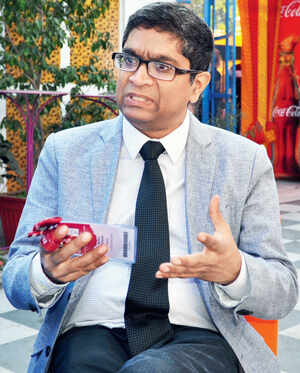
Sikh Society: forged in the frontier

Before Samuel Huntington banalised the study of international relations with his Clash of Civilisations thesis, there was Halford Mackinder who attempted (unwittingly of course) to do the same with history – with his Geographical Pivot of History thesis. (I am perhaps being unfair to Mackinder with the comparison – more on this later.)

However, just like Huntington’s thesis despite being a flattening of history (similar to another forgotten intellectual’s attempts at flattening globalisation in its simplification of diversity of experiences – cultural for one, economic for the other) – in Mackinder’s Geographic Pivot there were glimmers of theoretical reasoning. The thesis was imperialist and reductionist but it has value if only in a literary sense. (This would appal Mackinder, since her built his ‘theory’ as a counter to literary historians of ideas.)

Mackinder’s foundational logic was – that geography provides a stage to men, or Man (as he would prefer) which determines the scope of their movements, entries and exits, in the various Acts (eras) in the long drama of History – was the core thesis that civilisations were either broken (and destroyed) by invasion or they were rejuvenated through resistance.

The European civilisational core, Mackinder said, a backwater in the western edge of the Eurasian peninsula after the fall of Rome, was rejuvenated by successive waves of resistance to Saracens (Arabs) and Turks, as raiders from the land, and Vikings, as raiders of the sea. The raiders of the land were especially important for this reading of history, as they came from the Heartland – the grand central steppe lands of Eurasia, riding grounds of the horselords of the World Island – who in successive waves of the turning of the wheel of time fell upon the marginal, or peninsular lands, of the Eurasian megacontinent.

The civilisations of Greece and Rome were shattered by them. China was forever changed, and only the turning of Kublai Khan to a symbiosis of Tengri-ism, Dharma and Sinicisation might have preserved a semblance of the past into posterity. India, too, was shattered by wave after wave of invasions out from the Heartland. India, too, survived. But to what extent? I will not even attempt to answer this!

I will restrict myself to a reading of history I proposed in a previous essay (Sangat and Society: the Sikh Remaking of the North Indian Public Sphere). I discussed how Guru Nanak’s founding of Kartarpur as a model Sikh-Sangatarian society was a response from below to the anarchy from above unleashed by Babur’s invasion of India. Guru Nanak had been eyewitness to the destruction caused by the internecine warfare of Turco-Mongolic Princes in Khurasan, or the wider edges of the Heartland where it transitioned into the Marginal lands (because on the peninsular margins of Eurasia.

Sangatarianism was a civilisational response of North Indian society to waves of invasions from the Heartland. This is, of course, the plainest reading of the Sikh idea of the Sangat. The Sikh Sangat was both a support structure for the unprotected and gradually a bulwark against invasion from ‘outside’ and rejuvenation from within.

These days Sikhs are gaining (well deserved) respect for the community’s response (especially through langar seva) as a civil society support structure in this time of crisis. This should not be surprising for those who know Sikh society was forged in crisis, and one could argue, as a response to it.

Sikhs know how to organise and respond in times such as these. Much of this is due to a spirit of ascendant existentialism (chad-di kala) rather than giving way to nihilism. Sikhs have been through many eras of persecution, but the spirit of ascendant existentialism has prevented the community from falling into chagrin. There is a proverb I will translate loosely, speaking of the persecutions of a Mughal provincial governor who had sanctioned Sikhs and proclaimed a reward of coins on Sikh heads. The persecuted Sikhs of the era, far from being cowed down made a song of this –

Manu is our scythe, we are his crop of wild weed,

The more he chops our heads, the more we grow indeed.

Ascendant Existentialism implies the acceptance of death, cultivating an attitude of readiness for death, but not allowing this to suppress the vital joy of life. This is crucial to the ethos of a frontier society.

Today, in a sense, the entire global community has become a frontier society – living precariously. For some people such as doctors and healthcare workers, even day to day. Maybe cultivating a spirit of ascendant existentialism can do us all some good.

Finally, to end this with my promise to ‘be fair’ to Mackinder. His view that external threat can sometimes revitalise civilisations is a solid proposition. To survive times of crisis, we need to draw on the best of ourselves. And if we do come out on the other side, it is, then, the best of us that survives. Now of course I’m not making some foolish survival of the fittest argument. The fittest is not necessarily the best, and vice versa. What, then, is our, as humanity, ‘best’ – at this stage in our civilisational history? We will find out on the other side, perhaps. Perhaps we already have.

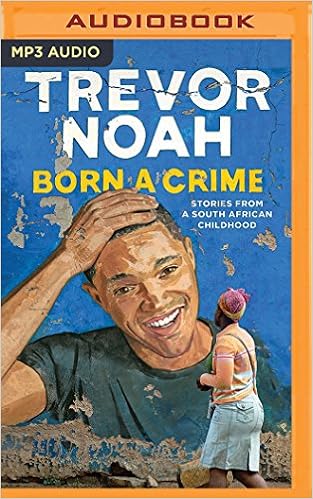
Review: Trevor Noah, Born a Crime

I listened to Daily Show host Trevor Noah’s memoir as an audiobook. I was expecting some sort of standard “third world middle class memoir with woke characteristics”, but it turned out to be something far more interesting; Trevor was born to a Black South African mother and a White father during apartheid, when such relationships were illegal. He grew up in poverty with a single mom who sounds like an amazingly strong and independent woman and the story of those early years is the best part of the book. You will learn more than you may expect about daily life in Black South Africa and the story is told with great verve and wit. There is the expected craziness and cruelty of apartheid, but he is also refreshingly blunt about the social evils prevalent in the ghetto and the various divisions (generally violent, sometimes outright vicious) within Black society. South Africa becomes a real (and far more colorful) place for the reader, well beyond the somewhat simple and superficial “black and white” story we all know from (distant) headline news reports. Trevor and his family attend 3 churches every Sunday, escape a possible rape/killing by jumping from a moving minibus, deal with poverty, crime and prejudice (mostly from other Blacks and “Colored” people, since interaction with White society is very limited in any case) and through it all, his mother manages to somehow hold things together and give him a reasonably good education. A violent stepfather (who eventually shot his mother, she survived) and a life of adolescent and early adult crime round out the picture. As a window into South Africa, it was much more colorful (and more interesting) than I expected.

Many of the quirks of Black life that he describes (always with empathy and sympathy) are not too unexpected or shocking to anyone with some knowledge of the world. When his teenage dance troupe goes to a Jewish school and they all start shouting “Go Hitler”  (the name of their lead dancer) it is very funny, and Trevor’s explanation of why they did not see this as some sort of faux pas is sensible and reasonable. But one other episode was personally harder to process for me and that is: cruelty to cats. 2 of the author’s cats were lynched, skinned and hung from their gate because Black South Africans have a thing about cats and witches. And while talking about this, Trevor casually throws in the fact that a Black security guard beat a cat to death on live TV when she ran out onto a sports event in a stadium and Trevor seems to think this is just a cultural quirk and we all have them. He lost me at that point I am afraid. Yes, Spaniards publicly torture bulls, some Chinese do horrible things to various animals and modern people all eat meat from cruel factory farms, but I find it very hard to see this kind of cruelty as somehow “normal”, and Trevor lost a few points in my estimation with his attempt at cultural sensitivity on this topic.

Trevor is, as expected, ready with modern liberal tropes for most of the historical and political references in the book. That is OK, but one does get the feeling that he thinks his experience as a rather unique mixed-race South African, and the lessons he draws from this life, can be smoothly transposed into the experiences, attitudes and priorities of any generic “third world” person.  In actual fact, South Africa is a rather extreme case, and his life is unique and unusual even within that case; the lessons he learned may not apply to every country as much as he thinks.

At the end he jumps from his life of petty crime (basically pirating and selling music and fencing stolen goods) to a successful career as a comedian, but this part lacks the detail we get of his early life. He does not in fact tell us anything about how he came to be a successful comedian. Maybe that will be in some future book. Or maybe he is just a smart guy and does not want to get too far into a phase of life whose characters he still deals with professionally.

Overall, a fascinating and very interesting book. More interesting and insightful than I expected it to be. Worth a read.

Leadership in Crisis Times; Who is your Wallfacer?

In Cixin Liu’s sci-fi trilogy (The Three Body Problem), humanity is under attack by a more advanced alien civilization. The aliens have sent sophons (modified photons) that can read/see/hear everything that is outside our heads, but they cannot read minds (apparently the Trisolarians have not solved the mind-body problem either), so the UN selects some people to be “wallfacers”; selected humans who are given free rein to develop a strategy to stop the aliens; they keep their strategy hidden inside their own minds, while using whatever resources humanity can put in their hands. In some sense, charismatic leaders are a bit like wallfacers; we trust their leadership without necessarily knowing what goes on in their head. As the Covid-19 pandemic continues to rage, we have the organized (relatively transparent) commissions and committees of the world hard at work, trying to figure out the best possible strategy. But much is unknown about the pandemic and how it will play out, especially in economic and political domains; in such times, leadership matters more because sane people disagree and no algorithm can decide who is right. The leader really has to lead, to make difficult decisions, to take original initiatives, to look for fresh answers. So who, out of the current crop of world leaders, is likely to do something above (or well below) “normal” handling?

  1. Trump. My view is not a secret. He is a corrupt narcissistic conman and a disaster. That does not mean he is wrong about everything and his critics are correct. In some cases his instincts may turn out to be better than those of the bureaucrats and traditional politicians, who maybe fighting the last war with yesterday’s methods (and whose own corruption and blind spots gifted us Trump in the first place). But he is batshit ignorant, he does not want to learn, he is not interested in anything beyond his own welfare. I expect nothing from him. I don’t even think he is seriously thinking about what to do, other than what he can get for his own re-election (see how he has managed to discover that stopping immigration is an anti-viral move at this time). That said, I am aware that there are sane people who like him and I encourage them to tell us more in the comments section 🙂
  2. Xi Jinping. Comrade Xi and his team are a black box to me. Please add your opinion in the comments section. I do think he is a Chinese patriot and I think China has many competent people at high levels of government and they have high standards of professionalism in midlevel people; I expect them to do some things very well, but it is also a dictatorship; dictatorships breed yes men and sycophants. Which brings us back to Xi, who I dont know anything about. So please comment..
  3. Putin. The Czar of all the Russians is clearly an intelligent and capable man. He has been in power for a long time. That breeds overconfidence and limits reality testing. Also, his country has less money than the first two. But the list of outsiders who paid the price for underestimating Russians is a long one; they are an amazing people, regularly screwing up on a massive scale and then regularly performing well beyond expectations.  What do you think it will be this time?
  4. Merkel. She seems highly intelligent and Germany can never be underestimated, but while I expect her to do a competent job, I do not expect unexpected miracles. No big “out of the box” moves. Which may be a good thing.
  5. Modi. His fans love him the way Trumpists love Trump; he is their only hope in an elite that otherwise does not have their pet projects as priority number one. Unlike Trump, he is not a conman, he is probably sincerely trying to make India stronger (whether he is succeeding or not is a separate question). But other than thinking he is sincere, I remain almost completely ignorant about his qualities as an individual. To hear his opponents say it, he is a bigoted non-entity, a “small man”, neither intelligent, nor well informed and certainly not well-intentioned. Supporters have a different view, but I am not sure how much of that is based on any real knowledge of the person, as opposed to his carefully cultivated persona (and their own projections/hopes). As far as i can tell, he is surrounded by yes men, doesn’t take criticism well and keeps his private thoughts to himself (in this at least, he is the polar opposite of Trump). So the bottom line is, I don’t know if he is capable of something above and beyond whatever capabilities the Indian state has collectively. Those abilities may be good enough (or better than nothing), but that does not seem to hold out the hope of any “out of the box” brilliant moves. Conversely, it also means they will not do crazy stuff.
  6. Imran Khan. The less said, the better. I will be happy if his regime turns out to have done about average. I fear they may do worse than average.
  7. Bojo. Baby Churchill may not be Churchill. Lets hear it in the comments.

What else? who is your wallfacer? and why? (I clearly know nothing about the leaders of South Korea, Taiwan or Japan.. feel free to tell us more about them in the comments section)

Just to be clear, I am not talking about “routine” response to the pandemic. That is important and it follows protocols and plans developed by bureaucrats and public health professionals, for better AND for worse. The thought here was that there may be an opportunity here for some nation to go beyond that level (or to significantly sink below it). IF that happens, who is likely to outperform the herd, who is likely to underperform? (e.g. I am guessing that Trump will under-perform, by American standards).  For the purposes of this post, I am thinking more about the economic and political consequences, not so much the caseload and death rate. 

Interview with a Mujahid: Maj Gen Tajammal Hussain Malik

The late Major General Tajammal Hussain Malik had an illustrious military careere (and a very controversial retirement career). In 1965 his unit played an important role in the defense of Lahore (a battle that the Indian army could have won if led by someone like Sagat Singh, but luckily for Pakistan, their GOC was Niranjan Prasad and Lahore was saved) and in 1971 his brigade was the only major force that the Indian army could not break in its lightning campaign in East Pakistan. Gen Tajammal was also a true believer who dreamed of the standard “Pak army true believer” stuff (abolish provinces, impose shariah law, unite the ummah), but with the interesting twist that he hated the crook Zia ul Haq and actually planned to assasinate him on 23rd March 1980 (his second coup plan, more serious than his first, which had been little more than a vague thought that arose when he was denied a well-deserved promotion). By the way, when Islamophobes think of Pakistan they tend to imagine that the median army officer is as fanatical as Gen Tajammal (though they obviously assign a more negative valence to that fanaticism than Islamophiles do), but as the following interview makes clear, his level of belief is not exactly common in the senior ranks of the army.

Anyway, here is an interview that Major Amin conducted with Gen Tajammal in 2001 (a couple of years before Gen Tajammal passed away). I am posting it here both as an important historical document and as a window into the mind of someone who was NOT the median Pakistani army officer, but is probably representative of what we may call the “PMA ideal”: an officer who combined professional competence with a Nasim Hijazi level view of history, a PMA-level view of Pakistani politics and a naive but intensely sincere faith in what can only be described as the Chakwal version of Islam. Comments welcome. (I put Major Amin’s words in red, the rest is Gen Tajammal speaking)

Postscript: I have added the full text of an article Abdul Majeed Abid wrote about General Tajammal in the Pakistani newspaper “The Nation” at the end of this interview.. it add more detail to the picture of Gen Tajammal.

Major General Tajammul Hussain Malik

Agha H Amins Note:—

This is the man who was praised by Indians and they established a commission to study his masterpiece Battle of Hilli .He was praised by his Indian battle opponent in his book “Indian Sword penetrates East Pakistan” as a singularly brave man .

He was miles above pygmies like Zia , Ayub and Musharraf. When we joined the army, we were inspired by his battalion 3rd Baloch’s attempted coup of 23 March 1980 to wipe out despicable clown Zia and his dirty clique !

We had to wait till glorious 17th August 1988 when that plane finally crashed right into the Hindu Shamshan Ghat on Basti Lal Kamal !

One good thing that General Beg did immediately after that glorious crash in 1988 was to restore Tajammuls complete military honours and privileges. Tajammul was serving a sentence of 14 years RI for planning to liquidate all army generals and Zia on 23 March 1980, a brilliant scheme indeed !

Tajammul has thrown light on Zias shallow personality in this interview !

May God Bless His Soul !

Major Agha H Amin (Retired)

Maj Gen (Retd) Tajammal Hussain Malik

A.H Amin

September 2001

Please tell us something about your early life, parents? Continue reading Interview with a Mujahid: Maj Gen Tajammal Hussain Malik

Ghaznavids from 1021 to 1186

The following is a set of pictures from Major Amin (a well known military history specialist in Pakistan) that give the flavor of the 200 year run of loot, plunder and internecine warfare that characterized the Ghaznavid dynasty (including alliances with Indian rulers and officials who were willing to work with them). These are just headlines, interested readers will have to look up more detail in other articles and books (or in wikipedia, which is always helpful). There is a volume 1 that I will post when i get some more time.

By the way, this topic reminded me of a little episode from our school days. We had a Christian history teacher (a Mr Lawrence) who had written a kind of guidebook that all of the students used to study 8th grade history. In the chapter on Mahmood Ghaznavi, he had listed the reasons for his attacks on India. The list included items like spreading Islam and putting down miscreants and point number X was “loot and plunder”. Our Islamic studies teacher found out and started a campaign against Mr Lawrence for bringing Islamic heroes into disrepute. This led to the inevitable excision of this chapter from the book, but students had copies that had already been printed; they had to have the offending passages either torn out or crossed out. So it goes..

Continue reading Ghaznavids from 1021 to 1186

Nicknames in the British Indian Army

An oldie from Dr Hamid Hussain

Nicknames
Hamid Hussain
 
In British army, officers were sometimes given nick names.  This tradition continued in British Indian army when Indians were commissioned as officers.  The trend continued in present day Indian, Pakistani and Bangladeshi armies with addition of some native touch.  Some nick names were simply abbreviations of original names.  Lieutenant General B. M. Kaul (5/6 Rajputana Rifles) was nick named ‘Biji’.  His first name was Brij Mohan which was abbreviated to ‘Biji’. Brigadier H. D. Bilimoria was nicknamed ‘Russi’ while some friends called him ‘Billi’ and Major General Iftikhar Khan (7 and 3 Cavalry) was nick named ‘Ifti’.  Some modified abbreviations of original names were also used.  Lieutenant General Altaf Qadir (4/12 Frontier Force Regiment) was called ‘Toffy’ probably transformation of his first name Altaf while Lieutenant General Habibullah Khan Khattak (Baloch Regiment and 1 Bihar Regiment) was called ‘Beebo’.
Many Indian officers had long names that were difficult to pronounce therefore they were given Christian nick names by their fellow officers as it was easy to pronounce.  Field Marshal Kodandera Madappa Cariappa (1/7 Rajput Regiment)) was nick named ‘Kipper’, General Kodendera Sumaya Thimayya (4/19 Hyderabad Regiment) was called ‘Timmy’, Field Marshal Jemi Hormusji Framji Manekshaw (4/12 Frontier Force Regiment & 2/8 Gorkha Rifles) was called ‘Sam’, Lieutenant General Atiq ur Rahman (4/12 Frontier Force Regiment) was called ‘Turk’, Major General Yusuf Khan (7 Light Cavalry) was called ‘Joe’ and Major General A. A. Rudra (28 Punjabis) was nick named ‘Jick’.
Some nick names originated as a complement of a quality of the officer or some weak point.  Others got weird nick names for different reasons.  Lieutenant General Amir Abdullah Khan Niazi (1/14 Punjab Regiment) won his Military Cross (MC) in the killing fields of Burma, pinned by Viceroy Lord Wavell.  He fought well and his superior British officers were impressed and nick named him ‘Tiger’.  He was known in the army as Tiger Niazi.  When he landed in East Pakistan in 1971, he announced that ‘Tiger Niazi’ has arrived.  A Bengali commander Kadar Siddiqi (a non-commissioned officer of 2 East Bengal Regiment) quipped that “there are no tigers in Mianwali (referring to Niazi’s birth place).  Here you are among tigers”.  Kadar fought against Pakistan army and earned for himself the nick name of ‘Tiger’ and later popularly known as ‘Tiger Siddiqi’.

Continue reading Nicknames in the British Indian Army

Browncast Episode 90: With Kushal Mehra, Indian lockdown, Covid19, Things to come..

Another BP Podcast is up. You can listen on LibsynAppleSpotify,  and Stitcher (and a variety of other platforms). Probably the easiest way to keep up the podcast since we don’t have a regular schedule is to subscribe to one of the links above!

You can also support the podcast as a patron. The primary benefit now is that you get the podcasts considerably earlier than everyone else. This website isn’t about shaking the cup, but I have noticed that the number of patrons plateaued a long time ago.

I would though appreciate more positive reviews! Alton Brown’s “Browncast” has 30 reviews on Stitcher alone! Help make us the biggest browncast! At least at some point.

In this episode we talk to Kushal Mehra of the Carvaka podcast, about lockdown in Mumbai, Indian response to Covid19, Covid 19 in general, and what comes next…

Are the (TV) Mahabharata and Ramayan “Right Wing”?

In 1987 and 1988, India’s official (and at that time, only) TV channel (Doordarshan) broadcast serialized version of the famous Indian epics, the Ramayan and the Mahabharata. The series were hugely popular and with no competing TV choices, there was the kind of nationwide common viewing experience that is less and less common in the internet  and cable TV age. I dont know if Left-liberal Indians (mostly Hindus themselves) were agitated at that time (i dont remember it being an issue, but I was not really reading Indian media at that time) but over time a narrative has developed that the broadcast of these serials led to a rise in Right wing Hindu nationalism, which culminated in the demolition of the Babri masjid by a Right wing mob in 1992.  THe subsequent rise of the BJP to power is then the next step in a sequence that began with the broadcast of these “Hindu” serials.

As India has gone into lockdown due to Covid19, Doordarshan has announced that it is going to rebroadcast these serials. This step has revived the complaints about these serials being the first step in the rise of Hindu nationalism in India, exemplified by tweets like this one from “engaged historian” Audrey Truschke:

To me, as an outsider, this is quite fascinating. It seems that there is a significant segment of the Indian intelligentsia (which hapens to be the dominant faction in terms of foreign coverage of India; Western news organizations almost all pick up their own view of India via these “native informants”) that believes that: Continue reading Are the (TV) Mahabharata and Ramayan “Right Wing”?

Browncast episode 89: Dr Sunny Anand, part 2

Our conversation with Dr Anand was interrupted due to technical problems, so we recorded another session. This is session two of our talk with Dr Anand..

You can listen on LibsynAppleSpotify,  and Stitcher (and a variety of other platforms). Probably the easiest way to keep up the podcast since we don’t have a regular schedule is to subscribe to one of the links above!

As mentioned in last week’s session, Dr Sunny Anand is a highly esteemed Pediatric intensivist at Stanford who also works with the heart to heart foundation and provides quality heart surgeries and cardiac care across India (and other countries) in collaboration with Sai Sanjeevani hospitals. He talks about his work, the services provided by this chain of completely free top-of-the-line heart surgery centers, healthcare in the India and the United States, etc.Kanwaljeet J. S. ("Sunny") Anand, MD, has joined Lucile Packard Children's Hospital Stanford and Stanford Children's Health as the new division chief of palliative care & critical care medicine. (Photo: Business Wire)

Those wishing to learn more about the heart to heart foundation (chaired by legendary cricketer and gentleman Suni Gavaskar) can check out their website here. 

Browncast episode 87: Dr Sunny Anand on healthcare, free heart hospitals in India, etc

Another BP Podcast is up. You can listen on LibsynAppleSpotify,  and Stitcher (and a variety of other platforms). Probably the easiest way to keep up the podcast since we don’t have a regular schedule is to subscribe to one of the links above!

You can also support the podcast as a patron. The primary benefit now is that you get the podcasts considerably earlier than everyone else. This website isn’t about shaking the cup, but I have noticed that the number of patrons plateaued a long time ago.

I would though appreciate more positive reviews! Alton Brown’s “Browncast” has 30 reviews on Stitcher alone! Help make us the biggest browncast! At least at some point.


Kanwaljeet J. S. ("Sunny") Anand, MD, has joined Lucile Packard Children's Hospital Stanford and Stanford Children's Health as the new division chief of palliative care & critical care medicine. (Photo: Business Wire)

In this episode we speak to Dr Sunny Anand, a highly esteemed Pediatric intensivist at Stanford who also works with the heart to heart foundation and provides quality heart surgeries and cardiac care across India (and other countries) in collaboration with Sai Sanjeevani hospitals. He talks about his work, the services provided by this chain of completely free top-of-the-line heart surgery centers, healthcare in the India and the United States, etc.

Those wishing to learn more about the heart to heart foundation (chaired by legendary cricketer and gentleman Suni Gavaskar) can check out their website here. 

Brown Pundits