I am a physician interested in obesity and insulin resistance, and in particular in the genetics and epigenetics of obesity As a blogger, I am more interested in history, Islam, India, the ideology of Pakistan, and whatever catches my fancy. My opinions can change.
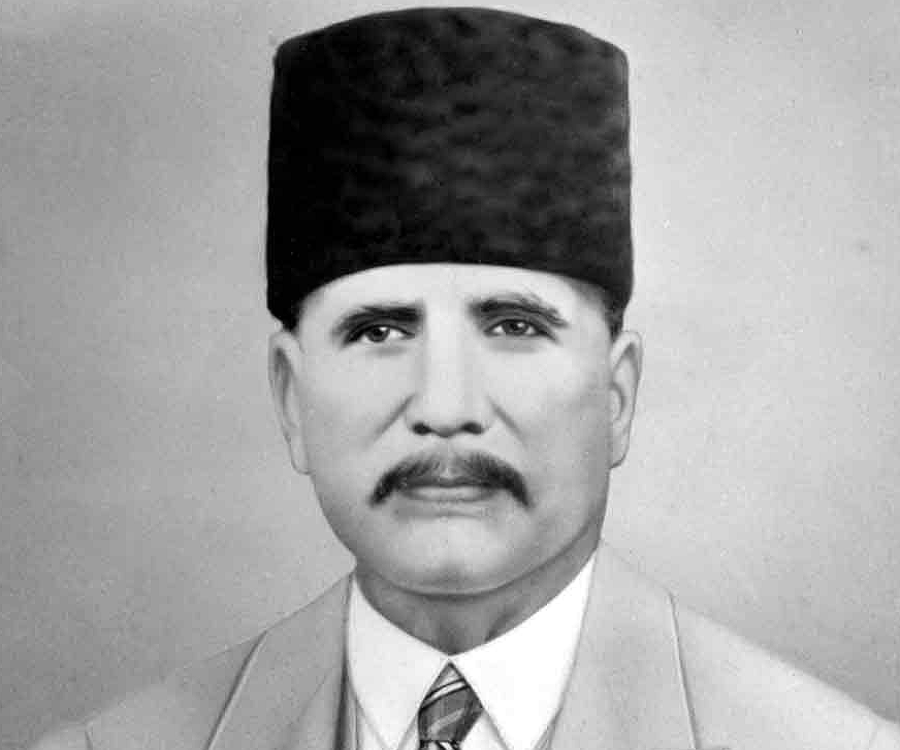
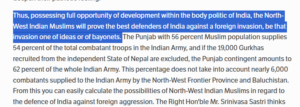
Since the world has been set alight and everyone has a theory, I will put out my pet theory and invite comments. In 1930 Allama Iqbal (supposed father of the idea of Pakistan) proposed a consolidated Muslim state in Northwest India as a solution to the problem of Muslim Nationalism in India. The part that is relevant to us today is his claim that such a state will defend India against the Barbarians to its West (his words were: “the North-West Indian Muslims will prove the best defenders of India against a foreign invasion, be that invasion one of ideas or of bayonets. “).
Iqbal, being a romantic Islamist in an age when the British Empire seemed a permanent fact of life had confused ideas about many things, and his vision of a Northwest Muslim state was as confused and romantic as any of his other dreams, but in this case he hit on something real.. Pakistan is the buffer that protects India from the Middle Eastern snakepit. Of course, it is also an example of the same snakepit extending into the Indian subcontinent, but it is worth remembering that India at one point was almost entirely colonized by Islalmicate invaders from the Northwest. Now that invasive colonial culture is concentrated in Pakistan; and with the war with Afghanistan, it is now directed against the very people it once idealized.
So my point is that Indians should thank Jinnah for his service. They now have a fighting chance of escaping the Middle eastern cannon fodder trap and becoming a successful Asian country.
Choose wisely. Let Pakistan be more in the Middle East. Be more Asian.
And for Pakistan the answer is also the same. Try to be more Indian, less Middle eastern. But our road home may be convoluted. Even Indonesia is not home free, our path is going to be rockier..
As one does, we were discussing societal rise and collapse on twitter and I said at some point:
“I have no clue about EU etc but I think stories of the demise of France, the Vikings and the Poles all look unlikely to me.. And given the evidence of the last 500 years of Russian asabiya, I wouldn’t write them off either.. They will all survive wud be my guess.. Meanwhile, the gods have arranged a once in a millennium opportunity for Indians and it will be an unforgivable tragedy to miss it.. Go big, or go home”
User @whatwasthataga4 on X.com (an Indian American) asked: “I don’t understand this once in a millennium opportunity. What exactly is it and how is it supposed to work in the best case?”
I posted an off the cuff reply and wished I could sit down and do a proper post on this. But knowing that I may not get to it, I am just quickly updating my tweet and hoping that commentators will add value.. So here is my “off the top of my head” explanation of this “once in a millenium opportunity” claim.
We will come back to why “once in a millenium” (i.e., did this opportunity not exist before? will it not exist in the future?), but I think you have to begin with belief in certain things, some of which seem obvious, but others are hotly contested by HBD types (and I think the HBD types are wrong here). So here are some things I believe are true and which constitute a “once in a millennium opportunity to become a developed and powerful nation” (we will dismiss the fantasists who think humans have moved beyond nations, yadda yadda yadda).
1. Indian human resources are potentially world class; the wetware is actually OK (though disease and malnutrition do lower IQ in some significant subsets, but cultural strengths compensate as well, so even that is not a lost cause)
2. So, wetware can work. What about software? I think even the software is not entirely corrupted. The bios is still intact for most people (though under threat) and the culture has many elements that make it potentially successful. For example, there is a significant commercial class and tradition, of the South Chinese type, if not equally developed right now. There is also significant respect for teachers and learning (again, not at Confucian levels, but it is very much there) and respect for legal authority (sometimes, maybe a lot of times, too much respect for authority, but there is also a romantic anti-authoritarian assault from Wokish Leftist ideologies that now threatens to over-correct).
You may be getting a hint of why i say its a chance, not a done deal. These are also strengths that are under sustained assault from Postleftist wokish ideologies and in India there is such significant domination of western leftish narratives in the educated classes that there is the possibility they could actually destroy these cultural strengths in another generation. That would be one way to miss the bus. Another would be to start a religious civil war. The second is very high on the list of fears for leftists and liberals, but I suggest we should be equally fearful of too much leftism 🙂
3. The administrative and military machinery of the Raj is intact, vast and relatively modern, and can be redirected to new purposes. I listed this at 3, but this is probably what many people think of when they say “India has a chance, thanks to the Raj”. I think the downsides of colonization exceed any benefits they brought, but no doubt the existence of this apparatus gives India (and even the other successor states of the Raj) an edge over, say, Afghanistan, for better and for worse. Its a mixed blessing but its there, and it CAN potentially be directed to new ends.
4. A vast and successful diaspora (a source of ideas, ideals, money and skills)
5. Relatively good asabiya for such a large country (I dont buy this notion that Indian people in general are not patriotic. If anything, they are excessively and over-sentimentally patriotic . Patriotism matters. (Pakistan has even better asabiya, so this is necessary, but not sufficient 🙂 )
6. The biggest population in the world Demographic dividend. Another obvious point where the opportunity is there now, but wont be there forever.
And so on.. There is a lot more
Add your comments. (I have left the meaning of development vague, but what I personally mean is very conventional success as the first layer (the thought is that this layer itself implies others), so things like being a giant middle income or more economy, with no serious invasion fears and a clearly functional political and economic system that is a very big source of innovation and ideas for the whole planet; I dont mean people will be more virtuous, or a “new man” will be born after the glorious revolution).
BTW, here is a conventional western view of why a chance for very serious development exists in India (at least this was the view last year, relations are more tense now and the strategic directives behind such programs may have shifted)
Postscript: My conspiracy theory is that a thousand conspiracies are launched and some turn out to be workable, but nobody knows in advance that A or B is a sure shot.. It’s a leap into the dark 🙂 (hence, work for the ones you want, when the time is right, it will happen)
I finally saw the movie in a theater in central California (almost houseful) and here are my thoughts:
4 out of 5 stars.
Genre: Inglorious Basterds. This is a revenge fantasy. The Indian state did not (publicly) take revenge for the Kandahar Hijack, the parliament attack or the Mumbai attack. This bothers “Nationalist Indians” and one of them decided to make a fantasy movie about revenge being taken.. And he did a good job.
Storyline: Fantasy about an Indian super-agent sent to infiltrate Pakistani terrorist networks, ends up in Lyari in the most notorious criminal gangs in Pakistan, who turn out to be tangentially involved in Pakistani-sponsored terrorism (none of this has any connection with reality). Mumbai attacks make an appearance and that is the part of the movie that is closest to reality; the attackers did train in Karachi, the attacks really happened and they really did get massacre instructions over the internet during their “mission”. Whether Khanani was involved or not, I have no clue, but someone like him probably was involved in the overall jihad efforts, so those parts are not just fantasy. The role assigned to the Lyari gangs is pure fantasy though.
The rest is of course ALL fantasy. But as a movie, it works very well, as long as you keep in mind that this is a revenge fantasy on the lines of Inglorious Basterds, not some kind of historical movie or documentary. The love angle is the silliest part of the story, but it IS a fantasy and it’s a bollywood movie, so hardly unexpected.
The movie itself works very well as a movie. The stars all deliver good performances, and Akshay Khanna definitely steals the show. His portrayal of Rahman Dakait will live long and prosper. And Akshay is now a legit superstar in Lyari (you can check out reels from there to confirm this) and will be mobbed and much loved if he shows up there. Sanjay Dutt as SP Choudhry Aslam is outstanding and Ranveer does a good job as the hero.
The music is simply outstanding. The background score worked VERY well in the theater (so see with good speakers if you can) and the songs are all excellent and fit in well with the movie.
It is very much an anti-Pakistan movie, so I dont think patriotic Pakistanis will enjoy it too much, but if you are a normal working class Pakistani you can enjoy it and if you are from Lyari you will likely watch it again. With direct attacks on Pakistan as the world center of terrorism and thinly disguised portrayals of Asif Zardari and Nabil Gabol, it is absolutely no surprise that this was banned in UAE as well. In fact, ISPR will surely make a revenge fantasy of their own now (it will be mostly AI slop, but some actors will get such over the top dialogs that they will be entertaining, and some music may be good, that is my prediction about the revenge movie, and I am very sure it will get funded, but it will not match Bollywood in tech or production; my confidence that it WILL be made comes from the simple fact that the Pakistani deep state is VERY obsessed with making sure we always have a tit for every tat.. in this we are somewhat different from India, but closer to the world average).
Why did Dhar mix Lyari up in this story? And was that a good idea? I think he mixed in lyari because Lyari gang wars are fantastic movie material and even if there was no real connection with the anti-Indian terrorism, for a movie it was a good element to fit into the story. Those gangsters mostly did die horrible deaths in real life and this too fits in well with the fantasy story, but it is worth keeping in mind that this connection is almost certainly fictional (if anything, some of them were working for foreign agencies, for example Uzair Baloch was formally accused of working with Iranian intelligence).
I will make a prediction about Dhurandhar part 2. I think they will get many or most of the figures shown in this movie to be killed in the next one as revenge by “unknown gunmen”, though in real life the unknown gunmen have not struck down any of the big fish till now.
That this revenge fantasy got a LOT Of pushback from Indian reviewers and critics (on the basis that it shows Pakistan too negatively and is too jingoistic) is a tribute to the naivete and innocence of the reviewers and the ecosystem they live in. We Pakistanis had no idea we have so many friends in India 🙂
Overall: well worth a watch. Three hours do fly past. It is very well made and most people will find it enjoyable, but patriotic Pakistanis may want to avoid it if such things raise their BP.
These are a couple of videos about the reality of the Lyari gangs and how this movie is playing there.
From the ever wonderful Hasan Mujtaba sahib’s facebook.
When Bhutto founded the People’s Party in Lahore — Hassan Mujtaba
It was Hameed Nizami, the owner of Nawa-i-Waqt, who introduced Zulfikar Ali Bhutto in Lahore to the brother of Dr. Mubashir Hasan. However, Bhutto developed a friendship with Dr. Mubashir himself, and it was at Dr. Mubashir Hasan’s house that he laid the foundation of his then-new party, the Pakistan People’s Party (PPP).
The first Vice President of the Pakistan People’s Party was the former diplomat J.A. Rahim, who wrote the foundational documents (foundation papers) of the party based on socialist principles. It was the same J.A. Rahim who encouraged Bhutto to stay in the country and politically confront the Ayub regime after resigning from the government. Otherwise, Bhutto — intimidated by the terror and intimidation of Malik Amir Mohammad Khan, the then-Governor of West Pakistan (known as Kalabagh) — was spending his time vacationing in Europe.
The party’s famous slogan “Roti, Kapra aur Makaan” (Bread, Clothing, and Shelter) was actually borrowed from Habib Jalib’s famous poem: “Har insaan maang raha hai roti, kapra aur makaan” (Every person is demanding bread, clothing, and shelter).
In those days, among those who used to meet Zulfikar Ali Bhutto — who spent his evenings at Faletti’s Hotel — were Habib Jalib, and left-wing student leaders from Lahore like Zafaryab Ahmed and Hassan Wasti.
Those who attended the founding meeting of the party at Dr. Mubashir’s house are all present in the historic photograph taken that day. In the photo, Sheikh Rashid — unable to find a seat — can be seen sitting in Bhutto’s lap. Others visible in the picture include Meraj Muhammad Khan, J.A. Rahim, Dr. Mubashir Hasan, Mustafa Khar, Hayat Muhammad Sherpao, Syed Saeed Hasan, Abdul Sattar Gabol, Nafis Siddiqui, Qasim Abbas Patel, Kamal Azfar, and possibly Khursheed Hasan Meer as well.
It is also a tragic chapter that shortly after coming to power, Bhutto became displeased with the same J.A. Rahim. He had J.A. Rahim and his sons arrested, and had them subjected to brutal torture at police stations — including sexual violence against his sons. The man who carried out this violence was the notorious Karachi gangster Suleman Brohi. Suleman Brohi was later killed in the 1990s during the government of Jam Sadiq Ali or Muzaffar Hussain Shah.
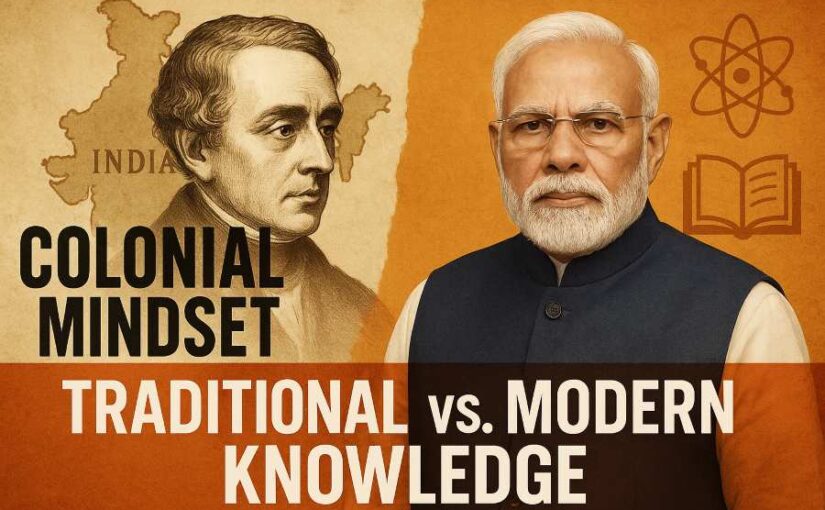
We had some discussion about Macaulay on X and I wanted to write a piece about it, but I also know I probably wont get the time soon, so I am going to just copy and paste the discussion here, I am sure people can follow what is going on and offer their comments.. (Modi’s speech link at end, macaulay minute text link as well)
It started with this tweet from Wall Street Journal columnist Sadanand Dhume:
In India, critics of the 19th century statesman Thomas Macaulay portray him as some kind of cartoon villain out to destroy India. In reality, he was a brilliant man who wished Indians well. Link to article.
I replied:
I have to disagree a bit with sadanand here bcz I think while cartoonish propaganda can indeed be cartoonish and juvenile, there is a real case to be made against the impact of Macaulay on India.. Education in local languages with hindustami or even English (or for that matter, sanskrit or Persian, as they had been in the past during pre islamicate-colonization India and islamicate India respectively) as lingua franca would have been far superior, and the man really did have extremely dismissive and prejudiced views, the fact that they were common views in his world explains it but does not excuse it. The very fact that many liberal, intelligent and erudite Indians of today think he was “overall a good thing” is itself an indication that his work has done harm.. BTW, there were englishmen in India then who argued against Macaulay on exactly these lines..
Another Browncast is up. You can listen on Libsyn, Apple, Spotify, and Stitcher (and a variety of other platforms). Probably the easiest way to keep up the podcast since we don’t have a regular schedule is to subscribe to one of the links above!
In this episode Maneesh Taneja and myself talk to Shaifq ur Rahman and Jyoti Rahman, Bangladeshi academics and scholars with an interest in the current political churn.
This blog was created by Razib Khan and I joined it shortly afterwards. It has gone through some changes over time. For a period, I was the only “administrator” active on it, but I have not been devoting much time to it recently. As a result the blog had become rather inactive, but recently one of our early “founders” (XTM) has come back and taken a more active role in the blog and has revived activity on it.
Unfortunately, there were some clashes between authors and commentators recently and I am afraid that such has been my lack of attention that I have not even read most of the posts in question. So I think it is time to face the facts and admit that I am not going to be able to take a more active role and should therefore withdraw from responsibilities I am not able to fulfil. I hope to remain an author here and I hope to do more podcasts as well. Razib and whoever he designates/invites/allows will continue to run the blog and I wish them the best. I hope it remains a place where diverse voices from the Indian subcontinent can continue to debate the issues that are important for people of Indian origin (and people in general) all over the world.
I hope the authors I brought on will continue to write and comment as well.
I have not been busy elsewhere and dont get to pay much attention to the blog and unfortunately, we seem to be seeing a lot of harsh comments and blog posts and general unhappiness. I am not promising miracles (I think the comment section will remain something of a mess, but we will try to clean up even there) but I hope we can get on even keel soon. Please do stick around, we will try to make some improvements and if you are an author who has not written for a long time, please do write more so that the quality of the posts can go up..
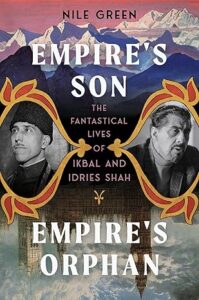
Idries Shah (1924-1996), a British citizen of Afghan and Indian origin, became world famous with his books about Sufi-ism (especially his magnum opus, “The Sufis”), selling over 15 million copies worldwide. In the course of this career, he also hinted (more than hinted, he wrote several books under other names in which he built up these claims about himself) that he was a sufi master himself, descended from an ancient and aristocratic family of Afghan Sufis who trace their descent to the Prophet Mohammed and are now bringing this ancient wisdom to the western public. His father, Syed Ikbal Shah, had settled in England and written several books about the esoteric east, but the careers of both father and son were dogged by accusations of making up stories and exaggerating their depth of knowledge about these matters. Professor Niles Green (who is the Ibn Khaldun Endowed Chair in World History at UCLA) has spent a long time researching both father and son and has now written a biography to settle this controversy and tell us who they really were.
So we learn that Ikbal Shah was a descendant of Jan Fishan Khan (famous indian actor Naseeruddin shah and retired general Zamiruddin Shah are also descended from him), an afghan who had sided with the British expedition to Kabul in the first Afghan war, and who escaped to india with the survivors of that expedition. For his loyalty, he was given a small estate in Sardhana, near Delhi. In 1857 Jan Fishan Khan again proved loyal to the British and was rewarded with the title of Nawab. It is here that Ikbal Shah grew up, and somehow decided to travel to Edinburgh to study medicine just before the first world war.
In Scotland, Ikbal fell in love with a Scotswoman and they married against the wishes of his dad, who therefore cut him off. Ikbal Shah proved to be a capable and energetic person who managed to make a life for himself in England as an expert on Afghanistan (where he had never been) to various branches of British academia and the British govt. Nile leaves us in no doubt that Ikbal Shah was a serial fantasist who made up wild stories about Bolsheviks and their operations in Afghanistan to British officials who sort of knew he was fake, but found him useful. To his credit, he was able to sell enough stories about the exotic east to survive in England and even joined the BBC during WW2 to make propaganda broadcasts for the British empire.
Ikbal Shah had three children (Omar Ali Shah, Idries Shah and Amina Shah) who grew up in the UK and Idries Shah followed in his dad’s footsteps to become an expert on the mysterious east (Omar Ali Shah also sold himself as a sufi teacher). Starting as an expert on “oriental magic”, he soon invented himself as a Sufi master and acquired several high profile fans, including the poet Robert Graves and the writer Doris Lessing. His book on sufism remains a bestseller and he wrote dozens of other books on various aspects of sufi-ism, all of which continue to sell. Nile Green regards this as more or less the result of gullible people being fooled by Shah, but the fact is that if you read the books in question (I have read several of them), they do seem to have genuine insights into human psychology and the various “teaching stories” Idries Shah claimed to have collected do indeed have the capacity to teach useful lessons for life. From within his own world, he can claim that what looks like fakery is just how this esoteric knowledge works in this world. After all, we are talking about sufi-ism and it is by no means clear how one can distinguish a sufi charlatan from a real sufi, since “genuine sufi-ism” itself thrives on mystery and misdirection, almost by design.
The fact that the brothers Idries and Omar Ali Shah falsely claimed at one point to have the oldest manuscript of the rubayat of Omar Khayyam (Professor Green makes a solid case that they made up the whole story) is itself enough to condemn them as charlatans, but as Professor Rawlinson once said ” Shah cannot be taken at face value. His own axioms preclude the very possibility.” If Sufis are enlightened beings who possess some esoteric knowledge that is not available to ordinary mortals, and if they are supposed to help you by telling you what you need, not what is “true” or false, it is by no means clear that this book and its careful examinations are the end of the matter. As Idries Shah’s epitaph states: “Do not look at my outward shape, but take what is in my hand”. The story continues..
By the way, the title “empire’s son, empire’s orphan” is a good indicator of the fact that the professor also has to labor under the limitations of his own field. Basically, it means nothing, but if you are into postcolonial writing then it is the fashion to connect every biography to “empire” and its discontents. It adds nothing to the story, but luckily it also takes nothing away.