Review: The Forge of Christendom by Tom Holland

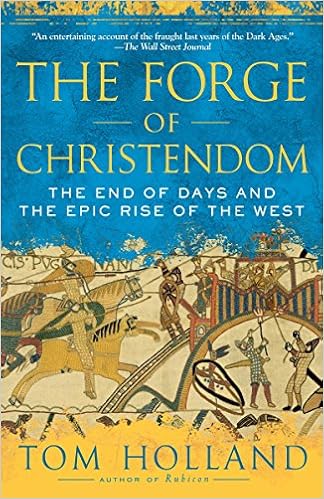
Tom Holland’s latest book is about the slow recovery of Western Europe between 900 and 1100 AD, a period that he sees as the beginning of Western Europe’s transformation from a decaying and dilapidated backwater to the mastery of the world. Tom Holland clearly thinks Christianity had much to do with this rise and presents the violent elimination of paganism in Scandinavia and Eastern Europe as positive achievements of the age. This is mostly done not by direct editorializing; it is done by using the language of the invading Christians (not as quotes from ancient books but as the text of the book itself) to describe the pagans. What the pagans thought of this transformation is rarely mentioned or is explicitly presented as a quote, not as the author’s own text.

He sort of claims that this great transformation had something to do with rising apocalyptic expectations about the end of the first Christian Millennium, the disappointment of which was followed by the channelization of these energies into this-worldly revival and expansion. He does not really prove this hypothesis and it may be that it is mostly a device to frame the book and is not taken completely seriously by Tom Holland himself. Certainly I more or less ignored it while reading the book and you can get some value out of the book without paying this theory any mind either.

(The book’s Amazon.com intro presents this as the central thesis of the book: “At the approach of the first millennium, the Christians of Europe did not seem likely candidates for future greatness. Weak, fractured, and hemmed in by hostile nations, they saw no future beyond the widely anticipated Second Coming of Christ. But when the world did not end, the peoples of Western Europe suddenly found themselves with no choice but to begin the heroic task of building a Jerusalem on earth.” I did not find it convincing and I think you can ignore it too). That said, the book is still fun to read. Tom Holland always wants to make history fun, to tell stories, to quote contemporary accounts and to paint vivid pictures of life in those times. He is always interesting, but the reader will have to read other books to find out if the slant presented here is the most reasonable one or if Mr Holland is letting his storytelling side (or his Christian/English side) dictate how events and characters are presented.

There is definitely an element of subtly (and occasionally not-so-subtly) challenging the more “woke” interpretations of history that are currently popular in some elite Western universities. He wants the readers to see Christianity (specifically Catholicism) as an overall force for good (separation of church and state, suppression of elite violence, etc) and as an important source of cultural unity, growth and creativity in those troubled time. He is not necessarily wrong about this, but he rarely makes a solid evidence-based case case (with alternative views systematically evaluated and rejected) for his preferences, relying instead on eloquence and (selective?) presentation to convince the reader.

If you don’t mind (or already approve of) his Christian and “Eurocentric” viewpoint, this is the book for you. Even if you do mind, it is a very entertaining read, full of zany anecdotes and interesting factoids. A reasonably good overview of the age and worth a read. But it will be a good idea to read other books about the period before you decide that the trends were exactly as described in this book.

Ahmedis and Pakistan. Some background..

Atif Mian

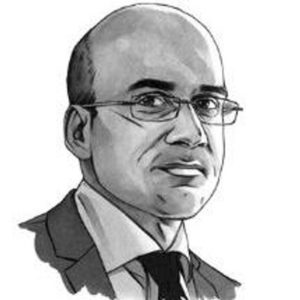
Professor Atif Mian is a prominent Pakistani-American economist and a professor of economics at Princeton university. 2 weeks ago he was nominated to be a member of Imran Khan’s “Economic Advisory Council” (a think tank of sorts that is supposed to generate ideas for the new PTI government; it is not at all clear what influence, if any, this group will have in real life). This set off a controversy in Pakistan because Atif Mian is an Ahmedi and Ahmedis are widely reviled as heretics, apostates and traitors in Pakistan. After an initial attempt to defend his appointment (including the obligatory Jinnah quote and reference to the fact that an Ahmedi, Sir Zafrullah, was one of Jinnah’s closest advisers and Pakistan’s first foreign minister) the Imran Khan government backed down and asked him to leave the council.

Since then his defenders (mostly liberals who believe religion should play no role in such appointments and experts should be judged on their professional skills and not their religion) and opponents (Islamists, PTI-type Islamist-lite folks who believe Ahmedis in particular should not be appointed to any important position because they are fake Muslims and potential traitors, etc etc) have been arguing about this case on social media. This post is an attempt to provide background and clarify some of the issues raised by both sides.. (some of the background material was published earlier in a post I wrote in 2012 for 3quarksdaily.com)

Mirza_ghulam_ahmad
Mirza Ghulam Ahmed

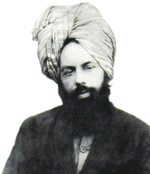
The Ahmediya movement was started in Punjab in 19th century British India, by Mirza Ghulam Ahmed of Qadiyan. He seems to have been a quiet, religious loner who brooded about the challenges faced by his faith and his people. The decisive military and economic superiority of Western civilization over the Islamicate world had produced a variety of efforts at reform and revitalization. They ranged from the Wahabi-influenced puritanical Jihadism of Syed Ahmed Barelvi (who led an extremely fanatical jihadist movement in what is now Khyber Pakhtunkhwah, until he was defeated by superior Sikh firepower and a reaction to his extreme views among the local Muslims) to the anglophile reformism of Sir Syed Ahmed Khan (founder of Aligarh Muslim University). Mirza Ghulam Ahmed’s response was to start a movement of religious revival that was built around his own charismatic claims. Though he contradicted some mainstream Islamist claims about the finality of prophet-hood and the absolute necessity of military Jihad (military jihad as a Muslim duty is now so widely downplayed that it is hard for Westerners and even Westernized Muslims to figure out why his claim was considered so controversial). His movement was socially conservative and even puritanical and he vigorously defended Islam, especially against Christian missionaries and Hindu critics. He found some support among modestly educated middle class Punjabi Muslims (including Islamist icon Allama Mohammed Iqbal, who either flirted with joining the movement or actually joined for a few years, depending on what version you believe). As his movement (and his claims regarding his own status as prophet or messiah) grew, it also drew orthodox opposition, especially from the dominant Sufi-oriented Barelvi Sunni sect. Ironically this branch of local Islam enjoyed some American (and world media) attention as “moderate and tolerant Muslims” in contrast to their Deobandi/Wahhabi brethren in the aftermath of 9-11 (though this attempt to fight Wahabi/Deobandi fire with Sufi-Barelvi water seems to have run into some trouble recently).

This increasingly vocal opposition (complete with fatwas from Mecca declaring the Ahmedis as apostates liable to the death penalty if they did not repent) led to a sharper separation between Ahmedis and other Muslim sects, but the Ahmedis themselves always claimed to be Muslims and made efforts to remain fully engaged in “Muslim causes”. In their own view they were reforming and purifying Islam, not opposing it, so they had a legitimate interest in the cause of oppressed Muslims everywhere (e.g. they took a leading role in supporting Kashmiri Muslims against their Dogra-Hindu ruler). Some Ahmedis played a very prominent role in the Pakistan movement, including Sir Zafrullah Khan, who wrote a Pakistan proposal for the viceroy in Feb 1940 and shared it with Jinnah before the Muslim League passed its Lahore resolution in March 1940. He remained one of Jinnah’s closest associates and was the first foreign minister of Pakistan and Jinnah’s representative on the boundary commission that divided India) and others held prominent positions in the new state and fought for it with distinction (most famously, General Akhtar Malik in the 1965 war with India). It is likely that neither they, nor the relatively Westernized leadership of the Muslim league had a clear idea of what lay in store for them in Pakistan. Even more ironically, the Ahmedis themselves aggressively pursued “blasphemers” (e.g. Pandit Lekh Ram in Punjab in 1897). It is hard to read this Ahmedi polemic against Lekh Ram without thinking about where the Ahmedis themselves now lie in relation to the blasphemy meme. Continue reading Ahmedis and Pakistan. Some background..

Review: Directorate S: The CIA and America’s Secret Wars in Afghanistan and Pakistan

The following is a review by Dr Hamid Hussain.

Book Review – Directorate S: The CIA and America’s Secret Wars in Afghanistan and Pakistan by Steve Coll.

 Hamid Hussain

 Steve Coll’s new book is an excellent account of events of the last two decades in Afghanistan-Pakistan region.  Steve has all the credentials to embark on this project.  He is one of the best and well-informed journalist and his previous book Ghost Wars is the most authentic work of the history of Central Intelligence Agency’s (CIA’s) war in Afghanistan in 1980s.  For his new book, he has used important American sources from different departments of US government engaged with Afghanistan and Pakistan. He has also used some Afghan and few Pakistani sources, but it is mainly an American perspective of the events. There is need for work on Pakistani and Afghan perspective which is a far more difficult task. Continue reading Review: Directorate S: The CIA and America’s Secret Wars in Afghanistan and Pakistan

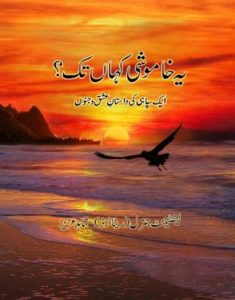
Review: General Shahid Aziz’s Memoir Yeh Khamoshi Kahan Tak

Shahid Aziz retired from the Pakistan army after a long and successful career, reaching the rank of Lieutenant General (3 star general) and serving as DG analysis wing of the ISI, DGMO (director general military operations), CGS (chief of general staff) and corps commander (commanding 4 corps in Lahore). After retirement, he served as chairman of the powerful National Accountability Bureau (NAB), the main anti-corruption watchdog in Pakistan. In spite of having been one of General Musharraf’s closest associates (and related to him by marriage; the daughter of one of Shahid Aziz’s cousins is married to Musharraf’s son) he became increasingly critical of Musharraf after retirement and in 2013 he wrote a book that was highly critical of Musharraf and of Pakistan’s supposedly pro-US policies at that time.

In May 2018 there were several news reports claiming that General Shahid Aziz had left his home last year (or even earlier) to join the Jihad against the West and had been killed, either in Syria or in Afghanistan (General Musharraf was the one who claimed he was killed in Syria, most other reports said Afghanistan). While his family has denied these reports, they have not been able to produce any explanation about where he is if he has not actually died on Jihad. So I decided to read the book. Having read it, I think the combination of naive idealism and PMA-level Islamism found in his book makes it very likely that these reports are true. My review follows (please also read this review by Abdul Majeed Abid as a complementary piece) Continue reading Review: General Shahid Aziz’s Memoir Yeh Khamoshi Kahan Tak

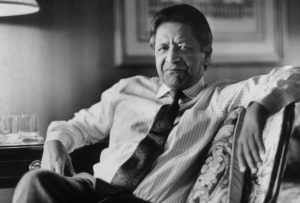
VS Naipaul (and Prime Minister Imran Khan)..

I have been busy with a move for several months (from the Midwest to the Best Coast) and have not been active on Brownpundits. I hope this will change in the coming weeks and months. Not enough time today for a full post on something,  just some quick notes on two recent events:

  1. VS Naipaul has died. I am a fan of Naipaul the writer, which sometimes gets me into arguments with woke friends, because the memo has been circulated that he was “a White supremacist” and so on (there is also the issue that he was a misogynist and mistreated some of the women in his life, which is probably true, but the broader un-personing instructions are based on his supposed ideological crimes, not his personal life). I don’t have anything to say about his relations with women (FWIW his last wife seems to have been happy with him) or his general crankiness and misanthropy, but I think the ideological accusations are an unfair characterization of his work. As far as I can tell, he had no single over-arching ideology; his aim was to try and see “things as they are”, which is never easy (and perhaps never possible), not to promote a particular Right or Left wing political viewpoint. He will be missed.   

From “The Enigma of Arrival”

Continue reading VS Naipaul (and Prime Minister Imran Khan)..

Pakistan Elections 2018

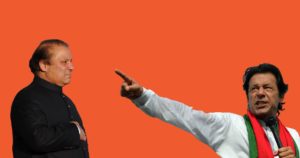
Pakistan heads to the polls on July 25th. I happen to be in the middle of a move, so I have not been posting much but a short note on the election is certainly due. Back in 2013 Pakistan had its first peaceful democratic transfer of power and it looked like some sort of democracy was finally taking root, with the military still exercising disproportionate influence but with an elected government running most of the country according to its own priorities. Unfortunately, the trend line has since reversed and done so in spectacular fashion. There are many theories about why this particular reversal happened, with some people blaming the party in power (the nominally right of center PMLN) and others the overweening ambitions of GHQ (*General Headquarters. The army). Whatever the triggers, it seems that at some point the army high command decided that it could not coexist with Mian Nawaz Sharif and his politically ambitious daughter (Maryam Nawaz Sharif) and for the last year and a half the army, primarily acting through its intelligence agencies (for the rough stuff) and ISPR (the PR wing of the army, now expanded into a vast public relations operation with a serving general in charge) has been on a crusade against the PMLN in general and Mian Nawaz Sharif (MNS) and his daughter in particular.

The operation has not gone according to plan; it seems clear that the army expected that MNS would give up the fight easily and the PMLN (a party once put together with the help of the army and including many professional turncoats) in any case will get the hint and push him out and replace him with his more cooperative younger brother (Mian Shahbaz Sharif, MSS). But MNS has refused to back down and most of the party has chosen to stand by him. The army has been forced to resort to more and more blatant attempts at political engineering but every escalation has been met by even more stubborn and public resistance from MNS, culminating in his return to the country after being sentenced to a long prison term in a corruption case where legal norms were openly flouted and the fairness of the judiciary was seriously compromised. Multiple national and international observers have already commented on the kind of tactics being used to corner the PMLN and to give an unfair advantage to Imran Khan’s PTI and I won’t go into those details (see links for more on that), but this level of blatant military intervention has also stiffened the resistance of the PMLN and seems to have energized their supporters. At the same time, the combination of 24/7 one-sided propaganda in the Pakistani media and the behind the scenes pressures applied by intelligence agencies has not been without effect, with several candidates disqualified, others induced to switch sides and all facing the possibility of more engineering on election day. The end result is that there is great uncertainty on the eve of the election. Polls generally indicate a close contest, but the unknown unknowns make any guess hazardous.

That said, it is the job of pundits to make predictions, so I will make mine. We will see how it turns out tomorrow. Continue reading Pakistan Elections 2018

Judicial Jitters in Pakistan. A look back..

From Dr Hamid Hussain

Controversy about judiciary is seen as a novel phenomenon in Pakistan.  Found this piece from the vault written in 2007.  It is long but provides context of current status.  There is a coming ‘food fight’ among senior judges.  A sitting senior judge has leveled the accusation that court benches are formed at the advice of intelligence agencies and that phones of judges are being taped.  This is the first salvo and more fireworks in store.   When politics is militarized and judiciary and army brass politicized, then system will always be wobbly.  Read it if you have some spare time but I’ll advise to take some aspirin before reading it.

“The keenest sorrow is to recognize ourselves as the sole cause of our adversities”.    Sophocles

Hamid

Defence Journal, June 2007

Judicial Jitters in Pakistan – A Historical Overview

Hamid Hussain

‘Get your facts first, and then you can distort them as much as you please’.   Mark Twain

Pakistan is in the throes of a judicial crisis since March 2007.  On March 09, 2007, general Pervez Mussharraf summoned chief justice Muhammad Iftikhar Chaudry to army house.  He was asked some tough questions and then asked to resign.  Chief justice held his ground and refused.  He was kept at army house for several hours so that an acting chief justice could be sworn in.  Justice Javed Iqbal was sworn in as the senior most judge justice Rana Baghwan Das was out of country.  Chaudry was given the title of ‘suspended’ chief justice and his case referred to Supreme Judicial Council (SJC) for action.  This started a crisis where majority of the people denounced the cavalier manner in which general Mussharraf dealt with the chief justice.  Legal community fully supported chief justice by boycotting courts and bringing out processions on the streets.  Now every one is waiting for the final scene of the drama which may take a while.  Current crisis has brought judiciary in the lime light.  This article will give a historical overview of the role of judiciary in Pakistan and its interaction with both civilian and military rulers.

In every country, there is a continuous struggle for accumulating more power between different state institutions.  Executive tries to get a free hand and does not like legal restraints.  Judiciary tries to put some breaks on unchecked powers of the executive.  This struggle keeps some semblance of balance of power.  However, a politicized judiciary is as dangerous as an uncontrolled power hungry executive.  Continue reading Judicial Jitters in Pakistan. A look back..

Forbidden Fruit: Military and Politics in Pakistan (and beyond)

From Dr Hamid Hussain

While browsing through some old material, found an old piece written in 2003 when General Pervez Mussharraf had just completed the political engineering project. It is lengthy and indulges in some theories but gives some context to what is happening now. While pondering over it, I found words of Amjad Islam Amjad as best description;

Hum loog;

dairoon mein chalte hein

dairoon mein chalnen se

daire to barhtey hein

fasley nahin ghatey

aarzoen chalti hein

jis taraf ko jate hein

manzilein tammana ki

saath saath chalti hein

gard urhti rehti hey

dard barhta rehta hey

rastey nahin ghatey

subhe dam sitaroon ki

tez jhilmilahat ko

roshni ki amad ka

pesh baab kehtey hein

ik kiran jo milti hey

aftab kehte hein

daira badalne ko

inqilab kehtey hein

Enjoy if you have some extra time on hand.

Hamid

Forbidden Fruit – Military & Politics

Hamid Hussain

2003

Introduction

Politics and profession of soldiering has nothing in common. They are totally different but essential elements of any society. Politicians and soldiers have an interesting relationship in all societies. In societies where civilians are in control, military officers act in accepted boundaries though ready to defend their turf against civilian encroachment. In societies where political institutions are weak and there is lack of consensus on legitimate course of succession, soldiers gradually expand their area of influence. They gradually restrict the role of civilians in various areas and sometimes directly take over the state replacing the civilians. This generally accepted model does not mean that military as an institution has no relevance to the important policy decisions. Even in countries where the tradition of civilian supremacy is well established, military has a political role relating to national security, albeit a different one. One commentator has correctly pointed that “the military’s political role is a question not of whether but of how much and what kind”. [1]

This article will evaluate soldier’s attitude towards political activity and how it develops. This will be followed by the details of Pakistani experience of politicization of officer’s corps and how repeated and prolonged military rules have militarized the politics. In the end, the complex relationship between soldiers and politicians will be summarized. Continue reading Forbidden Fruit: Military and Politics in Pakistan (and beyond)

Indian Religious Landscape Survey

This is a very simple poll. I posted a couple of these questions on Twitter (@omarali50) and want to do the same here. The idea is to test a hypothesis (not about what will happen to the Indian religious landscape, but what do readers of this blog THINK will happen to it, and why) which will be part of a later blog post I plan. For now, please take this very simple 3 question survey by scrolling down within the survey below.. and comment on the post as you see fit.. We may learn something, or at least have some interesting discussions..

Create your own user feedback survey

Political Engineering in Pakistan Part II

From Dr Hamid Hussain.

June 12, 2018

Following piece is mainly the result of questions form non-Pakistanis to explain the context.  It may not be very interesting for Pakistanis as they are already well informed and it seems lengthy and a bit boring.  The noise is at a very high pitch making reasonable discourse very hard.  Reminds me tenth century Arab poet Mutanabbi’s words, “With so much noise, you need ten fingers to plug your ears”.   

 Summary could be single sentence quotes;

Political Leaders: Reminds me Liddelhart’s words “The prophets must be stoned; That is their lot, and the test of their fulfillment.  But a leader who is stoned may merely prove that he has failed in his function through a deficiency of wisdom, or through confusing his function with that of a prophet”.

Generals: The Times, April 6, 1961 issue statement that “it is difficult to envisage some thirty or forty generals and a smaller number of admirals and air force commanders appointed solely by Providence to be the sole judges of what the nation needs”.

Judiciary: Jorge Ubico of Guatemala’s words that “My justice is God’s”.

Enjoy.

Hamid

Political Engineering – Modus Operandi

Hamid Hussain

“The establishments in the US, Pakistan and India are usually working for their own good rather than for the good of their public.  Shaking them might not be a bad idea”.  Former Director General of Inter Service Intelligence (ISI) Lieutenant General (R) Asad Durrani quoted in Spy Chronicles

Pakistanis will be voting for general elections on 25 July 2018.  Events of the last one year have raised many questions about the process. The gulf between important institutions is widening by the day.  Attitudes have hardened and everyone is rallying behind their respective wagons.  Pakistan’s power stool is three-legged and at one time known as ‘troika’.  In the past, President, Prime Minister and Chief of Army of Staff were the three legs of this stool.  Change of President to a ceremonial role by taking most of his powers removed this leg. In due course, this leg was replaced by Judiciary. The three legs are uneven with executive as shortest, followed in size by Judiciary and then army.  There is an inherent element of instability in this arrangement.   Continue reading Political Engineering in Pakistan Part II

Brown Pundits