The religion of Hindus before Hinduism

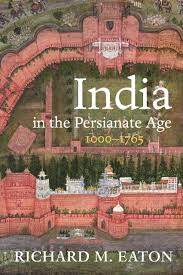
India in the Persianate Age: 1000–1765 is a good read and I recommend it. But the author, Richard Eaton, is not a guru or a sheikh, and should not be taken as such.

A comment Eaton makes offhand several times is that the conflict between Turks and Indians should not be understood in confessional terms. This is a commonly asserted, and on some level, it reflects elements of the truth. Hindu Rajputs served under Muslims, and Turkic soldiers served under Hindus. You can’t reduce everything to confession.

But, it is clear that confession and civilizational identity did exist, and it was robust. Going from the specific to the general.

  1. A great deal of text given over to Man Singh’s glorification of his conquests as an Indian warrior, and his patronage of Indian religion, in particular Vaishnavism.
  2. Eaton highlights the rapid Indianization of practices and hegemonic motifs present among the Turks and Afghans who were born and raised in India. And yet despite the syncretistic tendencies which occurred, ultimately these ashraf elites remained identified as Muslims and often were pulled back to world-normative Islam over the generations.
  3. Vijayanagara persisted as a Hindu polity for three centuries. The cross-cultural analysis shows that recalcitrant pagan powers always convert to the religion of their enemies eventually. The leader of the pagan resistance in Saxony became a Christian. Pagan resistance to Christianity in Sweden, Lithuania, and ancient Rome were only temporary, as resistant lineages eventually were assimilated into the new order. Resistance to Buddhism in Japan and Tibet was initially violent, but futile. In iterative games, paganism is the eternal ‘beatable’ strategy.

The only point to posting this is that there is a common assertion that Hinduism as a religion or identity only emerged in the 19th century. I am now convinced that this confuses the name of the phenomenon for the phenomenon. The Indian religion of the Hindus was clearly bundled together in a way that allowed for their elite deployment as a meta-ethnic identity that separated them from the Turks and Afghans who ruled them. Similarly, the Islam of the Turks and Afghans (and variegated Ethiopians, Arabs, and Persians), separated them from the Indians whom they conquered to prevent full assimilation as an Indian elite with popular roots in early modernity.

There is a major issue where our conception of religion qua religion is conditioned on an intellectual revolution rooted in the Second Reformation of the Calvinists. But, I think it is important not to get carried away with this construct, and assert that Calvinist religion is qualitatively different from pre-Calvinist religion. I don’t think it is. Rather, it simply shifts some of the parameter values within the model. Similarly, the identity of a coherent Hindu Rashtra with a post-caste socio-religious identity is an invention of modernity, but its roots are ancient and indigenous, and not postcolonial fictions.
Charles Cameron, R.I.P.


Charles Cameron, a contributor to this weblog, and an early guest on our podcast has died after an illness. I do not know any details (I saw a Facebook post), but I felt that it was important to mention his passing since his contribution to this forum was appreciated, and from what I knew of him he seemed a man with a great heart and boundless curiosity.

Death is inevitable, and a part of life. We too shall pass in our own time. All we can hope for in this one life is to leave memories that honor what we stood for after we leave.

Islam on the fringes

Decided to start reading India in the Persianate Age: 1000–1765. It’s a fast and easy read (and, it’s an affordable book for a nonspecialist like me who only spends $100 or more on genetics texts). I jumped ahead in a few passages, which seem to be adaptations from papers I’ve read from the author before.

In relation to discussions on this weblog and comments I’ve made:

1) The author describes islands and pockets of wholly Muslim peasants in eastern Bengal observed by the Mughals in the 16th century. These Mughals indicate that these people are not truly Hindu or Muslim, at least initially. This is line the common thesis that Islamicization is a function of the weak to nonexistent integration of these frontier peasants into Indian culture. Mughal observers also note the physical appearance of these people: small, dark-skinned, and beardless. This seems entirely accurate (I cannot grow a beard!).

The author observes that tax receipts over several decades in Bengal exhibited a pattern that is suggestive of a massive population increase in the east and stability in the west. In fact, there were two-fold increases in the east at the same time that districts in the west declined by 10%.

The thesis by the author, which seems broadly creditable, though not proven, is that the transition to high-intensity rice agriculture in the plains of the eastern delta, and in particular east of the Padma, arrived after the Mughal expansion into the reason. As such, the transition to a “higher religion” occurred under Islam, and therefore these people became Muslim (at least nominally). The analogy that is obvious here would be the Christianization of the Montagnards and other Southeast Asian “hill people” during the colonial period, as they had been detached from Theravada Buddhist civilization.

2) The author deploys a similar model, with modifications, for western Punjab. The model here is that Jat who moved up from Sindh abandoned obligate pastoralism and engaged in agriculture, and fixated upon the tombs and shrines of Islamic eminences. Due to the emphasis on paternal lineage, the author observes that the Islamicization of names occurred quantitatively over 300 years, from the 15th to the 18th century (initiation to completion).

The main qualm I have with this model is this: the Jats/people of Punjab do not look to be from Sindh if modern Sindhis are representative of ancient Sindhis. In the language familiar to readers of this weblog Sindhis are enriched for “Iranian-related ancestry” vis-a-vis Punjabis, who are enriched for “steppe.” The Jats in particular are highly enriched for “steppe” ancestry. Going by genetics alone this model is difficult to accept, though as noted in this space it does seem that caste-like stratification has ancient roots in this region, and so that may serve as some explanation.

Note: The model in Bengal implies that Islamicization and Hinduicization occurred in East Bengal simultaneously. That is, most of the sponsors of agricultural reform and intensification happened to be Muslim, but some were Hindu, and in the case of Hindu sponsored developments the regions became Hindu. Further investigation though would be warranted for Bengali Brahmins in the eastern regions, who would then presumably be migrants from the western zone, because it is hard to credit animistic tribes needing the services of literate priestly elites.

Ancient Pakistanis were Hindu

Over at my other blog, Pakistani British Are Very Much Like Indians Genetically. The title doesn’t refer to genome-wide worldwide affinities. Rather, the preprint looks at British Pakistanis, and finds a pattern that is not going to surprise Indians: endogamy seems to have kicked in for these groups starting 1,500 to 2,000 years ago. This is exactly what you see in the Indian jati data. The similarity is pretty incredible, and to me is a strong rejection of the model that these groups were strongly anti-caste so on the margins of Indic civilization.

There is a second wave of endogamy though, dated from 150-500 years ago, roughly. I think this is likely Islamicization and adherence to cousin-marriage. These Pakistani groups seem to show the tendency of jati endogamy common among Hindus, and, cousin-marriage patterns of the Islamic world.

Finally, the reason I posted over on the other blog is that I think this might speak to the long-term trajectories of Bangladesh and Pakistan: Bangladesh is not in the same mold as Indo-Pak societies. The 1000 Genomes data indicate few runs of homozygosity and not much internal structure. That is, no jati endogamy, and, low levels of cousin-marriage.

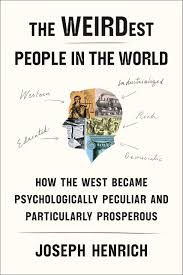
If you believe Joe Henrich, this means good things for Bangladesh in the future… (vs. Pakistan)

(the Henrich podcast is already available for Patrons)

Open Thread – 08/29/2020 – Brown Pundits

The usual. Like I said I’m moderating more, so watch yourself.

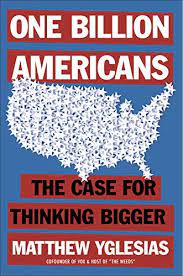
On Monday some of the BP crew (and my friend Josiah Neeley of Urbane Cowboys will be talking to Matthew Yglesias of Vox about his new book One Billion Americans: The Case for Thinking Bigger. Open to questions from the peanut gallery here too. I’ll probably also ask non-book questions toward the end of the hour.

Why Turks ruled India for so long

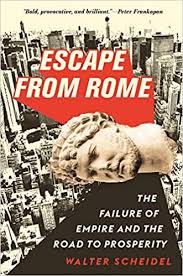
After finishing Escape from Rome: The Failure of Empire and the Road to Prosperity I continue to believe that geography and economics explain the basic reason for the very long ascendance of Turkic people in the Indian subcontinent, and, their eventual eclipse.

The context for this is the fact that many Indian and Indian American friends have posited cultural rationales for the Turkic hegemony. That is, there was a passivity and disunity in Hindu society which made it vulnerable to the Turks, who were also adherents to a separatist hegenomic ideology in the form of Musim. All this may very well be true, but I have always held that the key factor was that Turks and Muslims more general had ready and easy access to warhorses.

Between 500 A.D. and 1500 A.D. was the heyday of the nomadic pastoralist as a geopolitical force in Eurasia for various reasons. Even in the centuries after 1500 A.D. horses remained critical for mobility. The problem is that in much of agricultural Eurasia there is not sufficient pasturage to raise large numbers of horses.

Pretty much every Eurasian society within reach of the steppe (so basically every society except for those in Western Europe, Japan, and Southeast Asia) had to deal with the menace of armed nomads. Sometimes they paid them off. Sometimes they mobilized enormous armies which incurring crushing costs. And sometime they were conquered.

Between 1700 and 1900 this spectre faded. Improvements in military technology, transport, and mass national mobilization, leveled the gap between the steppe and the settled peoples, to the point where by 1900 the steppe was a marginal factor.

Note: the author of Escape from Rome attributes the rise and fall of Vijayanagara explicitly as a function of its access to horses.

Browncast Episodes 121 & 122: Desi-Rae, heterodox Jamaican American, and Anthony, a black American in China

Two new BP Podcast episodes are up. You can listen on Libsyn, Apple, Spotify,  and Stitcher (and a variety of other platforms). Probably the easiest way to keep up the podcast since we don’t have a regular schedule is to subscribe to one of the links above!

You can also support the podcast as a patron. The primary benefit now is that you get the podcasts considerably earlier than everyone else. This website isn’t about shaking the cup, but I have noticed that the number of patrons plateaued a long time ago.

First, we talked to Desi-Rae, a Jamaican American woman who has some heterodox views. Her views on race in Jamaica and the United States, relationships, and the fallout from being so vocal. I apologize that my mic was very low on this episode.

Next, I talk to Anthony, a black American who worked in China. We talk about Chinese perceptions of blackness, his daughter, who is half-Chinese, and the prospects for the China-USA relationship.

Why Indian Americans are not the new Jews

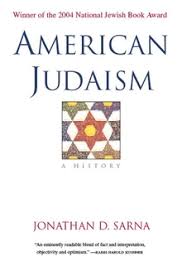
In the 2000s I would have arguments with some Indian American friends about the ethnic trajectory of Indian Americans in terms of their similarity American Jews, where I staked out the position that the analogy was superficial (e.g., on the Sepia Mutiny blog). To understand why the analogy doesn’t work, you need to know the history of American Jews first. Though Judaism in the United States goes back to small Sephardic communities along the eastern seaboard before the Amerian Revolution, to understand the Jewish community in the 20th and 21st centuries one needs to focus on the two Ashkenazi migrations from Central and Eastern Europe that occurred in the 75 years between 1850 and 1925.

The first wave was the “German Jews”, most of whom were Bavarian peddlers. Many of them scattered across the country, starting general stores and the like. Though numerically a very small migration, they founded many Jewish American institutions. There is a reason that the headquarters of Reform Judaism, which is of German origin, is in Cincinnati. This reflects the migration of German Jews along routes of commerce in the 19th century.

The second wave, and the much larger one, is the migration stream that issued out of the expanded Russian Empire, in particular Lithuania and Galicia. These are who the German Jews referred to as the “Ostjuden”, the Eastern Jews. This was a term applied in Germany to Jews from Poland and further east as well. The Ostjuden were often destitute. Those that fled the early 20th century pogroms may have had nothing but the clothes on their backs. In fact, in all likelihood, the richer and more assimilated Jews were the ones who remained in Europe.

America was the destination for the more marginalized.

Continue reading Why Indian Americans are not the new Jews

Kamala Harris embrace of ‘victim identity’ bothers me

Apparently Kamala Harris was admitted to law school through LEOP:

LEOP offers admission to approximately 50 high-achieving students each year—up to 20 percent of the class—who have experienced major life hurdles, such as educational disadvantage, economic hardship, or disability. The majority are students of color. Besides traditional admissions criteria, such as grades and LSAT scores, the program also considers students’ overall potential and the obstacles they’ve overcome. “These are extraordinary students who have been playing while injured in the game of life, but all they do is win,” McGriff said.

Once students enroll, LEOP supports them throughout their tenure at UC Hastings, offering a weeklong orientation, academic counseling, practice exams, and help preparing for the bar exam and job interviews, among other resources and services.

…. LEOP went on to count many prominent alumni among its ranks, including U.S. Senator Kamala Harris ’89; San Francisco Public Defender Jeff Adachi ’85; Adelmise Warner ’01, chief counsel at Pandora; and Andrew Houston ’07, procurement counsel for the University of California’s Office of the General Counsel.

We know a lot about Kamala Harris’ mother’s family. They are upper-middle-class Tamil Brahmins. Her mother did raise her mostly alone. So she was a single mother. But she was also a Ph.D. biomedical researcher.

Here is a profile about her father, Kamala Harris’s Father, a Footnote in Her Speeches, Is a Prominent Economist:

Dr. Harris was raised in a landowning family on the north coast of Jamaica by a paternal grandmother whom he described as “reserved and stern in look, firm with ‘the strap,’ but capable of the most endearing and genuine acts of love, affection and care.” Reserved and highly intelligent, he was more cut out for academia than activism, contemporaries said.

Basically, on both sides of Harris’ pedigree, there is evidence of sub-elite status. Her utilization of the LEOP program seems to be unfair to students who were genuinely disadvantaged.

The Aryan Integration Theory (AIT)

I’ve been thinking a bit recently about loaded terms like the “Aryan Invasion Theory.” Since I’m not Indian I don’t get super worked up about the ideological valence of the term. But, after thinking about it for a while, a few weeks ago I decided that the term “Aryan Invasion Theory” (AIT) is not useful, and I will abandon my gentle defense of its utility.

My own views can be read extensively at already, so I won’t belabor the details of what I believe.

Rather, I think that the classical version of the “AIT” is not useful because I think most people associate the idea of a barbarian “invasion” with a conflict between two clear and distinct groups, and one of the groups have a coherent social and political organization in a complex fashion. This is not what I believe at this point. Rather, I believe that Indo-Aryans interposed themselves into a fallen landscape.

The best evidence from Narasimhan et. al. indicates that “steppe” admixture into Indian subcontinental groups in the northwest dates to the period between 1900 and 1500 BCE (95% confidence intervals). What we now call “Ancestral North Indian” (ANI) and “Ancestral South Indian” (ASI) seem to have emerged in the period between 2000 and 500 BCE. In the “Swat transect” which begins ~1000 BCE there is an increase in AASI related ancestry over time (and, increase in “steppe” as well), suggestive of subcontinent-wide gene flow, including into the northwest from the southeast.

My idea for how Indo-Aryans became preeminent in South Asia is similar to the arrival of Rohirrim into Rohan. The “Mature IVC” had almost certainly have collapsed by the time of the Indo-Aryans arrived. This is part of a West and South Asia wide collapse of complex urban societies. This is often attributed to a climatic shock and was correlated with an influx of barbarian peoples (e.g., the Guti of the Zagros into the territory of Ur III). In some cases, such as Egypt, the indigenous elites recovered rapidly. In the case of Babylonia, an intrusive Semitic population, the Amorites, assimilated into the high culture of the Akkadians and Sumerians.

The situation in South Asia is unlikely to be peaceful. The Y chromosomes of South Asians are on the order of 10-20% attributable to the steppe (depending on sampling and weighting of populations). A much smaller percentage of mtDNA is attributable to these people. The indication here is that this was a migration of males.

But, the opposition to the Indo-Aryans was not culturally as advanced as the IVC. Rather, the likelihood is that what we see is similar to what occurred in the Balkans after 550 A.D. and the withdrawal of East Roman forces. The Latin-speaking peasantry, with no elites, and the collapse of the Christian church, eventually assimilated into the “peasant culture” of the intrusive Slavs across much of the Balkans. A similar process seems to have occurred across much of Britain, where a minority of pagan Germans assimilated larger numbers of semi-Christianized Celts after their elites retreated to Cornwell, Wales, and Brittany.

It seems that complex specialized societies can be quite brittle. Especially those from the Bronze and early Iron Age (the late Bronze Age collapse is another case). The decline of the IVC probably resulted in the evaporation of many elites who had served to anchor the identity of these polities. My assumption is that the arrival of Indo-Aryans, who had more social cohesion at this point (steppe nomads are all easily mobilizable as a fighting force due to lack of specialization), resulted in integration of the remnant local elites rapidly into the new social order.

Brown Pundits