Browncast episode 71: Stand Up Comic Rajiv Satyal

Another BP Podcast is up. You can listen on LibsyniTunesSpotify,  and Stitcher. Probably the easiest way to keep up the podcast since we don’t have a regular schedule is to subscribe at one of the links above.

You can also support the podcast as a patron. The primary benefit now is that you get the podcasts considerably earlier than everyone else.

Would appreciate more positive reviews! It’s been a really really long time that we’ve been on 30 iTunes positive reviews. I notice that Alton Brown’s Browncast has 30 reviews on Stitcher alone! Help make us the biggest browncast there is!

In this episode I talk to Rajiv Satyal, an Indian-American comic who is becoming increasingly visible on the standup circuit. We discuss his background and his thoughts about comedy, politics, identity, cancel culture and whatever else comes up.

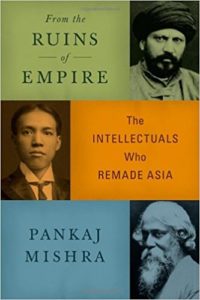
Review: The Intellectuals who Remade Asia (Pankaj Mishra)

This was a long rolling rant I wrote several years ago while reading Pankaj Mishra’s book “From The Ruins of Empire; The Intellectuals Who Remade Asia”. The format is that I comment as I read the book. So early parts are comments on early chapters and so on. Quotes from Pankaj are in bolded italics. I am reposting today after someone complained that it still needs some editing. Hopefully this version will be easier to read.

First things first, this books is NOT about the intellectuals who remade Asia. That book would have to start with people like Aizawa in Japan, the first Asian nation to be “remade”, but that is one nation and one set of thinkers you will not find in this book. Why? because this book is not about Asia, its history or its renaissance, it (like most of Mr MIshra’s recent work) is about post-liberal virtue signaling. For details, read on..

Introduction: After being told that everyone from Orhan Pamuk to Pakistani Ambassador (and liberal feminist Jinnahist icon) Sherry Rahman is in love with Pankaj Mishra’s new book I started reading it. The first 50 pages set a certain tone. And its not a very encouraging one.

On  page 18 he says: the word Islam, describing the range of Muslim beliefs and  practices, was not used before the 19th century. 

WTF? This is then negated on the very next page by Mishra himself. The only explanation for this little nugget is that Pankaj knows his audience and will miss no opportunity to slide in some politically correct red meat for his them. He knows that sections of the liberal academia believe that Islam is unfairly maligned as monolithic (and monolithically bad) and Pankaj wants to let people know that he has no such incorrect beliefs. It is a noble impulse and it recurs. A lot. I do not need to add that this sentence is complete nonsense. Continue reading Review: The Intellectuals who Remade Asia (Pankaj Mishra)

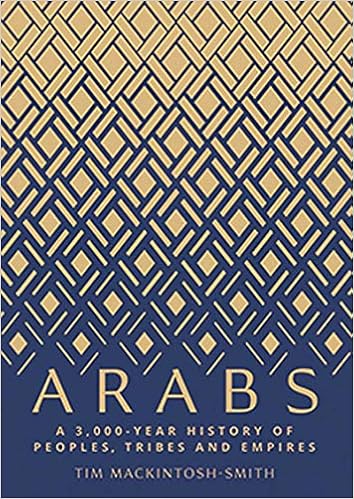
Review: Arabs. A Three Thousand Year History of Peoples, Tribes and Empires

Mackintosh-Smith, Tim. Arabs . Yale University Press. Kindle Edition.

Tim Mackintosh Smith is one of those romantic Englishmen who used to go and settle in far off lands and “go native”. He lives in Yemen (apparently still there, even during the civil war) and has been writing about the region and the Arab people for several decades. This book is the culmination of a lifetime of study, a comprehensive history of a people and civilization to which he has become attached and about whom he knows more than most. It is well worth reading.

He begins by making it clear that this is a history of the Arabs, not a history of Islam. The first mention of the word Arab actually occurs in “in 853 BC (and) concerns the employment by the Assyrian state of a transport contractor, a certain Gindibu (‘Locust’), an Arab chieftain who owned vast herds of camels”. This is about 3000 years ago, and the coming of Islam lies about halfway through this history. While we know relatively little of the early (pre-Islamic) history of these people, Mackintosh-Smith wants us to be aware that the Arabs existed long before Islam did. Continue reading Review: Arabs. A Three Thousand Year History of Peoples, Tribes and Empires

The Shias of Kashmir

From our regular contributor, Dr Hamid Hussain. 

In my last piece about Kashmir, I briefly mentioned Shia factor in Kashmir in current context and Ahmadi factor in historical context.  Many otherwise well informed individuals admitted that they had little idea about these.  Others with more direct interaction with Kashmir issue asked questions and this is in response to these exchanges.  Enjoy if you are bored of black and white narratives on the subject and interested in ‘fifty shades of grey’.

Hamid

Shia of Kashmir

Hamid Hussain

Shia of Kashmir has a unique history.  There were two groups of Shias who migrated to Kashmir from present day Iran and Iraq in fifteenth and sixteenth centuries.  One group escaped persecution and other were missionaries.  Some artisan classes also joined these groups.   Local conversion due to efforts of missionaries increased Shia numbers.  In Gilgit-Baltistan area with geographic links to Badakhshan province of Afghanistan and Tajikistan, Ismaili missionaries were successful in small pockets while mainstream Ath’na Asha’ari (followers of twelve Imams) missionaries were successful in areas that are now part of Indian Controlled Kashmir (ICK).  Separation of Gilgit-Baltistan from Pakistan Controlled Kashmir (PCK) which is ethnically and linguistically different from Kashmiris left no significant Shia population in PCK.

In ICK, there are about one million Shia out of a total Muslim population of 8.5 million.  Shia are geographically and politically separated in ICK.  Sparsely populated Ladakh which is now separated from Jammu & Kashmir (J&K) as Union territory has equal numbers of Buddhists and Muslims.  In Kargil area, ninety percent of Muslim population is Shia numbering about 125’000.  There are small numbers of Sunnis in Drass area.  Remainder Shia population is concentrated in the Valley. Continue reading The Shias of Kashmir

Film Review: Drone

Film review from Major Aghan Humayun Amin. (Spoilers ahead)

DRONES 

REVIEW ESSAY 

Last night I watched a movie named “ Drone” with immense interest. 

Drones have been a major part of my research since 2006 when I personally and closely saw some drone strikes while serving as a consultant in Afghanistan and Pakistan. My main client were Canadians and to be specific SNC Lavalin , at that time Canada’s largest consulting company and worlds fifth largest. The movies director is a Canadian citizen which multiplied my interest as Canada sometimes moves opposite United States and has been doing so with varied levels since loyalists fled to Canada after the rebellion of the American Colonies. 

The first issue with this movie which could be very hard hitting and a block buster is that it misses the small details , which is a case of lack of common sense and sweeping judgements which were entirely avoidable. 

The first image failure occurred when while claiming to depict Pakistans wild west Waziristan region the area filmed and shown was Pakistans biggest city Karachi. To deliver the most unkindest cut of all as Shakespeare would have described it , the first shot titled Waziristan shows sky scraper buildings in Karachi rather than mud houses and totally opposite images for which Waziristan is famous and known.  Continue reading Film Review: Drone

Film Review: Berlin Falling

Review from Major Agha Humayun Amin.  I am sure some of Major Amin’s observations will invite comment 🙂

I was very keen to watch this movie and watching it was a big disappointment.

While the movie is low budget , budget by no means could have reduced it from reaching the stature of greatness if the man who made the movie was more intellectually dishonest !

The entire historic context of this movie is drastically flawed and fallacious.
The movie conveys a German military in Afghanistan that committed serious war crimes , whereas my personal observations having constructed five clinics in Kunduz in 2004-5 and having been involved in CASA 1000 survey passing through Kunduz province where German military was deployed , leads me to the irrevocable and unflinching conclusion that the German military in Kunduz was the most humane military outfit in entire NATO or non NATO forces deployed in Afghanistan.

Now this was entirely avoidable had the author carefully studied the history of German military record in Afghanistan.

As one who lived in Kabul and travelled extensively I found that Afghans loved no foreign country more dearly than Germany who they lovingly referred to as ”ALMAAN” and Turkey.

The reason was simple ! Both these states simply refused to enter areas where the public was hostile to NATO presence. While it is another issue that the German governments reasons for not doing so were based on pure and simple lack of moral courage or strategic resolution , in not annoying the large Muslim population of Germany , the result was positive, at least in terms of human rights. Continue reading Film Review: Berlin Falling

Kashmir, Analysis by Dr Hamid Husain

From our regular contributor and well respected Military historian Dr Hamid Husain

Following was outcome of exchanges with some informed individuals from both sides of the border about Kashmir.  I was educated & enlightened. It is just a glimpse on my part about possible scenarios.  It is first of a two part; second part deals with the legal aspect of the issue as Constitution bench of Indian Supreme Court has taken up the case.

“Borders are scratched across the hearts of men

By strangers with a calm, judicial pen

 And when the borders bleed we watch with dread

The lines of ink along the map turn red”

                                                               Marya Mannes

Regards,

Hamid

Paradise Lost – Kashmir at Crossroads

Hamid Hussain

“Any intelligent fool can make things bigger, more complex and more violent; but it takes a touch of genius and lots of courage to move something in the opposite direction.”    Albert Einstein

On 05 August 2019, newly elected government of India announced change in Kashmir status. President issued an order under Article 370 superseding a previous Presidential Order of 1954 thus removing restrictions on application of Constitution of India in the state of Jammu & Kashmir (J&K).  This also removed Article 35 A that gave special status to residents of J&K. In addition, J&K was divided into two Union territories with separation of Ladakh.

Currently, three countries control parts of the territory that was once princely state of Kashmir during the Raj.  Indian Controlled Kashmir (ICK) is fifty five percent of the territory, Pakistan Controlled Kashmir (PCK) is thirty five percent and Chinese Controlled Kashmir (CCK) is fifteen percent. There is no conflict at Indian-Chinese border in Kashmir called Line of Actual Control (LAC) and there has been no border incident in the last fifty years.  I recall the only incident of military history several years ago when tempers escalated at that border, the soldiers simply threw stones at each other. The story of Line of Control (LOC) between India and Pakistan is totally different.

Kashmir is more of an ideological element between two countries.  Both sides have a psychological entanglement where the raison d’etre of both countries is linked with it.  India views continued control of Kashmir as vindication of its stand that Hindus and Muslims are not two separate nations and that is why a Muslim majority state is part of Indian union.  Pakistan contests this narrative and see India’s control of Kashmir as challenging the very idea of Pakistan based on ‘two nation theory’.  Both sides are intelligent enough to recognize the old dictum that ‘possession is the nine-tenth of the law’. Rhetoric aside, in real politic, both countries are fully aware that LOC is now a de facto border, and no one can force a military solution of the problem.  When there is an interlude of peace between two countries, public opinion is in favor of compromise.  However, with every crisis, jingoism runs supreme on both sides of the border.

India

‘Nationhood is rooted in rites of violence we all prefer to forget’.  Quoted in Karl Meyer & Shareen B. Brysac’s King Makers

India’s recent efforts to remove special status of Kashmir is to fully integrate the state in Indian union with the hope that this will end separatism in ICK.  Unique circumstances of Kashmir at the time of partition in 1947 necessitated a compromise.  Article 270 of Indian constitution gave Kashmir a special status where Indian constitution was exempted from the state in governance of the state.  In the last seventy years, 94 of the 97 entries of the Union List and 260 of the 395 articles of the constitution were extended to Kashmir.  Ironically, it was all done through Article 370 as this was the only ‘tunnel’ through which center could act in Kashmir.  The result is that in practical terms Article 370 had ceased to provide any special concessions to Kashmiris.  More important is Article 35 A that was inserted by a Presidential Order in 1954 as a compromise between Indian Prime Minister Jawaharlal Nehru and Kashmiri leader Shaikh Abdullah.  This clause gave the authority to state government to define ‘permanent resident of the state’.  A Dogra rule era law of 1927 that prohibited acquisition of land in Kashmir by an outsider was incorporated in Constitution of J& K in 1956 that closed the door for acquisition of land by outsiders. Now only a permanent resident of the state was eligible for land acquisition, government jobs and scholarship in state educational institutions. Article 370 was a psychological and 35 A practical anchor of special status of Kashmir. Continue reading Kashmir, Analysis by Dr Hamid Husain

Review: The Anarchy, by William Dalrymple

I had earlier posted a short version of this review, to which many people objected that it was not really a review, just a short rant. Major Amin has now sent a longer version. I hope this will satisfy some of the critics…

The Anarchy-
William Dalrymple

Book Review

By Major Agha H Amin

Dalrymple is not a serious historian but a highly skilled jester who plays to the gallery. He makes many factual errors in his book and frequently gets carried away by emotions. promiscuously mixing facts with fiction.

On page 12 there is a small typing error placing third mysore war victory of Cornwallis in 1782 rather than 1792:

In describing Aurangzeb on page 13 Dalrymple misses the most essential fact that it was the Hindu Maratha Insurgency that laid the foundation of the decline and fall of the Mughal Empire. In this regard, other groups such as the Rajputs etc were mickey mouse players; the real hero of Hindu resurgence was Sivaji.

Dalrymple describes Mohammad Shah in very derogatory terms,  but fails to
note that under his shaky tenure the Mughals still defeated Ahmad Shah Abdali at Sirhind in 1748.

The battle of Buxar took place in 1764 and not in 1765 as Mr Dalrymple states on page-16.

On page 60 Dalrymple fallaciously states that Bhonsle was incharge of Orrissa whereas the Bhonsla citadel was many hundred miles from Orrissa to the west in  Nagpur.

Dalrymple is addicted to fantasies (playing to the gallery), thus he projects the Mughals as the height of civilization while these so called civilized Mughals in 1719 publicly tortured Banda Bahadur’s five year old son, gouging out his heart while the child was alive and shoving it in his fathers mouth !

Nadir Shah did not invade Afghanistan in 1739 but in 1738 via Helmand, a long way from Delhi, but our brilliant and careless writer states he did so in 1739.

Dalyrmple totally misses one of the great  betrayals in Indian history at Karnal, where Nadir Shah of Persia on the prompting of Nawab of Avadh Saadat Khan decided to pillage and plunder Delhi after an initial agreement to return to Persia after being paid a relatively small fine.

Dalrymple spents great energy on vilifying the company for the famine of Bengal of 1770, but fails to reconcile the fact that a far greater famine broke out in Bengal under the British crown. In general, jis treatment of events reeks
of extreme polemics and subjectivism.

Even worse is his treatment of military events, for example in describing the First Anglo Mysore war he glorifies Hyder Ali but fails to note that he lost in several pitched battles against Colonel Smith and won the war only because of lack of cavalry by the company as well as the extreme corruption of  various company officials.

Dalrymples treatment of military history in general  is atrocious. For example,  in discussing the Second Anglo Mysore War he only discusses one battle (Pollilore) but totally ignores the fact that Hyder Ali was repeatedly defeated
at Porto Novo , Sholingur etc by Sir Eyre Coote.

Dalrymple totally ignores the fact that while the company lost one battle in 1780, the war continued till 1784 and was inconclusive in spite of Hyder Ali’s superior cavalry and the company’s corruption.

Dalyrmples use of historical facts is generally one sided and extremely biased. This is not a one-off, but a pattern. He cherry picks and higlights what fits his narrative, ignoring or downplaying what does not.

Ahmad Shah Abdali never went to Delhi in 1762 so Dalrymples claim that he ousted Imad ul Mulk in 1762 is incorrect (page-259 ).

By and large the book is a repetition of well known facts of British Indian history, framed tendentiously to fit his narrative. Basically Dalrymple has wasted a book in vain as it brings out nothing new. His whole conclusion about the company and the title of the book “Anarchy” is extremely questionable and
debatable. Firstly the English East India Company did not cause anarchy in India as Dalrymple repeatedly tries to prove. India was already in a state of complete anarchy when the British company became a serious player. They took advantage of this anarchy, they did not cause it.

Delhi was sacked more than 40 times between 1737 and 1800 by non British  forces, but Dalrymple is blind to this as it does not fit the narrative he wants to project. All the bad things he sees are only to be found in English East India Company. This will no doubt delight his nationalistic (or guilt-ridden English) readers, but it is a very questionable framing of 18the century Indian history.

His military knowledge is myopic and he constantly distorts military history and uses bits and pieces to prove or disprove as he wills at whim.

As a matter of fact the company restored order in India .The first three universities in Indian history were founded at Calcutta ,Madras and Bombay in 1856-57 by the Company. Outmoded customs such as widow burning , infanticide etc were abolished by the company. A hereditary class of feudal lords was created by Lord Cornwallis in 1792 as a result of which political
stability was introduced and strengthened in India. The company had many reformers, philanthropists and utilitarians but Dalrymple in his irrational hatred is blind to all these people.To Dalrymple all that British East India Company did
was bad and he has an extremely jaundiced and twisted vision, not an objective view of history.

Dalrymple gives no weightage to the fact that British parliament and system prosecuted Clive and Warren Hastings and tried to regulate company rule in India. They were not angels, but they were not the uniquely villainous source of all evils in India. Above all Dalrymple forgets that without the driving spirit of corporate enterprise of the company the British would never have conquered India. While personal interest has constantly dominated human conduct in history , whether it was a company or a state , Dalrymple wears coloured glasses and his perception is cloudy as well as confused.

Finally, my most serious issue with Dalrymple is his overly simplistic sweeping judgements. The Mughals for example were as big opportunists and greedy rulers as the company.They were a small group of adventurers, kicked out of central Asia, who captured India or north India just like the British company because of superior military tactics. If you look at Mughal contributions you find a few grand monuments such as the Taj Mahal or Shalimar Bagh in Lahore! Whereas the British company gave India , irrigation , universities, a
sound military system , a system of governance and  a class of  hereditary feudals who made the system more stable, relative to the times.

Another point that Dalrymple totally misses is that the company saved the Indian Muslim elite from total political extinction . The Muslims were practically nobodies by 1800. Delhi was ruled by the Marathas, Badshahi mosque of Lahore was a horse stable and a powder magazine! The Marathas
and Sikhs totally dominated north India! But a knight in shining armour comes and saves the Indian Muslim elite. It was Lake who saved the Muslims of Delhi from extinction! Hugh Gough saved the Muslims of Lahore and Peshawar! But Dalrymple misses out all these things.

Dalrymples most serious failure is that greed and avarice is not a British company failing but a human failing and all Indian rulers were guilty of this just as much as the EIC. Dalrymple fails to appreciate that Indians gladly
fought against Indians under the company because the company paid salaries in time !

Dalyrmple fails to note that British company]s triumphs were triumphs of organization, such as when Lieutenant Flint repeatedly defeated Tipu Sultan with a 100 % Indian force at Wandewash.Dalrymple fails to appreciate that
India was conquered by an organizationally superior company using 80 % Indian manpower! Why Indians followed them if they were as plainly evil as Dalrymple believes or wants us to believe !

And finally, Dalrymple fails to relate this past to what happened after the British left. Pakistan, where I live, is one of the most corrupt states in the
world .Pakistans tax officials of the so called FBR are 1 billion times more corrupt than the English East India Company could be in their wildest dreams. Parochialism is such that in todays Pakistan the entire ruling establishment consists of few districts and few castes of North Punjab and small parts of Sindh!

Characters like Dalrymple thrive on emotional manipulation which is why Dalrymple needs to be questioned and refuted!

Book Review: The Anarchy (William Dalrymple)

A longer version of this review is now up at this link.

A short review from Major Amin. I have not yet read the book, but Dalrymple’s recent books have an increasing tendency to play to the gallery. I would not descirbe this as “irrational hatred” (see review below), it is entirely rational. He knows his audience and frames his books to pander to that audience. He is a good writer and is not ignorant, but his books are spoiled by his urge to frame his story in ways that will appeal to his audience (educated Indians who are happy to hear bad things about the EIC and Westerners who want to appear virtuous). Again, I have not read this book, but his other recent books and interviews all exhibit this tendency..

The Anarchy-Dalrymple– Book Review

The Anarchy-Dalrymple Book Review

https://www.researchgate.net/publication/335881689_The_Anarchy-Dalrymple_Book_Review

Firstly English East India Company did not cause anarchy in India as Dalrymple repeatedly tries to prove.

India was in complete anarchy when the British company became a serious player.

Delhi was sacked more than 40 times between 1737 and 1800 by non British forcces, but Dalrymple is blind to this hard fact. All the bad things he sees are only to be found in English East India Company.

His military knowledge is myopic and he constantly distorts military history and uses bits and pieces to prove or disprove as he wills at whim.

As a matter of fact the company restored order in India .First three universities in Indian history were founded at Calcutta ,Madras and Bombay in 1856-57.

Outmoded customs like widow burning , infanticide etc were abolished by the company.

A hereditary class of feudal was created by Lord Cornwallis in 1792 as a result of which political stability was introduced and strengthened in India.

The company had many reformers, philanthropists and utilitarians but Dalrymple in his irrational hatred is blind to all these people.

To Dalrymple all that British East India Company did was bad and he has an extremely jaundiced and twisted vision.

Dalrymple gives no weightage to the fact that British parliament and system prosecuted Clive and Warren Hastings and tried to regulate India.

Above all Dalrymple forgets that without the driving spirit of corporate enterprise of the company the British would never have conquered India.

While personal interest has constantly dominated human conduct in history , whether it was a company or a state , Dalrymple wears coloured glasses and his perception is cloudy as well as confused.

Last Will of Guru Gobind and Emperor Aurangzeb

From @parikramah ‘s blog, some comments on the last will and testament of Guru Gobind and Emperor Aurangzeb.  (I am mostly interested in the two wills and posted those here.. if you are interested in the dharmic vs adharmic discussion you can to to the link above for the full post)

Fatehnamah – A Tale of two Wills

Guru Gobind had earlier written in the Zafarnama

چه ها شد که چون بچگان کشته چار
که باقی بماند است پیچیده مار
che ha shod keh chon bachegaan koshteh chaar
keh baaqi bemaand ast peycheedeh maar

“What happened that you have killed four children (my sons, the sahibzadas)? For the coiled snake (in the form of my Khalsa) still remains…”

It is interesting that the Ten Gurus of Sikhism spanned an epoch of India’s recent history that coincided with the Moghal dynasty. Guru Nanak was imprisoned by the invader Babur, the first Moghal. And Guru Gobind Singh faced off with Aurangzeb, who died rather pathetically shortly thereafter. The Last Guru was called Sacha Patshah (The True Emperor) by Indians at that time, while Aurangzeb isn’t.

It is just 24 verses, the Guru boldly declares the facts of time, and is still advising and admonishing Aurangzeb. Its remarkable that, having just escaped against overwhelming odds from a siege and assassination attempt, the Guru was able to write – in verse no less! – to his persecutor and the murderer of his father and sons, with words of wisdom and warning. He was still willing to meet with the old Moghal and accept his apologies. There can be no doubt who is Guru here.

به نام خداوند تیغ و تبر
خداوند تیر و سنان سپر
be naam e khodaavand e tegh o tabar / khodaavand e teer o sanaan o separ!

1. In the Name of the Lord of the sword and shield! Lord of arrow, battleaxe and spear!

خداوند مردان جنگ آزما
خداوند اسپان پا در هوا
khodaavand e mardaan e jang-aazmaa / khodaavand e aspaan paa dar havaa!

2. Lord of those men that try the test of battle! Lord of their horses that fly through the air!

همان کو ترا پادشاهی بداد
بما دولت دین پناهی بداد
hamaan koo toraa paadshaahi bedaad / bemaa dowlat e deen-panaahi bedaad!

3. The same Lord that granted you a material kingdom, To me He entrusted the protection of the Dharma.

ترا ترک تازی با مکر و ریا
مرا چاره سازی با صدق و صفا
toraa Tork-Taazi ba makr o riyaa / maraa chaareh-saazi ba sedq o safaa!

4. Whereas you engaged in plunder by deceit and hypocrisy, To me was left the responsibility of creating the Way of truth and purity!

[Note: The word Tork-Taazi, which literally means “Turk-Arab” in Farsi, but is a term used to mean plunder and vandalism, pillage and rape in that language.]

نه زیبد ترا نام اورنگزیب
ز اورنگزیبان نه یابد فریب
na zeebad toraa naam e Aurangzeb / ze aurangzeebaan na yaabad fareeb!

5. The name “Aurangzeb” does not befit you, Since one doesn’t find fraud in that which is supposed to bring “honor to the throne”!

تسبیحات از شجه و رشته بیش
کزان دانه سازی وزان دام خویش
tasbeehat az shojeh o reshteye beesh / kazaan daaneh saazi vazaan daam e kheesh!

6. Your rosary is nothing more than tangled beads and thread, With every movement of your beads you only expand your snare of entanglements!

[Note: Here the Guru is referring to the test of sanity of will and purpose. It is an inferred fact that Aurangzeb would have not been able to experience any peace and bliss in his tasbeeh (japa), even if he carried one wherever he went. He may have clung to it for a sense of security, but there was no immediate experience of bliss in it, nor any clarity and ability gained from it. For Aurangzeb, the Holy Name was a co-dependency. For the Guru, it was a relationship based on pan-determinism.

A dharmaarthic system should foster pan-determinism between individual contributors, not co-dependency on or between elites and subjects.]

تو خاک پدر را با کردار زشت
با خون برادر بدادی سرشت
to khaak e pedar ra ba kerdaar e zesht / ba khoon e baraadar bedaadi seresht!

7. Your nature and disposition is from your grisly deeds, Moulded by the dust of your father and the blood of your brothers.

وزان خانه خام کردی بنا
برای در دولت خویش را
vazaan khaaneye khaam kardi banaa / baraaye dar e dowlat e kheesh ra!

8. And from that (by imprisoning your father and murdering your brothers) you have laid a weak foundation for your kingdom.

من اکنون با افضال پرش اکال
کنم ز آب آهن چنان برشگال
man aknoon ba afzaal e Purush e Akaal / konam ze aab e aahan chonaan barshgaal

9. “Now by the grace of the Eternal Oversoul (Akaal Purush), I have made the water of steel (Amrit for my warriors) which will fall upon you like a torrent.”

که هرگز از آن چاردیوار شوم
نشانی نماند بر این پاک بوم
ke hargiz az aan chaardeevaar e shoom / neshaani namaanad bar een paak boom!

10. And with this torrent your sinister castle will vanish from this holy land without a trace!

ز کوه دکن تشنه کام آمدی
ز میوار هم تلخ جام آمدی
ze kooh e dakkan teshneh-kaam aamadi / ze mewaar ham talkh e jaam aamadi

11. You came thirsty (defeated) from the mountains of Deccan; the Rajputs of Mewar have also made you drink the bitter cup (of defeat).

[Note: Throughout the ten-generation span of the Gurus, they took a pan-Indic view in terms of political and social mobilization, and even the panj-piare came from all parts and strata of society. In ideological and spiritual terms, they took a global view, as Guru Nanak did.]

بر این سو چون اکنون نگاهت رود
که آن تلخی و تشنگی ات رود
bar een soo chon aknoon negaahat ravad / ke aan talkhi o teshnegee at ravad

12. Now you are casting your sight towards this side (the Punjab). Here also your thirst will remain unquenched.

چنان آتش زیر نعلت نهم
ز پنجاب آبت نه خوردن دهم
chonaan aatash e zeer n’al at naham / ze panjaab aabat na khordan daham

13. I will put fire under your feet when you come to the Punjab and I will not let you even drink water here.

چه شد گر شغال با مکر و ریا
همین کشت دو بچه شیر را ؟
che shod gar shaghaal ba makr o riyaa / hameen kosht do bacheye sher ra?

14. What is so great if a jackal kills two cubs of a tiger by deceit and cunning?

چون شیر ژیان زنده ماند همی
ز تو انتقام ستاند همی
chon sher e zhiyaan zendeh maanad hamee / ze to enteqaam setaanad hamee!

15. Since that formidable tiger is still alive, he will definitely extract revenge on you!

نه دیگر گرایم با نام خدا ات
که دیدم خدا و کلام خدا ات
na deegar garaayam ba naam e khodaat / ke deedam khodaa va kalaam e khodaat!

16. I no longer trust you or your ‘God’ since I have now seen your ‘God’ as well as his Word.

با سوگند تو اعتبار نه ماند
مرا جز با شمشیر کار نه ماند
ba saugand e to e’tebaar na maanad / maraa joz ba shamsheer kaar na maanad

17. I do not trust your oaths any more and now there is no other way for me except to take up the sword.

توی گرگ باران کشیده اگر
نهم نیز شیر ظ دام بدر
tuye gorg e baaraan kesheedeh agar / naham neez sher ze daam bedar

18. If you are an old fox, I, too, will keep my tigers out of your snare.

اگر باز گفت و شنیدت با ماست
نمایم ترا جاده پاک و راست
agar baaz goft o shoneedat ba maast / namaayam toraa jaadeye paak o raast

19. If you come to me for detailed and frank talks, I shall show you the path of purity and truthfulness.

به میدان دو لشکر صف آرایی شوند
ز دوری به هم آشکارا شوند
be maidaan do lashkar saf-araee shavand / ze doori be ham aashkaaraa shavand

20. Let the forces from both sides array in the battlefield at such a distance that they are visible to each other.

میان هر دو ماند دو فرسنگ راه
جون آراسته گردد این رزمگاه
miyaan e har do maanad do farsang e raah / chon aaraasteh gardad een razm-gaah

21. The battle field should be arranged decoratively in such a manner that both the forces should be separated by a reasonable distance (of two furlongs).

از آن پس در آن ارصه کارزار
من آیم به نزد تو با دو سوار
az aan pas dar aan arseye kaarzaar / man aayam be nazd e to ba do savaar

22. Then I will advance in the battle field for combat with your forces along with two of my riders.

تو از ناز و نعمت ثمر خورده
ز جنگی جوانان نه بر خورده
to az naaz o ne’mat samar khordeh / ze jangi javaanaan na bar khordeh

23. So far you have been enjoying the fruits of a cosy and comfortable life but haven’t yet collided with fierce warriors (in the battle field).

به میدان بیا خود با تیغ و تبر
مکن خلق خلاق زیر و زبر
be maidaan biyaa khod ba tegh o tabar / makon khalq e khalaaq zir o zebar

24. Now come into the battle field with your weapons and stop tormenting the people who are the creation of the Lord.

According to internal Moghal reports, Aurangzeb was old and senile by this time. He had been a fratricidal bigot who acted on the encouragement of a jealous priesthood hardened by ethnic and theological differences. Apparently, he could not tell the difference between Dharma and Adharma, and so his sense of duty was imbued with this lack of ethical discrimination. He dies in the hope of redemption, and had even apologized and invited the Guru to come see him on his deathbed. Here is his last will and testament (link):

“Praise to be God and blessing on those servants [of Him] who have become sanctified and have given satisfaction [to Him]. I have some [instructions to leave as my] last will and testament:

FIRST – on behalf of this sinner sunk in iniquity [i.e. myself] cover [with an offering of cloth and capital] the holy tomb of Hasan (on him be peace), because those who are drowned in the ocean of sin have no other protection except seeking refuge with that Portal of Mercy and Forgiveness.

SECOND – Four Rupees and two annas, out of the price of the caps sewn by me, are with Aia Bega, the mahaldar. Take the amount and spend it on the shroud of this helpness creature. Three hundred and five Rupees, from the wages of copying the Quran, are in my purse for personal expense. Distribute them to the faqirs on the day of my death.

THIRD – Take the remaining necessaries [of my funeral] from the agent of Prince Alijah; as he is the nearest heir among my sons, and on him lies the responsibility for the lawful or unlawful [practices at my funeral]; this helpless person (i.e. Aurangzeb) is not answerable for them, because the dead are in the hands of the survivors.

FOURTH – Bury this wanderer in the Valley of Deviation from the Right Path with his head bare, because every ruined sinner who is conducted bare-headed before the Grand Emperor (i.e. God), is sure to be an object of mercy.

FIFTH – Cover the top of the coffin on my bier with the coarse white cloth gazi. Avoid the spreading of a canopy and uncanonical innovations like [processions of] musicians and the celebration of the Prophet’s Nativity (maulud)

SIXTH – It is proper for the ruler of the kingdom (i.e. my heir) to treat kindly the helpless servants who in the train of this shameless creature [Aurangzeb] have been roving in the deserts and wilderness [of the Deccan]. Even if any manifest fault is committed by them, give them in return for it gracious forgiveness and benign overlooking [of the fault].

[SEVENTH, EIGHT, NINTH – His assessment of the Irani, Turani, and the Saiyid nobles and his advice how to treat them keeping in mind their qualities and weaknesses.]

TENTH – As far as possible the ruler of a kingdom should not spare himself from moving about; he should avoid staying in one place, which outwardly gives him repose but in effect brings on a thousand calamities and troubles.

ELEVENTH – Never trust your sons, nor treat them during your lifetime in an intimate manner, because, if the Emperor Shah Jahan had not treated Dara Shukoh in this manner, his affairs would not have come to such a sorry pass. Ever keep in view the saying, ‘The words of a king are barren’.

TWELFTH – The main pillar of government is to be well informed in the news of the kingdom. Negligence for a single moment becomes the cause of disgrace for long years. The escape of the wretch Shiva took place through [my] carelessness, and I have to labour hard [against the Marathas] to the end of my life, [as the result of it].

Twelve is blessed [among numbers]. I have concluded with twelve directions. (Verse).
“If you learn [the lesson], a kiss on your wisdom.

If you neglect it, then alas! alas!”

Ahkam-i-Alamgir, (Eng. Tr. J.N. Sarkar, Text in Ir. Ms. 8b-10a).

There is another will of Aurangzeb in India Office Library MS.1344 p.49b (Sarkar, Aurangzeb, Vol.V, 201). Its chief interest lies in the suggested method of partitioning the empire among his three surviving sons.

Continue reading Last Will of Guru Gobind and Emperor Aurangzeb

Brown Pundits