The (Original Brown) Pundits: Spies, Explorers and Scholars during the Great Game

Galwan Valley, Pangong Lake, Karakoram Pass, Doklam Plateau, Mishmi Hills. These obscure geographical features and landmarks in the high Himalayas separating India from China have suddenly made their way back into the public consciousness. The catalyst this time is the increased friction between the People’s Republic of China and the Republic of India. I use the phrases “way back” and “this time” deliberately. To scholars and enthusiasts of the Great Game, these names and the surrounding context are eerily familiar: shadow boxing between an ascendant, assertive superpower (Tsarist Russia) trying to throw its weight around in its immediate neighbourhood and an ostensibly weaker but rising middling power (British India) trying to protect its interest in its backyard.

The original Great Game, which played out over the course of the nineteenth century between the British Indian and Russian Empires in South and Central Asia, had all the characteristics of a bestselling novel, filled with action, adventure and intrigue. It also had its set of glamorous characters: Sir Alexander ‘Sikunder’ Burnes- the famous British spy with oodles of charm and dashing good looks to boot- was the James Bond of his era. He was matched on the Russian side by Captain Yan Vitkevich, the enigmatic Polish-Lithuanian orientalist and explorer. Mercifully, there was very little by way of direct bloodshed between the principal protagonists, although things did come close to getting out of hand on a few occasions. No wonder the Russians evocatively called the contest “The Tournament of Shadows”.  It was compelling drama and the public- in Britain, India, Russia and beyond- lapped it up. The romance and zeitgeist of the times was captured by the great Victorian author Rudyard Kipling in his famous novel, Kim.

Continue reading The (Original Brown) Pundits: Spies, Explorers and Scholars during the Great Game
Browncast: Akshay Alladi, Indian Conservative

You can listen on LibsynAppleSpotify, and Stitcher (and a variety of other platforms). Probably the easiest way to keep up the podcast since we don’t have a regular schedule is to subscribe to one of the links above!

In this episode we talk to Akshay Alladi, an Indian conservative. We talk about what it means to be an Indian conservative and Indian cultural and political issues in general. Check it out.

Browncast: Tim Mackintosh Smith, author of “Arabs”

You can listen on LibsynAppleSpotify, and Stitcher (and a variety of other platforms). Probably the easiest way to keep up the podcast since we don’t have a regular schedule is to subscribe to one of the links above!

In this episode (split into two parts) we talk to Tim Mackintosh Smith, author of “Arabs; a three thousand year history of peoples, tribes and empires“. We talk about his book and about Arab history and contemporary reality. Check it out..

Travel Writer Tim Mackintosh-Smith on Why Seventh and Eighth Graders Should Read These Classic Arabic Travel Tales – ArabLit & ArabLit Quarterly

Stark Truth About Aryans: a story of India (part 1)

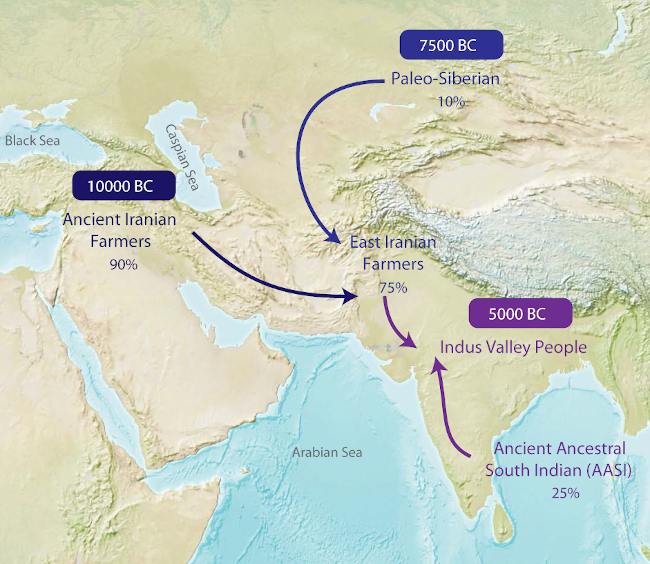
My Substack piece is up, Stark Truth About Aryans: a story of India. I’m pretty proud of this, as it wasn’t a single-sitting blog post, but something I worked over several times. Since it’s for paid subscribers I’ll post the first few paragraphs below, with an infographic that I think illustrates a lot of what’s going on.

Continue reading Stark Truth About Aryans: a story of India (part 1)

The Sindhi homeland of the “Dravidians”

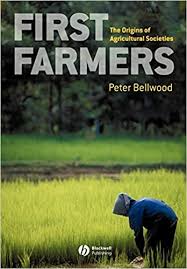
Peter Bellwood in First Farmers presents a hypothesis for the expansion of the Dravidian languages into southern India in the late Neolithic through the spread of an agro-pastoralist lifestyle through the western Deccan, pushing southward along the Arabian sea fringe. At the time I was skeptical, but now I am modestly confident that this is close to the reality.

There is always talk about “steppe” ancestry on this weblog. But there are groups that seem “enriched” from IVC ancestry, as judged by the Indus Periphery samples. The confidence is lower since we don’t have nearly as good a sample coverage…but I think I can pass on what we’ve seen so far: groups in southern Pakistan, non-Brahmin elites in South India, and some Sudra groups in Gujarat and Maharashtra, seem to be relatively enriched for IVC-like ancestry. Then there is the supposed existence of Dravidian toponyms in Sindh, Gujarat, and Maharashtra. And, their total absence in the Gangetic plain.

There have been decades of debate about Brahui. I’ve looked closely at Brahui genetics, and they are no different from the Baloch. Combined with evidence from Y chromosomes (the Baloch and Brahui have some of the highest frequencies of haplogroups found in IVC-related ancient DNA), I doubt the thesis they are medieval intruders (if they are, their distinctive genes were totally replaced).

Genetically, we know that some southern tribes, such as the Pulliyar, have some IVC-related ancestry. But other groups, such as Reddy in Andhra Pradesh, have a lot more. How does this cline emerge? My conjecture is that there were several movements of “Dravidian” people from Sindh and Gujarat into southern India, simultaneous with the expansion of Vedic Aryans to the north into the Gangetic plain. The region the Vedic Aryans intruded upon, Punjab, was not inhabited by Dravidian speakers. Like Mesopotamia, the Indus Valley Civilization was probably multi-lingual, despite broad cultural affinities developed over time.

The scions of the priest kings

I was talking to a person of South Indian Brahmin origin today about their genetics. Over the course of the conversation, he showed me Y and mtDNA haplogroup types amongst his jati. The vast majority of the Y haplogroups were not R1a.
Brahmin groups in India seem to be about 15% to 30% steppe in their overall genome. But their Y chromosomes are usually 50% or so R1a1a-Z93. The lineage associated with Indo-Iranian pastoralists.

So what’s going on with the other haplogroups? For example, J2, L, C, G, and H?

From what I can see J2 and L are the next most frequent haplogroups after R1a1a-Z93. This tells us something. These are haplogroups found in ancient “Indus Periphery” samples. And, these two haplogroups are found at high concentrations in the northwest of the subcontinent.

It doesn’t take a {{{Brahmin}}} to connect the dots here. Some of the gotra as early as the Vedic period were almost certainly derived from high-status individuals in the post-IVC society. Warriors and priests in the fallen civilization of the IVC, which had likely degraded itself to a level of barbarism by the time the Indo-Aryans became ascendant.

I like to make jokes about “sons of Indra.” But let’s give the dasyu credit where it’s due: those Indians carrying J2 and L almost certainly descend from the men who build the great cities of yore. Their dominion was lost when their civilization fell, but they integrated themselves into the new order.

Open Thread – 1/16/2021 – Brown Pundits

What’s going on?

I have a 6000-word piece on Indian genetics coming out on my Substak in the next few days (waiting on some maps that were commissioned).

Update: The pieces (had to break into two) are ready to go. Part 1 today and part 2 tomorrow. I commissioned some simple maps and created an infographic. Since these will be “paid” (you have to subscribe), I’ll post the infographic for people here:

Continue reading Open Thread – 1/16/2021 – Brown Pundits

The material wages of caste

When perusing Twitter I occasionally see arguments between the troll Araingang and contributors to this weblog on various topics. Many times I don’t really what the argument is about because I feel it’s deeply semantic.

So, for example, caste, varna, and jati. I know the dictionary definition of all this stuff and the various arguments. As an atheist, and someone who has “no caste” or varna or jati, I’m not very interested in theological arguments as to the origin of these concepts, their validity, and their application. Muslims for example can write 1,000-page books on Tawhid. I don’t care. What I care about is the application of Shariah law upon dhimmis and the heterodox. The rest is commentary.

In the 2000’s I read books such as Nicholas Dirks’ Castes of Mind: Colonialism and the Making of Modern India. The argument and evidence marshaled suggest that the raw materials of the caste system predate the British, but their system of manipulation, organization, and rationalization was critical.

Then, in the period after 2010, I began reading and analyze the genetic data. I was shocked at how clear and distinct varna and jati differences were. My friend Surya Yalamanchili sent me his DNA last year, and I asked him if he was Kamma. He had no idea what that meant, but the genetic evidence seemed persuasive to me from other people he clustered within my private data. He asked his mother, and she said “yes.” He was shocked. I was not.

The conclusion I draw from this, along with patterns such as higher steppe ancestry in “higher varna,” is that there are deep roots and structures to the inequality we see across the Indian subcontinent. It is possible that in fact, the jatis were “separate but equal.” But I doubt that just as I doubt the “peace” Islam imposed upon dhimmis was welcomed on the whole (in some cases, yes). Dalits in particular have very small effective populations. That means their genes show evidence of high levels of inbreeding because of incredibly small marriage networks.

This post is less about what I believe, then trying to understand what you know and believe. The genetic data is something I am familiar with. I work with it. The historical evidence I do not know. Were there Dalit kings? Were there long periods where Brahmins were subordinate as menial servants to Sudra jatis?

I understand that Hindus of a more progressive bent are uncomfortable with the association between caste and their religion and identity. Religion is what man makes it, and so I do not see its connection to Hinduism as necessary, ineluctable, and eternal. But, the impact of caste is so strongly stamped on the genes of so many Indians I cannot brush it away as a detail of history.

Brown Pundits