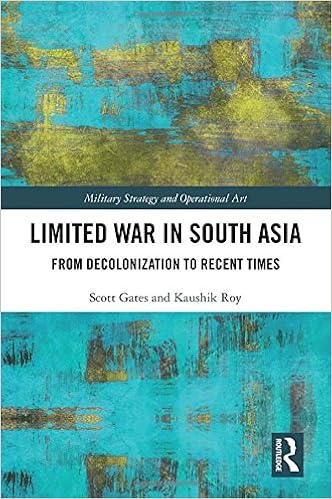
Book Review: Limited War in South Asia

This is Major Amin’s review of “Limited War in South Asia”

In 2018 when I saw this book by Kaushik Roy I was surprised since to my mind Kaushik Roy does very well with archives and records but is not a real military historian who understands hard core military matters.
I therefore decided to procure this book and read it , and find out what Mr Kaushik Roy has found out.
Below is my review of Kaushik Roy and Scott Gates book.
The maps which are published at the start of the book are poorly drawn, inaccurate and impossible to understand as the scale is too small.A serious failing for a book published by a publisher as eminent as Routledge as late as 2017 !
For example all Pakistani formations are marked incorrectly although the Pakistani order of battle is known worldwide.This is a simply inexcusable failure.
Like Pakistan’s 1 Corps is marked as 2 Corps while Pakistan’s 2 Corps is marked as 1 Corps and even its dispositions are not marked accurately.
Further the map invents a new corps which has never existed in the Pakistan Army, ie 3 Corps.Thus Lahore’s 4 Corps is shown as 3 Corps.
The writer magnifies the role of Indian Army in North Africa and Italy while in reality in both theaters Indian Army was part of a much larger British Australian New Zealand South African American force and enjoyed massive numerical superiority in both theaters. Thus Indian Army casualties in North Africa were very low and the same was the case in Italy.In most ways the Indian Army learnt little about higher command as British Indian Army was never trusted with major offensive operations. The brigade and divisional commanders were always British and each Indian brigade had one British infantry unit. Continue reading Book Review: Limited War in South Asia
Easter Attacks in Sri Lanka

Sri Lanka blasts: At least 137 dead and more than 150 injured in multiple church and hotel explosions:

More than 137 people have been killed and more than 150 injured after coordinated bomb blasts hit a number of high-end hotels and churches in Sri Lanka on Sunday.

The blasts, reported to have occurred in the cities of Negombo, Batticalo and the capital Colombo, targeted at least three hotels and three churches as worshippers attended Easter services.

Bodies of the dead have been received at Colombo National Hospital, according to hospital sources. Most of those injured were also taken there, hospital officials said.

Please post updates in the comments.

Update: New York Times seems to be reporting Islamists.

From basket-case to garment superpower

This article seems to use Bangladesh as a prop to beat Pakistan’s governing class over the head, Beg, borrow, repeat: Pakistan’s IMF addiction continues even as its finance minister leaves. It’s a pretty strange thing in 2019. In the 20th-century Bangladesh was known for the early 1970s famine, as well as periodic catastrophic floods.

A minimal amount of research will show that it’s not all roses in Bangladesh. There are huge governance issues, overreliance on textiles is probably not a good long-term optimum, and human capital accumulation may not keep up with the shifts toward a high-technology 21st-century economy (most of the world’s population will have to face this though).

So here is the weird thing I want to note: this blog gets about 10x more traffic from Pakistan than Bangladesh. And, it gets 100x more traffic from India than Bangladesh. This blog gets more readers from Singapore than Bangladesh!

philhaal is guftagu se thak gaye hain hum.

She simply raises an eyebrow, twirls a finger, twinkles her eyes — and the screen goes ablaze. I wanted to join the front-benchers screaming with delight when, pre-interval, she naughtily murmurs, philhaal is guftagu se thak gaye hain hum.

We went to watch Kalank starring Alia Bhat and Varun Dhawan last night. I don’t have much to add to the film reviews, who’ve done a pretty fine job in pointing out both the strengths and the weaknesses.

Karan Johar and his runaway success straddles both new and old Bollywood. One of the reviews chimed in perfectly with what I felt; that Karan is all about “more is more.”

It detracts from the essence of the film and Bollywood is now the inverse of  Pakistani dramas. Pakistani dramas convey exceptionally powerful stories on shoestring budgets (Hum Safar was shot on 5,000 USD and it, along with Dastan, revitalised the Pakistani Drama industry).

One of Vidhi’s podcast suggestions is asking why Bollywood doesn’t garner the same level of international respect as Persian Cinema. We’re iA going to explore it in a future podcast but the splintering of a Unified India’s High Culture, where Pakistan got the Mughal bits and India the rest, has had some lasting damage.

Kalank also descends into a farce because it’s as realistic about Hira Mandi and pre-Partition Punjab as Aladdin is about “Arabia.” I enjoyed the performances all around but they lacked that raw intensity of the Khans.

Madhuri Dixit stole the show but even she had to navigate the difficult corners of the script. One reviewer touched on various influences on the film (Pakeezah, Raazi) but what came to mind is that this was supposed to be the Desi Titanic.

Partition is a painful and difficult subject; the cumulative and untold trauma can spin a thousand romances and tragedies. Like most psychic wounds it can be mined for great art but if KJo wants to pioneer Urdu cinema (Ae Dil Eh Mushkil) he has to first learn that the language of love is spoken with the heart.

It’s what powers the great Pakistani plays and initially I was surprised that the screen play was by Abhishek Varman, the language used was so elegaic and chaste (I thought more Urdufied than Urdu but that is to quibble over little details) but then I heard in one of the reviews that the writer was a Muslim.

In the end though I appreciated the nod towards Urdu culture though I found one line rather offensive, which roughly translated, “her face was Irani but her dress was Indian.” Self-respect starts at home.

The Kalash of Iran

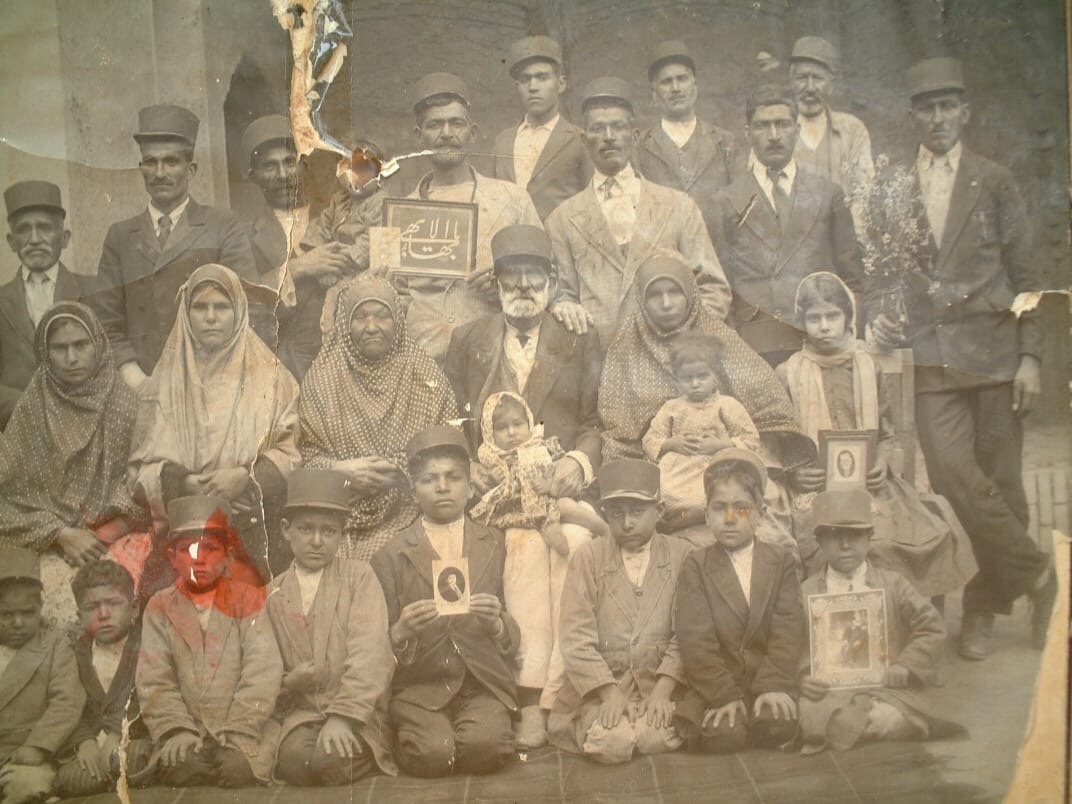
87 years ago in a small village outside yazd called Hossein Abad

“Just to tell you a little story, the gentleman in the middle with white beard is my great grandfather who’s holding my mum in his arm.

His father had seven sons and they were Zoroastrian and one day he told his sons that he has seen a sign that Shah Barham has come and he asked them to investigate and they all did and became Baha’is,”


I came across this on social media and I found it amusing in light of the discussion on the Kalash of Pakistan. Continue reading The Kalash of Iran

Notre Dame & Babri Masjid

This status represented my initial thoughts on Notre Dame. Not all monuments are equal and the Notre Dame has a place in the global imagination. Continue reading Notre Dame & Babri Masjid

Bring the Kalash to Ladakh!


This was something that was suggested on Twitter (or emerged out of a discussion on Twitter): why can’t the Kalash have the option of relocating to Ladakh? It’s not that different of an ecosystem, and there would be less cultural pressure to change and/or threat of assimilation.

The Indian government imposes a no-contact policy for the Sentinelese for the sake of their cultural and biological integrity (they would probably die of disease). I’m not proposing this for the Kalash, but at least bringing them to Ladakh would prevent the imminent threat of assimilation, though the individual appeal of Delhi would still be there.

There’s a lot of anger from Hindu nationalists online. Often toward Muslims. I get the reasons. But this is something that is constructive and positive. The Kalash are not a fossil race. But they preserve something that is unique and soon to be lost to the world.

The end of the Kalash is nigh

Verily I say unto you, this generation shall not pass, till all the Kafir Kalash bend the knee to the one true God!

I think anyone who has given it any thought knew that this was inevitable and just a matter of time. That time seems to be now. The Kalash compensated for conversion with higher endogenous fertility, but if it is true that educated young women are converting to Islam, their ability to reproduce their numbers will decrease rapidly.

Anxious Times In Pakistan’s Pagan Valley Rising Islamic Influence Pressures An Ancient People:

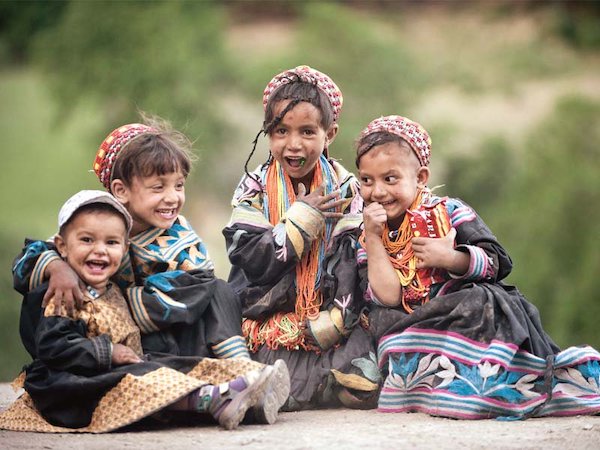
Naveed is a member of the Kalash, a pagan community known for their fair skin that has long inhabited this area near the border with Afghanistan. The Kalash people, many of whom believe they are the descendants of the armies of Alexander the Great, have held on to their religious beliefs and colorful rituals for centuries, even as a sea of Islam has encircled them.

But the unique traditions of the Kalash are coming under mounting cultural pressure as the pace of conversions to Islam accelerates within Pakistan’s smallest ethnoreligious community. The Kalash population currently numbers between 3,000-4,000, and locals estimate that some 300 of their members have converted to Islam over the past three years, The Washington Post reported in November. Some local reports, however, have said the figure is not that high.

First, to preempt genetic comments: the Kalash do not descend from Europeans like Alexander’s Macedonians, as such. Rather, they are a mix of Indo-Aryan steppe ancestry, with a base of Iranian farmer (the largest component probably), along with a residual but non-trivial amount of indigenous deep South Asia ancestry (AASI in other posts). It is probably fair to say that they are among the most Indo-Aryan peoples in the Indian subcontinent, but the recent work on the Ror people indicates that some Jatt groups are similar.

Second, the fact that they are not Muslim to this day is simply due to the contingencies of history. The Afghan conquest of nearby Nuristan in the last decade of the 19th century resulted in the wholesale conversion of the pagans of that region. The fact that the Kafir Kalash were on the British side of the border meant that they were spared forced conversion.

And so almost magically deep into the 21st century, we got a window into the world of Indo-European customs and practices of the descendants of the Andronovo and Sintashta cultures, relatively isolated from the primary stream of what became Hinduism to the south and east and Zoroastrianism to the west (both of which interacted with non-Indo-European indigenous elements). The sun is setting on these people, whether through forced conversion, or the attractiveness of modernization and assimilation into the dominant culture of Pakistan.

In a few generations, they will be but faint memories to their descendants, and a single thread of the many threads of human cultural history will vanish forever.

Brown Pundits