
Please keep the other posts on topic. Use this for talking about whatever you want to talk about.
India Still Rising
The Honorable former U.S. ambassador to India David C. Mulford’s summary of why India is rapidly becoming a great global superpower and why PM Modi might become the best PM in Indian history. My estimate is that India will have more billionaires than America in less than a generation. When this happens what is to stop post modernists from decrying “Asian supremacy”, Asian hegemony, Asian exploitation, Asian empire, Asian imperialism, Asian oppression, Asian racism/bigotry/ sectariansim? How to reduce jealousy of Asia? Or is this dark future inevitable?
Kashmir
The government in Kashmir has fallen. What’s next for this troubled province?
As an aside my own preference is the LOC is a soft border between India and Pakistan. I don’t want any redrawing of the map whatsoever. I would rather Fawad Khan and Mahira Khan be able to act in Bollywood and Pakistani players play in the IPL. I can understand that for some Kashmir is a hot topic but I’m far too invested in Rising India as it is.
However if I see this post degenerate into low quality jingoism on either side; I’ll arbitrarily delete comments.
Comments are free but facts are sacred. If I see unnecessary emotionalism I’ll just remove it- the BP threads have turned into an Indo-PAK flame war and I have stayed my hand but in my own threads I’m going to be much more pro-active.
Indian Religious Landscape Survey
This is a very simple poll. I posted a couple of these questions on Twitter (@omarali50) and want to do the same here. The idea is to test a hypothesis (not about what will happen to the Indian religious landscape, but what do readers of this blog THINK will happen to it, and why) which will be part of a later blog post I plan. For now, please take this very simple 3 question survey by scrolling down within the survey below.. and comment on the post as you see fit.. We may learn something, or at least have some interesting discussions..
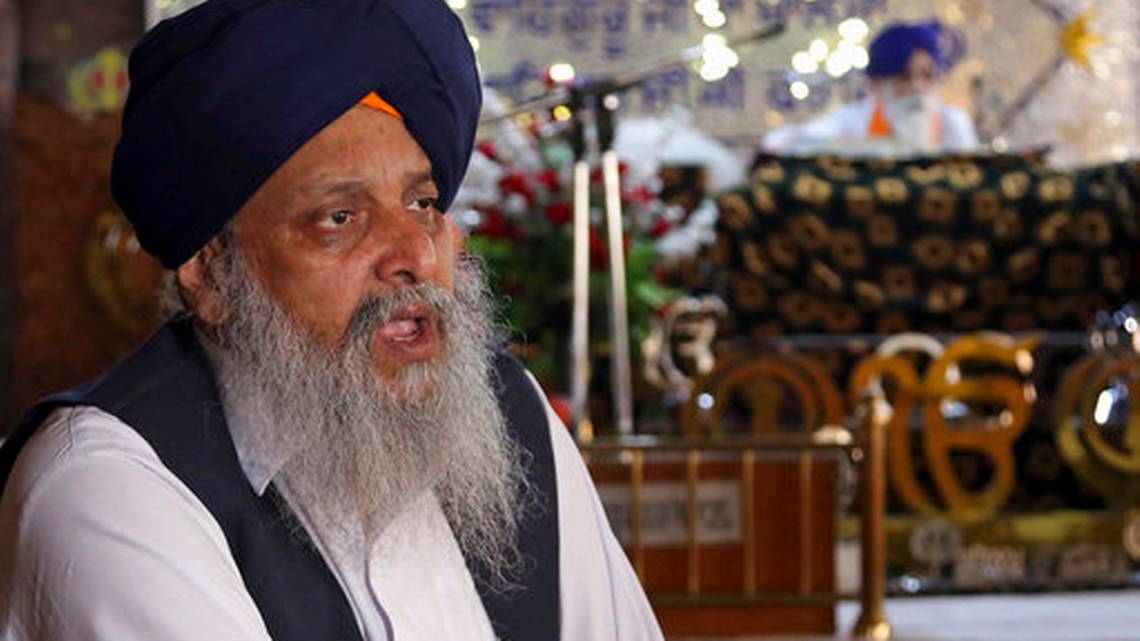
Avtar Singh Khalsa: Lion of Afghanistan

The Lion of Afghanistan, Avtar Singh Khalsa, serves as a representative in the Afghan Parliament. This Afghan hero fought for ten years in the ANA (Afghan National Army) and is reaching out with love and heart to the Taliban to negotiate peace; but willing to fight if Taliban refuses: “I sacrifice myself for those of my brothers who have been through all kinds of pain and suffering,” he said. “I don’t care if I lose my whole family and I get killed for this cause. I will struggle until I get their rights.”


“The 52-year-old father of four, originally from the eastern Paktia province, has lived most of his life in Kabul . . . “I don’t only want to serve my Sikh and Hindu brothers. I have to be able to serve all the Afghan people, no matter which ethnicity or group they belong to. Our services must reach everyone,””

Please visit Avtar Singh Khalsa’s Gurudwara in Kabul on your next visit!
Wild natives and the white Man’s burden
I was hearing a few stories about the ivory towers of academia and some of the micro-aggressions on display was just shocking. Two that immediately come to mind are:
(1.) there was a particularly famous Desi academic who was holding court in one of the colleges. Many desis came to pay homage to him prompting one (white) academic to sniff to another, “it feels like a Delhi saloon bar here.” This was in full hearing of the coloured academics.
(2.) a particularly (in)famous colonial administrator had visited a college in the 50’s and noting the wild behaviour of the undergraduates, joked “I thought the natives came only in shades of brown.” The implication being that the undergraduates were acting like careless natives in the sun. This is an oft-repeated and humorous joke in certain rarefied circles.
I was livid when I heard this but it prompts me to reflect that regardless of the stress on equality and fairness; the elite churn only enough to preserve their power structure.
What makes micro-aggression so powerful of course is that it is the aggressed who feels trapped. How does one respond since the Model Minority Asian is far too busy assimilation/integrating/succeeding and doesn’t want to cause a fuss. It’s all well and good having a rant on Twitter or a blog but it’s not very likely that a #metoo movement is going to emerge vis a vis micro aggression.
Another interesting observation is that Asians are particularly vulnerable to micro-aggressions because we are a longer-term delayed gratification sort of population; we are looking at that promotion, salary raise to ever truly want to make a commotion.
The art of pushing back banterously without escalating the matter too much should be taught in all citizenship classes..
After the jump my own short thoughts on the staying power of elites.
The Grand Punditess of Them All
Sharing LV’s recent talk at CogX. Of the 300-400 speakers she was, I believe, the only women (correction – handful of women) speaking on a technical subject so a huge stride forward for #WomenInStem and #IndiansInAcademia (academia in Britain especially in the higher and more complex echelons is astonishingly white). It might be shirk to say so but I suspect Vidhi might be Lakshmi in human form..
Judging from what our beloved commentariat constantly snark about me in the threads it’s astonishing she married a lightweight like me 😉
A talk on #gaussianprocesses by the very talented @VLalchand – https://t.co/HIUfnTKJ2p at #CogX2018@turinginst #CogX18 #MachineLearning #AI #Mathematics #science #womeninleadership #WomenInSTEM #indian
— Zac X (@XerxestheMagian) June 14, 2018
https://www.facebook.com/zachary.latif/videos/10105007111664881/?comment_id=10105012834246781¬if_id=1528957991813595¬if_t=video_comment
Open Thread
Please keep the other posts on topic. Use this for talking about whatever you want to talk about.
Political Engineering in Pakistan Part II
From Dr Hamid Hussain.
June 12, 2018
Following piece is mainly the result of questions form non-Pakistanis to explain the context. It may not be very interesting for Pakistanis as they are already well informed and it seems lengthy and a bit boring. The noise is at a very high pitch making reasonable discourse very hard. Reminds me tenth century Arab poet Mutanabbi’s words, “With so much noise, you need ten fingers to plug your ears”.
Summary could be single sentence quotes;
Political Leaders: Reminds me Liddelhart’s words “The prophets must be stoned; That is their lot, and the test of their fulfillment. But a leader who is stoned may merely prove that he has failed in his function through a deficiency of wisdom, or through confusing his function with that of a prophet”.
Generals: The Times, April 6, 1961 issue statement that “it is difficult to envisage some thirty or forty generals and a smaller number of admirals and air force commanders appointed solely by Providence to be the sole judges of what the nation needs”.
Judiciary: Jorge Ubico of Guatemala’s words that “My justice is God’s”.
Enjoy.
Hamid
Political Engineering – Modus Operandi
Hamid Hussain
“The establishments in the US, Pakistan and India are usually working for their own good rather than for the good of their public. Shaking them might not be a bad idea”. Former Director General of Inter Service Intelligence (ISI) Lieutenant General (R) Asad Durrani quoted in Spy Chronicles
Pakistanis will be voting for general elections on 25 July 2018. Events of the last one year have raised many questions about the process. The gulf between important institutions is widening by the day. Attitudes have hardened and everyone is rallying behind their respective wagons. Pakistan’s power stool is three-legged and at one time known as ‘troika’. In the past, President, Prime Minister and Chief of Army of Staff were the three legs of this stool. Change of President to a ceremonial role by taking most of his powers removed this leg. In due course, this leg was replaced by Judiciary. The three legs are uneven with executive as shortest, followed in size by Judiciary and then army. There is an inherent element of instability in this arrangement. Continue reading Political Engineering in Pakistan Part II
The invention of Hinduism 1,000 years ago by a Muslim
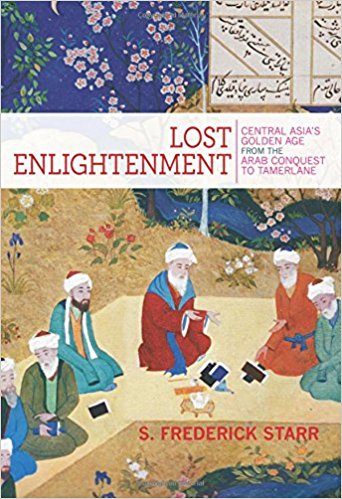 On of the most annoying tropes in modern intellectual discourse, in particular of the postcolonial variety, is its Eurocentrism. That is, the focus on the Western colonial experience is so strong and unwavering that operationally the rest of history becomes prehistory, a formless period which we are ignorant of, when humans were different in fundamental ways.
Empirically this is of course false. Earlier I have mentioned that the Central Asian Iranian polymath, Al-Biruni, had much to say about India. His was one of the earliest extensive anthropologies we have about the subcontinent from the prespective of an outsider. Though Al-Biruni was from a region which had once had a flourishing Buddhist presence, by the 10th century this had faded from historically memory. Whereas earlier Islamic scholars from previous centuries allude to the persistence of Buddhists in what is today Central Asia and Afghanistan, by Al-Biruni’s lifetime non-Muslims were in sharp retreat (though in the fastness of area like Chitral paganism persisted for a thousand years).
In any case, here are some extracts of Al-Biruni on Indian religion:
The belief of educated and uneducated people differs in every nation; for the former strive to conceive abstract ideas and to define general principles, while the latter do not pass beyond the apprehension of the senses and are content with derived rules, without caring for details, especially in questions of religion and law, regarding which opinions and interests are divided.
With regard to God, the Hindus believe that he is one, eternal, without beginning and end, acting by free will, almighty, all-wise, living, giving life, ruling, and preserving; one who is unique in his sovereignty, beyond all likeness and unlikeness, and neither resembling anything nor having anything resemble him. In order to illustrate this, we shall produce some extracts from the Hindu literature….
…
This is what educated people believe about God. They consider the unity of God as absolute, but that everything beside God which may appear as a unity is really a plurality of things. The existence of God they consider as a real existence, because everything that exists, exists through him. It is not impossible to think
…
If we now pass from the ideas of the educated people among the Hindus to those of the common people, we must first state that they present a great variety. Some of them are simply abominable, but similar errors occur also in other religions. Nay, even in Islam we must decidedly disapprove of the anthropomorphic doctrines, the teachings of the Jabriyya sect, the prohibition of the discussion of religious topics, and such like. Every religious sentence destined for the people at large must be carefully worded, as the following example shows. Some Hindu scholar calls God “a point,” meaning to say thereby that the qualities of bodies do not apply to him. Now some uneducated man reads this and imagines that God is as small as a point, and he does not find out what the word “point” in this sentence was really intended to express. He will not even stop with this offensive comparison, but will describe God as much larger, and will say, “He is twelve fingers long and ten fingers broad.” Further, if an uneducated man hears what we have mentioned, that God comprehends the universe so that nothing is concealed from him, he will at once imagine that this comprehending is effected by means of eyesight; that eyesight is only possible by means of an eye, and that two eyes are better than only one; and in consequence he will describe God as having a thousand eyes, meaning to describe his omniscience.
Similar hideous fictions are sometimes met with among the Hindus, especially among those castes who are not allowed to occupy themselves with science, of whom we shall speak hereafter.
As the word of confession, “There is no god but God, Mohammed is his prophet,” is the shibboleth of Islam, the Trinity that of Christianity, and the institution of the Sabbath that of Judaism, so metempsychosis is the shibboleth of the Hindu religion. Therefore he who does not believe in it does not belong to them, and is not reckoned as one of them. For they hold that the soul, as long as it has not risen to the highest absolute intelligence, does not comprehend the totality of objects at once. Therefore it must explore all particular beings and examine all the possibilities.
The point of this post is not to show that Al-Biruni had a good idea of what “Hinduism” was, though I think if you read it on the whole he isn’t that far removed from how some moderns would characterize it. Rather, it is to show that the distinctiveness of Indian religious thought was noticed long before Europeans arrived to create a specific categorization system which we utilize today. The details of the system might deviate from Al-Biruni, or Adi Shankara, but in its broad outlines it’s describing the same thing.
(since some people are not subtle, the title is not to be taken literally)