The Coming Information Apocalypse..

“What happens when anyone can make it appear as if anything has happened, regardless of whether or not it did?” technologist Aviv Ovadya warns/asks in this interesting journey through the existing and coming technologies for manipulating words, images, networks and people..

Aviv says:

“Alarmism can be good — you should be alarmist about this stuff,” Ovadya said one January afternoon before calmly outlining a deeply unsettling projection about the next two decades of fake news, artificial intelligence–assisted misinformation campaigns, and propaganda. “We are so screwed it’s beyond what most of us can imagine,” he said. “We were utterly screwed a year and a half ago and we’re even more screwed now. And depending how far you look into the future it just gets worse.”

That future, according to Ovadya, will arrive with a slew of slick, easy-to-use, and eventually seamless technological tools for manipulating perception and falsifying reality, for which terms have already been coined — “reality apathy,” “automated laser phishing,” and “human puppets.

He then describes how rapidly the technologies for manipulating images, mining personal information and using AI to tailor messages specifically to each user are developing.  And he fears that:

fast-developing tools powered by artificial intelligence, machine learning, and augmented reality tech could be hijacked and used by bad actors to imitate humans and wage an information war”

Of course they will. And the technology development will not stop just because it can be put to scary uses. I cannot think of an example from history where technological development was stopped because X “enlightened individuals” predicted it would be destabilizing. (Aviv is not saying that either, I just wanted to get that out of the way). So eventually everyone will be playing with these tools, and so? Didn’t everyone start using print and then radio, and then TV and then the internet? Maybe it made it possible to coordinate people in larger numbers towards common ends (not necessarily good ones, but I mean the game of politics did not change to some new game, it just ramped up a level), but the numbers coordinated by religion/culture in the past were not trivial either, just slower moving .. The question is this: is there a point where quantitative change becomes qualitative? and what does that mean? What will be radically different? Leaders? followers? patsies? useful idiots?

This is not a rhetorical question, I am really curious what people think will change and what will not.

By the way, i read that while he was waiting for Stalin to shoot him, Bukharin was reading philosophy and this was the question that stumped him; the question of quantitative change versus qualitative change..
The Sun that Rose From the Earth

Shamsur Rahman Faruqi’s The Sun That Rose From the Earth: Insights into the world of Urdu poetry in the Late Mughal Era

By Kabir Altaf

South Asians continue to be fascinated by the Mughal period.  Whether one sees this period as the origin of North India’s high culture (the view of most Pakistanis and partisans of the Islamicate culture) or as hundreds of years of slavery under the Muslims (the view of the Hindu Right), it is clear that the Mughals remain central to India’s history and to the country’s conception of itself.   This period was also the time when there was a great flourishing of the arts, including music and poetry. For example, it was during the reign of Muhammad Shah “Rangila” (r. 1719-1748) that khayal gaiyki—presently the main style of classical vocal music in North India—was developed. Some scholars also state that it was in Muhammad Shah’s time that Urdu replaced Persian as the language of the Mughal court.   What is without question is that the 18th and 19th centuries were when Urdu poetry reached its heights and when the works of authors such as Mir Taqi Mir (1723-1810) and Mirza Ghalib (1797-1869) were created.

It is the lives and works of these poets which forms the core of Shamsur Rahman Faruqi’s collection of novellas, The Sun That Rose From The Earth—the author’s own translation into English of his Urdu work Savaar aur Doosre Afsane.  The three major stories–“Bright Star, Lone Splendour”, “In Such Meetings and Partings, Ultimately” and “The Sun That Rose from the Earth”—are about Ghalib, Mir, and Mushafi respectively.  Faruqi is known as the “grand old man of Urdu literature” and received the Padma Shri from the Government of India in 2009.  His novellas reflect his vast knowledge of Urdu poetry and the culture that produced it.

“In Such Meetings and Partings, Ultimately” is one the longest stories in the book and revolves around Mir Taqi Mir’s romance with Nurus Saadat, a courtesan from Isfahan.  The title comes from one of Mir’s verses from his first divan (1752), which Faruqi translates as follows: “In such meetings and partings, ultimately/ Lives are lost. There is no end to Love/And Beauty never relents.” The story ranges from Armenia—where Nurus Saadat’s mother, Labiba Khanam, is orphaned and becomes a courtesan, to Isfahan, and finally to Delhi, where Mir meets Nurus Saadat.  Since she is a courtesan and is contracted to another, her meetings with Mir must remain secret.  She is also dying of consumption and eventually she pushes Mir away so that he will not have to deal with the grief of her death.

Faruqi is a master at physical description and at describing people’s clothes (which reveals his immense knowledge about the cultural details of the period). Here is his introduction of Mir: “He was twenty-two, twenty-three years of age, tall but slim. His wrists were strong and broad, his eyes, red with sleeplessness—or was it drink?—were still commanding, full of character, though it could be seen that they could twinkle with humour when the occasion demanded. His beard was not long or dense
”  This physical description is followed by a paragraph on Mir’s clothes, which begins: “He had a short, light, full-sleeved tunic on his upper body. It was called nima, or angarkha, depending on the style. The nima was worn waistcoat fashion. The fabric was woolen, russet coloured. It was called banat, but it was not of the best quality and its russet was now fading somewhat. Under the nima he wore a long woolen tunic. His trousers were of Aurangabadi mashru
” (Faruqi 250).  Though such long descriptions tend to slow down the narrative pace, they are invaluable for giving one a sense of the period.

Another noteworthy aspect that Faruqi gets across is that it was not only Muslims who were involved in the creation of Urdu poetry.   One of Mir’s close friends is Rai Kishan Chand Ikhlas, an Urdu poet in his own right.  Similarly, the narrator of the story about Mushafi is Darbari Mal Vafa, whose father, Kanji Mal Saba, was a Persian poet and a student of Mushafi’s. The fact that Hindus are shown as being involved in the creation of Urdu and Persian poetry gives the lie to the modern Hindutva version of history that the religious majority was deeply oppressed under “Muslim” (really Mughal) rule.  Faruqi’s book is thus an essential corrective to the revisionist myths of today’s India.

The book is filled with Persian and Urdu verses, though these suffer from being sometimes awkwardly translated into English.  However, this is my limitation as a reviewer of being unable to fluently read the Urdu version of Faruqi’s book. Probably, the verses would have more power there. In the English version, they sometimes get in the way of advancing the plot.

Overall, The Sun That Rose From The Earth provides a fascinating look at Delhi at the beginning of the long Mughal decline. It is a must-read for those with an interest in Urdu poetry and culture.

Kabir Altaf received a B.A. in Dramatic Literature from George Washington University. He has studied Hindustani Classical Vocal and is currently teaching Music History at the Lahore University of Management Sciences (LUMS)

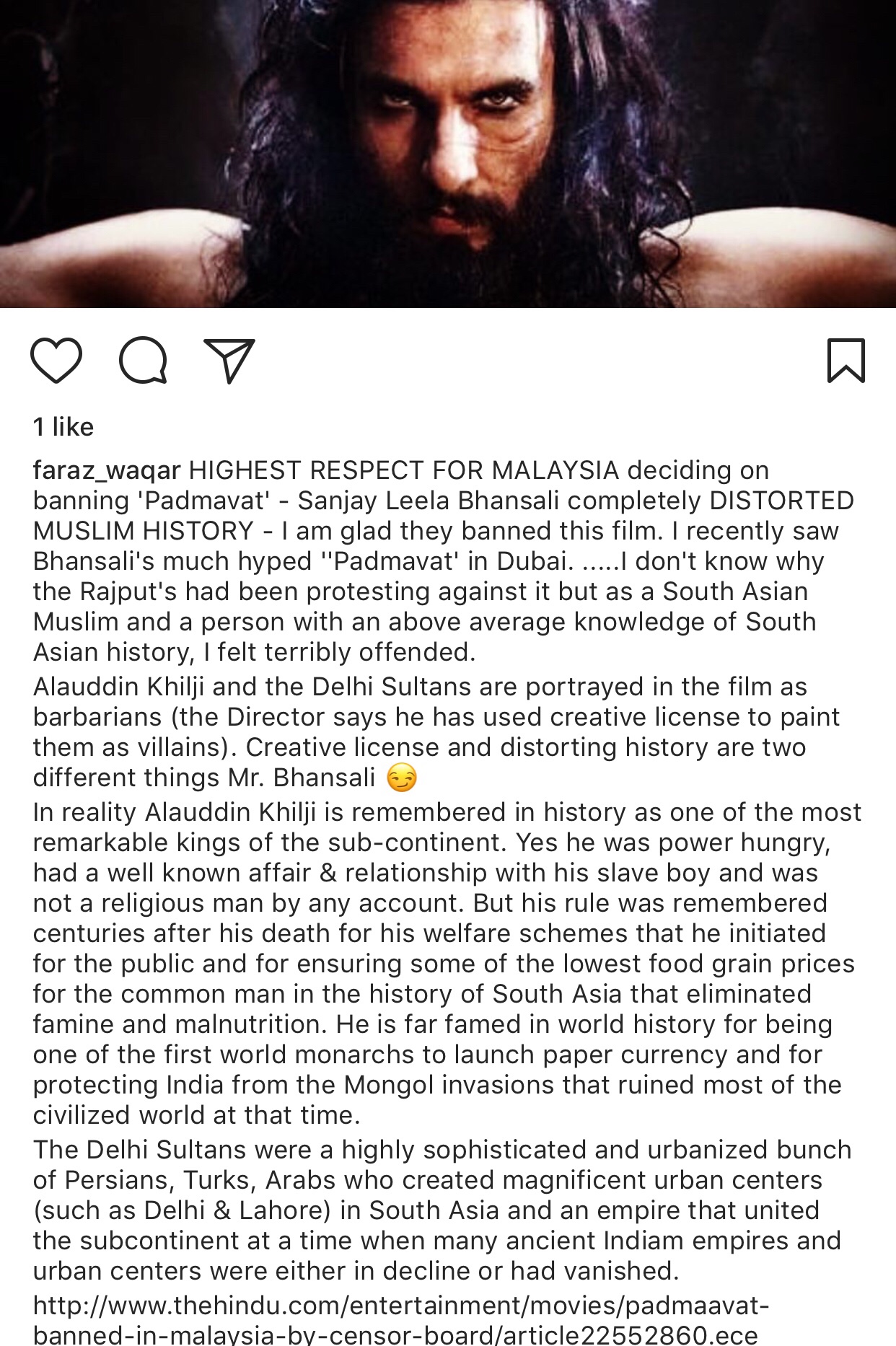
Padmavat banned in Malaysia

I thought I would share this important comment on Alauddin Khilji in light of the Padmavat defamation. I haven’t seen it yet though but I’ve heard it’s very anti-Alauddin..

Review: The House of Government


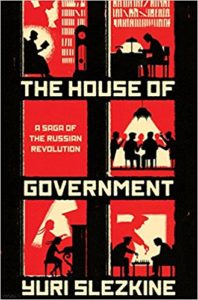
Yuri Slezkine is a Russian-American historian (he is also technically Portuguese-American, since he first emigrated from Russia to Portugal and then came to the US with a Portuguese passport) who has written a number of interesting books, and “The House of Government; a Saga of the Russian Revolution” is his latest and greatest offering.  At over 1000 pages, it is not a lightweight book, literally or metaphorically. What he does is follow the lives of a large number of Bolshevik revolutionaries, from their origins as young rebels (they were almost all very young; very few were over 40 when they took over the largest country in the world) to the heady days of the Bolshevik revolution, to the civil war that followed, the first compromise (the NEP), the second and more serious attempt at “true communism” (the five year plan), the terrible violence and suffering of collectivization,  the victory of communism under Stalin, the insane purge and auto-annihilation that followed that victory, the second world war, the desiccation and death of revolutionary ideology, and, perhaps most strikingly, the coming of age of the next generation without any sincere transfer of the purported official ideology, leading to the final, inevitable collapse of the entire experiment.

Continue reading Review: The House of Government

Paki Elites & where they live

I could be wrong but Pakistan’s elites are in the following cities:

Islamabad is the home to the political & bureaucratic elite. Very chaste and crisp Urdu and a real redoubt of the Pakistani government. I spent alot of time in this city when growing up but have found to be a Talibanised version of an English village (I jest but not by much). The main ethnicities are Punjabis, who are thoroughly Urdufied and Pakistanised and Pathans, who are the exotic minority in the city with their colourful language & weird accents.

Pindi (Rawal) is the ugly older sister of Islamabad but of course is where the military is based and so would probably be where all the military elite (which is the shadow government of the country) is based.

Lahore is the home to the economic elite, after all Punjab is the largest and most influential state. It is no Karachi however and is far more regional than cosmopolitan. It has a rough macho culture and can be a bit crude & crass. However as one of Pakistan’s oldest and most prestigious cities it has considerable sway. Punjabi language & ethnicity has obviously a strong sway here as the common tongue mixed in with Urdu of course.

Pakistan’s greatest city (& my personal favorite) is of course Karachi. It may not necessarily have the moneyed but the social trendsetters are here . Predominantly drawn from Pakistan’s once dominant elite (the Urdu-speakers are sort of like the Wasps in Pakistan, a faded elite) who go to certain schools (well only one, KGS), study abroad, live in Defence & Clifton and have a rather hedonistic approach to life (not in the manic way as upper-crust Lahoris but in a more studied & sophisticated way). The living room arbiters of the cultural life of the nation; English-speakers with Muhajir heritage (of course most of these families have intermarried with the locals etc). Love-hate relationship with India and very confused about Pakistan in general; believe that they are the last continuance of the Mughal decadence of Delhite culture. I may be projecting my own love of Karachi here but it really is the Queen of East; the last redoubt of Urdustan.

Much as I like New Delhi (I much prefer New Delhi to Lahore & my truest roots are there since my late grandmother was born in Karol Bagh) it’s not very inspiring to see the Muslims clustered in ghettos like cattle waiting to be slaughtered. Ghalib would probably find Karachi, more than Delhi, to be a more familiar city..

Fair & Lovely

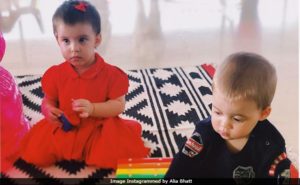
These are K-Jo’s children that he had by surrogacy. They are obviously very cute and beautiful and I’m very happy for him (I’m a huge supporter of surrogacy).

However it seems that they were fertilised with a white egg donor and while I don’t comment on personal choices; I don’t see why he couldn’t have chosen someone of his own race.

What I find strange about Hindutva is that they hate us (the Mughals & their Muslim spawn in India) but are so ambivalent/ almost slavish towards white people.

Classic example of divide & rule; as much as I believe in desi solidarity if a Pakistani or Persian had done such a thing I would not have approved. If one has no pride in one’s colour or heritage then what’s the point

Don’t get me wrong there is nothing wrong in falling in love with people of different races and have children with them; that’s a very beautiful thing. However to go out of one’s way and pull a Michael Jackson; to try and have super-Aryan children, strikes me as a complex too many.

Furthermore Karan has the onus of being one of the most emulated individuals in India and by somehow sending out the impression that white is right is not healthy for a society that is already ridden with colour complex. Roohi & Yash would have been just as lovely in a darker shade of brown..

Ranking Mass Murder..

Ian Johnson in the NYRB asks the question: Who killed more? and does it matter? 


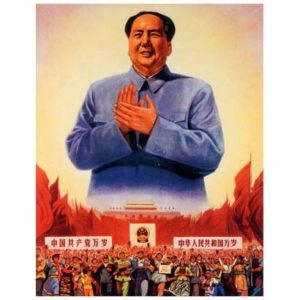
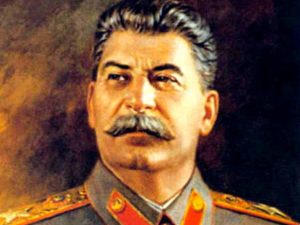
The people on the list are Mao, Stalin and Hitler. Obviously Pol Pot does not make it because there were not enough Cambodians to qualify. Some Indians will complain that Churchill is missing, though I personally think that while he was involved, at times peripherally, in some really bad affairs (Bengal famine is the one most mentioned), he honestly does not belong in this particular list. But that is easier said than proven; which is the point of this post; that this question turns out to be more difficult the more you think about it..  Continue reading Ranking Mass Murder..

Does the Hijab suit desi women?

I have noticed that desi Hijabi women in Britain have a habit of acting very precious; as though every men is into them.

My second observation that just as some styles suit certain races; does the Hijab suit desi women when one of their prized assets, luxuriant thick hair, is all bundled up?

Finally if the point of the Hijab is to make a woman unattractive then isn’t that something to be discouraged; Model minorities should always put their front foot forward.

ps: Oh My Lord! I had literally just posted this article when my wife prompted me that this is World Hijab Day. That is so shocking like within 2 minutes of this article being published I found that out; quell coincidence!!

Brown Pundits

I just realised in my reply to Min Min Pucci that Brown Pundits has turned 7 yrs Old over the Christmas – New Year period of 2017.

I had just met my wife-to-be so BP coincides with the definitive end of my single life. December 15 is my birthday and Dec 15′ 2010 (I had just turned 26) is when I met the very brilliant Vidhi; a birthday gift from the gods..

In that same period I remember feverish discussions on the Sepia Mutiny thread board between Razib, Alia and myself. I can’t remember the topic and I prefer the haziness of my memories to the cold hard truth of a google search.. Legends arise in mists after all.

It was a very interesting Christmas/birthday period since I hadn’t travelled anywhere (my job at that time was very demanding) but everyone else had and it was a curiously still moment in my life.

In the script of my life it was the pregnant pause that would birth the events of the next decade. In a way it was a very innocent and idealistic time of my life; passionate about the far rather than the near. Essentially I was ripe to take my blogging to the next level (I had been blogging at my own blog from 2002 but never as far or as wide as I would have liked)..

It was Razib’s idea to start a brown-focussed weblog (to add to his mighty online empire). I jumped on the idea since I work well collaboratively.

I remember I submitted a list of names and Razib pounced on Brown Pundits; so it was a very serendipitous beginning for the first two “Brown Pundits”.

Omar joined almost immediately and became a formidable (and saner voice than mine; the devil in me loves to bait the mob) presence on this blog. We spent most of the first years discussing Pak-nationalism (the gift that keeps on giving to all desi comment forums) until BP “intermitted” (I can’t remember exactly when).

This reboot of BP is a lot quieter but maybe because we’re a lot older..

Ancient Arya Culture

I believe Arya culture is a lot more ancient than Westernized Indology suggests; although how old I do not know. Arya is a culture, civilization, philosophy and faith rather than ethnicity. It was geographically spread from Iran, to the southern former Soviet Republics, Afghanistan, Tibet, Thailand, Vietnam, Loas, Cambodia, Malaysia, Sumatra, Java, Bali, Sri Lanka; although I don’t know what geography it was “founded” from so to speak. Its offshoots are the East Europeans, Germanic tribes, Romans, Greeks. Maybe they are more than offshoots and part of the original civilization.

Given how little modern science and archaeology knows; perhaps Western Indology Oriental dating needs to be reevaluated. Only an almost infinitely small fraction of ancient artifacts have survived father time; including 385,000 year old tools found in South Asia recently. Here are other articles about this.

Recent very fine comments at Brown Pundits have discussed the relationship between Buddhism and Sanathana Dharma. I see the Buddhist family of threads as part of the broader Sanathana Dharma family of families of threads. The great enlightened master Shakyamuni Gautama Buddha revived and enriched far more ancient masters and teachings. Buddha said he was Rama and Kapila reborn. Kapila is the founder of Samkhya, one of the ten schools of Sanathana Dharma:

There are significant similarities between Buddhism, Nagarjuna (founder of Madhyamaka Buddhism–a subset of Mahayana Buddhism), and Alatasanti Prakarana, or the fourth chapter of Gaudapada’s  Māáč‡ážukya Kārikā. Gaudapada is the guru of Govinda, who is the Guru of Shankaracharya. Multiple sourcing from many eastern calendars and records place Shankaracharya’s date of birth at 509 BC, including but not limited to the 5 Shankaracharya maths in India. Since this date comes from so many literary and historical sources from so many places around South Asia, this date might be correct. Which would date the Alatasanti Prakarana significantly before modern historians date Shakyamuni Gautama Buddha. Which is additional evidence that Buddha may have lived before 1000 BC. Some say Buddha lived 1800 BC. If Buddha was a contemporary of Zarathustra, there is some data consistent with Zarathustra being born 1200 BC to 1500 BC.

I suspect but don’t have evidence that Buddha built upon and enriched great existing streams inside Sanathana Dharma. Buddha said he was a reincarnation of Rama and Kapila, the father of Samkhya Darshana and a figure in Jainism.  [The Dalai Lama frequently praises Samkhya philosophy.] Some elements of Buddhism do not have similarities with known Samkhya texts. Could it be that Buddhism has embedded within it some ancient now lost strains of Samkhya philosophy? I do not know, but since almost all Samkhya texts have been lost, it is hard to say. This does not take anything away from Buddha and Buddhism. There is a reason that almost all of Buddha’s disciples were Hindu Brahmins (along with a few Kshatriya Hindus) and virtually all South Asian Buddhists regarded themselves as Hindu Buddhists as recently as the 1941 British Indian census. There is a reason that many Hindu temples and individual Hindu Puja rooms worship Buddha; and why most Hindus so venerate Buddha.

How are Nirvana or Shunya different from Brahman? [Article has been edited to suggest Buddha might have been born before 1000 BC.]

Brown Pundits