Home – Lost, Found and Imagined

One of Brown Pundit’s commentators, Ruchira, wrote a wonderful piece (titled similarly to this post) on her sadly discontinued still archived but profound blog, Accidental Blogger, in 2007 about being an NRI. It was really very well-written and I thought I would reproduce it here for its 10+ year anniversary. For someone like myself who has such diverse origins and is also “peripatetic” (it’s always nice to have to google words to refresh on their exact meaning); this piece really resonated with me.

This is one of the few personal essays Ruchira had written on her blog and her father-in-law, mentioned below, passed away last year in 2016. I have excerpted & italicized a particularly moving passage on him as he was a noted Urdu writer.

It is bittersweet that Urdu, an exalted melange borne of poets, warriors & nomads, is cursed to wrestle with death every few generations in the bloodiest of circumstances (1857, 1947, 1971). Truly a tongue more suited for war than peace, for pain than pleasure but then perhaps that is what makes it so achingly beautiful and ephemeral.

A noted Urdu writer, my father-in-law has written extensively on his experience and that of others during these traumatic times. One of his most acclaimed books tells the story of Indian Muslim refugees in Pakistan transforming their new domicile in Karachi into the Indian city of Lucknow from where they were displaced, brick by brick in their dreams. His literary account of the losses on both sides of the border vacillates between regret, fear and doubt – sometimes harshly critical, sometimes sadly sentimental and always nostalgic. Unlike my own family, my husband’s parents have visited Pakistan several times – until fairly recently. I have often wondered why my father-in-law couldn’t let go of the memories while my own parents were able to. Was it because he made the partition his literary genre and therefore it remained on his mind long afterwards or conversely, did he write about it because he couldn’t get over the loss?  Could it be that the carnage he witnessed was so etched in his mind that he bears a far greater sense of betrayal? I don’t know.

All in all a very wonderful and lyrical piece, which I’m very happy to share below.

Home – Lost, Found and Imagined

More than twenty six years ago, I left New Delhi, India to follow my peripatetic husband on a journey that would take us across two new continents and four different cities. Until then my birthplace Delhi, was the only home I had known.  Most of my family and all my friends lived there and frankly, I had never imagined leaving that comfortable zone of familiarity except for travel and tourism. In the years since the initial uprooting, the idea of home has undergone dramatic changes in my mind, as has the definition of comfort zone. What exactly is home for any one of us?  Where the heart is or where the hearth is? Is it the place we ourselves grew up in or where we bring up our children?  Do we define it by the food, the smells, the climate or the faces around us? Or is much of it in our minds?

For ages humans have left their homes in search of food and adventure, as also in fear. They have set down new roots in unfamiliar landscapes . Having done so, they have surely at one time or another reflected back on that decision and wondered if their lives were better or worse for having left. Good and bad fortunes are both ascribed to the decision to leave one’s homestead.

Severing ties with once familiar surroundings can come about in two ways – voluntarily and involuntarily.  For some it is a deliberate choice of a new life in a new place. Others leave under the threat of natural or man made disasters. There is no doubt that the initial trauma and the feeling of helplessness is much greater for the latter group. But after years, when things have settled down and a modicum of normalcy returns, do things even out?  Do those who are violently uprooted from their nests continue to pine for their loss longer and more keenly than those who leave peacefully? During WWII did European Jews fleeing the horror in their homeland miss Poland, Germany, Hungary and Lithuania once they found safe haven elsewhere? Or were they able to shed their attachment for the “home” that didn’t accord them dignity and provide sanctuary? Will Palestinian refugees ever accept a peace settlement with Israel without a “right of return” clause?  Are displaced persons from war torn regions more or less nostalgic about their homes than immigrants such as myself who chose to relocate under placid circumstances? Or is it all in our head, how rooted or uprooted we feel in one place or another?

Both of my parents and my father- in-law lost their ancestral homes during the partition of India to what was to become Pakistan (east & west). My own parents came from the eastern wing of partitioned India which saw far less sustained violence than the western part to which my husband’s family belonged. My parents’ side of the family lost considerably more in material wealth and social standing than did my in-laws. Yet there was a dramatic difference in the way the two families chose to remember their loss. Although their circumstances had been seriously and even brutally altered, my parents and other close relatives went on to live reasonably comfortable lives in India, going about their business in a forward looking manner. They explained the partition in terms of politics, history and the perfidy of the British. Their progeny (me included), born in independent India in safe and peaceful circumstances heard their stories and in their imagination, often conjured up a sense of loss more wrenching than the refugees themselves felt. But that is always the peculiar burden of subsequent generations – to feel more helpless, more enraged and more emotionally bereft for the sufferings of their elders. The victims themselves who live through the terror and the humiliation manage to often remember their experience with aloofness and perhaps even triumph, looking back at discrete events which they managed to survive against all odds.

Like my family, my father-in-law too did well for himself in east Africa (he left India soon after the partition) and in India where he returned several years later. But to this day, he remains very sentimental about his interrupted life and his erstwhile home from where he and his family escaped with little more than the shirts on their backs. He witnessed widespread violence during the bloody mayhem that accompanied India’s wrenching territorial partition and population exchange. A noted Urdu writer, my father-in-law has written extensively on his experience and that of others during these traumatic times. One of his most acclaimed books tells the story of Indian Muslim refugees in Pakistan transforming their new domicile in Karachi into the Indian city of Lucknow from where they were displaced, brick by brick in their dreams. His literary account of the losses on both sides of the border vacillates between regret, fear and doubt – sometimes harshly critical, sometimes sadly sentimental and always nostalgic. Unlike my own family, my husband’s parents have visited Pakistan several times – until fairly recently. I have often wondered why my father-in-law couldn’t let go of the memories while my own parents were able to. Was it because he made the partition his literary genre and therefore it remained on his mind long afterwards or conversely, did he write about it because he couldn’t get over the loss?  Could it be that the carnage he witnessed was so etched in his mind that he bears a far greater sense of betrayal? I don’t know.

Last month I came across the poem, “How Do You Like Austin?” by Maurice Leiter at Brian Leiter’s blog. It is apt to quote a few lines from the poem here.

How do you like your new home? …

But isn’t it different from New York?

I am different from them both.
Once the sightseeing is done,
There is really no place
That is not home.

After initial few years of slight disorientation (especially the two years in Germany), like Maurice Leiter, I too no longer fret about where “home” is. It now is a state of mind that transcends  geography. I have found wonderful friends and a rhythm of life that I can enjoy almost everywhere I have lived. In the early days when I visited Delhi, I felt I was going “home.” Gradually as the years went by, the return flight to the US began to acquire the feel of “coming home.”  Since the death of my parents, Delhi, which I still love to visit, feels less and less like the home I knew.  Also, I am now much less connected to the political / social reality in India, a connection which for me, is vital to feeling at home. Delhi will never fully cease to be “home” for me – it is thoroughly integrated in my memory and my imagination. But “home” now no longer evokes a single concrete image as it did in my youth. Several others vie for that honor – places where I have been, where I am now … and hopefully  also where I will be in the future. I can now go back and forth physically between these spaces at different times and emotionally inhabit them simultaneously.  All feel equally comfortable and I don’t have the need to transpose one upon the other to create an illusion of the perfect “home.”
The Mujahid Revolt in Arakan in 1952 (and a SOAS report on the Rohingyas)

Rohingya, Burma  Myanmar, jihad Rohingya, Burma  Myanmar, jihad

The following is a report prepared by the British Foreign office about the “Mujahid Revolt” in Arakan around the time of Burmese independence. It provides good background on the Rohingya issue and is worth a read..

Below that is a report prepared by a researcher at SOAS in 2005, which gives some more background..

“This document is a transcript of an original British Foreign Office document held at the National Archives in Kew, Richmond, Surrey under File Reference FO 371/101002 – FB 1015/63”

CONFIDENTIAL BUR/24/52.
FB 1015/63
The Mujahid Revolt in Arakan

Background

1. The Akyab district of Arakan, the northern parts of which are now the scene of a Muslim rebellion, is even less well provided with communications than are most parts of Burma, and its inaccessibility and its remoteness from the centre of government are principal factors in making the rising possible. The district is separated from Burma proper by the hills of the Arakan Yoma, and west of this range a series of rivers, running roughly from north to south and divided from one another by parallel ranges of higher ground, split the district into several parts between which, as between the district as a whole and the rest of Burma, communication is difficult. On the west, the Naf river flows south to the sea, and in its lower reaches forms the frontier between Burma and East Pakistan.
2. The northern part of the Akyab district comprises two administrative areas, known as townships, namely, the Buthidaung township consisting of the upper part of the Mayu river valley and the adjacent hills, and the Maungdaw township consisting of the lower Naf valley with the coastal strip running south from its estuary. The two townships, now the scene of so much disorder, are separated by hills known as the Mayu range. Though most of the Buthidaung township consists of hills, the Maungdaw townships contains the flat, intensively cultivated land along the lower Naf, and this is one of the most fertile and densely populated parts of Burma. In both townships, the people depend on agriculture for their livelihood, and apart from minor village handicrafts, there is no industry.
3. Owing to the nature of the country, the easiest means of communication both within it and between it and other parts of Arakan is water-transport, either by coastal craft plying to the Naf estuary or by inland-water transport along the Naf and Mayu rivers. Roads are few and poor; railways do not exist. Formerly a light railway ran from the town of Maungdaw on the Naf to the town of Buthidaung on the Mayu, passing through two tunnels on the way; it was constructed by the Arakan Flotilla Company to link their services on the Naf with those on the Mayu and to provide an inland route by which the rice of Maungdaw might reach the rice-mills at Akyab, but it was later abandoned and developed into a metalled roadway. In general, land movement in Buthidaung and Maungdaw townships must be effected by bullock-cart track or by jungle-path. Thus the north of the Akyab district is essentially isolated.
Continue reading The Mujahid Revolt in Arakan in 1952 (and a SOAS report on the Rohingyas)

Life expectancy in South Asia

India is very heterogeneous. Nevertheless, the contrast between Assam and Bangladesh is very curious to me.

1 Kerala 74.9 74.0
2 Delhi 73.2
3 Jammu and Kashmir 72.6
4 Uttarakhand 71.7 60.0
5 Himachal Pradesh 71.6 67.0
5 Punjab 71.6 69.4
5 Maharashtra 71.6 67.2
8 Tamil Nadu 70.6 66.2
9 West Bengal 70.2 64.9
10 Karnataka 68.8 65.3
11 Gujarat 68.7 64.1
12 Haryana 68.6 66.2
13 Andhra Pradesh (includes Telangana) 68.5 64.4
14 Bihar 68.1 61.6
* India 67.9 63.5
15 Rajasthan 67.7 62.0
16 Jharkhand 66.6 58.0
17 Odisha 65.8 59.6
18 Chhattisgarh 64.8 58.0
19 Madhya Pradesh 64.2 58.0
20 Uttar Pradesh 64.1 60.0
21 Assam 63.9 58.9

Review: Jaya by Devdutt Pattanaik


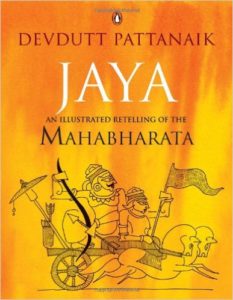
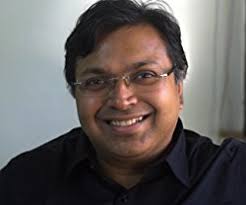
Dr Pattanaik (a medical doctor who became a pharmaceutical executive and then a writer on mythology and an amateur Indologist) has written ”Jaya”, a modern (and highly condensed) “retelling” of the ancient Indian epic, the Mahabharata.  The Mahabharata, in its canonical Sanskrit version (which was likely finalized sometimes in the first 500 years CE) consists of 18 parts of varying length, and is by far the longest epic poem in the world (a 100,000 verses, ten times longer than the Iliad and Odyssey combined). The poem itself states that this is an expanded version of an earlier, much shorter epic, so there is no question about the fact that it has multiple authors who have added and subtracted (mostly added) material over hundreds or even thousands of years to what was probably a much more compact original. A complete English translation (complete as far as possible at that time) was carried out by Krishan Mohan Ganguly and published in 1896 and is available online at Sacred Texts.  It is, of course, extremely long and is written in somewhat archaic and ornate English (for example the word “puissant” is used every time one of the characters is described as powerful; which, as you can imagine, happens a lot in an epic about powerful people), but it has a certain old-fashioned charm and I can attest that dipping into it to look up a particular episode, or just at random, can be an addictive exercise. Scholars, meanwhile, have continued to refine the canonical text,  and new, presumably more authoritative, collections and translations continue to be published. Not being a scholar of either Indic literature or the Mahabharata, I will say no more on that topic, so on to Jaya. Continue reading Review: Jaya by Devdutt Pattanaik

To be brown is to be a civilization


Though I often disagree with him, I do enjoy Zach’s perspective on things because they are different from mine, though we exhibit similarities (e.g., both of us generally align with the center-Right in Anglophone societies). Zach may be one of the first cosmopolitan desis in his pedigree; he, himself of part-Persian heritage, marrying a South Indian Sindhi, probably to raise a family in England. In contrast, I may be the last brown person in my pedigree for a while, fading into legend and myth (or infamy!).

But one of the things I think is important to emphasize is South Asia is a civilizational entity straight-jacketed for historical reasons into a few nation-states. Though India and China are often compared together, they are totally incomparable insofar as the Han majority of China exhibit a racial and linguistic unity which South Asians do not (even though southeast Chinese dialects are unintelligible with Mandarin, the written language is the same).

By and large, I am predisposed to agree that someone like Zach is more prototypically South Asian than I am. Despite his religious heterodoxy his cultural rootedness in the Northwest quadrant of the subcontinent does put him at the “center of the action,” so to speak. In contrast, my own family’s recent origins are on the far eastern fringe of recognizably desi territory…. That is, my family is from the eastern portion of eastern Bengal (my grandmother was almost killed by the crazy elephant of the maharani of Tripura!). It’s interesting that 3,000 years after the emergence of Iron Age South Asian cultures the fulcrum of South Asian identity is where it began all those millennia ago (there was a period between the Mauryas and the Guptas when Bihar was the center).

Talking about what is more prototypically desi is like talking about what is more prototypically “European.” Being French or German is more prototypically European than being Albanian or Russian. We could argue why, but in your heart you know it’s true. There are definitions of Europeans which exclude Albanians and Russians (even though I’d disagree with those personally), but no plausible ones which exclude French and Germans.

Finally, I do think it indicates the limits and flexibility around race and brown identity. As Zach has said repeatedly he is very light-skinned (and part Iranian to boot). Myself, I don’t think anyone would describe me as either light-skinned or dark-skinned; I’m pretty much the average South Asian in complexion. Brown. Not light brown. Or dark brown. Literally just brown. But that doesn’t really weight much in terms of who is “more desi” or not. I have never watched a Bollywood film all the way through. That matters more.

Why Brown Pundits?

This post is in response to Zach and Zimriel.

Why Brown Pundits? Why this blog? And why do I post here, as opposed to Gene Expression or Secular Right, or various other venues which I have access to?

To a great extent the origins of this blog for me go back to the early 2000s, when I began to have some discussions with a few South Asian friends/readers through carbon copy emails. Two of those individuals later went on to co-found the Sepia Munity weblog.

Growing up in an overwhelmingly white America my understanding of South Asians was parochial and superficial, or at least academic, until I entered adulthood. At that point I met various South Asian Americans, and formed some friendships of some durability, and began to see how they viewed the world. How their experiences differed from mine, and how they were similar.

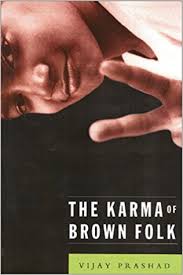
There was, and is, a lot of diversity. But I didn’t see too much of my own perspective being represented. Books such as the Karma Of Brown Folk reflected what I think the most dominant and “hip” element of American South Asian subculture, which is culturally left-wing, and aspires toward what has become bracketed under the term “intersectional.”

I’m not saying that these people are the majority. Just that they vocal, and active, and the ones who are likely to agitate and organize around a South Asian American identity (as opposed to local particularistic identities, such as being a Tamil Brahmin, or a more general identity, such as being a liberal Democrat or conservative Republican).

This blog is a way to get some more heterodox and diverse views out there. For example, I am a libertarian leaning conservative who is an atheist, whose children are “white presenting” as they would say today. I am Bengali by birth and upbringing, but it is unlikely that my descendants will be Bengali in anything but distant lineage. That’s a statement of fact, and neither positive or negative. It probably influences my negative attitude toward fashionable anti-white poses struck by gentry left-wing American South Asians (poses struck in solidarity with other “PoC”), as anti-white prejudice impacts my family directly.

As for what I post here vs. what I post elsewhere: if I’m not aiming toward generality of inference or lesson I’ll post them here. A South Asian illustration of a general principle can be posted elsewhere, but sometimes issues and questions exhibit strong South Asian particularities, and they belong here.


Turkish Turbulence – Shock Therapy for Turkish Armed Forces


From our regular contributor, Dr Hamid Hussain

“A tree won’t fall with a single blow”. Turkish proverb

A failed coup attempt by some members of Turkish Armed Forces (TAF) in July 2016 made international headlines for few days. The news quickly faded away and firm clamp down and a purge inside Turkey prevented any detailed information about the dramatic changes in Turkish Armed Forces in the last two decades.

Events of July 2016 were the final phase of the demise of the first republic established by the country’s founder Kamal Ataturk and emergence of second republic. Turkish Armed Forces assigned themselves the role of guardian of the republic and were a dominant force for almost a century. TAF directly intervened several times while at other times removed civilian governments by orchestrating events behind the scene if they perceived any deviation from the Kamalist secular vision. Turkish Armed Forces have finally met their tragic end and moved out of the power center. Continue reading Turkish Turbulence – Shock Therapy for Turkish Armed Forces

What is Brown Pundits?

Even since I’ve relocated to the Shires and inspired by my wife’s intense focus on her PhD I’ve been trying to write a science fiction novel. It’s going well and it’s sort of something as a bucket list thing to do. One thing I’ve realised as a “writer” is that distractions are lethal.

Therefore virtually all of my activities have been trimmed down so that I can write more. However writing isn’t a linear activity; it’s not only related to time but inspiration.

At any rate how does this all relate to Brown Pundits? I was of course involved in the original Brown Pundits (in the winter 2010/spring 2011) but not so much in this reboot. It’s also difficult to actually pin down what Brown Pundits is about.

Do we talk cricket, no there’s cricinfo for that. Do we talk desi politics, there’s NDTV for that and we don’t really comment on films or popular culture (I watch Hindi films & Urdu drama but my commentaries on it never really get picked up). Also I don’t accept that Brown Pundit is a Sepia Mutiny successor.

The Devil wears Brown

I find the answer lies in the Devil Wears Prada. In one iconic scene an icy Meryl Streep lectures a dowdy Anne Hathaway about how MS’s Haute Couture decisions percolates through every pore and layer of fashion until it reaches to the bottom of Anne’s bargain basement collection.

BP in some ways is like that; we aren’t the High Culture of Brownitude (not by any stretch of the imagination) but the High Intellect of it. We won’t discuss Kashmir necessarily but rather the underlying pattern of conversion to Islam among Kashmiris and how that led to the situation that is today. We aren’t academic specialists by any means because we trade depth for breadth.

Of course each Punditeer has a different style; Razib is precise & knowledgeable, Omar has a ideo-political framework whereas I’m much more hazy and experiential. We also now have Slapstick with his interest in his Kashmiri Pandit history & politics.

I don’t know if I have given a clear definition but I would like to think the intellectual discourses we have here about South Asia and diaspora percolates, even in a tiny way to the rest of Desidom.

The Obliquity of Oriental Culture

I love the Tipping Point genre. I was recently reading Matthew Syed’s “Bounce” & I also enjoyed the Rational Optimist, Black Swan (which is tbh slightly different to the rest). However most of all Obliquity deeply impacted me.

I tend to be oblique, or indirect, in my aims & agenda. It’s something that’s perplexing for my wife, who is extraordinarily direct. That suits her in her academic career and cultural heritage, where Sindhis seem to wear their hearts on their sleeves.

Growing up I was deeply impacted by the very restrained mores of Irani Yazdi Baha’i culture (it’s a thing trust me & disproportionately influential in the South Asian Baha’i world). I always found desi culture much more emotional whereas ours was reserved (almost) to the point of being British, to this day I find emotional outbursts to be troubling and a personal failure (also for someone so chatty I find it difficult to discuss deep emotions).

Further to that is the distinction between the public face and the private one, again a relic of Persian culture. Now by Persian culture I have no idea whether it’s prevalent in the mainstream Iranian culture but rather in the diasporan pockets of Baha’i communities in the Gulf & South Asia. However ta’arof (the art of politeness) is a pretty universal thing among Persian speakers I imagine.

Ironically these Oriental cultural features, obliqueness, reservedness, class consciousness (that one I picked up from Pakistan which in the 90’s & naughties was positively Victorian in its class hierarchy), the private & public distinction were all cultural traits that hyper-accelerated my integration into Britain. Britain is a complex country and the class system is still very much a national feature; especially in the regions that I’m in (Oxbridge Formals sometimes feel straight out of Hogwarths).

For instance take the term “micro-aggression”; now I’m not exactly sure of what it means but I understand it to be a way of scoring racial points by white people in as subtle a way as possible. That’s basically Persian Baha’i culture because our Faith is so idealistic we can never be outright rude to one another so sometimes we manifest anger in very mundane, petty & hurtful ways.

My wife makes a good point that Pakistani & her Sindhi Bhaiband culture are very similar; there’s a love of socialising, glamour and opulence. It’s very very different to the sub-culture that I grew up in that preferred the under-stated and refined rather than scale or lavishness.

Brown Pundits becomes interesting to me personally when I need to reflect on my culture, on my mindset and whether it hinders me or aids me. I imagine if I had moved to the US instead of the UK I would have probably emphasised the more Pakistani-desi aspects of my heritage; the extroversion, the ebullience & conviviality (again I’m talking about the Karachi KGS sub-culture in Pakistan). In Britain however the haunting & melancholic tones of a lost Persia (Yazdi culture is a culture of mourning & redemption in the Faith) chime very very well here and sort of facilitated an interest in the rarer circles of British life.

I do find posh Britain to be a bit common & vulgar at times, especially when they are always trying to get sloshed/drunk (alas the English & their drink), but once one swims among the older generations there is a sense of artistic and aesthetic inclination coupled with a love of good conversation.

However nothing prepared me for my wife’s hugely superior approach she took to life in the West. Whereas I was always holding on to my idealised constructions of my heritage; she essentially junked that and showed me that even though I was a many-generationed Baha’i there was some ineffably Islamic bug about my mentality that hindered my full progression in the West.

Islamic cultures have this sort of puffed up pride because of their glory-days and Bahai’s too can sometimes have it because our Prophets were Persian. This unearned haughtiness makes us feel sometimes that the West is only technically and materially superior but nothing more. What my wife has shown me that Westerners have an extremely different, not so positive, impression of our cultures and that only through internalisation of this reality can one hope to truly compete in the West.

For all this time even though I commingled in White Society, in a variety echelons, I somehow stayed apart & alien to it because my own conception of my heritage bubbled me from truly intimate interactions. It’s only when I popped the bubble, thanks to my wife, did I truly join White Society and began to realise there are things like white privilege, micro-aggression and that white people behaved pretty much like much like ethnic people just much more subtly.

I also realised that when I went from being an exoticised & fascinating alien to be an actual member in England among the English that why so many immigrants prefer the ethnic enclave. The English are not racists but neither are they entirely welcoming. Brexit reflected that silent strain of superiority brought upon by Memories of the Empire.

If I wasn’t naturally very extroverted I would have retreated back to Londonistan a long time ago. My wife & I find ourselves in situations where we are the only dark-haired people in crowded room (it’s shocking how mono-ethnic social groups are in multi-cultural societies) and Society does see us as Sui generis.

  • As an example we have the very un-Asian thing where we have a puppy (mA a beautiful one at that) as opposed to a child (Asians are more into kids, white people more into pets).
  • My wife is more educated and accomplished than I am, which is rare in most couples but even more so in desi ones. We are in Oxbridge because of her.
  • We live in the shires and not in the multi-ethnic urban zones.
  • Even though I write on BP as Pakirani IRL I will usually call myself an Indian out of respect for my wife. The country that I cannot bear to see criticised/humiliated is India because I see it as an attack on my wife (irrational I know).
  • Mind you this is very different to the BP banter where Internet Hindus wants to see me as this crazed Paki & I like to provoke them.
  • For an Asian/Indian woman my wife has privileges and a voice that is rare even in emancipated Western cultures. As I said in my wedding speech I see my wife as an incarnation of Lakshmi (maybe a tad hyperbolic but YOLO).

Hindustani Culture as a Link culture?

I was replying to Razib on this comment & thought that instead I would turn it into a post. I would also like to caveat my thoughts:

I have a habit of generalizing since I am now more used to social media posts than blogging. As always I’m very happy to be wrong and these are simply my thoughts and observations.

The fact that my wife is a Sindhi from Chennai (among other things) gives me an additional window into “other” parts of South Asia long inaccessible to the average Paki. As an aside my late eponymous paternal grandfather was actually Kakazai but my grandmother was an Urdu-speaker from Amroha so that culture was instead transmitted to the next generation. So I speak both as an insider and an outsider to this Hindustani cultural complex that I’m commenting on. Not fully in but neither out & just enough on the margins to make it interesting!

How do Desis from any part of the Subcontinent connect? Let’s say as a thought experiment we take the extremes of the South Asian desi region; a Tamil, Pashtun, Nepali and Bengali walk into a bar. Now none them may know Hindustani or they may speak it with a very heavy accent but that is their common link and bond, which would even inflect the English that they speak to one another (English usage of course depending on their socio-economic strata). If they didn’t want to watch a Hollywood film they could conceivably agree on a Bollywood film. UP, in that way, is the beating heart of all South Asia.

All of these cultures are radically different from “Hindustani” culture (for want of a better term) but there’s enough familiarity with it, which makes it a civilizational links of sorts (or a cultural lingua franca that underpins Desidom).

A culture that hasn’t been touched by Hindustani culture or is far removed from it (both Afghanistan and SE Asia were at times part of the Indic cultural sphere but it’s hard-pressed to consider Burmese, Dari-speakers or even the Hindu Balinese as Desis) doesn’t get absorbed into desiness. Whereas Nepal has sufficiently desi touches even though its people do look very different (most of the Nepalis I’ve met in my limited experience do seem more East than South Asian).

As a final point to a very great extent Hindustani culture has been deeply influenced by the colonial project as part of the divide & rule strategy (I don’t want to go into the Hindi-Urdu controversy hence why I’ve used the neutral term Hindustani). There is a reason why that, despite their very different geographies, both the successor states to the British Raj (India & Pakistan) depended on this culture as a nation-building project for their diametrical ideologies.

There were of course severe limits to the Hindustani language project with riots in South India in mid 60’s and the independence of Bangladesh in 1971 but even so the march of Hindustani as a core component of Desiness remains unabated especially with the rise & rise of Modern India & Hinglish.

Brown Pundits