Hello from Phnom Penh.
It’s interesting to note that in SE Asia the country that has thrived throughout is the one that kept its independence (however nominal), the Kingdom of Siam (Thailand).
Hello from Phnom Penh.
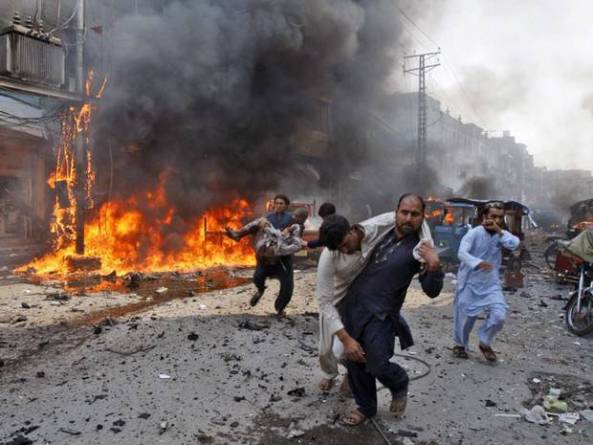
In the latest gruesome attack on the Shia community in Pakistan a suicide bomber blew himself up in a crowded ImambaRa (Shia mosque) and killed over 60 people, including several young children. People are still picking up pieces of their loved ones (literally, see video here if you dare). Who are these killers? how do they convince young people (some reports say the killer in this case was a young man named Abubakr) to go and blow themselves up in a crowd of civilians? For some background, see below.
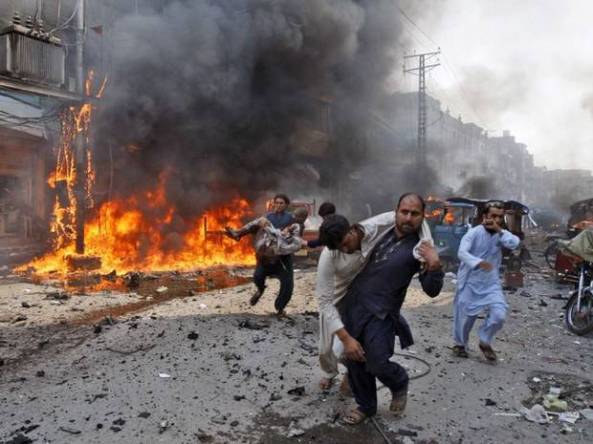
One question i have not been able to resolve: what is the PROXIMATE cause of individual attacks like these? do the LEJ leaders send bombers to blow up people randomly? or do they have specific tactical objectives? by tactical objective I mean things like “release person X or we kill a lot of people” or “pay us X or we blow up shit”…things like that? Will some knowledgeable people from Pakistan comment? Thanks

On to the background: the following is a slightly edited version of an older post on 3quarksdaily. I have added a few words at the very end about how the response of the state looks ineffectual.
Shias (mostly Twelver Shias, but also including smaller groups of Ismailis and Dawoodi Bohras, etc.) make up between 5 and 25% of Pakistan’s population. The exact number is not known because the census does not count them separately and pro and anti-Shia groups routinely exaggerate or downgrade the number of Shias in Pakistan (thus the most militant Sunni group, the Sipah e Sahaba, routinely uses the figure of 2% Shia, which is too low, while Shias sometimes claim they are 30% of the Muslim population, which is probably too high).
Historically Shias were not a “minority group” in Pakistan, in the sense in which modern identity politics talks about “minorities” (a definition that, includes some sense of being oppressed/marginalized by the majority). Shias were part and parcel of the Pakistan movement and a central component of the ruling elite. The “great leader” himself was at least nominally Shia. He was not a conventionally observant Muslim (e.g. he regularly drank alcohol and may have eaten pork) and was for the most part a fairly typical upper-class “Brown sahib”, English in dress and manners, but Indian in origin.
He was born Ismaili Khoja but switched to the more mainstream Twelver Shia sect; a conversion that he attested to in a written affidavit in court. According to Jinnah-scholar Yasser Latif Hamdani, his conversion was due to the Khoja Ismaili sect excommunicating his sisters when they married non-Khojas.
Clearly his position as a Shia was not a significant problem for him as he led the Muslim League’s movement for a separate Muslim state in India. Twelver Shias were well integrated into the Muslim elite, and in opposition to Hindus they were all fellow Muslims. The question of whether Jinnah was Shia or Sunni was occasionally asked but Jinnah always parried it with the fatuous stock reply “was the holy prophet Shia or Sunni?” This irrelevant (and in some ways, irreverent) reply generally worked because theologial fine print was not a priority for the (superficially) Anglicized North Indian Muslim elite. Their Muslim identity distinguished them from Hindus and especially in North India, it was mixed with a certain anti-Indian racism, the assumption being that they themselves were Afghans, Turks, Persians, or even Arabs, and were superior to the locals. This sense of superiority was racial and extended to poorer Muslims who were clearly local converts. One consequence of this attitude being the fact that North Indian Muslims who became prosperous frequently acquired retroactive Turko-Afghan origins. But foreshadowing the problems that would come later as the ideology of Pakistan matured, a Shia-Sunni distinction did arise when Jinnah died; while his sister arranged a hurried Shia funeral inside the house, the state arranged a larger Sunni funeral (led by an anti-shia Sunni cleric) in public.
Having used Islam to separate themselves from their Hindu and Sikh neighbors, the ruling Pakistani elite might occasionally use it to strengthen the spirit of Jihad in Kashmir or carry out other nation-building projects, but they rarely saw it as a potential problem. When the “objectives resolution” was passed to impose an “Islamic” color on Pakistan’s future constitution (“Sovereignty over the entire universe belongs to Allah Almighty alone and the authority which He has delegated to the state of Pakistan, through its people for being exercised within the limits prescribed by Him is a sacred trust.”) only one Muslim member voted against it (that one rebel being the left-wing Mian Ifikharuddin). But it would be wrong to imagine that ALL those who voted for the objectives resolution wanted shariah law in Pakistan. Most of them probably imagined some mildly Islamicate laws but having grown up as members of the pro-British North Indian elite in British-ruled India, they took it for granted that most laws and the basic administrative structure of Pakistan would remain British-colonial, with some harmless Islamic color being added where needed. Most of the push for sharia law came mullahs and from neo-fascist Islamists of the Jamat e Islami and neither group was strongly represented in the ruling elite. Most of these mullahs, as well as the Jamat e Islami, had strongly opposed Jinnah’s project on the logical grounds that no one as ignorant of Islam as Jinnah could possibly create an Islamic state. But they soon realized that this pork-eating, whisky drinking Shia had created the perfect laboratory for their Islamist project and they were quick to move in and try to take ownership.
Jinnah and some of the other Westernized Muslims in the Muslim League (like their later descendant Imran Khan) do seem to have had the vague notion that a true Islamic state was a sort of social-democratic welfare state that was first introduced into the world by the Caliph Omar and then taken by the Swedes to Europe (see here for details regarding this belief). Some others thought Pakistan would be a secular Westminster- style democracy, but one dominated by Muslims rather than Hindus (to which they added the common belief that Muslims are “inherently democratic” while Hindus are “caste-ridden”, an ahistorical belief shared by many Western-educated Hindu liberals btw).
But the mullahs knew better. An Islamic state must have Islamic laws. And these laws are not going to be created de novo by some Westernized Muslims impressed by Scandinavian Social Democracy; they already exist. They were developed over hundreds of years, mostly between the 8th and 12th centuries CE. And they are serious business. Very deep questions of legitimacy, authority and sources were debated by the people who created those laws. Part of the Shia-Sunni dispute has to do with exactly these questions of authority and legitimacy. As long as a state is British or Indian or ethno-nationalist, these debates are mostly history; if and when there is an Islamic renaissance these debates will be part of the historical tradition from which this rennaissance will build it’s new enlightenment. When that happens there will no doubt be people who will cite these 10th century laws as “the basis of our modern Islamic civilization” the same way some people insist the ten commandments are the basis of all Western laws, but that rennaissance and that level of development has yet to occur in any Islamic country. Outside of Saudi Arabia, what we have right now is Western/colonial legal codes and state institutions with a smattering of “sharia punishments” thrown in for effect. But if you have created a state with no real basis except Islamic solidarity it doesn’t take long to start wondering how and when the state will actually become Islamic. And once you start down that path, you have to specify which Islamic law? Or you have to do the hard work of inventing a whole new set. The “new set” option is a step too far for the limited intellectual resources available to the Pakistani elite (and involves fighting past the apostasy and blasphemy roadblocks), so we are back to arguing about which school of classical Islam to follow.
General Zia, who understood these matters better than the average Pakistani liberal, took his theology seriously. He favored hardcore Sunni schools of thought, though his exact allegiances are by no means clear. He also understood the importance of Saudi Arabia as a source of cash, and that may have played a role in his decisions (e.g.a senior official in his govt later claimed that he introduced the Islamic law of cutting off the hands of thieves purely in order to get short-term Saudi favor). In any case, he introduced a series of “Islamic laws” one of which made it compulsory for all Muslims to pay Zakat (poor tax) to the state. Shia jurisprudence regarded this as a personal matter rather than a state matter and a very large number of Shias organized to demand that they be excluded from this law. This Shia movement was given some support by Iran (a message from Khomeini was read out to the largest gathering in Islamabad), a fact that has allowed some apologists to claim that all later problems are part of some sort of proxy war between Iran and Saudi Arabia (a claim that is thoroughly debunked here). While the Shias won that round and were exempted from Zakat, a line had been drawn that has continued to become darker and bloodier with time.
At ground level a lot of this was not due to any single organized conspiracy but involved the confluence of several factors: Islamization put the question of “whose Islam” on the table; Zia’s personal leanings led to support for anti-Shia factions; Saudi Arabia inserted Wahabi-Salafi propaganda into the mix; The Shia response to the Zakat law and open (even if mostly symbolic) support from Iran helped opponents to label them Iranian agents; and modernization and modern education themselves led to a preference for modern (and fascist) versions of Islam in preference to Indian folk Islam with its “superstitious”, it’s heavy Indian coloring of rituals and folk beliefs and it’s striking multicultural colorfulness.
Newly rich Saudi and Gulf individuals wished to promote “true Islam” in Pakistan. Many individuals in Pakistan wished to be paid by Gulf and Saudi millionaires to do the same. While the actual madrassa cannon-fodder came mostly from poor families, the policy the promoted the same came from middle class military officers and their civilian collaborators. Modern education and economics had prepared the minds of many middle class Pakistanis (including many whose families were traditionally Barelvi Sunni) to accept Maudoodi-type “back-to-basics” modern Islamism. Just like traditional folk Hinduism was rejected by Arya Samajis and other Hindu reformers, educated middle class Muslims in Pakistan were ready to reject folk Islam and strive for modernized purity. Thus,in predominantly Barelvi Pakistan, the majority of the new madrassas set up all over the country and paid for by Gulf money turned out to be hardline Deobandi, Ahle hadith and Wahhabi in sectarian orientation.
It is worth repeating that the Anti-Shia polemic was not paramount in the minds of many of the geniuses who promoted these policies. In fact, many in the Pakistani middle class still have no clear idea of where the anti-Shia polemic is coming from. It was not part of our education. While Shias were a minority sect, their version of Karbala and the martyrdom of Husain was widely accepted and reverence for Ali and the house of Ali was part of most Sufi orders. Shia symbolism had spread well beyond the Shias and become part of the cultural heritage of educated Sunnis in South Asia (or maybe, as Jaun Elya points out here, a lot of what is now typically “Shia” had it’s origin within Sunnis, things not necessarily always being divided in exactly the same boxes in which they are divided today). Certainly there were Ahle hadith and Wahhabi mullahs in Pakistan who were frankly anti-Shia, but even they tended to stay away from any direct criticism of Imam Hussein and his family. That this kind of reverence is not a universal feature of the Muslim word is not something that is even vaguely known to most Pakistani or Indian middle class Sunnis. That in Indonesia and Malaysia there is practically no sense of Moharram as a month of universal mourning is a surprise; that the Saudi Wahhabis have a well-developed anti-Shia polemic that brands the Shias as heretics, Jewvish agents and frank enemies of Islam was poorly understood.
But the fact is the Saudi Wahhabis and their fellow travelers DO have such a story. When I first heard the Saudi version (from a Pakistani doctor who had converted to Saudi Islam and ran a “study circle” in our residential camp in Saudi Arabia) it was a bit of a shock. It took a while for me to realize that his version of history was completely mainstream in Saudi Arabia. In this version, Islam (basically a military conquest enterprise from day one) was spreading rapidly on its way to conquer the world, until a Jew named Ibne Saba helped to create a fitna (the first civil war) that sabotaged this first attempt at world conquest. This fitna is now known as the Shia sect and they have been sabotaging Islam ever since. I paraphrase of course, but this is not too far from what any pious Saudi or Gulf millionaire believes. It is therefore no surprise that they spend good money to teach Pakistanis these “truths” and some of them go on to support killers who take the next step and start physically eliminating Shias.
A second and only locally important economic factor was the fact that there were some prominent Shia landlords and power-brokers in Southern Punjab. Anti-Shia polemics combined in those parts with what the Marxists gleefully call “class issues” to give it something of the color of a hardline Sunni revolt against the local Shia elite in these areas.
But the third and most critical component of this perfect storm was the state policy of Jihad or “strategic depth”. The Afghan Jihad that effectively destroyed Afghanistan may have been a CIA project, but from day one it was supported and then hijacked by local actors who had priorities of their own. Cynical Saudis saw it as a way to send away religious zealots to “jihad camp”; Pious Saudis saw it as a way to spread true Islam to the benighted heathens; and GHQ saw it as a golden opportunity to get “strategic depth” in Afghanistan, to be translated later into conquest of Kashmir and projection of power (perhaps even an empire!) in Central Asia.
As a result, the ISI got oodles of cash from the CIA and the Saudis (every American dollar was matched dollar for dollar by the Saudis) and had complete autonomy in who they handed it out to. They handed it out to the most hardline Islamist groups they could find. And the Saudis paid for the madrassas where hardline Islam was to be taught to future suicide bombers. That it included a healthy dose of anti-Shia propaganda was part of the package. Even today, many Pakistanis who have not been directly involved in jihad and anti-jihad have no idea of the kind of ideological poison that was being injected into Pakistan’s Madrassa and Jihad underworld starting in the 1980s and accelerating through the 1990s under state patronage; and continuing even as the state itself became at least partially ambivalent about the cause. One visit to this site and others like it should help to put things in perspective.
Very early on, some of the anti-Shia groups started targeting Shias within Pakistan. Jhang in central Punjab was an early battleground, as were Gilgit, Kohistan and Parachinar. Zia’s regime is known to have actively helped set up the Anjuman e Sipah Sahaba (ASS), the primary anti-Shia militant group, probably as a way of getting political leverage against uppity Shias. Like many other inventions of general Zia (MQM being the most famous) the puppets soon escaped from state control (while continuing to receive help and protection from factions within the state). Ultra-militant offshoots of the ASS (offshoot or deniable-militant-arm, take your pick) like the Lashkar e Jhangvi (LEJ) had launched open war on all Pakistani Shiites by the 1990s. The state made some intermitten efforts to rein them in (most notably in Nawaz Sharif’s second tenure) , but since the same militants were linked by common donors and patrons to other militants that were considered “good” by the state (as in Kashmir Jihadists, Taliban, etc.) and because their “legal” front organizations were friends of the Saudis and of the “good Jihad” factories, this crackdown was always ineffectual and remains so to this day.
The level of violence has steadily accelerated over time. To get an overview of the violence, see here. This has now reached the point where I personally know well-established Shia doctors who abandoned their life in Karachi and escaped to the US because someone across the hall was shot dead in broad daylight because of his sect. In 2012, over 300 Shias were killed or injured in attacks during the holy month of Moharram. Since 2001, nearly a thousand Shia Hazaras have been murdered in Quetta city and its environs and over 3000 injured. In events that evoke the horrors of partition and 1971, Shias were taken down from buses in Kohistan and identified either using their names (there are some typically Shia names, though overlap occurs) or the scars of self-flagellation many Shias have on their backs. They were then shot in cold blood. The term “Shia genocide” has been used and several op-eds have appeared in which prominent writers are asking where this will end.
Predictions: So where will this end? Prediction is where the pundit rubber meets the road, so here goes:
1. The state will make something of an effort to stop this madness. Shias are still not seen as outsiders by most educated Pakistani Sunnis. When middle class Pakistanis say “this cannot be the work of a Muslim” they are being sincere, even if they are not being accurate.
But if the state makes a greater effort to rein in the most hardcore Sunni militants, it will be forced to confront the “good jihadis” who are frequently linked to the same networks. This confrontation will eventually happen, but between now and “eventually” lies much confusion and bloodshed.
2. The Jihadist community will feel the pressure and the division between those who are willing to suspend domestic operations and those who no longer feel ISI has the cause of Jihadist Islam at heart will sharpen. The second group will be targeted by the state and will respond with more indiscriminate anti-Shia attacks. Just as in Iraq, jihadist gangs will blow up random innocent Shias whenever they want to make a point of any kind. Things (purely in terms of numbers killed) will get much worse before they get better. As the state opts out of Jihad (a difficult process, but one that is almost inevitable, the alternatives being extremely unpleasant) the killings will greatly accelerate and will continue for many years before order is re-established. The worst is definitely yet to come. This will naturally mean an accelerating Shia brain drain, but given the numbers that are there, total emigration is not an option. Many will remain and some will undoubtedly become very prominent in the anti-terrorist effort (and some will, unfortunately, become special targets for that reason).
3. IF the state is unable to opt out of Jihadist policies (no more “good jihadis” in Kashmir and Afghanistan and “bad jihadis” within Pakistan) then what? I don’t think even the strategists who want this outcome have thought it through. The economic and political consequences will be horrendous and as conditions deteriorate the weak, corrupt, semi-democratic state will have to give way to a Sunni “purity coup”. Though this may briefly stabilize matters it will eventually end with terrible regional war and the likely breakup of Pakistan. . Since that is a choice that almost no one wants (not India, not the US, not China, though perhaps Afghanistan wouldn’t mind) there will surely be a great deal of multinational effort to prevent such an eventuality. If it does happen, the future may look very different from the recent past (btw, a little explanation of the scenario building in that last link is here).
Sadly, the Tariq Ali type overseas/Westernized-elite Left will play no sensible role in any of this. If we do (God forbid) get to the nationalist-Sunni-coup phase; Pankaj Mishra may find something positive in it (“strength” and the willingness to stand up against imperialism being a high priority for him) but events will not fit into that semi-positive framework for too long.
Addendum: A friend raised the objection that the state may well be trying it’s best. It is just not a very effective state,so they cannot stop the killers. I don’t think we can accept that argument. This is not what “trying your best” looks like and Pakistan in any case is not Nigeria. It is an order of magnitude more capable as a state. It can do much more it if wanted to. For example, in response to any terrorist movement one expects the state to launch a massive propaganda effort against them. All the PR resources of the state (and the resources of the Pakistani state are very potent in this case, see the PR around Kashmir, against Baloch separatism or even the anti-drone campaign that can be turned on or off as needed) are mobilized to identify and demonize the enemy. Has there ever been such an effort against the Lashkar e Jhangvi? much less against their legal fronts and fellow travelers? And in law enforcement, leads are pursued to the end, sympathizers are caught in the dragnet, people are given the message that it is unsafe to support the terrorist program. Has than happened anywhere in Pakistan? Forget about a broad campaign, even in the case of specific attacks there is limited and very hazy information about the investigation and it’s findings. Who planned it? who carried it out? what was their motivation? who has been caught and who is still at large? in many cases, the local police may know a lot of these things a few months down the line, but how much gets communicated to the public? Since very little organized propaganda effort is mounted by the state, the field is open for every conspiracy theory under the sun.
This is not the best the state can do…

btw, the cartoons and the painting are the work of the highly talented Pakistani cartoonist and artist sabir nazar. http://pinterest.com/laiq/sabir-nazar-cartoons/

Obaidullah Aleem wrote this in 1971, it sound like he wrote it for today.
Mr Hamid Hussein, one of the best and most well-informed commentators on the Pakistan army (and the British Indian army and it’s other daughter armies) has sent in this piece:
Year in Review and Year Ahead– Pakistan Army in 2014-15
Hamid Hussain
“A general who advances without coveting fame and retreats without fearing the disgrace, whose only thought is to protect his country and do good service to his sovereign, is the jewel of the kingdom.” Sun Tzu
General Raheel Sharif was appointed Chief of Army Staff (COAS) in November 2013. He decided to work with the existing team of senior officers and didn’t embark on a major re-shuffle right after assuming charge. The responsibilities of COAS of Pakistan army are not limited to the army and he invariably gets involved in domestic politics as well as foreign relations. The argument whether the COAS pushes the door or politicians through their own incompetence opens doors as well as the windows for him to enter the corridors of power is as old as the emergence of Pakistan as an independent state in 1947.
In 2014, General Sharif worked to take control of his own institution, gently pushing civilians on some areas of interest of the army and mediated among quarrelling politicians. This trend will likely continue in 2015. General Sharif opted for a different approach and decided to work with the senior brass put in place by his predecessor, General Ashfaq Pervez Kayani rather than bringing about a new team immediately. This meant that he was first among the equals at the decision making table. I was not expecting forceful decisions from General Sharif, but I was pleasantly surprised when he took the decision about launching operation in North Waziristan quite early in his tenure.
In the last ten years, there has been a gradual shift in the thought processes of the officer corps. Earlier there was debate amongst the senior brass regarding the balance between negotiations and military operations. In recent years, there has been a decisive shift towards clearing all the swamps. In the last year of General Kayani’s tenure, the majority opinion among the inner core was in favor of clearing North Waziristan. The army had completed all their preparations but General Kayani demurred due to reasons best known to him (since his retirement, many are now critical on many of his decisions during his extended tenure). Now with a new COAS, the consensus amongst the existing team and the new chief being first among the equals at the table made the decision about the operation easy.
In 2014, General Sharif used the normal retirement process to bring about a new team. This prevents friction amongst the senior brass and was the correct approach. Newly promoted officers were appointed to important command and staff positions, that included four Corps commanders. General Sharif will be now be presiding at conferences where other members around the table are quite junior to him. This will enable him to carry the team easily with him.
In 2014, there were three main areas of friction with the new civilian government headed by Prime Minister Nawaz Sharif; the decision on a military operation in North Waziristan, the trial of former army chief General Pervez Musharraf and the large scale demonstrations in the capital by a cleric, Tahir ul Qadri and recently empowered political party Pakistan Tehreek-e-Insaaf (PTI) led by Imran Khan with the clear goal of ousting the elected government.
The case of operation in North Waziristan is tragic. Both the previous Pakistan People’s Party government as well as provincial government of Awami National Party (ANP) pushed for the military operation, the army demurred and now when the army decided to take action in 2014, the new civilian government demurred fearing a backlash and started to drag its feet. Both army and civilian rulers share the blame; petty personal and institutional interests clouded their judgement about strategic threats. Finally, when the army announced the start of the operation the civilians simply tagged along.
The army as an institution doesn’t want a public humiliation of their former chief. In addition, General Sharif has had a long personal association with General Musharraf. General Sharif’s elder brother Major Shabbir Sharif was a decorated soldier and was killed in action in 1971. He was General Musharraf’s course mate and he was what Musharraf wanted to be. Since 1998, General Musharraf was more like an elder brother to General Sharif and his career was personally overseen by General Musharraf. As a Brigadier, General Musharraf gave him choice between his Private Secretary (PS) or a course at the Royal College Defence Studies (RCDS) in London and Sharif chose the later. Musharraf promoted him to two stars rank and gave him the choice appointments as GOC of Lahore based 11th Division and later Commandant of Pakistan Military Academy (PMA). The Army brass want the government to give General Musharraf a safe exit, while the civilian government wants the courts to drag him through the coals.
A third complicating factor was the announcement of Tahir ul Qadri and Imran Khan to stage mass demonstrations in the capital to oust the government. Tahir ul Qadri openly asked for direct army intervention. On the other hand, former Director General Inter Services Intelligence (DGISI) Lieutenant General Ahmad Shuja Pasha had some contacts with Imran Khan and many of the politicians who were associated with General Musharraf later joined Imran Khan this raised concerns that Imran had support of the army. To make matters worse, relations between the Prime Minister and DGISI Lieutenant General Zaheer ul Islam deteriorated on the issue of an assassination attempt on a famous journalist and television anchor. Adding fuel to the fire, some senior army officers were also not happy with the Prime Minister. With this background, when massive demonstrations were staged against the government in the capital, the Prime Minister concluded that the army has given its blessing to these manoeuvres. Tahir Qadri and Imran Khan assumed too much and over read the briefs without calculating the impact of the change of command. The trio of the P rime Minister, Imran Khan and Tahir ul Qadri reached such an impasse that General Sharif had to mediate, further eroding civil-military relations. In the process, he re-asserted the army’s control in several important areas.
The year 2014 ended on a very sad note on December 16th, when militants attacked a school run by the army and killed 141 people, 132 of them children. Following the precedent of reacting to events, in a knee jerk reaction, the civilian government started the wholesale hanging of convicted terrorists, telling teachers to come to schools armed with handguns and announcing plans without any homework which they neither had the capacity nor the will to carry out. The Army asked for and got a constitutional amendment in two weeks authorizing the establishment of military courts to try terrorists. Things which should have been done ten years ago with thoughtfulness and coordination were done in hours after the atrocities sowing even more confusion. Neither the Pakistani public nor the international community is confident from such measures.
In 2015, General Sharif will likely continue on the same path, guiding the army in ongoing operations, managing his senior brass and to position senior officers to succeed him in 2016. In addition to national security, he will try to keep a firm control on the key foreign policy areas especially relations with Afghanistan, India and United States. To do this involves keeping open independent channels of communication with Kabul, Washington, London and Beijing and this will invariably keep civil-military relations on a rocky road.
In 2015, two major shuffles will occur in April and October when eight Lieutenant Generals will be hanging up their boots. Among these eight Lieutenant Generals are four Corps Commanders. Appointments in 2015 will also show General Sharif’s own preference about his succession. In my opinion, only three senior officers qualify to fill the COAS post in 2016. They are the current Chief of General Staff (CGS) Lieutenant General Ishfaq Nadeem Ahmad, the current Rawalpindi based X Corps commander Lieutenant General Qamar Javed Bajwa and the current Military Secretary (MS) Lieutenant General Mazhar Jamil. The current DGISI Lieutenant General Rizwan Akhtar will be too junior to be considered for the position. However, his role will be crucial in the next two years. By the fall of 2015, Ishfaq, Qamar and Mazhar would have completed at least two years in their present positions and moving them around will put all three in a position to succeed him. One possibility is swapping the positions of Ishfaq and Qamar while moving Mazhar to command of a Corps (probably Lahore as command of Multan Corps is usually given to an Armored Corps officer). After this repositioning, all three officers will be equally qualified to succeed General Sharif in the fall of 2016.
General Ishfaq is from the 62nd Pakistan Military Academy (PMA) Long Course and was commissioned in the 34th Azad Kashmir (AK) Regiment. He is generally respected for his professionalism. His career is typical of any senior officer serving as Chief of Staff (COS) of the Mangla based I Corps at Brigadier rank, he commanded the 37th Infantry Division operating against militants in Swat and then as Director General Military Operations (DGMO) at Major General rank before his promotion to Lieutenant General. In November 2013, he was brought in as CGS.
Lieutenant General Qamar Javed Bajwa is from the Baloch Regiment. He served as the Chief of Staff (COS) of the Rawalpindi based X Corps at Brigadier rank, then GOC of Force Command Northern Area (FCNA) and Commandant of School of Infantry & Tactics at Major General rank. He was promoted to Lieutenant General rank in August 2013 and appointed Corps Commander of the Rawalpindi based X Corps.
Lieutenant General Mazhar Jamil is a gunner. He served as GOC of the Lahore based 10th Division, Commandant of the PMA and Vice Chief of General Staff (VCGS) before elevation to Lieutenant General rank in September 2013 and appointed Military Secretary (MS).
General Rizwan Akhtar was commissioned into the 4th Frontier Force Regiment. He is considered a good officer by his peers. His career is also typical of senior officers reaching Lieutenant General rank with usual command, staff and instructional appointments. He commanded the 27th Infantry brigade of the 7th Infantry Division from 2005-07. However, all North Waziristan formations were essentially restricted to their posts and there were no offensive operations. The Army was busy cleaning the South Waziristan and the swamps of North Waziristan were rapidly filling with alligators of all shapes and hues. The Army high command was simply reacting to events on the ground with the result that it lost the support of local population in tribal areas. In 2011-12, he was GOC of the 9th Division operating in South Waziristan. He was Director General (DG) of the Sindh Rangers in 2012-14 and involved in the clean-up operation against criminal elements in the city of Karachi. In October 2014, he was promoted to Lieutenant General rank and appointed DGISI. In 2005 as Brigade commander in North Waziristan, he prepared a detailed report about the threats emanating from North Waziristan and response options. In 2008, while at the US Army War College at Carlisle Barracks, Pennsylvania, Rizwan wrote his course paper on the U.S.-Pakistan trust deficit and the war on terror. He made several recommendations on how to bridge the gap in trust between Pakistan and the USA. Now as DGISI, his position enables him to address both these issues – only time will tell how successful he will be in this endeavor.
Generals Ishfaq and Rizwan are the two senior officers amongst the inner core who are in a position to contribute effectively towards the successful conduct of operations, to stay the course while helping to create favorable regional and international dynamics that are beneficial to Pakistan. They are part of the inner core decision making process and if they can continue on the track of the multiple tasks: of completing major military offensives against militant strong holds, trying to improve relations with India and Afghanistan, slowly disentangling Pakistan from the snake pit of Afghanistan and help the COAS to stays in his own lane.
An important task for Generals Sharif and Rizwan is to keep the ISI as an organization on the right track. The majority of serving officers in ISI have no intelligence background, they come for a two to three year stint. This stint has become an important part of climbing the promotion ladder, so they tend to be very cautious, relying too much on reports generated from lower levels without being subject to rigorous questioning (although there are some exceptions). They should demand from all ISI deputy directors to take full control of their respective departments and ensure that the direction from their commanders is carried out in both the letter and the spirit. Some old hands in both the civilian section as well as retired army officers serving on a contract basis need to be moved out as the new generation are fully aware of the changed threat environment so need to be represented at all levels.
One crucial factor in the coming years is the issue of independent external funding of Pakistan’s armed forces. It is clear that with the winding down of the U.S. mission in Afghanistan, budget allocations to Pakistan will be markedly reduced especially for the army. It is likely that a Middle Eastern expeditionary force will be assembled and so more U.S. funding could follow. The great assembly of extremists of all shades, as well as the mother of all sectarian wars is being fought in the Middle East spanning many countries. It will be very tempting for the army command to try and get some piece of the Middle Eastern pie – as the Afghan pie will likely morph into a cookie.
In my opinion, the Pakistan army command should make every effort to stay miles away from the mess of the Middle East despite the instant gratification of some short term financial benefit. The blow-back from Afghanistan is shaking the very foundations of the Pakistani state and Pakistani society and army have paid a heavy price. Pakistan simply does not have the luxury in both capability and will to bear the brunt of another conflict which is becoming more vicious by the day and nobody can predict how things will settle down in the Middle East.
It was expected that after his two previous stints as Prime Minister, Mr. Nawaz Sharif would bring some maturity to the position along with a change from a highly personalized to an institutional form of government – instead his performance in 2014 has been dismal. The government is drifting from crisis to crisis and is unable to present a coherent plan to tackle the critical issues. The space left by civilians is invariably being filled by the army, especially in the security and foreign policy arenas. The Prime Minister needs to bring discipline and professionalism in his team. The security and foreign policy teams should be re-organized by bringing in young and energetic members who get an input from both the professionals in the police and the foreign office as well as outside experts.
The army is by comparison better organized, has better institutional norms, but still has its own problems. Promoting officers and giving them important assignments under whose command hundreds of soldiers deserted, officers who cannot even protect their own offices when their headquarters were bombed by militants with impunity or under whose nose hundreds of militants enter a major city, break open the city jail and free over two hundred prisoners who then go back to their lairs is not a good omen for the army. This has a very negative impact all along the chain of command.
My personal view which has not changed in the last decade is that if any COAS can get the courage to sack a dozen or so officers that will go a long way to improve things. The army brass needs to work within the system and while bypassing civilians is easy, it will aggravate relations and make things more complicated in the long run.
the conflicts of the last decade have put a severe strain on the Pakistani state and society. The Pakistan army is not immune from these changes. One simple fact should be remembered by everyone that civilians and soldiers are on the same team. It is the responsibility of every player to avoid a selfish goal. Friction is expected in any polity, but minimum working relations are mandatory. The personalized decision making process of the Prime Minister and COAS will only aggravate civil military relations as distrust is mutual. Civilian and military leadership should establish institutional mechanisms that will improve working relations, generate respect and ensure continuity of policies.

Ahmed Humayun, an analyst at the “Institute of Social Policy and Understanding” has a post up about the “management of savagery“, a central text in the Islamist militant movement.
Read the whole thing here (at 3quarksdaily).
Excerpts:
Yet it also outlines a clear, coherent worldview, a theory of geopolitical change, and, when it is not recycling superficial clichés about Western decadence, offers penetrating insight into how terrorist tactics can succeed, even when they appear to fail. It is a call to action that outlines a series of concrete, often diabolically clever steps that have been followed by a wide range of militant groups. –
..Such a transitional state prevails in the Muslim world today. Militant groups should therefore seek to ‘vex’ and ‘exhaust’ the enemy- the regimes ruling their societies, or their Western allies. This will catalyze the breakout of chaos – the weakening of political authority across the land, creating opportunities for militants to ‘manage the savagery’ successfully, so that the ultimate goal, an Islamic state, may be realized. –
..Finally, the West can try to live up to its values. The militants correctly identify that concepts like freedom, liberty, and justice resonate in Muslim majority societies, and see them as competing with the ideology they seek to implement. But when we unflinchingly back autocrats in Muslim majority societies instead of defending our stated values, when we support the stultifying status quo instead of encouraging critical political reform, we shrink the space for progressive ideas to emerge and expand opportunities for militant notions. We will never persuade the militants, of course but we might be able to persuade others if we tried. –
See the whole thing at 3qd. It is worth a read. I had the following “off the top of my head” comment on it:
I would add a few minor notes to this excellent analysis of the “management of savagery”:
1. The authors of the Islamist narrative are not self-sufficient in their creation of this narrative. They rely on Islamicate tradition for a lot of their cherry-picked theological quotes and for historical references about events like the early Arab invasion and colonization of the “near East”, the crusades, the invasions of Europe and even the sea-jihad of the Barbary pirates, ..interestingly the Pakistani ones at least seem to make more references to the conquest and loss of Spain and the subsequent centuries of conflict in the Western Mediterranean region than to the Ottoman conquests and subsequent losses in South-Eastern Europe, reflecting perhaps the relative value of the two regions in the eyes of Islamists and in the eyes of broader contemporary audiences; Spain, France and Italy being worthy prizes and the Balkans being mostly a nameless mess. They (surprisingly) do not seem to use a lot of Islamic source material for their polemic about early 20th century European interventions. A lot of THAT narrative is lifted straight from Robert Fisk and other Western writers. SOAS seems to have contributed more to that story than the Ulama and authors of the blessed dar-ul-Islam. This is an interesting sidelight and worth at least one good PhD thesis someday.
2. The author’s final prescriptions (“But when we unflinchingly back autocrats in Muslim majority societies instead of defending our stated values, when we support the stultifying status quo instead of encouraging critical political reform, we shrink the space for progressive ideas to emerge and expand opportunities for militant notions. We will never persuade the militants, of course but we might be able to persuade others if we tried”) are boiler-plate left-liberal talking points, but depending on what actual steps the author has in mind, may be even more unrealistic than the Islamist’s dream of utopia-after-savagery. Of course, the author may have specifics in mind that are far different from what I have heard from other progressive friends. This is always the risk when one imagines details based on a few brief lines of text. But we all rely on such heuristic devices and I get nervous when I hear “progressive ideas” and American foreign policy mentioned in one paragraph. I may be completely misreading the author (and I apologize in advance if I am clubbing him unfairly with people who occasionally read Arundhati Roy as if she is a serious analyst), but these days, I get nervous easily 🙂 … I am afraid that the neo-cons half-baked, ahistorical, poorly thought out creation of neo-liberal Iraq was not far enough from “progressive ideas” for us to feel safe. American support for “progressive ideas” may turn out to be no more helpful than American support of the “stultifying status quo” if it is based on equally superficial notions of history and of the origins of states and of modern society (for better and for worse). Just a thought…
3. There is no single correct thing to do everywhere and at all times and the answer (as always) is “it depends”, but the author’s desire that the US avoid militarily invading far away countries (to save them, or to destroy them) is one we can all agree with and say “Amen”.
Whoever, with deliberate and malicious intention of outraging the religious feelings of any class of citizens of India, by words, either spoken or written, or by signs or by visible representations or otherwise], insults or attempts to insult the religion or the religious beliefs of that class, shall be punished with imprisonment of either description for a term which may extend to 4[three years], or with fine, or with both.
But even with this new and expanded article 295A in place, prosecutions for blasphemy were few and far between until, in the 1980s, General Zia added two new sections to the law in Pakistan and really set the ball rolling. These infamous sections are labelled 295B and 295C.
295-B: Defiling the copy of Holy Qur’an. Whoever wilfully defiles, damages or desecrates a copy of the Holy Qur’an or of an extract there from or uses it in any derogatory manner for any unlawful purpose shall be punishable with imprisonment for life.
295-C: use of derogatory remarks etc., in respect of the Holy Prophet: – who ever by words, either spoken or written, or by visible representation, or by any imputation innuendo, or insinuation, directly, defiles the sacred name of the Holy Prophet Muhammad (PBUH) shall be punished with death, or imprisonment for life and shall also be liable for fine.
In the wake of this latest horrendous outrage, many liberal people are hoping that this blasphemy law can be changed to finally stop or slow down this torrent of prosecutions and killings. Others have noted that the law is not the problem, free-lance enforcement of a broader blasphemy meme in the Muslim community is the problem and will likely persist even if the law is repealed. In my view the law is not the only problem, but it IS a very potent symbol of the surrender of state and society in front of the blasphemy meme. Repeal of the law will not kill that meme, but repeal of the law will be an equally powerful signal that things have changed and that state and society no longer approve of the killing of blasphemers. It will not end the problem, but it will be the beginning of the end. Repeal of the law is not a sufficient condition for this nightmare to end, but it is a very important necessary condition.
Unfortunately, I don’t think such repeal or amendment is actually likely in the foreseeable future. My predictions:
When Salman Rushdie’s book was declared blasphemous and rallies demanding his head were held all over the world and books were burned, General Zia was not the agent of those protests.
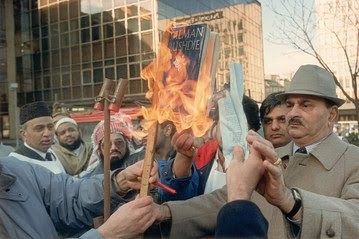
Rushdie went underground and has managed to survive, though some of his translators were not so lucky. But Theo Van Gogh was killed in broad daylight in Amsterdam and Ayan Hirsi Ali was driven underground for producing a supposedly blasphemous movie in liberal Holland. Another blasphemy execution was attempted by textile engineering student Aamir Cheema in Germany. And as expected, Aamir Cheema too has achieved sainthood in Pakistan after he took his own life in a German prison, with his funeral attracting thousands and his grave becoming a popular shrine.
A minister in Musharraf’s enlightened cabinet wrote more than one op-ed commending such acts and fantasizing about the day Salman Rushdie’s skin will be torn from his body with sharp hooks. A fantastically surreal movie has even been made about the execution of Rushdie by Muslim Guerillas who penetrate his secret Zionist hideout and attack him with flying Korans.
I am not kidding.
In 2002 a convicted murderer named Tariq decided to atone for his sins by killing a man accused of blasphemy who happened to be in the same prison in Lahore. Director Syed Noor (known for countless song and dance Lollywood films) produced and directed a movie called aik aur ghazi (one more holy warrior) about this young man and his glorious exploit. It is worth noting that Syed Noor is a “moderate Muslim”, but this has not prevented him from glorifying the actions of a vigilante who killed another prisoner because he believed him guilty of blasphemy.
When a poor christian boy was accused of blasphemy in Lahore, the entire colony he lived in was burned to the ground. When a poor Christian woman named Aasia bibi acted “uppity” in front of some Muslim ladies (see details in the video below), she was charged with blasphemy and sentenced to death. These episodes highlights another important aspect of the blasphemy meme: it functions to bully and oppress minorities by threatening them with legalized lynching in exactly the same way as the “uppity nigger” meme was used to bully and oppress black people in the pre-civil-rights South in the United States. The fear of being accused of blasphemy, enforced by periodic horrific lynchings, ensures that Christians, Hindus and Ahmedis never forget their place and act uppity in front of good Muslims, since any indiscretion could lead to a blasphemy accusation and once accused, your goose is cooked.
Aasia Bibi’s death sentence was so flagrantly unjust that Salman Taseer (whose own father had provided a funeral bier for Ilm Deen), the then governor of Punjab, was moved to say she should be let go and the blasphemy law should be amended to prevent such misuse. He was killed by his own guard for saying so. His guard was garlanded and showered with rose petals by Pakistani lawyers when he appeared in court and now has at least one mosque named in his honor.

HE has not been hanged. In fact, he is a hero to many and has been handing out new death sentences of his own while in prison; he convinced one of his guards to go and shoot a 70 year old mentally unstable British man who has been sentenced to death on blasphemy charges but not yet exectuted (probably not yet executed because he is British). MNA Sherry Rahman introduced a “private member bill” to amend the law and was herself charged with blasphemy for her pains (though being a member of the ruling elite, she has not yet been brought to trial). Rashed Rahman, a well known human rights lawyer was shot dead because he dared to take up the case of a young university lecturer who is being tried for blasphemy on insanely ridiculous grounds in Multan. Javed Ahmed Ghamdi, a liberal cleric who has tried to present religious arguments against this law (a law that clearly goes well beyond anything written even in most of the medieval compilations of shariah law) has had his assistant killed and is now living in exile in Malaysia. “Respected” Pakistani religious scholars have declared him to be an apostate and an agent of the enemies of Islam. The law is no closer to repeal or even modification.
And just a few weeks ago, the spineless Lahore High Court upheld the death sentence on Aasia Bibi. She may be hanged before the Governor’s killer.
In fact. the law is now moving on to fresh pastures. There is a sustained push by anti-Shia groups to use the law against Shias just as it is being used against Ahmedis, Christians and other minorities. The law does not specifically mention the issue of blasphemy against the companions of the prophet (the sahaba), but why not? if you insult any of the companions of the prophet, do you not insult the prophet? Never mind that the companions themselves were frequently at each other’s throats, but today the issue is the wedge that will open the way to legal persecution of Shias and help push them into the same position now occupied in daily fear by Christians, Hindus and Ahmedis. Several Shias have already been charged under the law and there is more to come. In fact, on the same day when Shahzad and Shama met their gruesome fate in Kot Radha Kishan, a Shia Zakir was killed in custody in Gujrat. He may have been mentally unstable and had been arrested for brawling in the bazar. In custody, he continues to harangue the police about the calumnies suffered by the Banu Hashim (the family of the prophet) at the hands of some of the companions (the sahaba). This so upset one of the police officers present that he got an axe and decapitated the prisoner inside the police station. The police officer concerned has been arrested and desperate attempts are being made to play down the sectarian dimension of this killing, but all will become clear once the policeman is put on trial. The ASWJ (the main umbrella anti-Shia organization) will protest that he was only defending the honor of the prophet. Punishment will not be easy. “Sweep under the rug” is likely to be the compromise.
In short, killing blasphemers is considered a highly admirable deed by a very large number of people in Pakistan (and probably in several other Islamicate nations). While it is indeed true that misuse of the law has become common after General Zia’s time (an intended consequence, as one aim of such laws is to harass and browbeat all potential opposition), the law has deeper roots and liberals who believe that it is possible to make a distinction between true blasphemy and misuse of the law, may find that this line is not easy to draw. The second, and perhaps more potent reason the law will not be repealed is because the law was consciously meant to promote the Islamist project that the deep state (or a powerful section of the deep state) continues to desire in Pakistan. The blasphemy law is a ready-made weapon against all secular opposition to the military-mullah alliance (though some sections of the military now seem to have abandoned that alliance, hence the qualification “section of the deep state”). Secular parties are suspected of being soft on India and are considered a danger to the Kashmir Jihad and other projects dear to the heart of the deep state. At the same time, Islamist parties provide ideological support and manpower for those beloved causes. In this way, the officers of the deep state, even when they are not personally religious, recognize the need for an alliance with religious parties and against secular political forces (Musharraf was a good example). They may have been forced into an uneasy (temporary?) compromise with secular parties by circumstances beyond their control (aka America) but with American withdrawal coming soon, the deep state may not wish to alienate its mullah constituency too much. They will be needed again once the Yankees are gone. Hence too, no repeal at this time.
 In Niger, crowds have already burned several churches and several people have been killed (it seems they were not impressed by Pope Francis’ attempt to use this moment to ask for insult-protection for all faiths). More such stuff may happen in the days and weeks to come. In any case the Islamists do not have to respond soon. Patience is one of their virtues. Revenge attacks will come some day even if nothing happens soon. They have long memories. They are not done yet.
Longer term, the outcome in Western countries is likely to be more blasphemy, not less (things will be more confused in the world’s largest democracy). And it will not all be some principled defense of free speech. In terms of abstract principle, the French (and many other European countries) are not without their own hypocrisies. Many European countries have laws against “hate speech” , holocaust denial and even blasphemy that are a mockery of free speech (and that do not really promote the peace and harmony they are supposed to be promoting; see a must read article by Sam Schulman on this issue) They frequently do not apply these laws, or fail to convict when they do apply them (and punishments are very very mild), so the actual situation on the ground is not as bad as it is in many Islamicate or Marxicate countries, but it is certainly not ideal. The United States is, in terms of abstract principles, probably the best country in the world for freedom of expression. As in all human endeavors, there is some distance between the ideal and the practice even in these United States, but legal restrictions on freedom of expression are lower in the US than in any country I can think of (past or present). Thank Allah for the first amendment.
But while discussions of abstract principle have their place, they can also distract from far more obvious and simpler points. In this case, here is the situation: there are people of many religions in Europe, in Japan, in China, in the Americas (North AND South) and in all these religions (except Islam) it is now the norm to argue about the foundational myths and to make fun of them. Some people take them literally (in ALL religions), many people deeply respect them, but some find them totally unbelievable and others just make jokes about them. In this atmosphere, you have a Muslim population that is asking for very special treatment for their particular myths. They are saying (in effect) that not only will WE live under rules XYZ, we want EVERYONE to live under rules XYZ. But they (and their intellectually more sophisticated defenders in the Western liberal elite) also insist they are not different in principle from anyone else. They also have ongoing and historic disputes with many groups (including, for example, right wing anti-immigrant politicians, Zionists, Jews in general, Christian religious nutjobs, Serbs, etc etc). In this setting, how likely is it that everyone in Western societies will accept MUSLIM rules that even some Muslims find unbearably oppressive? …I think it is not very likely.
btw, Charlie Hebdo itself has come out of this tragedy with flying colors. The accusation that they are some kind of racist right wing publication was a canard in any case, and their current issue proves it. You can read more about it here.
Anyway, here are my predictions:
1. More blasphemy in the West. Things will go back and forth, but the overall trend is that Islamicate taboos on satirizing Islam will gradually fall, as will taboos on discussing early Islamic history any differently from the histories of other religions or other ideologies. There will be more attacks, more Islamophobia (both real as well as imagined-SOAS-type Islamophobia) and more unpleasantness all around, but the overall trend will be towards more criticism and more satire and ever fewer taboos.
2. In the Islamicate core, blasphemy will remain a huge big deal and many more people may yet share the fate of Raif Badawi (or worse), but the internet will ensure that the discussions that will become common in the West will slowly make their way into the Islamicate core as well. But they will invite a backlash and in places (like Pakistan) things will get worse before they get better.
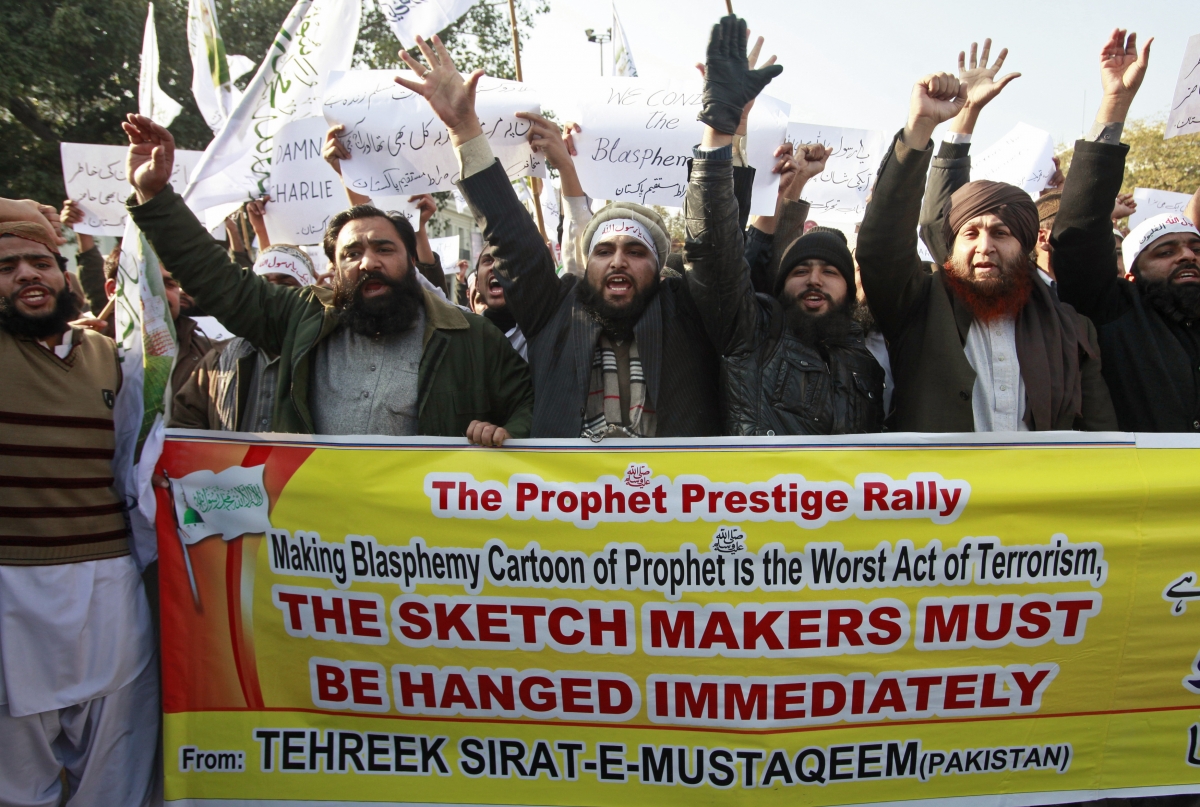

3. PostMarxist thinkers will split further, with some joining the critics of Islamicate taboos and other defending them in the cause of fighting Islamophobia. Many of them will continue to insist (not always without justification) that the “real issues” are economic or political, not religious, and that Islamophobia is real and the people on Fox News really do have more power than the Islamists still living in Western Muslim communities, but the circle within which religion is ALWAYS “not the real issue” will shrink, not expand. This is not of much interest to many people (since Post-Marxists don’t actually run the world, in the “West” or the “East”), but is always of interest to some of us because of the friends and family we hang out with. It will not be a happy few years in this circle as things in the Islamicate core get worse, Islamophobia (the actual cases) gets worse and neither Zionists nor Palestinians get to win cleanly. I feel a bit sad about this.
4. “Reform Islam” (consciously or unconsciously modeled on Reform Judaism) as promoted by people like Reza Aslan or Karen Armstrong may eventually become a real thing, with some sort of coherent theological framework and it’s own network of mosques and religous teachers, but we are nowhere close to it being a reality already. The notion that there is already some kind of “moderate Islam” that lies hidden under a recent Wahabi overlay and can be recovered by promoting Sufiism and the poetry of Maulana Rumi is highly exaggerated. Blasphemy and apostasy, for example, are capital crimes in ALL major sects of Islam and a few superficial books from Reza Aslan or Armstrong are not enough to change that. On the other hand, where there is damand, someone will eventually provide supply. These books are not completely useless. In the years to come, other, more subtle, more knowledgeable and more sophisticated thinkers will no doubt create such Islams (plural) in the Western world and in China. But not so easily in the Islamicate core. Things there will get worse before they get better. Dr Ali Minai has an excellent piece about some of the work that will have to be done.
The full-frontal Islamist memes meanwhile can be seen in this excellent video. Our Imam in school used to say a lot of these things in 1974 and we thought it was more funny than threatening. But they were serious and here we are today.
(function(d, s, id) { var js, fjs = d.getElementsByTagName(s)[0]; if (d.getElementById(id)) return; js = d.createElement(s); js.id = id; js.src = “//connect.facebook.net/en_US/all.js#xfbml=1”; fjs.parentNode.insertBefore(js, fjs); }(document, ‘script’, ‘facebook-jssdk’));
btw, as an illustration of things to come: several people (and more important, the magazine Newsweek) have posted respectful portraits of the prophet Mohammed painted by Islamic artists in Iran, Turkic and Mughal lands in the pre-colonial era. See for example


Btw, Hafiz Saeed is on it..

There is never a point to deliberately offend; in fact BP is a perennial victim of that.
There was a time in our first year when we were hitting a tipping point and then we became a target, which led to several website issues. Ever since we moved from WordPress to Blogger our user engagement is a fraction of what it was.
Leave a comment if you do; I’m not expecting many to be honest even if we do have robust viewing figures.
The first couple years of the blog had an excellent comments section especially when we were WordPress.
http://uk.eonline.com/news/614318/naya-rivera-says-showering-daily-is-a-white-people-thing-watch-now