Furious Confusions

A
PTI supporter I know on-line sent me the piece “An Ode to Fury
by Fahd Husain in the Nov 19 Express Tribune, with the implication that the
fury discussed in this article justified the “revolution” being fomented by PTI
and PAT. The following is an extended version of my response, which may also
address critiques by others on my earlier piece, “The
Tragedy of Imran Khan and the Insafian Revolution
”.
The
people of Pakistan have every right to be furious. They should be furious at
those who have led them for 67 years and have brought them to their current
state. But they should be even more furious at themselves for allowing this to
happen: for electing incompetent leaders when given the chance, and for
welcoming dictators with celebrations when they grew tired of those they had
elected; for their worship of personalities and their ignoring of institutions;
for buying into a toxic and bigoted ideology in the name of faith and
patriotism ; for teaching their children mythology dressed as history; and for
swallowing the propaganda of civilian and military governments without ever
checking for its veracity. The deaths of children in Thar is indeed an
incredible tragedy, but these children didn’t just start dying this year; they’ve
been dying for decades
– even centuries. It is a sad fact that the society
at large in that part of the world has not cared much for the plight of the
poor and the powerless. I’m glad that the people of Pakistan
are now furious about it, but will they respond by repenting of their own ways,
or will they again go looking for fantasy solutions peddled by snake oil salesmen
with big words and no ideas? As the poet Iqbal Azeem said eloquently:
 badalnaa hae to rindoN say
kaho apnaa chalan badlayN
 faqat
saaqi badal dayne se maekhaana na badlay gaa
(For
true change to happen, tell the drinkers to change their own ways; the tavern
will not change just by replacing the one serving the wine)
What
I see is that some people, furious at the country’s conditions, are looking to
yet another savior running on the cult of personality. To the extent that Imran
Khan is embodying the justifiable fury of the Pakistani people, he is serving a
useful function. But history shows that those who embody such fury seldom, if
ever, turn out to be actual saviors, or even good leaders. The extreme examples of this are Hitler and Mussolini, both of whom expressed the real anger of people overreal problems in their countries, but in the end, created even greater problems. I do not
imply that Imran Khan is an extremist like these two, but his movement in its current manifestation does pose a real danger. A revolution driven by anger always leads first to incredible
horrors, as was seen in France, Russia, China, and, to some extent, in Iran. Only
in the long run do such revolutions move to their different outcomes – in most
cases, disillusionment. Once people are brought to a frenzy, they cannot be
controlled even by the leaders who led them there. The spark of fury that
ignites revolution turns easily into fires of vengeance and hate. Is that what
Pakistanis want? If so, Imran Khan is their man – though he should remember
that the first people such revolutions consume are often their own leaders.
And in almost all cases, the end result is not a democratic system, but a
strongman dictator.
However,
I am comforted by the fact that, while understandably furious, the people of
Pakistan are not in a revolutionary mood. Imran Khan can gather a few tens of
thousands – occasionally a few hundred thousand in large cities – for a
one-night stand with music and entertainment, but there is no ocean of humans
out in the streets of Pakistan day and night, as there was in Iran in 1978 or
in Egypt in 2011, even though neither revolution produced a particularly
desirable outcome in the short term. Most people still seem to understand that,
all said and done, Imran Khan is yet another politician promising the moon. And
they are strengthened in their opinion when they see the opportunists
surrounding Imran Khan, and his own feckless behavior. Gravitas, though much
ridiculed by those who lack it, is indeed an essential component of a true
leader’s make-up. It is what gives them the dignity to command respect and
expect loyalty. Washington and Lincoln had it, Ataturk had it, Gandhi, Nehru
and Jinnah had it. Imran Khan, bless his heart, just doesn’t. It is worth
noting that all the gentlemen I mentioned achieved far greater ends without
once resorting to the kind of personal insults and empty threats that issue
forth every night from the roof of the PTI container. Can anyone imagine Mohammad
Ali Jinnah or Mahatama Gandhi speaking in the idiom that Imran Khan, Shah
Mahmud Qureshi and Shaikh Rashid use? They were erudite, dignified and
hyper-intelligent individuals with the self-control and depth necessary in true
leaders. They spoke firmly and eloquently, but with civility; their ideas moved
not only their followers but also their foes by the force of their logic and
conviction, not by the use of locker-room trash-talk. Today, one can disagree
with their ideas, but no one can deny their stature – and this was apparent
even before they had succeeded in their causes.
I
think that the passionate defenders of Imran Khan conflate two distinct things.
The first is a justifiable feeling of frustration with the current order and
the desire to change it. The second is the belief that, because they are giving
voice to popular frustration,  Imran Khan
and PTI are going to fix the problem. Unfortunately, the latter does not follow
automatically from the former. Just because your pain is real and someone gives
voice to it does not imply that they can heal it, or even have the first idea
of how to do so. Everything I have seen suggests to me that Imran Khan does not
have the knowledge, character, judgment or temperament to do what it will take.
In
the article, Fahd Husain says, “A state and a government that has lost
the ability to care, has lost the mandate to rule.” Perhaps so, but by these
standards has any government in Pakistan ever had a mandate to rule? And who
can say that those who rule post-revolution will truly care? If history is any
guide, the revolution will probably lead to an even less caring government by an
even less accountable group. I could be
wrong, of course … and indeed, would be happy to be wrong. But at this point,
I can only modify Iqbal’s words to say:
  na Qadri meN ne Imran mayN
numood is kee
  ye rooh apne badan kee
talaash mayN hae abhee
(neither Qadri nor Imran provide
what is needed; the spirit [of change] is still in search of a body it can
inhabit)
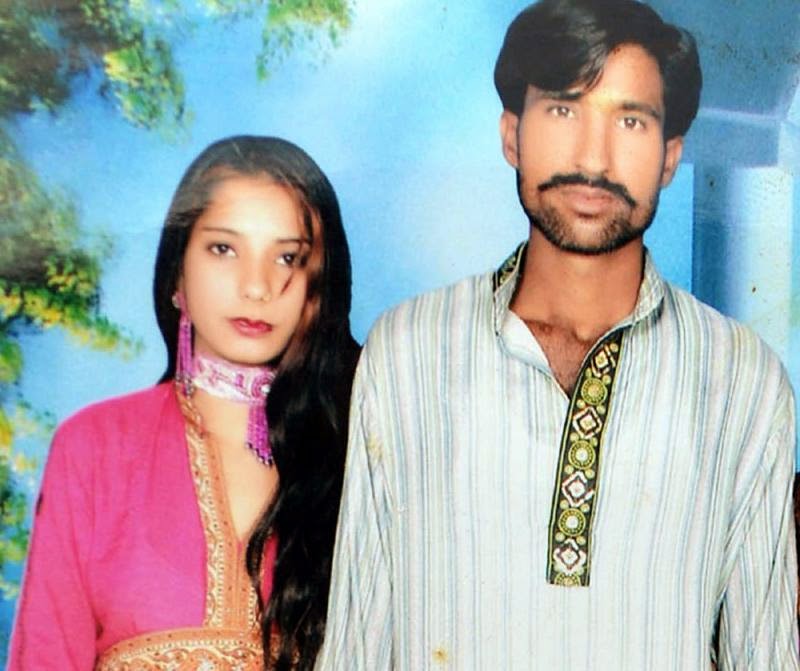
Burnt Offering: The Martyrdom of Shama and Shahzad Masih

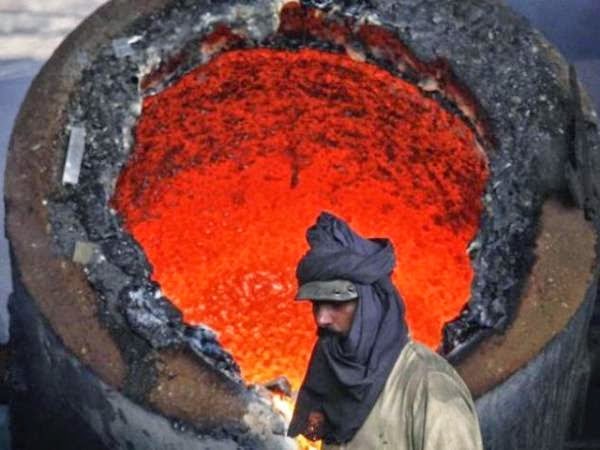
Shama and Shahzad Masih were poor Christians who lived in the small village of Chak 59 in the Tehsil (subdivision) of Kot Radha Kishan near Lahore. It is not a remote area (though some orientalist in the BBC has managed to describe it as such), being a well developed center of the leather industry lcoated only 60 kilometers from the provincial capital of Lahore on a major national highway (and is the home of 2 former prime ministers of Pakistan!). Like many other poor people in their village, they worked as modern-day slaves in the local brick kiln. This, by the way, is not an exaggerated or poetic description of their employment status; bonded labor in brick kilns in India and Pakistan is internationally recognized as a type of modern slavery and involves many of the abuses known to us from books and movies about slaves in the days of yore.

The young couple had 4 children: Solomon (8) and Zeeshan (5) had been given to an uncle for adoption, probably due to the parent’s poverty. Sonia (4) and Poonam (18mths) lived with them and Shama was pregnant again with her fifth child. Her father-in-law had died recently and a few days later Shama cleaned out his room and disposed of his old papers by burning them. He had been an “amil” (a folk healer) who used various religious texts in his amulets and suchlike, and the burnt papers apparently included some with arabic writing on them. Shama, who was illiterate and so could not read them in any case, burnt the lot and threw the remains on a nearby garbage heap.What happened next is best described in this report from World Watch Monitor (corroborated to me by a friend in the police as the best description of the event):

“On Sunday, Shama burned them all and threw the ashes on a garbage heap outside their quarters. Shama never meant any disrespect to Islam as she was totally illiterate and had no idea what the amulets contained,” she said. “A few people recognized partially burned pages in the ash and raised a cry that Shama had burned the Qur’an.”
Shahzad Masih and his five brothers worked for many years at the brick kiln, owned by Yousuf Gujjar. Parveen said Shahzad and his brothers went to Gujjar to resolve the matter after the situation got tense in the village. “Gujjar on the one hand assured us that nothing would happen, and on the other hand asked his accountant not to let Shahzad and Shama flee the village without paying back their bond money”, (taken from them as an ‘advance’ against their employment and wages).
By Monday night, some Muslim neighbors had informed the police of the alleged desecration and warned of a possible attack on the Christian couple, Parveen said. “That night I had Shahzad and Shama sleep in my home so that if the police arrested them, at least we would know.”At about 6 a.m. when Shahzad and Shama went back to their own home in order to prepare for work, an angry mob began pouring into their quarters. Sensing the danger all the Christians fled except Shama’s sister Yasmeen (married to Shahzad’s brother Fiaz Masih).Yasmeen said they were still preparing breakfast when a few more people knocked at their door and enquired about Shama. 
“They entered the house and one of the men dragged Shama out. Shama had their youngest daughter Poonam in her arms. That man snatched Poonam and threw her on the floor…So brick kiln guard Muhammad Akram rescued Shama and took her to the kiln office (only a few yards away from their house) and locked her in there, to save her from the attackers.”
“By then, the number of mobsters was very small, but we could hear announcements being made from mosque loudspeakers in nearby villages – that a Christian woman had desecrated the Qur’an”.Yasmeen said people from five surrounding villages – Chak 60, Rosey, Pailan, Nawan Pindi and Hatnian – were gathered together by the residents of Chak 59 and their brick kiln coworkers.
Soon thousands of men armed with clubs, hatchets and axes loaded onto tractors and trolleys began pouring in.(The guard) Akram had locked the main kiln office door from the outside, but the angry protestors broke in anyway. But they failed to break the iron door of the office inside, and Shama and Shahzad must have locked it from inside.”The angry protestors then climbed on to the roof, and broke it in, “as if it was made of wood, straw and mud” said Yasmeen.She says these men then opened the door from inside and brought the couple into the open, where the highly-charged protestors were ready to attack.
“They beat them with wooden clubs on their heads, and hatchets, before they were both tied to a tractor and pulled out onto a road which was under construction, covered with crushed stones.”“I think they were unconscious, but still breathing, but the mob was still not willing to leave them alone,” said Yasmeen. “They took some petrol from a tractor and doused their bodies and threw them in the kiln. Then I lost hope and fled with my children from there.”
Another relative, Parvaiz Shehzad, who also lives in Clarkabad, said that Muslims of neighboring villages “were very much jealous of Christians”. The village is named after Robert Clark (1825–1900), the first Anglican missionary to Pakistan. Parvaiz Shehzad said it was the first village in the district that had electricity, a bank, a post office and a high school.“Most educated people of surrounding villages had studied in in Clarkabad…Strife between the Christian villagers and Muslim villagers has been a common feature in recent years”.As Shehzad and Shama were of Clarkabad, he claims jealousy came into play.
The dead woman’s sister Yasmeen says that during the entire violent attack, a police van was present, but because they were so few, the police did not take charge. “Some men asked them to fire into the air to quell the protestors, because the mob had no weapons to fire back…Shama and her husband might have survived if the police had taken timely action.”
Heavy contingents of police did arrive at the scene after the crowd had killed the couple. A local media reports that the police have arrested at least 42 people in connection with the case.The police themselves filed the case and lodged the First Information Report (FIR), [no. 475/14], registered in Kot Radha Kishan Police Station. The FIR states that 500 to 600 men tortured the Christian couple. The FIR identifies 60 men by name and says that:“the incident took place after the above-nominated persons gathered a crowd of people and roused their passion though false announcements from the mosque (loudspeakers) of desecration of the Qur’an.”...


Another eyewitness reports that when the young couple, beaten to near death, were put into the fire, a large heavy iron sheet was put on top of them to hold them down; as if the crowd wanted to make sure that they would burn. As if there was ever any doubt. As if there could be a different ending after a mob had arrived to defend the honor of Allah and his prophet. As if this was not 2014 in Kot Radha Kishan (“stronghold of Radha and Krishna“). As if this was not Kalyug…

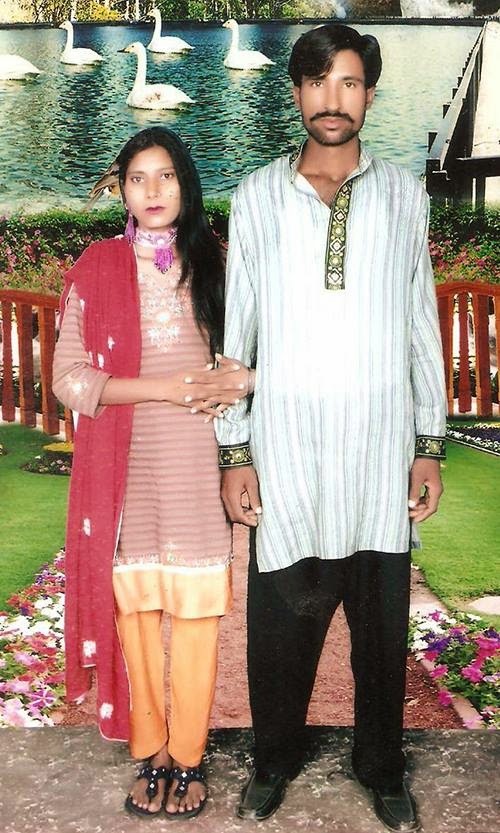
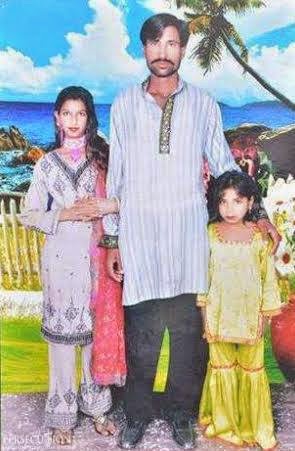
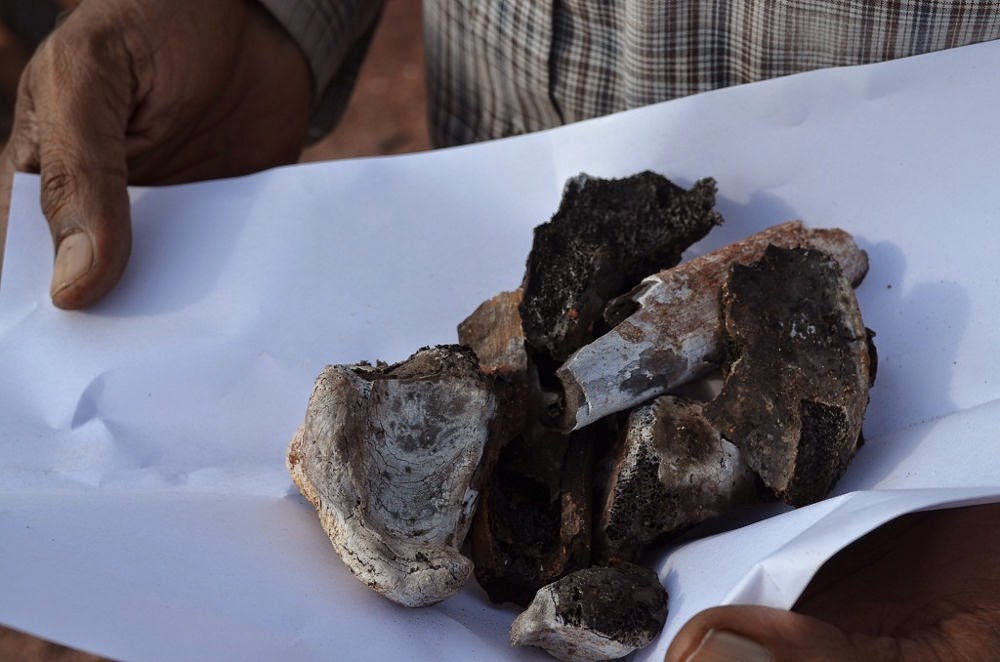
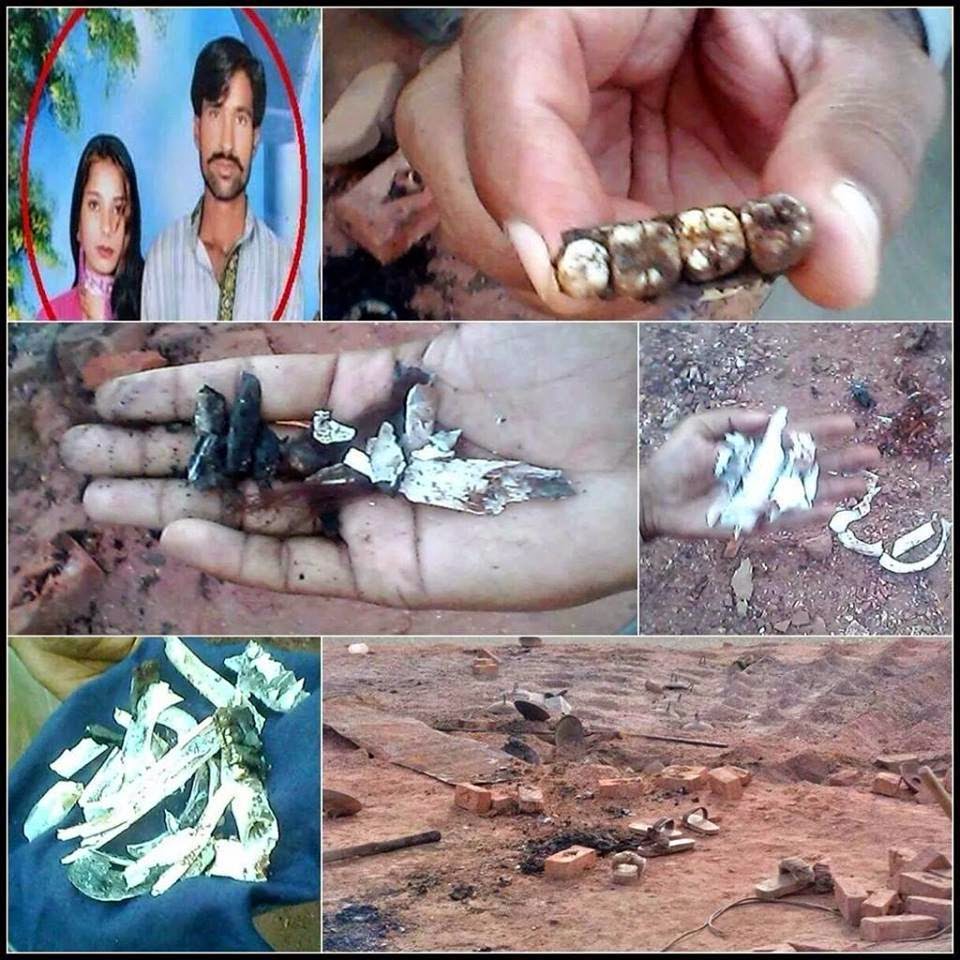
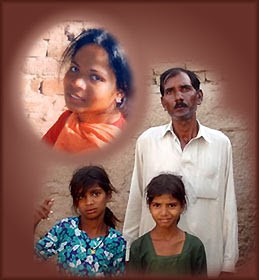
Several pictures of the couple have surfaced. We do not know if it was Shahzad or Shama who chose the backgrounds. (Note: I hv been told (and agree after looking again at the pictures) that it is not the same girl in all the pictures, some are with a cousin or niece of Shahzad, not with his wife Salma; this will no doubt become clearer with time; In any case, there seems to be no doubt about the picture of their last remains)

Yes, many thousands were killed in equally gruesome ways in 1947, in 1971, in 1984, in 2002; India, as Naipaul said, is a wounded civilization. But just look at these pictures…the contrast between the idyllic scenes depicted in the photographer’s backgrounds and the actual life of the poor couple was already harsh when they took went to the photographer in Clarkabad; the contrast between these beautiful, hopeful faces and their terrified, screaming last hour on earth is unbearable and unimaginable. Too painful for words. After such knowledge, what forgiveness?

Someone took a picture of the remains after the good people of Kot Radha Kishan had finished with the couple.

Burnt offering
What more can one say?

The government of chief minister Shahbaz Sharif has acted with some speed and 40 or so people have been arrested for this atrocity. The Prime Minister has expressed shock, condemned the incident, and promised to bring the guilty to book. Multiple organizations within Pakistan have condemned this murder and I have no doubt that millions of Pakistanis are shocked to the core. I also believe that both the chief minister and the prime minister are entirely sincere in their concern. They are not inhuman bastards and they are not dumb. They see this is a terrible atrocity and they know how ugly it looks to the rest of the world. But their best intentions will not prevent the next incident and the fact that the blasphemy law itself has been openly questioned in Pakistan after this incident will not lead to any change in the law.

Why not? Because the law runs deep and has real support among the people and, perhaps more to the point, serves real purposes for sections of the ruling elite. (the follow is modified from an earlier article I wrote about the blasphemy law)

A blasphemy law was part of the 19th century Indian Penal code as section 295 (this fact has allowed many a postmarxist to begin any discussion of blasphemy laws with the phrase “colonial era law”, God be praised).
Here is section 295 of the Indian Penal Code of 1860:  Injuring or defiling place of worship with intent to insult the religion of any class.—Whoever destroys, damages or defiles any place of worship, or any object held sacred by any class of persons with the intention of thereby insulting the religion of any class of persons or with the knowledge that any class of persons is likely to consider such destruction, damage or defile­ment as an insult to their religion, shall be punishable with imprisonment of either description for a term which may extend to two years, or with fine, or with both.

This seems like an eminently sensible law and cannot really be blamed for all the evils that came later. But in the 1920s there was a famous case in Lahore where a Hindu publisher was arrested by the colonial authorities after Muslims agitated against him for having published a book called Rangila Rasul (“merry prophet”). But the court in Lahore (quite properly) found him innocent because there was no law on the books against just publishing a book, no matter how offensive it may be to some religious group. Fearing future communal discord from such provocations, the British then had the legislative assembly add section 295A to the law in order to criminalize deliberate attempts to “outrage the religious feelings of any community”). This section states:

Whoever, with deliberate and malicious intention of outraging the religious feelings of any class of citizens of India, by words, either spoken or written, or by signs or by visible representations or otherwise], insults or attempts to insult the religion or the religious beliefs of that class, shall be punished with imprisonment of either description for a term which may extend to 4[three years], or with fine, or with both. 

But even with this new and expanded article 295A in place, prosecutions for blasphemy were few and far between until, in the 1980s, General Zia added two new sections to the law in Pakistan and really set the ball rolling.  These infamous sections are labelled 295B and 295C.

295-B:  Defiling the copy of Holy Qur’an. Whoever wilfully defiles, damages or desecrates a copy of the Holy Qur’an or of an extract there from or uses it in any derogatory manner for any unlawful purpose shall be punishable with imprisonment for life.


295-C: use of derogatory remarks etc., in respect of the Holy Prophet: – who ever by words, either spoken or written, or by visible representation, or by any imputation innuendo, or insinuation, directly, defiles the sacred name of the Holy Prophet Muhammad (PBUH) shall be punished with death, or imprisonment for life and shall also be liable for fine.

Note that the law no longer requires that the offense be malicious in intent. Intent is no longer an issue. Insulting the Quran or the prophet, even unintentionally, is now punishable by death. To seal the deal, in 1991 the Federal Shariat Court of Pakistan struck down the option of life imprisonment and made the death penalty obligatory. Between 1984 to 2004, 5,000 cases of blasphemy were registered in Pakistan and 964 people were charged and accused of blasphemy; 479 Muslims, 340 Ahmadis, 119 Christians, 14 Hindus and 10 others. Thirty-two people charged with blasphemy were killed extra-judicially during that time. More have died since. Eighty-six percent of all the cases were reported in Punjab.

In the wake of this latest horrendous outrage, many liberal people are hoping that this blasphemy law can be changed to finally stop or slow down this torrent of prosecutions and killings. Others have noted that the law is not the problem, free lance enforcement of a broader blasphemy meme in the Muslim community is the problem and will likely persist even if the law is repealed. In my view the law is not the only problem, but it IS a very potent symbol of the surrender of state and society in front of the blasphemy meme. Repeal of the law will not kill that meme, but repeal of the law will be an equally powerful signal that things have changed and that state and society no longer approve of the killing of blasphemers. It will not end the problem, but it will be the beginning of the end. Repeal of the law is not a sufficient condition for this nightmare to end, but it is a very important necessary condition.

Unfortunately, I don’t think such repeal or amendment is actually likely in the foreseeable future. My predictions:

1. The law will not be repealed. Some minor amendments may be made someday (and even these will excite significant Islamist resistance and are not likely) but their effectiveness will be limited. Blasphemy accusations will continue, as will the spineless convictions issuing from the courts. In fact, new blasphemy accusations will almost certainly be made with the express intention of testing any new amendment or procedural change (thus, ironically, any amendment is likely to lead to at least one more innocent Christian or Ahmedi victim as Islamists hunt around for a test case).
2. Aasia bibi, the law’s most prominent current victim, will not get a reprieve from anyone but she will not be hanged. Instead, she will be held in prison till she dies or is killed by a vigilante in prison.  Her immediate family will have to leave the country at some point. The local Christian community will have to clearly show their humble submission in order to be allowed to get on with their lives.
 3. Blasphemy will continue to be a potent weapon in the hands of the deep state, the Islamists and sundry local gangsters and land grabbers.
These predictions may appear pessimistic and discouraging, but I would submit that they are not meant to be discouraging; they are meant to be realistic. The law will not be repealed because the law is not just an invention imposed by General Zia on an unwilling populace. Rather, this law is the updated expression of a pre-existing social and religious order. Blasphemy and apostasy laws were meant to protect the orthodox Islamic theological consensus of the 12th century AD and they have done so with remarkable effectiveness. Unlike their Christian counterparts (and prosecutions for heresy and blasphemy were seen throughout the middle ages in Europe) these laws retain their societal sanction and have been enforced by free lancers and volunteers where the state has hesitated. The most famous, and in many ways, the most telling example of the wide societal sanction for killing blasphemers is the case of the carpenters apprentice Ghazi Ilm Deen Shaheed, who executed the Hindu publisher of Rangila Rasul after legal prosecution had failed. The demand to kill Rajpal was being made openly in public meetings and two other Muslims had already attempted to kill Rajpal prior to Ilm Deen’s successful attempt. In fact Ilm Deen’s best friend had wanted to do the act and only stepped aside because they drew lots and Ilm Deen won thrice in a row.
And when he did do the deed the Muslim community mobilized to defend him and in the high court his appeal was handled by two lawyers, one of whom was none other than Quaid E Azam Mohammed Ali Jinnah, who was asked to take up the case by that illustrious modernist and “moderate Muslim hope”, Allama Mohammed Iqbal. After he was hanged by the British, Allama Iqbal was one of the leaders of a campaign to have his body brought to Lahore for reburial (he had been quietly buried in a remote prison by the British authorities). When this demand was conceded in the face of massive public protests, his funeral drew thousands and was attended with pride by Allama Iqbal, who supposedly said that “this carpenter has left us, educated people, far behind”. In an ironic twist the charpoy (rope bed) on which Ilm Deen was borne to his grave was said to have been donated by another literary luminary, Mr MD Taseer, whose own son would later become governor of Punjab and would be killed for “blasphemy” by a new Ilm Deen. Ilm Deen’s grave is now a popular shrine and a movie has been made about his exploit, complete with a dance sequence featuring the blasphemer enjoying himself before he meets his fate.

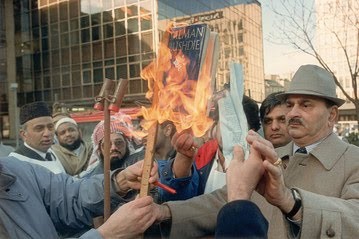
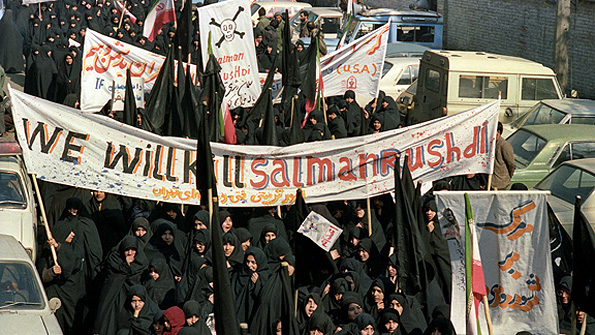
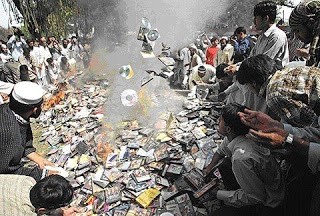
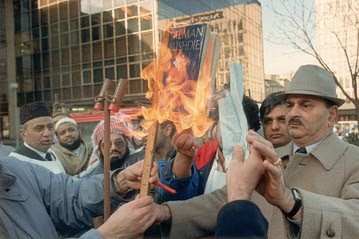
When Salman Rushdie’s book was declared blasphemous and rallies demanding his head were held all over the world and books were burned, General Zia was not the agent of those protests.

Rushdie went underground and has managed to survive, though some of his translators were not so lucky. But Theo Van Gogh was killed in broad daylight in Amsterdam and Ayan Hirsi Ali was driven underground for producing a supposedly blasphemous movie in liberal Holland. Another blasphemy execution was attempted by textile engineering student Aamir Cheema in Germany. And as expected, Aamir Cheema too has achieved sainthood in Pakistan after he took his own life in a German prison, with his funeral attracting thousands and his grave becoming a popular shrine. A minister in Musharraf’s enlightened cabinet wrote more than one op-ed commending such acts and fantasizing about the day Salman Rushdie’s skin will be torn from his body with sharp hooks. A fantastically surreal movie has even been made about the execution of Rushdie by Muslim Guerillas who penetrate his secret Zionist hideout and attack him with flying Korans.
I am not kidding.

In 2002 a convicted murderer named Tariq decided to atone for his sins by killing a man accused of blasphemy who happened to be in the same prison in Lahore. Director Syed Noor (known for countless song and dance Lollywood films) produced and directed a movie called aik aur ghazi (one more holy warrior) about this young man and his glorious exploit. It is worth noting that Syed Noor is a “moderate Muslim”, but this has not prevented him from glorifying the actions of a vigilante who killed another prisoner because he believed him guilty of blasphemy.

When a poor christian boy was accused of blasphemy in Lahore, the entire colony he lived in was burned to the ground. When a poor Christian woman named Aasia bibi acted “uppity” in front of some Muslim ladies (see details in the video below), she was charged with blasphemy and sentenced to death. These episodes highlights another important aspect of the blasphemy meme: it functions to bully and oppress minorities by threatening them with legalized lynching in exactly the same way as the “uppity nigger” meme was used to bully and oppress black people in the pre-civil-rights South in the United States. The fear of being accused of blasphemy, enforced by periodic horrific lynchings, ensures that Christians, Hindus and Ahmedis never forget their place and act uppity in front of good Muslims, since any indiscretion could lead to a blasphemy accusation and once accused, your goose is cooked.


Aasia Bibi’s death sentence was so flagrantly unjust that Salman Taseer (whose own father had provided a funeral bier for Ilm Deen), the then governor of Punjab, was moved to say she should be let go and the blasphemy law should be amended to prevent such misuse. He was killed by his own guard for saying so. His guard was garlanded and showered with rose petals by Pakistani lawyers when he appeared in court and now has at least one mosque named in his honor.

HE has not been hanged. In fact, he is a hero to many and has been handing out new death sentences of his own while in prison; he convinced one of his guards to go and shoot a 70 year old mentally unstable British man who has been sentenced to death on blasphemy charges but not yet exectuted (probably not yet executed because he is British). MNA Sherry Rahman introduced a “private member bill” to amend the law and was herself charged with blasphemy for her pains (though being a member of the ruling elite, she has not yet been brought to trial). Rashed Rahman, a well known human rights lawyer was shot dead because he dared to take up the case of a young university lecturer who is being tried for blasphemy on insanely ridiculous grounds in Multan. Javed Ahmed Ghamdi, a liberal cleric who has tried to present religious arguments against this law (a law that clearly goes well beyond anything written even in most of the medieval compilations of shariah law) has had his assistant killed and is now living in exile in Malaysia. “Respected” Pakistani religious scholars have declared him to be an apostate and an agent of the enemies of Islam. The law is no closer to repeal or even modification.

And just a few weeks ago, the spineless Lahore High Court upheld the death sentence on Aasia Bibi. She may be hanged before the Governor’s killer.

In fact. the law is now moving on to fresh pastures. There is a sustained push by anti-Shia groups to use the law against Shias just as it is being used against Ahmedis, Christians and other minorities. The law does not specifically mention the issue of blasphemy against the companions of the prophet (the sahaba), but why not? if you insult any of the companions of the prophet, do you not insult the prophet? Never mind that the companions themselves were frequently at each other’s throats, but today the issue is the wedge that will open the way to legal persecution of Shias and help push them into the same position now occupied in daily fear by Christians, Hindus and Ahmedis. Several Shias have already been charged under the law and there is more to come. In fact, on the same day when Shahzad and Shama met their gruesome fate in Kot Radha Kishan, a Shia Zakir was killed in custody in Gujrat. He may have been mentally unstable and had been arrested for brawling in the bazar. In custody, he continues to harangue the police about the calumnies suffered by the Banu Hashim (the family of the prophet) at the hands of some of the companions (the sahaba). This so upset one of the police officers present that he got an axe and decapitated the prisoner inside the police station. The police officer concerned has been arrested and desperate attempts are being made to play down the sectarian dimension of this killing, but all will become clear once the policeman is put on trial. The ASWJ (the main umbrella anti-Shia organization) will protest that he was only defending the honor of the prophet. Punishment will not be easy. “Sweep under the rug” is likely to be the compromise.

In short, while it is indeed true that misuse of the law has become common after General Zia’s time (an intended consequence, as one aim of such laws is to harass and browbeat all potential opposition), the law has deeper roots and liberals who believe that it is possible to make a distinction between true blasphemy and misuse of the law, may find that this line is not easy to draw. The second, and perhaps more potent reason the law will not be repealed is because the law was consciously meant to promote the Islamist project that the deep state (or a powerful section of the deep state) continues to desire in Pakistan. The blasphemy law is a ready-made weapon against all secular opposition to the military-mullah alliance (though some sections of the military now seem to have abandoned that alliance, hence the qualification “section of the deep state”). Secular parties are suspected of being soft on India and are considered a danger to the Kashmir Jihad and other projects dear to the heart of the deep state. At the same time, Islamist parties provide ideological support and manpower for those beloved causes. In this way, the officers of the deep state, even when they are not personally religious, recognize the need for an alliance with religious parties and against secular political forces (Musharraf was a good example). They may have been forced into an uneasy (temporary?) compromise with secular parties by circumstances beyond their control (aka America) but with American withdrawal coming soon, the deep state does not wish to alienate its mullah constituency too much. They will be needed again once the Yankees are gone. Hence too, no repeal at this time.

Of course blasphemy accusations and their use to suppress speech are not limited to Muslim countries; e.g. Sikhs have resorted to violence to protest blasphemy and Hindu mobs have rioted to enforce the sanctity of Shivaji’s memory in Mumbai. But Islamist consensus on blasphemy is wider and deeper and has an edge that other fanatics can only envy. In the long run (decades, not centuries) Islamists will be forced to compromise with modernity one way or the other (with one way being less painful than the other). But that time is not yet here…For many years, perhaps decades, we are going to see terrible violence in the Islamicate core and some of it is going to be about blasphemy. That is just where we happen to be..

Post Script: It is likely that in the coming days some of the details of the murder will be revised (though the beating and burning are not in doubt and will not be wished away). About such revisions, it is important to keep in mind that a number of new stories are going to be circulated by interested parties to muddy the waters, spoil the prosecution, confuse the issue and so on. And the “best supported” new stories may not be the most authentic. As Goldhizer noted about hadith authentication, in many cases the best authenticated are the ones most likely to be untrue (the authentication chains being so good precisely because they were invented to look authentic).
Local MPA’s will be activated to defend the kiln owners. Local villagers will find ways to play down their own barbarity and play up the “desecration”. Clerics will find NGO’s behind a new conspiracy to defame Islam.
It has all happened before….

PPS: The All Pakistan Private Schools Association (which may or may not represent too many schools) has observed an “anti-malala day” to condemn her membership in the “Rushdie club”. Mashallah.

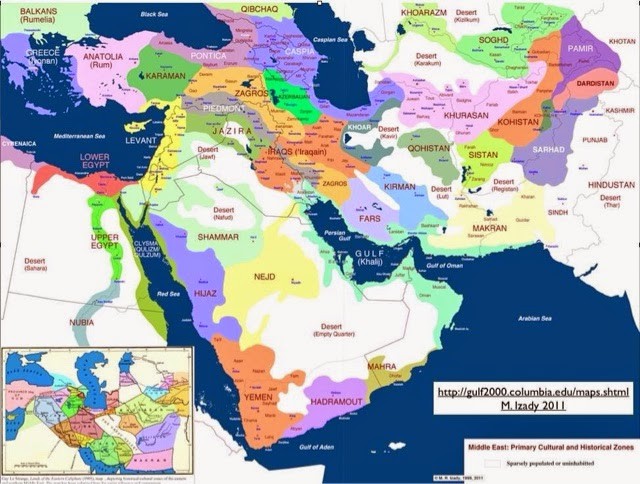
Islamicate civilization: It will get worse before it gets better…

by Omar Ali


First published at 3quarksdaily.com


1.1_compressed
At about 6 pm on Sunday evening, a young suicide bomber (said to be 18 years old) blew himself up in a crowd returning from the testosterone-heavy flag lowering ceremony held every evening at the India-Pakistan border at Wagah, near Lahore.

Presumably this young man (a true believer, since a fake believer would find it hard to explode in such circumstances) had wanted to target the ceremony itself (usually watched by up to 5000 people every day, most of them visitors from out of town) but the military had received prior intelligence that something like this may happen and there were 6 checkpoints and he was unable to get to the ceremony, so he waited around the shops about 500 yards away from the parade site and exploded when he felt he had enough bodies around him to make it worth his while.
About 60 innocent people died. Many of them women and children. Including 8 women from the same poor family from a village in central Punjab who were visiting relatives in Lahore and decided to go to the parade (whether as entertainment, or as patriotic theater, or both). The bombing was instantly claimed by more than one Jihadist organization but it is possible that Ehsanullah Ehsan’s claim will turn out to be true. He said it was a reaction against the military’s recent anti-terrorist operation (operation Zarb e Azb: “blow of the sword of the prophet”), that his group wants “an Islamic system of government” and that they would attack infidel regimes on both sides of the Indian-Pakistani border.


The Indian authorities decided to suspend their side of the parade for the next three days. But on Monday evening, the Pakistani side decided to hold their parade as usual and a crowd was on hand. Cynics have pointed out that most of the “crowd” looked like soldiers in civilian clothes, but that is not fair. The “show of resilience” meme is a very ancient and well-developed meme and has solid credentials and should not be easily dismissed. I personally wish both India and Pakistan end this ridiculous ceremony someday (soon), but on this particular occasion a show of resilience was the smart move. But then, the respected corps commander of the Pakistani army corps in Lahore, General Naveed Zaman (an outstanding officer, himself on the Taliban’s hit list for his role in various anti-terrorist operations) made a statement and beat his chest a bit about how we are a brave nation, we are back the next day and “look, on the Indian side it’s like a snake has sniffed them”, the implication being, they are cowards, they didn’t show up, but look at us, we are back and we are strong.
Naveed zaman on wagah blast
This is par for the course for the Pakistani army (whose propaganda software was designed and built for only one enemy, and whose soldiers are motivated to attack Jihadi terrorists by being told that the Jihadists are all Indian agents, I am not kidding) but is still telling: the day after one of the biggest massacres of civilians by a Jihadist terrorist bomber (there being no other kinds in our area these days, though the Tamil Tigers showed that a Tamil Hindu version is indeed possible, and in fact preceded the adoption of this particular weapon by Islamist terrorists) the senior army officer in the region could only taunt the Indians across Eastern border.
Meanwhile, in Nigeria, the Boko Haram terrorists announced that most of the 276 girls they kidnapped have been “converted to Islam” and married off. So the matter is settled.


And in Iraq, the “Islamic State” has been buying and selling captured Yezidi girls as slaves in the best medieval Arab tradition. In the video below, the young men of IS can be seen joking about the topic (the translation is by Jenan Moussa, an Arab journalist, not by MEMRI, so discerning viewers can view it without violating any of the standard guidelines):


Boko Haram has also gone ahead and blown up some Shias in Nigeria as they commemorated Moharram, while their fans have apparently shot a Shia in the face in, of all places, Sydney.
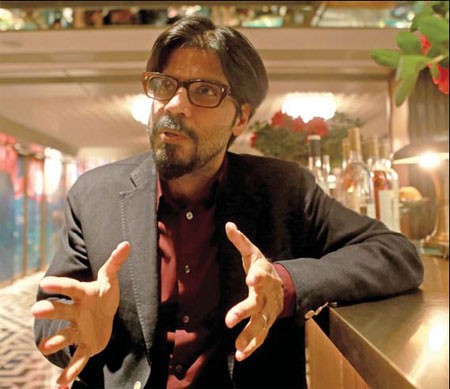
My point is this: the Salafist-Jihadist meme, so carefully nurtured and brought together in the Afghan-Pakistan border region by Pakistan, Saudi Arabia and the US in the 1980s, is now global and will soon come to your neighborhood if your neighborhood happens to be in the core Islamicate territories of the Middle East, India, Southeast Asia, Londonistan or Mississauga. Many different narratives about this phenomenon are in the market, ranging from Neocon propaganda and Fox News to Islamist apologetics and Marxist “class-based analysis”. For Western and Westernized liberals of a particular disposition, there are also “commentators” like Pankaj Mishra, who can be relied upon to press all the politically correct buttons without committing to anything resembling a coherent description, prediction or prescription. I would like to add some random thoughts to this mélange:

 1. We are all human beings. And in the great Eurasian landmass, we have been mixing, biologically and culturally, for thousands of years. It is not possible that a relatively recent religious movement (Islam) has somehow significantly altered the biology of the people involved. This is a trivial observation, but some people on both sides of the liberal-conservative divide seem to have some misapprehensions about this, so it is worth reiterating. Going beyond that, I would add that even as a cultural phenomenon, Islam is not from some other planet. It evolved within pre-existing cultures, borrowing and altering already existing cultural memes. Much of “Islamic history” is the history of an initial (very successful and very extensive) Arab conquest, followed by some further conquests (primarily in Central Asia and India) by Islamicized Turkic invaders. Only in Indonesia and Malaysia did the initial wave arrive as traders and the subsequent conquests and conversions were almost entirely the work of local converts. This makes early South East Asian Islam a bit of an outlier, but that is another story. Only by disregarding most of history can we regard these conquests (and their associated missionary activities) as somehow completely unique. There are some peculiar features of Islamicate civilization, but not as many as its fans or its detractors would like to claim.
2. That being said, Islamicate civilization developed a remarkable degree of consensus on it’s core doctrines in the Islamic heartland. Even Shias and Sunnis converged on similarities in daily life and communal attitudes towards non-Muslims, towards women, towards apostasy, towards blasphemy, towards the notion of holy war. While agreeing with Razib Khan’s views about the relative unimportance of theology in general, I think modern life and the recent experience of colonization, decolonization and its associated psychopathologies have led to an unusual situation in the Islamicate world: while the pressures that cause religious revivalist movements or “fundamentalist” movements may be similar in non-Muslim communities (hence Sikh, Hindu and Buddhist identity-based semi-fascist  fundamentalist movements), the material that is available to these movements and the historical background of the religions involved, makes it difficult to associate a detailed “shariah” with any of those movements. Sikhs can ban tobacco and kill blasphemers and traitors, Buddhist mobs can kill Muslims without compunction in Myanmar and Sri Lanka, Hindu nationalists ban beef and carry out pogroms, but the notion of a Sikh state or a Hindu state or a Buddhist state is mostly the notion of a state where their co-religionists hold sway (or even hold exclusive title), but lacks consensus on any well developed legal code or even theology.  This is not the case with Islam.
3. There is such a legal and theological framework in Islam and it has wide support in principle. In principle is, of course, not the same as in practice. Most Muslims know as much about Muslim theology as Christians know about Christian theology, which means they know very little. But because of widespread beliefs about blasphemy and apostasy, this “in principle” support translates into an inability to frontally challenge those who come armed with more detailed Islamic knowledge. For example, most Pakistanis may have no idea that classical Islamic law permits slave girls to be captured, used for sex (without marriage) and bought and sold as desired. If and when IS comes to Pakistan and wants to talk about buying and selling slave girls, most people will probably be shocked. It is possible that most people will initially even find some way to say this is wrong. But it is also my guess that when face to face with an IS ideologue, most people will be unable to argue for too long. Because he will have classical Islamic texts on his side and his opponent will have nothing beyond his human intuition of fairness and good behavior. Intuition will not stand against argument. And there will probably be no argument for too long because to argue too much would cross over into the zone of blasphemy.  And most people (except maybe for the tiny sliver educated in Western or Western-style universities and out of touch with their own traditions almost completely) believe that blasphemers should be punished, and at least for the most extreme kinds of blasphemy, the punishment should be death. This, by the way, is just a simple empirical fact, easily checked if you step out among the people in that region.
4. Whenever the existing state order (in almost all cases, the product of recent Russian or West European colonization, so somewhat suspect in any case) falls apart, the next common denominator tends to be Islamist. And among those Islamists, the ways of the golden age are not some distant myth. Those books are still around, still honored, still relevant, still protected against criticism by blasphemy and apostasy memes. And those books include rules for holy war, for slave holding,for female legal inequality etc. that are no longer fashionable in the modern world. That is just how things happen to be.
5. The ruling elites in most Islamicate countries are not Islamist in practice and may not be so in principle either. But having taken the path of least resistance (or having received their Islam from Karen Armstrong or post-Marxist theorists) they have acquiesced in the glorification of medieval Islamicate norms, not as past history but as guides to present behavior. They will now be (literally in many cases) hoist on their own petard.
6. Elements of the ruling elite (especially in South Asia, where penetration of Western postcolonialist/postmodern/post-Marxist garbage has been most extensive within the elite) are vigorously opposed to many of these medieval norms, but have disappeared into an alternate universe where only White people have agency and therefore only White people are responsible for all events. This has effectively taken them out of the equation for now. They remain mostly harmless, but the opportunity cost of their withdrawal into la la land is not insignificant.
7. As the Bill Maher-Ben Affleck affair has shown, Western Liberals are generally clueless about Islamic history and the status of (most of) the Islamicate world with regard to issues like freedom of religion, freedom of speech, feminism and suchlike. This is NOT to endorse a particular Whiggish vision of history as the only valid path, with every community situated somewhere along the timeline from barbarian to Western liberal democracy. But it is to emphasize that opting out of this linear timeline is one thing, pretending that everyone is already at point X on the timeline while paying lip-service to multiculturalism is another. If Ben Affleck thinks that Western standards of “liberal democracy” (however defined and whether regarded as an endpoint or not) are not to be applied to everyone on the globe and that these standards are being used to demonize and colonize those who hold to different values and models, then he has a leg to stand on. But he (or others like him) seem to lose this admirable level of “nuance” when they get to specifics. Instead of saying that Pakistani Muslims do not permit free speech when it comes to X, Y and Z and who are we to comment or interfere (especially when we are just using this commentary to justify our invasion of this or that country), they are saying “there is no real difference in free speech norms between X and the US”, which is patently absurd. Other liberals (too numerous to list) will look at history as if European powers have real histories (with colonization, oppression, invasions, decimations etc, also with progress, emancipation, democracy, etc.) and everyone else lived on some other static planet with no history, no past and no future. I don’t have to go into detail, Wikipedia can solve this issue for anyone these days, but it is still surprising how few people will bother to even read Wikipedia before brandishing absurdities in this matter. The opportunity cost for this (loss of some Western liberals) is perhaps insignificant in real life, but since I tend to interact with some of these (very nice) people, I obsessively comment about them. Hence this comment.
8. More after I get some feedback; many or most of these comments are very likely to be misinterpreted by many people. This is partly because I am not a good enough writer, but partly because all of us use various heuristics to slot every commentator into pre-existing boxes. To see a little of where I am coming from, some of the following articles may be helpful. Thank you.
http://www.theatlantic.com/international/archive/2014/10/the-roots-of-the-islamic-states-appeal/382175/

http://blogs.discovermagazine.com/gnxp/2013/04/against-the-seriousness-of-theology/#.VFb-nPnF9DI

http://blogs.discovermagazine.com/gnxp/2006/09/atheism-heresy-and-hesychasm/#.VFb-4PnF9DI
http://www.3quarksdaily.com/3quarksdaily/2013/01/-some-notes-on-the-shia-sunni-conflict-by-omar-ali.html
http://www.3quarksdaily.com/3quarksdaily/2012/10/from-innocence-to-mohammed-joyce-by-omar-ali.html
http://www.3quarksdaily.com/3quarksdaily/2011/01/one-thousand-year-writers-block.html

The Tragedy of Imran Khan and the Insafian Revolution

Looking back at Pakistan’s history over the last forty
years, he represented the country’s best opportunity to transform itself from a
third-world kleptocracy to a modern democracy, which is why the failure of
Imran Khan and his revolution is such a tragedy. I do not mean to imply that he
has failed in narrow political terms: It is much too early to say that, and I
would not be surprised to see him as Prime Minister of Pakistan in the near
future. What has failed, rather, is the vision that he had once promised. It
has been tainted irredeemably by his alliances with obscurantist forces like
the Jamaat-e-Islami, his rationalization
of Taliban extremism
, his willingness
to act as the instrument of anti-democratic forces
, his poor judgment of
character, his limited
grasp of history
, his opportunistic
embrace of bigotry
, and his inability to organize his movement into a
meaningful force rather than a rabble of unthinking acolytes. Ultimately, Imran
Khan’s revolution has been limited by its leader’s inability to transcend the
limitations of his own character. At one level, this is just a tragedy, but at
another, it is an unforgivable betrayal because, by promising gold and
delivering dirt, Imran Khan has set back the cause of true reform and
strengthened the very forces he had originally wished to counteract. Many of
his supporters are delighted that he has weakened the current government, which
they see as corrupt and illegitimate, and indeed he has. But this government
represents only one aspect of the rot in Pakistani society – and not even the
most salient one. What Imran Khan’s actions have really weakened is the
institution of democracy in Pakistan.
Among the factors that have brought Pakistan to where it is
today, corrupt politicians may be the most visible, but are certainly not the
most significant. They are the scavengers picking at the corpse, not the
original killers. The true source of Pakistan’s problems are the forces that,
over the country’s entire history, have not allowed the institutions of
governance and socioeconomic organization to establish themselves, and have
precluded the emergence of a stable social contract between the state and its citizens.
These forces are given many names – “the Establishment”, “the Deep State”, “farishtay”
(angels), “secret agencies”, etc. – but the only thing certain about them is
that they pervade all aspects of the state. Corrupt politicians are, at best,
servants and enablers of these forces – a symptom, not the cause, so to speak.
And this is reflected in the fact that, while the political system in Pakistan
has been extremely unstable since the country’s inception, the ideological
orientation of the country has been remarkably stable, and has moved only in
one direction. This is evident in the policies towards India and Afghanistan,
the Kashmir issue, the nurturing of extremism as a geopolitical weapon, the untouchability
of the military-industrial complex, the use of the educational system as an
instrument of ideology, the suppression of civil society and civil rights, the
dehumanization of minorities, and – above all – in the periodic disruption of
the democratic system.
Democracy is a fragile thing and does not come naturally to
humans. Its success in the West and the East has depended on being given the
space and time to establish itself. Good democracy – if it arises at all – requires
many generations to take root, and is often preceded by decades of poor, imperfect,
corrupt and just plain bad democracy. Those decades of bad democracy are
absolutely necessary for the ultimate emergence of good democracy, which
explains why the latter has never occurred in Pakistan. Every time the
democratic experiment begins and takes its natural imperfect course, a possibly
well-meaning “reformer” upends it in the name of bringing order, thus resetting
everything to square one, which is where the process starts again after a period
of political stasis. There is no time for democracy to establish itself, and
for true reformers to emerge from within
the system, which is the only way the system can ever be reformed. And this
brings us back to the tragedy and betrayal in Imran Khan’s revolution. His
diagnosis of what ails Pakistan, while partial, was (and remains) correct: The
democracy that exists now is terrible. As the leader of the second most
powerful party in the Parliament, and the party in power in one of the four
provinces, Imran Khan the reformer had a golden opportunity to begin exactly
the kind of “reform from within” that Pakistani democracy needs. However, such
a process would take time – years and decades of bad but slowly improving
democracy, if the reformers could persevere. It is quite likely that, while he
would begin it, Imran Khan would not be the one to complete the process. And
this is where his character was tested and found wanting. Like many would-be
reformers, Imran Khan obviously believes that he, and only he, can accomplish what is needed. It is a delusion common in
the leadership business, but is seldom warranted. In this case, realizing that
he was already nearing “retirement age”, Imran Khan chose to short-cut the
process and to attack the system from the outside. The claim is often made (by
his supporters) that he first spent a year – a whole year! – demanding reforms
within the system, as if a process that requires decades can be judged on the
results of a few months of half-hearted noise-making! I have no insider
knowledge of who – if anyone – pushed him towards adopting this course, but it
is obvious who benefited from it: The forces that do not wish to see the
institutions of democratic government stabilize. Whether he has weakened the
PML-N government or not, he has done incalculable damage to these institutions,
which represent whatever future Pakistan might have. That is his greatest
betrayal … but it isn’t all.
Imran Khan emerged upon the political scene as a widely
admired sportsman, a determined fighter, a dedicated philanthropist and, above
all, an honest man. He is still all these things, though the last attribute
must perhaps be qualified now to apply only to financial matters. Those who followed
him enthusiastically and those, like myself, who wished him well with some
caution, all hoped that he would transform the social and political landscape
of Pakistan with a thoughtful, well-organized and systematic movement. What has
emerged instead is empty sloganeering, shallow thinking and dangerous
impatience. One would expect the leader of a true reform movement to surround
himself with thinkers, intellectuals, technocrats and organizers – people who
know, understand, think and act with judgment. Instead, Imran Khan is
surrounded by rank opportunists of little expertise but grandiose ambitions,
the refuse of the same system that he seeks to overthrow. One common theme that
unites them is their reluctance to criticize their leader and their willingness
to rationalize his most absurd actions. And there have been plenty of these.
One may recall the exhortation to
transfer money from abroad using a “hawala” scheme
that violated
international law
, or the ridiculous (and counterproductive)
edict
to stop paying tax and utility bills
, or forcing all his party’s members to
resign from Parliament (much to
their chagrin
). No prominent leader in the Pakistan Tehreek-e-Insaf (PTI) –
with the exception of the now departed Javed Hashmi – has dared to criticize these
ideas as impossible, counter-productive or both, though many of them must surely
know this. However, they also know the boundless narcissism of their leader who
cannot abide criticism any more now than he could when he was captain of the
cricket team. A little autocracy was not bad for Pakistan cricket, but it is
poison for national governance!
The party created by Imran Khan – the PTI – should have been
a haven for rational, thoughtful Pakistanis who could change the country
through the force of their ideas and their exemplary behavior. That has always been
the key to reform: Ideas and character. Instead, he has created a party characterized
by paranoia, demagoguery, defensiveness and abusiveness.
Every untoward event is quickly attributed by the party faithful to vast
international and domestic conspiracies, variously involving the US, India,
Israel, internal traitors, former judges and generals, government
functionaries, and Fakhroo Bhai’s lack of spine. Whatever befalls the PTI is
always someone else’s fault – the Dear Leader never makes a mistake. When – in spite
of many
irregularities
– the 2013 elections were deemed
to be generally fair
, and the results turned out to be almost exactly what all
serious pollsters – as opposed to PTI kool-aid drinkers – had predicted,
the response was to serially blame officials and politicians at every level. Every
journalist who criticizes PTI policies is immediately deemed a “dollar-khor” “lifafa
journalist”
traitor on the take from nefarious entities. Anyone who dares
to challenge Imran Khan’s “ideas” is labeled a bully, traitor, pervert, and
worse. The picturesque language that issues forth from the social media
accounts of PTI youth is just an amplified reflection of the attitudes implicit
in their leader’s rhetoric – the same lack of decorum, the
same inability to accept criticism, the same alacrity in blaming everything on
others, and the same lack of prior thought. The river of incoherence, factual
errors, empty threats and false predictions that has issued forth from the roof
of the PTI container on D-Chowk would long ago have drowned any rational
political movement, but froth floats even in a flood.
Then leaving aside style, let us turn to substance. Through
2012 and 2013, as Pakistan was engulfed in violence perpetrated by jihadi
Taliban, Imran Khan and his party kept up a
steady drumbeat of apologetics for the extremists
, calling them “our
alienated brothers” and suggesting
they open offices
in Pakistani cities. To be sure, the PML-N of Nawaz
Sharif was no better on this, though the two differed slightly in their choice
of preferred extremist outfits. However, this was a much more problematic
position for a party supposedly championing reform. When it came time to form a
government in the Khyber Pakhtunkhwa (KP) province, PTI forged an alliance with
the mother-ship of religious obscurantism and political thuggery in Pakistan,
the Jamaat-e-Islami.
They were given only two ministeries, but one of them was education – an area fraught
with ideological conflict. Predictably, the need to mollify Islamist coalition
partners has resulted in devastating
changes to the educational curriculum in KP
. PTI still does not dare to
criticize Islamist militants as terrorists. Even as I write this, PTI mouthpieces
are out on social media and TV news shows trying to deflect the blame for yesterday’s
deadly blast at Wahgah away from the Taliban (who have already claimed
responsibility) and towards India. One has to ask: Whom is this benefiting? And
once we have an answer to this question, many things will become magically
clearer.
 I am often asked why
I am so adamantly opposed to Imran Khan’s leadership if I think he is not
corrupt and means well (I do). Why not give him a chance as opposed to the
corrupt lot currently in power? My answer is that, given the stakes, I prefer corrupt,
incompetent opportunists to committed, single-minded ideologues. The former are
not harmless, but are incapable of being truly dangerous, because the success
of their “business” depends on the system’s survival. The latter scare me
because they are the type who would gladly burn a village to save it. I fear that Imran Khan today is unleashing forces within Pakistani politics that even he will not be able to control in the future, and sadly, they are mainly destructive ones.
In the hard-fought
and bitter American presidential election of 1960
, more than 68 million
votes were cast nationwide, and John F. Kennedy won by only 112,827 votes – 0.165%
of all the votes cast – and winning only 23 states to Nixon’s 26. It was
well-known that Mayor Richard Daley’s “machine” in Chicago had conjured up
thousands of questionable votes, including votes from dead people. The state of
Texas was delivered by JFK’s running mate, Lyndon Johnson, by means still
shrouded in mystery. Yet, that most greedy of politicians, Richard Nixon,
accepted defeat with grace and left the field to his opponent, living to fight
another day. Then in the election
of 2000
, the Democratic nominee, Al Gore, actually won half a million more
votes than his opponent, George W. Bush, and clearly should have won the state
of Florida – and thus the Presidency – had all votes been counted properly.
However, the US Supreme Court, with a majority of Republican judges – including
three appointed by Candidate Bush’s father or President Reagan (when Bush Sr.
was Vice-President) – arbitrarily stopped the recount and delivered the
Presidency to George W. Bush. Many urged Gore to challenge this, but he stepped
aside gracefully to show respect for the system. This is how mature leaders
behave. In both cases, the losers’ supporters (myself included, in the case of
Al Gore) gnashed their teeth and stamped their feet in frustration, but no one
talked of overthrowing the government. Contrast this with the behavior of the
Republican ideologues after 1994, who ended up impeaching Bill Clinton, or the
even more reckless ideologues of today’s Tea Party, who have repeatedly brought
the US government to the brink of disaster because of their personal hatred for
President Obama. In this, and in too many other things, the party created by
Imran Khan resembles the Tea Party of today and the ideologues of 1994: The
same unwillingness to listen to contrary facts, the same paranoid conspiracy
theories, the same indiscriminately abusive language towards critics, and –
most sadly – the same preference for ideology over Reason. The PTI has become
the party of “you’re with us or against us”, the party that trusts its gut feelings
more than objective facts, and the party that seeks to “reform” the system by
demolishing it. For all his claims of being an honest reformer, Imran Khan has
turned out to be yet another well-meaning authoritarian wannabe – albeit in
civilian clothes for a change.

Pankaj Mishra and his discontents…

Pankaj has an op-ed in the NY Times. Friend Sardul Minhas prodded me to say something about it, but I was short of time and just gave some general comments about the Pankajist worldview and it’s discontents. These comments are quick and off the cuff, so almost as superficial as Pankaj Bhayia’s op-ed, but they sort of add to my earlier longer rant about his book, and my earlier article about Pankaj and Arundhati Roy. Read them all and you will start to see what I mean (or at least, where I am coming from). Trust me 🙂 

Before I go on, let me say that India hypernationalism is at least as real as Pakistani or American or Chinese hypernationalism and can be almost equally crazy. Like those hypernationalisms, it is mostly held in check by real-life constraints and need not trigger world war three, but world war three is not inconceivable. Shit happens. So I do not mean to imply that all is well and will forever remain well in the Indian subcontinent with the BJP in power (and of course anyone who says all was well before the BJP came to power must be joking). But I do think some of the doom and gloom is overdone and a lot of it is just hyperventilation that provides no good analysis as to why this phenomena has grown, what it may become, and what can be done to moderate or counter it’s possible excesses…in short, i dont think there is nothing to fear, but I do think that the Pankajist worldview is neither an adequate analysis, nor a rational prescription for it’s cure.

Pankaj seems to believe (or knows it is
fashionable to believe) that the worship of strength and material progress is a serious mistake
and therefore all of recent Western history (with its abundant displays of
strength and material/organizational progress, however defined) was a very bad thing. But he
also believes the equally fashionable meme that the weak should “stand up for their
rights” and
fight back and defeat the strong….since I have not seen any evidence to suggest
that he has some well-developed theory of Gandhian resistance, how is this
circle to be squared? Given belief A, belief B requires the acquisition of
strength and at least some material/organizational progress (how else will anyone be able to overcome the
amoral West?) but it so happens that the constituency of “strength and material/organizational progress” in India is one that Pankaj cannot afford to be associated with. He has little
trouble with non-Indian strength-worshippers like
Jamaluddin Afghani (a minor and ineffectual fascist whom he portrayed, historically inaccurately, as one of the great exemplars of Asian resistance to Western domination), but in India his home is in the liberal elite Left, and the “strength and progress” idea, while very much present in the traditional Left, is not one that the postmodern Left is comfortable with…besides, the strength part is now mostlymonopolized by the Hindutvadis, so there are problems with admiring Indian anti-Westernism and strength-worship that do not arise for Pankaj when he is talking about Muslims or Chinese who want to become strong like the West. Incidentally, Japan remains a sore spot of Pankaj; perhaps because of his initial Leftist orientation or because the rise of Japan does not fit his preferred picture of “East tries to Westernize and falls flat on face”, he completely skipped Japan when discussing his version of the rise of Asia from the ruins of Empire. Anyway, given these ideological limitations, what is to be done? His options include:

 1. Westernization has been and forever will be a disaster for non-Western nations. The apparent weakness of “Eastern” nations is actually strength; a sign of moral superiority, closer to nature, deeply rooted, psychologically sound, more humane etc etc. Gandhi had some such beliefs. Of course Gandhi also believed that if we stick to our (moral) strengths, we can “defeat” the apparently stronger West. But this defeat will not look like the usual victory and defeat looks in war. Valid or not, this would be a relatively consistent (and very attractive) set of beliefs. But many elements of this system are anathema for the Left (like Gandhi’s embrace of the people’s ancient religon and religious myths, his lack of interest in physical strength, and his un-Marxist view of history), so Pankaj cannot comfortably take a Gandhian position against the West (though he can say patronizing nice things about it).

2. Westernization has been and forever will be a disaster for non-Western nations. They must find their own unique way forward. They have unique cultures and cultural strengths and these are embedded in their language, their culture, their myths, their religions… and they must build from these, etc. But this is what a lot of the Hindu right is saying, so it certainly cannot be Pankaj’s choice either.

3. Or Pankaj can drop the whole Eurocentric post-Marxist framework and start from scratch. He might then find that “Westernization” is not so exclusively Western. A lot of it is just progress in human knowledge (always incomplete and prone to errors) and any individual or group can acquire and make use of past discoveries in human knowledge, whether they happen to have been made in Europe or Central Asia or Japan, and build on those…. that maybe the flaws we see in the West are not that foreign either, but are human characteristics, and their larger organized expressions (armies, conquests, wars, colonization, cultural and literal genocides, megalomaniacs, liars) are not really some unique and novel Western invention…. If strength and scientific progress are diseases, then we are all prone to falling victim to their allure….and so on. But that would be such a departure from the postcolonialist postmodern post-marxist universe in which Pankaj operates, its not really a choice either. What if his audience no longer buys his op-eds?

It’s a tough place to be in.  Hence the confusion.
btw, he started with Naipaul, betting that his audience would have little or no clue about Naipaul’s actual views about Indian history and the rise of the BJP. I think this move shows Pankaj is not dumb and he sometimes takes risks. Those are worthy qualities 😉
Or it may mean that Naipaul’s earlier expression of admiration for Pankaj (as a literary critic) has created a soft spot. Human nature being what it is…

I initially posted these thoughts as a facebook comment and asked some questions on 3quarksdaily (where Pankaj’s article was up on the blog). One of the responses (from someone named Sundar) was as follows:
I doubt if I fit the profile of Pankaj’s intended readership, but here goes:


I think the Indian left (and Pankaj in particular) has become irrelevant. The Left parties have been decimated even in their citadel of West Bengal, where they had unleashed a reign of terror for 25 years. (If you think that is an exaggeration, you should learn more about life in Rural West Bengal). It is another matter that the TMC is continuing their tactics.


Intellectually, the left has been in shock since their utopias of Russia and China have moved on. Hence their desperate attempt to use any issue they can get their hands on: Environment, Caste etc. Their last gasp was their infiltration of the centrist Congress party via Sonia Gandhi’s unconstitutional NAC.


They are terrified that Modi has put together a workable coalition of various caste groups which aims to control parliament for the foreseeable future. They don’t know how to deal with Modi: he comes from the very groups that they claim to represent. But he represents a new kind of India, one which does not want handouts from elite controlled parties.


Whether Modi’s electoral coalition will hold in the next Lok Sabha elections, I don’t know. But if it does, the India left’s worst nightmare will come to pass: A world where they are simply irrelevant. A Bourgeois India that hasn’t heard of Pankaj Mishra and his ilk. And doesn’t care.


My answer had some more questions, which I will post here in the hope that someone will attempt some answers:
I think you are right, though out of loyalty to my youthful ideals and deference to my friends /peer group I would assign a less positive valence to this decline and fall… Anyway, follow up questions : since higher education and public intellectuals in India share (consciously and unconsciously) many of the historic assumptions, ideals, paradigms etc of the Left, what does the
 future hold in that area? Will they modify their beliefs and carry on? Will there be a circling of the wagons and a vicious fight with the newly powerful right, followed by an auto da fe? Will the crazier Hindutva historians replace our familiar Marxist intellectuals as most of my friends seem to fear? And will all this play any role in “real life”? 
Inquiring minds want to know 🙂


Finally, a word from my better half (who has higher IQ and EQ): I must not just criticize Mishra. I must also say what he would be good at; so here goes: I think he would be an excellent literary critic if he could just give up his urge to push his (fashionable, but ultimately irrelevant) political agenda in every thing he writes. I know, “the personal is political” and all that, but comrade, that too may just be fashionable claptrap. Take a deep breath. Let go…

PS: Given the current political conflicts within India (with which I have only an outsider’s connection), it is inevitable that an attack on Pankaj will get positive responses from his supposed ideological opponents in the BJP (I say “supposed” because Pankaj actually shares their emotional antipathy towards the West and has some sympathy for their counterparts in other Asian countries, just not in India itself). Just to keep things clear, I am mostly Left-of-Center in my politics and extremely left of center on most social issues (though somewhat right of center on state intervention in social issues, whatever). I do hope a left-of-center alternative survives and thrives in Indian politics, not just because my own inclinations (mostly) lie that way but because the total dominance of any one ideology is always a problem. Best to have some balance and some competition. Finally, I do realize that all who identify as leftists are not as Eurocentric/Europhobic and confused as Pankaj. 
Oh, and about the Hindutvadis, I think there are some obvious problem areas in their quest to become the leaders of resurgent and powerful India: I am saying nothing original if I say that the “Muslim question” is one of them. In my case, the concern is not that they will try to “Indianize” Islam well beyond what current Indian Muslim leaders would consider desirable… I think that is the eventual fate of Indian Islam and I see no great reason to abhor that possibility. My concern is that they will mess up the “soft landing” that is the “desirable option” in this process. i.e. I think a soft landing is possible (and desirable) but the way the BJP has evolved, they may not be the best people to achieve it. More on that some other day, but I do want to add that to me this is not a specifically “Muslim” concern. It is an Indian concern. In numbers, in solidarity, in civilizational consciousness, in cultural contribution, etc Indian Muslims are not an insignificant component of India. A “hard landing” would hurt everyone and the outcome is by no means guaranteed to be in the Hindutvadi’s favor. Softer approaches would work better for everyone, not just for the Muslims. Fascist tendencies and mob action are other obvious problems but are by no means a BJP monopoly (see West Bengal for details) but a BJP-specific (much less serious) area of concern is the large mass of pseudoscientific nonsense that has accreted around the crazier edges of the Hindutva brand. While I think the actual “real world” significance of that mass of craziness is sometimes exaggerated by liberal/Westernized/agnostic/atheist observers, it is not necessary trivial.  I quote Prime Minister sahib: “We worship Lord Ganesh. There must have been some plastic surgeon at that time who got an elephant’s head on the body of a human being and began the practice of plastic surgery – See more at: http://indianexpress.com/article/india/india-others/pm-takes-leaf-from-batra-book-mahabharat-genetics-lord-ganesha-surgery/99/#sthash.mRlrMYpm.dpuf “
I really dont think modern Indian medicine will be easily derailed by such flights of fancy, but ….There. That should do it 🙂 

Post-post script: Friend Shivam Vij posted Guardian’s piece about Modi making his Hindutva pseudosciency remarks and I told him its funny, but may not necessarily be too consequential. Many friends seemed to find that surprising. Why not consequential? he is saying an elephant head was transplanted on a human, literally. That’s crazy. Well, yes, it is, but if we go by that, we would lose our shit everytime some leader says he believes in the talking snake or the flying horse or whatever. The silliness is not the problem. Or at least, its not NECESSARILY a big problem. The same people who believe in flying horses and talking snakes are very rational and clever in matters closer to our own lives. So the problem is not necessarily the silliness of the belief. Its the fact that PM sahib chose to express it on such an occasion and in such a context, indicating a certain mixing of knowledge streams best left unmixed…and the implication that such hindutvadi pseudoscience may then be forced on people in real life settings, maybe even in Medical schools and (God Forbid) in the All India Institute of Medical Sciences. Now in a democracy that is certainly a possibility and a scary one. But a reasonably competent elite can erect filters and keep the ship on near-even keel even in a democracy.
Is the Indian elite competent enough.
I guess we will find out. 

Hazara Genocide: Are the police just stupid or is there more to it?

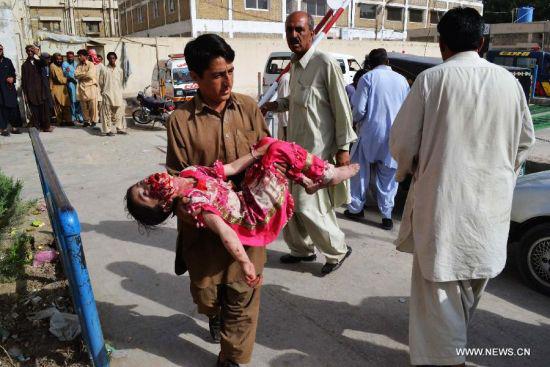
As the systematic genocide against the Shia Hazara community in Balochistan continues unabated, Mohammed Hanif has a good piece on his interactions with “law enforcement” in Quetta.

Some choice quotes:
““Hazaras, you know, are our ladla babies,” said one of Quetta’s senior most police officer earlier this month. “We’ll do anything to protect them.” He was giving an off the record briefing and went into some detail about the number of security cordons he had thrown around the Hazara community in Quetta, particularly Hazara town. And what about their movement? Students, traders, office workers? Students going to the university, according to the police officer, got a police escort. The problems of food delivery were discussed. “Even the vegetable vendors get police escort,” he said triumphantly. And then like a true philosopher of law and order he went on to explain: “Do you know the basic problem with Hazaras? They look different; because of their features, they are easily identifiable.”

On Thursday, when eight of those pampered babies, with different features, were gunned down while buying fruit and vegetables, Quetta’s police was quick to absolve themselves. “We offered them escort, and they just didn’t tell us.”

Forget about the details, just look at the strategy: a well armed, organized group has declared war on Shias in general and Hazaras in particular (because they are so easy to identify; one reason racism works more effectively than most other forms of discrimination: the enemy is color coded or otherwise easily identifiable). This armed group runs countless madressas in which they teach their anti-Shia ideology. They have an organized militant wing that carries out assassinations and bombings. The police, charged with stopping this campaign and protecting Pakistani citizens, throws up ever higher walls around the Hazara community and wrings their hands when some terrorist either gets across the wall or some Hazara gets slaughtered wandering outside their prison.
Does this make any sense? 


What about tracking down and capturing (or killing) the killers? After all, they do not drop out of the sky and disappear under the earth, they live in and around Quetta. They meet somewhere. They plan their attacks. They make their bombs. They buy guns and ammunition. They have bases and hideouts.
And the police strategy is to build more walls around the Hazaras?
Are the policemen just stupid or is there more to this policy?

What do you think? 
I think they are stupid, but no more than any other subcontinental police force. Mostly “there is more to it”… First and foremost there is a dual government in Balochistan, with the army running it’s own regime and the so-called elected provincial govt twiddling their thumbs and looking for ways to make money doing so; Secondly, the army has other priorities when it comes to Jihadists, so an all out operation is inconceivable. Good jihadis must be protected while bad ones are hunted. It has never worked, but hell, this is the army that has been trying the same tricks in Kashmir for 65 years and “it has never worked” is not a problem for them; next year will be different. Armies from Madina Saani will conquer India and Khorasan and together with China we will rule the world, etc etc..you know the drill. 
Is there any way to change this? 
Or do we wait for the Hazaras to either die or leave? 

“we are muslims”

…“We have source besides the (Pakistan) army…people in
Kashmir are fighting….just need to incite them….
we can fight with the (Indian) army from both the front
and back
….we are Muslims”…..

….
This is true, there is a hot war going on right now in Kashmir and all the familiar arguments (pro-war, pro-peace) are being re-hashed. It is time to examine them anew.

We have ex President/General Musharraf noting that the path to freedom in Kashmir involves inciting Kashmiri Muslims to launch an intifada. He is confident that the inherent strength in the “we are muslims” argument will (finally) lead to the vanquishing of a half-million strong Indian army.

Short response: Our opinion is that the only feasible way forward in Kashmir is to bring Indian civil society on-side by impressing on the moral arguments about self-rule. For that two things (at the minimum) need to happen. First, there has to be a popular consensus in India that meaningful peace is possible with Pakistan. As of now, only Pranay Sharma (see below) and a few committed leftists believe in this. Any Pak incitement will only lead to more Kashmiri deaths (and a rise in popularity of Modi).

Second, moral arguments are not convincingly made by (or on behalf of) people who do not have any inherent faith in them. Large sections of Kashmiri muslims rejoiced when the Pandits left. The argument is simple: get rid of the people (minorities) and the land is yours to enjoy for all times. As originally battle-tested by the proponents of the two nation theory, this winner-takes-all argument has been a winning one all across South Asia. Today in Hindu majority Telangana, the man in charge compares himself favorably to Hitler (see link below) and wants to chase away all Andhra people (also Hindu majority and Telugu speaking).

Thus to win the argument Kashmiri muslims (and their well-wishers such as Musharraf and a Hindu Brahmin like Vishal Bharadwaj) have to stipulate that suppression of the weak by the strong is wrong. But Musharraf is not making that argument. He is claiming that victory will come from Pak army fighting outside-in, even as the Intifada fights inside out. This “we are muslims” dream helped in the birth of Pakistan and (seemingly) helps hold Pakistan together even now. But it will not help liberate Kashmir.
……………..

Next, Bruce Riedel worries about a cross-border nuclear war and Pranay Sharma frets about Modi using “Pakistan card” to consolidate his power.

It is interesting (and typical) to see how differently the two analysts read the same situation, while “neocon” Riedel points out that not responding to Pakistan’s misadventures will encourage them to attack even more, “aman ki asha” Sharma is worried that a robust response from India will invite backlash from Pak (we think both predictions are correct, an ideological response holds constant regardless of the counter-response).

India has a no-first strike policy on nuclear weapons. Thus the only way a nuclear war happens is if Pakistan initiates a strike. Two things are for sure. First this will not happen without Chinese authorization and that seems unlikely. After all India CAN launch a nuclear missile on Beijing (it is a bit closer to home than MARS). Doomsday scenarios are fun to discuss but beyond the recycled concerns we doubt there is anything fresh to ponder upon.

Second, if Pakistan does strike it will be also the end of Pakistan as a nation. We know that the Pak army has a long history of being irresponsible, but we doubt they are suicidal. 


Former president General Pervez Musharraf on Thursday said Pakistan needs to incite those fighting in Kashmir, India Today reported.   
“We have source (in Kashmir) besides the (Pakistan) army…People in
Kashmir are fighting against (India). We just need to incite them,”
Musharraf told a TV channel.

Musharraf, who assumed power in 1999 soon after the Kargil conflict
as hostilities erupted between Indian and Pakistani troops in the area,
claimed that the Pakistan army is ready for war with India. But he
cautioned India against any misadventure.


“India should not be under the illusion that Pakistan will not hit back,” he warned.


“In Kashmir, we can fight with the (Indian) army from both the front
and back…We are Muslims. We will not show the other cheek when we are
slapped. We can respond tit for tat,”
he said, while commenting on the
recent firing along the Line of Control and working boundary.


At least 12 people have been killed since India resorted to
‘unprovoked’ firing on the border.

“Modi is anti-Muslim and anti-Pakistan. He has not changed. The
problem is with us… We are running to attend his (Modi) inauguration, we
should keep our dignity.”

………….. 


Let us be absolutely clear on this: the only person who has no dignity left over Kashmir is Ex-P/G Musharraf. He has been exposed as a person who was betraying his allies in the West and (specifically looking at Kargil) betraying his own (Muslim) troops.

The argument that democracy (even if imperfectly) should come to all corners of South Asia (and the near-abroad) is a powerful one.

But then Pakistan as the worst case offender should repair the democracy deficit urgently and teach big brother a “peaceful lesson” in how democracy works, starting with (muslim) people in “Azad Kashmir”. Unfortunately there is not a chance of that happening anytime soon, not in Pakistan, but also not in Nepal, Bhutan, Bangladesh, Burma, Thailand, Sri Lanka, Maldives, Iran, Afghanistan, and China. And we will be very surprised if Ex-P/G Musharraf will ever come to a position where his opinion counts for anything, except as a measure of what his fellow citizens think (and dream).

…….
India and Pakistan have fought four wars since 1947 and had several
crises that went to the brink of war. Both tested nuclear weapons in
1998. Now tensions are escalating between the two again.


It began in May, when a heavily armed squad of Pakistani terrorists
from Lashkar e Tayyiba (Army of the Pure) attacked India’s consulate in
Herat, in western Afghanistan.
They planned to massacre Indian diplomats
on the eve of the inauguration of India’s new Hindu nationalist prime
minister, Narendra Modi. The consulate’s security forces killed the LeT
terrorists first, preventing a crisis.


Since LeT is a proxy of Pakistan’s military intelligence service
known as the ISI, Indian intelligence officials assume the Herat attack
was coordinated with higher-ups in Pakistan.  They assume another LeT
attack is only a matter of time.  They are probably right on both
counts.

This summer, clashes between Indian and Pakistani troops
have escalated along the ceasefire line in Kashmir. Called “the Line of
Control,” the Kashmiri front line this year has witnessed the worst
exchanges of artillery and small arms fire in a decade, displacing
hundreds of civilians on both sides. More than 20 have died in the
crossfire already this month. Modi has ordered his army commanders to
strike back hard at the Line of Control to demonstrate Indian resolve.


Although Modi made a big gesture in May when he invited his Pakistani
counterpart, Nawaz Sharif, to his inauguration, since then Modi has
canceled routine diplomatic talks with Pakistan on Kashmir and signaled a
tough line toward terrorism. He also appointed a very experienced
intelligence chief, Ajit Doval as his national security adviser. Doval
is known as a hard-liner on terrorism—and on Pakistan.

Modi’s Bharatiya Janata Party strongly criticized his predecessor,
Manmohan Singh, for what it saw as a weak response to LeT’s attack on
Mumbai in 2008. No military action was taken after 10 LeT terrorists,
armed and trained by the ISI, killed and wounded hundreds of innocents,
including six American dead.


In 2001, a previous BJP government mobilized the Indian military for
months after a Pakistan-based terror attack on the Indian parliament.
The two countries were eyeball to eyeball in a tense standoff for almost
a year. Two years before that, the two countries fought a war in
Kashmir around the town of Kargil.


In the 1999 Kargil War, the Pakistani army crossed the LOC to seize
mountain heights controlling a key highway in Kashmir. BJP Prime
Minister Atal Vajpayee responded with airstrikes and ground forces. The
Indian navy prepared to blockade Karachi, Pakistan’s major port and its
critical choke point for importing oil. A blockade would have rapidly
cut off Pakistan from oil supplies. The Indian navy was so eager to
strike it had to be restrained by the high command.


The Pakistanis began losing the fight at Kargil. Then they put their
nuclear forces on high alert. President Bill Clinton pressured Nawaz
Sharif (the prime minister then and now) into backing down at a crucial
summit at Blair House on July 4, 1999. If Clinton had not persuaded
Sharif to withdraw behind the LOC, the war would have escalated further,
perhaps to a nuclear exchange.


Kargil is a good paradigm for what a future crisis might look like. A
BJP government is not likely to turn the other cheek. It cannot afford
to let terror attacks go unpunished. That would encourage more.


The difference between the Kargil War and today is that both India
and Pakistan now have far more nuclear weapons and delivery systems than
15 years ago. Pakistan is developing tactical nuclear weapons and has
the fastest growing nuclear arsenal in the world.
China provides
Pakistan with its nuclear reactors. India has missiles that can reach
all of Pakistan and even to Beijing. The escalatory ladder is far more
terrifying than it was on the eve of the millennium.


For retreating in 1999, Sharif was overthrown in a coup by the army
commander, Pervez Musharraf, who had planned the Kargil War. Now
Musharraf is calling for Sharif to stand up to Modi and not be pushed
around by India. The main opposition party leader, Bilawal Bhutto, has
called for a tough line defending Kashmiri Muslim rights, promising to
take “every inch” of Kashmir for Pakistan if he is elected prime
minister in the future. Sharif is under pressure from another party
leader, Imran Khan, to resign. The politics on both sides in South Asia
leave little room for compromise or dialogue.

America is seen in South Asia as a power in decline, a perception
fueled by the Afghan War. U.S. influence in New Delhi and Islamabad is
low. A Clinton-like intervention to halt an escalation will be a tough
act to follow. But the consequences of a nuclear exchange are almost too
horrible to contemplate.

……

The hype notwithstanding, Narendra Modi’s ‘tough’ line on Pakistan,
as reflected in the fortnight-long firing across the Line of Control and
the International Border by Indian and Pakistani soldiers, sets a
dangerous precedent.


A flag meeting that could have ended the firing between the rival
troops earlier than it did was put off because of India. Officials in
New Delhi justify the Indian stand to argue that it was to prevent
Pakistan from embarking on similar ‘adventurism’ in the future. In the
process, however, this also opens up space for India’s own ‘adventurism’
which it can adopt in dealing with other smaller neighbours as well.


To his myriad supporters, Modi’s hard stand against Pakistan is
something that was long needed. In Modi they see an Indian leader who
has finally decided to set the parameters of engaging with Pakistan in a
manner that is both effective and couched in terms that the neighbour
can well understand.


However, despite the prevailing mood of belligerence in the country,
especially among the prime minister’s admirers, the Modi government’s
policy of how to deal with Pakistan raises some serious concerns.


There are clear indications that much of India’s tough response was
fashioned by Modi to shore up his image domestically, especially before
the crucial assembly elections in Maharastra and Haryana.
According to a
report in the Economic Times, during the entire period of
firing at the border, Modi did not convene a single meeting of the
Cabinet Committee on Security (CCS). The decision to escalate the Indian
response to the Pakistani firing was taken solely by the Indian prime
minister and his national security advisor Ajit Doval, a former
Intelligence Bureau chief.

Modi decided to refer to the developments at the border and the tough
stand his government took several times during his campaigns in
Maharashtra and Haryana. This clearly shows that irrespective of the
death of several people, including hapless civilians living near the
border areas, the prime minister continued with his tough line to raise
his own stock
and brighten the chances of his party’s victory in the two assembly elections.


But the willingness to adopt such a stand and to use Pakistan to
build his own image can have negative implications. One, its success may
encourage him to play the Pakistan card every time he finds himself in a
spot and needs to boost his image with his countrymen at home. Two,
Pakistan can play this game of brinkmanship as well in future, with
dangerous consequences.
 

Whether or not it results in a war between the
two nuclear-armed countries, heightened tension between the hostile
neighbors will surely scare off potential investors from India and
derail India’s project of economic development.


More importantly, a tough, confrontational line drastically reduces
the diplo­matic space to resolve differences through peaceful
negotiations between the two countries. The precedent Modi is setting
can also send a negative signal to India’s smaller neighbors in South
Asia. If they continue to feel nervous about India, they may end up
moving closer to China
—the other big power in the region. And surely the
Indian leadership would not desire a possible scenario where India gets
isolated in South Asia. For the sake of its own development and growth,
India needs a peaceful neighborhood, particularly in South Asia.


The Indian prime minister will therefore have to go back from where
he started—by reaching out to India’s immediate neighbours. A policy
that not only ensures a peaceful neighbourhood but also allows the space
for others to grow and develop with India may turn out to be much more
effective in dealing with neighbours. Modi may as well show his strength
by taking the ‘tough’ political decision to reach out to Pakistan and
resume his engagement with the recalcitrant neighbour.

……

Suffice to say the Congress govt followed Sharma’s prescription and lost
respect on the international stage and politically at home. Sharma
makes the economic point that investments in India will suffer in case
of escalation in conflicts but then where were these investments in the
peacetime of 2009-2014?

Also, as is clear from the recent state elections
in Maharashtra and Haryana, Modi will keep winning due to a complete
vacuum in the opposition ranks. Congress is finished, Mayawati also
looks finished. Modi has been accepted as an OBC (Shudra) leader by Indians drawing from all sections of society. India is also an OBC nation by a large majority…thus we have a truly strange situation where powerful OBC communities like Yadavs in Uttar Pradesh, Marathas in Maharashtra, and Jats in Haryana opposing Modi (and he will still win).

As far as the muslims are concerned the in-fighting between the “secular” parties have left them without any sure source of political patronage. The understandable reaction has been to vote for “communal” parties like AIMIM headed by the odious Akbaruddin Owaisi. Unfortunately, this will lead to even more marginalization. Strategically, it would make much more sense for muslims to vote for the BJP and make it bend to minority demands (this is starting to happen in some strange places….in Kerala and in West Bengal).

It is early days yet but Modi is transforming into Indira Gandhi (it is a good thing that he has no sons to hand over the baton when the time comes).
The weakness of Man Mohan Singh was that the public knew that he was a
puppet. So yes, India will not turn the “other cheek” as the
provocations keep coming…and Pakistan becomes more and more isolated
as a nation with no friends.

Finally, Pranay Sharma knows this well: small neighbors of India seem to be working much better with Modi than the small neighbors of China. Not to mention how the Iran-Pak border has become hot as well as Iranian soldiers violate borders and shoot down Sunni insurgents. It also seems that Afghanistan will not remain passive if ISI continues with the “incite muslims” strategy.

So all in all, even the strongest opponents of Modi are only peddling weak arguments. We have to look harder for better leaders and better arguments (since we are pro-peace after all) but right now all we see is Modi all around us (even if with a broom and a dusting-pan).

Link (1): tribune.com.pk/pakistan-needs-to-incite-those-fighting-in-kashmir-musharraf

Link (2): dailybeast.com/icymi-india-pakistan-head-for-nuke-war

Link (3): outlookindia.com/printarticle.aspx?292284

Link (4):  firstpost.com/kcr-can-even-be-hitlers-grandfather-to-stop-injustice-telangana
 

regards

High Court Upholds Death Sentence on Aasia Bibi

Setting new records of shamelessness and spinelessness, the Lahore High Court has upheld the death sentence awarded to Aasia bibi for “blasphemy”.


For years now, the lower courts in Pakistan have taken the route of automatic award of death sentence in blasphemy cases. Lower court judges feel that they have no security and why should they put their life on the line for a Christian or an Ahmedi (and of course, for apostates they themelves almost certainly feel a death sentence is justified, so no conscience issues there)? They expect that the case will go to the High court and high court judges will either keep it in limbo forever or hear it and throw out the death penalty (helped, no doubt, by the transparent lack of due process at the lower court level..so in a way the lower court judge is doing the accused a service by giving zero time to their defence and pronouncing sentence on the flimsiest of grounds).
Well, no more.
Christians and Ahmedis in Pakistan now face a legal situation whose closest parallel may be in the Jim Crow South, where Black defendants were frequently found guilty on the flimsiest of grounds and if acquited, faced mob justice and public lynching. But while the Jim Crow South has moved on (a lot, though not all the way), the situation in Pakistan is headed in the opposite direction.
A poor woman has been in prison for 4 years and now faces the very real prospect of execution for what is basically the crime of being “uppity”. 
Sad.
Very sad.
Btw, this does shed light on what is clearly the weakest part of Ben Affleck’s ignorant but well-meaning liberal account of the Muslim world: the fact that the core Islamic world (really, everyone except Muslim countries that have been hit hard by communism, as in the Soviet Stans and in Xinjiang) is COMPLETELY illiberal when it comes to apostasy and blasphemy. Illiberal views on these issues are not fringe views in the Muslim world. Blasphemers are to be punished, usually by death. This is a MAJORITY view, supported by ALL major Islamic sects and their theologians. The notion that apostates are to be killed has a little less support, but is still the majority view in many countries and is again the clear consensus among orthodox Sunni theologians (I have little detailed knowledge of Shia theology, so I am leaving them out of it…they may believe exactly this as well). Based on these two memes, criticism of Islamists becomes a problem in all these countries and “reform from above”, enforced by Westernized rulers (like Ataturk) is always in danger because the religious establishment has never accepted it and the population continues to honor classical beliefs in principle (without knowing them too well, thanks to secularized education) and so is always available to be “reformed” back to those classical beliefs when circumstances change (as they have been changing in Turkey).
And so on.
Its not as hunky dory as Affleck and his fans may wish to believe.
For more, see this article about blasphemy laws. http://www.3quarksdaily.com/3quarksdaily/2010/11/blasphemy-law-the-shape-of-things-to-come.html

Also note that while Aasia bibi cannot get out of jail no matter what, this guy apparently had no problem joining the Mujahideen after being imprisoned in Croatia and deported to Pakistan for being a Jihadist

http://www.mediafire.com/view/75piv2l2qtc6s6w/Ahlul%20Azayim%204.mp4


Shoot rushdie


Brown Pundits