
The Face of the Ummah –
For the past one month, Imran Khan has been spending several hours a day on top of a container in the heart of Islamabad, demanding that the elected government must resign (because he says so) and pave the way for him to become prime minister and finally create the Pakistan that was dreamt of by Iqbal and that will be run according to the model of the State of Medina. (I am not kidding, he regularly evokes both Allama Iqbal and the model state of Medina and seems to be seriously impressed by both). Unfortunately, his sincere admiraition is not matched by any detailed knowledge of either Allama Iqbal or the state of Medina. This causes problems when someone who knows a bit about either of them shows up to bully him…poor IK has to cave in. Very fast.
This is Imran Khan promising that in his new Pakistan, “the best will be appointed on merit” and he has just heard that Atif Mian, a Pakistani economist at Princeton is among the top 25 economists in the world, so Atif Mian will be his finance minister:
Imran Khan wants “Qadiani” Atif Mian to be his… by PakistantvTV
Atif Mian is apparently an Ahmedi.
Oops.
Complete Interview IMRAN KHAN on MessageTv… by fame6
Why can Imran Khan not stand up to the Jamat e Islami or Hamid Gul or anyone with any Islamist credentials?
1. Imran Khan’s opinion of Iqbal and Islam is almost entirely based on what he learned in Pak studies and Islamiyat classes in Aitchison college Lahore. His knowledge of both may have progressed a little beyond that level …though only a little in the case of Iqbal: he still struggles to recite even one verse of Iqbal from memory..in fact, he tries the same verse repeatedly and has difficulty with it:
Sabaq Phir Parh Sadaqat Ka, Adalat Ka, Shujaat Ka
Liya Jaye Ga Tujh Se Kaam Dunya Ki Imamat Ka (recite again the lesson of truth, of justice, of valor/ for you will asked again to lead the world)
OK, he may have difficulty reciting the verse, but he seems to genuinely believe in it. Maybe he is just one of those otherwise smart people who are not good with memorizing poetry, but there are other problems…
2. Based on what he learned in 6th grade (I know, because I learned the same things), he really believes there is an Islamic model, that model is perfect, that model was best understood and explained by Iqbal, and he can put it into practice if people will only make him prime minister. All the links in this chain are controversial, but let us assume that the first three are correct, is the fourth one also correct?
3. Unfortunately, no. Because even if the first three are true (An Islamic model exists, it is perfect, it is best explained by Iqbal), the fourth can only work if IK knows the first three links in some detail and is so smart and capable (in the sense of being able to do X) that he can maneuver past all the people who have bad versions of the model or who don’t want the model because they are evil or whatever, and put his vision (which is, of course, the correct vision) into practice. On current evidence, what would make you believe that? In hundreds of speeches he has never moved beyond the vaguest and most general bromides (“true Islam will provide justice to all”), what would make anyone think he actually has something more profound hidden somewhere? The Atif Mian flap is not just an example of IK withdrawing from a position double-quick once some bigot shows up to challenge him, it is also a good example of how his mind works. He read somewhere that Atif Mian is a famous economist and he is a Pakistani. Without knowing anything more about Atif Mian, the people who nominated him as a top economist or even about ecomonics, he jumped all in and decided someone like Atif Mian should be his finance minister?
He has been asked before about the topic of laws discriminating against Ahmedis. And he has made some encouraging noises (though even he knows enough to be stick to vagueness in this case)
Even if he has some Western/Modern/Secular liberal instincts, it is clear that he is unable to stand up for that particular vision of justice the moment someone shows up with Islamist credentials and bullies him to retract…
Quick rough translation (not every word is translated): I want to condemn this propaganda about me and my position about Qadianis (notice that he takes care to use the term Qadiani, not Ahmedi). This is propaganda by those who see their political death coming. I am a Muslim. I have read the Quran (uses the feminine gender for the Quran repeatedly; his knowledge of Urdu is as shaky as his knowledge of Islam and Iqbal). I believe in the Quran. Whoever does not accept our beloved prophet as the final prophet is not a Muslim. So for someone to say that PTI will make some change in the 1973 constitution about laws relating to Qadianis after coming into power, this is a lie and it is propaganda. People who are giving fatwas about me without giving me a hearing are not being just. I am not a two-faced person. Wikileaks has said that I am the only politician in Pakistan who says the same thing behind closed doors as he does in public….this is my faith. This is the faith by which i live. “we follow Allah and we follow no one else”. This is challenging my faith. By which I live my life.
Its not going to end well.
He was doing such good work with his hospital and his university. Another good man lost to Pakstudies and Islamiyat….
The original
The Coke studio version from Meesha Shafi
Whatever you may think of the new effort (“desecration of the original” or a vast improvement), it is interesting that coke studio (and Meesha Shafi’s expresions) is trying to to salute some folk and classical elements in their modernized version and the director of Anwara is trying to make his picturization of the folk-ish Punjabi song more modern… I detect at least a short essay opportunity in the journal of postcolonial studies..
Lady V & I just managed to catch Haider and I have to say it was a great adaptation of Hamlet in Kashmir. In Kampala I see Shakespearean adaptation but they aren’t even localised instead it’s copied over word for painful word (especially when done in a different accent so it’s a double adaptation).
Traditionally we have had a lot of (gleeful) finger pointing from the left that if the world had simply ignored their attempt to transform Afghanistan into Cuba then things would have been just fine and dandy. The problem though is more basic: Pashtuns have never accepted the Durand line and the attraction for a national homeland (we would presume) would be just as strong as that of the Sikhs (and Kashmiris and Balochis…).
The difference between then and now is that the Pashtun powers that be now feel confident about their chances to create Pakistan in their own image. All the Taliban versions (Punjabi, Pashtun) may have differences in goals and opinions but doctrinally (and often operationally) they are brothers.
We have seen this Punjabi vs. Pashtun movie before when Afghan armies would raid Lahore and Delhi and Punjabi armies would go the other way. But we have not really seen a joint Punjabi-Pashtun operation to make Pakistan more pure and homogeneous.
The fear is not that the tribal districts will be ruled by religious nut-jobs (they already do), the worry is that Karachi and Lahore will fall in the hands of the extremists. This will happen as part of a well co-ordinated strategy. These people know what they are doing and they are capable of playing the long game.
In this context meaningless words like “failed state” are not helpful, a state bound by powerful (but hateful) laws is not the same as a law-less state. The far greater problem may be “isolated state.” People – yes, lots of Hindus, Jews and Americans, but also Europeans and Chinese…and Arabs (!!!) – associating Pakistan with terrorism when it is actually Pashtun nationalism in alliance with Punjabi islamism hoping to create a Caliphate for the true believers, trying to establish territorial, cultural, and spiritual control through the power of the gun (and the mob).
…….
Flying into Kabul earlier this week just before Afghanistan’s
presidential inauguration, a number of embassy cars sat waiting to pick
up VIPs and visitors from their respective nations. It was telling that
the Pakistani embassy cars were the only ones not armored.
….
After all,
because Pakistan supports the Taliban and its terrorism, the visitors
from Islamabad had about as much need for an armored car as Iranian
diplomats would in Hezbollah-controlled southern Lebanon. Terrorism is
not a random phenomenon.
…
For many Americans, ancient history is
anything more than a decade or two old. While a generation of American
servicemen, diplomats, and journalists think about the border between
Afghanistan and Pakistan, they think about it in terms of one-way
infiltration: Pakistani-supported Taliban or other terrorists
infiltrating into Pakistan in order to conduct terrorism. In this, they
are not wrong. But if the broader sweep of history is considered, then
much of the infiltration went the other way, with Afghan and Pashtun
nationalists sneaking across the border into Pakistan’s Khyber
Pakhtunkhwa, formerly known as the Northwest Frontier Province. (I had
summed up a lot of that history, here.)
…
As U.S. forces and America’s NATO partners prepare to withdraw upon
an arbitrary political deadline, terrorism will surge inside Afghanistan
but terrorism will not be limited to that country. Many Afghans
believe—and they are perhaps not wrong—that diplomacy will never
convince Pakistan to curtail its terror sponsorship. Pakistani officials
do not take American diplomats seriously. Pakistani diplomats either
lie shamelessly or purposely keep themselves ignorant of the actions and
policies of Pakistan’s Inter-Services Intelligence (ISI). Instead,
Afghans may increasingly turn to tit-for-tat terrorism, all with
plausible deniability: A bomb goes off in Kabul? Well, then a bomb will
go off in Islamabad. A Talib shoots an Afghan colonel? Well, then a
Pakistani colonel will mysteriously suffer the same fate.
…
Pakistan has supported Islamist radicalism since at least 1971, when
its defeat at the hands of Bangladeshi nationalists convinced the ISI
and President Zulfikar Ali Bhutto that radical Islam could be the glue
that held Pakistan together and protect it against the corrosiveness of
ethnic nationalism. President Muhammad Zia-ul-Haq took that embrace of
Islamism to a new level.
….
The Pakistani elite has not hesitated to use the Taliban and various
Kashmiri and other jihadi and terrorist groups as a tool of what it
perceives as Pakistani interests. Sitting within their elite bubble,
they mistakenly believe that they can control these forces of radical
Islamism. That Pakistan has suffered 50,000 deaths in its own fight
against radicals suggests they are wrong. The blowback may only have
just begun, however.
….
Pakistanis may believe that an American withdrawal will bring peace
(on Pakistan’s terms) to Afghanistan, but they may soon learn the hard
way that Afghanistan can be an independent actor; that not every
official is under the control of, let alone easily intimidated by
Pakistan; and that terrorism can go both ways. That is not to endorse
terrorism—analysis is not advocacy—but simply a recognition that the
regional reverberations of the forthcoming American and NATO drawdown
will be far broader than perhaps both Washington and Islamabad consider.
….
As the United States prepared for war against Afghanistan, some
academics or journalists argued that Usama bin Ladin’s al-Qa’ida group
and Afghanistan’s Taliban government were really creations of American
policy run amok. A pervasive myth exists that the United States was
complicit for allegedly training Usama bin Ladin and the Taliban.
…
For
example, Jeffrey Sommers, a professor in Georgia, has repeatedly claimed
that the Taliban had turned on “their previous benefactor.” David
Gibbs, a political science professor at the University of Arizona, made
similar claims. Robert Fisk, widely-read Middle East correspondent for
The Independent, wrote of “CIA camps in which the Americans once trained
Mr. bin Ladin’s fellow guerrillas.”(1) Associated Press writer Mort
Rosenblum declared that “Usama bin Ladin was the type of Soviet-hating
freedom fighter that U.S. officials applauded when the world looked a
little different.”(2)
…
In fact, neither bin Ladin nor Taliban spiritual leader Mullah Umar
were direct products of the CIA. The roots of the Afghan civil war and
the country’s subsequent transformation into a safe-haven for the
world’s most destructive terror network is a far more complex story, one
that begins in the decades prior to the Soviet invasion of Afghanistan.
…
THE CURSE OF AFGHAN DIVERSITY
Afghanistan’s shifting alliances and factions are intertwined with
its diversity, though ethnic, linguistic, or tribal variation alone does
not entirely explain these internecine struggles. Afghanistan in its
modern form was shaped by the nineteenth-century competition between the
British, Russian, and Persian empires for supremacy in the region. The
1907 Anglo-Russian Convention that formally ended this “Great Game”
finalized Afghanistan’s role as a buffer between the Russian Empire’s
holdings in Central Asia, and the British Empire’s holdings in India.
…
The resulting Kingdom of Afghanistan was and remains ethnically,
linguistically, and religiously diverse. Today, Pushtuns are the largest
ethnic group within the country, but they represent only 38 percent of
the population. An almost equal number of Pushtuns live across the
border in Pakistan’s Northwest Frontier Province. Ethnic Tajiks comprise
one-quarter of the population. The Hazaras, who generally inhabit the
center of the country, represent another 19 percent. Other groups —
such as the Aimaks, Turkmen, Baluch, Uzbek, and others comprise the
rest.(3)
…
Linguistic divisions parallel, and in some cases, overlap ethnic
divisions. In addition to Dari (the Afghan dialect of Persian that is
the lingua franca of half the population) and the Pushtun’s own Pashtu,
approximately ten percent of the population speaks Turkic languages like
Uzbek or Turkmen. Several dozen more regional languages exist.(4)
…
Tribal divisions further compound the Afghan vortex. The Pushtuns are
divided among the Durrani, Ghilzai, Waziri, Khattak, Afridi, Mohmand,
Yusufzai, Shinwari, and numerous smaller tribes. In turn, each of these
tribes is divided into subtribes. For example, the Durrani are divided
into seven sub-groups: the Popalzai, Barakzai, Alizai, Nurzai, Ishakzai,
Achakzai, and Alikozai. These, in turn, are divided into numerous
clans.(5) Zahir Shah, ruler of Afghanistan between 1933 and 1973,
belongs to the Muhammadzai clan of the Barakzai subtribe of the Durrani
tribe. Such clan, subtribal, and tribal divisions contribute already
intense rivalries and divisions.
…
Religious diversity further complicated internal Afghan politics and
relations with neighbors. Once home to thriving Hindu, Sikh, and Jewish
communities as recently as the mid-twentieth century, Afghanistan today
is overwhelmingly Muslim. The vast majority — 84 percent — are Sunni
Muslims. However, the Hazaras are Twelver Shi’i, and so have sixty
million co-religionists in Iran. In the northeastern Badakhshan region
of Afghanistan, there are many Isma’ili Shi’ia. When I traveled along
the Tajik-Afghan frontier in 1997, numerous Tajik villagers told me they
had regular clandestine contacts with the Isma’ili communities “just
across the river,” despite the watchful guard of the Russian 201st
brigade.
Many countries thrive on diversity. However, in the context of both
Afghanistan and the civil war, the fact that most identifiable Afghan
groups have co-linguists, co-ethnics, or co-religionists across national
boundaries became a catalyst for the nation’s collapse, as well as a
major determinant in the coalition-building during both the years of
Soviet occupation and post-liberation struggle. For example, the
Pushtuns of Kandahar have traditionally looked eastward toward their
compatriots in Pakistan, while the Persian-speakers of Herat have looked
westward into Iran. Uzbeks in Mazar-i Sharif have more in common with
their co-linguists in Uzbekistan than they have with their compatriots
in Kandahar.
As various Afghan constituencies looked toward their patrons across
Afghanistan’s frontiers for support, they created an incentive for
Afghanistan’s neighbors to involve themselves in internal Afghan
affairs. The blame cannot be placed only on outside interference in
Afghanistan, though, for the Afghan government has a long though often
forgotten history of interfering with the ethnic minorities in
surrounding countries and especially Pakistan.
DOWN THE SLIPPERY SLOPE
Zahir Shah took the throne of Afghanistan in 1933 after the
assassination of his father, Nadir Shah. Zahir was not a strong leader,
though. As Louis Dupree, the preeminent anthropologist of Afghanistan
observed, “King Mohammed Zahir Shah reigned but did not rule for twenty
years.”(6) Instead, real power remained vested in his uncles who sought
to break Afghanistan out of both its isolation and dependence on either
the Soviet Union or Great Britain. It was during this period that
Afghanistan and the United States first exchanged ambassadors. The
Afghan government awarded a San Francisco-based engineering firm the
rights to develop hydroelectric and irrigation projects in the Hilmand
River Valley. Slowly, Afghanistan began drifting toward the West, both
politically and economically.
In 1953, Zahir Shah’s first cousin, the 43-year-old Muhammad Daoud
Khan became prime minister. Daoud sought to root out graft in the huge
Hilmand scheme, speed up reforms, but he remained a firm opponent of the
liberalization in Afghan society. Seeking to recalibrate Afghanistan’s
neutrality, Daoud sought closer relations with the Soviet Union.(7)
However, neutrality in the Cold War was a fleeting phenomenon.
Both the Soviet Union and the United States increasingly plied
Afghanistan with economic and technical assistance. Daoud’s government
sought to buy arms, and approached the United States several times
between 1953 and 1955. However he was unable to come to an agreement
with Washington, which tied arms sales to either membership in the
anti-Communist Baghdad Pact or at least in a Mutual Security Pact.(8)
The Soviet Union, though, was eager to supply what the United States
would not. In 1956, Afghanistan purchased $25 million in tanks,
airplanes, helicopters, and small arms from the Soviet bloc, while
Soviet experts helped construct or convert to military specifications
airfields in northern Afghanistan. The Cold War had come to Afghanistan.
While acceleration of the Cold War competition in Afghanistan — with
its subsequent tragic impact on the country — would be a major legacy
of Daoud, it would not be his most important one. Rather, during Daoud’s
premiership Afghanistan’s relations with neighboring Pakistan would
irreversibly sour. Afghanistan increasingly saw in Pakistan both a
competitor and a threat. Indeed, Daoud’s quest for arms was in large
part motivated by Afghanistan’s own cold war with Pakistan. However, it
was Daoud’s support for a Pushtun nationalist movement in Pakistan that
would have the greatest lasting repercussions.
THE QUESTION OF GREATER PUSHTUNISTAN
The root of the Pushtunistan problem begins in 1893. It was in that
year that Sir Henry Mortimer Durand, foreign secretary of India,
demarcated what became known as the Durand line, setting the boundary
between British India and Afghanistan, and in the process dividing the
Pushtun tribes into two countries.
The status quo continued until 1947, when the British granted both
India and Pakistan their independence. Afghanistan (and many Pushtuns in
Pakistan) argued that if Pakistan could be independent from India, then
the Pushtun areas of Pakistan should likewise have the option for
independence as an entity to be called “Pushtunistan,” or “land of the
Pushtun.”(9) Once independent of Pakistan, Pushtunistan would presumably
choose to unite with the Pushtun-dominated Afghanistan, to form a
“Greater Pushtunistan” (and also bolster the proportion of Pushtuns
within Afghanistan).
The Pushtunistan issue continued to simmer into the 1950s, with
Afghanistan-based Pushtuns crossing the Durand Line in 1950 and 1951 in
order to raise Pushtunistan flags. Daoud, prime minister from 1953 to
1963, supported the Pushtun claims. The issue soon became caught up in
Cold War rivalry. As Pakistan ensconced itself more firmly in the
American camp, the Soviet Union increasingly supported Afghanistan’s
Pushtunistan agitations.(10)
In 1955, Pakistan reordered its administrative structure to merge all
provinces in West Pakistan into a single unit. While this helped
rectify, at least in theory, the power discrepancy between West and East
Pakistan (the latter of which became Bangladesh in 1971), Daoud
interpreted the move as an attempt to absorb and marginalize the
Pushtuns of the Northwest Frontier Province. In March 1955, mobs
attacked Pakistan’s embassy in Kabul, and ransacked the Pakistani
consulates in Jalalabad and Kandahar. Pakistani mobs retaliated by
sacking the Afghan consulate in Peshawar. Afghanistan mobilized its
reserves for war. Kabul and Islamabad agreed to submit their complaints
to an arbitration commission consisting of representatives from Egypt,
Iraq, Saudi Arabia, Iran, and Turkey. Arbitration failed, but the
process provided time for tempers to cool.(11)
Twice, in 1960 and in 1961, Daoud sent Afghan troops into Pakistan’s
Northwest Frontier Province. In September 1961, Kabul and Islamabad
severed diplomatic relations and Pakistan attempted to seal its border
with Afghanistan. The Soviet Union was more than happy to provide an
outlet, though, for Afghanistan’s agricultural exports, which the
Soviets airlifted out from the Kabul airport. Between October and
November 1961, 13 Soviet aircraft departed Kabul daily, transporting
more than 100 tons of Afghan grapes.(12) The New Republic commented,
“The Soviet Government does not intend to miss any opportunity to
increase its leverage.” Indeed, not only did the Soviet Union “save” the
Afghan harvest, but Pakistan’s blockade also effectively ended the U.S.
aid program in Afghanistan.(13)
Pakistan, meanwhile, looked with growing suspicion on the apparent
development of a Moscow-New Delhi-Kabul alliance.(14) For the next two
years, Afghanistan and Pakistan traded vitriolic radio and press
propaganda as Afghan-supported insurgents fought Pakistani units inside
the Northwest Frontier Province. On March 9, 1963, Daoud stepped down.
Two months later, with the mediation of the Shah of Iran, Pakistan and
Afghanistan reestablished diplomatic relations.
Nevertheless, the Pushtunistan issue did not disappear. In 1964,
Zahir Shah called a loya jirga — a general assembly of tribal leaders
and other notables — during which several delegates spoke out on the
issue. Subsequent Afghan prime ministers continued to pay lip service to
the issue, keeping the irritant in Afghan-Pakistani relations alive.
Even if Kabul’s support for Pushtun nationalist aspirations did not
pose a serious challenge to the integrity of Pakistan, the impact on
Pakistan-Afghanistan relations was lasting. As Barnett Rubin commented
in his 1992 study, The Fragmentation of Afghanistan, “The resentments
and fears that the Pashtunistan issue aroused in the predominantly
Punjabi rulers of Pakistan, especially the military, continue to affect
Pakistani perceptions of interests in Afghanistan.”(15)
THE RETURN OF DAOUD AND THE RISE OF THE ISLAMISTS
In 1973, Daoud overthrew his cousin Zahir Shah and declared
Afghanistan a republic. Pakistan, still reeling from the secession of
Bangladesh, feared a return of the fierce Pushtun nationalism of Daoud’s
first term. Meanwhile, Soviet Premier Leonid Brezhnev, embracing a
strategy of Third World activism, sought to exploit Daoud’s coup to
retrench Soviet regional interests.(16)
In 1971, Pakistan fought a bloody and, ultimately unsuccessful, war
to prevent the secession of East Pakistan which, backed by India, had
declared its independence as Bangladesh. While Pakistan had been founded
on the basis of Islamic unity, the 1971 war reinforced the point that
in Pakistan, ethnicity trumped religion. Accordingly, Pakistan viewed
Daoud’s Pushtunistan rhetoric (and his simultaneous support for Baluchi
separatists), as well as his generally pro-India foreign policy, as a
serious threat to Pakistani security.
Pakistani Prime Minister Zulfiqar Ali Bhutto responded by supporting
an Islamist movement in Afghanistan, a strategy that Islamabad would
replicate two decades later with the Taliban.(17) For Islamabad, the
strategy was two-fold. Not only could Pakistan deter Afghan expansionism
by pressuring Afghanistan from within, but also a religious opposition
would have broad appeal in an overwhelmingly Muslim country without the
implicit territorial threat of an ethnic-nationalist opposition. It was
from this Islamist movement that Pakistan’s intelligence agency,
Inter-Services Intelligence (ISI), would introduce the United States to
such important later mujahidinfigures as Burhanuddin Rabbani, Ahmad Shah
Masud, and Gulbuddin Hikmatyar. The latter is actually a Ghilzai
Pushtun, but from the north, with only limited links to the Pushtuns of
the south. Accordingly, he was not considered a Pushtun nationalist by
his Pakistani benefactors (or most Afghans).(18)
In 1974, the Islamists plotted a military coup, but Daoud’s regime
discovered the plot and imprisoned the leaders — at least those who did
not escape to Pakistan. The following year, the Islamists attempted an
uprising in the Panjshir Valley. Again they failed, and again the
Islamist leaders fled into Pakistan. Islamabad found that supporting an
Afghan Islamist movement both gave Pakistan short-term leverage against
Daoud, and also a long-term card to play should Afghanistan again seek
to strategically challenge its neighbor to the East. With a sympathetic
force in Afghanistan, Pakistan would be better able to influence
succession should the elderly Daoud die. It was thus in the mid-1970s,
while both the United States and the Soviet Union continued to ply the
Kabul regime with aid, that Pakistani intelligence — with financial
support for Saudi Arabia — first began their ties to the Islamist
opposition in Afghanistan.(19)
THE SAUR REVOLUTION
Under Daoud’s presidency, Afghanistan became increasingly polarized.
The Islamists were by no means the only opposition seeking to reshape
the status quo. Just as Pakistan backed the Islamist opposition, the
Soviet Union threw its encouragement behind the People’s Democratic
Party of Afghanistan (PDPA), sometimes referred to by either of its two
constituent factions, the Khalq and the Parcham. The Khalq and the
Parcham effectively remained competitors under separate leadership
between 1967 and 1977, when the Soviet Union pressured them to reunite.
Why did the Soviet Union shift its support from Daoud, with whom it
previously had a good relationship? Barnett Rubin explains that Soviet
policy toward the Third World underwent a fundamental shift in the
1970s. The ouster of President Sukarno in Indonesia and Anwar Sadat’s
decision to expel Soviet advisers from Egypt convinced Moscow that it
could no longer rely on non-communist nationalists. Simultaneously, the
American defeat in Vietnam had emboldened the Soviet Union to push
harder and compromise less.(20)
In 1978, a leading Parcham official fell to an assassin’s bullet.
Massive demonstrations erupted against Daoud and the CIA, which Parcham
blamed for the killing. Daoud responded by arresting the PDPA
leadership, spurring military officers sympathetic to the PDPA to move
against his government. On April 27, 1978, they seized power in a bloody
coup. On April 30, a Revolutionary Council declared Afghanistan to be a
Democratic Republic.
The Soviet Union welcomed the new regime with a massive influx of
aid. However, the old rivalries between the Khalqis, who dominated the
new government, and the Parchamis, crippled the regime. Hafizullah Amin
sought to implement the Khalq’s program through brute force and terror,
alienating many of his former partners. The Soviet Union, witnessing the
disintegration of state control, sought to salvage their influence in
Afghanistan through a change of leadership, but Hafizullah Amin refused
to accept Soviet dictates.
THE SOVIET INVASION
Having lost in Iran’s Islamic revolution their staunchest regional
ally, the United States again sought to engage Afghanistan. In December
1979, Soviet Premier Leonid Brezhnev, not willing to lose the tenuous
Soviet advantage in Afghanistan, sent the Red Army pouring into the
country. When Hafizullah Amin still refused to relinquish power, Soviet
units stormed his palace and executed him. While the Red Army and its
client regime in Kabul controlled the city, the Soviets were never fully
able to gain control over the countryside. Pockets of resistance
continued despite all attempts to stamp them out.
Despite the oversimplifications of some in academe and opponents of
the military campaign against the Taliban, the mujahidin was not simply
created by the CIA in the aftermath of the Soviet invasion. Rather, as
Red Army crack soldiers flew on Aeroflot planes into Kabul, and as
Soviet tanks rolled across the Friendship Bridge from what is now
Uzbekistan, a cadre for the enlargement of the Afghan mujahidin already
existed. This cadre had remained in Pakistani exile since their failed
uprising four years before. However, even if the mujahidin existed prior
to the Soviet invasion, it was the occupation of a foreign power that
caused the mujahidin movement to grow exponentially in both influence
and size as disaffected Afghans flocked to what had become the only
viable opposition movement.
ARMING THE AFGHAN RESISTANCE
The decision to arm the Afghan resistance came within two weeks of
the Soviet invasion, and quickly gained momentum.(21) In 1980, the
Carter administration allocated only $30 million for the Afghan
resistance, though under the Reagan administration this amount grew
steadily. In 1985, Congress earmarked $250 million for Afghanistan,
while Saudi Arabia contributed an equal amount. Two years later, with
Saudi Arabia still reportedly matching contributions, annual American
aid to the mujahidin reportedly reached $630 million.(22) This does not
include contributions made by other Islamic countries, Israel, the
People’s Republic of China, and Europe. Many commentators cite the huge
flow of American aid to Afghanistan as if it occurred in a vacuum; it
did not. According to Pakistani journalist Ahmed Rashid, the Soviet
Union contributed approximately $5 billion per year into Afghanistan in
an effort to support their counterinsurgency efforts and prop up the
puppet government in Kabul.(23) Milton Bearden, Central Intelligence
Agency station chief in Pakistan between 1986 and 1989, commented that
by 1985, the occupying Soviet 40th army had swollen to almost 120,000
troops and with some other elements crossing into the Afghan theater on a
temporary duty basis.(24)
Initially, the CIA refused to provide American arms to the
resistance, seeking to maintain plausible deniability.(25) (The State
Department, too, also opposed providing American-made weapons for fear
of antagonizing the Soviet Union.(26) The 1983 suggestion of American
Ambassador to Pakistan Ronald Spiers, that the U.S. provide Stingers to
the mujahidin accordingly went nowhere for several years.(27) Much of
the resistance to the supply of Stinger missiles was generated
internally from the CIA station chief’s desire (prior to the accession
of Bearden to the post) to keep the covert assistance program small and
inconspicuous. Instead, the millions appropriated went to purchase
Chinese, Warsaw Pact, and Israeli weaponry. Only in March 1985, did
Reagan’s national security team formally decide to switch their strategy
from mere harassment of Soviet forces in Afghanistan to driving the Red
Army completely out of the country.(28) After vigorous internal debate,
Reagan’s military and national security advisors agreed to provide the
mujahidin with the Stinger anti-aircraft missile. At the time, the
United States possessed only limited numbers of the weapon. Some of the
Joint Chiefs of Staff also feared accountability problems and
proliferation of the technology to Third World countries.(29) It was not
until September 1986, that the Reagan administration decided to supply
Stinger anti-aircraft missiles to the mujahidin, thereby breaking the
embargo on “Made-in-America” arms.
[While there was significant fear of Stinger missiles falling into
the wrong hands in the 1990s, very little attention was paid to the
threat from the anti-aircraft missiles in the 2001 U.S. campaign against
the Taliban. This may have been due to an early 1990s covert campaign
to purchase or otherwise recover surplus Stinger missiles still in the
hands of the mujahidin factions .](30)
The CIA may have coordinated purchase of weapons and the initial
training, but Pakistan’s Inter-Services Intelligence (ISI) controlled
their distribution and their transport to the war zone. John McMahon,
deputy director of the CIA, attempted to limit CIA interaction with the
mujahidin. Even at the height of American involvement in Afghanistan,
very few CIA operatives were allowed into the field.(31) Upon the
weapons’ arrival at the port of Karachi or the Islamabad airport, the
ISI would transport the weapons to depots near Rawalpindi or Quetta, and
hence on to the Afghan border.(32)
The ISI used its coordinating position to promote Pakistani interests
as it saw them (within Pakistan, the ISI is often described as “a state
within a state”).(33) The ISI refused to recognize any Afghan
resistance group that was not religiously based. Neither the Pushtun
nationalist Afghan Millat party, nor members of the Afghan royal family
were able to operate legally in Pakistani territory. The ISI did
recognize seven groups, but insisted on contracting directly with each
individual group in order to maintain maximum leverage. Pakistani
intelligence was therefore able to reward compliant factions among the
fiercely competitive resistance figures.(34) Indeed, the ISI tended to
favor Gulbuddin Hekmatyar, perhaps the most militant Islamist of the
mujahidin commanders, largely because Hekmatyar was also a strong
proponent of the Pakistani-sponsored Islamist insurgency in Kashmir.(35)
Masud, the most effective Mujahid commander, but a Tajik, received only
eight Stingers from the ISI during the war.
Outside observers were not unaware that Pakistan had gained
disproportionate influence through aid distribution. However, India, the
greatest possible diplomatic check to Washington’s escalating
relationship with Islamabad, removed herself from any position of
influence because its unabashed pro-Soviet policy eviscerated any
American fear of antagonizing India. The U.S. State Department
considered India a lost cause.(36)
While beneficial to Pakistani national interests at least in the
short-term, the ISI’s strategy had long-term consequences in promoting
the Islamism and fractiousness of the mujahidin. However, the degree to
which disunity would plague the mujahidin did not become fully apparent
until after the withdrawal of the Soviet army from Afghanistan.
Afghanistan was a bleeding wound for the Soviet Union. Each year, the
Red Army suffered thousands of casualties. Numerous Soviets died of
disease and drug addiction. The quick occupation had bogged down into a
huge economic drain at a time of tightening Soviet resources. In 1988,
Soviet Premier Mikhail Gorbachev announced his intention to withdraw
Soviet troops. Despite Gorbachev’s continued military and economic
assistance to Najibullah, Afghanistan’s communist president, most
analysts believed the Najibullah would quickly collapse. The CIA
expected that, at most, Najibullah would remain in power for one year
following the Soviet withdrawal.
However, Najibullah proved the skeptics wrong. Mujahidin offensives
in the wake of the Soviet withdrawal failed. Washington had only
budgeted money to support the mujahdin for one year following the Soviet
withdrawal, but Saudi and Kuwaiti donors provided emergency aid, much
of which went to Hikmaytar and other Wahabi commanders.(37) While the
United States budgeted $250 million for the mujahidin in 1991, the
following year the Bush administration allocated no money for military
assistance. Money is influence, and individuals in the Persian Gulf
continued to provide almost $400 million annually to the Afghan
mujahidin.(38)
Many Afghan specialists criticized the United States for merely
walking away from Afghanistan after the fall of the Soviet Union. Ed
Girardet, a journalist and Afghanistan expert, observed, “The United
States really blew it. They dropped Afghanistan like a hot potato.”(39)
Indeed, Washington’s lack of engagement created a policy void in which
radical elements in the ISI eagerly filled. However, to consider
Afghanistan in a vacuum ignores the crisis that developed when, on
August 2, 1990, Iraqi troops invaded Kuwait. Washington’s attention and
her resources shifted from the last battle of the Cold War to a
different type of conflict.
Islamist commanders like Hikmaytar, upset with the U.S.-led coalition
in the Persian Gulf, broke with their Saudi and Kuwait patrons and
found new backers in Iran, Libya, and Iraq. [Granted, while the break
was sudden, the relationship with Tehran was not. Hikmaytar had started
much earlier to collaborate with Iran]. It was only in this second phase
of the Afghan war, a phase that developed beyond much of the Western
world’s notice, that Afghan Arabs first became a significant political,
if not military, force in Afghanistan.
THE EMERGENCE OF THE AFGHAN ARABS
One of the greatest criticisms of U.S. policy, especially after the
rise of the Taliban, has been that the CIA directly supported Arab
volunteers who came to Afghanistan to wage jihad against the Soviets,
but eventually used those American arms to engage in terrorist war
against the West. However, the so-called “Afghan Arabs” only emerged as a
major force in the 1990s. During the resistance against the Soviet
occupation, Arab volunteers played at best a cursory role.
According to a former intelligence official active in Afghanistan
during the late 1980s, the Arab volunteers seldom took part in fighting
and often raised the ire of local Afghans who felt the volunteers merely
got in the way. In an unpublished essay, a military officer writing
under the name Barney Krispin, who worked for the CIA during its support
of the Afghan mujahidin’s fight against the Soviet Army, summoned up
the relationship between Afghan and non-Afghan fighters at that time:
The relationship between the Afghans and the Internationalists was
like a varsity team to the scrubs. The Afghans fought their own war and
outsiders of any stripe were kept on the sidelines. The bin Ladin’s of
this Jihad could build and guard roads, dig ditches, and prepare fixed
positions; however, this was an Afghan Jihad, fought by real Afghans,
and eventually won by real Afghans. Bin Ladin sat out the ‘big one.’
Milton Bearden, former CIA station chief in Pakistan, was equally blunt, writing:
Despite what has often been written, the CIA never recruited,
trained, or otherwise used the Arab volunteers who arrived in Pakistan.
The idea that the Afghans somehow needed fighters from outside their
culture was deeply flawed and ignored basic historical and cultural
facts.
Bearden continued to explain though that while the Afghan Arabs were
“generally viewed as nuisances by mujahidin commanders, some of whom
viewed them as only slightly less bothersome than the Soviets,” the work
of Arab fundraisers was appreciated.(40)
In 1995, Ali Ahmad Jalali, a former Afghan Army Colonel and top
military planner on the directing staff of the Islamic Unity of Afghan
Mujahidin, along with Lt. Col. Lester W. Grau, US Army, ret., a career
Soviet Foreign Area Officer, published a collection of essays by
mujahidin commanders explaining their tactics in various engagements.
Throughout their essays, various commanders make reference to the
presence of Afghan Arabs, often in ways which indicate their combat role
was marginal at best. For example, describing a 1987 mujahidin raid on a
division garrison in Kandahar, Commander Akhtarjhan commented, “We had
some Arabs who were with us for jihad credit. They had a video camera
and all they wanted to do was to take videos. They were of no value to
us.”(41) Similar comments were made by other commanders.
So where did the Afghan Arabs come from? Many of the volunteers
originated in the Muslim Brotherhood or other radical Islamist
organizations. The Saudi Arabia-based Islamic Coordination Council
organized both the new recruits, and disbursement of assistance. In
Pakistan, Arab volunteers staffed numerous Saudi Red Crescent offices
near the Afghan frontier.
The Arab volunteers also disproportionately gravitated to the
Ittihad-i Islami (Islamic Union), led by Abd al-Rabb al-Rasul Sayyaf.
Sayyaf was a Pushtun, but he long lived in Saudi Arabia, had studied at
al-Azhar in Cairo, and spoke excellent Arabic. Sayyaf preached a strict
Salafi version of Islam critical of manifestations of both Sufism and
tribalism in Afghanistan. However, successful as he was with Saudi
financiers, he remained unpopular among ordinary Afghans both because of
his rampant corruption and also because Afghans considered both Sayyaf
and his fundamentalist brand of Islam foreign.(42)
Even without a central role in the jihad, though, Afghan Arabs did
establish a well-financed presence in Afghanistan (and the border
regions of Pakistan). While he does not cite his source, Pakistani
journalist Ahmed Rashid estimated that between 1982 and 1992, some
35,000 Islamists would serve in Afghanistan.(43)
Is the United States responsible for creating the Afghan Arab
phenomenon? It would be a gross over-simplification to ascribe the rise
of the Taliban to mere “blowback” from Washington’s support of radical
Islam as a Cold War tool. After all, while many mujahidin groups are
fiercely religious, few adhere to the combative radicalism of the Arab
mercenaries. Nor can one simply attribute the rise of Islamic
fundamentalism to U.S. involvement, for this ignores the very real fact
that a country preaching official atheism occupied Afghanistan.
Nevertheless, by delegating responsibility for arms distribution to the
ISI, the United States created an environment in which radical Islam
could flourish. And, with the coming of the Taliban, radical Islam did
just that.
THE RISE OF THE TALIBAN
The Taliban seemingly arose from thin air. Newspapers like The New
York Times only deemed the Taliban worthy of newsprint months after it
had become the dominant presence in southern Afghanistan.(44) The rise
of the Taliban was accompanied by heady optimism. Just as many Iranian
opponents of the Islamic Republic freely admit to having initially
supported Ayatollah Ruhollah Khomeini, a wide variety of Afghans from
various social classes and cities told me in March 2000 that they too
were initially willing to give the Taliban a chance, even though few
still supported the movement at the time of my travel through the
Islamic Emirate. Teachers, merchants, teachers, and gravediggers all
said that the Taliban promised two things: Security and an end to the
conflict between rival mujahidin groups that continued to wrack
Afghanistan through the 1990s and, indeed, until the ultimate victory of
the Northern Alliance with U.S. air support in December 2001.
Following the 1989 withdrawal of the Soviet military, Afghan
president Najibullah managed to maintain power for three years without
his patrons. In 1992, ethnic Tajik mujahidin forces captured Kabul and
unseated the communist president. However, Rabbani, Ahmad Shah Masud,
and ethnic Uzbek commander General Rashid Dostum could not control the
prize. Hikmatyar immediately contested the new government that, for the
first time in more than three centuries (except for a ten-month
interlude in 1929), had put Tajiks in a predominant position. Hikatyar’s
forces took up positions in the mountains surrounding Kabul preceded to
shell the city mercilessly. Meanwhile, Ismail Khan controlled Herat and
much of Western Afghanistan, while several Pushtun commanders held sway
over eastern Afghanistan.
Kandahar and southern Afghanistan was in a state of chaos, with
numerous warlords and other “barons” dividing not only the south, but
also Kandahar city itself into numerous fiefdoms. Human Rights Watch
labeled the situation in Kandahar “particularly precarious,” and noted
that, “civilians had little security from murder, rape, looting, or
extortion. Humanitarian agencies frequently found their offices stripped
of all equipment, their vehicles hijacked, and their staff
threatened.”(45) Pakistani journalist Ahmed Rashid argued that the
internecine fighting, especially in Kandahar, had virtually eliminated
the traditional leadership, leaving the door open to the Taliban.(46)
Afghanistan became a maelstrom of shifting alliances. Dostum defected
from his alliance with Rabbani and Masud, and joined Himatyar in
shelling the capital. The southern Pushtun warlords and bandits
continued to fight each other for territory, while continuing to sell
off Afghanistan’s machinery, property, and even entire factories to
Pakistani traders. Kidnappings, murders, rapes, and robberies were
frequent as Afghan civilians found themselves in the crossfire.
It was in the backdrop to this fighting that the Taliban arose, not
only in Afghanistan, but also among Afghan refugees and former mujahidin
studying in the madaris (religious colleges) of Pakistan. Ahmed Rashid
conducted interviews with many of the founders of the movement in which
they openly discussed their distress at the chaos afflicting
Afghanistan. After much discussion, they created their movement based on
a platform of restoration of peace, disarmament of the population,
strict enforcement of the shari’a, and defense of the “Islamic
character” of Afghanistan.(47) Mullah Muhammad Umar, an Afghan Pushtun
of the Ghilzai clan and Hotak tribe who had been wounded toward the end
of the conflict with the Soviet army, became the movement’s leader.
The beginning of the Taliban’s activity in Afghanistan is shrouded in
myth. Ahmed Rashid recounted what he deemed the most credible:
Neighbors of two girls kidnapped and raped by Kandahar warlords asked
the Taliban’s help in freeing the teenagers. The Taliban attacked a
military camp, freed the girls, and executed the commander. Later,
another squad of Taliban freed a young boy over whom two warlords were
fighting for the right to sodomize. A Robin Hood myth grew up around
Mullah Umar resulting in victimized Afghans increasingly appealing to
the Taliban for help against local oppressors.(48)
Territorial conquest began on October 12, 1994, when 200 Taliban
seized the Afghan border post of Spin Baldak. Less than a month later,
on November 3, the Taliban attacked Kandahar, the second-largest city in
Afghanistan. Within 48 hours, the city was theirs. Each conquest
brought the Taliban new equipment and munitions — from rifles and
bullets to tanks and MiG fighters, for their continued advance.(49) The
Taliban maintained their momentum and quickly seized large swathes of
Afghanistan. By February 11, 1995, they controlled 9 of Afghanistan’s 30
provinces. On September 5, 1995, the Taliban seized Herat, sending
Ismail Khan into an Iranian exile. Just over one year later, Jalalabad
fell, and just 15 days later, on September 26, 1996, the Taliban took
Kabul.
A stalemate ensued for almost eight months, but shattered when
General Malik rebelled against Dostum, allowing Taliban forces into the
north. On May 24, 1997, the Taliban seized Mazar-i Sharif, the last
major city held by the mujahidin. However, after just 18 hours, a
rebellion forced the Taliban from the city. When the Taliban again took
the refugee-swollen city in August 1998, they took no chances, brutally
massacring thousands. With Dostum in an Uzbek exile, the only major
mujahidin commander remaining was Ahmad Shah Masud, nicknamed ‘the Lion
of the Panjshir’ for his heroism during the war against the Soviets.(50)
While supported materially by Pakistan, the Taliban relied heavily
upon momentum in its near-complete conquest of Afghanistan. Following
the fall of Kandahar, thousands of Afghan refugees, madrasa students,
and Pakistani Jamiat-i Ulama supporters rushed to join the movement.
Ahmed Rashid estimates that by December 1994, more than 12,000 recruits
joined the Taliban.(51) Each subsequent Taliban victory resulted in
thousands of new recruits. Often these victories were less a result of
military prowess than cooption of opposing warlords into the Taliban
movement.
I was in Mazar-i Sharif in 1997, when the Taliban first marched on
the city. Their advance was surprisingly fast (leaving foreigners in the
city scrambling to evacuate). The reason was they had simply coopted
General Dostum’s deputy Malik, who was in command of the neighboring
province. Rather than fighting their way through more than 100
kilometers, the Taliban force suddenly found themselves with free
passage to within a dozen kilometers of the city.
Stalemate ensued as the Taliban were unable to gain significant
ground against Masud, who retained control of between 5 and 10 percent
of Afghan territory. The fight between the mujahidin forces commanded by
Masud and the Taliban became a fight between those who had been
beneficiaries of American assistance in the 1980s, and those who had
sprung to prominence in the aftermath of American withdrawal from Afghan
affairs.
PAKISTANI SUPPORT FOR THE TALIBAN
The Taliban became the latest incarnation of Pakistan’s desire to
support Islamist rather than nationalist rule in neighboring
Afghanistan. The Taliban arose in madaris on Pakistani territory. Upon
the capture of Spin Baldak, mujahidin commanders in Kandahar immediately
accused Pakistan of supporting the new group. In late October 1994, the
local mujahidin warlords intercepted a convoy containing arms, senior
ISI commanders, and Taliban.(52) The men and material in this transport
proved crucial in the seizure of Kandahar.
Even after the stalemate ensued between the Taliban and Ahmad Shah
Masud, Pakistan provided the Taliban with a constant flow of new
recruits. Rumors spread throughout the city while I was there that 5,000
new ‘Punjabis’ were on their way into Afghanistan to supplement the
fight against Masud. Former Defense Intelligence Agency analyst Julie
Sirrs gained access to Taliban prisoners held by Ahmed Shah Masud; among
them were several Pakistani mercenaries.
Merchants in the book market in central Kabul talked about seeing
many Pakistanis “here for jihad.” In Rish Khor, on the outskirts of
Kabul, operated a training camp for the Harakat ul-Mujahidin, a
Pakistani-supported terrorist group waging a separatist campaign against
India.(53) It was members of this group that hijacked an Air India
flight from Nepal to Kandahar in December 1999, eventually releasing the
hostages after Taliban mediation and escaping. Afghanistan provided a
useful base not only to train pro-Pakistani militants and terrorists,
but also to give them field experience.
While politicians in Islamabad repeatedly denied that Pakistan
supported the Taliban, the reality was quite the opposite.(54) While
some Taliban trade occurred with Turkmenistan and even Iran, and the
Taliban benefited from the supply of opium to all of its neighbors,
Pakistan remained the effective diplomatic and economic lifeline for the
Taliban’s Islamic Emirate. Senior ISI veterans like Colonel “Imam”
Sultan Amir functioned as district advisors to the regional Taliban
leadership. Pakistan also supplied a constant flow of munitions and
recruits for the Taliban’s war with the Northern Alliance, and provided
crucial technical infrastructure support to allow the Taliban state to
function.(55)
This did not represent a radical change in Pakistan’s Afghanistan
policy. Rather, Islamabad’s support of the Taliban was simply a
continuation of a pattern to support Islamist rather than nationalist
factions inside its neighbor. Nor was the ISI the only supporter of the
Taliban within the Pakistan government. Former Prime Minister Benazir
Bhutto’s interior minister Nasrullah Babar also staunchly supported the
group. Robert Kaplan, correspondent for The Atlantic Monthly went so far
as to argue that Bhutto and Babar “conceived of the Taliban as the
solution to Pakistan’s problems.”(56) Ahmed Rashid commented, “The
Taliban were not beholden to any single Pakistani lobby such as the ISI.
In contrast the Taliban had access to more influential lobbies and
groups in Pakistan than most Pakistanis.”(57)
Taliban volunteers, interviewed by Human Rights Watch, described
Pakistani instructors at Rish Khor which, according to Afghans I
interviewed, also served as a training camp for the Harakat
ul-Mujahidin, the violent Kashmiri separatist group engaged in terrorist
operations against India.(58) Citizens of Kabul derisively spoke of
“Punjabis,” volunteers from Pakistan. Guarding ministries in Kabul in
March 2000 were Taliban officials who only spoke Urdu, and did not speak
any Afghan language. The Pakistani government did not dispute reports
that thousands of trained Pakistani volunteers serving with the
Taliban.(59)
While the Pakistani government was directly complicit in some forms
of support for the Taliban, just as important was its indirect support.
In 1971, there were only 900 madaris (religious seminaries) in Pakistan,
but by the end of President Zia ul Haq’s administration in 1988, there
were over 8,000 official madaris, and more than 25,000 unregistered
religious schools.(60) By January 2000, these religious seminaries were
educating at least one-half million children according to Pakistan’s own
estimates.(61) The most prominent of the seminaries — the Dar al-Ulum
Haqqania from which the Taliban leadership was disproportionately drawn
— reportedly had 15,000 applications for only 400 spots in 1999.(62)
Ahmed Rashid comments that the mullahs running most of the religious
schools were but semi-literate themselves, and blindly preached the
religious philosophy adopted by the Taliban. Visiting one such religious
seminary in the aftermath of the World Trade Center attacks, students
told a Western reporter that, “We are happy many kaffirs [infidels] were
killed in the World Trade Center.” Regarding Muslim casualties in the
World Trade Center, one student responded, “If they were faithful to
Islam, they will be martyred and go to paradise. If they were not good
Muslims, they will go to hell.” The seminary students generally learn
only Islam, tainted with strong strain of anti-Westernism and
anti-Semitism.(63)
TALIBAN SUPPORT USAMA BIN LADIN
Where does Usama bin Ladin fit into the picture? The Taliban and
Usama bin Ladin’s al-Qa’ida network retained distinct identities.
Indeed, only in 1996 did Usama bin Ladin relocate from refuge with the
Sudanese government to the Taliban’s Afghanistan. Bin Ladin caused a
seeming paradox for Afghanistan watchers. On one hand, the Taliban,
recognized as the government of Afghanistan by only Pakistan, Saudi
Arabia, and the United Arab Emirates, sought to break its isolation. On
the other hand, the Taliban continued to shelter Usama bin Ladin, even
after his involvement in the 1998 bombings of the U.S. embassies in
Kenya and Tanzania.
As the media turned its attention to Afghanistan after September 11,
many commentators sought answers as to why the Taliban continued to host
Usama bin Ladin, despite the international ire that he brought to the
regime. CNN’s correspondent even went so far as to postulate that the
Taliban could not turn over Usama bin Ladin because of Afghanistan’s
tradition of hospitality (something which did not stop the Afghans from
killing nearly 17,000 British men, women, and children evacuating Kabul
under a truce during the First Afghan War in 1842.)
The answer to the paradox is actually much more mundane, and also a
result of the discrepancy in the fighting ability of the Taliban versus
the mujahidin commanders like Ahmad Shah Masud who had received U.S.
support and training in the 1980s. Masud remained undefeated against the
Red Army and, lacking both men and material, he managed to stubbornly
hold back the Taliban from the last five percent of Afghanistan not
under their control. Masud’s secret was superior training and a fiercely
loyal cadre of fighters. While the Taliban’s rank-and-file may have
talked jihad, more often than not they would flee or hide when the
bullets began to fly. Unlike Masud’s men, the Taliban simply were
incapable of fighting at night.
Bin Ladin brought with him to Afghanistan a well-equipped and
fiercely loyal division of fighters-perhaps numbering only 2,000. While
many of these trained in al-Qa’ida’s camps for terrorism abroad or
protected bin Ladin and his associates at their various safe-houses, bin
Ladin made available several hundred for duty on the Taliban’s
frontline with Masud, where they assured the Taliban of at a minimum
continued balance and stalemate. While the Taliban suffered a high
international cost for hosting bin Ladin, this was offset by the
domestic benefits the regime gained. The war with the Northern
Alliance-not recognition by Washington or even the Islamic World-was the
Taliban’s chief priority.
WHO IS RESPONSIBLE?
In hindsight, and especially after the World Trade Center and
Pentagon attacks, it is easy to criticize Washington’s shortsightedness.
But American policymakers had a very stark choice in the 1980s: Either
the United States could support an Afghan opposition, or they could
simply cede Afghanistan to Soviet domination, an option that might
result in an extension of Soviet influence into Pakistan.
Contrary to the beliefs of many critics of American foreign policy,
the United States is not able to dictate its desires even to foreign
clients. Washington needed Pakistan’s cooperation, but Pakistan was very
mindful of its own interests. Chief among these, especially following
the secession of Bangladesh in 1971, was minimizing the nationalist
threat to Pakistani integrity. Islamabad considered Afghanistan,
especially with successive Afghan government’s Pushtunistan claims, to
pose a direct challenge to Pakistani national security. Accordingly,
Islamabad only allowed religiously based rather than nationalist
opposition groups to operate on Pakistani territory. If American
policymakers wanted to oppose Soviet imperialism in Afghanistan, then
they simply would have to accede to Pakistani interests.
The United States is not without fault, however. Following the Soviet
Union’s collapse, Washington could have more effectively pressured
Pakistan to tone down the support for Islamic fundamentalism, especially
after the rise of the Taliban. Instead, Washington ceded her
responsibility and gave Pakistan a sphere of influence in Afghanistan
unlimited by any other foreign pressure.
NOTES
1. Robert Fisk, “Think-Tank Wrap-Up,” United Press International,
September 15, 2001; “Public Enemy No. 1, a title he always wanted,” The
Independent, August 22, 1998.
2. Mort Rosenblum, “Bin Ladin once
thought of as ‘freedom fighter’ for United States.” Chattanooga
Times/Chattanooga Free Press, September 20, 2001. Even some foreign
dignitaries have sought to promote the myth. In a December 7, 2001,
interview with the pro-Syrian Lebanese daily al-Safir, Egyptian
President Hosni Mubarak commented, “…When the so-called Mujahideen
went to Afghanistan, they became more extreme, and began to disseminate
extremist ideas. People like Omar Abd Al-Rahman and bin Laden were
American heroes.”
3. “Afghanistan,” The World Factbook 2001
(Washington: Central Intelligence Agency, 2001)
http://www.cia.gov/cia/publications/factbook/index.html . (After more
than two decades of war, any statistics regarding Afghan demographics
must be considered only approximations.)
4. Ibid.
5. Vartan
Gregorian, “The Emergence of Modern Afghanistan: Politics of Reform and
Modernization, 1880-1946,” (Stanford: Stanford University Press, 1969),
pp.29-32.
6. Louis Dupree, Afghanistan (Princeton: Princeton University Press, 1980,) p.477.
7. Dupree, p.507.
8. Dupree, pp.510-511.
9. Dupree, pp.485-494.
10.
Barnett Rubin, Fragmentation of Afghanistan: State Formation and
Collapse in the International System (New Haven: Yale University Press,
1995,) p.82.
11. Dupree, pp.538-539.
12. Dupree, p.546.
13. “George Washington Ayub,” The New Republic, October 30, 1961, p.7.
14.
Amin Saikal, “The Regional Politics of the Afghan Crisis,” in: Amin
Saikal and William Maley, eds., The Soviet Withdrawal from Afghanistan
(Cambridge: Cambridge University Press, 1989,)p.54.
15. Barnett Rubin, pp.63-64.
16.
T.H. Rigby, “The Afghan Conflict and Soviet Domestic Politics,” in:
Amin Saikal and William Maley, eds. The Soviet Withdrawal from
Afghanistan (Cambridge: Cambridge University Press, 1989,) p.72.
17. Barnett Rubin, p.100.
18. Najmuddin A. Shaikh, “A New Afghan Government: Pakistan’s Interest,” Jang, (Internet edition)December 1, 2001.
19. Barnett Rubin, pp.100-101.
20. Barnett Rubin, p.99.
21.
Alan J. Kuperman, “The Stinger missile and U.S. intervention in
Afghanistan,” Political Science Quarterly, No. 2, Vol. 114, June 1999.
22. Barnett Rubin, pp.180-181.
23.
Ahmed Rashid, Taliban: Islam, Oil, and the New Great Ga e in Central
Asia. (London and New York: I.B. Tauris and Company, 2000,) p.18.
24. Milton Bearden, “Afghanistan, Graveyard of Empires,” Foreign Affairs, November/December 2001.
25. Ibid.
26. George Schulz, Turmoil and Triumph: My Years as Secretary of State. (New York: Charles Scribner’s Sons, 1993,) p.692.
27. Kuperman, “The Stinger missile and U.S. intervention in Afghanistan”
28.
Steve Coll. “Anatomy of a Victory: CIA’s Covert Afghan War; $2 Billion
Program Reversed Tide for Rebels,” The Washington Post, July 19, 1992,
p.A1.
29. Kuperman, “The Stinger missile and U.S. intervention in Afghanistan”
30. Interview with former CIA operative, November 1998.
31. Kuperman, “The Stinger missile and U.S. intervention in Afghanistan,”
32. Barnett Rubin, p.197.
33. Pamela Constable, “Pakistani Agency Seeks to Allay U.S. on Terrorism,” The Washington Post, February 15, 2000, p.A17.
34. Barnett Rubin, pp.181,198-199.
35. Kuperman, “The Stinger missile and U.S. intervention in Afghanistan”
36. Amin Saikal. “The Regional Politics of the Afghan Crisis,” p.59.
37. Barnett Rubin, p.182.
38. Barnett Rubin, p.183.
39.
Mort Rosenblum, “bin Ladin once thought of as ‘freedom fighter’ for
United States,” Chattanooga Times/Chattanooga Free Press, September 20,
2001.
40. Bearden, “Afghanistan, Graveyard of Empires,” Foreign Affairs, November/December 2001.
41.
Commander Akhtarjhan, “Raid on 15 Division Garrison,” In: Ali Ahmad
Jalali and Lester W. Grau, eds. The Other Side of the Mountain:
Mujahideen Tactics in the Soviet-Afghan War. (Quantico, Virginia: The
United States Marine Corps Studies and Analysis Division, 1995,)p.396.
42. Rubin, 223-224; Rashid, p.85.
43. Rashid, p.130.
44. See: John Burns. “New Afghan Force Takes Hold, Turning to Peace,” The New York Times, February 16, 1995, p.A3.
45. “Afghanistan: Crisis of Impunity,” Human Rights Watch, July, 2001, Vol. 13, No. 3, p.15.
46. Rashid, p.19.
47. Rashid, p.22.
48. Rashid, p.25-26.
49. “Afghanistan: Crisis of Impunity,” Human Rights Watch, July, 2001, Vol.13, No. 3, p.15.
50. See chronology in Rashid, p.226-235.
51. Rashid, p.29.
52. Rashid, p.28.
53.
Michael Rubin and Daniel Benjamin, “The Taliban and Terrorism: Report
from Afghanistan,” Policywatch, The Washington Institute for Near East
Policy, No. 450, April 6, 2000.
54. For Pakistani denials of support
for the Taliban, see: Pamela Constable. “Pakistani Agency Seeks to Allay
U.S. on Terrorism,” The Washington Post, February 15, 2000, p.A17.
55. “Afghanistan: Crisis of Impunity,” Human Rights Watch, July, 2001, Vol.13, No. 3, p.23.
56.
Robert Kaplan, “The Lawless Frontier; tribal relations, radical
political movements and social conflicts in Afghanistan-Pakistan
border,” The Atlantic Monthly, September 1, 2000.
57. Amit Baruah. “Pak. Ripe for Taliban-style revolution,” The Hindu, February 24, 2000.
58. “Afghanistan: Crisis of Impunity,” Human Rights Watch, July, 2001, Vol. 13, No. 3, p.29.
59. Gregory Copley, “Pakistan Under Musharraf,” Defense and Foreign Affairs’ Strategic Policy, January 2000.
60. Rashid, p.89.
61. Gregory Copley, “Pakistan Under Musharraf,” Defense and Foreign Affairs’ Strategic Policy, January, 2000.
62.
Reuel Marc Gerecht, “Pakistan’s Taliban Problem; And America’s Pakistan
Problem,” The Weekly Standard, Vol. 7, No. 8, 2001, p.24.
63. Barry
Shlachter, “Inside Islamic seminaries, where the Taliban was born,” The
Philadelphia Inquirer, November 25, 2001. The views of the Pakistani
madrasa students were equally anti-Western before the September 11
attacks. See: Robert Kaplan, “The Lawless Frontier; tribal relations,
radical political movements and social conflicts in Afghanistan-Pakistan
border,” The Atlantic Monthly, September 1, 2000.
….
Link (1): commentarymagazine.com/will-afghanistan-turn-the-tables-on-pakistan/
Link (2): michaelrubin.org/1220/who-is-responsible-for-the-taliban
….
regards
We are very fond of home-made recipes because they taste different from the commercial stuff and they are quite practical (unlike the cook-book stuff).
This is claimed to be an authentic Syrian Christian recipe for sponge cake. A resourceful “aunty” instructed us “live” and the result was not half bad (and very little effort). Let us know if someone likes it, we will pass on the message to aunty.
….
How to prepare??
Sift
the dry ingredients together. The dry ingredients
are: flour, baking powder and milk powder. Simply place everything in a sifter
and shake it back and forth over a bowl to eliminate the clumps (do it thrice
at least).
Mixing
ingredients in a mixer grinder (bigger jar). Pour sugar, butter,
egg, essence, elaichi, clove, sugar caramel and flour in a bigger mixer jar.
Stir it well with a spoon and then switch on the grinder and grind it for 5
mnts.
Pour
the mixture into round pan. Fit a greased paper (like butter
paper) in a round pan smoothing out the wrinkles or bubbles. The grease paper will keep the mix from
sticking to the pan. After pouring each layer of the viscous fluid in the round
pan, put cashewnut and kismis.
Bake in oven at 350 deg
F for 30 mnts. Decide the time of
baking by taking the cake from the oven in the midst and poke it with a skewer.
If the skewer is dry, we can assure that the cake is baked.
….
regards
As expected, Bharat Desai, John Kapoor, Ramesh Wadhwani, Ram Shriram, and
Vinod Khosla have either technology backgrounds or play in technology.
Specifically, Desai (IIT Bombay), Wadhwani (IIT Bombay) and Khosla (IIT Kharagpur) are Indian Institute of
Technology graduates and are committed to improve those institutions and create entrepreneurs (not just technology officers).
………
….
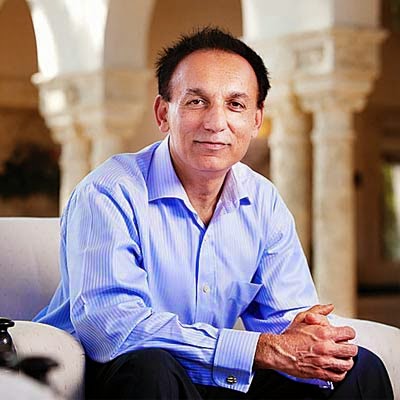
The Indian Institute of Technology (Bombay) in
Powai (Mumbai) received quite a windfall recently when billionaire alumnus
Bharat Desai, chairman of US-based company Syntel, donated $1 million to
his alma mater. The money will go toward starting a robust
entrepreneurship centre so that many more technicians come out as
entrepreneurs rather than just as degree-holders.
……
Five Indian-Americans have been named among the 400 richest people in
the US by Forbes, a list topped by Microsoft co-founder Bill Gates for
the 21st year in a row with a net worth of USD 81 billion.
…
Founder of outsourcing firm Syntel Bharat Desai, entrepreneur John
Kapoor, Symphony Technology founder Romesh Wadhwani, Silicon Valley
angel investor Kavitark Ram Shriram and venture capitalist Vinod Khosla
are among The Richest People In America 2014 list by Forbes.
….
Forbes said 2014 was another record year for American wealth, when the
aggregate net worth of the richest 400 Americans was USD 2.29 trillion,
up USD 270 billion from a year ago.
“Thanks to a buoyant stock market, the richest people in the US just keep getting richer,” Forbes said.
….
Gates is the richest American for the 21st year in a row, with a net
worth of US 81 billion. The Microsoft chairman’s stake in the software
company he cofounded accounts for just under 20 per cent of his total
net worth. His friend Warren Buffett, chief executive of Berkshire
Hathaway, occupies the number two spot on the 400, a rank he has held
since 2001 with a net worth of USD 67 billion.
Larry Ellison, who just announced that he was giving up the CEO role at
Oracle, the software firm he founded, comes in at number three, with a
net worth of 50 billion dollars.
…
Facebook co-founder and CEO Mark Zuckerberg is now the 11th richest
person in the US, and the biggest dollar gainer on the list. His fortune
soared to USD 34 billion, up USD 15 billion since last year, due to a
sharp rise in the price of the social network’s shares.
…
Desai and his family rank 255 on the list, followed by Kapoor who is ranked 261, Wadhwani (264), Shriram (350) and Khosla (381).
….
Desai, 61, and wife Neerja Sethi founded outsourcing firm Syntel in 1980
while studying at University of Michigan. The Indian Institute of
Technology alumnus has a networth of USD 2.5 billion.
Kapoor, 71, debuts on The Forbes 400 as a serial entrepreneur who has
founded two pharmaceutical companies that he has guided to exceptional
success.
…
The bulk of his wealth is concentrated in shares of Akorn
Pharmaceuticals, an Illinois-based generics manufacturer that Kapoor has
been involved with since the early 1990s, and INSYS Therapeutics, a
cancer-treatment maker that went public in May 2013. Kapoor, whose net worth is USD 2.5 billion, also has a small chain of
fast-casual Indian restaurants in Arizona called Bombay Spice, as well
as Roka Akor Japanese eateries in Chicago, Scottsdale and San Francisco.
…
Wadhwani, 67, an Indian Institute of Technology Bombay alumnus has a net
worth of USD 2.5 billion. Forbes said over the last decade, his galaxy
of companies has expanded to 20 and is generating three billion dollars
in revenues with 18,000 employees worldwide.
He is the recipient of the 2013 Forbes India ‘Non-Resident
Philanthropist Award’ and sits on the boards of the Kennedy Center and
the Center for Strategic and International Studies. Wadhwani signed Bill
Gates’ and Warren Buffett’s Giving Pledge last year.
….
Shriram, 57, has a net worth of USD 1.87 billion. He was an early Google
backer and has been a Silicon Valley angel investor since 2000. Through
his Sherpalo Ventures, he has backed early-stage tech firms such as
Zazzle and Paperless Post, as well as the frozen yogurt retailer
Pinkberry.
…
Shriram made most of his fortune through Google and has been on its
board since the company was founded in 1998. In June 2014, Shriram and
his wife donated $61 million to engineering initiatives at Stanford
University, which both of his daughters attended and where he is a board
trustee.
…
Khosla, 59, has a net worth of USD 1.67 Billion and has run his own
venture capital firm, Khosla Ventures, since 2004, following nearly two
decades at VC firm Kleiner Perkins. His highest-profile investments have
lately been in clean tech: wood-based biofuel, new types of batteries
and water purification.
…
All together, the 400 wealthiest Americans are worth a staggering USD 2.29 trillion, up USD 270 billion from a year ago.
The average net worth of list members is USD 5.7 billion, USD 700
million more than last year and a record high. An impressive 303 of the
400 saw the value of their fortunes rise compared to a year ago. Only 36
people from last year’s list had lower net worths this year.
…
The list has 27 newcomers including Elizabeth Holmes the youngest woman
on the list, and the youngest self-made female billionaire in the world.
Just 30 years old, the Stanford University dropout has built blood
testing company Theranos into a firm that venture capitalists have
valued at USD 9 billion.
…..
Link (2): dnaindia.com/bharat-desai-donates-1-million-to-iit-b
….
regards
….
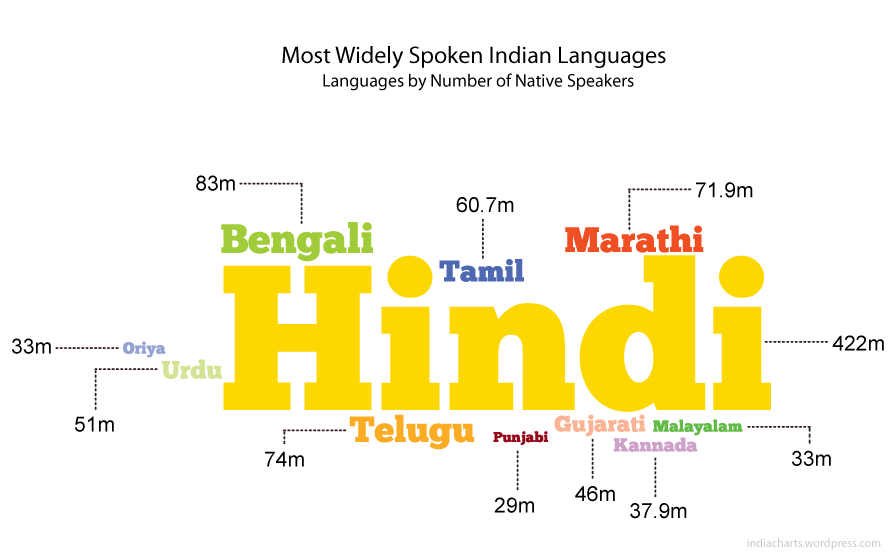
That said Indians are united about the need for diversity (and benefit of local control). This is simply a matter of accepting reality. In a country when there are so many languages, religions, cultures there is not much you can do to privilege any one “thing” over another (you can try and fail).
In general, where there has been sustained complaints of “imposition” (one community over another), we have followed the example set by our (ex) British masters and granted partition. On November 1, 1966, there was a splitting of the pre-existing Punjabi Suba into majority Punjabi speaking (and Sikh by religion) Punjab, and Hindi speaking (Hindu) Haryana, and also Hindi/Pahari speaking (Hindu) Himachal Pradesh (25 January, 1971). The same policy was followed for Kerala (1956), Maharashtra (1960) and Nagaland (1963) and others.
In November 2000, Jharkhand was split from Bihar (and Chattisgarh from Madhya Pradesh) with an emphasis on (exclusive) tribal identities. We just experienced (2nd June, 2014) a bitter, yet mostly peaceful partition between Telugu speaking people in Telangana and Andhra. And in the future there may be a Gorkhaland for Nepalis who propose to be free of Bengali domination.
Even at the intra-state level, a new, muslim majority Malappuram district was created on 16 June 1969 (by the secular, communist government of EMS Namboodiripad) by segregating taluks of the erstwhile Kozhikode and Palakkad
districts.
Thus when President Obama said: (Tame) Kem Cho (?) Mr Prime Minister we were quietly happy. There is no country on which has such diversity to the point that the Constitution notes 22 scheduled languages. Even that list ignores tens of millions of non-Hindi speaking people in the “Hindi” belt – Maithili from North Bihar is the sole exception – and the Tulu speaking community in (Mangalore) the south.
……
Since the time of independence elites have been fighting between themselves about the language to be imposed on the downtrodden (elites will always send their progeny to English speaking convent schools). But the eight schedule is serious business and if we really claim to love out country we should be able to speak at least one language that is not English and not our mother tongue.
For the Hindu-Hindi imperialists, we recommend learning any one of the four main southern languages; Telugu with a very large Sanskrit content will probably be the best bet. For the people of the south (who want to make a point by rejecting Hindi) we recommend Bengali (or Gujarati). However if you truly want to confound the Hindi speakers try Bhojpuri (or Maithili, the sweetest of them all).
…………
…
Via the 92nd Constitutional amendment 2003, 4 new languages – Bodo, Maithili,
Dogri, and Santali – were added to the 8th Schedule of the Indian Constitution.
…
Even though English language is not included in Eighth Schedule (as it is a
foreign language), it is one of the official languages of Union of India.
…..
Link: www.omniglot.com/language/phrases/bengali.php
….
regards
Then again if people feel that as per this definition humanism = feminism (and we agree) then it may be preferable to call ourselves (flawed) humanists.
How about reproduction and the specific question related to the medical termination of pregnancy (MTP aka abortion)? Again the long form answer is complicated (see below) but the short answer is that the final call is wholly the woman’s (to pull the trigger or not).
…..
Yes, abortion undoubtedly involves killing, but as a society we do sanction killing, all the time, unless we are Jains who keep mouths covered and feet uncovered (while eating organic Jain food). Yes, we should aim to kill less and minimize the pain while killing. This implies that abortion should be performed as early in the cycle as possible (we like the two doctor rule). Since we are not religious we are not concerned with the quality of life in the after-life, however we understand that other people may have principled objections on this matter.
Yes, any form of state control is odious. We consider the Chicom practice of kidnapping women and forcing abortions to be one of the purest forms of evil. Societal pressure causing women to abort girl child (and on rare occasions boys) is immoral. Men forcing women to have abortions because they enjoy sex (but not safe sex) is criminal (and this is why we advocate notification of authorities, usually parents but also teachers and care-givers, if the woman is under-age).
Yes on state subsidies for MTP – it is a simple enough procedure and poor people need it the most. If you feel that your tax dollars are being misused you can try to (non-violently) change society so that abortion becomes rare (while remaining safe and legal). Yes, there is a difference between killing unborn babies and killing people. But this also implies that birth control should be made available (subsidized) to all women.
This is the bottom-line, we do not like killing. We are also extremely fond of babies (of all types), hence killing of babies (even unborn ones) is problematic for us. But we live in an imperfect society and killing is part and parcel of it. If there exists an Almighty who has privileged women (and not men) to bring life to earth, it must be equally the privilege of women to terminate such a life.
…….
A Nagpur-based businessman is helping women seeking abortions across
the world–and he’s doing it through mail. Now under the Maharashtra
Food and Drug Administration scanner, Mohan Kale has been running a
mail-ordered abortion service, where in, he mails medicines with
terminate pregnancies to women across the world who are unable to avail
it.
….
According to a report in The Times of India,
44-year old Kale was influenced by Physician and abortion rights
activist Rebecca Gomperts, who made headlines with her decision to set
sail and provide abortions to women in countries where it is illegal.
….
“As a man, I can’t give birth to a baby but I do have autonomy over my
body. Why shouldn’t women?” the report quotes Kale as saying.
….
According to the New York Times
report, Kale and Gomperts met two years ago. At the time, Gomperts was
looking for a new supplier in India. As a supplier, Kale’s job is
simple: He is sent a prescription after a doctor approves an abortion
request, and he sends the ‘kit’ to the women in need. ….
Since the
medicines are legal in India, they can be purchased with a prescription.
Kale forms part of a much bigger telemedicine service that Gomperts
started in 2006. Five years before starting the telemedicine service,
Gomperts “did some legal and medical research and concluded that in a
Dutch-registered ship governed by Dutch law, she could sail into the
harbor of a country where abortion is illegal, take women on board,
bring them into international waters, give them the pills at sea and
send them home to miscarry.
….
Calling the effort Women on Waves, she chose
Dublin as her first destination,” says the New York Times report.
In places like Ireland, women made a beeline to seek appointments with
Gomperts. Women on Waves has since transformed into an international
tele-medicine service, of which Kale forms a part.
Kale sends
around 2,000 kits each month – containing one mifepristone and four
misoprostol tablets – to women who live in nations where abortion is
either banned or restricted. These are two of the 1,500 compounds that
Kale sells, generating an annual revenue of $4.5 million – but no profit
with an option for patients to donate 90 euros.
And the need
is enormous. Nearly 40 percent of the world’s population lives in
nations where abortion is banned or restricted making it a major health
concern for women.
The report in New York Times explains: “The
World Health Organization estimated in 2008 that 21.6 million unsafe
abortions took place that year worldwide, leading to about 47,000
deaths. To reduce that number, WHO put mifepristone and misoprostol on
its Essential Medicines list.”
But even as both Kale and
Gompert walk a legal tight-rope, the service has enabled thousands of
women across the globe to assert their reproductive rights and attain
greater control of their bodies. New York Times cites a thank you note
from one of the women, which sums it up: “I used your service a few
months ago. Today I finally found out I was back to normal, whatever
that really means, seems strange to say really, but I wanted to say a
HUGE thank you.”
…..
…..
regards
….USCIRF
@USCIRF Hindu Nationalist Group Seeking to Cleanse Christian Presence From #India Is Not Unlike ISIS, Watchdog Group Warns……David B. Cohen
@DavidBCohen1 “Watchdog” group likens BJP to ISIS, proving they’ve no moral compass. Moral equivalence is not moral, nor is @USCIRF……
….
The argument continues about the curious case that was the 2005 US VISA ban imposed on Narendra Modi as directed by the US Commission on Internal Religious Freedom (USCIRF, see tweet above). The ban was quite unique in its application (apart from Nelson Mandela* back in the day and more recently Prabowo Subianto of Indonesia, see link below for details). There have been (naturally) speculations as to how it came about, and what was the specific role of (american, expat) evangelical Christians.
Interestingly enough, American colonial policy makers have chosen to segregate India (under supervision of the US Pacific Command- PACOM) and Pakistan (US Central Command- CENTCOM). Why is that? Well, we think we know.
The desired impact (of the ban) was to make Modi unacceptable to (and unelectable by) Indians. But that was not how the cookie crumbled. If left alone it was quite likely that Modi would have faded away, similar to how BJP lost in Uttar Pradesh under the pincer attack of Mulayam Yadav and Mayawati. But the humiliation imposed from outside led his own people to see him as a victim. It was Gujarati asmita that helped deliver three in a row victories to the state-house.
….
With these victories under his belt, Modi was able to sell the story (at the national level) of a successful executive who could deliver on growth. This became a major point of contention between rival camps of economists (Amartya Sen against, Jagadish Bhawati in favor). Other people pointed out the poor human development indices for Gujarat. It was noted (correctly) that for disadvantaged people, Tamil Nadu is a much better place to be than Gujarat.
Finally we should not under-estimate the passion of the volunteers of the Sangh Parivar. As late as early 2013 it was not clear that Modi will be getting the mandate (we had opined against this on BP). The elders had argued that the leadership issue be resolved after the election. But the rank and file forced their hand.
It was only with the great reluctance (fearing active American displeasure) that RSS and BJP agreed to go with Modi as chief. And now Modi has crushed all the people who spoke against him…..including the original iron man Lal Krishna Advani.
Our feeling is that people went ahead with gut feeling. The true battleground was Uttar Pradesh and Bihar. Huge numbers of migrant workers from these states (and others) work in Gujarat. They are made welcome in a way (not a very good way admittedly) that they will not be in Tamil Nadu. As a result people accepted the Gujarat growth story at face value. It was going to be vote for Modi (as opposed to a vote for the BJP).
Then there were the topical issues of (excessive) corruption and (zero) safety of women. Modi is clean in a way Tamil politicians are emphatically not. Chennai (and the South) is pretty safe for women but Ahmedabad ranks #1 in national surveys (and has done so consistently).
Eventually in the elections the DMK was wiped out…even the most solid forts crumbled. Corruption is not a killer under normal circumstances because people accept the fact that both sides are equally corrupt. However this election we believe was different (it felt different). People, uncommitted neutrals, not fire-breathing bigots were simply furious.
We saw the evidence of this in the polling booth and (as we pointed out on these pages) it was the first time we were convinced that Modi will win in a big way. The VISA ban had backfired, badly.
………..
The question is then, who really intended to benefit from a ban on Modi. Rajeev Srinivasan is (ideologically) on the right but it does not mean that his analysis is wrong. RS claims that it was a push from US based evangelists which convinced the US political establishment. Is this a valid claim?
There is a long background article (see below) by Zahir Janmohamed which substantiates Rajeev’s claim. The campaign for the VISA ban was led by a John Prabhudoss, an India-born, Evangelical Christian leader based in Washington DC.
The Saffron pogroms directed against the tribal Christians in Odisha (2008-2009)
has been indicative of how the battle of lions vs. Christians will be
fought in the tribal lands of Jharkhand and Chattisgarh. Strangely enough, it turned out
that the Christians (and their allied Maoist brigades) can also turn
into lions, when they murdered Swami Laxmana-nanda Saraswati who had been deeply involved in tribal welfare in Odisha over three decades.
We now expect the frontal invasions to calm down for the moment (but the guerilla warfare will continue). This was confirmed when the US Commission on Internal Religious Freedom (USCIRF) fired a fresh new salvo.
USCIRF
@USCIRF Hindu Nationalist Group Seeking to Cleanse Christian Presence From #India Is Not Unlike ISIS, Watchdog Group Warns http://bit.ly/1AqCYSh
The fire has been returned, not by Hindutva-vadis but Americans keen on building economic (and political) bridges with India
David B. Cohen
@DavidBCohen1 “Watchdog” group likens BJP to ISIS, proving they’ve no moral compass. Moral equivalence is not moral, nor is @USCIRF
The US Christian Leadership knows that if it came to a competition between dollars and bibles, the Americans will always settle for dollars. If active persecution of Christians was bothersome to the USA, Americans would never do business with China, Egypt, and Pakistan.
We are not suggesting that persecution of Christians have to rise to Middle-Eastern (or Far-Eastern) levels for people in India to start taking action. The point is that USCIRF and the US Christian Leadership are picking a wrong battle to fight (and they will lose badly). If America turns its back on India today, China will be waiting with open arms (India has to hand over Arunachal Pradesh and the no-limit ATM will be turned on).
The uncomfortable reality is that you will catch more flies with honey than with vinegar. Comparing India to the Caliphate is not the way. The Bible advises us to turn the other cheek to violence. This implies it is moral courage and not brute force that will eventually win out. If the US Christian Leadership believes that God is on their side (and why not) then they will need to play the long game. They need to act like proper Christians and be patient and in due time the kingdom on this earth will be for them to enjoy (there is no heaven, they know).
….
“When the U.S. denied
Mr. Modi a visa in 2005, it was like the U.S. denying a visa to the
governor of Iowa — no offense to Gujarat,” he said. “The U.S. did not
see it as a big deal. And back then, it seemed clear to everyone in this
town that Modi was involved in the riots. Now the picture is fuzzier,
and many are intrigued by Modi.”
…
Link (1): firstpost.com/modis-us-visit-will-be-all-pomp-and-of-little-circumstance
Link (2): thejakartapost.com/us-backflip-modi-ban-a-fillip-prabowo
Link (3): nytimes.com/u-s-evangelicals-indian-expats-teamed-up-to-push-through-modi-visa-ban
….
regards
PS * No, we are not foolish enough to compare Modi with Mandela
