Q Poll- Obama worst prez (Reagan best)

Response to Shah Alam:  Yes, we agree, but remember, this was a man who got a Nobel prize for having done nothing. He must be held to a higher standard.

Unfortunately for left-liberals, this is a well respected Quinnipac
University Poll, not some Koch brothers dirty money funded push poll.

To add insult to injury, both the plutocrat Mitt Romney, who
memorably farted at the general direction of millions of americans (
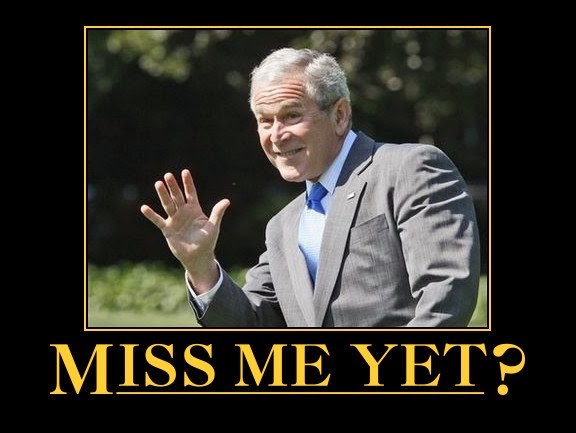
47%) AND the infamous GW Bushitler
came out ahead.

Still we have to go with the first thought in our mind: Racist!!!!!
Second thoughts: Obama was actually doing fine till he botched the healthcare.gov site launching. If only he had outsourced the job to Tata Consulting Services (TCS) everything would have been fine and Obama would have displaced Ronnie at the top of the list.
………..
Barack
Obama is the worst US President since World War II, 33 per cent of
Americans have said in a new poll released on Wednesday which gave
negative grades for him for his handling of key issues like the economy,
foreign policy, terrorism, heatlhcare and environment.


America
would be better off if Republican Mitt Romney had won the 2012
presidential election, 45 per cent of voters say, while 38 per cent say
the country would be worse off, according to the Quinnipiac University
National Poll.


American voters say 54 – 44 per cent that the Obama Administration is not competent running the government.

The president is paying attention to what his administration is doing,
47 per cent say, while 48 per cent say he does not pay enough attention,
according to the poll.

52-year-old Obama, now in his second
term, is the worst president since World War II, 33 per cent of American
voters say while another 28 per cent pick his predecessor in the White
House, President George W Bush.


Ronald
Reagan is the best president since WW II, 35 per cent of voters say,
with 18 per cent for Bill Clinton, 15 per cent for John F Kennedy and 8
per cent for Obama, the independent Quinnipiac University poll finds.

Among Democrats, 34 per cent say Clinton is the best president, with 18 per cent each for Obama and Kennedy.

Obama has been a better president than George W Bush, 39 per cent of
voters say, while 40 per cent say he is worse. Men say 43 – 36 per cent
that Obama is worse than Bush while women say 42 – 38 per cent he is
better.

Obama is
worse, Republicans say 79 – 7 per cent and independent voters say 41 –
31 per cent. Democrats say 78 – 4 per cent that he is better.

Voters say by a narrow 37 – 34 per cent that Obama is better for the economy than Bush.

Missing Mitt are Republicans 84 – 5 per cent and independent voters 47 –
33 per cent, while Democrats say 74 – 10 per cent that the US would be
worse off with Romney.

“Over the span of 69 years of American
history and 12 presidencies, President Barack Obama finds himself with
President George W Bush at the bottom of the popularity barrel,” said
Tim Malloy, assistant director of the Quinnipiac University Poll.

“Would Mitt have been a better fit? More voters in hindsight say yes,” the Quinnipiac press release says.

A series of political controversies, economic woes and foreign policy crises have hit Obama’s reputation.
…..

Link: http://timesofindia.indiatimes.com/world/us/Obama-worst-US-president-since-World-War-II-Poll/articleshow/37651202.cms

……

regards

Facebook issues an OK-OK apology

The researchers wanted to see if the number of positive, or negative,
words in messages they read affected users.
…Indeed, after the exposure the manipulated users began to use negative
or positive words in their updates

Down with Facebook we say!!! Hang social media, how dare they manipulate us emotionally? Well….did you know that they issued a heart-felt apology? From the COO even. Guess what folks, everything is fine and dandy now. 

….wait a minute…did they promise to never ever pull that stunt again? No they did not? Just blamed everything on poor communication?? And these are experts in social media???? Hang social media, we say. Down with Facebook.
…..
Apologising for bad communication on Facebook’s news feed experiment,
visiting Chief Operating Officer Sheryl Sandberg today said it was like
any other test aimed at improving service quality for over 1.2 billion
users.


Facebook conducted a study in January 2012 to see how the placement of
positive or negative words in the news feeds of users affected their
status updates.


The results of the study, conducted on 700,000 users, were published in
an article in the journal ‘Proceedings of the National Academy of
Sciences’.


This stirred a global debate on privacy and protection of user data.

“This was an experiment done for one week, this was communicated
terribly and for that communication, we have apologised. This is part
of the ongoing research that companies do to test different products,”
Sandberg told reporters here.


She added that Facebook, which is the world’s largest social network
with over 1.2 billion users, takes privacy and security very seriously.
In India, Facebook has over 100 million users.


Previously, Facebook data scientist Adam Kramer, in a post, had also
said the goal of Facebook’s research is to learn how to provide a better
service.


A UK regulator has begun an inquiry into the experiment to determine if
the company broke data protection laws applicable in that country.


“We work very closely with the regulators all over the world. We are
fully compliant (with regulations). (respect for data privacy) is the
hallmark of our service, it is the underpinning of our service,”
Sandberg said.

……..

A study detailing how Facebook secretly manipulated the news feed of
some 700,000 users to study “emotional contagion” has prompted anger on
social media.
For one week in 2012 Facebook tampered with the algorithm used to place
posts into user news feeds to study how this affected their mood.


The study,
conducted by researchers affiliated with Facebook, Cornell University,
and the University of California at San Francisco, appeared in the June
17 edition of the Proceedings of the National Academy of Sciences.


The researchers wanted to see if the number of positive, or negative,
words in messages they read affected whether users then posted positive
or negative content in their status updates.


Indeed, after the exposure the manipulated users began to use negative
or positive words in their updates depending on what they were exposed
to.


Results of the study spread when the online magazine Slate and The Atlantic website wrote about it yesterday.


“Emotional states can be transferred to others via emotional contagion,
leading people to experience the same emotions without their awareness,”
the study authors wrote.


“These results indicate that emotions expressed by others on Facebook
influence our own emotions, constituting experimental evidence for
massive-scale contagion via social networks.”


While other studies have used metadata to study trends, this appears to
be unique because it manipulates data to see if there is a reaction.


The study was legal according to Facebook’s rules but was it ethical?


“#Facebook manipulated user feeds for massive psych experiment… Yeah, time to close FB acct!” read one Twitter posting.


Other tweets used words like “super disturbing,” “creepy” and “evil,” as well as angry expletives, to describe the experiment.


Susan Fiske, a Princeton University professor who edited the report for publication, told The Atlantic that she was concerned about the research and contacted the authors.

…….

Link(1): http://www.outlookindia.com/news/printitem.aspx?847710

Link(2):  http://www.outlookindia.com/news/printitem.aspx?847223

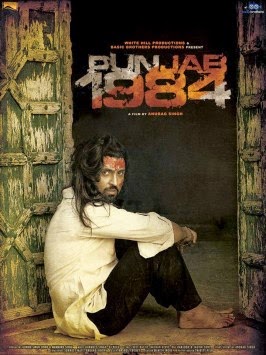
Punjab 1984

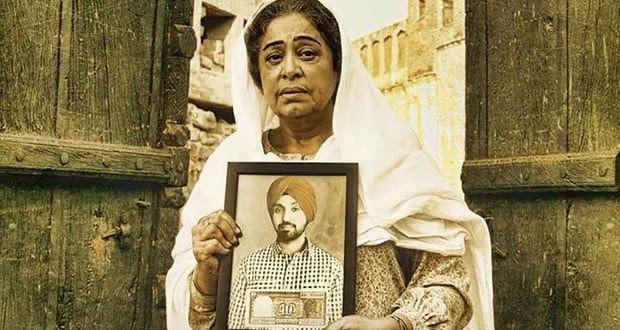
….the story of a mother whose son was picked-up by the police at the
behest of a relative with whom the family had a land dispute……the story of a son who…is
determined to return to his home openly, in broad day light and with
honor 

India is the best country in the world. Where else you will get this million strands of thought which will drown out all your preconceived notions about everything? Imagine a pastel color box with 300 color shades, India has all of that from extreme right to extreme left (speaking of politics only).

India is the worst country in the world. Where else do you have the most beautiful words set side by side the most ugly actions against men and humanity? Thousands of people are massacred and we move on, it is always another community, another time, another place. Perhaps because most of us are so poor and leading lives filled with so much indignities that we can barely reflect on what it means to be a part of a civilization that has been enriched by people from almost all corners of the earth.  
There is no accountability and no justice. The victims of 1984 (and their families) deserve nothing less from their brothers and sisters.
 

Punjab 1984 is less of a commentary on the
crimes of 1984 and beyond and more of a love story (interview clip of
director Anurag Singh below). One of the best movies of 2014, excellent
direction, acting and music. However the storyline is controversial.
Khalistanis claim that the movie portrays the freedom movement in a negative light.

Certainly there is no open pro-Khalistan sentiment else the movie would not have been released in India (for example, Sadda Haq which was also released recently). That said it is true that every movement becomes infected with corrupt, opportunistic people over time.

There is also no question that huge numbers of Hindus were killed (though this does not justify a single Sikh killing). Incidentally, Amarinder Singh, a Sikh and Congress MP from Amritsar has claimed that a total of 35000 hindus were killed (see link below).

Simran Kaur is a Sikh AND a leftist (one more color shade) – she has previously published in Kafila!!! Her review of P-1984 seems to be quite sensible though. Now the review itself is a matter of controversy as the freedom fighters are upset!!!

The review below has a few spoilers so please proceed with caution.
……
I had the opportunity to see the film Punjab 1984.  I almost
decided not to go based on the reviews I saw online which claimed the
film defamed the Khalistan movement and made Sikh fighters look like
villains.
I’m glad I went anyways. I found the film to be thoughtful and able to present a nuanced picture of what took place. 


I feel that those who found the film to be offensive perhaps haven’t
lived through those days or aren’t familiar with what happened and how. 
It could be a case of looking at the Movement with rose-colored glasses
or trying to understand it as a simple binary of Good Guys-Khalistanis,
Bad Guys-Punjab Police & Indian Government.


Things were never so simple. 


Punjab 1984 isn’t a propaganda film for the
Khalistan Movement, nor should we have expected it to have been.  That
having been said, I believe the film is positive towards the Movement
and Daljit’s character, Shivjit Singh (Shiv) is a strong protagonist. 


Like the main character in the film, many of the young men who joined
the Movement were initially not particularly ideological or often even
all that religious.  They were pushed into taking up arms by
circumstances and the fact that there were few alternatives available to
them.


The story in Punjab 1984 is one that happened all across
Punjab. Family disputes, land disputes and other business disputes
became thrown into and interwoven with the ongoing insurgency. Some
people joined a Jathebandi to ensure their security or because a rival
had joined another Jathebandi.  In many disputes about money or land,
one side paid the police to frame their rivals in order to get rid of
them.


….
Shiv is one such young man.  A neighbor takes advantage of the
situation in Punjab to use the Punjab Police to intervene in a land
dispute.  Shivjit Singh is tortured and sent to be eliminated in a fake
encounter by the corrupt police officer. 


….
After escaping police custody Shiv joins a Kharku group whose leader
(Sukhdev Singh) is fiery and speaks passionately about Khalistan but in
his personal life he clearly is not a Gursikh.  The leader, Sukhdev,
engages in some actions which are clearly not justifiable according to
Sikhi. In a scene depicting a meeting of Kharku leaders, there are
serious disagreements and internal bickering.


….
That too is not an unusual story. Many prominent leaders of the
Khalistan Movement such as Dr. Sohan Singh or Wassan Singh Zaffarwal
have now been accused of being government moles who derailed the
movement.  It is a also an unavoidable reality that the Khalistan
Movement was internally very divided and many leaders did not get
along.  The repeated formation and division of the Panthik Committees
and the formation of countless splinter groups is a illustrative of
that. 


….
The plight of Shiv who does not agree with the way in which his
leadership is taking the movement is also not unusual. In my discussions
with families of young Sikhs who joined the Khalistan Movement for
ideological reasons, I have been told more than once that the young
Singh’s felt disappointed that not everything they saw was what they had
expected or in accordance with the principles of Sikhi. 


….
While many of us automatically assume that anything that went wrong
in the Khalistan Movement was a result of government infiltration, the
reality is not as simple.  While government agencies heavily infiltrated
the Khalistan Movement, there were many individuals who got involved
for self-interest. There was a criminal element who took on the mantle
of Khalistan to continue their pursuits. And there were those who may
have got involved with good intentions but were corrupted along the way. 

Not every Kharku was a Gursikh or behaved in a way that was consistent
with the principles of Sikhi. This element of the Movement cannot be
dismissed simply as a fringe, but played a major part and was also
instrumental in its failure. Punjab 1984 shows some of that reality. 


….
Some commentators have expressed outrage that the film showed Hindus
being killed by “kharkus”. In fairness, the killings in the film are
carried out by goons who are clearly not ideologically motivated
fighters. Such incidents are also unfortunately a reality of what
happened in Punjab. 


….
I have read some commentary which claims no innocent Hindus were ever
killed by the Movement. I think that sentiment is actually a positive
reflection, if not a misguided one, as it shows that Sikhs continue to
abhor the killing of innocents.


….
In reality, the killing of Hindus and non-Punjabi laborers was not a
one-off occurrence. Those involved in these killings were sometimes
blinded by hatred and the argument that “Hindus” had killed Sikhs in
Delhi and other cities in November 1984. There was also a strain of
thought among some that driving Hindus out of Punjab would speed the
formation of Khalistan.
This angle has been covered by several books,
including the novel Kundliay Sup by Amardeep Singh Amar, a very well known and respected Khalistani writer.


….
There have also been objections to the scene in which Shivjit Singh’s
group’s boss is seen drinking with a politician. That scene is in fact
quite powerful and reflects an important reality.
The politician is
connected to both the police and the kharkus and says that those who are
too ideologically committed to Khalistan make the best fighters but the
worst politicians.  He says that even if Khalistan were to become a
reality, it would be people like him who would make the government. The
fact is that such politicians existed in the Sikh community in 1984 and
continue to exist today who manipulate the community and Panthik
sentiments for their own benefit. 


….
The fact that these corrupt elements were drinking is hardly a shock. 


….
Finally, some commentators have lamented that only the negative
aspect of the Khalistan Movement has been shown and none of the
spiritual Gursikhs who were involved were given any prominence. I would
agree that the movie would have benefited from a character who was
ideologically motivated to join the Khalistan Movement and was a
spiritual Gursikh.  That having been said, the absence of such a
character is not a fatal flaw.  This film cannot be expected to show
every angle of the Movement in 2.5 hours. 


….
Overall, the character of Shivjit Singh is a powerful one. It shows
how young Sikhs were pushed into a fight that they had not wanted. It
shows the confusion they felt, the obstacles they faced and the truly
complicated world of the Khalistan Movement. 


…..
Rather than criticize this effort or trying to boycott it, it would
be better for the community to take this film as an opportunity to
reflect on the Movement and learn more. We should not be incensed when
we are presented with the weaknesses of the Khalistan Movement. Not
every personality involved in the Khalistan Movement or every incident
that took place is one we need to defend. If we are to move forward as a
community, we need to confront what went wrong and ensure we don’t
repeat those mistakes. 


….
Punjab 1984 is a thoughtful film. It requires reflection and
nuanced analysis to fully appreciate. There is even some subtle
symbolism and gentle nudges by the director if you are looking for them.


…..
If you are looking for a pro-Khalistan  propaganda film that presents only one side of the story, you may be disappointed. 


….
I thoroughly enjoyed Sadda Haq but I enjoyed this film as well. Go to
see Punjab 1984 with an open mind. It certainly cannot reflect the
entire reality of the Khalistan Movement but it does an admirable job of
showing some important features of it. Features that we may not feel
comfortable confronting but will have to in order to progress.

….

Link(1): http://www.sikh24.com/2014/06/punjab-1984-an-opportunity-for-thought-reflection/#.U7QiuaOQuho

Link(2):https://in.news.yahoo.com/capt-amarinder-questions-jaitleys-silence-over-killing-35000-154506273.html

……

regards

Arundhati Roy is an US spy

The Post reported that Washington has “no-spying arrangements” with only the U.K., Canada, Australia and New
Zealand, a group known collectively with the U.S. the “Five Eyes.” 

Just an idle fantasy that we have about A.R. and her merry band of storm-troopers (all the rage against the MAN is such a perfect cover), but supposing for a moment that this was true, that she is indeed the Queen Bee in the pay of  the USA, it would be so delicious on so many levels.

Thanks to Edward bhai (give him a Bharat Ratna now!!!) we have the list of top ranked enemies of the USA requiring “special observation.” Surprisingly, no Russians and Chinese entities on the list. Instead what we have are a bunch of third-world, ideological organizations with a mass base not fully beholden to the West.

BJP (India), PPP (Pakistan), Hezbollah (Lebanon), Muslim Brotherhood (Egypt), FARC (Colombia) 

The FARC are a Violent Non State Actor (VNSA) from Colombia [ref. Wiki], equivalent to the Maoists of India (who are not under supervision…why?).
The Revolutionary Armed Forces of Colombia—People’s Army (Spanish: Fuerzas Armadas Revolucionarias de Colombia—EjĂ©rcito del Pueblo, FARC–EP and FARC) are an irregular military organization involved in the continuing Colombian armed conflict since 1964.The FARC-EP have a claim to be an army of peasant Marxist–Leninists with a political platform of agrarianism and anti-imperialism. The operations of the FARC–EP are funded by kidnap to ransom, illegal mining, extortion and the production and distribution of illegal drugs.

Also this…if you are keen on spying in Pakistan why bother to focus on the Pakistan People’s Party? Wikileaks show them to be quite harmless and pro-West, no?

That said spying on the BJP (and PPP) seems to be a sheer waste of taxpayers money. We can not speak for Egyptians and Lebanese, but in South Asia there are far more Jaichands and Mirjafars than patriots. Just arrange for a few scholarships, fund a few NGOs and we will happily spill the beans. Also awards are nice, we really dig foreign awards. And remember to invite us to give a few lectures (far cheaper than inviting Hilary).
…….


The Bharatiya Janata Party (BJP) was included in a top-secret list of
six non-U.S. political parties worldwide that the U.S. National Security
Agency (NSA) received official permission to covertly spy upon,
according to the latest trove of data released to the media by NSA
whistleblower Edward Snowden.


The BJP, Indian government and a host of other foreign entities were included within the surveillance list of the NSA
authorised by the FISA Court in 2010 and per U.S. law this
certification was required annually for the Agency to continue such
surveillance every successive year.


It s not clear whether the FISA Court similarly authorised the NSA to
spy on the BJP and Indian government in the years following 2010.


According to documents that Mr. Snowden published via the Washington Post on
Monday, the U.S.’ shadowy Foreign Intelligence Surveillance Act (FISA)
court gave the NSA “broad leeway” in conducting surveillance upon not
only these six political parties but also a list of 193 foreign
governments – including India – and only four countries were off-limits
under this programme.


The Post reported that Washington has long adhered to broad
“no-spying arrangements” with only the U.K., Canada, Australia and New
Zealand, a group known collectively with the U.S. the “Five Eyes.”


Yet the classified 2010 legal certification given to the NSA by the FISA
court suggests the Agency received “a far more elastic authority than
previously known,” one that reportedly allowed it to intercept through
U.S. companies not just the communications of its overseas targets but
any communications about those targets too.


NSA officials reportedly declined to comment on the certification or
acknowledge its authenticity, but “stressed the constraints placed on
foreign intelligence-gathering,” including requirements set for the
Agency by the President, the Director of National Intelligence and
various departments through the National Intelligence Priorities
Framework, the Post said.


The documents further revealed that the FISA court authorised the NSA to
snoop on the Internet and telephone communications of the World Bank,
United Nations, OPEC, and the European Union.


The other five political parties that the NSA had authority to spy upon
were Amal of Lebanon, with links to Hezbollah; the Bolivarian
Continental Coordinator of Venezuela, with links to FARC; the Egyptian
Muslim Brotherhood; the Egyptian National Salvation Front; and the
Pakistan People’s Party.


In a comment to the Post, Jameel Jaffer, Deputy Legal Director
for the American Civil Liberties Union, said, “These documents show both
the potential scope of the government’s surveillance activities and the
exceedingly modest role the court plays in overseeing them.”

……

Link: http://www.thehindu.com/news/international/bjp-among-six-foreign-parties-authorised-for-nsa-surveillance/article6165398.ece

….

regards

Did your Ma teach you to say that?

“… If you insult
the mothers and daughters of Trinamool workers. Then I won’t spare you. I
will let loose my boys in your homes and they will commit rape. I will
teach each of you a lesson”

….
Bengali men (super-caste Hindus, the so-called gentlefolk or the bhodrolok) have a self-image of being liberal. This is especially so when they stand up for their (bengali) muslim brothers against the (mostly north Indian origin, bihari/marwari) Hindu right. This is quite an admirable trait, given that millions of their own have suffered grievously at the hands of muslim thugs in uniform and without.

Bengali women (bhodro-mohila) have a self-image of being domineering. The lady Gods lead all the popularity contests. In Bengal, Shiva is a beggar awaiting favors from Annapurna, the mother who feeds the world. Bengali men are meek, mama’s boys (so says the poet Robi Thakur).

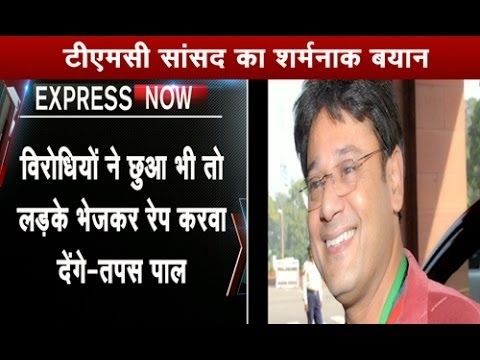
Here comes a Bengali who has little use for tradition. It also does not matter that his boss is a woman, who was tortured by marxist goons when she was a rising politician. He may be smiling white for  the cameras, but his heart is completely black. He is also a first rank liar and coward (tried to explain that he had said RAID not RAPE, next got his wife to apologize on his behalf).
……..
A day
after TMC MP Tapas Pal allegedly threatened to kill CPM workers and have
their women raped, his wife Nandini Pal on Tuesday apologized for her
husband’s controversial comment and said there was another part of the
story.


“I apologize for his comment. Of course there is no
question of supporting it. But yes I know there is another part of the
story, which provoked him to do that. The entire incident had happened
long back, what led to such a thing there is another part of the story,”
Nandini told reporters.

“On behalf of him I am saying sorry,”
said Nandini. The controversial comment had triggered an uproar and
sparked condemnation by opposition parties with CPM demanding that the
Lok Sabha Speaker take suo motu cognizance of Pal’s outburst and
disqualify him.

Trinamool Congress yesterday demanded an explanation in writing from the party’s actor-MP within 48 hours for his comment.

“The
statements made by Mr Tapas Pal are utterly insensitive. The party does
not in any way endorse what he said many weeks ago, which is being
played out on TV channels,” party spokesman Derek O Brien had said.

The MP’s comment also drew condemnation from the National Commission for Women.

Pal’s comment which went viral on a vernacular TV news channel
yesterday had quoted him saying,  “If any CPM man is present here. Listen
to me. If you ever touch any Trinamool Congress worker or their
families at Choumaha, you have to pay for this. Don’t try to act smart
with me. I am smarter than you…”

“…
Earlier, you guys have bullied me on various occasions. If you insult
the mothers and daughters of Trinamool workers. Then I won’t spare you. I
will let loose my boys in your homes and they will commit rape. I will
teach each of you a lesson,” the MP had warned.

Pal, however, denied that he spoke about rape. “What I said was I will tell my workers to ‘raid’.” 

…..

Link: http://timesofindia.indiatimes.com/india/Trinamool-MPs-wife-apologizes-says-there-is-other-part-of-story/articleshow/37561412.cms

…..

regards

ECHR bans the burqa!!!

The European Court of Human Rights is so much attuned to the sensitivities of marginalized groups that this decision comes as a bolt from the blue.

The burqa is already banned in France and parts of Belgium, Denmark and Italy. Germany has been thinking about it. Now plenty more countries will be emboldened by this ruling (but not the UK). In the near future immigrants may be asked to declare that they will abide by Western cultural rules.

A corresponding “civil rights” bill targeting Hindus (if one has to use such a lens) would ban caste based discrimination (proposed in  the UK but held back presumably because it will disturb UK-India relations). So the UK is nothing but consistent on these matters.

Arguments for burqa (full face veil) ban: The court agreed that this will enhance integration and help foster social cohesion. We agree, but only two cheers (see below).

Arguments against: (1) This will harm conservative muslim women as they will not be permitted to step outside the house. Well in that case muslim men should be prosecuted for involuntary incarceration.

(2) There should be no compulsion in clothing in a free society. Not true, we are not free to wear KKK and Nazi uniforms. Every society has rules, even so-called free societies.

(3) It is ordained by the Koran. No it is not. The Koran merely advises all muslims to dress modestly (good advice for all of us). 
 
(4) Very few women chose to wear a burqa. This is a bogus argument. If you are anti death penalty it is because you are opposed in principle, not because of the numbers. Even one innocent death is too much.

(5) Many young women chose to wear a burqa voluntarily (it is a socio-political statement and hence protected by the first amendment).

This is a truly a tough one and in our opinion the only reason why the Court could (should) have overturned the ban. This is also the reason why a burqa ban will never pass in the USA.

There are two not-quite satisfactory arguments against.

– The consequence of defining burqa wearing as acceptable (and symbol of piety) has very bad consequences for women (muslim or otherwise) who chose NOT to wear a burqa. Women are harassed in public for their choice of dress by muslim men.

– The question of security in a public space (everywhere except your home). Recently one muslim lady in Australia escaped conviction because she was dressed in a burqa. Male robbers have taken advantage of the burqa. Today we are all suffering from security restrictions. Muslims must share this burden equally.
…… STRASBOURG,
France: The European Court of Human Rights on Tuesday upheld France’s
controversial burqa ban, rejecting arguments that a 2010 law outlawing
full-face veils breaches religious freedom.

In a case brought
by a 24-year-old French woman with the support of a British legal team,
the court ruled that France was justified in introducing the ban in the
interests of social cohesion.

……

Link: http://timesofindia.indiatimes.com/world/europe/European-rights-court-upholds-French-burqa-ban/articleshow/37573848.cms

…..

regards

The Hindu Mirjafar

Fascinating story on so many levels. Across muslim south asia the thinking is that but for Mir Jafar, the British would not have got a foot-hold in Bengal. Muslim rule would continue uninterrupted across the land. India would become another Indonesia with Hindu pockets (Bali) and a Sanskrit-named airline (Garuda).

In Sindh however there is a local villain who betrayed the kings (Mirs) and was rewarded in silver coins for his services to the British. He is Seth Naomal Hotchand. 

Right now there is a lot of controversy about a Big Boss speech- namely Indians (Hindus) were slaves for a thousand years. Secularists are (as usual) up in arms. We are allowed to say that British imperialists were bad but not the Turks-Mughals. Why is that?

It is a fair statement that in Hindu ruled India, the Dalits were the
slaves (and many remain to this day). They have been slaves for
thousands of years. Neo-Dalits like S Anand are happy to
denounce Hindu imperialism and they are perfectly justified in doing so.

Why
then the double standards? When denouncing imperialism and slavery do it
for all cases without reservations, it would be the right thing to do.

Seth Naomal betrayed Sindh perhaps because he felt no allegiance to the people who tortured his family and treated his people as second class citizens (horses were reserved for Muslims, Hindus could ride only donkeys). For whatever faults of the British, they treated both Hindus and Muslims equally badly (worse than horses AND donkeys). Progress!!!
………………….
Muhammad Usman Damohi writes about Hotchand in the 2013 edition of his book Karachi: Taareekh Kay Aaenay Main: “The
man’s lust for wealth and status robbed Sindhi nationalist Muslims and
Hindus of their freedom, forcing them to live under tyranny and endure
the pains of slavery… This man helped the British defeat the Mir
rulers of Sindh.”


About his family background, Damohi writes:
Naomal was born in
Kharadar — one of the oldest areas of Karachi — in 1804. He was the
great grandson of renowned Hindu trader Bhojomal, who laid the
foundation for the city of Karachi in 1729. Naomal’s father Hotchand was
also a very successful merchant, with a business reach extending all
across India, Afghanistan, Iran and Muscat. This was one of those
powerful families who loaned money to the Mirs of Sindh, and even had
contacts inside the royal court of Hyderabad.

All this information
begs the question, even more – what would such a rich and powerful man
be aiming for in helping the British conquer Sindh? 

We turn to “Memoirs of Seth Naomul Hotchand of Karachi”, where he writes on page 89 (third edition, printed by the Sindhi Literary Board in 1996 and translated into English in 1915):

“It
was somewhere between 1831 and ’32. In Nasarpur (near Mirpurkhas,
southern parts of Sindh), a young boy — the son of a Hindu peasant, and
upset at his teacher for, perhaps, giving him a beating — went up to the
gates of a local mosque and stood there.

When a group of Muslims
spotted him, they took the boy inside the mosque. This angered the
Hindu community and triggered reactions like Hindu shopkeepers refusing
to sell goods to Muslims, with Muslims retaliating by throwing litter
into the well in Lyari, where many Hindus got their drinking water from.

“The next day, a man named Nooral Shah, and a ‘Syed’ by lineage, came
to our neighbourhood, cursing Hindus. My younger brother, Pursuram,
who was standing at the outer gate of the neighbourhood, asked Nooral
Shah to refrain from it, but things heated up. In rage, Nooral Shah
began claiming that Pursuram had insulted the Prophet Muhammad (PBUH),
and a huge Muslim crowd gathered to agitate.


“Later, Nooral Shah went to various cities of Sindh with a Quran held
up to his chest, inciting Muslims [to act against the Hindus]. Somehow,
my brother managed to slip out of city and go to Jaisalmer. Meanwhile,
the matter was taken to the court of the ruler of Sindh, Mir Murad Ali
Talpur. It was a sensitive matter, with a lot of pressure being
generated by Muslim groups. Mir sahib sent for my father to send
Pursuram to Hyderabad. Since Pursuram was not in Karachi, Mir sahib
ordered my father to appear at his court. “

“When my father
reached Hyderabad, Mir sahib referred him to the Qazi (religious judge)
of Nasarpur, which is a small city not far from Hyderabad. The Qazi
refused to hear the case. Then all of a sudden, Muslims attacked my
father and kidnapped him. He was taken hostage for 10-12 days.”

“At first, they wanted to turn him into a Muslim (meaning, circumcise
him). However, my father was over 50 years old, not to mention such
an act was against Islamic prescriptions as well. Along with that, the
Muslims feared that the act would cause too big a reaction, so they
changed their mind. Later, Mir Murad Ali regretted the incident and
ordered that my father be set free at once. That’s when he was finally
let go.”


Nevertheless, the more common understanding in Sindh remained that Hotchand had been circumcised. The incident has been described in detail in Seth Naomal’s memoirs.

Before Partition, the Hindu community of Sindh was among the
wealthiest in the region. Not just the landlords but the very rulers of
Sindh were often in debt toward the Hindus for large sums of money. 

Yet,
Hindus struggled to achieve the same social status that Muslims
enjoyed.

Sharing what he saw during his days in the region, James Burns notes:
“Hindus
in Sindh are banned from riding horses. That is why even the wealthiest
of Hindus are seen riding donkeys instead. It is also a custom for
Hindus to respectfully give way to any Muslim rider while on the road.”

Renowned intellectual and historian Dr Mubarak Ali writes in his book Sindh Khaamoshee Kee Awaz
that Seth Hotchand’s was one of the most respectable families of Sindh.
That is why the whole episode
 left a huge impact on the Hindu
community of Sindh.

This surely acted as a catalyst for the sense of insecurity that Naomal and his likes felt in his times.

It must have been a huge blow to Naomal’s ego. It seems this was the
episode that became the prologue to the tale of his treason. However, it
is unjust to claim that only Naomal was responsible for the end of the
Mir dynasty’s rule over Sindh.

The rulers, who controlled the
three regions of Hyderabad, Mirpurkhas and Khairpur, were always
indebted to Hindus for even basic state machinery, meaning they never
had enough resources. On top of that, the Mirs did not have a
well-trained army. This allowed the British to easily overcome the
once-mighty dynasty of rulers and their supporters in order to conquer
the Mehran Valley.

The British acknowledged Naomal’s services to
the crown by awarding him with a title. Khudadad Khan, a servant of the
British Raj, writes in his book Taareekh-e-Sindh (first published in
1900, reprinted in 2009 by the Sindhi Literary Board):

“The badge
for the CIE title was awarded to Seth Naomal Hotchand in a grand event
in his honour, held at Frere Hall. The Briton who had handed over the
badge spoke of how grateful the British government was for the immense
help Naomal’s information and recommendations provided in securing Sindh
in the 1843. He said the Great Queen (Victoria of Great Britain) was
proud to award him with the title of CIE (Companion of the Most Exalted
Order of Staff of Indian Empire). It was also announced that property
and pension both are awarded to Naomal henceforth.”

Dr Mubarak Ali writes in his essay titled ‘Kia Naomal Ghadaar Thaa?’ (Was Naomal a Traitor?):

“The role minorities play in a society is a highly sensitive one. The
more financially well-off the minority is, the more enemies it
creates. More often than not, members of the minority communities are
pronounced traitors or national enemies. In such cases, society falls
prey to schisms and minorities become disconnected from any kind of
national spirit. In the annexation of Sindh and India to the British,
the insecurity which the minorities lived in had a huge role to play.”


Naomal died aged 73 on September 16, 1878 in Karachi. His memoirs were published by the Oxford University Press in 1986. The translation begins with a note terming him a traitor.

…..

Link: http://www.dawn.com/news/1116294/traitor-of-sindh-seth-naomal-a-case-of-blasphemy-in-1832

….

regards

The good old days (Karachi 1986)

“The Pakistani doctors were
angels. One of them gave me his stethoscope so that I could walk about
freely looking for a handy phone”…. lady doctor escorted him to the radiology department…..collected as many addresses of patients from Bombay. “As I
gave my father the last contact, the line went dead.”

The “bite hue din” when minorities (Shia doctors) were safe and there was a sense of working for an unified public cause (as opposed to multiple sectarian causes). Ironically even the terrorists of old were secular with a goal to establish a multi-confessional Palestine. Pipedream? Perhaps. But in the eyes of most citizens of Karachi, a golden age as opposed to now when you have jihadis shooting up planes (and killing old ladies returning from Haj).

We always hear about how – just below the surface – South Asians have a real sense of bonding. And the article below makes a powerful case for this sentiment. The problem supposedly is that at the official level each side is on a warpath against everyone else.

For this theory to be credible we have to believe that the government and the army are divorced from the people at large. Then again perhaps the common man, fighting against inflation and a hundred other injustices, is only a passive bit player. What is the responsibility of the elites in all communities in helping to create and sustain this mess?

Take one example. Right now we have a 50:50 nation in Bangladesh, the P-I type (partition I) vs. P-II type people. To put things simply (simplistically) are you a Bangali first or a Muslim first?

It is really nothing less than an existential battle. Each community (elites) want total domination at the local level and parity at the nation-collective level.

The consequence is deadly (and predictable). Now that Hindus have been wiped out from Pakistan (and in the distant future from Bangladesh as well) all we will have is Muslims being targeted by other people…everywhere. From Chittagong to Peshawar, muslims will die because they are muslim, or because they are the wrong type of muslim.

Gandhi, for all his faults, consistently maintained that killing is wrong and the path forward lies through non-violence. Today, the elite thinkers consider the G-man to be wrong-headed and old-fashioned. The elite left in particular wants more guns and more blood-shed….the storm-troopers are supposedly Gandhian with guns. But unless we forswear violence and lay down the guns, there will be no progress. None.
………
…Mukul’s first row account of the terrifying incident…. It
left 20 people killed, including Pakistanis, Indians and Americans, and
several others shot, or injured while escaping the four well-armed but
nervously fidgety gunmen who took control of the 747 Jumbo at Karachi
airport’s tarmac.

During the three or four days he spent in the
city Mukul acquired deep affection for Karachi, its Edhi Foundation and
its caring, selfless doctors. However, a broad-brush view of the
political context in 1986 could help us locate the distance we have
traveled through the turbulent decades with their sharp ideological
bends and political U-turns culminating in the brazen terror attack on
the same airport a few weeks ago, albeit with a contrary purpose this
time.

The issue for the Arabic-speaking Pan Am hijackers was the liberation of Palestine from Israel’s occupation. 

Those who have watched the Middle East for the last three decades or
more would know how that objective has become a distant dream with
chances of an equitable and just fulfillment for the region’s Jews and
Arabs looking more remote than ever before.
By contrast the recent
attack on Karachi’s Jinnah Airport had pretty much an opposite purpose.
In fact, the outrage mirrored what could be a string of choreographed
events in Baghdad, Tripoli and Damascus whereby self-styled Muslim
puritans are targeting those who had assiduously supported the idea of a
free and multicultural Palestine.

At several levels, the
intra-Muslim bloodshed dominating the political firmament of the Middle
East and swathes of South Asia today, seems to have its genesis in the
disastrous 1981 Fez summit of the Arab League. Saudi Arabia’s Fahd Plan,
which effectively proposed to recognise Israel and promised it security
in return for what major Arab leaders saw as a moth-eaten Palestinian
state with municipal rights, was rejected by Iraq, Syria and Libya. 

Look closely, and you would find the three countries that steadfastly
opposed the Fahd Plan are the ones confronting an existential challenge,
their secular and tyrannical rulers being sought to be replaced by
rabid and tyrannical rulers who largely share Riyadh’s political
allergies, if not its worldview.

I didn’t ask Mukul Vaingankar if
he had a preference between Israel and Palestine
when he was seated on
the window seat right in the front row of the economy class cabin while
disaster prepared to strike the plane. Nor does he evidently have a view
now.
What was evident from his narrative though was that ordinary
Indians and Pakistanis have a subtle bonding that endures, albeit
undetected largely because it is their governments mostly that are
handling or mishandling each other.

When the Arab gunmen stormed
the plane dressed as airport security personnel, an alert member of the
cabin crew was able to transmit the message to the pilots. The pilots
fled through the cockpit windows perhaps as part of a drill to deny the
hijackers leverage to use the plane’s communications and to immobilise
its flying ability. A total of some 360 passengers were rounded up from
different cabins and herded into the area where Vaingankar unwittingly
found himself in the crosshairs of the Abu Nidal gang. His two
neighbours were Gujarati-speaking women from a dance troupe on its way
to perform in New York.

At some point at night after a nearly
10-hour terror vigil, the power grid on the plane collapsed and the
lights went off. The gunmen who were parked right near Vaingankar’s row
began shooting randomly in the dark, but they spared the seats to their
left and right possibly as it would have required them to turn and risk
losing their bearings in the invisible commotion.

A military
assault followed and a chute was lowered for the surviving passengers to
escape. Vaingankar could have walked off to the safety of the airport
terminal as several other passengers had done. He was, however,
persuaded by a Gujarati woman with a fractured foot to escort her in one
of the Edhi ambulances that were headed for the Jinnah Hospital. He
briefly became her interpreter.

“The Pakistani doctors were
angels. One of them gave me his stethoscope so that I could walk about
freely looking for a handy phone,” he recalled, explaining that security
was tightened after one of the suspected hijackers was brought wounded
to the hospital. The phone lines were jammed with anxious callers. A
helpful lady doctor escorted him to the radiology department where
Vaingankar found a phone that had been spared the melee. By then he had
collected as many addresses as he could of patients from Bombay. “As I
gave my father the last contact, the line went dead.”

Mukul
Vaingankar has nothing but unalloyed respect for the Pakistanis he
engaged with. He feels strongly that it is a particularly South Asian
syndrome — the instant warmth and readiness to help each other
unselfishly in a crisis.
He was pained by the turn of events in Pakistan
since his 1986 ordeal. He knows that the good doctors he met and the
caregivers of the Edhi Foundation he befriended are in trouble today at
the hands of those that attacked the Karachi airport recently. Mukul
Vaingankar wants to help, but like many others, he doesn’t know where to
begin.

………

Link: http://www.dawn.com/news/1116156/this-karachi-nightmare-and-that

……

regards

3 boys dead, Israel to vote for war?

The rockets and counter air-strikes have been relentless, and wise men have been suggesting that Israel re-occupy Gaza. Now comes the news, the bodies of the three missing teenagers have been found.

The Israeli cabinet will meet @ 230 PM (Eastern Standard Time) and probably take a decision one way or the other. There will be pressure from the USA to not escalate matters, then again one of the kids is an Israeli-American.

If yet another war breaks out then whatever is left of the mid-east will be consumed in flames. These are interesting times indeed.
……….


The bodies of three Israeli teenagers who were kidnapped in the West
Bank earlier this month have been found north-west of the city of
Hebron, the Israeli Defense Forces confirmed today.

“Following extensive searches in order to retrieve the three abducted
teens … three bodies were discovered in the area north-west to Hebron,
north of the community of Telem,” the IDF said in a statement. “The
bodies are currently going through forensic identification. The families
of the abducted teens have been notified.”

An emergency cabinet meeting has been called for 2:30 p.m. ET, and an
announcement could come during or after the meeting, a source told ABC
News.
Hamas, the Palestinian militant group accused by Israel of taking the
boys, has denied kidnapping the teens, though senior Israeli and
Palestinian officials agree that the abductors were likely tied to — or
part of — Hamas but operating without orders from the organization’s
leadership.
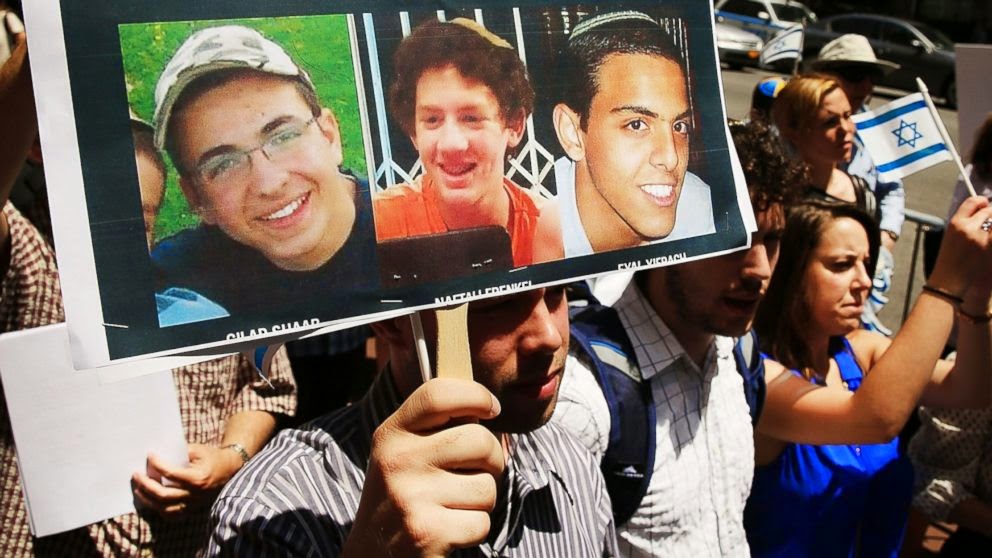
One of the teens, 16-year-old Naftali Frenkel, had dual U.S.-Israeli
citizenship and his family is from Brooklyn, N.Y. The two others were
Gilad Shaar and Eyal Yifrach.


Israeli forces have conducted raids in the West Bank in the search for
the teens and their kidnappers since they were abducted on June 12.
Since the search started, more than 240 Palestinians have been arrested
in the operation dubbed “Brother’s Keeper,” the army said. Knesset sessions for tonight have been cancelled, according to Israeli media reports.
There are reports that Israeli soldiers have already been deployed in
Hebron, and Israeli TV stations earlier showed pictures of soldiers
searching through rubble and military vehicles moving through the
village of Halhul, just north of Hebron.
At the end of a White House press briefing, Press Secretary Josh Earnest
was asked about the report of the deaths, news of which broke in the
middle of the briefing.
“We obviously condemn in the strongest possible term, violence that
takes the lives of innocent civilians,” he said. “But I don’t want to
react any further without having a chance to take a look at that report
myself.”

……

Link: http://abcnews.go.com/International/bodies-missing-israeli-teens-found-hebron-source/story?id=24367041

…..

regards

Maharajah Ranjit Singh

 Today (June 30) is the 175th death anniversary of the Sher-e-Punjab.

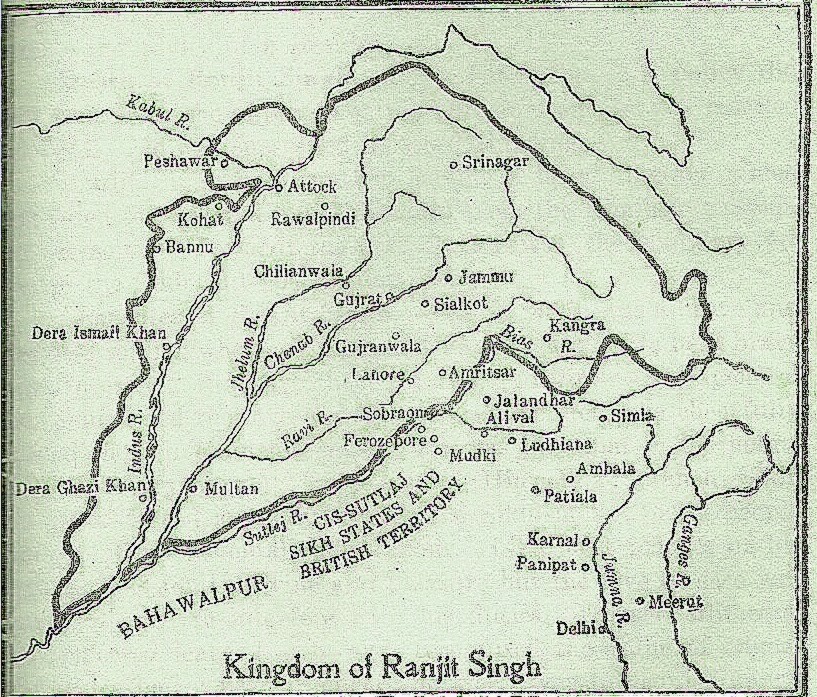
When the Sikh sun was at peak noon, the empire was bound by Peshawar (North-West), Srinagar (North-East), Amritsar (central), and Multan (south).

When the downfall came it was at the hands of the perfidious Albion. The Sikhs did not dwell much on this humiliation and became (along with the Gurkhas) a pillar of the British Indian Army. Then came Jalian Wala Bag, the hanging of Bhagat Singh, the brutalities of Partition,...… OTOH during the dark days of 1984, it was the BBC Foreign Service (and Mark Tully) which kept the Sikhs within India and outside informed about the true extent of crimes against God and men (and women).

As we understand the (mainly expat) Sikhs still dream of restoring the lost kingdom. The only problem is a corridor to the sea. During the peak revolution days of the 1980s there was a proposal to grab Karachi unbeknownst to patron-in-chief General Zia. Another proposal was to annex Gujarat and establish a corridor via Rajasthan.

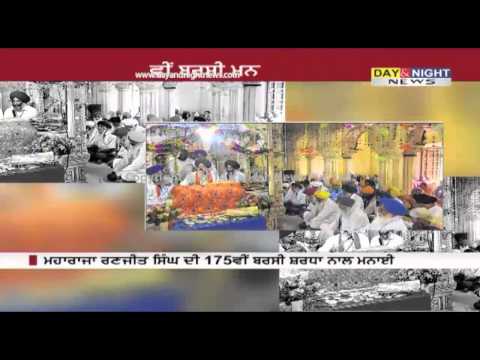
The SGPC observed his anniversary at Dewan Manji Sahib hall in the
Golden Temple complex. A religious function was held and prayers were
offered in the memory of Maharaja Ranjit Singh, often described as the
greatest Sikh ruler, whose kingdom stretched from the Sutlej river in
the east to Kabul in Afghanistan.


Besides ‘bhog’ of the ‘Akhand Path’ , ‘hazoori ragis’ of the Golden
Temple performed ‘kirtan’. The religious function was well attended by
devotees and SGPC officials. Giani Balwinder Singh, a ‘granthi’ (priest) of Harminder Sahib
threw light on the mighty Sikh ruler. He recalled the Maharaja’s secular
vision and the respect he accorded to all religions during his reign.

He also recalled the Maharaja’s contributions to the Sikh community
and his role in gold plating and beautification of the Harmandir Sahib
and building several others historic Sikh shrines dedicated to the Sikh
gurus.

….
While Shiromani Gurdwara Parbandhak Committee (SGPC) and Pakistan Sikh
Gurdwara Parbandhak Committee (PSGPC) will observe death anniversary of
Maharaja Ranjit Singh on Sunday, monuments related to him in Amritsar –
Burj Vaniake, where the ruler used to stay and even hold his durbar, and
Pul Kanjari…, largely
remain neglected by the government.
Pul Kanjari has been preserved with
private efforts, but Burj Vaniake’s little fort-like structure is in
dilapidated condition and could cave in any day.


Once a lively
township, Pul Kanjri, about 35km from Amritsar, was built by Maharaja
Ranjit Singh and has a “baradari”, a “baoli” (bathing pool), a temple, a
gurdwara and a mosque. It also houses a tomb called Shah Sikandar ka
Takia.

….

Legend has it that Moran….from Makhanpur,
would entertain Maharaja Ranjit Singh with her dances whenever the Sikh
ruler would stay at the “baradari”. Once on her way from Lahore, she
lost her shoe in the canal, which used to provide irrigation water to
the king’s orchards in Shalimar Bagh, Lahore. When Maharaja Ranjit Singh
came to know that his favourite….. was upset after losing her
footwear, he ordered construction of a bridge (pul) across the canal.
Since then, the place is known as Pul Kanjari.

…..

Link: http://www.hindustantimes.com/punjab/amritsar/prayers-mark-maharaja-ranjit-singh-s-death-anniversary/article1-1235039.aspx

….

regards

Brown Pundits