Gopinath Munde death…massive setback for BJP

Gopinath Munde, who was the
OBC face of BJP in Maharashtra and who had joined the Union Cabinet as rural
development minister, died today following a road accident. This family has
been gravely troubled over the last few years, earlier, brother-in-law Pramod Mahajan, another
top flight leader from Maharashtra was shot dead by
his own brother.
Now with Munde dead, BJP will have lost the person who was expected to lead the party to victory in upcoming state elections in Maharashtra.


Gopinath Munde met with a road accident at 6:30 AM of June 3, 2014, while on
his way to the Delhi airport.
Munde’s convoy met with an accident in the Moti Bagh area of South Delhi, which
is near Delhi airport. Minister was on his way to Airport to leave to Mumbai. Munde’s car collided head on with another car and in the
accident, the BJP leader sustained multiple head, chest and spinal injuries.
Munde, a diabetic
patient, fell down from the car and asked to be taken to a hospital when his
security guard helped him. Munde has suspected to have suffered a cardiac
arrest and he was taken to the AIIMS Trauma Center where he passed away around
7.20 am.

The back-story [ref. wiki] is remarkable, it shows how Mrs Gandhi’s emergency regime brought many of today’s (non-Congress) mass leaders, most of them from working class backgrounds to the fore-front of Indian politics (Congress and to some extent the Left enjoyed  the patronage of the elite and the educated class). Indian democracy was saved by defeating the all powerful Mrs Gandhi and her son Sanjay (ma-bete ki sarkar of a bygone age) under the leadership of Jay Prakash (JP) Narayan, who (in our opinion) remains the most respected Gandhian after Gandhi. And yes, many of these people, just like Narendra Modi, graduated in political education from RSS university.

From Lalu Yadav in Bihar to Chandrababa Naidu in Andhra, all leaders have one common point in their resume- incarceration during 1975-1977. The only group who backed Mrs Gandhi during those dark days were the Communist Party of India (Russian backed CPI, not the Chinese backed CPIM). And today CPI (and to some extent CPIM as well) has been pushed deep into the dustbin of history. Congress must also adapt and reform quickly, else it will follow the same path to oblivion.
……..

Munde was born in Parali, Maharashtra,
on 12 December 1949, to Pandurang Munde and Limbabai Munde in a middle class Vanjari
(caste) farmer’s family.
Munde’s wife Pradnya is sister of Pramod
Mahajan (a Brahmin). 

His family included Sister Saraswati Karad. She is followed by
elder brother Pandit Anna, who is actively involved in social and political
work. He was third child in the family. He was followed by younger brothers,
Manikrao and Venkatrao. Munde has three daughters — Pankaja, Pritam and Yashashri. Pankaja is an
MLA. Pritam is a doctor, and Yashashri is studying law.

Munde
attended a government primary school, in Nathra village, Beed district where
classes were conducted “under a tree”. He later attended the Zilla
Parishad high school in Parali. He obtained a BA in commerce from college in
Ambejogai. Subsequently, he studied at the ILS College in Pune.

Munde
got involved into politics when he met Pramod
Mahajan, a friend and colleague in the college. As a member of the Akhil Bharatiya Vidyarthi Parishad,
he took part in the agitation against the state of emergency imposed by the
Prime Minister Indira Gandhi. He was incarcerated in the Nashik
central jail until the Emergency was lifted.

In 1971, he associated with the campaign of the Bharatiya Jana Sangh candidate in the Lok
Sabha election in the Beed
constituency.
He attended the Rashtriya Swayamsevak Sangh’s Shiksha
Varga (Training Camp) held in Pune that year.
He soon became the Sambhajinagar Mandal
Karyavah, looking after half a dozen shakhas of the RSS, and subsequently, the
in-charge of its Pune
City Students’ Cell. 

Later, he was made a member of the executive committee of
the city RSS.
The Janata Party by this time had split, and the Bharatiya Janata Party, founded by the
leaders the erstwhile Bharatiya Jana Sangh had come into existence.
Munde was made President of the Maharashtra
unit of the BJP’s youth wing, the Bharatiya Janata Yuva Morcha.

He was Leader of Opposition in Maharashtra Vidhan Sabha from 12 December
1991 to 14 March 1995. Munde was sworn in as the Deputy Chief Minister of
Maharashtra when Manohar Joshi-led government took over the reins of
the state on 14 March 1995.

Munde
served as a member of the 15th Lok Sabha (2009–2014), representing the Beed constituency.
Munde won 2014 Loksabha election from Beed Constituency by margin of 2
lacs. He defeated NCP’s Suresh Dhas.Subsequently, he was appointed as Minister of Rural Development
by Prime minister Narendra Modi.

……..
Link: http://timesofindia.indiatimes.com/india/Union-minister-Gopinath-Munde-dies-in-road-accident-in-Delhi/articleshow/35980717.cms
…….

regards

Achhe din has come to…Pakistan

The economy is steadily improving, almost reaching the high points under Musharraf. The projected growth rates of 7% in 2017 may be a bit too ambitious, unless there is an economic breakthrough with India. Also promised are 900,000 jobs in next four years, which will again require economic co-operation with India.

In turn India will also significantly benefit from economic ties with Pakistan.

It all points to a fast time-table for resolution of the Kashmir problem. While all other interests will have a look in, the efforts can only succeed if common Kashmiris agree to a final settlement. The politicians have always claimed that they were very close to a solution before Kargil created a brake or Mumbai put a stop to talks. Such events may happen in the future as well and it will be always best to remain prepared.
……..
Launching the survey at a press conference, he said this is less than
the targeted 4.14 per cent but it is for the first time in six years
that the country has entered the territory of four per cent growth this
year.


And, the GDP growth rate would be increased one per cent
each during the next three years taking it to 7 per cent in 2017.
Similarly, the industrial growth has been recorded at 5.84 per cent as
against 1.37 per cent last year.

The minister also said that the
large-scale manufacturing recorded growth of 5.135 per cent as against
4.08 per cent last year. He said electricity generation and gas
distribution growth last year was minus 16.33 per cent and this year it
has grown by 3.72 per cent.

Construction recorded growth of 11.31
per cent this year as against minus 1.685 per cent last year while
wholesale and retail trade increased by 5.181 per cent as against 3.38
per cent last year, he said.

Ishaq Dar said that transport and
communication recorded growth of 2.89 per cent as against 2.88 per cent
last year while agriculture sector showed growth of 2.12pc against
2.88pc last year.

Major crops showed growth of 3.74 per cent as
compared to 1.19pc last year. Wheat production this year is 25.29
million tonnes as compared 24.21 million tonnes last year, he said.

Rice
production this year stood at 6.8 million tonnes as against 5.54
million tonnes; sugarcane 66.47 million tonnes as compared to 63.75
million tonnes last year and maize production this year is 4.531 million
ronnes as against 4.22 million tonnes last year.

Provisional
estimates of cotton production this year are 12.77 million bales as
against 13.03 million bales last year. Similarly, grams and oil seeds
recorded growth of minus 3.52 per cent.

The minister said
inflation in the first eleven months of the current financial year was
8.6 per cent as against 7.5pc last year.

Exports in ten months of
the outgoing financial year stood at $21 billion as against $20.1
billion last year, showing an increase of 900 million dollars.

Ishaq
Dar said the grant of GSP Plus concession by the European Union has
started impacting our textile sector positively as it grew by 7 per cent
in value terms.

According to the survey, imports in ten months of
the outgoing financial year stood at $37.1 billion as against $36.7
billion last year, indicating 1.2 per cent increase. The minister said
there was a significant increase in import of plant and machinery which
was a positive indication.

Workers’ remittances in ten months of
current financial year reached $12.9 billion as against $11.6 billion
last year, showing a growth of 11.5pc. Foreign investment this year
stood at $2.979 billion against $1.277 billion last year.

Foreign exchange reserves presently stood at $13.63 billion against $11.4 billion dollar last year, said the minister.

The
survey further unveiled that per capita income this year has increased
to $1,386 from $1,339 last year. Stock market crossed 29,700 points and
its capitalisation increased by about 38 per cent. Tax revenue as
percentage of GDP this year is 7pc as against 6.8pc last year.

Non-tax
revenue as percentage of GDP remains at 2.7pc while total expenditure
as percentage of GDP reduced to 12.9pc from 14.8pc last year.

Development
expenditure this year as percentage of GDP was 2.2 per cent as against
2pc last year. Fiscal deficit in first ten months was 3.2 per cent as
compared to 4.7pc last year.

The finance minister further said that FBR tax collections in 11 months have grown by 16.4 per cent. Ishaq
Dar said the State Bank of Pakistan’s borrowing last year was Rs 416.8
billion, but this year the government paid back Rs 10.5 billion to the
bank.

Hinting an increase in the defence budget, he said the PML-N government has made the defence of the country invincible.

To a question, he said major incentives will be given to the private sector to restore the confidence of the investors.

It is estimated that
around 900,000 jobs will be created in the next four years after the
introduction of G-3 and G-4 spectrum, said the finance minister.

……

Link: http://www.dawn.com/news/1110122/414pc-gdp-growth-recorded-highest-since-2008-09/
……

regards

Communal? Who, me??

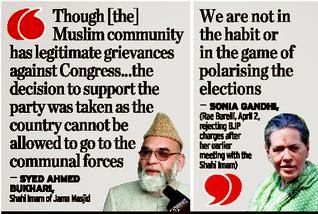
So, this is how the last brick wall crumbles. There is now unprecedented, open criticism about the Queen, not just the Prince. In order for the Congress to have a chance to recover from the shellacking this is only the first (but welcome) step. There must be a root and branch reform whereby the dynasty forswears power and remains confined to an advisory role (just like the Shahi Imam).

….
Bihar (Congress) MP Asrarul Haque’s criticism of the
Bukhari-Sonia meeting
in April which was followed by the Delhi-based
cleric’s appeal to Muslims that they
should vote for Congress –
“The meeting should not have happened and it was wrong
on the part of the Congress party to issue an appeal to one community.

..
And yes, the Shahi Imam is communal, just as we expect a Sadhu and a Padri to be communal. While all religions have nice words to say re: co-existence, the point of the matter is that you self-identify with one tribe and that your preferences will be to suit yourself and your brothers, often at the expense of others.

If the post-election surveys are accurate then the top-three vote gathering combinations are as follows. 
(1) The BJP/NDA axis was supported by Upper Caste hindus, non-Sunni muslims, lower- Other Backward Castes (as opposed to landowning higher caste shudras), non-Jatav Scheduled Castes (Dalits) and (non-Christian) Scheduled Tribes. 
(2) Sunni Muslims and upper- OBCs (for example, Yadavs in UP/Bihar) voted for Congress/UPA (except in Tamil Nadu, Odisha, and Bengal where these groups voted for Jayalalitha Jayaram, Naveen Patnaik and Mamata Banerjee). 
(3) The Jatav vote concentrated in North India (particularly in UP, Rajasthan and Madhya Pradesh) was in favor of the Bahujan Samaj Party led by Mayawati.

There are signs that voting patterns in India will become fixed (due to polarization) unless there is a wave election in favor of a charismatic person, or against an unpopular incumbent. With the benefit of hindsight the tsunamo in 2014 combined both these effects.

There were perhaps 10-20 seats (mostly in Uttar Pradesh) where the Muslim-Yadav vote got split between the Congress and the Samajwadi Party (SP), and resulted in the BJP winning even majority muslim seats. If Congress and SP had a formal alliance with clear-cut seat divisions, then it may have been enough to deprive the BJP of the huge psychological boost of a simple majority.

What Sonia did wrong was that she gambled that muslims will unite behind the Congress and vote against SP in the marginal seats. In that narrow sense the Imam’s appeal to his flock is actually responsible for a BJP mandate. This is what being “communal” gets you in the end- you unite the Hindus against you and you split up your own vote-bank.

And you lose so terribly that you may never win again.
……………………..

In an
implied criticism of party boss Sonia Gandhi’s pre-election meeting with
the Jama Masjid shahi imam, senior Congress leader Digvijaya Singh has
dubbed Syed Ahmed Bukhari as a “communal” man.

Singh told
reporters, “I do not consider him (Bukhari) a secular person. I believe
Imam Bukhari is a communal person.”  The remark comes on the heels of
Bihar MP Asrarul Haque’s criticism of the Bukhari-Sonia meeting in April
which was followed by the Delhi-based cleric’s appeal to Muslims that
they should vote for Congress. The appeal triggered a controversy.

In what is seen as a direct jibe at Sonia, Haque, according to reports,
said, “The meeting should not have happened and it was wrong on the
part of the Congress party to issue an appeal to one community.”


The meeting, which BJP used to accuse
Congress of playing “appeasement” politics, has been controversial
because many in the party feel it helped the saffron camp to polarize
voters in its favour.

Now, the public criticism from within is
likely to embarrass the leadership much more than the attacks from BJP,
especially when it has come from a Muslim MP, as also a senior Congress
general secretary.

Critically, it marks the first instance of
Sonia facing fire for the election debacle or related issues; the anger
among party men till now was directed against her son and heir apparent
Rahul Gandhi. In the last week, Congress has had to suspend two senior
leaders in Kerala and Rajasthan for slamming Rahul.
…….

…..
Link: http://timesofindia.indiatimes.com/india/Now-Sonia-Gandhi-too-draws-flak-from-her-party/articleshow/35969282.cms
……

regards

A preview of Indo-Pak cooperation in Uganda

I received a random salesman call from two brown dudes.

One of them (M) had been calling me the past few days trying to set up a meeting. He had been “sirring” me a fair bit and on the third time they managed to come to our offices.
Turns out even though he’s Gujarati Brahmin (I could tell the surname) he looks like a rather familiar North Indian accountant, the type we get somewhat used to. He was very techie and very solicitous.
As I walk into the meeting I notice the darker chap and assume because of his curly hair he must have been South Indian. Turns out he has a Muslim name (A) and upon my asking how long the company has been in Uganda (5yrs+) I ask if it’s an Indian company.
Turns out to my surprise it’s originally Pakistani (I find it a bit odd that an Indian is working for Pakis, but a job is a job I guess).
At any rate turns out A is of course Pakistani and as I sit in that short meeting it dawns on me the almost perfect illustration of Indo-Pak cooperation and stereotypes. Indian accountant in a suit, obsequious looks techie and money.
The Paki had obviously done something to his hair (in Uganda making those curls is called texturising) and was wearing a River Island shirt (we’re not even in Kampala proper) with a slight American twinge (I doubt he was the son of the founder but an aspiring relative so the American accent is grafted on).
I don’t know if Paks are the cool kids of the subcontinent (apparently the Sri Lankans have the most swag in london) but at a few moments in the meeting I couldn’t keep from smiling as the paki went and on with the sale.
Are Paks the natural salesman of South Asia, are Indians more technically gifted I have no idea but when stereotypes slap you in the face, sometime you have no choice but to smile along.. Oh and we might just buy the product.. 

Is Kashmir’s Jung a Jihad? A Pakistani Cleric answers

This is not about Indo-Pak cocky slugfest on the broader Kashmir conflict but purely on technical grounds (for guidance of true believers), Sheikh Tauseef ur Rehman seems to make better sense than  team Hafeez Saeed –


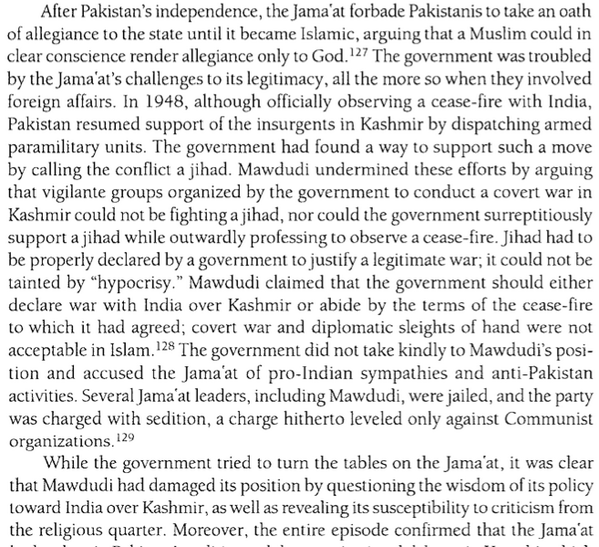
Interesting to note that Abu Ala Maududi (founder of Jamaat-e-Islami), had also opposed Jihad-e- Kashmir(on technical grounds) in 1947 . An excerpt from @vali_nasar‘s book on the same-

“Rape is …the end of our future”

If you believe that you are in possession of a soul that will be indestructibly yours, here is an easy way to protect it from being eternally tarnished. It is really very simple. Join the movement (led by Sulabh International for now) to sponsor community toilets in villages…government initiatives will be never enough. We must save our girls, and we must give them the dignity that is their birth-right, and we must be able to restore some of their natural cheerfulness. We must try and we must not fail.

“My daughter was a cheerful girl before but now she’s just silent” 

“Yes,
your majesty, we do much assumptions. We assumed that men love us and
need us. Men do neither. They love their ego and need to satisfy their
lust. Once both are satisfied, the man leads the woman he claims to love
to a blind-alley, blinded-folded and with her hands tied on the back,”
said Scheherzade.

First, a moving piece penned by Anwar Iqbal of Dawn:
………………….

“Pray, share the story, your majesty, if it pleases you,” Scheherzade said.
“That I will, so you may know and acknowledge the idiocy of your kind,” the king said.

“The
woman who was bludgeoned to death with bricks outside a Kazi court was
love-blind,” the king began. “So she fell for a man twice her age.”

“We may never know what caused her to do so but let’s assume that she was love-blind,” Scheherzade commented.
“Women assume. Men probe,” said the king.

“Yes,
your majesty, we do much assumptions. We assumed that men love us and
need us. Men do neither. They love their ego and need to satisfy their
lust. Once both are satisfied, the man leads the woman he claims to love
to a blind-alley, blinded-folded and with her hands tied on the back,”
said Scheherzade.

“Unwise that can have dangerous consequences,”
said the king, “but since I am in a forgiving mood, I will only ask what
leads a woman to this blind alley except her foolishness?”

“Perhaps
you are right, your majesty, but what causes a mother to bring up her
son and turn him into a man? Love or blindness?” asked Scheherzade.

“Do not argue,” said the king, “remember your have forfeited your life to me.”

“Forfeited
I have not, risked, yes,” Scheherzade said to herself, adding: “May I
request your majesty to proceed with the story?”

“OK, where was I?” asked the king.
“You were saying that this woman fell for a man twice her age,” Scheherzade reminded him.

“Yes, she did and this man was already married. So he killed his first wife to marry this woman,” the king said.

“Did
she ask him to kill her? And even if she did, didn’t he know that
murder is a crime punishable with death?” asked Scheherzade.

“We may never know what she said or did because she is dead,” said the king.
“But the man is still alive, can’t they ask him?” said Scheherzade.
“They can but they will not,” said the king.
“Why, your majesty?” asked Scheherzade.
“Because he has already been forgiven,” said the king.
“Forgiven a murder?” asked Scheherzade.
“Yes, by his son,” said the king.
“So the son forgave his mother’s murderer?” asked Scheherzade.
“Yes, this man was his father,” said the king.

“And
she was his mother,” said Scheherzade. “You may not, your majesty, but
here I will ask: Why a woman nurses her son, knowing that this helpless
piece of flesh will turn into a man one day and defile?”

“How do I know, I am not a woman,” said the king.

“You may never know, your majesty,” said Scheherzade, “you may never know. But please narrate your story.”

“After murdering his first wife, he married this woman, which angered her family,” said the king.
“Why so, your majesty?” asked Scheherzade.
“Because
she married him against their advice and refused to marry a young man
they had chosen for her. The family got so upset that they bludgeoned
her to death with bricks outside the Kazi court when she came there to
defend her marriage,” the king said.

“Just like that?” asked Scheherzade.

“Yes, just like that. She had brought shame and dishonor to her family,” said the king.
“So it was a question of honor, your majesty?” asked Scheherzade.
“Yes, honor, which is more important than anything else, even life,” said the king. “But you would not know.”

“Yes,
I would not know. But if you promise not to behead me, I may request
you to explain what I do not understand?” asked Scheherzade.

“Go ahead,” said the king.
“Who has tied a man’s honor to a woman’s body?”
“Shut up and get out of the room before I change my mind,” the king shouted.
………………………..
 
As outrage grows in India over the gang rape and murder of two Dalit
teenagers found hanging from a tree, the mother of a 14-year-old “untouchable”
who was kidnapped and raped earlier this year has said she wishes her daughter
had been killed too.


India’s new government on Friday said it was planning to set up a special
crisis cell to ensure justice for victims of sex attacks and two police
officers were sacked in the wake of the rape and murder of the teenagers that
has revived nationwide anger over the frequency and brutality of attacks.


In a further shocking example of how women from India’s “untouchable” caste
are easy targets for rapists – and rarely get justice – The Daily Telegraph
spoke to a mother who said she wished her raped daughter had died, such is the
stigma surrounding the issue in her caste.


Brimti Ram, 40, had been living in a form of slavery with her Dalit family
in Bagana village, around 100 miles from the capital Delhi, when her daughter
and three friends were seized by five relatives and neighbours of their feudal
landlord.
They later revealed that had been drugged and raped throughout the night.


She, her husband Lila Ram and their five children farm 20 acres of rice and
barley fields – without pay – in a futile attempt to service a £7,000
generational debt that they can never pay off.

“It’s not really a loan but something to control us,” Lila Ram said
yesterday.

Many of their fellow villagers live under the same bonded conditions, which
are illegal but common in India. Rapes and sexual assaults of Dalits are common
but often unreported and violence is frequent.

Fifteen “untouchable” boys have been murdered in the village in the last
thirty years, his community leader Virender Singh Bagodia said on Friday.

The community is treated “a notch above how people treat their animals”, he
said.


Brimti Ram said they have been so shamed by their daughter’s rape that
neither she nor her 16-year-old sister will ever be able to find a husband.

She had heard of the murders of the two Dalit girls in Badaun in Uttar
Pradesh and said she could understand the pain of their families, but she
wishes her daughter had been killed too.

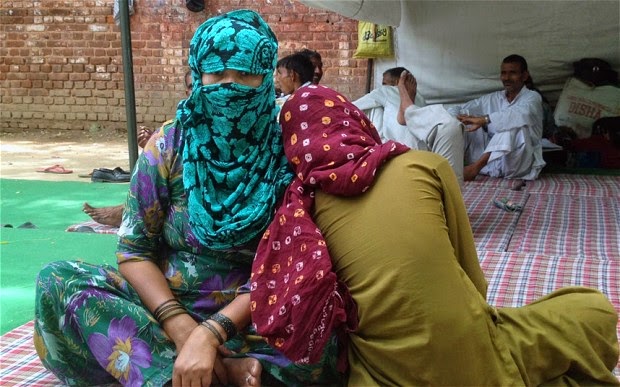
“Rape is loss of our reputation, livelihood, honour and the end of our
future,” she said. “If my daughter doesn’t get married and suffers her entire
life, wouldn’t it have been better for her that she had been killed by those
beasts?”


….
Her family is one of more than eighty who fled their village amid death
threats from the upper caste Hindus in their village who had already banned
them from sending their children to school, visiting the temple, or buying food
from their shops. They are now living on a pavement in central Delhi and are
too afraid to return to their homes.


“My daughter was a cheerful girl before but now she’s just silent”, she
added.


She was speaking after aides to India’s prime minister, Narendra Modi,
demanded a report on the gang-rape and murder of two 14 and 15 year old
“untouchable” cousins who were found hanging from a mango tree in Katra
village, near Badaun.


The unnamed girls, aged 14 and 15, were, just like the girls in Bagana,
going to the lavatory in a nearby field when they were grabbed by higher caste
men – from the local Yadav peasant farmer community.

They were last seen by an uncle as they were being led away but when he
challenged the men they threatened him with a gun.


The father of one of the girls yesterday said the police had “refused to
look for my girl” and that when he confronted one of the accused at his home,
he admitted abducting the girls but refused to release them. They were found
hanging from a mango tree the following morning.


The father said the girls would still have been alive if the police had
acted immediately.


Police in Uttar Pradesh said yesterday that three people, including a police
constable, had been arrested in connection with the sex attack, while they were
still searching for two further suspects. A “thorough investigation” is under
way, police said,


Mukul Goel, a senior police officer, said it had still not been determined
whether the victims had committed suicide or been strung up as a way of
silencing them after they were raped.


Akhilesh Yadav, the chief minister of Uttar Pradesh, on Friday snapped at a
reporter when asked about the rising number of rape cases in his state: “You
are safe, why are you bothered?” 

…….
Link (1): http://www.dawn.com/news/1109756/an-honour-more-important-than-life

Link(2): http://www.telegraph.co.uk/news/worldnews/asia/india/10865179/I-wish-my-daughter-had-been-killed-too-says-mother-of-untouchable-India-gang-rape-victim.html
……

regards

Too fucking little, too late

Repeat after us: Toilets before temples, weapons,…..anything

OK fine, we got rid of  the dynasty, but what we really need to get rid of is the sense of despair that our girls feel, the fact that they cannot get any peace of mind.never, ever. There has been an impact of the new laws….now they are killing off the girls just so there are no witnesses.

Sulabh
International will construct toilets in all the houses of Katra
Shahadatganj village of Badaun, where two sisters were allegedly gang
raped and murdered last week while they went to relieve themselves in
fields. 


Our earnest request to all politicians, business-people, government officials…anyone with any standing and who is blessed with a bit of money….please consider following the example of Sulabh and coming together to sponsor a village and a community toilet. Yes, we know that money is tight and times are tough….but how long are we going to remain in this state of barbarity?

The crisis areas are well known (mostly concentrated in UP, Bihar, MP, Rajasthan, and Chattisgarh), let us tackle this problem on a war footing with as much sense of urgency as with Polio eradication. Let us make India a place that is livable for our girls. Please.
…………………..
Sulabh
International will construct toilets in all the houses of Katra
Shahadatganj village of Badaun, where two sisters were allegedly gang
raped and murdered last week while they went to relieve themselves in
fields.

“Any woman defecating in the open is vulnerable and the
central government must acknowledge the issue. Resources will only pour
in then,” Sulabh founder Bindeshwar Pathak said.

According to the WHO, around 65 per cent of people in villages defecate in the open in the country.

The NGO, which works in the field of low-cost sanitation, also appealed
to the top business houses to adopt at least one village to end the
practice of open defecation “at the earliest”.

Pathak said the NGO will start the work of building toilets from tomorrow.

“A team of sanitation workers and engineers from Sulabh will visit the
village to start toilet construction work from tomorrow. We have ask our
team to construct toilet with highest pace,” Pathak said.

“We
are just setting an example by adopting this village as the issue of
toilet was the main reason behind both the deaths,” he said.

Hailing Prime Minister Narendra Modi for coining the slogan “toilet
first, temple later”, Pathak also expressed his wish to work with the
government for making available toilet in every house.

“I am going to write a letter to the Prime Minister soon in this regard,” he added.

The two teenage dalit girls, who were cousins and aged 14 and 15 years,
were allegedly gang raped and murdered and their bodies were found
hanging from a mango tree in the village.

…..

Link: http://timesofindia.indiatimes.com/india/Sulabh-to-build-toilets-in-all-the-houses-of-Baduan-village/articleshow/35903727.cms
…..

regards

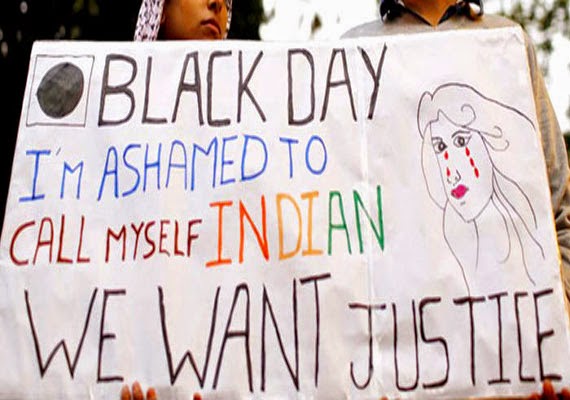
The Tree of Shame

Well there is no shame…..

….and there are no brothers and sisters amongst all us Indians…..

we are all animals, we are worse than animals…..


there are no words with which to express our sorrow and our apologies.
….
regards

July 1987: Reports from a different India


Posted: July 08, 1987

FATEHABAD, India -Terrorists
thought to be Sikh separatists attacked two more buses yesterday,
killing a total of 34 people, mostly Hindus, and bringing to 74 the
number of people shot to death in two days of highway ambushes.
On Monday, gunmen killed 40 bus passengers, nearly all of them Hindus, in Punjab state.
Police
said five extremists struck about 8:30 p.m. yesterday on National
Highway No. 10 in Haryana state, which borders Punjab. The attack
occurred about six miles from Fatehabad, a small market town in India’s
wheat belt, and about 150 miles southwest of Chandigarh.

The
attackers used a car and a jeep to block a bridge to stop one bus,
police said. They boarded the vehicle, began dragging out passengers,
and had killed four when a second bus came by from the opposite
direction, headed for New Delhi.
The terrorists then rushed across to the second bus and opened fire with automatic weapons, killing 30, police said.
When
the gunmen turned their attention to the second bus, survivors on the
first fled across nearby fields. Most of the dead were Hindus, and 15
people were wounded, authorities said.
Police said they believed
that yesterday’s attacks were carried out by the same group that staged
Monday’s ambush, in which several gunmen forced a bus driven by a Sikh
to stop on the main highway from Chandigarh to Delhi. They then drove to
a secluded spot before opening up on the passengers.
In that
attack, one gunman apparently was shot accidentally by his comrades. His
body was found later in an abandoned getaway car.
Punjab Police
Chief Julio F. Ribeiro told reporters that the bus driver in Monday’s
attack was detained for questioning. Ribeiro said that ammunition
recovered at the massacre site showed that the militants used
Chinese-made AK-47 assault rifles.
Yesterday was the fourth time
in a year that Sikh gunmen had targeted bus passengers. In attacks in
July 1986 and in November, a total of 38 people, mostly Hindus, were
killed. No arrests have been made in those attacks.
The massacre
Monday was the worst since extremists began a campaign five years ago to
establish an independent Sikh nation in Punjab.
Sikhs slightly
outnumber Hindus in Punjab. Officials say the random killings of Punjabi
Hindus are intended to drive them out of the state and in turn prompt
retaliatory Hindu killings of Sikhs elsewhere in India that would force
Sikhs to flee to Punjab.
In June 1984, the army attacked Sikh
militants holed up in the Sikhs’ holiest shrine, the Golden Temple at
Amritsar, killing hundreds. Four months later, Prime Minister Indira
Gandhi was killed by Sikh assassins, and her son, Rajiv, took over.
In
a statement after Monday’s slaughter, Gandhi said, “This atrocity
should redouble our resolve to fight against the extremists.”
He
took direct control of Punjab on May 11 when he fired the state’s
moderate Sikh government for failing to stem terrorist violence.
But
his seeming inability to manage the deteriorating situation in Punjab
was a key factor in the rout that his Congress-I Party suffered last
month in Haryana state elections. A peasant-dominated party swept to
power in Haryana in an anti-Gandhi backlash.
More than 500 people have died in separatist violence so far this year. About 640 were killed last year.
All three buses ambushed in the last two days were operated by Haryana
Roadways, the state transportation company. Yesterday, Haryana followed Punjab in suspending nighttime bus services.
Frustrated
officials in New Delhi said it was virtually impossible to prevent
attacks on buses, thousands of which are on the roads every day.
“You just can’t really be watching all the roads and all the buses,” one said.
Home
Minister Buta Singh, a Sikh and India’s top internal security official,
went to Chandigarh to visit wounded survivors of Monday’s attack and
called it “a brutal murder of human values.”
Political leaders in
the states of Punjab, Haryana, Himachal Pradesh, and Jammu and Kashmir
called for general strikes to protest the bus killings. Schools were
ordered closed in Haryana and shops in Chandigarh closed after the first
attack.
The right-wing and predominantly Hindu Bharatiya Janata
Party, defying a police ban on public assembly in New Delhi, said it
would organize a march on Gandhi’s heavily guarded residential compound
in the south of the capital city today.
After last night’s
attacks, security forces across northern India were put on maximum alert
and the army was placed on standby to assist police in preserving calm
in New Delhi, the scene of previous backlash attacks by Hindus on Sikhs.

Source: http://articles.philly.com/1987-07-08/news/26201308_1_sikh-militants-punjabi-hindus-independent-sikh-nation

Posted: July 09, 1987

FATEHABAD,
India — They lay on slabs of ice in the front corridor of the general
hospital, lifeless men and boys who only hours before had been on the
wrong bus at the wrong time.
At first there were 32 of them, so
many that the floor was covered with fresh blood. By yesterday afternoon
more than half were gone, claimed by relatives for cremation.
The
wiry corpses were the latest victims of the war raging between militant
Sikhs and India’s Hindu-dominated central government.
They
were gunned down Tuesday night – apparently by Sikh terrorists – on two
buses just outside this parched market town 150 miles northwest of New
Delhi. Were it not for a similar bus slaughter Monday, in which 40
passengers died, the killing would have been the bloodiest civilian
massacre since the beginning of the Sikh terror campaign.
The two
incidents touched off a round of revenge violence in several Indian
cities yesterday. Six Sikhs were reported killed, including one
Fatehabad merchant who was burned to death.
In addition to the
sheer numbers of dead, the Hindus were outraged because the Tuesday
massacres were the first outside the Sikh-dominated state of Punjab,
where militants have been fighting for five years to establish an
independent Sikh nation. That massacre was in neighboring Haryana state,
which is predominantly Hindu and increasingly anti-Sikh.
Fatehabad
is in Haryana, and 90 percent of its residents are Hindu. Although they
and their Sikh neighbors have lived amicably for years, the peace was
shattered yesterday morning.
Hindu rioters stormed Sikh-owned
shops and businesses, gutting about 15 of them, police said. A mob
chased a Sikh merchant and burned him to death, said Munish Chandra
Gupta, Haryana’s home minister. News photographers saw Hindus
dispassionately watching the victim’s death throes.
Seven Hindus in the town were injured when a Sikh storeowner opened fire on a mob coming to torch his business.
The
violence ended with the arrival of government soldiers, who imposed an
immediate curfew, emptying the streets and filling the town with an
eerie, frightened silence.
By mid-afternoon, shops were shuttered,
and soldiers patrolled the streets in convoys with their Sten guns
pointed outward. Occasionally a civilian could be seen scurrying across a
road on some errand before he was ordered back indoors.
Fires continued to smolder at a gas station and a general store, adding to the brutal heat and dust of India’s dry season.
Parked
in front of the hospital were the two buses attacked in Tuesday’s
massacre, one driven there by its uninjured driver and the other by a
16-year- old boy who survived the massacre by hiding under a seat.
Through a translator at a hospital, the terrified youth, Zile Singh, gave this account:
It
had just become dark as the bus traversed a plain – fertile when wet,
but now parched by the blazing, pre-monsoon sun – when it had to stop at
a small irrigation bridge, several miles outside Fatehabad, because a
car or jeep was in the way.
Four men stormed the bus, brandishing
weapons. They did not wear the turbans or long beards that usually
characterize Sikhs, but no one in Fatehabad appeared to doubt that they
were Sikhs.
The four then told two Sikh passengers to collect the
passenger’s valuables. Then, three women at the back of the bus were
ordered to come forward and take off their clothes.
After they had
done so, the boy said, the terrorists opened fire, ultimately killing
27 people on the bus and injuring two dozen, as well as killing a taxi
driver who stopped at the bridge. The women were abused, but no women or
children were among those killed.
Singh crouched under the seat
for about 10 minutes, then peered cautiously out. When he saw one of the
wounded people moving, he climbed into the driver’s seat and drove the
bus to the Fatehabad hospital.
He was not aware that a few minutes
later the terrorists attacked another bus at the same place, spraying
it with machine-gun fire and killing four people. The driver of the
second bus also brought his passengers to the hospital.
As news of
the latest killings spread, anti-Sikh violence exploded across Haryana
and another Hindu-dominated state in northern India, Uttar Pradesh.
Three
Sikhs died in Haryana, police said. Two more were slain in Rishiskesh,
the Himalayan Hindu city on the banks of the revered Ganges River in
Uttar Pradesh, the United News of India reported.
At least 25
Sikhs were injured in mob violence in Rishikesh, and at least 62 were
injured in Haryana and elsewhere in north India.
Along Highway 10
in Haryana, roving mobs of Hindus could be seen as shimmering objects in
the distance through the heat waves coming off the blacktop road. They
stopped and surrounded cars, peering in, wild-eyed and shouting, at
their occupants, hoping to find Sikhs they could kill with the bricks
and thick wooden clubs they carried.
Convoys of soldiers patrolled
the road, the major one in the state, trying to halt the cycle of
killing. Along the road the burning skeletons of trucks waylaid by the
mobs attested to their ferocity.
Back in the hospital, about a dozen men injured in Tuesday’s attack lay on hastily assembled cots in a hot, dusty side room.
Government
officials and dignitaries arrived at regular intervals to witness the
carnage. They were escorted over the corpses in the center hall and past
the mounds of bloody clothing left in the corridors.
Because the ice under the bodies was melting, they also had to endure a terrible stench.
“We
must do something with the bodies quickly,” said Kuldeep Kumer, chief
medical officer of the hospital. “It is a terrible thing, but if they
are not picked up by tomorrow morning, we will have to take them out
ourselves to have them cremated.”

Source: http://articles.philly.com/1987-07-09/news/26198088_1_independent-sikh-nation-fatehabad-haryana

PS: I was raised in the same town (Fatehabad). But by the time, I could follow the happenings, Punjab’s insurgency
had ended. But my Mother recalls armed Khalistan militants visiting her village
(in Rajasthan) every evening for area domination, while my father  barely escaped a militant attack in Abohar
(Ferozepur District of Punjab).  Apart from State and political actors
inside Punjab, ordinary Sikh community outside Punjab and ordinary Hindu community inside
Punjab feared for their lives all through 1980s & early 1990s- thousands of families had to leave their ancestral
places  (Hindus out of Punjab, Sikhs out of India
or into Punjab). At the height of militancy, our family too bought some land deeper inside
Rajasthan, just in case the shit hit the fan-which thankfully didn’t happen. Nevertheless, The brutal
insurgency and counter-insurgecy dragged on for
years, ending only by Mid 1990s.

Brown Pundits