“In this statistical sense, races are real”

Lots of interesting stuff re-told in “A Troublesome Inheritance” by Nicholas Wade and reviewed by H Allen Orr in the NY Review of Books. 

Response to Malik: Thanks for the comments. We are not experts but there are many big-shots around who do have lot to say on this matter. Again it is a pity that the old BP box is lying at the bottom of the sea where no one can find it.

The important question (for us)- is there any new knowledge? A large part of the “analysis” seems to us to be self-serving back-calculation, look at why Middle East or South Asia is struggling and put up a theory to fit the evidence. And often the evidence cited is not that clear-cut at all.

The other side (the establishment) is also of not much help, the only message we hear is that race related issues must be handled with care. We agree, but this will not stop people from speculating about the truth…so it is perhaps better that we thrash out the ideas in the open market-place (any firm judgement is unlikely to come though).

……
Why
did these genomic differences among peoples appear?
There are two main
possibilities. The first is that the differences are meaningless. The
frequencies of genetic variants can start out the same across several
populations and then slowly diverge from one another even when the
variants have no effect on Darwinian fitness
—defined, roughly, by how
many surviving offspring individuals produce. Geneticists call this
“neutral evolution.”

The second possibility is that the changes in
our genomes were driven by natural selection. According to this
hypothesis, the frequencies of genetic variants can diverge among
populations because some variants increased the fitness of their
carriers, perhaps by increasing their chances of survival in a harsh
environment encountered on the particular continent on which they lived. 

The study of
genomes provides new ways to find evidence of natural selection.

//////
Wade
also thinks that “evolutionary differences between societies on the
various continents may underlie major and otherwise imperfectly
explained turning points in history such as the rise of the West and the
decline of the Islamic world and China.”
 

Here, and especially in his
treatment of why the industrial revolution flourished in England, his
book leans heavily on
Gregory Clark’s A Farewell to Alms (2007).
Across these historical turning points, the details differ but the story
remains the same: certain peoples were predisposed genetically to
behaviors and thus institutions that paved the way for their success,
whether, say, economic (the West) or intellectual (the Jews).
Other
peoples, alas, had other genes.

Wade, now a freelance writer and reporter, is best known for his work as a journalist at The New York Times. He has also written several popular books on biology. The most recent—Before the Dawn (2006) and The Faith Instinct (2009)—focused on evolution in human beings, including the evolution of religion. In A Troublesome Inheritance,
Wade maintains this focus on human evolution, though he turns to a far
more controversial topic, human races. 

His goal, he says, is “to
demystify the genetic basis of race and to ask what recent human
evolution reveals about history and the nature of human societies.” He
concludes not only that human races are real but that they probably
differ genetically in surprising ways.

Wade’s main claim is that
human races likely differ in social behavior for genetic reasons as a
result of recent evolution.
These slight differences in behavior may, in
turn, explain why different sorts of social institutions appear among
different peoples:

Institutions are not just sets of
arbitrary rules. Rather, they grow out of instinctual social behaviors,
such as the propensity to trust others, to follow rules and punish those
who don’t, to engage in reciprocity and trade, or to take up arms
against neighboring groups. Because these behaviors vary slightly from
one society to the next as the result of evolutionary pressures, so too
may the institutions that depend on them.

Evolutionary biology might therefore have something to say about why
some peoples live in modern states and others in tribal societies, and
why some nations are wealthy while others remain mired in poverty.

A Troublesome Inheritance
cleaves neatly into two parts. The first is a review of what recent
studies of the genome reveal about our evolution, including the
emergence of racial differences. The second part considers the part that
genetic differences among races may play in behavior and in the social
institutions embraced by various races. These two parts fare very
differently.

As people dispersed about the planet, they
ultimately settled into the five great “continental races”: Africans
(sub-Sahara), East Asians, Caucasians (Europe, the Indian subcontinent,
and the Middle East), Australians, and Native Americans.
Some of these
groups are younger than others (America was peopled only in the last
15,000 years), but this division provides, Wade says, a reasonably
realistic portrait of how human genetic diversity is partitioned
geographically. Because of their geographic isolation from one another,
these groups of human beings necessarily evolved mostly independently
over the last tens of thousands of years. During this period of
independent evolution, much of what we think of as characteristically
human arose, including agriculture and settlement in permanent villages.

So
what has study of the human genome over the last decade revealed?
Wade’s chief conclusion here is that human evolution has been “recent,
copious and regional.”
The facts are fairly straightforward. The
continental races of human beings differ somewhat from one other at the
level of DNA sequence. As Wade emphasizes, these
differences are “slight and subtle” but they can nonetheless be detected
by geneticists who now have access to many genome sequences from around
the planet.

The central fact is that genetic differences among
human beings who derive from different continents are statistical.
Geneticists might find that a variant of a given gene is found in 79
percent of Europeans but in only, say, 58 percent of East Asians. Only
rarely do all Europeans carry a genetic variant that does not appear in
all East Asians. But across our vast genomes, these statistical
differences add up, and geneticists have little difficulty concluding
that one person’s genome looks European and another person’s looks East
Asian. 

To put the conclusion more technically, the genomes of various
human beings fall into several reasonably well-defined clusters when
analyzed statistically, and these clusters generally correspond to
continent of origin. In this statistical sense, races are real.

Natural selection can take a
genetic variant that is beneficial but initially rare and drive it to
much higher frequency in a population.
This process leaves a signal in
the genome. Because a whole stretch of DNA that
surrounds the beneficial variant will rise to high frequency along with
the variant, nearly everyone in the population might end up carrying the
same DNA sequence in this part of the genome.
Geneticists will thus see a stretch of the genome that shows unusually
little genetic variation in a population.

Using this or, more
often, related approaches, geneticists have obtained fairly good
evidence of natural selection acting on our genomes. Indeed Wade reports
that 14 percent of the human genome has experienced recent natural
selection.
These genomic approaches can’t tell us why natural
selection acted in a particular case (was it, say, adaptation to a new
parasite?), but they can tell us that these bouts of natural selection
were sometimes recent and restricted to particular continents.

Wade’s
survey of human population genomics is lively and generally
serviceable. It is not, however, without error. He exaggerates, for
example, the percentage of the human genome that shows evidence of
recent natural selection. The correct figure from the study he cites is 8
percent, not 14, and even this lower figure is soft and open to some
alternative explanation.
And Wade generally assumes that evidence of selection reflects
adaptation to the ecological environment, whereas some events might
reflect the action of other evolutionary forces like sexual selection,
in which individuals compete for mates, not for survival.

In the latter half of A Troublesome Inheritance, Wade ventures into far more controversial territory. His claims are, in outline, simple enough.

As
human beings evolved over the last tens of thousands of years, the
genetic basis of people’s behavior may have changed, just as the basis
of their skin color did. Some of these changes may have resulted from
Darwinian adaptation to new forms of social life. 

For example, the
“Great Transition” from nomadic life to permanent settlement that began
some 15,000 years ago likely produced a profoundly altered social
environment: populations grew larger, people interacted with more
non-kin, and society became more hierarchical.

In response to this
new environment, social behaviors may have changed by natural
selection. In some societies, people who were less aggressive or more
trusting, for instance, might have prospered under these conditions.
Indeed Wade argues that, because the rich could produce more surviving
children than the poor once permanent settlements appeared, genes for
whatever behaviors underlay their success could spread.
“The social
behaviors of the elites could thus trickle down into the rest of
society” by natural selection.

Crucially, Wade says that
“evolution in social behavior has necessarily proceeded independently in
the five major races,” reflecting their geographic and thus genetic
isolation.
The net result of all of this, during settlement as well as
other events in recent evolutionary history, is that the continental
races might well come to differ genetically in social behavior.

Why, for instance,
do Chinese immigrants to Malaysia and Thailand succeed so often
compared to the Malays and Thais themselves? After all,

people
are highly imitative, and if Chinese business success were purely
cultural, everyone would find it easy to adopt the same methods. This is
not the case because social behavior, of Chinese and others, is
genetically shaped.

Wade
also thinks that “evolutionary differences between societies on the
various continents may underlie major and otherwise imperfectly
explained turning points in history such as the rise of the West and the
decline of the Islamic world and China.” 

Here, and especially in his
treatment of why the industrial revolution flourished in England, his
book leans heavily on Gregory Clark’s A Farewell to Alms (2007).
Across these historical turning points, the details differ but the story
remains the same: certain peoples were predisposed genetically to
behaviors and thus institutions that paved the way for their success,
whether, say, economic (the West) or intellectual (the Jews). Other
peoples, alas, had other genes.

These are big
claims and you’d surely expect Wade to provide some pretty impressive,
if recondite, evidence for them from the new science of genomics. And
here’s where things get odd. Hard evidence for Wade’s thesis is nearly
nonexistent. 
Odder still, Wade concedes as much at the start of A Troublesome Inheritance:

Readers
should be fully aware that in chapters 6 through 10 they are leaving
the world of hard science and entering into a much more speculative
arena at the interface of history, economics and human evolution.

It perhaps would have been best if this sentence had been reprinted at the top of each page in chapters 6 through 10.
……..

Link: http://www.nybooks.com/articles/archives/2014/jun/05/stretch-genes/
……..

regards
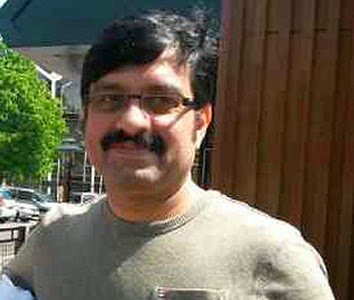
CAPA pays tribute to Dr Mehdi Ali Qamar

From the comments section in the Dawn, Mian Waheed, President, Community Association of Pakistani Americans (CAPA), pays a moving tribute to the memory of Dr Mehdi Ali Qamar.

Incidentally, we visited the CAPA (Central Ohio) web-page and there seems to be a very healthy Pak-Am community (with nice pictures celebrating the 66th birthday of Pakistan).

A community which will be forever scarred by the memories of a good life which came to an end too quickly and brutally (we did not know that he died in front of his family…truly shocking, the killers should have just had mercy and killed all of them).

………..

I am making this announcement with a very heavy and
grieving heart that one of our Pakistani community member, a friend of
mine, an intelligent person, a friendly guy and a poet with a very soft
and romantic heart, Dr. Mehdi Ali Qamar has been assassinated in
Pakistan a couple of days ago. 

Dr. Mehdi was on a visit to Pakistan
with his wife and kids and had gone to graveyard of his ancestors to say
prayers for them when two persons on a motorcycle opened fire on him.
Dr. Mehdi died in front of his family.

This will be a very shocking news to the Pakistani community of Ohio,
he was well known to a lot of us. Our prayers are with the family and
hope the assassins of Dr. Mehdi will be captured and brought to justice
swiftly.

President CAPA
………
Link (1): http://www.dawn.com/news/1108902/murder-in-rabwah

Link(2): http://capaohio.wordpress.com/2013/08/18/capa-ohio-arranged-a-community-picnic-to-celebrate-pakistans-66th-birthday/
…….

regards

(high-explosive) Toys for child soldiers

“They [army] would
give us one gola (grenade) each and send us to throw them on the
Indians,” Ali, a cook at Nadra, said. “The children were small and were
hard to detect at night. And plus we knew all the inside routes that
even the adults didn’t. So they gave us a gola each and off we went,
running up the hills.”

……….. 
Kargil is/was hopefully the last time that we will see hand to hand combat in South Asia. While war is exciting for some people, for us ordinary humans, it is the human factor that is of primary interest, the fact that war (always) creates hidden victims who will never find the support they need from a society which has forgotten them.

On the Indian side, one example was particularly shocking. This was the Adarsh society scam, a building which was intended for widows of the Kargil war dead (soldiers). The top people from politics, bureaucracy and (shamefully) military were involved. Here is the kicker- after all the investigations (as they say in vernacular) not even a single hair was touched. The culprits (alleged) are all out on bail due to a technicality (CBI did not charge-sheet them in a timely manner…why was that??). Ashok Chavan resigned as Chief Minister of Maharashtra and now elected as Member of Parliament in the latest Lok Sabha elections.

People who opine that corruption is the necessary grease that propels developing nations towards developed nation status should stop and reflect about the implications of Adarsh (and a thousand other scams, most of which have not seen any light of the day) and what it means for a country to disgrace the memory of her fallen soldiers.

On the Pakistani side, the report below confirms what was well known- the fact that Pakistan Army disowned its own soldiers as mujahideen and went to the extreme extent of refusing to take the bodies back. The soldiers (who fought for a lost cause) did not get a penny as compensation for their heroics in the battlefield.

However the most shocking revelation (for us) is as follows: child soldiers who were advised by the Army to lob grenades at the enemy. We are not from a military tradition so we would not know about all the intricacies, but it seems that the lines between a professional force and a religious cadre bent on jihad is a very thin one. 
……
[Ref. Wiki] The Adarsh Housing Society is a posh, 31 storey building constructed on prime real estate in Colaba, Mumbai, for the welfare of war widows and personnel of India’s Ministry of Defence.
Over a period of several years, politicians, bureaucrats and military
officers allegedly conspired to bend several rules concerning land
ownership, zoning, floor space index and membership get themselves flats
allotted in this cooperative society at below-market rates.
 

The scam was unearthed in November 2010 which forced the then Chief Minister of Maharashtra, Ashok Chavan, to resign (Sidnote: he has now been elected as a member of Parliament).

In January 2011, the Maharashtra government
set up a two-member judicial commission to inquire into the matter. The report highlighted 25 illegal allotments, including 22 purchases made by proxy.
The report also indicted four former chief ministers of Maharashtra: Ashok Chavan, Vilasrao Deshmukh, Sushilkumar Shinde and Shivajirao Nilangekar Patil, 2 former urban development ministers: Rajesh Tope and Sunil Tatkare and 12 top bureaucrats for various illegal acts. The allottees included Devyani Khobragade (Sidnote: main actor in the non-payment of wages to maid case in New York).

There was a spate of petitions filed in Bombay High Court seeking to monitor CBI investigation. The petitions are Criminal PIL
No. 34 of 2010 by former Journalist Ketan Tirodkar, Criminal Writ
Petition No. 3359 of 2010 by Simpreet Singh and Criminal PIL No. 36 of
2010 by Mahendra Singh. Ref. Bombay High Court order dated 17th Feb.
2011.
By this order High Court asked CBI to amend the F.I.R. by adding Benami
Properties Transaction Act section 4. Also, the High Court transferred
the missing filed probe from Mumbai Police to CBI. Praveen Wategaonkar
filed Criminal PIL later seeking invoking of Prevention of Money
Laundering Act (PMLA) into the case. So it has been invoked and
Enforcement Directorate came into picture.


….
Reacting to these petitions and based on the slow pace of the investigation in the last two years, Bombay High Court severely castigated Enforcement Directorate for its failure to initiate any probe in the matter on 28 February 2012. 
Expressing its unhappiness the court observed, “It
is unfortunate that ED has remained a mute spectator. There is a
serious lapse on the agency’s part for not probing into money laundering
offence. ED has not moved an inch. It reflects a sorry state of
affairs. We are summoning the director as there has been no assistance
from his department to the court.” 

The Court also rapped the CBI for the tardiness in its investigations (begun in January 2011).
The High Court, again on 12 March 2012, severely castigated the CBI for
not arresting any of the accused in spite of having evidence and
ordered it to take action without fear or favour.
ED having registered a case under Prevention of Money Laundering Act,
has decided to launch attachment proceedings of the flats after going
through the latest charge-sheet filed by CBI.

Following the Court’s criticism, the CBI carried out eight arrests including two retired Major Generals
TK Kaul and AR Kumar, retired brigadier MM Wanchoo, former General
Officer Commanding(GOC) of Maharashtra, Gujarat and Goa, Adarsh promoter
Kanhaiyalal Gidwani and Pradeep Vyas, the then city collector and currently, finance secretary (expenditure) in the Govt. of Maharashtra.
Accordingly on 22 March 2012, the Chief Minister of Maharashtra, Prithviraj Chavan announced in the legislative assembly that the two IAS officers whose names have figured in the scam, Pradeep Vyas and Jairaj Phatak have been suspended from government service.


In a further twist to the case, the CBI
officers arrested their own lawyers, J K Jagiasi and Mandar Goswami.
Jagiasi allegedly asked an Air India (AI) official, one of the accused
in the case, to pay a bribe of Rs 5 million in exchange for diluting
charges levelled against him. The petty cash books maintained by Jagiasi
helped unearth the conspiracy. 


In addition, Rs 2.5 million was
allegedly paid to Goswami. He was the Special Counsel in the Ministry of
Law and Justice and at present is working as Retainer Counsel for CBI.
According to CBI sources, the tainted AI official approached the CBI for dilution of the case filed against him. Jairaj Phatak
and Ramanand Tiwari were arrested by the CBI on 3 April 2012, for their
alleged involvement in receiving illegal gratification in the Adarsh
Housing Society Scam.

On 29 May 2012, a special CBI court granted bail to seven of the nine
arrested accused in the Adarsh scam since the CBI failed to file a charge-sheet within the stipulated 60 days from the time it took them in custody.
Those granted bail include Maj. Gen. (Retired-retd) A. R. Kumar, Maj. Gen. (retd) T. K. Kaul, Brig. (retd) M. M. Wanchu, IAS officer and former Mumbai district collector Pradeep Vyas, former Defence Estate officer R. C. Thakur, IAS officer P. V. Deshmukh and former Congress member of the Legislative Council Kanhaiyalal Gidwani (the chief promoter of Adarsh). 

………………………………. 

I needed a new guide to help me
find the elusive colony of people displaced by the Kargil conflict and
living somewhere behind Islamabad’s Bari Imam shrine. Wars between
Pakistan and India have claimed thousands of victims but forgotten among
them are the living victims of the Kargil war who have sought uncertain
refuge in the squalor of shanty towns around the country.

Across a
bridge and up and down narrow streets lined with palm trees and mud and
brick houses, their doors painted in shades of orange and green, Baqir,
our pied piper, led me and a long line of local children to a small
hamlet teetering on the edge of the creek. 

A sheepish Wafadar found us
again somewhere along the way. “Why did your family move here?” I asked
him. “I don’t know,” Wafadaar said. “Ask my father.” Something terrible
had happened to Wafadar’s father — something senseless but dreadfully
common among hundreds and thousands of people who have been displaced
from several parts of Pakistan brutalised by war.

A sepahi in the
Pakistan army, Shah returned to his village across the border from
Kargil one morning to find that an Indian shell had crashed through the
roof of his two-storey house and left his son and daughter dead. His
second daughter, 10-year-old Sidra, was lying semi-conscious under a
tree, her skull crushed by the bombardment.

As he gathered his
children’s bodies, Shah says he remembers fretting that the bales of hay
stacked on the roof for the goats’ winter fodder had caught fire during
the shelling. He worried for his animals. A few days later, after India
blocked water to the area, Shah fled, his bleeding daughter bundled in
his arms. Sidra died a few days later. But grief and remorse
trailed him to Islamabad, combining with other stresses: financial
troubles and the absence of support from relatives and friends. 

Fifteen
years later, Shah is a driver at the Earthquake Reconstruction and
Rehabilitation Authority, surviving on a meagre salary and a Rs5,000
pension. He blames Nawaz Sharif. “Kashmir was in our hands,” he told me
at his house, sitting in a blue plastic chair under harsh fluorescent
lights and a clock that read 6:54, no longer keeping time.

“But
then Sharif went to the United States and we had to give Kargil back.”
For Shah, and his neighbours, many of them ex-army men, Sharif’s
greatest betrayal was calling the Kargil fighters mujahideen. “Kashmiri
mujahideen?” he scoffed. “He said we were mujahideen! I’m retired from
the army. He disowned his own army.” While Shah has never been
compensated for what he left behind, and several trips to the GHQ have
borne nothing, Sharif will travel to India next week to make gains for
the future.

A neighbour’s son Ali Raza, now 20, also remembers
shells: exploding Indian shells dripping like rain every day on his way
to school. A shell fell near his school bus once, so close it rocked the
bus from the side to side. He tells me about the 12-year-old girl whose
nose was sliced off by shrapnel. He also tells me about how the war
changed children’s lives — and their toys too.

“They [army] would
give us one gola (grenade) each and send us to throw them on the
Indians,” Ali, a cook at Nadra, said. “The children were small and were
hard to detect at night. And plus we knew all the inside routes that
even the adults didn’t. So they gave us a gola each and off we went,
running up the hills.”

As Ali tells me about the unusual toys and
the invented games, his infant daughter plays with a rattle by his feet.
She chuckles. At least for her, one can pray, the war is over.

…..
Link: http://www.dawn.com/news/1108390/footprints-kargils-leftovers
….

regards

11 bullets? one, two..not enough??

Moral of the story: it is hazardous to do good deeds on this earth and in this life, even though you may benefit from it in the next life. These incidents have become commonplace now, the only reason this story is being covered is because the good doctor was an American.

We are curious but is APPNA (and any other medical association of Pakistani doctors in America) also segregated by communities? Will anybody on BP be knowing the family? It must be a terrible thing for them as a family and as well as the community. How do people heal after something like this? Please note our sincere condolences.

And this must be emphasized above all: please do not risk your life and limb (as well as inflicting terminal harm to your immediate family) by taking unnecessary risks such as traveling to your native land. If you must engage in charity work please carry on by any remote means possible (or better yet focus on opportunities in your adopted country). Please.
…….
An American volunteer cardiologist was shot dead in Pakistan on
Monday, a member of his minority Ahmadi community said, the latest
attack on a group which says it is Muslim but whose religion is rejected
by the state.

Mehdi Ali had taken his five-year-old son and a cousin to
a graveyard in Punjab province at dawn to pray when he was shot, said
Salim ud Din, a spokesman for the Ahmadi community.

“He came
here just one or two days ago to work at our heart hospital, to serve
humanity and for his country,” Din said. “Two persons came on
motorbikes. They shot 11 bullets in him.”

Ali was born in Pakistan
but moved abroad in 1996. He had returned to do voluntary work at a
state-of-the-art heart hospital built by the Ahmadi community in the
eastern town of Rabwah.

Ali, 51, moved to Columbus, Ohio, in the
United States, where he founded an Ahmadi centre and raised funds for
medical charities in Pakistan, Din said. He is survived by a wife and three young sons, Din said. 


The US embassy said it was providing consular assistance but declined to give further details. “We express our deepest condolences to his family and friends,” the embassy spokeswoman said.

…..

regards

Great Expectations

The novel had imparted quite a nasty shock at an impressionable age, hopefully the real-life drama will play out on a happier note for the sake of India and Indians.

Key takeaways (yes we know, the following are all anecdotes):


(1) Indian elites are really really shallow (as expected). To them Hindutva is a visit to the mandir a few times in their lives, on happy occasions as well as sad, and sometimes because your bike ran out of gas (as you were on a solo trip to Rhotang pass) and you saw an abandoned temple by the road-side and you were gullible enough to believe some made-up story about how the Devi appeared in a vision one night.

So do businessman Vipul and Shilpi Sharma, both 33…..Long-term
BJP supporters, the Sharmas are not attracted by the nationalism, or
the religious revivalism
that is part of the party’s ideological
heritage, but because “India has been under-performing” at home and
abroad during the last decade of Congress government. Shilpi believes
that with Modi in charge she will have a better chance of realising her
dream to have a holiday in Europe, the UK or Canada.

(2) India’s poor are really, really idealistic. They are politically aware, and do have lot of expectations from the government (why not?) and they have hopefully lost the humbleness that you have to bow before the king throws a bit of alms your way. They are the first pillar of democracy. If the revolution ever comes, they will be slaughtered to the last (wo)man, and this will be explained away by the need to lose memories of the poor.

Sanjeev Pal …has rent to pay, loan instalments on his new car to
meet and a family to look after back in his village
500 miles away. Time
is tight.

Not tight enough to stop him voting though. “This was a
duty, not a right only. We had to pick the best man to represent us,”
the father-of-two said.

That man, according to Pal, is Narendra Modi…. Analysts say the
election is the most significant in India for decades, possibly since the country won its independence from Britain in 1947.

This alone has
already fulfilled one of Pal’s hopes.
“This country needs someone who
can get things done. And that leader needs to be strong, with real
authority.”

For the moment, Pal the taxi driver is
relieved to be a little less worried about the future now than he was a
month ago.
“I know where Modi came from. Only a man who has been poor
can really understand what being poor means,” he said.

(3) The para (not very well supported) that is likely to send Pankajists (hey Omar, look at me!!!) into a bout of hysterics.
This is what they fear most, millions of upwardly mobile neo-Hindus, who are corrupted by the Satan of a system in which at the end there will be a few winners and the rest will all lose out.

Even among the most deprived, sensibilities are changing. The desire
for a hand-up rather than a hand-out, particularly among those who are
only just beginning to see their standard of living improve, is a
significant factor, say political scientists. “A lot of the dole
programmes are very popular, but just not enough any more,” said Milan
Vaishnav, of the Carnegie Endowment for International Peace. “Migration,
cellphones and economic growth have reshaped the realm of the
possible.”

(4) The young voted for Modi and how
The biggest
election winner for the BJP may have been young people. Around 100m
voters cast a ballot for the first time and some pollsters estimate that
up to 90% of 18 to 25 year olds, increasingly urbanised, aware and
aspirational across the country, voted
for Modi.
In one Dwarka coffee bar, Sartak Menon, 20, said the new
prime minister “aims to give the youth and the poor more power to have a
better lifestyle”. 

(5) The tentacles of caste are loosening, especially in urban areas (which will become much more prominent in terms of vote-shares)
Another
factor is the decline of caste, the tenacious Indian social hierarchy
which still determines the status of hundreds of millions.
The realities
of living in overcrowded Indian cities or zones like Dwarka have made
reinforcing social separation and discrimination through rituals or
violence much harder. Pal said that, though he previously always voted
for a party representing lower castes such as his own, he was not even
aware that Modi was from a similar community.

(6) So, what can possibly go wrong?
Over half of all
respondents in a poll published in the India Today news magazine said
Modi represented the national interest and the people’s aspirations, but
the proportion among Muslims, who number around 140 million in India,
was only 16%.

As Arundhati Roy explains (convincingly), the fear is misplaced, muslims will not be killed any more. Indeed on this count the BJP record may actually turn out to be superior than that of the secular armies…..just because the world will be watching very closely. It will be the tribals that will get knocked up…and very few people will care about that.
….
On the ragged edges of a fast-changing city, Sanjeev Pal is a
man on the move. The taxi driver has little time these days to stop and
talk politics. He has rent to pay, loan instalments on his new car to
meet and a family to look after back in his village 500 miles away. Time
is tight.

Not tight enough to stop him voting though. “This was a
duty, not a right only. We had to pick the best man to represent us,”
the father-of-two said.

That man, according to Pal, is Narendra Modi,
the 63 year-old provincial politician who, with 31% of votes cast in a
record turnout, won a landslide victory this month. Analysts say the
election is the most significant in India for decades, possibly since the country won its independence from Britain in 1947.

On
Monday, Modi will be inaugurated as his nation’s 18th prime minister.
From relative political obscurity, the former tea-seller has risen to
the highest executive office in this developing, troubled nation of 1.25
billion people. His Hindu nationalist Bharatiya Janata party now
commands a crushing majority in the lower house of parliament. The
Congress party, in power for all but 18 of the 67 years since
independence, has been reduced to a historic low.

This alone has
already fulfilled one of Pal’s hopes. “This country needs someone who
can get things done. And that leader needs to be strong, with real
authority.”

Pal lives and works in Dwarka, a new town that has
sprung up over the last 20 years on the outer rim of Delhi, the
sprawling Indian capital which is home to 17 million people. Dwarka is a
zone of transition. Less than a generation ago, it was just fields and
scrub. Now there are a million people living in rows of apartments
blocks, short of water but served by scores of private schools, malls, a
luxury hotel, a metro line, dusty parks and the occasional temple.
Fruit-sellers hawk mangos outside air-conditioned coffee bars and carts
laden with buffalo dung cakes used for fuel hold up Audi SUVs.

It
is the rapid and traumatic change leading to such contrasts that
explains the BJP’s win, and has given rise to the enormous expectations
now centred on Modi.
A sharp economic slowdown after decades of boom has
only sharpened the hope that, as the new prime minister told campaign
meetings, “good days are coming”.

Despite the buffaloes, Dwarka is
part of the West Delhi parliamentary seat, an urban constituency. In
elections a decade ago, there were only 120 such seats out of 543. Now
there are 180, according to Rajeev Karandaikar, a statistician and
election specialist at the Chennai Mathematical Institute, plus at least
another 100 which are semi-urban. For the first time, the BJP’s vote
share across cities and India’s vast countryside was similar, a
significant reason for the party’s success.

“There
was enormous support for Modi and deep anger at Congress. There was a
definite swing across all social and economic categories,” said
Karandaikar.

In the capital, Congress lost in every seat. In West Delhi, Parvesh Verma,
a debutant 36-year-old BJP candidate, beat a Congress veteran by
460,000 votes out of 1.3m cast. The newly formed Aam Aadmi, or common
man party, came second. “Everybody – Muslims, Hindu, ladies, boys –
wanted a strong government and a strong prime minister. People have
faith in Mr Modi. He has a clear vision for the country and he will
definitely deliver,” Verma said. The new MP’s father was once chief
minister of Delhi, a reminder of how politics in India is often a family affair.

Vinay
Mishra, the son of the outgoing Congress MP and an organiser of his
61-year-old father’s unsuccessful campaign, blamed “anti-incumbency” –
the traditional reaction of Indian voters against those in power – as
well as a “communication gap between the government and the common man”.
Mishra, 31, diplomatically avoided blaming Rahul Gandhi, the scion of
India’s most famous political dynasty and the face of the Congress
campaign, preferring to suggest the 43 year old Cambridge-graduate had
been badly advised.

If a general sense of instability, insecurity
and drift helped bring Modi to power, the desire for rapid progress,
order and direction is likely to now prove an immense challenge for the
new prime minister.
 

Pal, the taxi driver, believes that Modi, who is
seen as having brought development to the state of Gujarat while in
power there from 2001 until last week, can do the same on a national
level.

So do businessman Vipul and Shilpi Sharma, both 33. The
couple commute from Dwarka, driving three hours everyday to work in the
booming hub of Gurgaon, 15 kms away. Vipul runs a business. Shilpi works
for a multinational. With their Hyundai and top-of-the-range
smartphones, they are part of what overseas analysts call the Indian
middle class and poorer locals call simply “rich people”.

Long-term
BJP supporters, the Sharmas are not attracted by the nationalism, or
the religious revivalism that is part of the party’s ideological
heritage,
but because “India has been under-performing” at home and
abroad during the last decade of Congress government. Shilpi believes
that with Modi in charge she will have a better chance of realising her
dream to have a holiday in Europe, the UK or Canada.

The biggest
election winner for the BJP may have been young people. Around 100m
voters cast a ballot for the first time and some pollsters estimate that
up to 90% of 18 to 25 year olds, increasingly urbanised, aware and
aspirational across the country, voted
for Modi.
In one Dwarka coffee bar, Sartak Menon, 20, said the new
prime minister “aims to give the youth and the poor more power to have a
better lifestyle”. 

According to Indian government statistics, about a
fifth of Indians live in poverty, down from more than a third in 2004.
Even among the most deprived, sensibilities are changing.
The desire
for a hand-up rather than a hand-out, particularly among those who are
only just beginning to see their standard of living improve, is a
significant factor, say political scientists.

“A lot of the dole
programmes are very popular, but just not enough any more,” said Milan
Vaishnav, of the Carnegie Endowment for International Peace. “Migration,
cellphones and economic growth have reshaped the realm of the
possible.”

Vaishnav points to a blurring of the divide between
town and country in India, and says surveys show voters everywhere share
the same preoccupations of jobs, corruption and price rises.

Another
factor is the decline of caste, the tenacious Indian social hierarchy
which still determines the status of hundreds of millions.
The realities
of living in overcrowded Indian cities or zones like Dwarka have made
reinforcing social separation and discrimination through rituals or
violence much harder. Pal said that, though he previously always voted
for a party representing lower castes such as his own, he was not even
aware that Modi was from a similar community.

On the very edge of
Dwarka, where fields meet cement, Choudhury Dilichand, a retired teacher
said he voted Congress at the election. The 73-year-old, who recently
sold six acres of land bought for a pittance in his village 20 years ago
for millions of dollars, said the scale of BJP’s victory was easily
explained.

“The young people voted for Modi because he is honest
and there is hope that something can be done for jobs and development
and so on. If Modi can keep clean people only in government, then
something can be done. But if he can’t, then there will be problems,”
Dilichand said.

Some observers voice concerns. Since taking power
Modi has signalled a policy of conciliation abroad and unity at home,
but fears remain that if the new prime minister cannot fulfil the huge
expectations of his countrymen, he or his party could be tempted to
shift to the right.

The very factors underpinning his victory
could make this a tempting strategy to adopt. Over half of all
respondents in a poll published in the India Today news magazine said
Modi represented the national interest and the people’s aspirations, but
the proportion among Muslims, who number around 140 million in India,
was only 16%.

By 2050, at least half a billion people in India are
predicted to move from rural areas to towns and cities, fundamentally
changing the nature of the country. Many will end up in places like
Dwarka.

“The traditional hypothesis is that urbanisation is part
of a modernisation process, which involves an inevitable moving away
from traditional affiliations of community such as religion and caste,”
said Vaishnav.

But it is also possible that the dislocations
associated with rapid change can lead to communities consolidating and
this can provide an opportunity for politicians “harping on those social
cleavages”, he said.

For the moment, Pal the taxi driver is
relieved to be a little less worried about the future now than he was a
month ago. “I know where Modi came from. Only a man who has been poor
can really understand what being poor means,” he said.

…….
Link: http://www.theguardian.com/world/2014/may/25/narendra-modi-inauguration-huge-expectations/
…..

regards

(neo)Maoism for memory loss (in 3 steps)

Sometimes it takes just one line (or a few words) to make things crystal clear. Normally when we talk about totalitarian ideologies we have only a vague understanding of what it means (and we working class folks pride ourselves in being intellectually, a grade above trust-fund a-holes).  
In our opinion, the quote below* fairly captures the sentiment and motivation of Mao, and possibly that of the neo-Maoists, who yearn intensely for utopia on earth.
 ………
In Mao’s terms, suffering clears your head — even death clears your
head, using “your” in the plural. China had suffered for hundreds of
years, becoming enslaved by people they considered barbarians.
 

When Mao
says “chaos” he’s not talking like that trust-fund asshole in your dorm
who used to spray-paint circles with an ‘A’ in the middle when he was
sure nobody was looking.
 

He’s talking about mass death for generation
after generation. That’s how you get a clear head: you sweep all the
“human, all too human” baggage out of it. Once you have that “mind of
winter,” you can face down the nukes easily. Which he did.
 

……..

If any Dear Leader is planning to be implement this “chaos” plan in India today, he or she must have the fortitude (and vision) to get rid of people located at the bottom of the pyramid (which is where most people live). Maoists however may argue that in order to remove mental baggage of the society most effectively, we must start (and finish) with the bourgeoisie because it is they who tend to have the longest memories (this is how it worked in the cultural revolution as well).

A three step program is suggested
(1) We have 40% of the country suffering from malnutrition, so they must be at the head of the queue (memories of extreme poverty will go with them).
(2) Next up the order will be muslims and christians. Off with their heads as well (memories of colonization over a thousand years will vanish). 
(3) Depending on our tolerance level for enhanced culling, we can perhaps eliminate all except the (neo) middle class, which clocks in at about 20% of the population.

The principal payoff for having sent 1 Bil people to the gas chambers will be that the memories of mass poverty and colonization will be lost for good. That would indeed make India a wonderful place to live in. Not to forget, there will be now many more kids who are trust-fund a-holes.

regards

* Reference: comments section in http://brownpundits.blogspot.in/2014/05/ineuqality-caused-by-neoliberal.html 

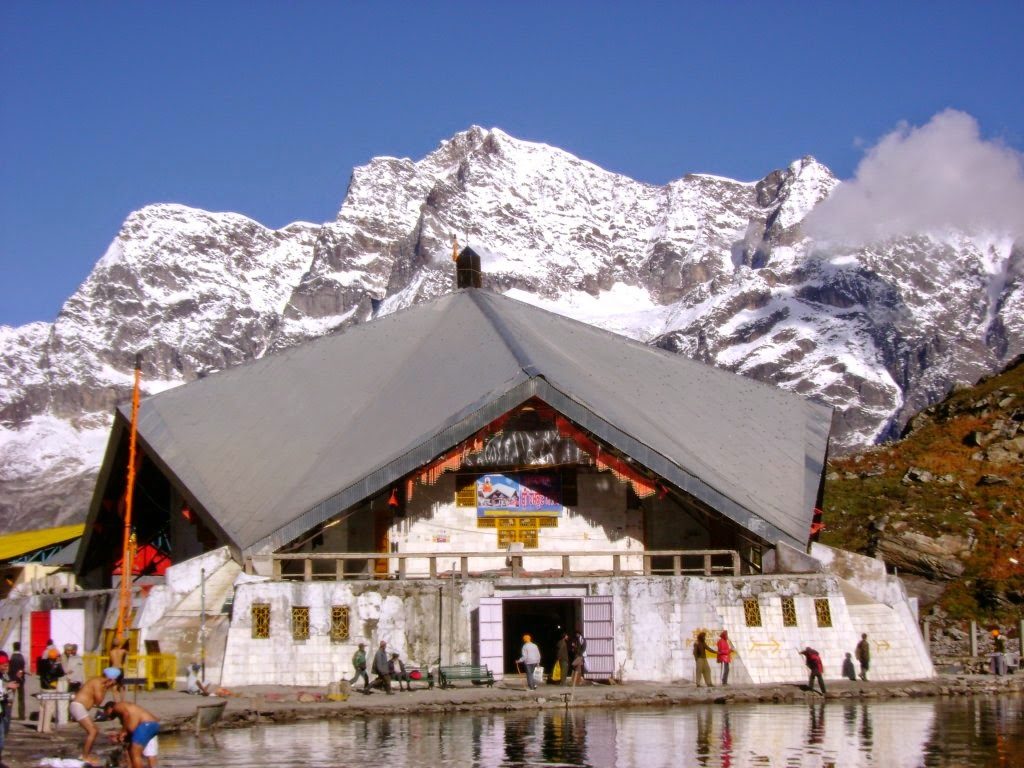
Shri Hemkunt Sahib

Guru Govind Singh meditated at this spot, high up on the Garhwal Himalayas.
The nearby valley of flowers is an unforgettable place to visit as well.

 
While the fact is that lakhs of pilgrims would love to visit the place, we wish they take all appropriate precautions. We forget easily even the most horrible events (it is probably a defense mechanism, else we all will go mad). But last year’s tragedy must still be fresh in people’s minds.

If any BPeeps are headed that way we will appreciate if you share your travel experiences.
………………………
The portals of the famous Hemkund Sahib Gurdwara located in snow-capped Garhwal Himalayas were thrown open to pilgrims today. Shri Hemkunt Sahib, where Guru Gobind Singh meditated before his incarnation
as the 10th Sikh guru, is one of the most revered places and attracts
lakhs of pilgrims every year.

Braving chilly weather, over
3,000 Sikh pilgrims offered their prayers at the star-shaped Gurdwara
situated at a height of 16,000 ft in Chamoli district.

The
shrine opens for four months in a year as the area remains snow-bound
during the rest of the period. It had remained closed since October 10
last year.
……………………………. 

………………………
Link: http://shrihemkuntsahib.com/home.html
………..

regards
  

Inequality caused by “neoliberal, neopatriarchy”

Please everybody, stop with the NEO- prefix, for some reason it causes our brain wires to short-circuit (already there is a new meme that neo-Hindu, neo-middle class was responsible for the Modification of India). This is just like that -GATE thingy, every single scandal is tainted by that suffix.

Beatrix Campbell in the Guardian makes a (not so) neo-point that a neo-woman’s revolution is required (yes, we did add the NEO-s on purpose). A commentator “royaltea” then responds to a particularly egregious claim that Chinese women were better off under Maoist times. 

It underlines the motto of the
left. We should be all equal and poor. Inequality is bad because some of
us are winners and others are losers (even while we are all richer). 

BTW “royaltea” is being kind when he (we presume) says that millions starved to death under Mao. It was in pure and simple terms, the genocide of 45 mil (of their own people). It should be the benchmark by which other genocides are ranked. The fact that it is not (along with Stalin’s gulags) has to do with the West-Left assertion that communism was good for mankind but was poorly implemented.

I’m of a certain age; I came alive politically with the women’s
liberation movement in 1970. It changed my life. It changed the world.

Except, of course, it didn’t entirely. No sooner had it bounced on to
the world’s stage than there was a counter-revolution – feminism didn’t
die, but it didn’t thrive either. It just survived, heroically
optimistic as ever. We believe in the best of ourselves; we believe in
the best of men.

But something dire happened between the Women’s Liberation Movement and now. That’s why I have written a manifesto, End of Equality. It became apparent to me that in the first decade of this century the
conditions necessary for achieving equality between men and women had
been extinguished.

End of Equality argues that there is a new
global settlement: neoliberal neopatriarchy. This is an ugly term for an
ugly relationship. Neoliberalisation is the subordination of the social
state to the market, and neopatriarchy tolerates girls being astronauts
or bankers, but resists genuine reform of the sexual division of
labour.
 

It helps to be clear about what this new sexual settlement is
not. It is not just a backlash, or a relic of olden times. It is not the
temporary brutality of globalisation, or the collateral damage of
austerity. It is an epochal enemy of feminism because it is a
repudiation of the social solidarities and welfare states without which
feminist agendas wither.

In this perceived era of gender equality,
there is a new articulation of male social power and privilege. There
is no evolutionary trek towards equality, peace and prosperity.
The new
world order is neither neutral nor innocent about sexism: it modernises
it. Masculinities and femininities are being made and remade as
polarised species.

When feminism fades, femininities are taken to
extremes. Some bodies are veiled and hidden, while others are plucked,
shaved and sliced.
Bosoms are built, stomachs are shrunk: the covered
body and the built body are oddly united. Their shared outlook involves a
pessimistic engagement with masculinity – it is either to be feared and
managed, or aroused and managed. But not actually changed.

Gaps
between men’s and women’s money, time, respect and resources are static,
or growing. Decades of reform have not transformed our most
masculinised institutions – the police, the criminal justice system, the
City.

Corporate culture reinstates the chasm between mothers’
time and men’s time. In the City of London 70% of young fathers work on
average 10-hour days. The City, then, is organised in the image of young
patriarchs, who may be providers but are scarcely parents. Instead,
they are visitors to women and children.

Neoliberal
neopatriarchy is shaping the world. Before China embraced capitalism in
1979, workers were poor, but pretty much equally so. In 1988, women
earned 87% of men’s pay – now they’re down to 67%.

……………….
Commentator “royaltea” responds:

Oh dear.
I wouldn’t bother commenting on such silliness, but this bit is actually offensive.

Neoliberal
neopatriarchy is shaping the world. Before China embraced capitalism in
1979, workers were poor, but pretty much equally so.

But they were very, very, very poor, with no freedom at all.


Under socialism, they were so poor that 45 million of them starved to death. Starved to death as the completely avoidable consequence of the imposition of socialist economic polices. (You might not have heard of this, but you can look up the “great Chinese famine” on line.)

To
suggest than people were better off in China under socialism they were
“equally poor” is beyond ignorance. It really is quite revolting.

In 1988, women earned 87% of men’s pay – now they’re down to 67%.

In 1988, average wages were about 3,00 Yuan, now it is 47,000 Yuan. Maths test – which is greater?
87% of 3,000 or 67% of 47,000. It’s the latter.

 
Chinese women have become massively better of, and more free since China ditched communist socialism.
…………………
Link: http://www.theguardian.com/commentisfree/2014/may/25/we-need-new-womens-revolution
…….
regards

Feelings (fears) of a (expat) Coconut

If this is the best of times for Gujarati expats, it is also the worst of times for non-Gujaratis like Saptarshi Ray.

These non-Gujju expats – (mostly) upper-caste folks, brought up in the non-UKIP, non-Tea Party traditions of the West, which celebrates minorities (and some minorities more than others) are also known as Coconuts (his expression).  
Right now, the Coconuts are suffering from a complex set of emotions:
(1) burning shame (our motherland is now run by RSS fascists who even make Nazi like salutes),
(2) bright-white anger and bewilderment (how could they vote for a shudra chaiwallah, we thought BJP is a manuvadi, Brahmin dominated party, controlled by Brahmin bosses from Nagpur) and,
(3) a tiny, little, nanoscopic bit of envy (these Gujarati baniyas, we will never give them our hard-earned money even if they promise better returns).

The following excerpts (expanded below) summarize the fears and feelings of a Coconut as he views India under Hindutva rule:
….
The money train of the Indian diaspora is especially pronounced among Gujaratis, and so many of them seem to love Modi,
as rupees, pounds and dollars from around the world fund everything
from schools to political campaigns. As chief minister of their home
state, he is held up as a man who can do business, and do politics.
He’ll make India great, goes the argument, and a great India certainly
doesn’t kowtow to any NRIs. Especially ones who disagree.

Modi and his goons—both within and without the mother country—want a
mythical India that celebrates Hinduism at the cost of other religions,
rides rough over its neighbours and looks purely inward. This is not
the India I know and love. A more confident India is to be welcomed,
but a global India is even better. 

…….
There is currently a full-fledged Boycott, Divestment and Sanctions regime targeting Israel that has been put in place by a coalition of the West-Left and Islam. It reached its pinnacle when in 2013 several US academic bodies endorsed the boycotts. As we understand, the BDS program accelerated due to the provocations (settlements) unleashed by PM Binyamin Netanyahu and there was also a deadly raid of  the Turkish flotilla carrying humanitarian cargo for Gaza (May, 2010) which attracted severe international condemnation.

….
Members of the American Studies Association have voted in favor of endorsing the academic boycott
of Israel by a 2–1 margin, making it the second major U.S. scholarly
association, after the Association for Asian American Studies, to do so.

The resolution approved by a plurality of ASA members cites
as a rationale the lack of “effective or substantive academic freedom for
Palestinian students and scholars under conditions of Israeli occupation” and
calls for the association to boycott Israeli higher education
institutions,
which are described as being “a party to Israeli state policies that
violate human rights and negatively impact the working conditions of
Palestinian scholars and students.”


“I think what the vote indicates is that people recognize the illegal
occupation of Palestine as one of the major civil rights issues of our time globally,”
said Bill Mullen,
a professor of English and American studies at Purdue
University and a member of the ASA’s Caucus on Academic and Community
Activism, which first put forward the boycott resolution.  

“American scholars
now understand the physical violence that’s part of the Israeli occupation;
they understand the massive restrictions on academic freedom for Palestinian
scholars that is part of living under an illegal occupation.
These facts are
now irrefutable to so many people that the vote indicates a kind of coming to
consensus around the illegitimacy of Israel’s occupation of Palestine.”

…………………

Now we know that India will be ruled by a man who prevailed in an election remote controlled by Mossad (aided by the Jewish controlled global media), and a direct nexus has been established between Hindutva and Israeli groups. Is it not high time that the American Studies Association and other groups take up the case of India as a regime ripe for BDS style sanctions? TBH, how are things fundamentally different between Palestine and Kashmir? (Pankaj Mishra has written a book exploring this very issue. Arundhati Roy is of the opinion that the cleansing of the Pandits was a stunt allowed by India in an attempt to gain high(er) moral ground)

And if India is on the radar, can the People’s Republic of China be far behind (btw please dont even think about sending a humanitarian army to Xinjiang, the activists will be all thrown into boiling water…or something). Also we have Russia which recently annexed Crimea and placed the minority muslim population (Tatars) in open air prisons…the term normally used to describe Gaza. Burma, Thailand, Philipines…the list goes on and on.

Then we have the most curious set of culprits… the Islamic nations themselves (many of which have been formed to explicitly protect muslims). How many (muslim) folks are dead or dying in Libya, Syria, Iraq, Pakistan, Nigeria, Iran, Saudia and elsewhere at the hands of goons who receive protection from the State? Prof Bill Mullen should also find the time to comment on all these “Palestines” such as Balochistan (for example). If not, why not?

To be clear, human rights is not a competition game, and all victims (muslims, non-muslims) are equally deserving. Inhumane actions (by humans) must be condemned (by other humans) and we should attempt to restore humanity as quickly as possible (India, for example, has the largest number of slaves in the world, Pakistan follows closely). But…..we still wonder, how will the Coconuts adjust to this new (harsh) reality of India, and how will they shape global attitudes and policies towards their beloved motherland as sublime love turns into bitter hate?
…….

My friend Ramesh and I have a running joke that we will one day write a travel book called The Coconut’s Guide to India
(©)—an instructive, descriptive work for our brothers and sisters born
throughout the diaspora making their first trip to the motherland,
and
all the dastardly pitfalls it might entail. To be taken with a pinch
of salt, and a dash of garam masala, naturally.


The title may need some tweaking, coconut is after all a rather offensive term:
brown on the outside, white on the inside,
and as frequent visitors to
our homeland who speak the lingo and know the customs, we thankfully
don’t qualify; but we’ve always felt our fellow British Asians who
cannot or will not make a trip to their ancestral country are missing
out. Not just due to its beauty, history or notions of connecting with
one’s identity, but also because of the welcome extended to those that
hold the status of NRI. 


The generation that emigrated in the post-empire rush in the 1950s
and 60s were predominately born in India, so had the natural affinity
that comes from being an expat rather than an outsider—but for their
children born in the UK or US, Germany or Australia, the relationship
with the des (homeland) has always been more complex.


..

At first we were novelties,
familiar looks yet bemusing accents, unseasonable clothing and odd
music. As an infant I remember the children in my grandad’s village
used to come and stare at me when word got round we were visiting, as
they wanted to see the boy who was born in England—and I could see the
disappointment in their eyes that I looked just like them. We were both
foreign and domestic, it was an exciting and confusing time. It led to
some books and films and stuff.


But now I fear that Modi’s crude mix of jingoism and capitalism will
damage relations with India’s satellite communities, or certainly
create schisms within it. Outside his rather sycophantic, predominantly
Gujarati fan club, the rest of us might wonder what use he has for us
if we do not give him our cash.


Will this now lead to the Indian diaspora becoming a Modi diaspora? One
where rightwing Hindu ideology is extolled and secular tolerance
becomes a shibboleth for us NRIs? Entry allowed only if you believe
Indian Muslims shouldn’t get the vote? Or there should be a new temple
at Ayodhya? Even if you don’t say it, perhaps you should think
it—otherwise, on your rickshaw pal; if you’re not with us, well then 

you’re not really Indian. Resident or not.


After all, two-score and more years of the NRIs—which has come to mean us born abroad as well as those who emigrated—turning up
has already meant familiarity, adaptability and, in more recent times, a
little bit of hostility. NRIs pay tourist rates at the Taj Mahal,
prices will jump at restaurants, people end up in arguments that
usually begin with: “You NRIs, you think you own the place.” 
In
effect, we are losing our insider status; we are becoming just any old
tourists. But now will we have to pledge allegiance to a divisive
carpetbagger?

I am happy to pay more to see beautiful buildings and enjoy nice meals—I
am after all a guest, albeit a regular one—but there is a discernible
change in dynamics. The Indian middle class are becoming wealthier, and
when I say wealthy, I mean dollar wealthy, and more robust. Indian
business, well some of it, is booming. As are its sports.

And it is this nexus of tradition and commerce that Modi knows only too well.

The money train of the Indian diaspora is especially pronounced among Gujaratis, and so many of them seem to love Modi,
as rupees, pounds and dollars from around the world fund everything
from schools to political campaigns. As chief minister of their home
state, he is held up as a man who can do business, and do politics.
He’ll make India great, goes the argument, and a great India certainly
doesn’t kowtow to any NRIs. Especially ones who disagree.

Modi and his goons—both within and without the mother country—want a
mythical India that celebrates Hinduism at the cost of other religions,
rides rough over its neighbours and looks purely inward. This is not
the India I know and love. A more confident India is to be welcomed,
but a global India is even better.

……

Link (1): http://www.outlookindia.com/printarticle.aspx?290765

Link (2):  http://www.slate.com/articles/life/inside_higher_ed/2013/12/israel_academic_boycott_american_studies_association_joins_the_fight.html

……

regards

Brown Pundits