This (investor visa) nest will cost you a million bucks

There are 10 million millionaires in the USA (and 30 million semi- and deci-millionaires).

In contrast India has only 180K. Still visa benefits are available if you invest a million bucks in the USA (there is a similar program in the UK as well). Things may change if the new immigration bill passes (it will not).

Assuming that you are a well-off minority or a liberal (or both). You are (justifiably) not a fan of Hindutva raising its head in your homeland. This is perhaps a good time to migrate to the West- the safe haven for minorities and liberals world-wide (made extra safe by checking every word of your emails/posts/letters….).

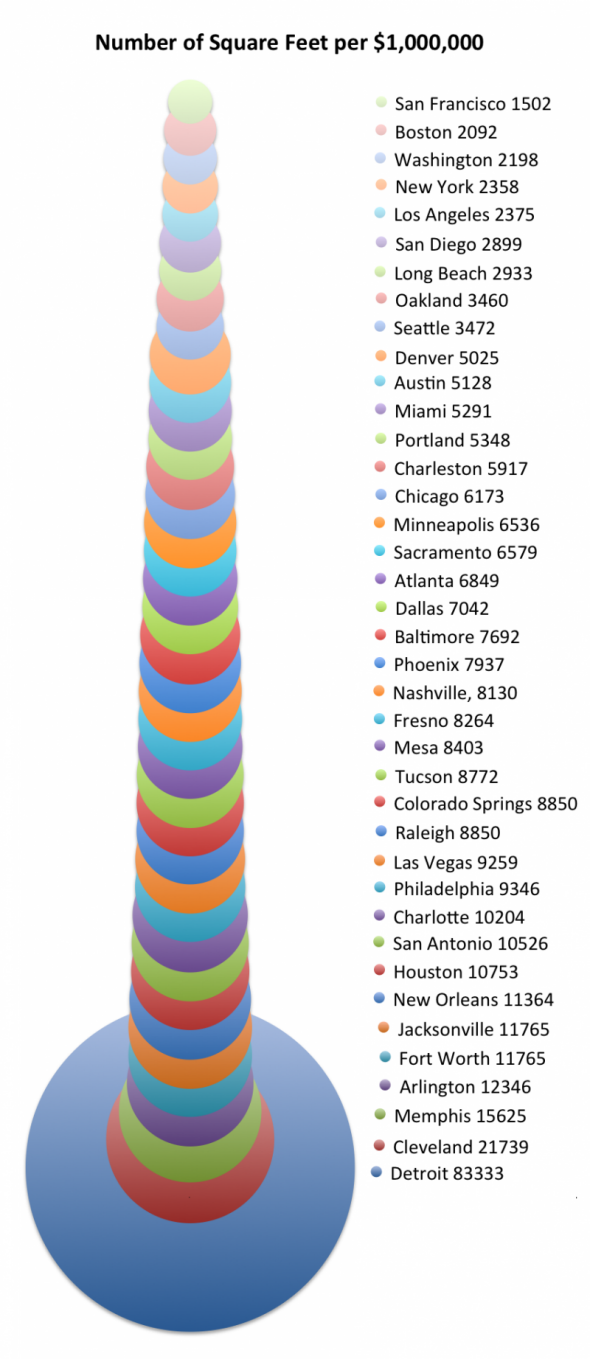
Here is a helpful chart which informs you on how much square footage you can get out of your million bucks. One thing to keep in mind- Detroit is not a very good choice.

regards

The neo-feudalists

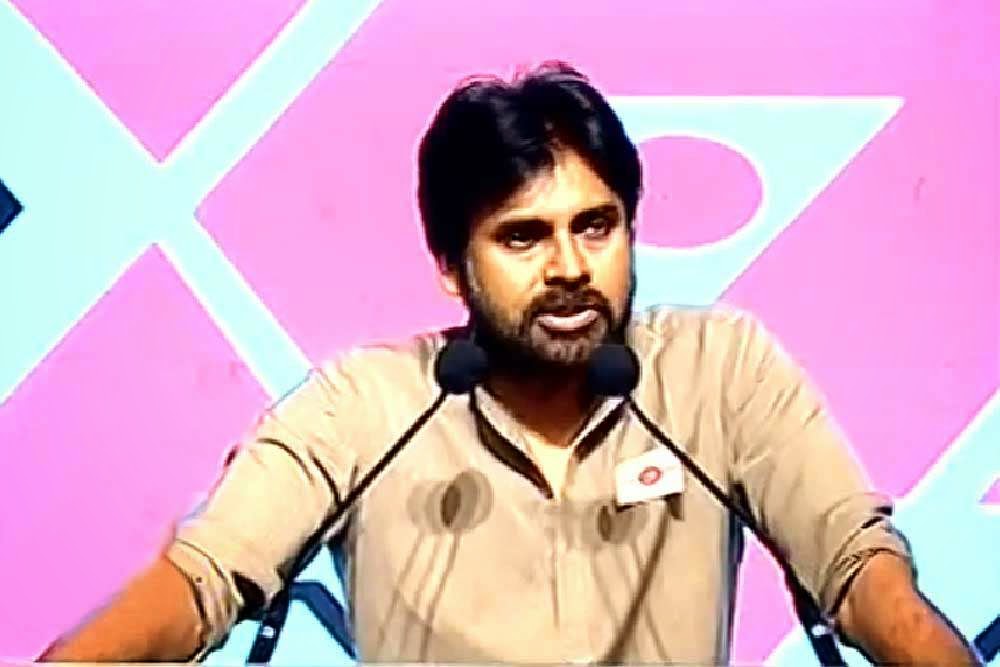
Who is Pawan Kalyan?

He is hero #1 in Tollywood (and brother of Chiranjeevi K, the superstar of the past).

He is also running on a “Congress hatao, desh bachao” platform (Chiranjeevi is presently an Union minister).

This reminds me of an old joke where a father wants x number of sons who will all join different political parties (and ensure that the family as a whole is always close to power, whoever wins). What exactly are Chiranjeevi’s qualifications which enables him to leap-frog ahead of dedicated party workers and become an Union Minister?

In the north there is the Raja, Rani, Nawab and Yuvraj brigade- VP Singh (ex-PM), Digvijay Singh, Madhav Rao Scindia, Vijay Raje Scindia etc.

In the south (specifically Andhra and Tamil Nadu) there are the cine-stars. They have unlimited access to money in the bank and the hearts of the people. People will self-immolate at the news of ill-health of the stars- such strong runs the passion of the common folk.

Frankly speaking it is a disgrace- taking advantage of gullibility of people. Kerala and Karanataka are mercifully free from this disease. Karnataka actually gifted an (in)famous cine-star cum politician to Tamil Nadu. Serves them just right.


Telugu actor Pawan Kalyan, Congress leader K Chiranjeevi’s brother,
today met Gujarat Chief Minister Narendra Modi and declared support to
him for the Prime Minister’s post.

Kalyan, who recently launched Jana Sena party, however did not say
anything about possibility of alliance with BJP in the residual Andhra
Pradesh/Seemandhra.

“Modi is fit to become the Prime Minister, and I and my party support him,” Kalyan said after the meeting. “I am backing Modi, so obviously I am backing BJP,” he said, when asked whether he would campaign for BJP in his state.

But he refused to spell out if his party will have a pre-poll tie up
with BJP. He also evaded a question as to why he and his brother and
Union Minister K Chiranjeevi had chosen different political paths.

Kalyan launched his party on March 14 with “throw out Congress” as the central plank.

regards

Fighting dirty

The long knives are out for Teesta Setalvad. She has  to fight communal forces on one hand and paid news organizations on the other hand. There will be no expectation of even-handedness, even fairness and independence in journalism.


This
Press Release specifically counters the malicious lies in the Affidavit
in Sur-Rejoinder filed by KN Patel, IO Crime Branch for the Respondent
State of Gujarat dated 18.03.2014 in Ahmedabad (and replicated with few
changes in Mumbai dated 19.03.2014). For those newspapers/publications
that published screaming headlines of us misusing funds, without
contacting any office bearers for clarifications, we appeal in the
interests of both fair and independent journalism and basic honesty to
print this Rebuttal with the same enthusiasm and prominence.

In a counter affidavit filed by her in the Sessions Court in
Ahmedabad on March 21, 2014, in response to the affidavit in
sur-rejoinder filed by the Gujarat police, Teesta Setalvad, Secretary,
Citizens for Justice and Peace, has accused the Gujarat police of once
again resorting to blatant falsehoods, twisted facts, deliberate
jugglery of accounts and foul innuendos, with the malicious intent of
colouring the public discourse and prejudice the public mind.
What is
most shocking is the brazen manner in which the Gujarat police continue
to spread falsehoods through signed affidavits, indicating callous
disregard of the justice process. This is nothing short of perjury.


It is evident from the affidavits filed by the Gujarat police that they
are in full possession of all our audited accounts, bank accounts
(organizational and personal) and personal credit card bills. All of
these have been obtained through highly questionable means,
which itself
is a subject for investigation. That apart, the foul intent and malice
of the Gujarat police is more than evident from the fact that despite
being in possession of dubiously acquired information it continues to
heap falsehood upon falsehood


Neither CJP nor Sabrang Trust has any debit/credit cards in their
respective names. For logistical convenience, with the full knowledge
and consent of the trustees and auditors of the two trusts, air and
train tickets are frequently booked online (using the personal credit
cards of Teesta Setalvad and Javed Anand). It is only such expenses
strictly related to the legitimate activities which are reimbursed by
Sabrang Trust and CJP after due verification. 

Despite being fully aware
of this fact, the Gujarat police have claimed, with obvious dubious
motive, that a host of personal expenses, including hair-cuts, purchase
of grocery, shoes, jewellery etc. have been paid for by the trusts.

Such expenses met out of public funds should “shock the conscience of
the court”, claims the sur-rejoinder. If anything, it is the blatant
lies on oath repeatedly indulged by the police that should stir the
conscience of court.


CJP and Sabrang Trust emphatically and categorically deny the claim made
in the affidavit in sur-rejoinder that cash withdrawals from the two
trusts totalling Rs. 75,28,000 (over many years) have been siphoned off
or pocketed by Teesta Setalvad and Javed Anand.
That this too is an
entirely baseless allegation can be established through the accounts
books and cash vouchers of both CJP and Sabrang Trust.


Similarly, the sur-rejoinder claims that funds from the bank accounts of
CJP and Sabrang Trust running into lakhs have been transferred into
fixed deposits in the “family personal names” of Teesta Setalvad and
Javed Anand. CJP and Sabrang Trust challenge the Gujarat police to
provide evidence of even a single rupee thus transferred from the bank
accounts of either of the two trusts into fixed deposits in personal
names.
Instead, the Gujarat police, functioning in nexus with one family
of the Gulberg society and a former employee of CJP cited as “witness”
in the specious FIR, is functioning at the behest of the political
bigwigs in the state who are seriously affected by the persistent
struggle for justice aided by CJP.


The sur-rejoinder reiterates that only Rs. 2.49 lakh was spent on Legal
Aid expenses. We challenge the Gujarat police to provide proof of this
totally bogus claim. CJP has spent over Rs. 2 crore (nearly hundred
times the police claim) on Legal Aid to the victims-survivors of the
state-sponsored Gujarat pogrom and this can easily be established
through accounts books, voucher files and annually audited accounts.

This deliberate underestimation is deliberate and meant to prejudice the
public mind.


Trustees:
I.M. Kadri Nandan Maluste Teesta Setalvad Cyrus Guzder
Javed Akhtar Alyque Padamsee Anil Dharker
Ghulam Pesh Imam
Javed Anand  Rahul Bose Cedric Prakash

regards

Little blue bird, zindabad

It seems up-rooting of social media as promised by the Caliph of Istanbul is a bit easier said than done. Better luck next time, old chap.

Turkey’s
attempt to block access to Twitter appeared to backfire on Friday with
many tech-savvy users circumventing the ban and suspicions growing that
the prime minister was using court orders to suppress corruption
allegations against him and his government.

Turkey’s
telecommunications authority confirmed early Friday that it had blocked
access to the social media network hours after Prime Minister Recep
Tayyip Erdogan threatened to “rip out the roots” of the website.
Tweets
have proliferated with links to recordings that appear to incriminate
him and other top officials in corruption.

By midday Friday, tweets were continuing unabated as users swapped
instructions online on how to change settings. One enterprising user
spread the word by defacing Turkish election posters with instructions
on beating censors.

President Abdullah Gul, a political ally of
Erdogan’s, was among those who circumvented the order, which he
contested in a series of tweets. “I hope this implementation won’t last long,” he wrote.

“Prime Minister Erdogan’s move spells the lengths he will go to censor
the flood of politically damaging wiretap recordings circulating on
social media,” said Emma Sinclair-Webb, senior Turkey researcher at
Human Rights Watch.

Andrew Przybylski, a researcher at
Britain’s Oxford Internet Institute said the ban appeared to be working
through the Domain Name System or DNS blocking, which was easy to work
around.

He said many Twitter-hungry Turks manually changed the
DNS settings on their computers and in their phones to point to Google’s
Domain Name System, which isn’t affected by the ban.

Earlier,
many users trying to access the network instead saw a notice from
Turkey’s telecommunications authority, citing four court orders.

Turkey’s lawyers’ association asked a court to overturn the ban,
arguing it was unconstitutional and violated Turkish and European human
rights laws. Turkey’s main opposition party also applied for a
cancellation.

Twitter’s (at)policy account earlier sent out
messages telling Turkish users in both English and Turkish they could
send out tweets by using short message service, or “SMS.” It was unclear
how those tweets would be viewable.

regards

Crimea loses, India wins

The conditions are indeed favorable at this point.

India desperately needs to make nuclear energy work and the Russians are passionate about friends (apart from say…Syria) who look the other way.

India and Russia are set to sign the much delayed
techno-commercial agreement for Kudankulam 3 and 4 reactors later this month.
Government sources said all differences, resulting from India’s contentious
Civil Liability for Nuclear Damages Act, 2010, had been taken care of with
Moscow finally agreeing to bring the pressurised water reactors under the
purview of the law.

Russia had until now maintained that the liability law, which makes suppliers
of equipment financially accountable in the event of an accident, was a recent
and an unnecessary invention in its civil nuclear partnership with India.

Unlike Kudankulam 3 and 4, the first and second Kudankulam units will function
independent of the liability law. Fearing that allowing the same concession for
the third and fourth units could lead to similar demands from other countries,
India had officially conveyed to Russia in 2012 that both the units will have
to operate under the liability law.

Russia had responded by saying that that the 2010 law was not in keeping with
the spirit of the 2008 civil nuclear cooperation agreement between the two
countries and that the cost of the supplied equipment would increase
significantly if the suppliers were made accountable. …..Russian deputy PM Dmitry Rogozin had said,
“If the supplier is to bear additional financial responsibility for
hypothetical damage, then the price of the supplied equipment will increase,
naturally.”
 

India and Russia had in 2013 signed an agreement for a $3.4
billion Russian line of credit for the reactors. The cost for the two reactors
is expected to be more than $7 billion.

The agreement, however, was not delayed only because of the liability issue. At
one stage, the UPA government deliberately slowed down negotiations as it
waited for protests in the coastal town against nuclear reactors to subside.  

PM
Manmohan Singh told then President Dmitry Medvedev during his visit to Russia
in March 2012 that the agreement would have to wait “until the conditions
became favorable.”


regards

“experiment of developing India ….has failed”

Deeply enchanted with Mao and completely disenchanted with Nehru (and his successors), Neville Maxwell made the following predictions.  

Ramchandra Guha looks at how well the verdicts have held up over time.

IN the first weeks of 1967, the Times of London carried a series
of articles on “India’s Disintegrating Democracy”. Written by their
Delhi correspondent, Neville Maxwell, these assessed the upcoming
General Elections, the fourth held since Independence, and the first
since Jawaharlal Nehru’s death. 
 
The articles were deeply pessimistic
about the prospect for democracy in India. As Maxwell wrote, “famine is
threatening, the administration is strained and universally believed to
be corrupt, the government and the governing party have lost public
confidence and belief in themselves as well”.
These various crises had
created an “emotional readiness for the rejection of Parliamentary
democracy”. The “politically sophisticated Indians” whom Maxwell spoke
to expressed “a deep sense of defeat, an alarmed awareness that the
future is not only dark but profoundly uncertain”.
Maxwell’s own view was that “the crisis is upon India — he could spy
`the already fraying fabric of the nation itself”, with the states
“already beginning to act like sub-nations”. His conclusion was
unequivocal: that while Indians would soon vote in “the fourth — and
surely last — general election”, “the great experiment of developing
India within a democratic framework has failed”.
The imminent collapse of democracy in India, thought Maxwell, would
provoke a frantic search for “an alternative antidote for the society’s
troubles”.  

Three options presented themselves. 

The first was represented
by the Jan Sangh (forerunner of today’s Bharatiya Janata Party).
This
would play the Hindu card but fail, since it was as corrupt and
faction-ridden as the other parties, and because the South would reject
its over-zealous promotion of the Hindi language. 

The second possibility
was an army coup,
but this too “seems out of the question in India”
because of the complex federal system. To succeed, there would have to
be 17 simultaneous coups in the States, as well as one in the centre.

While a straightforward coup was unlikely, Maxwell thought that the army
would nonetheless come to rule India through indirect means.
As he
predicted, “in India, as present trends continue, within the
ever-closing vice of food and population, maintenance of an ordered
structure of society is going to slip out of reach of an ordered
structure of civil government and the army will be the only alternative source of authority and order. That it will be drawn into a civil role seems inevitable, the only doubt is how?”
Maxwell answered his query by suggesting that “a mounting tide of public
disorder, fed perhaps by pockets of famine”, would lead to calls for a
strengthening of the office of the President. The Rashtrapathi would be
asked to literally act as the Father of the Nation, “to assert a
stabilizing authority over the centre and the country”. Backing him
would be the army, which would come to exercise “more and more civil
authority”. In this scenario, the President would become “either the
actual source of political authority, or a figure-head for a group
composed possibly of army officers and a few politicians … “.
Forty years down the road, we can perhaps say that Maxwell’s predictions
have been fulfilled in part, modest part.
The BJP has been shown to be
as corrupt and faction-ridden as (say) the Congress, the army has been
called in more often to quell civil disorder, and the President is no
longer a complete figure-head.  Yet his (Maxwell’s) extreme scepticism
about parliamentary democracy, his announcement of its imminent demise,
has turned out to be very mistaken indeed.
Rather than use the benefit of hindsight, let us contrast to Maxwell’s
gloominess a more upbeat contemporary estimate. This was provided by an
anonymous correspondent of another British journal, The Guardian.
His assessment of that election campaign of 1967 began by mentioning
how “the Delhi correspondent of a British newspaper whose thundering
misjudgments in foreign affairs have become a byword has expressed the
view that Indian democracy is disintegrating”. 
Then he added: “My own view after three weeks traveling round the country and talking to all and sundry, is that Indian democracy is now for the first time coming fully alive”.

regards

The West India company

…is striving to be a bit more humane than the East India Company (the 18th c. avatar, not the 21st c. shop owned by Sanjiv Mehta).

Taymoor Soomro recounts the bad old days in the Dawn
….
The East India Company was to its generation, what Amazon will likely be to
the next: monstrous, semi-sovereign, monopolistic, life-styling. It was a
state-backed, limited liability company incorporated in the seventeenth century
to explore the world and trade for the British. Through commerce and political
machination, it acquired increasing control over India and eventually colonised
the subcontinent before it was absorbed into the British administration.  

Over
its almost three century (first) life, it grew to rule one-fifth of the world’s
population, command a standing army of 200,000 men and control half the world’s
trade.
It was simply “the Company”.

The Company stood for power, adventure, discovery, luxury and class. It did
not bring civilisation to the subcontinent. The Mughals of the 17th and 18th
centuries were far more sophisticated than the British in many ways.
But it
brought tea and spices to the West and cheap cloth — calico, gingham, chintz,
seersucker and taffeta for example — a clean underwear revolution. Like all
corporates, its greatest strength and failing was its pure profit motive. In an
age with little regulation and competition, that absolute lack of morality
harnessed to extraordinary power generated massive profit and massive harm.  

The
Company played a role in the Bengal Famine of 1770 in which 10 million died,
the Boston Tea Party in 1773, the Anglo-Chinese Opium Wars from 1839 to 1842
and 1856 to 1860 and the War of Independence 1857, also known as mutiny; and
destroyed local textile and shipbuilding industries.
It was finally dissolved
in 1874 because of its failures in administration. The grotesque poverty of the
subcontinent today is in part a product of its rule.

So its revival comes as something of a surprise. Even more so, given that
the resuscitator who has pressed his warm breath between its blue lips is an
Indian. Sanjiv Mehta — a businessman with a diverse background in gemology and
tea trading — bought the rights to use the East India Company name in 2005.

There are clearly incentives. The East India Company has a name and
reputation that provide an obvious platform for a luxury goods retailer. Even
more so because we seem to remember the good and none of the bad. It is, in
British history, the original bridge to the exotic Orient, bringing tea and
pepper and cloves and muslin to the Empire. And in subcontinental history, the
Company heralded the British Raj — and brought order to India in a way that
none have since.
Its recent revival is an exercise in monetising those elements
of orientalism and nostalgia and as such its investment appears to be purely in
its branding.

Don’t get me wrong — if, on a hungry afternoon, at the back of a cupboard, I
chanced upon a dusty jar of its Real Raspberries Enrobed in Chocolate, I’d
likely enjoy them notwithstanding my discomfort with their politics and
semantics.

But in the end the East India Company’s revival leaves me more than anything
else with an unpleasant taste in my mouth. Its gruesome legacy, its
orientalism, its poor product selection make this endeavor unwise. In its
second incarnation, the Company retains its relentless thirst for profit but
little else.  

And to revive a grand Empire builder as a gift shop — well, it’s
like Pol Pot as a Cabbage Patch Kid: embarrassingly distasteful 
 but perhaps
appropriately degrading. If this is an act of revenge, it’s masterful.

……………
IT
major Tata Consultancy Services said it has been named as the top
employer in Europe for the second consecutive year by the Top Employers
Institute.

The company was recognised as an exceptional performer
across six core human resources areas – primary conditions, secondary
benefits, working conditions, training, career development and company
culture.


“We are delighted to have been rated as the foremost
employer across Europe for the second consecutive year and we look
forward to building on this success as we continue to grow and develop
our talent base across the UK and Continental Europe,” TCS Executive
Vice President and Global Head, Human Resources Ajoy Mukherjee said.


Previously known as the CRF Institute, The Top Employers Institute is
an independent organisation that identifies top performers in the field
of Human Resources worldwide. The Top Employer certification is based on independent research conducted by the institute and audited by Grant Thornton.

regards

Caste (and sect) of dead people?

A good question indeed. Samuel Kuruvilla tries to explain the dilemma faced by the fishermen community of Kerala. He is also clear minded about the playbook followed by the Italians and wants justice for the dead. It is after all not that complicated at all.

(This article was posted back in 2012. In Feb 2014, two years after the incident, it is reported that the families of the dead fishermen have decided to forgive the murderers. It is possible that social pressure was instrumental in this decision making where blood money will help pay for freedom. Perhaps some one should determine the extent of appreciation in value of (thirty pieces of) silver over a period of 2000 years.

….

The Italians are actively pursuing the
Church angle, given historic Italian and Vatican linkages with the Latin and
Roman Catholic Churches in Kerala.
 

Kerala is practically the only State in
India that has a plethora of autonomous Catholic rites predominantly composed
of members of one particular community or caste. While the Syrian Christians
are represented by two autonomous churches under the suzerainty of Rome, the
Syro-Malabar and the Syro-Malankar, the ‘new’ converted Christians in the
Catholic fold are represented by the Latin Catholic Church that functions under
the direct authority of the See of Rome. It is to this Church that both the
dead fishermen belong to and this Church was mentored, developed and governed
till around over half-a-decade ago by the Italian Bishops only.

However, the Catholic Church in
Kerala has been forced to keep out of the controversy given the serious nature
of the issue as well as the competing jurisdictions of three different Catholic
rites in Kerala, each with a different heritage while all owing ultimate
allegiance to the See of Rome.  

Caste politics has also played a role in this
issue, with the dominant Catholic rite in Kerala being predominantly composed
of the upper-caste Syrian Christians, while the ‘Latin’ Catholic Church in
Kerala was predominantly composed of people from the ‘oppressed’ classes of
Kerala
that had converted to Christianity to escape the rigid Kerala caste
system over the last couple of centuries. 

In fact when the recently crowned
‘Cardinal’ of the Syrian Catholic Church, Mar George Alenchery, who happened to
be in Rome attending his Cardinal investiture ceremony, when the incident took
place in Kerala, offered his good offices as a mediator between the
Italians-Vatican and the fisherman community in Kerala, there was an immediate
backlash with the Latin Catholic Church asking the Syrian Bishop to keep his hands
off the issue which concerned their own flock and not his. 

Given the
sensitivities of the people and particularly that of the ‘Mukuva’ community to
which both the fishermen belonged too, there is a limit beyond which the Church
cannot and will not go, at the risk of being branded anti-national and agents
of a foreign power.

The Chief Minister, himself an upper-caste Syrian Christian, has gone on record
as stating that the two erring Italian servicemen need expect no leniency from
the courts.

The whole issue, other than the
immense tragedy that the loss of two young working men’s lives has meant to
their respective families as well as to the state, both the Centre as well as
Kerala, that saw a foreign power commit coldblooded, albeit possibly not
premeditated, murder at our own doorstep, has highlighted the extent to which
the Western powers and in particular the Western ‘Christian’ powers are
prepared to use old colonial ‘religious’ linkages for their present convenience
and benefit, as and when the opportunity arises for them to do so. 

If this wanton act of aggression
against our nationals on our own coastline and well within our exclusive
economic zone is not punished as befitting our present power and status, other
nations will also be tempted to repeat the same along our coasts in the name of
combating piracy or even worse.  

The law must be allowed take its course as
regards the two Italian servicemen who killed our citizens along the coast of
Kerala on the night of February 15, 2012.


regards

A true Keralite (and a proud Christian)

Oomen Chandy has taken a brave stand against the all powerful western capitalist establishment in the form of the United Nations (and the European Union).

He is a proud Christian (along with Union Minister KV Thomas) who will not apologize for standing by his fellow christian fishermen who were murdered in cold blood (unlike church leaders who should know better).
 ……….
Kerala
chief minister Oommen Chandy on Friday urged the Centre not to release
the Italian marines accused of murdering Indian fishermen, even if the
United Nations intervened.

Asking the Prime Minister Manmohan
Singh not to give in to the pressures of Italy, he said reports in a
section of media that UN general assembly President John Ashe might take
up this demand with India during his visit to the country,
raised
concerns about the future of the case.

Freeing the marines
without trial under Indian laws would be legally prejudicial and lower
the image of the judicial system in the country, the chief minister said
in a letter to the Prime Minister.

He said people in Kerala were anxiously awaiting the trial and subsequent phases in the case.

Two Indian fishermen were killed off the Kollam coast of Kerala when
the two marines aboard Italian ship Enrica Lexie fired at them on
February 15, 2012.

Ever since the arrest and detention of the
marines — Massimilano Latoree and Salvatore Girone — Italy has been
opposing their trial under Indian laws and exerting pressure for their
release.
….

This is what Major Archbishop Mar George Alencherry had to say about the whole incident in 2012:
“I am and will remain in close contact with the Catholic ministers of
Kerala and I hope that they will help to pacify the situation. In particular, I
trust in the work of the Tourism Minister, the Catholic K.V. Thomas, who
participated in the consistory in Rome in the past days and attended the mass
with the Holy Father and the new cardinals. He is a man of great moral stature
and of significant influence, both in the local and Central Government, and he
assured me his maximum effort. I guarantee, in the next few days, my constant
involvement with the Indian authorities on the matter,” Agenzia Fides
quoted him as saying.


“I learned the story of the Catholic fishermen killed;
it is very sad. I immediately contacted the Catholic ministers of Kerala urging
the government not to act precipitatedly. In the episode, of course, there were
errors, since the fishermen were mistaken for pirates. But the point is
another. It seems that the opposition party wants to take advantage of the
situation and exploit the case for electoral reasons, speaking of ‘Western
powers’ or the ‘will of American dominance’, the Vatican agency quoted
him.

 
The archbishop’s reported remarks have kicked up a furore
because most of the state’s fisherfolk, including the two slain persons,
belonged to the Latin Catholic Church. Kerala is stunned by the killing.
The
state police have arrested the two marines on charges of murder and have also
seized the ship. These measures have been opposed by the Italian officials who
maintained their crew can be tried only under international law. “I like
to believe that the cardinal did not say such things. Hope he would understand
our family’s grief too,” says Derec, 17, son of Jelestin, one of the dead
fishermen.
Besides political leaders, fishermen’s organisations and even
members from the Latin Catholic Church have expressed dismay at the cardinal’s
reported remarks.

The cardinal has also dragged in K.V. Thomas, Union minister of state for
agriculture and food,
into the controversy. Thomas was present at the Vatican
where Alencherry was ordained as cardinal. The minister denied having discussed
the issue with the cardinal. “We are all for taking the most stringent
action against the culprits,” he said.

…..

The bereaved families are apparently under a lot of psychological pressure and have decided to forgive the killers. This of course should have no bearing on the case itself, Indian law does not recognize blood money payment as price for freedom.

….
“We have already forgiven the marines. I won’t get back my husband
if they are hanged. They shot dead my husband and his colleague
mistaking them for Somali pirates,” said Doramma, 40, wife of Valentine
Jelestine , 45, one of the victims.


For their forgiveness, Italy has paid a price. Doramma got Rs one crore and her two children Rs 50 lakh each. This apart, Doramma, a resident of Kollam in Kerala, has been offered
a job of a peon at the fisheries department by the Kerala Government to
keep Christian fishermen community, a major vote bank, in good humour.


The deal was negotiated by the Rome-controlled Kerala Latin Church to which the victims and their families belong.

It is yet doubtful whether the stance of the families is the true
reflection of their mind. People in their locality say since the Church
has a great influence on the families in the community, they may be jut
parroting the Church’s script. From day one, the Church, perhaps under
the pressure from Rome, has been trying for the safe exit of the marines
from India. To pave the way for it, the hefty (by Indian standard)
compensation has been paid.


But the owner of the ill-fated fishing boat which was badly damaged
in the reckless firing by marine has not been paid any compensation by
Italy despite his repeated request.

regards

The GM invasion is underway

Jayanthi Natarajan dumped the Congress back in 1996 (under the leadership of Mir Jafar Moopanar GK) and Congress got its chance to dump her back in 2013 after Congress was crushed in the state polls and industrialists complained about her to Man Mohan Singh. It was let known that this action was on behalf of a decisive new leader who wanted to show-case his friendliness towards the industry. May not be the best example of poetic justice….but then what is?

….
Jolted by the recent electoral drubbing that was attributed to the
UPA government’s non-performance and indecisiveness, Prime Minister
Manmohan Singh Saturday cracked the whip, ensuring the resignation of Environment & Forests Minister (Independent charge) Jayanthi Natarajan.

The move, signalling the government’s intent to remove
bottlenecks in the decision-making process, came ahead of Rahul Gandhi’s
address to India Inc. Sources said the Congress vice-president was
instrumental in Natarajan’s ouster and that several batches of
industrialists had met Rahul in recent times and singled out the
environment ministry for having vitiated the investment climate though
“arbitrary objections” and “rent-seeking”.

……

However the person in charge now is making J.N. look like an angel. The GM invasion is coming and that heroic quantum theoretician Dr. Vandana Shiva and her colleagues will not be able to stop it.

….
Taking a major step forward to scientifically assess ‘risk’ and ‘safety’
aspects of transgenic crops, the government’s top regulator – Genetic
Engineering Appraisal Committee (GEAC) – on Friday revalidated 10 varieties of
GM crops including wheat, rice, maize and cotton and allowed multi-national
seed companies to go for “confined field trials” of these varieties.

The companies like Monsanto, Mahyco and BASF whose applications got
revalidation will, however, be able to go for field trials only after getting
state’s mandatory nod. Revalidation of these varieties was required as their “validity
period” got lapsed due to state government’s stand of not allowing them to
go for field trial. The GEAC had given its clearance in those 10 cases way back
in 2011 and 2012.

The revalidation of 10 cases on Friday would allow the seed companies, which
developed these varieties, to go for “confined field trials” (called
Phase-II trial) in bigger area as compared to their tests in a very small tract
of land during Phase-I.

The move comes barely a month after the ministry had given its nod to
“confined field trials” of over 200 transgenic varieties of GM crops
which got GEAC’s clearance in its 117th meeting in March last year.

Though the regulatory body had given its go ahead to those 200 varieties,
the then environment minister Jayanthi Natarajan had kept this in abeyance.
The
ministry had then felt that the companies should not be allowed to go for field
trials unless the Supreme Court takes a final view on a pending PIL on the
contentious issue of GM crops.

The MoEF had, however, under the present minister M Veerappa Moily, last
month allowed the GEAC to hold its 118th meeting on Friday, taking in view
demands of scientist community from across the country.
Agriculture scientists from research institutions including IARI, ICAR and
various Universities have been demanding “field trials” for GM crops
for long,
arguing that “confined field trials are essential for the
evaluation of productivity performance as well as food and environmental safety
assessment”.


A group of prominent scientists had met under ‘father of green revolution’ M
S Swaminathan here at National Academy of Agricultural Sciences (Nasa) in
February and issued a 15-point resolution in favour of GM crops.
Pitching for the field trials, the resolution said, “The
non-conductance of regular field trials is a handicap as well as disincentive
in harnessing the benefits of a wide array of transgenic material available
with different research organizations”.

Anti-GM activists have, however, taken strong objection to the GEAC’s
decision on Friday to revalidate those 10 cases of transgenic varieties which
will pave the way for their field trials.

Protesting field trials, convenor of Coalition for GM Free India, Rajesh
Krishnan
said, “The bio-safety tests can be done in a greenhouse or glass
house. The field trials are mostly for agronomic purposes. The industry wants
to reduce the period of regulation and hence wants to run these things
simultaneously”. He said, “It is, in fact, ridiculous to simultaneously do assessment of
risks and open up the experiment for contamination, which often happens in the
case of a field trial, before the risk assessment is done”.


The industry body – Association of Biotech Led Enterprises- Agriculture
Group (ABLE-AG) – has, however, welcomed the GEAC’s move, calling it “a
progressive push to the march of GM technology in India”.
“We welcome this and hope that the rest of the applications too shall
be expeditiously cleared,” said Ram Kaundinya, chairman of the ABLE-AG. 

regards

Brown Pundits