Pankaj Mishra and His Discontents

This was an old post i wrote in 2014, still in our archive, but hard to find and not properly formatted, so I am reposting today).

Pankaj has an op-ed in the NY Times. Friend Sardul Minhas prodded me to say something about it, but I was short of time and just gave some general comments about the Pankajist worldview and it’s discontents. These comments are quick and off the cuff, so almost as superficial as Pankaj Bhayia’s op-ed, but they sort of add to my earlier longer rant about his book, and my earlier article about Pankaj and Arundhati Roy. Read them all and you will start to see what I mean (or at least, where I am coming from). Trust me 🙂 

Before I go on, let me say that India hypernationalism is at least as real as Pakistani or American or Chinese hypernationalism and can be almost equally crazy. Like those hypernationalisms, it is mostly held in check by real-life constraints and need not trigger world war three, but world war three is not inconceivable. Shit happens. So I do not mean to imply that all is well and will forever remain well in the Indian subcontinent with the BJP in power (and of course anyone who says all was well before the BJP came to power must be joking). But I do think some of the doom and gloom is overdone and a lot of it is just hyperventilation that provides no good analysis as to why this phenomena has grown, what it may become, and what can be done to moderate or counter it’s possible excesses
in short, i dont think there is nothing to fear, but I do think that the Pankajist worldview is neither an adequate analysis, nor a rational prescription for it’s cure.

Pankaj seems to believe (or knows it is fashionable to believe) that the worship of strength and material progress is a serious mistake and therefore all of recent Western history (with its abundant displays of strength and material/organizational progress, however defined) was a very bad thing. But he also believes the equally fashionable meme that the weak should “stand up for their rights” and fight back and defeat the strong
.since I have not seen any evidence to suggest that he has some well-developed theory of Gandhian resistance, how is this circle to be squared? Given belief A, belief B requires the acquisition of strength and at least some material/organizational progress (how else will anyone be able to overcome the amoral West?) but it so happens that the constituency of “strength and material/organizational progress” in India is one that Pankaj cannot afford to be associated with. He has little trouble with non-Indian strength-worshippers like Jamaluddin Afghani (a minor and ineffectual fascist whom he portrayed, historically inaccurately, as one of the great exemplars of Asian resistance to Western domination), but in India his home is in the liberal elite Left, and the “strength and progress” idea, while very much present in the traditional Left, is not one that the postmodern Left is comfortable with
besides, the strength part is now mostlymonopolized by the Hindutvadis, so there are problems with admiring Indian anti-Westernism and strength-worship that do not arise for Pankaj when he is talking about Muslims or Chinese who want to become strong like the West. Incidentally, Japan remains a sore spot of Pankaj; perhaps because of his initial Leftist orientation or because the rise of Japan does not fit his preferred picture of “East tries to Westernize and falls flat on face”, he completely skipped Japan when discussing his version of the rise of Asia from the ruins of Empire. Anyway, given these ideological limitations, what is to be done? His options include:

  1. Westernization has been and forever will be a disaster for non-Western nations. The apparent weakness of “Eastern” nations is actually strength; a sign of moral superiority, closer to nature, deeply rooted, psychologically sound, more humane etc etc. Gandhi had some such beliefs. Of course Gandhi also believed that if we stick to our (moral) strengths, we can “defeat” the apparently stronger West. But this defeat will not look like the usual victory and defeat looks in war. Valid or not, this would be a relatively consistent (and very attractive) set of beliefs. But many elements of this system are anathema for the Left (like Gandhi’s embrace of the people’s ancient religon and religious myths, his lack of interest in physical strength, and his un-Marxist view of history), so Pankaj cannot comfortably take a Gandhian position against the West (though he can say patronizing nice things about it).
  2. Westernization has been and forever will be a disaster for non-Western nations. They must find their own unique way forward. They have unique cultures and cultural strengths and these are embedded in their language, their culture, their myths, their religions
 and they must build from these, etc. But this is what a lot of the Hindu right is saying, so it certainly cannot be Pankaj’s choice either.
  3. Or Pankaj can drop the whole Eurocentric post-Marxist framework and start from scratch. He might then find that “Westernization” is not so exclusively Western. A lot of it is just progress in human knowledge (always incomplete and prone to errors) and any individual or group can acquire and make use of past discoveries in human knowledge, whether they happen to have been made in Europe or Central Asia or Japan, and build on those
. that maybe the flaws we see in the West are not that foreign either, but are human characteristics, and their larger organized expressions (armies, conquests, wars, colonization, cultural and literal genocides, megalomaniacs, liars) are not really some unique and novel Western invention
. If strength and scientific progress are diseases, then we are all prone to falling victim to their allure
.and so on. But that would be such a departure from the postcolonialist postmodern post-marxist universe in which Pankaj operates, its not really a choice either. What if his audience no longer buys his op-eds?

It’s a tough place to be in.  Hence the confusion.
btw, he started with Naipaul, betting that his audience would have little or no clue about Naipaul’s actual views about Indian history and the rise of the BJP. I think this move shows Pankaj is not dumb and he sometimes takes risks. Those are worthy qualities 😉
Or it may mean that Naipaul’s earlier expression of admiration for Pankaj (as a literary critic) has created a soft spot. Human nature being what it is


I initially posted these thoughts as a facebook comment and asked some questions on 3quarksdaily (where Pankaj’s article was up on the blog). One of the responses (from someone named Sundar) was as follows:
I doubt if I fit the profile of Pankaj’s intended readership, but here goes:
I think the Indian left (and Pankaj in particular) has become irrelevant. The Left parties have been decimated even in their citadel of West Bengal, where they had unleashed a reign of terror for 25 years. (If you think that is an exaggeration, you should learn more about life in Rural West Bengal). It is another matter that the TMC is continuing their tactics.
Intellectually, the left has been in shock since their utopias of Russia and China have moved on. Hence their desperate attempt to use any issue they can get their hands on: Environment, Caste etc. Their last gasp was their infiltration of the centrist Congress party via Sonia Gandhi’s unconstitutional NAC.
They are terrified that Modi has put together a workable coalition of various caste groups which aims to control parliament for the foreseeable future. They don’t know how to deal with Modi: he comes from the very groups that they claim to represent. But he represents a new kind of India, one which does not want handouts from elite controlled parties.
Whether Modi’s electoral coalition will hold in the next Lok Sabha elections, I don’t know. But if it does, the India left’s worst nightmare will come to pass: A world where they are simply irrelevant. A Bourgeois India that hasn’t heard of Pankaj Mishra and his ilk. And doesn’t care.

My answer had some more questions, which I will post here in the hope that someone will attempt some answers:
I think you are right, though out of loyalty to my youthful ideals and deference to my friends /peer group I would assign a less positive valence to this decline and fall
 Anyway, follow up questions : since higher education and public intellectuals in India share (consciously and unconsciously) many of the historic assumptions, ideals, paradigms etc of the Left, what does the  future hold in that area? Will they modify their beliefs and carry on? Will there be a circling of the wagons and a vicious fight with the newly powerful right, followed by an auto da fe? Will the crazier Hindutva historians replace our familiar Marxist intellectuals as most of my friends seem to fear? And will all this play any role in “real life”? 
Inquiring minds want to know 🙂

Finally, a word from my better half (who has higher IQ and EQ): I must not just criticize Mishra. I must also say what he would be good at; so here goes: I think he would be an excellent literary critic if he could just give up his urge to push his (fashionable, but ultimately irrelevant) political agenda in every thing he writes. I know, “the personal is political” and all that, but comrade, that too may just be fashionable claptrap. Take a deep breath. Let go


PS: Given the current political conflicts within India (with which I have only an outsider’s connection), it is inevitable that an attack on Pankaj will get positive responses from his supposed ideological opponents in the BJP (I say “supposed” because Pankaj actually shares their emotional antipathy towards the West and has some sympathy for their counterparts in other Asian countries, just not in India itself). Just to keep things clear, I am mostly Left-of-Center in my politics and extremely left of center on most social issues (though somewhat right of center on state intervention in social issues, whatever). I do hope a left-of-center alternative survives and thrives in Indian politics, not just because my own inclinations (mostly) lie that way but because the total dominance of any one ideology is always a problem. Best to have some balance and some competition. Finally, I do realize that all who identify as leftists are not as Eurocentric/Europhobic and confused as Pankaj. 
Oh, and about the Hindutvadis, I think there are some obvious problem areas in their quest to become the leaders of resurgent and powerful India: I am saying nothing original if I say that the “Muslim question” is one of them. In my case, the concern is not that they will try to “Indianize” Islam well beyond what current Indian Muslim leaders would consider desirable
 I think that is the eventual fate of Indian Islam and I see no great reason to abhor that possibility. My concern is that they will mess up the “soft landing” that is the “desirable option” in this process. i.e. I think a soft landing is possible (and desirable) but the way the BJP has evolved, they may not be the best people to achieve it. More on that some other day, but I do want to add that to me this is not a specifically “Muslim” concern. It is an Indian concern. In numbers, in solidarity, in civilizational consciousness, in cultural contribution, etc Indian Muslims are not an insignificant component of India. A “hard landing” would hurt everyone and the outcome is by no means guaranteed to be in the Hindutvadi’s favor. Softer approaches would work better for everyone, not just for the Muslims. Fascist tendencies and mob action are other obvious problems but are by no means a BJP monopoly (see West Bengal for details) but a BJP-specific (much less serious) area of concern is the large mass of pseudoscientific nonsense that has accreted around the crazier edges of the Hindutva brand. While I think the actual “real world” significance of that mass of craziness is sometimes exaggerated by liberal/Westernized/agnostic/atheist observers, it is not necessary trivial.  I quote Prime Minister sahib: “We worship Lord Ganesh. There must have been some plastic surgeon at that time who got an elephant’s head on the body of a human being and began the practice of plastic surgery – See more at: http://indianexpress.com/article/india/india-others/pm-takes-leaf-from-batra-book-mahabharat-genetics-lord-ganesha-surgery/99/#sthash.mRlrMYpm.dpuf “
I really dont think modern Indian medicine will be easily derailed by such flights of fancy, but 
.There. That should do it 🙂

Post-post script: Friend Shivam Vij posted Guardian’s piece about Modi making his Hindutva pseudosciency remarks and I told him its funny, but may not necessarily be too consequential. Many friends seemed to find that surprising. Why not consequential? he is saying an elephant head was transplanted on a human, literally. That’s crazy. Well, yes, it is, but if we go by that, we would lose our shit everytime some leader says he believes in the talking snake or the flying horse or whatever. The silliness is not the problem. Or at least, its not NECESSARILY a big problem. The same people who believe in flying horses and talking snakes are very rational and clever in matters closer to our own lives. So the problem is not necessarily the silliness of the belief. Its the fact that PM sahib chose to express it on such an occasion and in such a context, indicating a certain mixing of knowledge streams best left unmixed
and the implication that such hindutvadi pseudoscience may then be forced on people in real life settings, maybe even in Medical schools and in the All India Institute of Medical Sciences. Now in a democracy that is certainly a possibility and a scary one. But a reasonably competent elite can erect filters and keep the ship on near-even keel even in a democracy.
Is the Indian elite competent enough.
I guess we will find out. 
South Asian ancestry in Tajikistan

Genetic continuity of Indo-Iranian speakers since the Iron Age in southern Central Asia:

To model Tajiks, all 2-ways admixture models were excluded and we obtained one 3-ways admixture model (p-value = 0.49) implying around 17% ancestry from XiongNu, almost 75% ancestry from Turkmenistan_IA, and around 8% ancestry from a South Asian individual (Indian_GreatAndaman_100BP) representing a deep ancestry in South Asia.

Finally, we used DATES18 206 to estimate the number of generations since the admixture events. We  obtained 35±15 generations for the admixture between Turkmenistan_IA and XiongNu-like populations at the origins of the Yaghnobis, i.e. an admixture event dating back to ~1019±447 years ago considering 29 years per generation. For Tajiks (TJE, TJY, TJA) we obtained dates from ~ 546 ±138 years ago (18.8± 4.7 generations) to ~ 907 ± 617 years ago (31.2 ± 21.3 generations) for the West/East admixture. We also obtained a date of ~944 ±300 years ago for the admixture with the South Asian population.

Looks like most of the admixture from the Indian subcontinent dates to the period around 1000 AD, when the Ghaznavids were enslaving large numbers of Indians. This ancestry shows up in Afghanistan and eastern Iran.

Browncast: Ambassador Kamran Shafi on Benazir, Nawaz Sharif, Military Rule, etc

Another BP Podcast is up. You can listen on Libsyn, Apple, Spotify, and Stitcher (and a variety of other platforms). Probably the easiest way to keep up the podcast since we don’t have a regular schedule is to subscribe to one of the links above!

In this episode I (Omar) talk to Major Kamran Shafi, who served in the army, then became a columnist, served as Benazir Bhutto’s press secretary and after another long stint as a columnist, served as ambassdor to Havana, Cuba. He looks back at these years and what may lie ahead.

Pos tscript: Ambassador Shafi sent in a short voice message to add to the above. It is an episode in Benazir’s first term when she was being constantly harassed by the “establishment” and Kamran Shafi advised her to resign and go to Larkana..

Kamran Shafi: Outsiders Can Help by Dealing with the Elected Government - YouTube

Browncast: Peter Nimitz

Another BP Podcast is up. You can listen on Libsyn, Apple, Spotify, and Stitcher (and a variety of other platforms). Probably the easiest way to keep up the podcast since we don’t have a regular schedule is to subscribe to one of the links above!

Akshar and Razib chat with Twitter historian Peter Nimitz about obscure tribes, the Indus Valley, and other historical tangents.


Major Amin; a few words on Pakistan, Afghanistan and China

Another BP Podcast is up. You can listen on Libsyn, Apple, Spotify, and Stitcher (and a variety of other platforms). Probably the easiest way to keep up the podcast since we don’t have a regular schedule is to subscribe to one of the links above!

Last time we interviewed Major Amin just after the fiasco of the American withdrawal from Afghanistan. That was a relatively substantive interviey w (you can listen to it at this link: Major Amin on the age of strategic anarchy) and proved extremely popular, so there was a lot of demand to invite Major Amin back for an update. I caught up with the Major in a less than sober mood initially (some of you may have heard that recording) when he expressed his disappointment with how badly things are going in his homeland in somewhat colorful language, but at his request we have now redone this interview (the exact same questions) in a more sober tone. Enjoy.

Book Review: Rivals by Dr Saad Shafqat

Rivals: Saad Shafqat: Bloomsbury India

A review I wrote for India Today a few months ago.

Rivals is the third book and second novel from the pen of Dr Saad Shafqat, professor of neurology at the Agha Khan Hospital and Medical School in Karachi. He started writing with pieces about cricket and is the proud author of Javed Miandad’s autobiography (“cutting edge”) as well as a previous medical thriller (“breath of death”). This book is set in the same “Avicenna University Hospital” (a thinly disguised version of the author’s actual place of work) as his first novel, but the main protagonist in this one is not terrorists or terrorist hunters but doctors competing for a prestigious department chairmanship.
The book opens with Dr Tanya Shah at her morning constitutional and the author is clearly familiar with the world of Karachi’s rich and famous. As she puts on her Maria B lawn suit and grabs her Luis Vuitton bucket bag and heads out to work, every detail is lovingly described; Unfortunately, another character is also at his morning constitutional at exactly the same time, shaving his pubes and underarms so that he can be in a state of ritual purity when he meets his 72 virgins. Yes, there is a suicide bombing in chapter 2, but while it will play a bit of a role in the drama that unfolds later, this is not really a book about Islamist terrorists or their victims. It is a book about Dr Tanya Shah and her colleague Dr Hammad Khan, professor of ophthalmology and her rival in the race to become Avicenna’s next chief of surgery. Dr Hammad plots sexual escapades with medical reps and underhand maneuvers to undermine Dr Shah’s candidacy with his hangers on while sipping cocktails at an elite club, while a “white tiger” type ambulance driver and a bomb victim’s poor mother add some working-class spice to the mix. There is also a lot of medical excitement (operating room, trauma surgery, that sort of thing) that is well written and interesting.

The book is generally well written and is a fun and easy read, but the characters are not fully developed and promising detours frequently fade out without getting anywhere genuinely exciting. Still, it is set in Karachi and anyone with any connection to the medical world will find many familiar sights and sounds and depictions to keep him interested. And while there is a suicide bombing and some run ins with poor people, the book cannot be accused of relying on either poverty porn or Jihad-mongering for cheap thrills. Instead, Dr Shafqat stays mostly with the world he knows well and avoids any temptation to crudely take notice of how westernized and “un-Islamic” it is. These doctors are worrying about publications, presentations, trainees, committee meetings, departmental politics and sexual scandals and their stories hold no grand political lessons and attempt to correct no terrible historical crimes. That at least is refreshing. Overall, a fun read, but one is left with the feeling that it could have been better.


Afghan Chaos. Dr Hamid Hussain’s view..

From Dr Hamid Hussain. As readers of this blog know, our other Pakistani military history contributor (Major Amin) has a harsher version of the same situation: that there is chaos in Afghanistan and it will drag all neighbors into trouble with it. Dr Hamid, a nice guy at heart, is willing to hope for peace a little more than Major Amin.. (the initial response is about what the American policymakers are thinking of doing)

17 October 2021

Following was part of conversations with many with first hand knowledge about the region.  This gentleman had front row seat to many changes in the region and he was kind enough to candidly share his views with me & my response. It may be of interest to some.

Hamid

Thanks Sir.  I think you got it right about potential risks for the region.  I know that in polite conversations, these topics are not discussed but in the real and cruel world people talk about their dreams and delusions and it is directly proportional to the level of their knowledge or ignorance. This has been at least my experience of dealing with many from different countries who have front row seat to this blood sport.

Here are my two cents.  In my view, there is no agreement yet about the policy going forward but there are conversations about what is called ‘controlled chaos’.  Some see huge opportunities in current situation where all potential trouble makers in Washington’s eyes can be paid back in the same coin.  Keeping Russia busy defending its southern borders by spending more military and diplomatic capital, highlighting human rights violations of Uighurs on diplomatic front and limited support to do some fireworks in Xinjiang by using Wakhan corridor, destabilize Iran’s eastern border thus almost completely encircling Iran as currently, Israel is using Iraqi Kurdistan and Azerbaijan to cause troubles.  Igniting another border and more involvement in Afghanistan will waste more Iranian intelligence resources.  Turkey under neo-Ottoman dreamer Erdogan has gone from ‘zero trouble with neighbors’ foreign policy of decades to ‘100 % trouble with every neighbor’ quagmire.  He is arrogant and ignorant enough to be easily enticed into putting his hand in the snake pit of Afghanistan.  There have been reports of increasing Turkish parleys with Pakistan and several mysterious military flights from Istanbul to Chaklala air base have landed.  We don’t know the details yet but I’m suspicious that the cargo has something to do with Afghanistan and it is not humanitarian aid.

Everyone and his cousin in Washington is very angry at Pakistan.  The dangerous part is that now Afghanistan is not seen as a separate entity for management purposes.  The talk is about region and it is now ‘Pak-Af’ that means support of anti-Taliban groups in Afghanistan and Pakistan mainly on political front at this stage and if needed in future a military front can also come into play.  Goal is to create a ‘cordon sanitaire’ around Talib country of southern and eastern Afghanistan that is traditional Loy Kandahar and Loy Paktiya regions.  This means strengthening both Pushtun and Baloch nationalist forces in Baluchistan.  In Khyber Pukhtunkhwa (KPK), if Pushtun Tahaffuz Movement (PTM) is converted into a political party and moribund Awami National Party (ANP) wakes up and revamps its structure, it can create a political barrier to Taliban narrative.  In addition to these ethnic forces, two major political parties; Pakistan Muslim League – Nawaz and Pakistan Peoples Party (PPP) have no love lost for Afghan Taliban.  During their respective tenures (2008-2018), they have tried desperately to get rid of flea infested Afghan blanket but army came in the way. Even limited retreat of the army in current scenario provides the room for push back for all anti-Taliban forces.

Afghan Taliban leadership will try a hand at ‘reverse strategic depth’ by supporting religious segment especially fellow Pushtun Deobandi lot of KPK, Baluchistan and metropolis of Karachi.  This will be their attempt at political front.  In future, if circumstances force a military front then their natural allies will be Tehreek-e-Taliban Pakistan (TTP).

For the northern part of the region, there is talk about the Kurdish model that was adopted for Iraq.  A de facto independent region although Afghan scene is quite different as there is no history of separatism among non-Pushtuns and also it is not one single ethnic entity in the north.  If somehow, this time around non-Pushtuns come to the conclusion that Taliban are a dominant military force in control of Kabul for forseeable future who are not willing to share and they don’t have strong Pushtun partners to wrest control back and run as a joint venture, then other options come to the table.  Even in that case, this model will require some modification.  One possibility is the ‘canton model’ attempted in Syria for different ethnic and sectarian groups.  The base for northern plan will likely be Tajikistan.  Contrary to popular belief, it will be Afghan players that will determine the future course, outsiders will be simply enablers.

In my view ‘controlled chaos’ is a misnomer as chaos takes its own course and apprentice sorcerers can not even comprehend let alone control it. My personal view is that like every government change (although we may not agree with the method of taking control), Taliban should be given a chance of at least three years to prove what they mean?  Formal recognition can be kept at back burner for now while channels kept open at different levels.  In the meantime humanitarian aid channeling directly to the people to prevent famine and further dislocations while gently pushing Taliban to modify their stance on some issues especially inclusion of other groups and female education.  On part of Talib, if he can keep violence below a certain threshold where it does not hamper daily activities for the next few years, that will be an achievement.  In my view patience is needed but alas patience has never been an American virtue.

“The everlasting battle stripped from us care of our own lives or of others”.  T. E. Lawrence

Warm Regards,

Hamid

Early Hinduism – the epic stratification

This essay is highly speculative in nature and I have many doubts about many of the things stated below, but I have tried to coherently bring together distinct threads of early Indian history into an explanation for the great stratification of Jati-Varna


Ancient history is in general a tricky subject to delve into, but when it comes to ancient Indian history, the tricky becomes almost entirely speculative. The entire narrative is based on a series of texts, from the Vedic canon to Pali texts – none of them are dated precisely in absolute terms. The paucity of inscriptions from ancient India makes dating much more difficult as oral texts are much harder to accurately date.

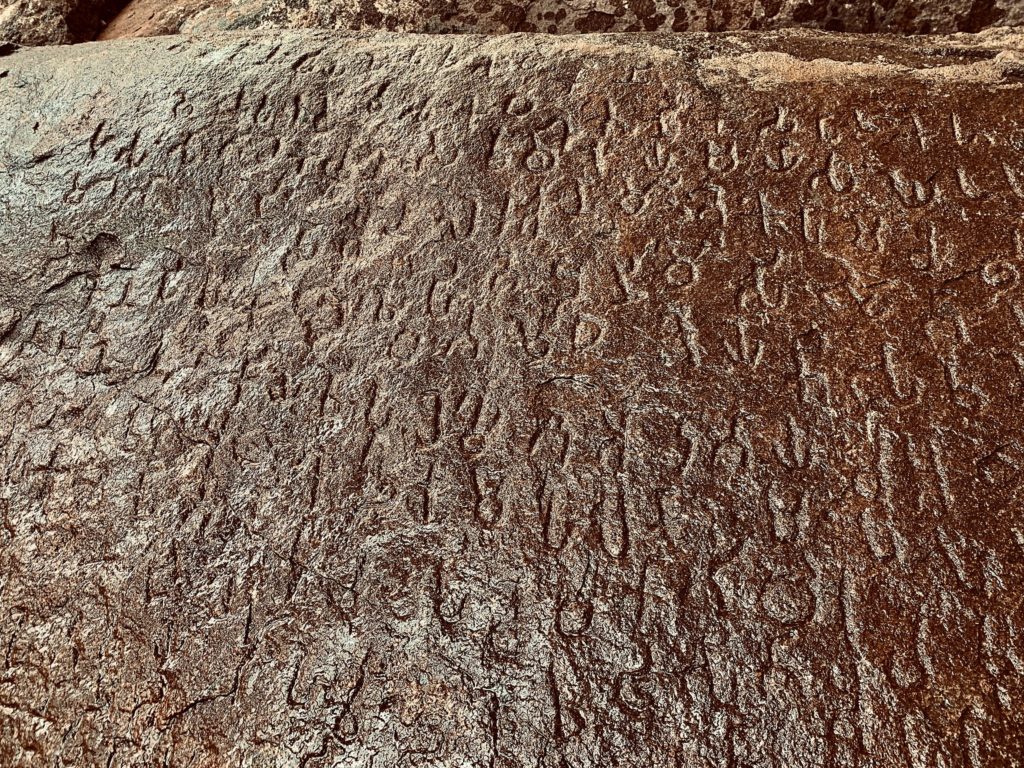
Ms Sarah Welch, CC0, via Wikimedia Commons
Ashoka’s major rock edict – the earliest inscription from Ancient India.

One of the early inscriptions from Ancient India, Ashoka’s 13th major rock edict from Kandahar reads

Except among the Greeks, there is no land where the religious orders of Brahmanas and Sramanas are not to be found, and there is no land anywhere where men do not support one sect or another.

Here Brahmanas are mentioned but not as a Varna per se but as analogous to various Sramanas (priests / philosophers). Some academics have come to regard the Sramana traditions as somewhat antagonistic to the orthodox Brahmanical traditions. However, the earliest written reference to these traditions, Ashoka’s Rock Edicts mention them always together. Patanjali and others too mostly mention them together and never as quite as antagonistic as later Sramana canon or modern scholarship would have us believe.

However, it is undeniable that one cannot be understood without the challenges presented by the other. Ahimsa and Vegetarianism are generally acknowledged (and contested) to be Sramana influences on Classical Hinduism. A lot of digital and literal ink has been spilled to answer the question of how these two currents have interacted and shaped each other – mostly through the lens of Ahimsa, Dha(r/m)ma, Moksha and only rarely Karma.

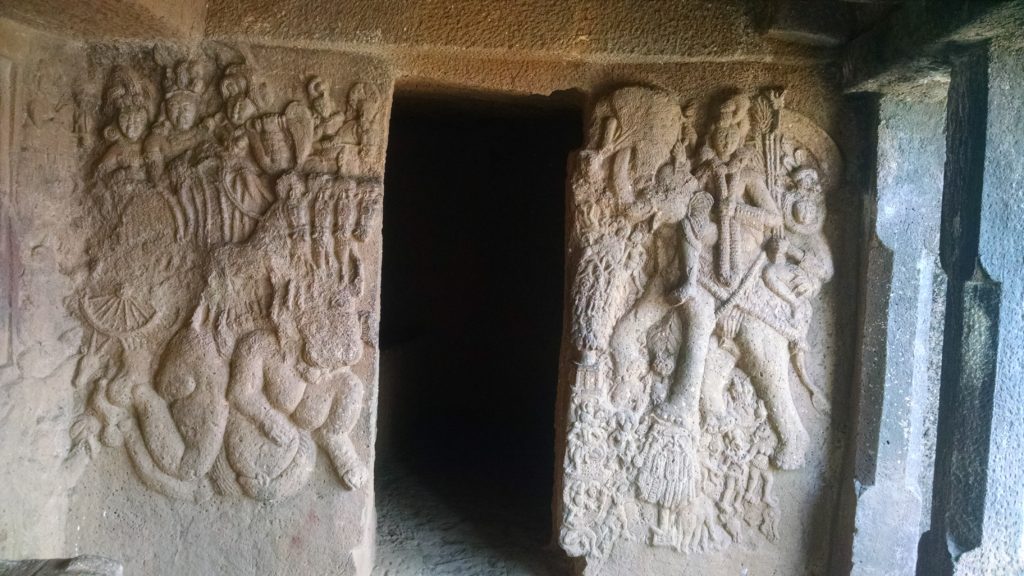
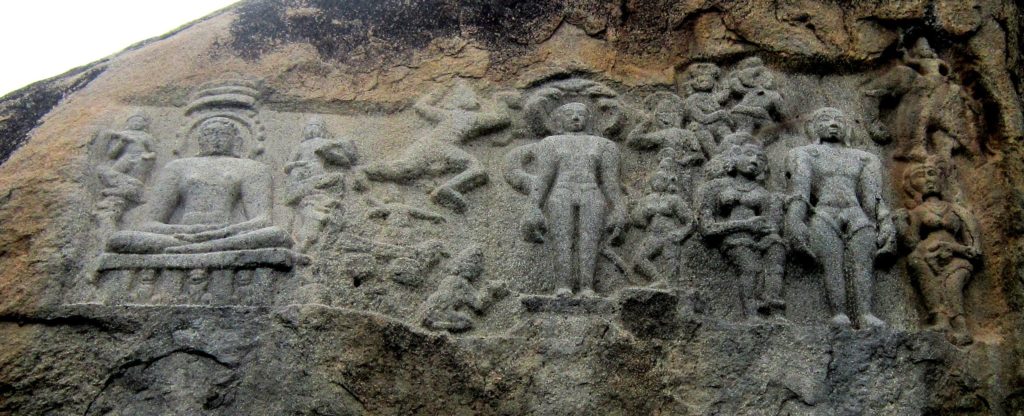
Vedic deities Indra and Surya at the entrance of Buddhist cave in Bhaja (200 BCE – 100 CE)

Johannes Bronkhorst’s Greater Magadha thesis offers a tenuous but interesting take on these interactions. The basic premise of the thesis is that the region of Greater Magadha was home to the Proto-Sramana traditions while the Kuru-Panchala region to the Vedic Brahmanas and that many ideas central to classical Hinduism like Karma, Rebirth, and Ayurveda came into it from the Sramana traditions of the Greater Magadha via the esoteric Upanishads (especially the ones which were composed in the horizon of Greater Magadha). The whole thesis rests on the revised chronology which only makes sense if the thesis is true – so I doubt the book is going to convince anyone. But it has catalyzed a rudimentary and dormant theory that came to my mind years ago while reading Ambedkar’s writings.

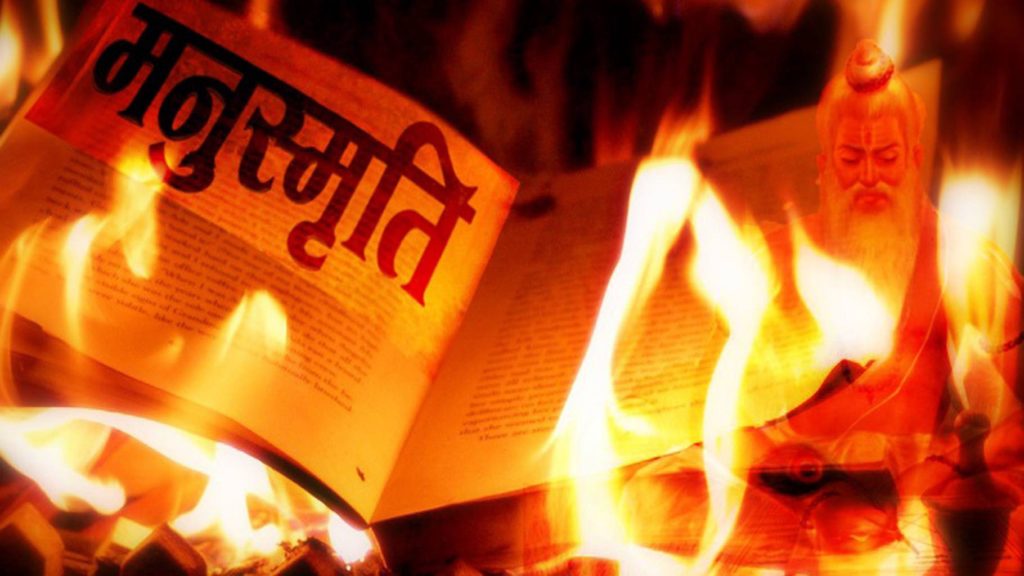
The composition of the Manava Dharma Shastra (100 BCE to 200 AD) is generally considered to be an indication (or instrument) of Varna ossification. The Varna system in some form ought to have existed (especially in the Gangetic heartland) since the late Vedic period (Purusha Sukta), yet both textual and genetic evidence points to this period as being one of great mixing. Hence it is fair to assume that whatever rudimentary Varna system existed, it was not very rigidly followed in these times. Also its important to note that traditional Varna system may have never been a reality south of the Vindhyas.

It is difficult to pin the Varna ossification to any particular political period. The only pan India ancient empire – the Mauryas are unlikely to have imposed any Varna hierarchy on their subjects as the pedagogic Ashoka doesn’t once mention Varna in his Rock Edicts. The Shungas are seen as the Brahmanical pushback against excesses of the Mauryan state but their power was both too limited in time and too restricted in region to have made any major impact. The same is true for most other political powers in the country for the next 500 years.

Brahmins had begun moving out of the Gangetic heartland as early as the late Vedic period itself. So why did the Varna system, suddenly begin to ossify  centuries later? Surely some metaphysical, philosophical, and/or political explanation is required to make sense of this phenomenon. Also, Jati endogamy which is the true hallmark of the Indian Caste system cannot be explained by the Brahmanical Varna system – even the rigid one prescribed in the Manusmriti. The answers may lie in a core philosophy of the Indic faith systems.

So what is the common characteristic that defines Indian religious thought? The answer is easy – the concept of Karma, Rebirth and Dharma. Even if we reject the thesis of Greater Magadha, we have to accept that the concepts of Rebirth and Karma are explored in far more detail in the Sramana schools – namely Buddhists, Jainas, and Ajivikas. The whole philosophical aim of the Sramana schools is to avoid Bad Karma to primarily get Good Karma and finally Moksha. This is in clear contrast with mainstream Vedic thought. Though the early Upanishads (Chandogya and Brihadaranyaka) touch the Karma doctrine it’s in no way as critically dissected as by the Sramanas. The lengths to which the Jainas and Ajivikas go to avoid all Karma; the detailed linking of the intention of the “Actor” to the Karma done by Buddha illustrate that the Sramanas, in general, were way more focused on Karma than their Brahmana counterparts. More importantly, the concept of Karmic retribution in Rebirth is much more detailed in early Sramana traditions than the Upanishads (Yajnavalkya doesn’t link Karma directly to Rebirth but discusses both separately). So it remains fair to assume that even if doctrines of Rebirth and Karma didn’t come into Classical Hinduism as an import from Sramana traditions, it can surely be thought that the Sramana innovations in the Karma and Rebirth doctrines challenged the more “this-worldly outlook” of the Vedic Brahmanas.

But how does this matter to the Jati Varna matrix? The initial conception of Varna sees it as a natural order of things (not unlike stratification seen in most ancient societies). Moreover, this conception is in no way rejected by the Sramana traditions even Buddhism – thought Buddha did not give Varna the emphasis it received from the Vedic Brahmanas.  Even today caste is practiced in the Jainas. So how did the conception of Karmic retribution affect this system? The answer seems obvious enough. It meant that the position of one in the Varna hierarchy could be justified as the fruit of Karma of previous births and not only as a Natural order. In other words, the ritual status was awarded to certain births for their good Karma and vice-versa. In many ways, Karmic retribution is a fundamental shift from the “this-worldly” ways of the composers of Rigveda.

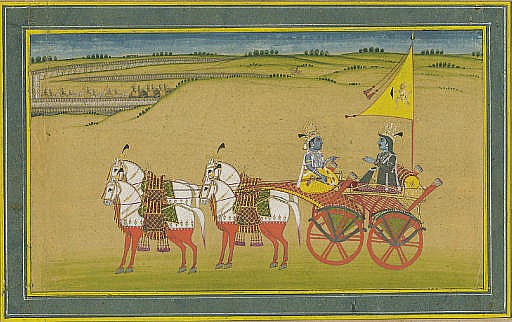
This change is captured in the Bhagavat Gita, arguably the most important book of the Hindu canon. While there continue to be many interpretations of the doctrine of Karma espoused in the Gita, the one reading tells us to fulfill the Dharma (of your Varna/ Position/ Situation) with the implication that it would result in Good Karma and better Rebirths – the ultimate aim of Moksha notwithstanding. That indeed seems to be one of the simplistic messages of the Gita which would have begun spreading in the society with the final versions of Mahabharata. The prescriptive Manusmriti is one thing, but the bonafide revelation of Gita is another (though it is not my point that Karmic retribution is the core message of Gita but it is hard to argue against it being a vehicle of the spread of these memes). This doesn’t mean that Varna became birth-based at this moment in history – it is fair to assume it always was at least partially birth-based though more flexible. But we can state that at this stage, one’s Birth became Karma-based and Varna also became inextricably linked to Karma. 

This could have resulted in two primary effects:

  • It would mitigate the sense of injustice perceived by sections of the society who had it tough. The injustice of birth was not injustice but the karmic justice of previous births.
  • It associated “ritual Varna hierarchy and division of labor” with moral dimension (Karma of previous birth). Potentially this moral dimension would buttress the existing Varna hierarchy.

It’s easy to imagine how this would in turn result in decreasing porousness between Varnas. Incidentally, this is attested through the first/second-century inscription near Nasik by Brahmana Satavahana Queen Gotami, which praises how her son prevented the mixing of the Varnas. This is one of the most solidly dated references against the mixing of Varnas (as it is an inscription) issued by a political authority (not just religious abstractions).

However in a pre-modern subcontinent without a strong centralized state, these ideas would have spread very slowly through the network of Brahmins and various (particularly) Vaishnava sects through the vehicle of Gita. The Hindu Golden age of the Imperial Vaishnavite Guptas – who ruled the second-largest and arguably the richest empire of ancient India, in the fourth/fifth century AD nicely correlates with these timelines. Thus we could say that by the time of the Huna invasions of the 5th and 6th century the Varna ossification was prevalent, but even that doesn’t explain the complete story. Still, we have no philosophical or scriptural basis for Jati endogamy.

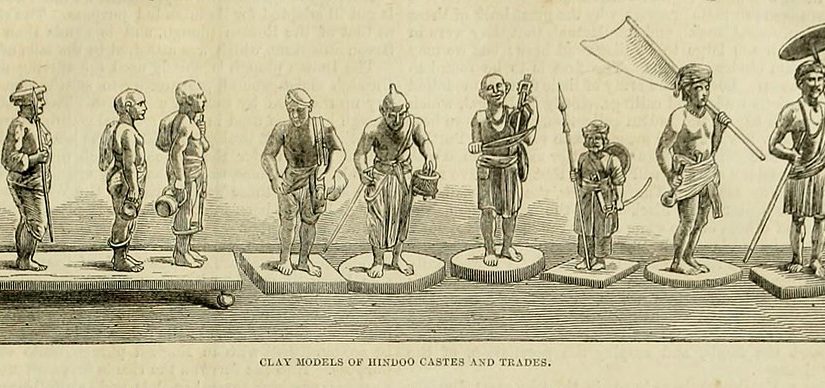
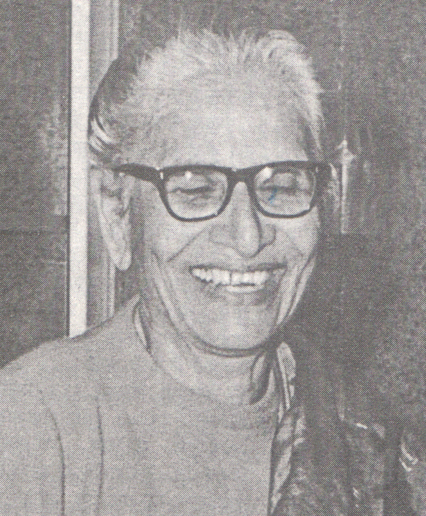
Irawati Karve – a pioneering Indian Anthropologist / Indologist

Anthropologist Irawati Karve in her book “Hindu society” was one of the earliest to claim that the Jati system was a pre-Aryan reality upon which the abstraction of the Aryan Varna system was imposed. Academically her work has been contested and not accepted in mainstream Indology, but her case is very compelling, given that it is based on her immense fieldwork in “Non-Aryan” tribes who have maintain very strict endogamy. But how does her thesis map onto what we know from genetics? Endogamy in India roughly seems to have ossified between 0 AD and 500 AD but who is to say that less rigid endogamy (not detectable) was not the norm earlier? Is it possible that the self-conception of Jatis is indeed is an ancient Pre-Aryan reality that was less rigid during the Vedic times? Clearly, there are no easy answers as all we can do is speculate and wait for Ancient DNA from India to show if there existed any pre-Aryan structure in the populations of the Indus valley.

Many tribal (hunter-gatherer) societies have endogamy baked into their cultures. But generally, as these tribal societies get integrated into the agricultural societies, this endogamy tends to break down – as evident for recent genetic findings (particularly Europe). But what if the tribal societies which integrated into the emerging Urban civilizations (first the Indus and then the Ganga) , never fully gave up their tribal/clan identities? The hundreds of excavated IVC villages point to sophisticated trade/occupational specialization. If both the sexes work in their ancestral trades per se, it would naturally result in tribal endogamy as it makes occupational sense. But that would not necessarily lead to rigid endogamy to the levels we see in the subcontinent- probably because this doesn’t exist elsewhere in the world. Though the identities of groups by kinship (precursor to Jati) may have existed even before the Varna system began to take form (let alone become rigid).

But why does this Jati endogamy become sharper with the ossification of the Varna system? Some take the explanation as Jatis arising out of the mixing of Varnas seriously, but that thesis (ludicrous imo) can be jettisoned without a second thought as Jatis exists even in those who are outside the Varna hierarchies. A potential answer may again lie in the doctrine of Karmic retribution.

Unlike the original simplistic Varna hierarchy – the concept of Karmic retribution enables hierarchies within hierarchies. Every Jati can be ranked within the Varna hierarchy based on the perceived moral inheritance (Karma) of their profession. Additionally, better births and even salvation are promised to the ones following their Jati-Varna Dharma. Thus Jatis would have both religious as well as occupational/cultural reasons for enforcing stricter endogamy which is far more believable than assuming these norms were somehow imposed across the subcontinent in pre-modern times by machinations of Dvija Varnas.

None of the above points are sufficient but all are necessary to explain the great vivisection of Indian society. Chronologically first the kinship-based (not gotra) groups were integrated into the expanding Aryavarta both culturally and genetically while the late Vedic abstractions of Varna and ritual purity began to take root in the orthodox Vedic traditions. When the rudimentary conceptions (Vedic or non-Vedic) of Karma and Rebirth were taken up by the Sramanas, taking them to a complex, philosophical, and rigorous extreme, they began to affect the Vedic philosophies.

In essence, the religious innovations of Karma, Rebirth and Dharma when coupled with pre-existing concepts of Varna, ritual purity, and tribal occupational endogamy conjure up a perfect storm that continues to flow through the blood of around 1/4th of humanity, in form of thousands of distinct streams. 


Post Script: 

  • What is not discussed above is the impact on the subcontinent of the violent Huna invasions which along with internal strife resulted in the collapse of the Gupta empire. The rapid de-urbanization which is speculated to have occurred in the fifth and sixth centuries would have also played a crucial role in this ossification. The second millennium with the Turkic invasions would have also played some role in the maintenance of this now-steady state.
  • I continue to have a lot of doubts about the above speculations, but when I read books on Indology and Indian prehistory, I find even more tenuous speculations (made by professional academics) than the ones I have proceeded to make in this essay. At least these speculations seem to align with the history alluded by the genetic data of caste (Or I have made them align).
  • I had thought along these lines even before reading about the interactions of Brahmanas and Sramanas but while reading the Greater Magadha thesis and following a YouTube seminar I thought the thrust of my current argument was staring me in the eye. I expected someone to draw the conclusions I had drawn, but was extremely surprised than no one has gone there.
  • The references for this essay are numerous and diverse to be noted here. Anyone interested please reach out to me.


Browncast: Anti Hindu violence in Bangladesh with Alex

Anti Hindu violence in Bangladesh

Another BP Podcast is up. You can listen on Libsyn, Apple, Spotify, and Stitcher (and a variety of other platforms). Probably the easiest way to keep up the podcast since we don’t have a regular schedule is to subscribe to one of the links above!

In this episode of Browncast, Mukunda and I host Alex Zuvran – the Ex Muslim Buddhist from Bangladesh. We touched upon the recent Anti-Hindu violence in Bangladesh, Islamism, the Awami League and Sheikh Hasina, Cricket and a lot more. It was a fascinating conversation and some of the things Alex talked about made me feel slightly more hopeful about the situation.

Brown Pundits