Be glad you are not a gal (in Senegal)

It is true enough that being a girl in India is a fate-bed strewn with thorns. Still while illegal torture by random monsters is hard, nothing is as ghastly as the state taking on the role of Daddy monster (and dont you know that the dictums are for the good of women…).


A 10-year-old girl who is pregnant with twins after she was raped by a
neighbour has been forced to continue with her pregnancy after human rights campaigners lost their fight to secure a legal route to abortion.


The
plight of the girl, who is five months pregnant and lives in Ziguinchor
in the south, highlights the heavy cost women and children are paying
for a Napoleonic law on abortion that is still in force in the former French colony.

“She
is going to have to go through with the pregnancy,” said Fatou Kiné
Camara, president of the Senegalese women lawyers’ association. “The
best we can do is keep up pressure on the authorities to ensure the girl
gets regular scans and free medical care.

“Senegal’s abortion law is one of the harshest and deadliest in Africa.
A doctor or pharmacist found guilty of having a role in a termination
faces being struck off. A woman found guilty of abortion can be jailed
for up to 10 years.”

“For
a termination to be legal in Senegal, three doctors have to certify
that the woman will die unless she aborts immediately. Poor people in
Senegal are lucky if they see one doctor in their lifetime, let alone
three,” Camara said.

“A single medical certificate costs
10,000 CFA francs ($20), which is prohibitive. We had a previous case of
a raped nine-year-old who had to go through with her pregnancy. We paid
for her caesarean but she died a few months after the baby was born,
presumably because the physical trauma of childbirth was too great.”

The women lawyers’ association is lobbying MPs to align Senegal’s abortion legislation with the African charter on women’s rights, which the country ratified 10 years ago. Its provisions – legal medical abortion in cases of rape and incest, or where a woman’s physical or mental health is threatened – have never been added to the statute book.

“Most of the calls are from rural people and
concern property rights and access to land,” said Aminata Samb, 25, a
law graduate who works with the association. “This morning a woman rang
to say her husband had married another woman and was no longer taking
care of her and her children. I inform the callers of their legal rights
and tell them where to turn, should they want to exercise them. But
many women just want to tell their story again and again. It makes them
feel better.”

regards

India: food, food everywhere, not a bite to eat

Amartya Sen can now get a second Nobel prize by pointing out that while democracies on the whole manage to avoid famines, they can still manage to condemn people to malnutrition, while the equivalent wheat production of Australia manages to rot away or worse.
….
Most of you may know that India produces
more food than we can consume. In fact, India has been self sufficient
in food for at least the last three decades, having “achieved self- sufficiency in food production in the late 1970s (1)”. And yet hunger in India remains at alarming levels. More children remain malnourished in India than any part of the world (almost 40% of the world’s total according to some estimates).


What most of you may not know is that India wastes a quantity of wheat equivalent to the entire production of Australia every year, of which 21 million tonnes perishes every year due to a lack of inadequate storage and distribution (2). Worse, up to 40 percent of the country’s food harvest rots before it gets to the market, thanks to inadequate cold storage facilities and transport bottlenecks.


A report from 2008 highlighted the scale of mismanagement and callous neglect of food storage:  “Over
10 lakh tonnes of foodgrains worth several hundred crores of rupees,
which could have fed over one crore hungry people for a year, were
damaged in..(FCI) godowns during the last one decade
 (between 1997 – 2007).”

Shockingly, “Rs 2.59 crore was spent just to dispose off the rotten foodgrains”.  


Responding to an RTI query last year, FCI admitted that over 17,500 tonnes of foodgrain lying in its godowns got destroyed in the last three years (alone)”. This abysmal state of affairs has seen foodgrains being stored in classrooms, grains being burnt and stocks being infested with worms.
 

A pernicious side-effect of rotten grains in godowns is the sight
of good quality grains being left in the open since valuable space has
been taken up by grains unfit for consumption.


Ironically, even as food production has soared in the last few years, storage capacity has actually decreased. This report by Kamayani Mahabal mentions
how Government owned storage capacity actually fell to 32.1 million
tonnes in 2009 from 36.7 million tonnes in 2004. This was UPA-I.

UPA-II was not much of an improvement. While “..total foodgrains
stock in the Central Pool recorded an increase of 45.8 million tonnes
between 2006-07 and 2011-12; FCI increased its storage space through
hiring or owned space only to the extent of 8.4 million tonnes (18
percent)…Its owned storage capacity increased by mere 0.4 million
tonnes during the period
” (3).

What’s worse, even the existing capacity – woefully inadequate as it was – was not being utilised fully. “The
auditor (CAG) observed that utilization of existing storage capacity in
various states and union territories was less than 75% in the majority
of the months between 2006-07 and 2011-12.” 

In case of fruits and vegetables – items that perish easily – lack of proper storage makes the situation worse. An ASSOCHAM Study from 2013 estimated that “at least 30% of fruits and vegetables were rendered unfit for consumption due
to spoilage
after harvesting, negligent attitudes, absence of food
processing units and unavailability of modern cold storages”. The study
also noted that barely 22% of produced fruits and vegetables reach the
wholesale market in India.


Dr JP Narayan of LokSatta has noted that “Post-harvest losses of perishable commodities exceeds Rs 100,000 crores or Rs one trillion per annum”.

regards

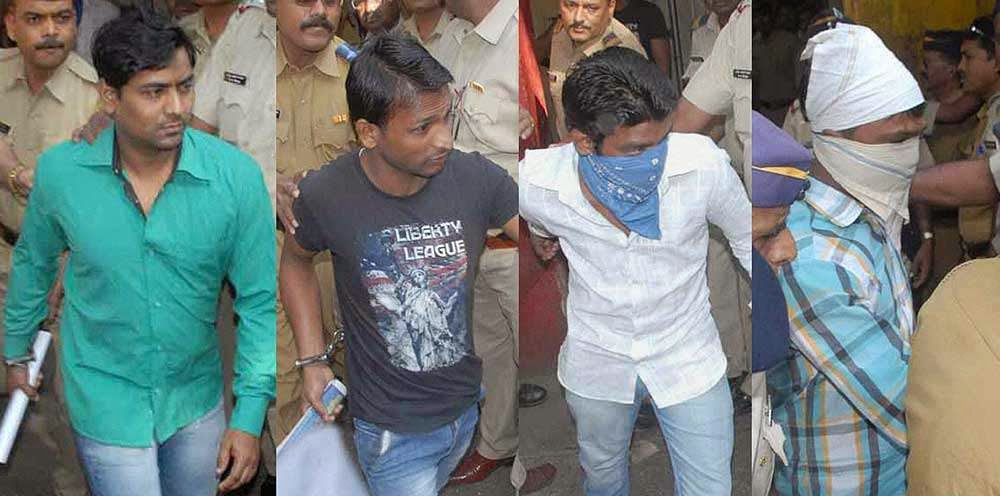
Shakti Mills gangrape – death penalty (3)

The three repeat offenders get the death penalty.

We violently disagree with the death penalty (no ifs and buts), and we are happy that even though it is the law of the land it will probably never be acted upon given the recent Supreme Court rulings and it is much better to prescribe some diabolical punishment scheme like solitary confinement.

The three repeat offenders in the Shakti Mills gang-rape cases have been awarded death sentence by sessions court.

Awarding death penalty to the three, the court said, “Mumbai gang-rape
accused have least respect for law. They don’t have potential for
reformation as per facts of case.”

“The suffering that gang-rape survivor and her family has undergone is unparalleled,” the court said.

“Mumbai gang-rape accused were emboldened since law enforcing agencies
hadn’t caught them. If this is not the case where death sentence
prescribed by law is not valid, which is?” the judge asked.

“Exemplary and rarest of rare punishment is required in the case,” the
judge said, adding, crime violates all rights of survivor.

Prosecutor Ujjwal Nikam had demanded the maximum punishment for the three repeat offenders.

Kasim Bengali, Vijay Jadhav and Mohammed Salim Ansari are the common
accused who are also convicted in the telephone operator gang-rape case.
The 18-year-old telephone operator was gang raped on the premises of
Shakti Mills in July last year a month before the photojournalist was
brutalised on August 22.

The 22-year-old photo journalist of a
magazine was gang raped by Vijay Jadhav, Kasim Bengali, Salim Ansari,
Siraj Rehman and a minor boy when she had gone to the Shakti Mills
compound in the Central Mumbai with a male colleague on an assignment.

…..

regards

Justice delayed (denied) in Suryanelli

A totally barbaric case where a glimmer of light can (may) be seen. A sixteen year old tortured for 40 days with all the accused except the prime mover acquitted of all charges. Then came the log-term mental toruture where she was accused of being a “deviant girl.”

The only difference with the re-appeal is the ghost of Nirbhaya, which forced the Supreme court to scrutinize her case (after it had been lying idle for an unbelievable period of 8 years [ref wiki]).  

This poor girl can thank that poor girl for a bit of justice that may be flowing after such a long dry season.


24
accused in the Suryanelli rape case have been held guilty of gang rape
by Kerala high court on Friday after a rehearing in the case. All the 24 were acquitted 9 years ago by another division bench of the court.

The mass acquittal was challenged in the Supreme Court, which ordered re-hearing in the case last year.

It was on January 31 last year that the apex court had set aside the
high court’s mass acquittal in the rape case and had asked the high
court to take a fresh look at the case.

A division bench comprising Justice KT Sankaran and Justice ML Joseph
Francis pronounced its judgment today after completing fresh hearing.

The case relates to the abduction of a 16-year-old girl (16 years, 3
months, and 23 days as on January 16, 1996) from her school hostel at
Suryanelli in Idukki district on January 16, 1996 by a bus conductor,
first accused Raju, in the guise of love.

She was then handed
over by the conductor to second accused Usha and Dharmarajan and was
transported from place to place in Kerala and Tamil Nadu for 40 days.
During the 40-day period, she was presented to 41 men and was raped 67
times, until she was released on the morning of February 26, 1996. She
was transported for over 3,000 kilometres by the gang during the rapes.

Charges against the accused included rape, kidnapping, criminal
conspiracy, wrongfully concealing abducted person, selling minor girl,
procuration of minor girl, and gang rape.

On September 2, 2000,
a sessions court at Kottayam had convicted 35 of the accused to undergo
prison sentences ranging from 4 to 13 years and had acquitted four
persons.

A total of 40 persons had faced trial in the case,
which included 9 businessmen, 2 advocates, 2 railway employees, 3
vehicle brokers, 1 mechanic, 1 policeman, 5 drivers, 1 professor, 1
clerk, 5 coolies, 6 farmers, 1 bus conductor, 1 nurse, and sex worker
Usha who pimped the girl.

As the main accused Dharmarajan was
absconding, he faced trial separately later on. He was convicted and
sentenced to life imprisonment in 2001. Considering appeals
filed by convicts, a division bench of the high court had, on January
20, 2005, acquitted all the accused except Dharmarajan. He was convicted
only for procuration of minor girl, and not for rape. His sentence was
modified to 4 years of rigorous imprisonment from life imprisonment by
the high court.

Considering state government’s appeal, a
special bench of the apex court dealing with crimes against women had
set aside the high court’s judgment and had ordered a fresh hearing on
the appeals by the high court on January 31 last year.

State
government had assigned director general of prosecution T Asaf Ali to
present the prosecution’s case. A total of 27 appeals were filed by the
convicts, including prime accused Dharmarajan, through advocate George
Kutty Mathew. Hearing of the appeals had begun on March 13 last year.

……

regards

The prince is banished from the kingdom

We are actually held speechless (only for a moment to be sure). Is this actually India that we know so well of where a well-off person never bothers to stand in a queue. And these majestic words simply take your breath away: “If Gandhi has to apply, he should apply himself in person or send
application signed by him with all the essential documents”

Life is super strange these days but it is clear that the bureaucracy (aka steel frame) that actually rule India is showing its true colors. It will not bow to any man, common or royal. Whether it is a positive sign or not, the answer is blowing in the wind.

The local administration has cancelled application of Congress Vice
President and local MP Rahul Gandhi for issuance of domicile
certificate.

“The application should have been made by Gandhi himself with his
signature, which was not there. The application was made by one Rajendra
Singh with is against law”, District Magistrate, Jagatraj Tripathi
today told PTI when asked about cancellation of the application.

The papers needed with the application were also not there, he added.

“If Gandhi has to apply, he should apply himself in person or send
application signed by him with all the essential documents”, the DM
said.

Bank account of all the candidates are to be opened on dircetions of EC
and for this domicile certificate is needed, the officer clarified.

Congress Amethi spokesman Rajendra Singh had applied for the certificate
showing Munshiganj Guest house as temporary address of Gandhi and the
administration had cancelled the application terming it against rules
and regulations.

…..
regards

Saffron surge in Battleground States

Still no clarity on the magic number- 220 which will be required to convince new partners (my state is my kingdom) to join up. For now the likely list will include TDP (Andhra), AIADMK (Tamil Nadu) and BJD (Odisha). And that’s it. BJP is radio-active for the two Mullahs (Mulayam and Mamata) who have strong muslim backing. Mayawati may be persuaded to join but she will demand dismissal of Samajwadi Party from Lucknow (Uttar Pradesh) in return.

It appears that Mission 115 looks to be a goal too far for the Congress (the south, in particular, Kerala, Karnataka and Telengana will be crucial). Also the AAP may not be making a large enough impact in this elections but hopefully will take over from Congress as a secular alternative. For that the AAP has to find a way to steal (and retain) Dalits and Muslim votes, which have always  been donated free to Congress.

The
Congress and UPA are facing decimation in a wide swathe of states from
Delhi and Rajasthan in the north to Bihar and Jharkhand in the east,
Madhya Pradesh and Chhattisgarh in the centre, Maharashtra in the west
and Andhra Pradesh, Tamil Nadu and Karnataka in the south. In sharp
contrast, the BJP and its allies are riding high in almost all these
states, with Tamil Nadu being an exceptional case of neither major
alliance doing well, according to an opinion poll done for a TV channel.

The poll done by Hansa Research for NDTV and released on Thursday
estimated that the BJP would win 21 of 25 seats in Rajasthan, 25 of 29
seats in MP, eight of 11 seats in Chhattisgarh, 10 of 14 seats in
Jharkhand, 16 of 28 seats in Karnataka and four of seven in Delhi. Thus,
in these six states combined, the party would bag 84 out of 114 seats
on its own. The BJP with its allies would win 21 of Bihar’s 40 seats, 36
of Maharashtra’s 48, 16 of AP’s 42 and three of Tamil Nadu’s 39,
leading to a total of 76 out of 169 seats in these four states.

As against this, the poll predicts that the Congress will win just 29
seats in AP, Tamil Nadu, Karnataka, Madhya Pradesh, Rajasthan,
Chhattisgarh and Delhi put together, while the party and its allies will
win 25 seats in Bihar, Jharkhand and Maharashtra. In short, the overall
tally in all of these states put together would be 160 for the NDA and a
mere 54 for the UPA.
 In
Tamil Nadu, the poll predicts that the AIADMK will win 25 seats, the DMK
alliance 11 seats and the BJP alliance three seats, leaving the
Congress facing a blank slate. In Andhra Pradesh, there would be two
distinctly different battles – mainly between the TDP-BJP and the YSR
Congress in Seemandhra and between the Congress and TRS in Telengana.
Put together, the TDP alliance is estimated to win 16 seats, the YSR
Congress 10, the Congress eight and TRS seven.

In Maharashtra,
the NDA will win 36 seats and the UPA just 10, the poll predicted. In
Bihar, the NDA gets 21, the UPA 11 and the ruling JD(U) a mere six. In
Delhi, AAP will win two seats and Congress one, the remaining four going
to BJP, the poll predicted.
  
…..
regards

Dalit boy dumps Obama, picks up AK-272

He was a dead poor, rural boy whose mother was a rag-picker. He defied fate (and logic) by marching into the Indian Institute of Technology and then on to USA and had been an active supporter of the Obama campaign. However, now his homeland has called and he has returned to assist Arvind Kejriwal to achieve their (common) dream of a corruption free (less?) India. A true patriot, India needs many more of such bright, young stars who may one day grow into an(other) Ambedkar.

Much better than a few other disadvantaged people who grew too big too fast (and became too greedy and had to pay for their sins).

It’s
not often that the son of a dalit agricultural labourer from
Maharashtra’s farm suicide belt, whose mother once worked as a rag-picker
on the streets of Mumbai, makes it as an entrepreneur in America and
provides healthcare consultancy to the governments of New York,
Washington and New Jersey.


What are the odds that such a man
will throw up a life in New Jersey after a decade in the US to return to
his dusty village in rural Marathwada? That’s a question Aam Aadmi
Party’s Jalna candidate, Deelip Mhaske, is best suited to answer.

Mhaske (35) is a Dalit candidate contesting the elections from an open
seat in a Maratha stronghold, a rarity of sorts for Indian politics.
While Mhaske is no stranger to elections, having actively supported the
Obama campaign, the murky world of Maharashtra politics came as a bit of
a shock to him. His political opponents have used both his caste and
his US stint against him, calling him an outsider.

Some of his
campaigns have been disrupted by rowdy elements shouting casteist slurs
at him. He says other political parties have openly distributed alcohol
in the district to buy votes.

Mhaske, though, is no stranger to
challenges. When he made it to IIT Bombay for a degree in planning and
development, he doubled up as a construction labourer, while his mother
worked as a ragpicker to make ends meet. “I once landed up at a building
where my classmate lived in order to carry out some construction work.
That’s when she discovered for the first time that I worked as a
construction labourer,” he says.

Post IIT, a research paper he
wrote was selected for a conference at the University of Pennsylvania
where he got a scholarship to do his PhD. Mhaske, who went on to set up
his own outpatient clinic for mental health patients, also had a degree
in health sciences from Harvard Business School. He has been a
healthcare consultant with the governments of New York, New Jersey and
Washington.

His early success may have something to do with the
Central government scholarship he got at the age of 10, which gave him
entry to Navodaya Vidyalaya, one amongst a chain of schools that
provides quality education across India to talented children in rural
areas.

Mhaske has been intricately linked with India’s
anti-corruption movements, both while at IIT as well as during his
career in the US. “I have been an active member of Jayprakash Narayan’s
Lok Satta party in Hyderabad, and was involved in setting up a chapter
of the party in Maharashtra,” says Mhaske, adding that he had been a
part of Anna Hazare’s movement against corruption in 2003, as a student
at IIT, well-before Hazare shot to fame on the national arena.

While in the US, Mhaske joined the Aam Aadmi Party the day it was
launched and has worked on several campaigns, both online and offline,
to garner support for the party. “I’ve always felt the need to enter
politics in order to better the system. This is why I have supported
good parties such as AAP and Lok Satta,” says Mhaske.


regards

Babri demolition was pre-planned

If this Cobra sting report is true then there should be charges of high crimes against the nation brought against the top conspirators.

What we found to be the most sickening was this viewpoint: young participants were deliberately used as
cannon fodder by provoking a police firing on kar sevaks in 1990 because
of the belief of some leaders that the movement would not gather steam
unless ‘some Hindus die’.


An
elaborate sting operation, conducted on 23 key people of the Ram
Janambhoomi movement, claims that the demolition of the Babri Masjid on
December 6, 1992, was elaborately planned by the various wings of the
Sangh parivar and executed with precision by trained volunteers. It
wasn’t, as it is claimed, a case of mob frenzy going out of control,
leading to the fall of the disputed 16th century structure.

The
investigation, carried out by Cobrapost, claims that by piecing
together the versions given by the top Ram Janambhhomi players, among
them Sakshi Maharaj, Acharya Dharmendra, Uma Bharti, Mahant Vedanti and
Vinay Katiyar, it is apparent that top BJP leaders like L K Advani and
the then UP chief minister Kalyan Singh, as well the former Congress PM,
P V Narasimha Rao,
were aware of the planned demolition of Babri
Masjid.

Posing as a
would-be-author researching his book on the Ayodhya movement, Cobrapost
associate editor K Ashish travelled to Ayodhya, Faizabad, Tanda,
Lucknow, Gorakhpur, Mathura, Moradabad in UP, Jaipur, Aurangabad, Mumbai
and Gwalior interviewing 23 of those who participated in the operation.
He clandestinely recorded conversations with them.

If what
they claim is true, the Ram Janambhoomi leaders and activists toiled
secretly for months on a plan codenamed ‘Operation Janmabhoomi’ and
executed it with military precision. Volunteers were trained, logistics
painstakingly put in place and the assault on the disputed shrine
launched using large surging crowds with volunteers skilled in
demolishing structures embedded in it.

Not only do those
interviewed spell out details of the planning, they also allegedly
reveal how enthusiastic young participants were deliberately used as
cannon fodder by provoking a police firing on kar sevaks in 1990 because
of the belief of some leaders that the movement would not gather steam
unless ‘some Hindus die’.

Many of those interviewed by the
make-believe author are accused in CBI cases pertaining to the
demolition. Yet, they seemed to have no qualms in “confessing” (or
boasting) about their role in the episode that left a deep communal
schism in India.

….regards

Heavenly abode prefers a secular icon

The rumors are louder than ever that Hindus in Kerala have become a minority (majority: Muslims + Christians). It is also true that Rahul Gandhi’s grand-father was Feroze Jahangir Khan (Parsi from Mumbai) and his mother is a Roman Catholic (from Italy). What has one thing to do with the other?

Kerala is the only one out of 4 southern states where peeps prefer Gandhi over Modi as PM.  Indeed on present mood, Congress may sweep 17 out of the 20 seats. That is simply amazing and probably also underlines the sidelining of the Communists in this election. In addition, Congress is likely to win as many as 18 seats in Karnataka (out of 28)- which can be attributed to the lingering memories of the horrendously corrupt BJP state govt under Bookanakere Siddalingappa Yeddyruppa (he is back in the BJP after having been expelled…as short term greed overcomes long-term need). In Tamil Nadu, however the Grand Old Party will get no satisfaction as the Dravidas are completely, head-over-heels in love with their foreigner (and) Brahmin lady leader (her party is likely to win the majority of seats- 21 out of 39). Finally Congress should expect no more than 8 seats in Andhra Pradesh (including Telengana). Thus, a max total of 43 seats, approximately 40% of the Mission 115 seats are due to come from the south. In more than one way it is significant that it is the (southern) end of the nation is where the GOP has vowed to take its last (secular) stand and the people are still loyal followers (and voters). Good for them.

regards

The nine sisters of the North-East

We, the denizens of North-Eastern India know that it is considered as a backward area that most  Indians will never visit over their lifetimes. Man Mohan Singh is supposedly the Rajya Sabha MP from Axom but he remains a stranger to his (adopted) state.

The North-East has large cohorts of non-Hindus (majority Protestant denominations) who are not expected to align with the “Manuvadi” party (aka BJP). The Congress (with a Roman Catholic at the top) should be a natural fit (unless one digs deep and discovers historical rivalry between Protestants and Catholics).

As an aside the BJP supremo has been busy cultivating the Syrian “Brahmins” from Kerala and they seem to love him back (probably united by animosity against muslims). 

Also as expected, the Hindu communities are divided in their loyalties. Bengalis in Tripura will vote for the Communist Party (CPIM) while the Axomia (in the Brahmaputra river valley) will vote for an Axom-first party. The Bengali Hindus of Barak river valley switch their allegiance alternately between the Congress and the BJP.

If we include Sikkim and North Bengal in the N-E kitty, the Lok Sabha seats are laid out as follows: Arunachal Pradesh-2, Axom-14, Manipur-2, Meghalaya-2, Mizoram-1, Nagaland-1, Sikkim-1, Tripura-2, Bengal- 3 (north bengal seats). Total- 28.

As late as July 2013, Congress was optimistic about collecting 20 seats (not including Sikkim/North Bengal). This would be vital for the Mission 115 plan (114 was the minimum no for Congress in 1996).

Now there is a major problem, the local mansabdars have ganged up against the Delhi durbar. 

The back-story is as follows: Purno Sangma (pix above, with daughter Agatha Sangma- MP) was originally a Congress leader who was expelled in 1999 (along with Tariq Anwar and Sharad Pawar) for having the audacity to question the leadership of the Grand Madam. Sangma was also the 2012 presidential candidate chosen by the BJP (against Pranab Mukherjee). Thus the personality clash goes far back and the break-up may be permanent at this point. 

If the North-East coalition matures into a permanent pressure group (as it should, if it had any sense) then the entire region may become out of bounds for the Congress (as an independent player) just like what has happened in Tamil Nadu, Andhra Pradesh, West Bengal, Bihar, UP,…..


As of now the distinctive issues that float the North-East boat are (1) migrants from Bangladesh (all provinces), (2) China threat (Arunachal only) and (3) Armed Forces Special Powers Act (Manipur only). Interestingly enough BJP has promised to review AFSPA, perhaps by proposing to dial down AFSPA in the north-east while maintaining status quo in Kashmir. 

Finally what about the famous TINA factor that keeps the muslims permanently locked inside the Congress barracks everywhere? A lot of blood was spilled in the 2012 riots in Goalpara and neighboring regions of Axom (also known as Bodoland). Tarun Gogoi (Congress Chief Minister of Axom) was accused of favoritism as muslims suffered disproportionately. While the outside world does not give a damn, the muslims themselves are unlikely to forgive/forget.  
….
A newly-formed regional front of parties from the northeast today said
it is in consultations with BJP for support to its candidates for the
Lok Sabha polls.

Former Lok Sabha Speaker P A Sangma, whose National People’s Party (NPP)
is part of the North-East Regional Political Front, however, said that
the grouping will have no truck with the UPA.

NPP, Asom Gana Parishad, Mizo National Front and Nagaland People’s Front
are among the 10 regional parties from northeast which have formed the
NERPF against the Congress-led UPA to fight the Lok Sabha elections in
the region. Sangma’s NPP and Nagaland’s NPF are also part of the NDA.

NERPF, floated last October, will contest 21 out of 25 Lok Sabha seats in eight northeast states.

Blaming Congress for the “problems” in the northeast, Sangma said, “NPP
and NPF are very much part of the NDA and other parties of the front are
free to have alliance with any party at national level but definitely
not with Congress.”

The front also expressed its reservation over the functioning of
electronic voting machines and demanded alternative arrangement for
casting votes in the Lok Sabha elections.

“We urge Election Commission to abolish EVM system as it is not
foolproof and we do not have faith in it. We suspect it can be tampered
with,” Sangma, who will be contesting from Tura constituency in
Meghalaya, said. “If at all EVMs will be used then they should be supported with paper slips,” he said.

Raising the issue of frequent incursion of China on Arunachal border, he
said, “We want the government to ensure prevention of such incidents in
future.”

Referring to the issue of infiltration of illegal migrants from
Bangladesh, he blamed the UPA government for failing to take effective
steps against influx from across the border. He also demanded immediate
scrapping of the AFSPA


regards

Brown Pundits