The Tusker named Ganesha

Sounds too good to be true, but then elephants are funny creatures (and this is not the first time this has happened, see below).
At least it is heartening to know that the baby has survived the attack and is out of danger.

The bad news is that elephant and their habitats are under siege (from villagers locally and Chinese globally).   
Will there be any wild life left by the time this baby grows up? Ganesha will then live only in paintings and temples. That will be a profound tragedy.
….

A tusker
smashed a house to bits in a village in West Bengal’s Purulia district on
Monday night but when it heard a 10-month-old baby crying under the debris, it
turned back and carefully removed every last bit of stone, brick and mortar
from the infant’s body before heading back to the forest.

…Mother Lalita Mahato said: “We
worship Lord Ganesh (the elephant god) in our village. Still, I can’t believe
that the tusker saved my daughter after breaking down the door and smashing a
wall. We watched amazed as it gently removed the debris that had fallen on her.
It’s a miracle.”

The child’s father, Dipak Mahato, said they were having dinner around 8pm when
they suddenly heard a “cracking sound” and then a huge crash from the
bedroom. “We ran over and were shocked to see the wall in pieces and a
tusker standing over our baby. She was crying and there were huge chunks of the
wall lying all around and on the cot,” he said. “The tusker started
moving away but when our child started crying again, it returned and used its
trunk to remove the debris.”

They took the girl to Deben Mahato Sadar Hospital. She has some external
injuries from the debris falling on her but is not in danger. Hospital
superintendent Neelanjana Sen said the infant is stable but they will keep her
under observation for 48 hours.

A similar incident had been reported in Jalpaiguri’s Madarihat about six months
ago when an elephant herd carefully removed a little girl from harm’s way
before smashing several houses.
 

regards

Comrade Prashad battles the (Gir) Lion

Makes a well reasoned (non hysterical) appeal in the name of India’s tradition of secularism and helps underline the role of the Left in keeping the forces of darkness at bay. 

He is correct in noting that the choice is not between leaders, but fails to emphasize that the choice is more conceptual:  if you want growth vote for Modi, if you want harmony vote for someone else. 

That IMO is an improper choice as well because of the dubious nature of claims on both sides- Modi has no magic wand for the economy and the so-called secular parties have (in recent times) an even poorer record of preserving communal harmony than the BJP.

Prof Prashad should have done the right thing and confessed that he and other fellow travelers of the left seriously f**ked up matters by not joining hands with the Indians Against Corruption folks (now morphed into Aam Aadmi Party) and channelizing the popular anger into a broad-based movement when they had their chance 2 years ago. That would have given them exactly what they wanted: a secular, third Front with the urban middle-class on board (and prevent the false choice above from gaining ground, it can be argued that corruption harms the economy as well).

The IAC movement was boycotted by the left for supposedly having right-wing connections. More to the point the left just cant stand nationalists like Anna Hazare (who in turn has abandoned AAP and is now promoting Mamata Banerjee because he has ego issues with Arvind Kejriwal).

The failure of the left (always has been) is short-sightedness and arrogance, and now the entire house of cards (third front) has fallen apart in Tamil Nadu and everywhere else. Could not happen to a nicer bunch of people.

….
What will save India from the Modi juggernaut is that it doesn’t have
a presidential system. The people will elect 543 new members of
parliament. The winning bloc will have to secure half the seats, not
easy for the Congress (206 seats in the last parliament) or the BJP (117
seats). Since 1967, the Indian government has been formed out of
alliances that include regional parties with deep roots in the Indian
states. The old days of a single party ruling the roost are gone;
regional parties are now able to dictate terms for the coalition. It is
what moderates the extremism of the BJP – but only out of necessity.
Modi’s toxicity has turned off core allies, leaving the BJP with the
confidence of a lion but the alliances of a skunk. To complicate
matters, a new anti-corruption party – the Aam Aadmi Party
– promises to directly challenge the Congress and the BJP in their
north Indian heartlands. If they are able to do so, it will strengthen
the hand of the Third Front.

The
Third Front, under various names, has made an appearance in each
election since 1967. It brings together regional parties and the Left
Front, which is often its backbone. They are united by their antipathy
to both the Congress and the BJP, and their commitment to secularism and
social justice. No easy common programme can be produced, largely
because the parties in the Front differ hugely in their assessment of
how the country should develop. Nevertheless, one of its contributions
has been to move India in a federal direction to empower the states
(Uttar Pradesh, India’s most populous state, has a population of 200
million, larger than most countries in the world).

In a country of
India’s scale, federalism is a pathway to democracy. In a fractured
parliament the Third Front could broker a government committed to social
justice and secularism – as it did in 2004 when the Congress was pushed
to create social welfare schemes such as the National Rural Employment
Guarantee Act. When the Left broke with the Congress in 2009, the
alliance that remained – the UPA – departed from any commitment to
relief. Only when the Left is a vital part of the Third Front has this
alliance been able to push for reforms to rebuild the hopes and lives of
hundreds of millions of Indians who live below any given standard of a
poverty line. Only when the Left and its allies are stronger yet will
they be able to chart an alternative direction for India.

regards

(21st century) jobs for women

For Indian society to progress we need more and more women to be liberated from domestic slavery and provide both men and women the ability to shift from back-breaking, tedious jobs to 21st century jobs (in part by incorporating technology and upgrading work practices, see article excerpt below).


Armal Ali lives in one of the poorest neighborhoods of Lucknow, the capital of Uttar Pradesh, India.
The family of 11 occupy a breeze-block shack with no windows. Ali works
all day at a hand loom, sitting cross-legged on the ground, making
embroidered saris that are highly prized across the subcontinent. But
local residents know too well that such work wrecks eyesight and causes
chronic backache.

Ali hopes that his daughter Ousma, 9, will lead a
different life. “Nothing special,” he says, “but at least sitting at a
desk, for instance, with plenty of light around her.” He would also like
her to speak English, like “the people in suits who talk about money
all day on television”.

When you are lacking in “good jobs” women can progress only at the expense of men. Fortunately, the private sector already values women as employees and is responding strongly. Unfortunately, violence aimed at women is causing immense harm by restricting employment hours, especially the peak hours during evenings/nights when clients/teams in the west are available for interaction.


The formal/organized sector is the benchmark for middle class gender
bending.
It is here that employment is stable; compensation is adequate
and working conditions bearable. It is not as if nothing has changed
since 1947.  

Formal employment has increased, albeit marginally, and
today is around 29 million or just 5% of total employment. Whilst women
have benefited disproportionately, their share in formal employment
increased inadequately from a low 15% in 1995 to a miserable 20% today.
 

The private sector which has lower institutional and
labour market rigidities, is already responding, on a strictly “value
for money” basis to enlarge women employment. Since 1995 the formal
private sector added 2.8 million jobs, of which 39% (1.1 million) went
to women.
Their share has increased from 20% in 1995 to 24% today. 

It is in public sector formal employment that more needs to be done.
Public sector formal employment shrank by 2 million jobs since 1995 to
17.5 million today. Despite the shrinking pie of government jobs, jobs
for women increased by 0.6 million to 3.3 million or 18% of total public
sector employment:
way behind their share in the private sector.

It will hurt men directly but government must reserve 50% of entry
level positions for women across the board in the civilian cadres of
government, including within the existing quotas for scheduled caste,
scheduled tribe, other backward caste, and minorities (a few states).
Income based “brownie points” in selection and a “one-time quota
benefit, not transferable to children” can serve to churn the ensuing
benefit better. 

The average Indian woman looks for succour from just four public
horrors; (1) the lack of public safety in the street and often also at
home; (2) informal gender bars for education; (3) biased job recruitment
and assessment and (4) rigid work environments,
which do not recognizes
their multiple roles as bread winner; home stabilizer and comforter.
Their effective participation in the public space needs to fit in within
this framework. 

 
….technology is the biggest gender bender but the government
does not use it strategically.  

Monitoring outcomes effectively and
improving access to services are two sorely neglected areas.
 

Policing in
India continues to be a low tech, “danda” swinging profession.
Why
cannot an FIR be filed electronically, with a phone number attached for
authentication, thereby putting the onus on the police to follow up with
the complainant? Why are mixed gender police patrols, armed with smart
phone access, to record and report crime and access the crime database,
not visible to citizens? 

Why are blood samples not collected at home in
rural areas by mobile agents of laboratories and reports sent
electronically to users? Why are interactive phone based health and
education counselling services, on the Tamil Nadu pattern, not scaled up
nationally? Why do development babus still not have specific household
specific, annual targets for the multiple social benefit schemes of
government? Why do they have the discretion to fish for beneficiaries?

regards

Gulaab Madhuri (close but no Smita)

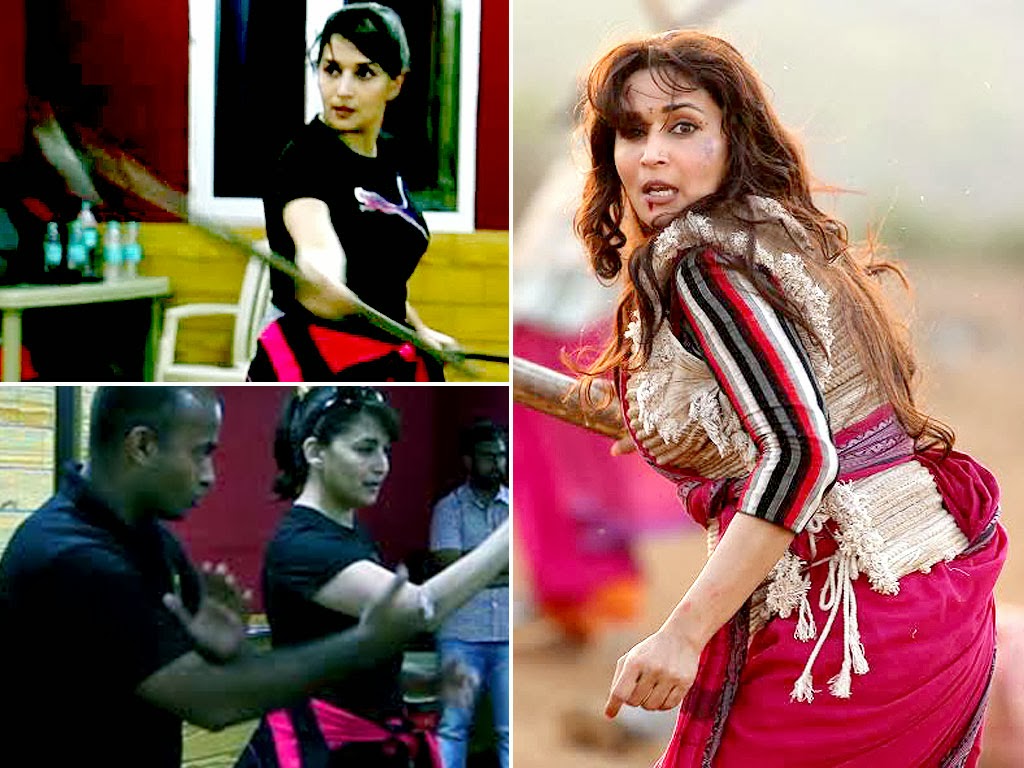
Imagine for a moment that you have two ladies in your life (god forbid) and one was a  non-vegetarian and the other vegetarian, how will things work out? As Soumik Sen explains things will be fine if the ladies are being kind (as they normally are) but from time to time when the dam of anger and frustration breaks and the inner goddess (Durga) marches out to slay the monsters….beware of the gulaab gang.  


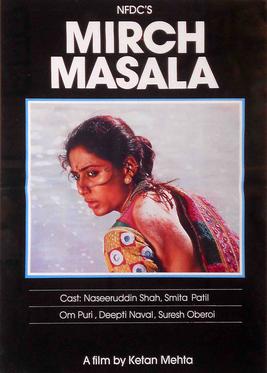
That said Mirch Masala (and Smita Patil,Naseeruddin Shah, Deepti Naval and Om Puri) is an all time classic and cant be
beat.  

File:Mirch Masala.jpg 

How did you become a filmmaker? I was born
and brought up in Kolkata. After studying at St Xavier’s, I did my masters
in Economics from Delhi School of Economics. I did a brief stint at the World
Bank, after which I became a business journalist and produced a business show
on television, where I was required to research, write and interview people for
the programme.
I disliked Delhi as a city and after five years of being a
journalist, I took a transfer to Mumbai, as I wanted to write films. I met Raj
Kaushal, who was a friend’s friend and told him that I wanted to write films.
He gave me my first film to write Anthony Kaun Hai, which Raj himself directed.
I then wrote the Kishore Kumar biopic and spoke to Ranbir Kapoor. This is
before Barfi. And then Anurag came on board to direct it. In the meantime, I
wrote Gulaab Gang and have directed it. My next film will be a biopic based on
the life of PC Sorcar, which I have written and will be directing too.  
How
did Gulaab Gang happen?
I actually wanted to do a ‘Western’ which is a big
film experience on the big screen. Anurag Basu and Sanjay Leela Bhansali give
their audiences that. Sholay would be the best Indian example of a Western.
Every Western has a protagonist and antagonist. And the underdog will take down
the really powerful guy. Also, Mirch Masala was a massive influence. I
believe that men are not big enough to empower women. And actually, if women are
financially independent, men become redundant in their lives. So we wanted to
create a masala film, where men are almost irrelevant. I have always been a
massive Madhuri fan. I presented the film to her completely avoiding eye
contact with her. I had written this film keeping only Madhuri in mind and she
said yes. If Madhuri had not said yes, this film would not have happened.

How different are Madhuri and Juhi to work with? Madhuri is somebody I can watch the Gunda video with. Gunda is a cult
classic starring Mithun Chakraborty and it is so bad that it is so good. It is
a D-grade film, but Madhuri gets it and loves it. I introduced her to it while
shooting. Juhi is far more prim and proper. She
is fun, but in a formal way. Madhuri is much more spontaneous than Juhi. Juhi
is a lot more studied, conscious and puts in a lot more thought.   Madhuri
is incredibly professional. She will be there for a 5 am shot at 4.45 am with
her makeup on. We had no stunt doubles or body doubles for any of the shots. Madhuri
is non-vegetarian, Juhi is vegetarian.
I remember when my associate
director came to meet me for the interview, I asked him only one question, ‘Are
you vegetarian?’ He said no. I said, ‘You are in.’
But I am way too
grateful to Juhi to allow me to break her mould.

Who are you most attached to? My mother. She is a very strangely crazy
person and I am a lot like her. She is extremely loving and gets into these
fits of this tempestuous anger, has a giving heart and likes to keep everybody
happy. She also has a very discerning eye for music, art and cinema and she is
a no-nonsense person when it comes to her telling you what she likes or doesn’t
like….She came here and I made her meet Madhuri who immediately touched
her feet. My mom immediately said, ‘See her upbringing.’

Are Bengali women dominating? I like dominating women as they are more
competent.

regards   

Pakistan and India: divided by a common culture

The aam aadmi on both sides of the border will mostly agree with the sentiments expressed by the author (but the elites will not). The cultural (and many other) bonds that are still intact have to be placed alongside the antipathy generated by the hot/cold war that has been going on for the last 67 years. To tell the truth, apart from the Balkans, there are probably few other examples that match the hostilities generated by the British partitions of India, Palestine, Cyprus, and Ireland. Finally, the mixed emotions about Indian movies are relevant for an Indian (middle-class) audience as well.

The only place where I disagree with the author (and this comes back from Zachary’s earlier note of a Pakistani and Indian muslim friendship) is that Pakistanis (and by extension the global media) automatically assume that Indians culture is primarily (even exclusively) Hindu, or even more alarmingly a muslim culture polluted by Hindu sentiments. In contrast I would imagine (perhaps wrongly) that  muslims in Kanpur and Karachi will be able to find a significant amount of overlap in their culture and world-views- to take one specific example, Indian muslims are jut as strongly anti-zionist as their brothers across the Ummah.

The reason I am pessimistic about even a cold peace is because the ideological differences are so hot and stark. Peace will come only when the elites will have had enough of war, that is for sure.

As India and Pakistan struggle to resolve their political differences
presently, there is an India/Pakistan-related struggle going on inside
me too.


My inner instincts tell me that a big part of my cultural heritage
relates to India. However, Pakistani ideologues and even some close
relatives tell me that it is unpatriotic to assert any cultural
attachment with India due to Pakistan’s political differences with that
country. Is it possible for a Pakistani to separate cultural and
political issues and simultaneously maintain cultural affinity but
political differences with India?

One must first analyse the
extent of similarity between Indian and Pakistani cultures. Culture
refers to societal ideas, customs and social behaviours and encapsulates
the domains of art, dress, language, food, family structures, religious
practices, festivals, traditions, values etc. There is admittedly
enormous cultural diversity within both countries and sweeping
comparisons between the two cultures are inappropriate.

However,
it is also true that there is large similarity in the cultures of
Pakistan’s eastern regions (Sindh, Punjab and Azad Kashmir) and India’s
northern and western regions along most cultural aspects mentioned
above, eg art and dress. While Pakistanis living in the country’s
western regions obviously have more cultural linkages with Pakistan’s
western neighbours (eg Afghanistan), Pakistan’s eastern regions host the
bulk of the population. Thus, for the majority of Pakistanis, the large
cultural overlap with India is undeniable.

Religion obviously is
the main realm of exception to this cultural similarity
and since it
influences many traditions, there are differences too between Indian and
Pakistani cultures. Additionally, over the last three decades,
middle-class cultural values in the two countries have become more
dissimilar.

Parts of the Pakistani middle class have unfortunately
become more conservative, xenophobic and intolerant. Conversely, the
Indian middle class has become more liberal and Westernised. This,
positively, has meant greater tolerance for diversity but also,
negatively, greater focus on materialism within Indian society in
contrast to the high degree of frugality that Indian middle classes
practiced traditionally.

The most visible manifestation of this
increasing difference in values is in movies and the media. Indian
movies are now increasingly exploring themes, eg in movies such as
Bombay Talkies, which can barely be mentioned even in liberal Pakistani
newspapers. On the negative side, it means that it is often difficult
now to watch Indian movies with family.

Despite
religious differences, I and a lot of other expatriate Pakistanis that I
know usually find it easier to relate with expatriate Indians due to
the strong linguistic and cultural linkages than with Muslims or
non-Muslims from Africa, the Middle East and Far East. Given these
cultural similarities, it does not make sense to disown such a large
part of one’s cultural legacy, especially one to which Muslims
contributed so much over the centuries before Partition. 

Trying to
disown such a large part of one’s cultural legacy can only have
negative repercussions for the individual and collective national
psyche. One must have the self-confidence and a sense of balance to be
able to assert cultural similarities with India without feeling ashamed,
guilty or unpatriotic.

Thus, over the last few decades, India has
arguably become the second largest exporter of culture (through the
export of its movies, music, food, etc) in the world after the US. I
must admit that whenever I see such Indian cultural artefacts being
appreciated globally, in places as diverse as Addis Ababa, Vietnam and
Israel, I cannot help feeling some sense of pride and personal
connection too.

Yet Indian movies portray Islam with respect and often on an
equal footing with Hinduism. In contrast, it is rare to see Pakistani
movies showing respect and positivity towards Hinduism. However,
when it comes to Pakistan, Indian movies are largely silent or portray
Pakistan negatively even though Pakistan is probably the biggest market
for them after India.

regards

BJP grabs the first seat (West Bengal)

The General Elections 2014 (GE2014) starts with the first result as of today. The BJP and the Gorkha Janamukti Morcha have re-affirmed their ties. Thus the Darjeeling seat will remain with the NDA for the 2014 cycle. In 2009 Jaswant Singh was the winner (51.5%).   In return BJP (if it comes to power) will promise to look into creating State #30- Gorkhaland (currently part of West Bengal). The sticking point (as with the Andhra Pradesh/Telengana division) has been the allotment of Siliguri (the principal town in North Bengal). BJP may decide to act this time (and Congress may help as a quid pro quo), since Telengana division (and allotment of Hyderabad to Telengana) could not have happened without BJPs support.  As a result, Mamata will be facing a loss of up to 3 Lok Sabha seats but she will have a free run in the rest of Bengal. The central govt will also be freed up to strike (North Bengal focused) boundary/river water sharing agreements with Bangladesh (these talks are at a dead-end because of Didi). It is win-win for everybody!!!   BJP
president Rajnath Singh wrote in Twitter, “Gorkha Janamukthi Morcha
(GJM) president Shri Bimal Gurung has decided to support the BJP in
coming Lok Sabha polls. I welcome his decision.”  
regards         

Rohildev Nattukallingal wins big with FIN

The 23 year old boy from Malappuram makes it big on the world stage (youngest speaker so far at the World Mobile Congress). Congratulations sir!!!

Remember those people talking animatedly to themselves in public who
you used to give a wide berth to before you realized that they weren’t
crazy, just the first users of a new Bluetooth technology with wireless
devices tucked behind their ears?

Well, get ready for the next
wave of people acting strange publicly, gesturing and waving their
fingers in your face, with colorful rings around their thumbs. Because
they’re coming, and those rings are the newest addition to the “internet
of things” — wearable technology that promises to change the world. The
rings, called Fins, make your entire palm a gesture interface with
which you can control multiple connected devices.

regards

A glimpse of Pakistan and her castes.

FAB story #2: Imad Uddin Ahmed from Lahore, Pakistan, writes:

Until I moved to Pakistan for a few years after
graduating from college in California, I wouldn’t say that I
saw my Indian or Indian diaspora friends as anything other than fellow South
Asians – brown brothers and sisters who had similar tastes and values, but who
supported the wrong cricket team and prayed in a different way. 

In Pakistan, I inquired and discovered what caste
my Hindu ancestors belonged to, having been asked by a colleague on my first
day at work (at a women’s rights NGO!) 

In Pakistan, I learned the South Asian prejudices
that South Asian beauty was predicated on a light skin-tone and, for men, sharp
features and height. I learnt too that these features were associated with
higher caste Indians and with Muslims – descendants of invaders were regarded
as more beautiful than the indigenous people who had constructed the Indus’
most ancient civilisations. Why, then, the likes of Shiv Sena only target
Muslims in India as foreigners (many of whose ancestors were Hindu), seems a
bit arbitrary. It was in Pakistan that I learnt how, in spite of inhabiting an
Islamic republic, Pakistanis carried forth their un-Islamic caste prejudices,
and that these prejudices allowed many of us to feel superior. By learning how
somewhat physically different we were from many Indians, I also learnt how
similar our mentalities were to my image of them. 

For all the prejudices I ridiculed, I started
subconsciously imbibing them, and my recent friendships with Indians and Hindus
have been coloured by them. Where I previously had yearned for dark and lovely
South Asian girls, I started favouring the light-skinned ones, and I’ve enjoyed
teasing Brahmin girls I’ve dated that they had lost their caste. (Apparently
for fear of losing hers, one of my ancestors refused to share the crockery her
son had used, let alone hug him, once he had converted to Islam.) I now guess
(to myself) a person’s caste by considering their surname and looks, and try to
figure out whether their life choices (profession, partner, extra-curricular
activities) have been affected by it. 

Hussein (name changed to protect privacy) was the
first Indian friend I had made since I had started living in Pakistan. We
connected through blogging while I was in Lahore and he was in Mumbai. 

We were initially drawn to each other by a
fascination with each other’s otherness. He wanted to know what Pakistan was
like, his thirst having been whet by a book called Husband of a Fanatic about
my (and Amitava Kumar’s) relatives in Pakistan, and about Hindu extremism in
India. I had never known a Muslim Indian, and wanted to know whether he felt
marginalised, what his daily struggles were and which cricket team he
supported. (I myself failed Norman Tebbit’s test of being a true Brit for
failing to support England.)

When we finally became friends in the UK, he shared
with me Tehelka’s coverage of the 2002 Gujarat riots, and then details of his
own tragic loss in those riots.

Despite seeing an indecent proportion of his
compatriots support the man responsible for inciting those riots, he tells me
that he is glad that his grandparents didn’t cross the border – I understand
his view: whereas in India, you aren’t safe being a Muslim, in Pakistan you
aren’t safe being the wrong type of Muslim. Pakistan and India aren’t too
dissimilar. 

About the author: Imaduddin Ahmed is a Pakistani
and British Public Private Partnerships financial transactions advisor in
Rwanda. He has blogged as ‘The Lost Pakistani’ for GQ India and co-authored
with Kapil Komireddi ‘Pakistan, rebranded’ for The Boston Globe, as well as
opinion editorials and comment pieces for the global edition of The New York
Times, Internationale Politik, The Guardian, The East African, The Friday Times
of Pakistan and New Strait Times.

Photo credit: Asim Rafiqui

Kashmir Games

In India (under a hypothetical BJP majority coalition rule) an open question that will be frequently raised is whether  Muslims are “Indians first” or not. This is basically a proxy for whether Muslims prefer Pakistan over India or not. This was probably the case even before, and the consequences have been deadly in the past, but now the situation has become highly delicate. This is especially so as political parties have been indulging in match-fixing– engineering riots for the express purpose of segregating majority and minority votes.

For most parts of India, Muslims are in a minority and too much tied to Hindus (in economic terms if not social terms) to raise their voices. And if they do so the backlash is swift (in Asom, UP,…etc.). In Kashmir however people grow up in a Muslim-only society (having cleansed the valley of all minorities themselves) and a popular slogan is “bhooka nanga hindustan, dil se pyara pakistan.” The Abdullah family is allowed a free hand (to steal) and the suppression of liberty directly leads to discontent (and to provide fertile grounds for the extremists to recruit).

But things will not remain frozen in time/space and the potential for friction will rise fast. Indian Hindus as a group are shifting right-ward and this matches with the trend elsewhere in the non-western world. There will be little or no ground to be given to minorities, including Shias in Sunni land. Even in the west, the forces on the right are gaining ground, especially in Europe.

In the mean-time Kashmiris need education and jobs. The Kashmir valley population is 6.9 million (as per 2011 census, 97% muslim). Jammu meanwhile is 5.35 million (31% muslim) and Ladakh is 0.29 million (54% muslim). There will not be enough opportunities in the Gulf for the youngsters (or enough asylum claims to be sustained in the West). As far as political freedom goes, anything except soft boundaries may not be negotiable under any sort of political regime.

Let us be clear, if war breaks out (supported by jihadi squadrons from the western front) and history repeats once more, it will be much harder on the Kashmiri population. Jaganmohan may have been bad but Modi will be even worse. World-wide the patience with Jihadism will be much lower now, and the worst case (Syria like) scenario cant be ruled out.

Thus the (practical) choice for both Kashmiris and Indians is to find a way to show mutual tolerance otherwise the situation may reach boiling point. Will a soft borders resolution with Pakistan be a helpful compromise? It may not be clear to the politicians but it is urgent that the ball moves forward after the elections. Otherwise be prepared for incidents like this to snowball into something major.


A private university in Greater Noida
on Saturday expelled six students — four of them Kashmiris — from one
of its boys’ hostels after a stand-off between two groups over last
Sunday’s India-Pakistan cricket match. It’s the second such controversy this week after a university in Meerut suspended a group of Kashmiri students for celebrating Pakistan’s victory in the Asia Cup match.

The expulsion came after a tense week at the Sharda University hostel
where the Kashmiri students allegedly cheered for Pakistan. Another
group protested that night, but the standoff escalated midweek after a
student’s provocative comments on a social media network.

The student cited the example of Swami Vivekanand Subharti University
in Meerut, demanding similar action against the four Kashmiri students.
The post elicited strong reactions and students started mobilizing on
campus. When the situation threatened to go out of control, Sharda
university authorities called police. Ranvir Singh, students’ welfare
dean, said the university expelled them from the hostel to maintain
discipline. All of them are first-year students.
   regards

Moopanars for Modi?

Journalism by talking to a taxi driver…nevertheless it is interesting that BJP support has crossed 10% in Tamil Nadu. I would imagine people who used to vote for Congress would not mind switching over to the BJP. The situation is similar to Kerala where the BJP can only win if the dominance of the Left declines and if  the powerful Nair Service Society (NSS) and Sree Narayana Dharma Paripalana (SNDP) join hands to keep the hindu vote united.  

One interesting thing to keep a check on- as recounted in the anecdote below-  people may choose to vote differently depending on whether it is a national or a state election. If Congress implodes and BJP becomes the default national party then it can even win the votes of minorities. 

Thanjavur district
is the home of the Cauvery delta region and is the rice-bowl of Tamil
Nadu. The river and the fertile fields nourished Carnatic music,
particularly in the 18th and 19th centuries, when
the celebrated trinity of Saint Thyagaraja (1767-1847) and his
contemporaries, Muthuswami Dikshitar and Shyama Sastri, held sway.
Those
were the days when civilization was river-based. Things have changed
since, and, today, Chennai is the Mecca of Carnatic music. The district,
more particularly, Tiruvaiyaru, 15 kms from Thanjavur city, still
reverberates with the sounds of Carnatic music for five days in a year,
when it hosts the internationally-famous Sri Thyagaraja Aradhana, to
commemorate the death anniversary of Saint Thyagaraja.
The Saint passed away 167 years ago, on Pushya Bahula Panchami. Pushya is the name of the month in the lunar calendar. Bahula is the dark or the second fortnight, while Panchami
is the fifth day of the waning moon, according to the Hindu almanac.
Translated into the Gregorian calendar, which we follow now, the
Aradhana date varies from year to year, though not the month.
I was in Tiruvaiyaru for the Aradhana—as I have been doing for the last decade or so—this time from 17th to 22nd
January. I mostly attend the evening concerts, which leaves me free
time in the mornings. Thanjavur district is also famous for its temples,
with Kumbakonam being the hub for most of the famous Shaiva and
Vaishnava shrines, besides those dedicated to the Navagrahas, the nine planets. I, therefore, took the opportunity on one of the days to visit a few temples.
The
region is also the strong-hold of the Moopanars, the land-owning caste.
The late G.K. Moopanar was the most famous among them. Traditionally
Congress, the Moopanars are proud of Mr. Moopanar and equally so about
his son, Mr. G.K. Vasan, a union minister now. In fact, the family is
well-known for its public service and is the main patron of Sri
Thiyagabrahma Mahotsava Sabha, the body that organizes Sri Thyagaraja
Aradhana. Mr. Moopanar was its president until his death, and the post
is now held by his brother, Mr. G.R. Moopanar.
Our cab driver too
was a Moopanar, without much land, though. “My grandfather squandered
the 32 acres that we once owned,” he confessed. Our driver was a
talkative man: so am I.  Would he vote for the Congress, I asked. “No
way. Modi,” he replied. It was his opinion, I opined. It is the opinion
of most people here, he countered. “Jayalalithaa wants her partymen to
ensure that the AIADMK won all the 39 seats to the Lok Sabha,” I
reminded him. “This is not an assembly election,” he responded. “It is
for the prime minister and we want Modi as pm. Did you see the crowds at
Modi’s Tiruchi rally? My car couldn’t enter the city that day.”  He
could be right. An opinion poll conducted by Junior Vikatan, a political journal belonging to the Vikatan group, published a survey which showed that about forty per cent of those interviewed said they would vote for Modi.
According
to the survey, the AIADMK could get thirty percent, the DMK and the
others the remaining thirty per cent. Another poll has put the BJP vote
at a modest 17 per cent. The BJP is trying to woo the DMDK of Vijayakant
to cobble together a non-AIADMK, non-DMK third front. The DMDK is being
wooed by the DMK too, but the party’s vote has shrunk badly and only
three per cent are inclined to vote for it, according to pollsters.
Back
in my hotel, I asked the room boy whom he would vote for. DMK, he
replied. But wasn’t this an election for parliament, I asked him. “Yes,
but my family always votes for the DMK,” he replied. As his reply shows,
the traditional DMK base is intact.
– See more at: http://www.theindianrepublic.com/tbp/modi-favourite-tamil-rural-heartland-100024490.html/99#sthash.Kd6UM2P7.dpuf

Thanjavur district is the home of
the Cauvery delta region and is the rice-bowl of Tamil Nadu. The river and the
fertile fields nourished Carnatic music, particularly in the 18th and 19th
centuries, when the celebrated trinity of Saint Thyagaraja (1767-1847) and his
contemporaries, Muthuswami Dikshitar and Shyama Sastri, held sway.
…The district, more particularly, Tiruvaiyaru, 15
kms from Thanjavur city, still reverberates with the sounds of Carnatic music for
five days in a year, when it hosts the internationally-famous Sri Thyagaraja
Aradhana, to commemorate the death anniversary of Saint Thyagaraja.

I was in Tiruvaiyaru for the
Aradhana—as I have been doing for the last decade or so—this time from 17th
to 22nd January. I mostly attend the evening concerts, which leaves
me free time in the mornings. Thanjavur district is also famous for its
temples, with Kumbakonam being the hub for most of the famous Shaiva and
Vaishnava shrines, besides those dedicated to the Navagrahas, the nine
planets. I, therefore, took the opportunity on one of the days to visit a few
temples.

The region is also the strong-hold
of the Moopanars, the land-owning caste.
The late G.K. Moopanar was the most
famous among them. Traditionally Congress, the Moopanars are proud of Mr.
Moopanar and equally so about his son, Mr. G.K. Vasan, a union minister now. In
fact, the family is well-known for its public service and is the main patron of
Sri Thiyagabrahma Mahotsava Sabha, the body that organizes Sri Thyagaraja
Aradhana. Mr. Moopanar was its president until his death, and the post is now held
by his brother, Mr. G.R. Moopanar.

Our cab driver too was a Moopanar,
without much land, though. “My grandfather squandered the 32 acres that we once
owned,” he confessed. Our driver was a talkative man: so am I.  Would he
vote for the Congress, I asked. “No way. Modi,” he replied. It was his opinion,
I opined. It is the opinion of most people here, he countered. 
“Jayalalithaa
wants her partymen to ensure that the AIADMK won all the 39 seats to the Lok
Sabha,” I reminded him. “This is not an assembly election,” he responded. “It
is for the prime minister and we want Modi as pm.
Did you see the crowds at
Modi’s Tiruchi rally? My car couldn’t enter the city that day.”  
He could
be right. An opinion poll conducted by Junior Vikatan, a political
journal belonging to the Vikatan group, published a survey which showed
that about forty per cent of those interviewed said they would vote for Modi.

regards

Brown Pundits