the 14th Ferozepur Sikh regiment…and some others

Continuing the tradition of posting Dr Hamid Hussain’s occasional emails about Indian military history (and very sad at having lost the previous posts that were in the old Brown Pundits):

Dear All;
A good friend from India asked questions about details of 14 Sikhs in WWI and role of Indian Medical Service (IMS); not much written about IMS.  There were some other questions about Sikh recruitment in British Indian army especially caste issue.  Following piece was consolidation of answers of these queries.  My digging of military archeology is only for those interested in history.  I personally have a lot of fun doing this though quite tiring.  
Hamid
14th Ferozepore Sikhs
Hamid Hussain
14th Ferozepore Sikhs was raised in 1846 after First Anglo-Sikh War from demobilized soldiers of Sikh army.  It was raised by Captain G. Tebbs and recruits came mainly from cis-Sutlej area.  Regiment recruited local Sikhs and Punjabi Muslims.  Initially, Oudh Rajputs from other regiments were posted to the regiment.  In 1852, Tebbs died and Captain T. E. Colebrooke took command.  In 1857 Mutiny, regiment was in Mirzapur.  Few days before the uprising about four hundred men under the dynamic command of Lieutenant Jeremiah Brasyer were sent to Allahabad and few days later they were instrumental in saving the fort.  Brasyer was the founding father of the regiment.  He spoke Punjabi and in 1846, he toured cis-Sutlej area and was instrumental in encouraging Sikhs to join the new regiment.  He was an amazing character.  He was a gardener and enlisted in Bengal artillery.  Few years later he was appointed Sergeant Major of 26th Bengal Native Infantry.  He fought in First Anglo-Afghan War of 1842 and First Anglo-Sikh War of 1846.   He was given commission and appointed Ensign at the age of thirty-three and served as interpreter during the raising of 14th Ferozepore Sikhs.  The regiment was later known by his name as Brasyer’s Sikhs. 
During mutiny, with the breakdown of general order, soldiers of 14th Ferozepore Sikhs got hold of all the liquor from cantonment and city of Allahabad.  They periodically got drunk and discipline was seriously compromised.  British position was still precarious and they have to act tactfully.  They bought all the liquor from Sikhs at asking price and later transferred them from the fort to a nearby building.  During Mutiny, regiment joined Henry Havelock’s relief of Cawnpore and Lucknow. In the hot weather, soldiers discarded their regular uniform and donned red turbans.  British officers including their commander Brasyer also wore red turbans.  In honor of this service, regiment was allowed to wear red turbans and later the whole Sikh regiment adopted the red turban; a tradition still continued in Sikh regiment of Indian army. 

Regiment participated in many expeditions on North West Frontier.  In 1863 Ambela Expedition, regiment under the command of Major Ross and Subedar Major Sikandar Khan participated in some sanguine battles.  In 1877, regiment participated in Jowaki Expedition operating in Bori valley.  In 1878, regiment participated in Second Anglo-Afghan War under the command of Lieutenant Colonel Williams.  Regiment was decimated not by enemy fire but by an epidemic of typhoid fever killing 200 men.  In 1881, regiment participated in Waziristan operation.  In 1884, Lieutenant Colonel George Nicholas Channer V.C. took command of the regiment.  He was originally from 1st Gurkha Rifles.  Channer family had long association with Indian army and especially Sikhs.  His father Colonel George Girdwood Channer served with Bengal Artillery.  His brother Colonel Bernard Channer DSO served with 2nd Native Infantry and Rajput Light Infantry.  Bernard’s three sons served in Indian army.  Guy Channer DSO served with 14th Sikhs and commanded the battalion in 1918, Bernard Gordon with 54th Sikhs (later 4/12 Frontier Force Regiment and now 6 Frontier Force Regiment of Pakistan army) and Keith Francis with 30th Jacob’s Horse.  In 1888, regiment fought in Black Mountain expedition under the command of Lieutenant Colonel Ellis, Chitral expedition in 1895, Tochi Field Force in 1897 and went to China in 1900 during Boxer rebellion. 
In 1866, Punjabi Muslims were phased out and regiment became a single class regiment of Sikhs.  It is important to understand Sikh recruitment in British Indian army.  Sikh religious and social transformation in nineteenth century resulted in retreat of Khatri and rise of Jat Sikhs.  There is no caste system in Sikh religious doctrine and all are considered equal.  However, in reality there existed a clear class hierarchy in descending order of Jat, Khatri, Arora, Lobana, Ramgarhia and Ahluwalia.  Jats were sitting on the top of the pyramid and didn’t mingle with other classes.  British had to consider this during recruitment therefore only Jat Sikhs were recruited for single class regiments as well as class companies.  Other Sikh castes were recruited in separate regiments. 
Lobana Sikhs were recruited mainly in pioneer regiments (48th Pioneers) as well as some Punjab regiments.  British policy of insisting on strict adherence to Sikh religious code for its military recruits resulted in solidification of Sikh identity.  This also helped in significant conversion of Lobana Hindus to Sikhism with resultant marked reduction of Lobana Hindus in Punjab.  Twin benefits of military service and allotment of agricultural lands helped in upward social mobility of Lobanas.  Due to their first class performance in First World War, in 1922 reorganization, it was decided to have at least one company of Lobana Sikhs in each pioneer battalion.  In 1932, when pioneer regiments were disbanded, Lobana Sikhs were recruited in mountain batteries of artillery as well as constituting machine gun platoons of some infantry regiments.  Some Lobanas from disbanded pioneer regiments were transferred to Bengal and Bombay Sappers & Miners. 
Low caste Sikhs called Mazhabi and Ramdasia (M & R) Sikhs were at the bottom ring of the social ladder and they also looked towards army for upward social mobility.  They were mainly recruited in 23rd, 32nd and 34thPioneers.  A very small number served with Royal Bombay Sappers & Miners.  Pioneers were a specialized infantry that was extremely useful in frontier expeditions.  34th Pioneers earned the ‘Royal’ title for their stellar performance in First World War.  In 1932, when pioneer regiments were disbanded, only a very small number of M & R Sikhs remained in army.  About 320 M & R Sikhs were transferred to Bengal and Bombay Sappers & Miners.  Initially, all Sikhs were mixed in Sappers & Miners regiments but problems between high and low caste Sikhs especially the tricky issue of M & R Sikhs attending Jat Gurdwaras of the regiments resulted in segregation.  All Jat Sikhs went to Bengal Sappers & Miners while Lobana and M & R Sikhs to Bombay Sappers & Miners. 
In Second World War Mazhabi & Ramdasia (M & R) Regiment was re-raised from elements of earlier disbanded pioneer regiments.  Several old British officers of disbanded pioneer regiments were instrumental in raising M & R regiment.  1st M & R regiment was raised in Jullundur in October 1941 by Lieutenant Colonel C. H. Price.  Price was from 32nd Pioneers and after disbandment went to 2/12 Frontier Force Regiment.  Second in Command Major E. P. F. Pearse was from 34th Pioneers and had gone to 3/2 Punjab Regiment.  Subedar Major Jewan Singh was from 32nd Pioneers.  9/15 Punjab Regiment and 7/17 Dogra Regiment provided initial lot of native officers and other ranks for the raising of the regiment.  1st M & R fought in Burma theatre.  Later two more M & R battalions and some garrison companies were raised.  M & R Regiment was later re-named Sikh Light Infantry (SLI). 
In First World War, 14th Sikhs served in Gallipoli and Mesopotamian theatres where battalion suffered heavy casualties. In Gallipoli, 14th Sikhs was part of 29th Indian Brigade (other battalions were 69th and 89th Punjabis and 1/6th Gurkha Rifles).  Lieutenant Colonel Philip C. Palin was CO, Lieutenant Cremen Adjutant, Lieutenant Meade Quarter Master and Lieutenant Matthew Machine Gun Officer.  Indian officers included Subedar Major Jaswant Singh and Subedars Thakur Singh, Prem Singh and Kartar Singh.  Battalion’s Medical Officer was Cursetjee and sweeper Channi. Battalion suffered heavy casualties in the Third Battle of Krithia in June 1915 with over three hundred and seventy killed and wounded.  At one time, all officers were killed and wounded and only Second Lieutenant Reginald Arthur Savory remained unscathed and took temporary command of the battalion (he was wounded later and at Lt. Colonel rank commanded the battalion by then renamed 1/11 Sikhs and retired as Lieutenant General).  Battalion was reinforced with two double companies of Patiala Imperial Service Infantry, drafts from India and from other Punjabi regimens and Burma police battalions.  Battalion earned the distinction of winning 35 Indian Distinguished Service Medals (IDSMs) in Gallipoli campaign. 
In Mesopotamia, battalion guarded line of communications of I Corps and served with 51st Brigade. Commanding Officer was Lieutenant Colonel Earle and Subedar Major Sham Singh.  They were succeeded by Major Guy Channer and Subedar Major Narain Singh.  Battalion suffered 61 killed in action and 250 wounded.  Among the wounded was Captain George Francis Bunbury whose father Lieutenant Colonel W. E. Bunbury (originally from 28th Punjabis) had commanded the battalion from 1902-6.  Influenza epidemic decimated the battalion killing 300 men; a de ja vu of 1878 when Typhoid fever took more toll than enemy’s bullets.  Battalion has a unique distinction of having winners of gallantry awards even among its medical officers.  Battalion’s Medical Officer Captain Cursetjee won a DSO while Sub Assistant Surgeon Bhagwan Singh won Indian Order of Merit (IOM) in Mesopotemia.  Heerajee Jehangir Manockjee Cursetjee was awarded DSO in 1918 for gallantry and devotion to service when he attended to wounded soldiers despite being wounded himself.  He retired as Major General.
Indian Medical Service (IMS) was the first branch of Indian army that opened its doors to Indians as King Commissioned Officers.  One the eve of First World War, many Indian officers were serving with IMS.  In addition to Cursetjee, two other IMS officers; Captain (later Colonel) Phirozshah Byramji Bharucha and Captain (later Lieutenant Colonel) Nilkanth Shriram Jatar also won DSO in Great War.  Jatar is the most decorated IMS officer.  He won his first DSO in June 1917 in Mesopotamia when serving as medical officer of 16 Cavalry.  He won bar to DSO during Waziristan operation in 1920 when serving as medical officer of 2/76th Punjabis.  He was severely wounded at Kotkai (in 2008 Pakistan army fought battle at the same location.  In fact, Pakistan army and paramilitary scouts fought many battles with militants at almost all previous battlefields of frontier warfare a century ago) during the withdrawal and lost his leg.  IMS officers introduced their young children to military life and children of many of these pioneer officers of IMS joined Indian army.  Jatar’s three sons joined armed forces; Major General Sudhir Jatar, Brigadier Arvind Jatar (Central India Horse) and Air Vice Marshal Jairam Jatar. Children of another IMS officer Lieutenant Colonel Mohamed Abdur Rahman also opted for army after their education in England.  Atiq ur Rahman ‘Turk’ joined 4/12 Frontier Force Regiment, opted for Pakistan in 1947 and became Lieutenant General in Pakistan army.  Turk’s brother Attaur Rahman after serving with a Frontier Force Regiment battalion joined Indian Foreign Service.  He decided to stay in India and served as Indian ambassador to several countries.
 In 1922 reorganization, 14th Ferozepore Sikhs was designated Ist Battalion of 11th Sikh Regiment.  Ist, 2nd and 3rd battalions of 11th Sikh Regiment were single class Jat Sikh battalions while 4th, 5th and 10th battalions were composed of two Jat Sikh and two Punjabi Muslim companies.  In 1945, Naik Nand Singh of 1/11 Sikh Regiment won Victoria Cross (VC) in Burma.
In 1947, Indian army was divided between India and Pakistan.  Most battalions were composed of class companies or squadrons and they were exchanged between two countries.  Ist Battalion of Ist Punjab Regiment was assigned to Pakistan and it consisted of Sikh A Company, Hazarawal Muslims B company, Punjabi Muslims C Company and Rajput D Company.  Sikh and Rajput companies of the battalion went to India.  Sikh A company was assigned to 1/11 Sikh then stationed at Gurgaon.  In the terrible times of communal hatred when Muslims and Sikhs were killing each other, it is amazing to note that the regimental bond was still vibrant and solid as a rock.  Former Commanding Officer of 1/1 Punjab Colonel Sher Ali Khan Pataudi was in Delhi waiting to go to Pakistan to join Pakistan army.  Battalion’s former Subedar Major Feroz Khan was also in Delhi.  When they came to know that the Sikh company of 1/1 Punjab was in Gurgaon in the process of joining 1/11 Sikh, they decided to visit their former comrades.  While their fellow co-religionists were killing each other Pataudi and Feroz were entertained by Sikhs of 1/1 Punjab with the farewell dinner and karha parsad (a sweet offering to visitors as a sign of hospitality) and many wet eyes.
 1/11 Sikh played crucial role in securing Kashmir for India in 1947-48.  Pakistani tribesmen and some regular troops had captured the town of Baramula and were on the doorsteps of Srinagar.   On October 26, Indian leaders decided to send Indian troops to Kashmir.  1/11 Sikh was the first battalion air lifted to Kashmir.  Commanding Officer Lieutenant Colonel Dewan Ranjit Rai was informed to bring his troops to Palam air filed in Delhi for air lift on early morning October 27.  Two companies of the battalion were on internal security duties.  Rai took C and D companies along with battalion headquarters with instructions that remaining two companies follow later.  Rai had no idea about the task and at the airfield he was given operational orders.  Ground situation was very fluid with very limited information and no one even knew the extent of Pakistani advance.  Rai was instructed to land at Srinagar airport and secure the airfield.  In case, there was no response from Srinagar tower or if it had already fallen, then he was to go to Jammu and grab any kind of transport and try to go as close to Srinagar by road. 
On landing at Srinagar, Rai sent C company under the command of Captain Karamjit Singh towards Baramula and it reached Mile 32.  D Company under Major Harwant Singh did a flag march in Srinagar and then sent reinforcement to C company.  Rai had no communication with his troops as the plane carrying battalion’s signal platoon developed a problem and had to divert to Jammu (signal platoon joined three days later).  Faced with this dilemma, Rai decided to join his forward troops.  At Mile 32, tribesmen failing to dislodge the Sikhs outflanked them and tried to cut off their rear.  Rai arranged for the extrication of his troops and was killed in action.  Major Harwant Singh took temporary command and later Colonel (later Lieutenant General) Harbkhash Singh (originally from 5/11 Sikhs) took command of the battalion.  Rai was a firs rate officer originally commissioned in 5/11 Sikhs.  He was from the Pakistani town of Gujranwala.  His grandson Shivjit Shergill and great grandson Fareed Shergill served in Indian armored corps (Central India Horse).
 In December 1947, battalion lost its Victoria Cross (VC) winner Jamadar Nand Singh in Kashmir.  His body was never found.  He was awarded Maha Vir Chakra (MVC) posthumously making him the most decorated soldier of Indian army.  1 Sikh was instrumental in saving Srinagar for India and rightfully earned 59 gallantry awards.  Their valor was acknowledged by declaring October 27 as ‘Infantry Day’ for Indian army.  In 1962 Indo-China war, 1 Sikh fought in Towang sector.  Battalion had over 170 casualties including 132 killed in action.  Among the dead included their Commanding Officer (CO) Lieutenant Colonel B. N. Mehta and Subedar Jogindar Singh.  In 1965 Indo-Pakistan war, 1 Sikh was in Titwal sector of Kashmir and involved in some minor operations. 
In 1979, Mechanized Infantry Regiment was raised and many old infantry battalions were converted to mechanized infantry and allotted new numbers.  1 Sikh became 4th Mechanized Infantry regiment.  Mechanized Infantry regiments are mixed class and 1 Sikh lost its all Sikh character on its re-incarnation as 4th Mechanized Infantry.  1 Sikh traded its red turban for black beret in transformation to 4th Mechanized Infantry regiment; however it is carrying on 170 years of traditions. 
Notes:
–        The 14th, King George’s Own Sikhs : the 1st Battalion (K.G.O.) (Ferozepore Sikhs), the 11th Sikh Regiment, 1846-1933 by Colonel F.E.G. Talbot, 1937
–        1st King George V’s Own Battalion, the Sikh Regiment. The 14th King George’s Own Ferozepore Sikhs. 1846-1946 by Lieutenant-General P. G. Bamford, 1948
–        M & R: A Regimental History of the Sikh Light Infantry 1941-1947 by J. D. Hookway. 
–        The Sikh Regiment by D. S. Sandhu, http://www.bharat-rakshak.com/MONITOR/ISSUE3-6/sandhu.html
–        The Story of Soldiering and Politics in India and Pakistan by Major General Sher Ali Khan Pataudi, 1978
Hamid Hussain
February 28, 2014

Save rhinos, be safe from leopards

In the urban jungle that in Mumbai people are constantly getting killed by roving leopards (there are 11 feet long alligators as well).

In the Kaziranga national park/forest the rhinos are getting killed by China backed poachers.

The proposed solution: deport the leopards and de-horn the rhinos. The cruelty is unimaginable and the solutions dont work. 

As far as the rhinos are concerned, serious question, why do we not present a few baby rhinos to China (just like they loan their pandas) for a few million dollars so that THEY can saw of the horns periodically and leave the few rhinos back in the jungle in peace.
….

Assam lost at least 90 of its 2500-odd rhinos to poachers
since 2008, 34 of those only in 2013. Mumbai’s Aarey colony lost three children
and two women to leopards in the last two years even though the forest
department has trapped two dozen leopards in and around the colony since 2004.
Indeed, chopping off horns to save
rhinos is not a new idea. Namibia was the first country to dehorn its rhinos in
1989. But it also invested heavily in anti-poaching infrastructure during the
1990s. In the absence of effective security, dehorning alone does not help. In
Zimbabwe’s Hwange National Park, for example, most of the dehorned rhinos were
killed within 12-18 months of dehorning in the early 1990s. Dehorning has not
worked in South Africa either, where 350 rhinos were poached in 2013 alone. The
Kenyan Wildlife Service took a stand against dehorning and lost 37 rhinos in
2013. Zimbabwe kept faith and lost six newly dehorned rhinos during
January-August 2011 in the Save Valley Conservancy. 
The problem is manifold.
First, one cannot remove the whole horn without mutilating the rhino like
poachers do. After veterinarians saw off the horn, the stump remains rooted
deep inside the tissue and is enough to lure poachers. Secondly, like nail,
horns grow back, making dehorning necessary every 3-4 years. Huge expenses apart,
it requires frequent sedation of rhinos. Unfortunately, one in every 20
immobilisation attempts kills a rhino. Thirdly, the horn serves key biological
purposes, from selection of mate for breeding to defending calves against
predators. Altogether, absence of the horn does not make the survival odds
significantly higher compared to the threats of poaching. Then there is the
issue of the chopped horns, valued in gold in the international market.


While Assam plots a loss of face, Maharashtra is
suffering from a loss of reason. It is
possible to trap and shift every leopard sighted in Aarey Colony. Only it will
be a never-ending exercise. The leopards of Aarey are part of the population
that lives in Sanjay Gandhi National Park (SGNP) and will keep showing up,
unless all leopards are removed from SGNP itself. That too may not solve the
problem as leopards are known to move into SGNP from other parts of the state. 

If nothing short of extermination will free the Aarey colony of leopards, how
can the residents escape conflict? The forested stretches around the
settlements should be avoided, especially by children who often take short-cuts
through bushland because the BMC dragged its feet over launching a bus service
to the nearest school 5 km away. It is unclear why the forest department or
NGOs failed to move the city transport department for over a year or run a
school bus themselves. The area should be cleared of garbage piles that attract
feral dogs and pigs that in turn draw leopards. More toilets should be
installed so that residents do not have to squat in the open and be mistaken by
leopards for prey animals. Mumbai’s many civil society groups take pride in
garbage collection drives or awareness campaigns but have so far failed to tap
into government or voluntary schemes to offer any permanent solution to either. 

regards

Sikh-Baha’i nuptials go (semi) viral

Raja Harmeet Singh: https://www.facebook.com/photo.php?fbid=10200840163961145&set=a.3301275465467.108443.1675351134&type=1&theater

Wedding of my niece Sahar Haghighat with Donesh Anwari in Jaipur — with Aastha HaghighatHarmeet SinghDonesh AnwariFarnaz ParastMona HaghighatSahar Haghighat AnwariGurpreet KaurArsheen KaurShekoofeh Moghaddas, Er Tarandeep Singh, Japjot Singh, Ash Mass Moghaddas, Soolmaz Haghighat, Shide MoghaddasHaleh Nabiollahi and Siavash Haghighat.

It seems the Sikh side is also Baha’i(esque) since Mr. Harmeet Singh has the Shrine of Baha’u’llah as his cover profile. It’s a nice glimpse into a Baha’i future, the different peoples of the world (or in this case North India- Iranis) clustered together under the symbol of the Greatest Name (the 100th Hidden Name of God), Baha’.

Worse than Hitler !!!

First came the Hitler insults and we did nothing. Next came the worse than Hitler gaalis and we still stood silent (see below).

What next? Stalin.…well no that is actually a live politician in India, and he only wants to finish off his elder brother…so that would make him an Aurangzeb…. no wait, Stalin’s father himself abandoned his eldest son and gave Stalin the throne…which implies Stalin is actually Bharat….

Mao.…well there are many live blood-red Maoists in India (only fake Maos in his own home-land) and strong words will not break their bones…for that you need AK-47s (actual not metaphorical guns).

Fun fact (#1):  The actual Hitler collaborator Netaji Subhas Chandra Bose (see below) founded the Forward Block which is a partner in the current Left Front coalition in Bengal.  
The Nehru-Gandhi family does not like Bose (he could have upstaged Nehru but for the intervention of Gandhi). As befits the party of (supposed) nationalists BJP (and Arun Jaitley) should take this opportunity and claim Bose as their own (as they have claimed Sardar Patel). That may win them a few extra votes in Bengal.

Fun fact (#2):  The Emergency that Arun Jaitley describes was led by Mrs Gandhi and supported by the Communists (CPI) on direct instructions from Moscow.  

So here you have an example of a (worse than) Hitler collaborator working for a foreign pay-master. 

This may well be the worst possible political gaali. Please mail in the check, Mr Jaitley.

Victor Mallet gives the back-story in the Financial Times

What is it about Adolf Hitler and India? I thought it was the British who were uniquely persistent in their post-war
obsession with the Nazi dictator.  

(Humourist Alan Coren entitled one of his
books Golfing for Cats and put a Nazi flag on the cover because he had learned
that golf, cats and Nazis were the three topics that sold well.)

Modi’s opponents on the left relish the comparison with the man responsible
for the murder of 6m Jews because it hints at the darkest moment in the BJP
leader’s past: the days in 2002 when hundreds of members of the Muslim minority
were killed by Hindu rioters in Gujarat, soon after Modi became the state’s
chief minister. Sitaram Yechury, a politburo member of the Communist Party of India
(Marxist), told the FT last year
that Modi’s popularity was “chillingly reminiscent of the appeal that Hitler
had among the German youth”.

Yet it is not only right-wingers in the BJP that are the targets of Hitler
jibes. Arun Jaitley, one of the most senior BJP leaders and a likely cabinet
minister in any Modi government, said it was Rahul Gandhi’s grandmother Indira
Gandhi who was the real Hitler in India’s post-independence history.

“The comparison between Hitler and her was startling,” he said on his blog in a bitter
response to Rahul Gandhi’s comments in Gujarat. Jaitley reminded his readers
that he had spent 19 months in jail during the emergency and authoritarian rule
imposed by Indira Gandhi in 1975 and read William Shirer’s The Rise and Fall of
the Third Reich in prison.

“Suspension of democracy, abrogation of civil liberties, detention of
political opponents, suspension of democratic activity, abandonment of free
press, absence of judicial independence and [vesting] of power in one person
were features of Hitler’s regime. Each step had inspired Indira-ji’s internal
Emergency. There was one basic difference between the two. Hitler did not promote
a dynasty because he did not have one to promote.”

…But Subhas Chandra Bose, a radical
Congress leader, cooperated with Nazi Germany and with Japan during the second
world war and raised an army of liberation that was eventually defeated along
with the Japanese.

I can add a personal footnote: When I first met our doctor in Delhi, I was
surprised by his unusual first name and asked him whether his father had
opposed colonial rule in the days of the British Raj.
He said he had. The
doctor’s name is Rommel.

regards

Twice born @ 41

In India we see people around us who are (as per tradition) twice born or dwija. Here is an example of an actual twice born person.

Sardar Sanjit Singh was dead. For 90 minutes. And he has come back to life. Congratulations. 

One important point about protocol that should not be overlooked. It helped that Sardar-ji was part of the medical community, CPR was continued well beyond the normal 30 min time limit (in India), how about in the west? Dr Tungikar (see below) is recommending a 60 min CPR at least. Food for thought.

….
A 41-year-old Aurangabad man, who was clinically dead
for 90 minutes after suffering a heart attack, was revived with continued cardio-pulmonary
resuscitation (CPR)
that was given to him manually about 100 times.

Medical experts said his rare revival was possible because of his age and
general health. It was also possible because doctors didn’t give up and he got
immediate medical attention.

Sardar Sanjeet Singh, an x-ray technician at the Mahatma Gandhi Mission (MGM)
Charitable Hospital, complained of chest pain, giddiness and sweating while on
duty at the medical institution on February 2. Doctors found he had suffered a
heart attack. His heart rate and blood pressure had dropped when he was
admitted to the casualty ward. A while later, his heart beat stopped.

“On examination, we found he had no pulse or heart beat. He was clinically
dead and the ECG monitor showed single straight lines indicating there was no
heart activity,” said Prashant Udgire, intervention cardiologist with MGM.
Singh was instantly put on mechanical ventilation and a temporary pacer was
inserted to start his heart beat. Since there was no heart activity, doctors
started manual cardio-pulmonary resuscitation (CPR) by rotation for about 100
times while simultaneously keeping a watch on the blood flow to the brain and
other vital organs. “After a long-drawn effort of 1 hour 30 minutes, the
patient’s heart started beating again,” Udgire said.

An emergency coronary angiography conducted immediately showed one of the main
arteries was totally blocked. The blood clot was removed using a special
thrombus extraction device known as export catheter. Subsequently, coronary
angioplasty with one stent was performed.

“Singh regained full consciousness after four days and was taken off the
ventilator. Fortunately, he showed remarkable recovery without any neurological
damage. This is a rare case of successful revival of a heart attack patient
through cardio-pulmonary resuscitation for one-and-half-hours. The recovery was
without any neurological deficit,” the doctor said.

Singh recalled, “I had collapsed while on duty. I came to know much later
from relatives and friends about the serious condition I was in. I’ve got a
fresh lease of life.”

Independent medical experts said such a revival was not impossible.
Cardiologist Anand Deodhar said the doctors were able to diagnose the cardiac
condition and begin treatment immediately while maintaining the constant flow
of blood and oxygen to brain and vital organs, which led to Singh’s revival.

Former cardiologist at Government Medical College and Hospital, Sudhir
Tungikar, observed, “This was a case of witnessed arrest. In such cases,
cardiologists should make an effort for more than an hour to revive the
patient. They should not give up in 30 minutes, which is the usual
practice.”

regards

Total Siyaapa

I went to see this film where Indo-Pak romance meets Meet the Parents. It was quite silly and obviously set up for a part /2 (he got to meet her side, but she still hasn’t met his side and then both sides have to meet).

It was nice to see images of London but some are quite disconcerting as the shots are all over the city where the characters could have in way traversed them as they did (London remains after all a city of 32 villages/boroughs).
The Indo-Pak angle wasn’t really touched upon and frankly the movie could have been far more interesting (lucrative) if it had taken a few creative leaps. Instead it was a tired formula and also tried to make it a national dichotomy (Indo-Pak) instead of a religious one. I think a Pakistani non-Muslim remains a more preferable match than an Indian Muslim for an average Indian Hindu family.
Other than that it was pure “time-pass” as they say (a concept completely unknown in London) and other than that I was actually meant to see Shaadi ke Side effect but I would have been the only person (Thursday 10pm is not a popular time for films in Kampala). Incidentally 3 other strangers were with me in the theatre watching total Siyaapa with me but by the end of it I was the only one left. Says it all I imagine.

The Chandi of Chandigarh

Daughter of Lt Gen (retd) HD Panag and grand-daughter of Colonel Shamsher Singh (that is how you are introduced in India, no?).

Now Gul Panag plans to be an Aam Aurat from Chandigarh. In order to slay the (corruption) demon you need a Shakti (to bloody him) but also a Mohini (to dazzle him). Strongly recommended.

regards

PS Dr Omar may want to comment about Colonel Shamsher Singh. After all the top military elites on both sides knew of each other quite intimately. This is what came up in a quick search.

Colonel Shamsher Singh was born during the First World War on July 8,
1916 in the Panag family of Mahadian village, Fatehgarh Sahib district.
After his schooling, he enrolled in the Mohindra College, Patiala, and
then began his career as an enlisted soldier with the Patiala State
Forces. Soon thereafter, he was selected for training at the Indian
Military Academy and was commissioned into 1st Patiala Lancers. As part
of the 1st Patiala Lancers, he participated in military operations in
the North West Frontier Province and World War II.

In 1946, he was transferred to 1st Patiala Rajindra Sikhs
Infantry Battalion. In March 1948, Col Shamsher Singh (a Major at that
time), then second-in-command, was made responsible for defence of Zoji
La and Gumri heights with a garrison of two companies. In spite of the
intense pressure from Pakistani troops who were desperate to capture
Zoji La so as to gain access to Srinagar and the valley, the Zoji La
garrison stalled the enemy advance and successfully defended the pass
from May to October 1948, after which the Indian Army re-grouped and
employed tanks of the 7th Cavalry to push the enemy back and open the
route to Kargil and Leh. The Sikh troops under Major Shamsher Singh
advanced to Kargil and picketed the surrounding heights thereafter.

“jab sab faansi par latkaye jaege”


Right now the situation in India is desperate. Even in the so-called woman-safe Mumbai, ladies are being molested in broad daylight. We have all become passive observers even when injustice happens in front of our eyes, because we are deadly afraid of …what exactly? Death will come to all of us some day, it is really the fear of death that stops us from helping out a (wo)man in distress.

I am not in favor of death penalty because the system can always make mistakes and we should not have to lose even one innocent man. That said these folks deserve no mercy and should never again see the light of freedom.

……..
The Delhi high
court on Thursday upheld the death sentence awarded to the four convicts in
the brutal gang rape and murder of a 23-year-old girl here on December 16, 2012
that shook the nation’s conscience and led to widespread protests.

A bench of justices Reva Khetrapal and Pratibha Rani confirmed the sentence of
Akshay Thakur, Vinay Sharma, Pawan Gupta and Mukesh, saying the offense
committed by them falls in the category of rarest of the rare and upheld their
conviction.

“Death reference is accepted. Death sentence awarded by the trial court is
affirmed. The appeals of the convicts are dismissed,” the bench said.

The parents of the victim were also present in the court at the time of
pronouncement of the verdict.
“We have got full faith in the judiciary. We had expected this verdict.
But the ultimate satisfaction will be when the convicts meet to their ultimate
fate,” the mother of the 23-year-old paramedic told the media outside
court room after the verdict was delivered.

“Hume pura nayay tabhi milega jab sab faansi par latkaye jaege (We will
get justice only when all of them will be hanged),” she said.

regards

Kashmir: the avalanche season


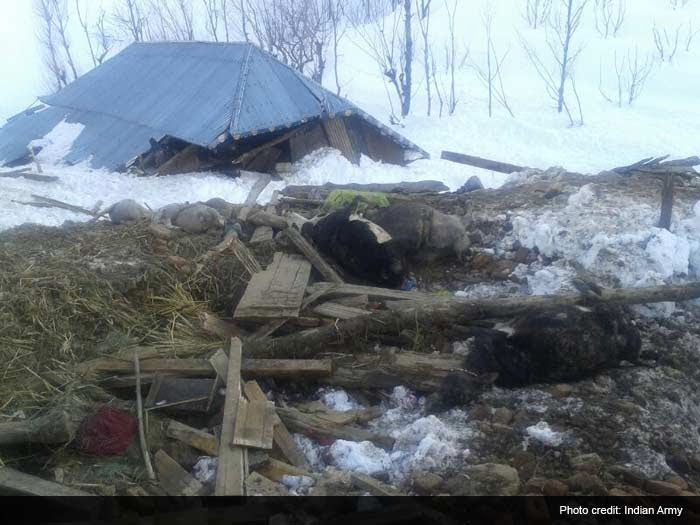
Official sources told The Hindu that Naik Vijay Pratap and
Dharmendra Singh of the Army were killed when their shed collapsed under
an avalanche at their camp at Batra in Drass area of Kargil. Three
Nepalese workers died when their stone quarrying site caved in near
Kargil due to heavy snowfall.


A Gujjar family’s hutment collapsed at Balsaran in Damhal Hanjipora
foothills of Pir Panjal mountain range, killing three inmates — Rashid
Gorsi (24), Talib Gorsi (12) and Altaf Gorsi. Nine members of the family
sustained injuries and were evacuated. Three women — Rehti of Manigam Qazigund, Jana of Badipora Chadoora and Fazi of Kansu Shopian —died when their houses collapsed. Manzoor Ahmad of Kadalbal Pampore, who was on his way from Ramsu to
Ramban, was killed in a landslip in Panthal on Srinagar-Jammu highway.


About 100 people have been evacuated from Waltengo Naar and other
hamlets of the Pir Panjal foothills to safer places in Kulgam, Anantnag,
Shopian and Rajouri districts. Sources said that over 200 cattle
perished in different incidents. 
regards
Brown Pundits