
Pakistan’s Inner Logic

On Nivedita & Archer’s joint request (Mamnoon/Tashakor/Merci for the kind words); I’m going to expand on my comment:

ā€œKabir is definitely right. Ethnicity in Pakistan is complex; there are three tiers of society. The English speaking elite (Imran is part of that so is Kabir), who are ā€œPakistanisā€ and ethnicity isn’t really reflected on…ā€

This comment, which the BP archives have tons of similar posts on (BP was venerable even in 2014), sketches the bones of Pakistan’s sociological map. But what lies beneath the skin?

Pakistan is feudal; India is not.

That one statement alone explains much. Landholding elites dominate politics, rural economies still function on patronage, and class mobility is rare. Caste, though ā€œdenied,ā€ is real and sharper, in some ways, than it could ever be in India (the reservation system does not really exist in Pakistan except for religious minorities but not for socio-economic castes). Pakistanis can sniff out class in one another with a dexterity that’s probably only matched in the United Kingdom, which is the home of class stratification (I remember reading Dorian Gray in Karachi in the early millennium and shocked how similar late Victorian early Edwardian England was).

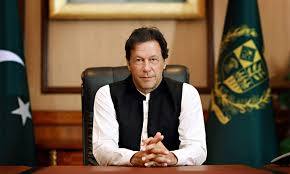
The postcolonial state froze itself in amber. There has never been a serious leftist rupture, excepting 1971’s successful Bengali revolution. Even Imran Khan, who styled himself a reformist, is a product of elite schools, Aitchison College, Oxford, and aristocratic lineage. His ā€œIslamic socialismā€ was only ever viable because Pakistanis still believe in myths of the benevolent landlord.

And yet, Pakistanis sometimes seem happier than their Indian counterparts, even if not remotely successful. Why? Continue reading Pakistan’s Inner Logic

Pressure on Social Media in Pakistan

A recent BBC report discussed how contractors employed by ISPR (Inter-Services Public Relations, the media arm of the Pakistani armed forces) monitor and harass people who are perceived as being disloyal or anti-military. Today I saw an email from a friend who is a very patriotic Pakistani with mainstream (pro-democracy) views, who was just kicked out of an “elite” Whatsapp group because the group admin was under pressure from “sources”. I am excerpting the relevant part of the email here with his identity removed; to me the interesting part is that this is a relatively small group of people, and they are not Left wing activists or ethnic nationalists or starry eyed peaceniks, they are mostly bankers and Westernized members of the elite, deeply committed to Pakistan and the idea of Pakistan.. that someone was looking at them and making specific requests to remove members is a new and rather extreme step in the spread of XiJinping thought in Pakistan..

“Yesterday, this member-moderator along with two others became its victims when we were unceremoniously removed from a so-called “prestigious” WhatsApp group of “who’s who” by its moderator without notice or assigning any reason. Our sin? Arguing against the Miltablishment’s policies in the context of Nawaz Sharif’s interview. One member out of 250 in this WhatsApp group took a principled stand by voluntarily opting out in our support. Some other members I understand are writing in our defense. Surprisingly, those Miltablishment supporters who had initiated the debate on this issue (Nawaz Sharif’s interview) and had used the filthiest and most polarizing of languages against the group’s stated policy were neither touched nor even reprimanded.

The moderator of this WhatsApp group subsequently and reportedly explained to someone that “continuous bashing of military (sic)….was landing the group in trouble” and that “he was under pressure from some quarters” to take action (remove the members) – this could be a reference to outside monitors (intelligence agencies) or inside die-hard supporters of Miltablishment. Either way, the thought-police is out in full force. If a WhatsApp group of 250 is monitored, the power of the Miltablishment is complete and total.

Having come back to the country after X-years, I have been incredibly saddened and depressed at the strident polarization one is a witness to. No one is listening to the other side and temperatures are as high as I clearly remember they were at the time of military action in Bangladesh in 1971, when a brother was pitted against a brother..”

An extract from the BBC report (which is worth reading in its entirety):

By establishing the email address associated with the metadata of the document, Amnesty researchers traced it to an Islamabad-based cyber security expert, Zahid Abbasi.

When confronted by the BBC, Mr Abbasi confirmed he had previously worked for a year for the Pakistani military’s public relations team (ISPR) and that the document was genuine.

He admitted his role included tracing the IP addresses of “people abusing institutions” online and “compromising their accounts” by, for example, sending them fake Facebook login pages.

Brown Pundits