I wrote the following article for one of the English daily newspapers in Bangladesh. The main idea is directly borrowed from a very good post in Brown Pundits (2016) by always superb contributor Omar Ali bhai. “Is Islam the rock on which the liberal order broke?” https://www.brownpundits.com/2016/12/05/islam-is-rock-on-which-liberal-order/
Link to my article here. Text follows. Just as a reminder, newspapers op-eds are not suitable place for good elaboration and defense of ideas. This is not an analysis or theorizing, just a reaction.
The rock that broke liberalism
https://www.dhakatribune.com/opinion/op-ed/2019/05/25/the-rock-that-broke-liberalism?fbclid=IwAR3cQVWjO1PYe6muE33Dijy44kR90fJRH1Iv6UBqS9KYqHr9e7AlTHKjvdo
I was watching live streaming of the India Election 2019 results on the NDTV website. Panelist after panelist was commenting on how significant were Balakot strikes in boosting BJP’s re-election prospects, and how ignorant are the liberal elites of India about the appeal of national identity among the masses.
This was NDTV, as a reminder, one of the citadels of India’s liberal elites. BJP’s triumphant re-election under Narandra Modi underscores the wave of right-wing populist nationalism sweeping across democracies of the world — Europe, Australia, Latin America, the US, Asia, maybe soon in Canada also.
With every election, every referendum taking place in established democracies, it is becoming apparent that this wave may not be just yet another right turn in the cycle of politics soon to be corrected by pivot to the left, but a fundamental shift in the people themselves.
A couple of years ago, in a South Asia focused blog I frequent, a much-admired Pakistani-American writer wrote a post posing a great question: “If and when modern humanism and liberalism crashes and burns, will future historians look back and say that Islam was the rock on which it first and decisively broke?”
His point was not that Islam single-handedly threw a powerful challenge to the liberal order, or “end of history” would have been achieved if Islam didn’t throw a wrench into the gears of civilization.
He argued that by obdurate refusal to accept the fundamental assumptions of post-enlightenment worldview, by obstinate resistance to assimilate with the mainstream when in the minority and by dogged persistence in recreating antediluvian theocracies when in majority, Muslims not only undermined the universal validity of the whole liberal project, but also sowed deep doubts about the liberal project among its previously most faithful adherents.
Muslim recalcitrance has hastened delivery of the contradictions that the liberal project was pregnant with from the beginning.
And the contradictions are huge indeed. The liberal order is prone to breakdown because it doesn’t sufficiently account for the fact that human nature itself is broken. People are not just utility or satisfaction maximizing beings. Enjoyment and suffering are intimately co-mingled.
People do not just want to reach heaven together; they want some, preferably who are somewhat different, to be confined to hell as well. Apart from the contradictions, surely undercurrents of technological and economic change, the shift in global power balance, the inevitable decay of political order, played a far more important role in undermining the liberal dominance than obstinate resistance of the followers of Islam?
However, it’s hard to deny any causative role of Islam. The emergence of right-wing, national identity politics was perhaps inevitable in India, but BJP’s astonishing dominance must be partially attributable to Pakistan’s persistent spoiling and nightmare-neighbour role? Right-wing majoritarians everywhere are scapegoating Muslims as the principal other; morality of their methods can be questioned, but the success cannot.
Moreover, I would argue that Islam has not undermined the liberal order by sowing doubts within liberal ranks or exposing its contradiction, it has weakened liberalism by emboldening and consolidating the enemies of liberalism in established democracies which were scattered and disheartened after the bloodbath of WWII and subsequent emergence of liberal world order.
Stubborn defense of group identity by Muslims of the world has made upholding group identity respectable for all groups, majority or minority, powerful or weak. In the age of mass politics, group identities like religion or nation have more elements in common than in difference. If Muslims can be unabashedly assertive about the sanctity of their religious identity and traditions, other groups can be unapologetic about their respective identities too.
Muslims may be a small minority in most of established democracies, but they comprise nearly one-fourth of humanity, and they have a very emphatic presence in Asia, Africa, and parts of Europe. To people of different faiths, Muslims, regardless of their actual numbers as minority, represent the much talked-about demographic threat from the south.
Muslims, whether in majority or minority, are on the other hand deathly afraid of the political, cultural, and economic threats emanating from the leading political and ethnic groups of the world. It’s a mutual cycle of fear spiraling downwards. Muslims cheering the probable demise of a liberal world order is the height of folly.
As the world’s most powerless and disunited major group, they will continue to pay the major price of breakdown in blood and misery. Uighurs of China portend that bleak future.
In established democracies, Muslims are generally politically allied with liberal progressives, and this alliance has opened liberals up to accusation of double standards in protecting a very illiberal minority identity. Abandoning universalism and embracing identitarianism is hollowing out liberalism from within. Either the principles of liberalism apply for all groups or none at all.

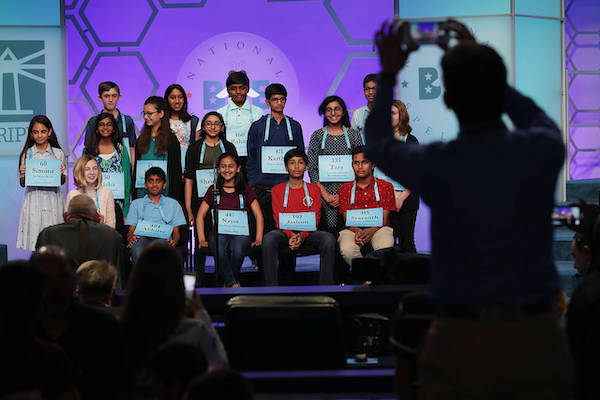
 Reminds me of the stuff in Jerry Muller’s The Tyranny of Metrics. Now that the national bee is going in this direction it will be impossible to reverse the trend and make it a test of childhood exuberance and passion, as it was until recently. Rather, it will be just another part of the meritocratic conveyer belt, another notch in one’s resume or c.v.