
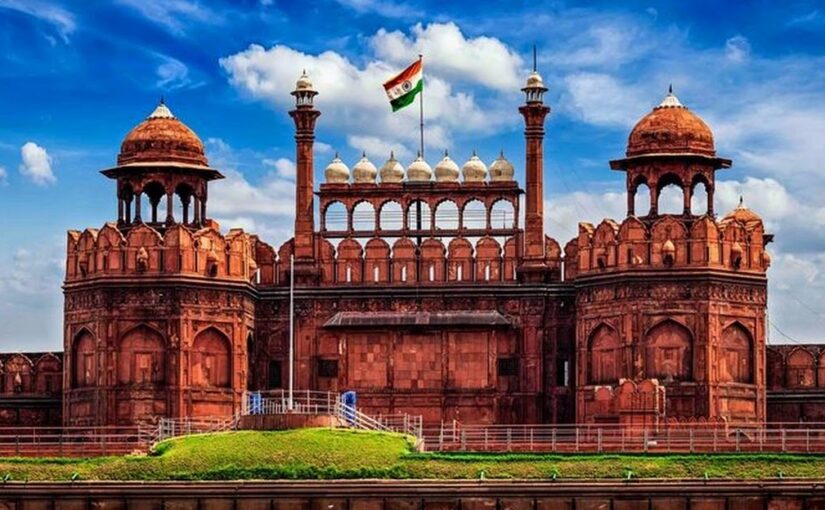
Over the past few months, I’ve noticed a marked improvement in the quality of conversation on BP. A large part of this, I suspect, is due to eliminating trigger-response dynamics; as seen when I barred Q on a technicality. It created space: suddenly, the commentariat was thinking, not reacting. In that quiet, something became obvious.
Whenever Kabir invokes “neutral experts,” they always seem to be Western, usually venerably white, often from institutions directly involved in the colonial rape of India. And yet these same voices are elevated as if they were impartial or above it all. They aren’t. They are the architects, not the observers. This is the paradox at the heart of Pakistan.
Pakistan Is Not the Heir of the Mughals
Let’s be clear: the Pakistani and Indian Muslim elites are not the successors of the Mughals, they are the successors of the collaborators (Quislingstanis?). The British systematically dismantled the Mughal elite. Every heir was hunted, humiliated, or hanged. What survived was not imperial pride but administrative servility.
The colonial state did not end in 1947. It was repackaged. The Pakistani state is a classic colonial continuation: created through divide-and-rule, managed by native intermediaries, and driven by a deep dependency on Western epistemes, weapons, and frameworks.
Q.E.A-Jinnah did not bluff and fail. He was played, used to fragment what might have been the greatest decolonial project in modern history: an organic, plural, civilizationally united India.
India Is a Geographic Expression, But That’s Exactly the Point
Yes, there is such a thing as the Indian subcontinent (Akhand Bharat); a land bounded by the Hindu Kush, the Himalayas, and the Indian Ocean. This is not a random term. It holds within it a deep coherence: cultural, linguistic, genetic, aesthetic, culinary, musical, spiritual. It is not homogeneous. But it is continuous.
And yet, colonialism broke this continuum; not just by drawing borders, but by replacing a shared sense of self with bureaucratic taxonomies like “South Asia.” What does South Asia mean? South of what? East of whom? These are compass points drawn from London, not Lahore. To even use the term “South Asia” is to admit, unconsciously, the primacy of someone else’s map.
Why “South Asia” Proves Pakistan Is a Colonial Entity
-
Pakistan was created by British fiat, for British aims, and survives in the shadow of Western patronage.
-
India, for all its flaws, is attempting to resurrect a civilization; not an ethnicity, not a religion, but an idea: that this land was once whole and can be whole again.
-
When Pakistan invokes “South Asia,” it is not referring to a region; it is erasing one.
-
The intellectual roots of Pakistan’s elite remain tethered to London and Langley; not Lahore or Lucknow.
That is why the term “South Asia” is so revealing. It is not descriptive. It is prescriptive. It is meant to replace the word India, because to acknowledge India as a civilization is to admit that Partition was a mistake.
The Real Civilizational Frontier Was Never the North But the East
The Indo-Gangetic plain was always vulnerable to northern invasion. The relationship with Central Asia and the Middle East was asymmetrical: India absorbed, transformed, and reinterpreted, but always in reaction. But the true zone of Indian expansion was the east, not by sword, but by ship.
-
The Chola dynasty and other Tamil thalassocracies seeded what became the Maritime Dharma Belt.
-
From Angkor to Borobudur, a distinct Mandala Zone formed; not colonies, but civilizational siblings.
-
Here, India was not invaded. It invited.
-
Islam arrived by trade, Christianity by conquest. The former adapted. The latter erased.
This Trans-Dharmic Highway, this Suvarnabhumi Sphere, remains India’s forgotten frontier. And it shows what civilizational India can look like: expansive, plural, radiant.
Rebuilding the Bridge, Brick by Brick
At BP, we are not defending Hindutva. We are not endorsing any party. What we are doing is harder: we are trying to recover the soul of the subcontinent; by refusing to forget that there was once a bridge, and that it can be rebuilt. Pakistanis are welcome in that project. But only if they’re ready to leave behind the colonial fiction that created them. If you’re still clinging to terms like “South Asia,” ask yourself; what are you really trying to preserve?
Mistake ≠ Malice. Love Persists.
Even if Pakistan was a historical bluff — the product of Qaidaism, imperial manipulation, and colonial rupture — it does not follow that one cannot love Pakistan. Mistakes can birth meaning. A child born by accident is no less loved than one meticulously planned. Pakistan exists. Pakistanis live, dream, create, and contribute. The call is not to delegitimize their being — but to question the origins of their framework. To disassociate from the colonial machinery that birthed Pakistan is not to hate Pakistan. It is to liberate it.
On the Bengali Brahmin Class: The Latinate Gatekeepers
A word, too, on the Bengali Brahmin intellectuals — the so-called Latins of the East. Fluent in English, steeped in privilege, and often cloaked in Leftist virtue, they have long functioned as the gatekeepers of South Asian discourse. But their vision of “South Asia” is still one born from Lutyens’ corridors — orderly, curated, frozen in Nehruvian amber. They don’t want evolution. They want editorial control.
What they fear is not Hindutva — but an India that outgrows their license to interpret it. And like many post-colonial elites, they are not post-colonial at all. They are heirs to a different empire — and still loyal to its language, its categories, and its map.
“Pakistanis are welcome in that project. But only if they are ready to leave behind the fiction that created them”–So is this a subtle call for me to leave?
“Akhand Bharat” is a Hindutva term. It de-legitimizes Pakistan and Bangladesh. It is irredentist and implies that Pakistan and Bangladesh must be undone. I assume that’s not your implication but by using Hindutva’s terms you seem to have picked a side.
There is a Pakistani equivalent of “Akhand Bharat”. It’s called Ghazwa-e-Hind. It’s the idea that Delhi will become Pakistan’s capital. I personally find both “Akhand Bharat” and “Ghazwa-e-Hind” to be extremely offensive.
You ask “South of what”? The answer is very simple: South of the Himalayas.
I disagree on India as a civilization. This is again a right-wing Indian view. The Left acknowledges that India’s borders are arbitrary (like the borders of all nation-states are arbitrary)
Bottom line is Pakistan was created because the Muslims of British India felt that their rights would not be protected under “Hindu Raj”. They wanted a country of their own in which they would be the political masters. It’s deeply tragic that this had to happen at the cost of so much ethnic cleansing. But neither Pandit Nehru nor Quaid-e-Azam anticipated that. Perhaps they should have.
Lastly I don’t cite experts because they are White but because they have academic expertise on a particular topic. I’m happy to cite Indian academics. But then they are going to get called “anti national” because they don’t share people’s right-wing assumptions. There’s always another way to de-legitimize someone’s point of view.
Did I say that?
I’m talking about a general tendency among right-wing Indians. Any Indian academic that argues anything that is against the views of the Modi government is called “anti-National”. We’ve seen it on BP with the constant demonization of “The Wire” and “Scroll.in” as “leftist propaganda” etc.
Of course, this phenomenon exists in Pakistan as well. There the right-wing doesn’t use the term “anti-National” but “anti-Pakistan”.
If there is one thing the right-wing (in any country) agree on it is that they hate the liberal press. But it’s fine. I make no bones about the fact that I hate the right wing. I’m a good centre-leftist and always will be.
I just wanted to push back on your point that the British created Pakistan. Yes, technically the British partitioned India. But the Pakistan Movement goes back to the Lahore Resolution of 1940. There was a very real fear among Muslims (more specifically the North Indian elite) of what “Hindu Raj” would be like. That fear led them to demand a country of their own. Which I don’t think is indefensible.
Prior to Independence, there had never been a democratic administration. Universal Suffrage was a European idea introduced to India.
The Muslim League knew India’s demographics. They knew that in a “one man one vote” system the electorate would be overwhelmingly Hindu and Muslims would be at a disadvantage. For years before Partition, they had tried to work out a deal with Congress for something like reserved seats or separate electorates.
The vast majority of Indian Muslims are native to India. So this “Hindu native” vs. “foreign Muslim” angle is ahistorical.
yes but obviously Indian Muslims don’t seem to have done too badly. the Muslim League miscalculated in a way
I will remind you of the Sachar Committee Report which stated that the condition of Indian Muslims was worse than that of Dalits. This was a report commissioned by the Congress government not by Pakistanis.
India has never had a Muslim Prime Minister. I would be willing to bet that this is not going to happen in my lifetime.
The Muslim League succeeded in getting the Muslim majority provinces a country of our own. This is a huge achievement.
20 year old cherry.
So? Are you going to argue that the condition of Indian Muslims has changed substantially for the better? By all means make that argument (maybe it deserves a whole post).
All I can say is I’m glad Pakistan exists. I wouldn’t want to live in a country where my condition was worse than that of a Dalit.
I’m very happy with my mansion and my servants 🙂
But are your servants happy?
They are relatively well-paid (my parents always pay servants above the market rate) and are given housing and food.
If they are not happy they are free to go seek employment elsewhere. They are employees not slaves.
They can espouse whatever belief they want. They are welcome to their delusions (as is everyone else).
I’m ethnically Kashmiri. It’s highly likely that my ancestors were Kashmiri Brahmins before they converted to Islam. I’m perfectly fine with that.
Many Pakistanis carry caste names like “Rajput” etc. I think that’s an acknowledgement that at some point their ancestors were Hindu or Sikh.
but the British allowed Partition to happen
The British decided on Partition as a last resort so they could leave their colony. But we cannot absolve the Congress and the League. Both parties voted on Partition and both endorsed it.
The “we ruled you for 800 years” is usually said in Hindi and the intended audience is Hindus in the subcontinent. The “we are victims of Islamophobia and Hindu fascism” is usually said in English and the intended audience is gullible Western progressives.
Again with the Islamophobic tone! Your comment is dripping with disdain for “Abrahamic ideologies” and particularly for Islam.
My point with comparing “Akhand Bharat” and “Ghazwa-e-Hind” was simply this: That just as Indian citizens find the idea of the Pakistani flag being planted on top of the Red Fort appalling, Pakistanis find the idea of India retaking Pakistan and making our nationhood disappear appalling. 240 million Pakistanis do not want to be part of a Hindu majoritarian country.
You yourself have equated “Indic” with Hindu. So you will forgive me if as a Pakistani, I find the word “Indic” deeply deeply distasteful.
Both India and Pakistan (as nation-states) were created at exactly the same time. We need to get over irredentist fantasies of destroying the other’s nationhood.
why is the word Indic distasteful?
In the context of Nivedita’s comment, it seems to imply an Indian (or Hindu) claim on the land that currently comprises Pakistan.
You can see why Pakistanis would find that implication deeply offensive.
Bottom line is don’t question my nationhood. Pakistan exists and we are not going anywhere.
Pakistan’s origins can be interrogated.
India and Pakistan are not exactly the same.
Iran and Pakistan are not the same. Iran is 3,000 years old.
India is older than Iran.
You and I are talking about two different things.
As nation-states, India and Pakistan were created at the exact same time: August 15, 1947.
You are free to believe in the “civilizational” identity of India. I consider it a Hindu Right-wing idea and do not find it intellectually convincing.
There is a remedy for this dissonance. It might be distasteful and everyone can take as much offence as they like, and label it whatever which way, but here it is.
Muslims from the Indian subcontinent should accept that they are all culturally Hindu/Indic. They do not have to believe in any of the Hindu gods in the same way none of the Italians believe in the Roman gods. The Europeans, while all religiously christian (when religious) culturally identify with Roman,Greek,Teutonic, Gaulish, Viking, Slavic origins. The pagan festivals are the origins of Easter (spring equinox ) and Christmas (winter solstice).
Accept the past honestly and we can embrace the future together.
I see this is an impossibility in Pakistan at the moment but an educated Pakistani should be able to accept this, and if they cannot, then argue on forever I guess.
Sorry “culturally Hindu” is a red line for me. Never going to accept that.
I’m ethnically Kashmiri-Punjabi. I share a lot of commonalities with my Punjabi brethren across the border. It doesn’t bother me that they are Hindu or Sikh. But I cannot apply the label “Hindu” to myself. Pakistanis to my right would be absolutely livid that you even suggested it.
And what was the religion of their ancestors?
If you’re asking about my ancestors, most of them were probably Hindu. That doesn’t bother me.
But saying that I as a Pakistani am “culturally Hindu” is not something I agree with. I don’t identify with Hindu culture at all but with Indo-Islamic culture.
And I’m someone who sings Hindustani music in which many compositions are about Hindu gods particularly Radha and Krishna. But for me this is music and part of the culture. I don’t actually believe that Radha and Krishna existed or were gods. The only God I believe in is Allah.
Forget Islamophobic for a moment. I responded that way because you made remarks like “arid desert” etc which reek of disdain for the Arab world. Which is fine but not entirely germane to the point.
“Akhand Bharat” is problematic because it implies that Pakistan should not exist. This is really not a very complicated point.
I don’t think history started with Muhammad bin Qasim. That’s a right-wing Pakistani argument. If they were here commenting on BP I would be disputing them passionately. I can promise you that.
I associate myself civilizationally with the Delhi Sultanate and the Mughal Empire. As a Pakistani, I am heir to the Indo-Islamic culture (Hindustani classical music, Urdu, Mughal cuisine etc).
Personally, I’m not a fan of the “civilizational” concept in the first place. As a good liberal, I believe in the nation-state.
great minds..
😀
[…] Kabir:I will remind you of the Sachar Committee Report which stated that the condition of Indian Muslims was worse than that of Dalits. This was a report commissioned by the Congress government not by Pakistanis. India has never had a Muslim Prime Minister. I would be willing to bet that this is not going to happen in my lifetime. The Muslim League succeeded in getting the Muslim majority provinces a country of our own. This is a huge achievement. […]