
Why 2014 happened in 2014

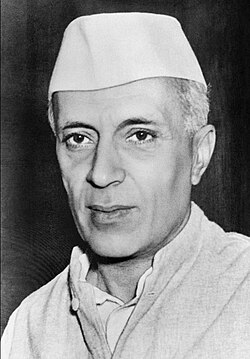
I just read a comment by Kabir about how 2014 changed Nehru’s India drastically ( I do not agree but that’s not for now). But this poses another question.

As XTM’s post pointed out/alluded Hindutva was inevitable and the natural outcome of Pakistan. But why did it take 67 years of Hindutva to assert itself.

In my mind the answer is pretty straightforward and two fold.

1. Gandhi’s murder at hands of a Hindutvavadi.

2. Sluggish economical growth of the socialist era (also called wrongly the Hindu rate of growth).

I would love to hear comments on the question posed above.

Why 2014 happened in 2014?
Why Zia, Munir, Ayub, and Even Modi, Are Jinnah’s Children

The heirs of Jinnah are not liberal Pakistani nationalists or English-speaking Karachi elites.

His true heirs are:

  • Zia-ul-Haq
  • Asim Munir and the modern Pakistan Army
  • Ayub Khan
  • And Narendra Modi

This is not provocation. It is structural observation.


I. Jinnah Created a Logic That Outlived His Liberal Aesthetics Continue reading Why Zia, Munir, Ayub, and Even Modi, Are Jinnah’s Children

Nehru, Privilege, and the Missed Settlement of 1947

Kabir’s defence of Nehru as the moral compass of the Indian republic reveals something deeper than nostalgia for secularism. It exposes how much of India’s founding moment was shaped by a single man whose class background insulated him from the material and psychological stakes of Partition; stakes that Gandhi, Jinnah, Bose, Ambedkar, and even Savarkar understood far more viscerally.

Nehru was unique among the major players of his era. He was the only one born into national leadership, the only one who inherited a political position, and the only one whose life had been marked not by struggle but by access. While others were shaped by jail, exile, poverty, or ideological intensity, Nehru was shaped by privilege, and privilege has its own blind spots.

This matters because 1947 was not a moment for abstract idealism. It was a moment for negotiation between communities whose elites no longer trusted one another. On that task, Nehru was the least prepared of the principal actors.


I. Nehru’s Privilege Was a Constraint, Not a Qualification

Continue reading Nehru, Privilege, and the Missed Settlement of 1947

Brown Pundits