
Two comments overnight exposed different sides of the the same problem.
You Can’t Weaponise Islamophobia and Then Kneecap Hinduism
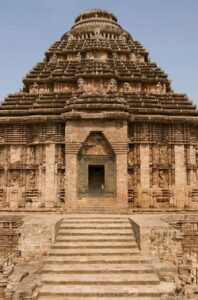
Kabir tried to circulate a link around Manu Pillai’s Gods, Guns and Missionaries, a serious book, framed around whether Hinduism was, in some sense, constructed. The question is legitimate. All traditions are constructed. All identities consolidate under pressure.

But Hinduism and Islam are pari passu in this respect. The nineteenth century shaped both. Colonial enumeration shaped both. Reform movements reshaped both. Romila Thapar, Wendy Doniger, Sheldon Pollock; the literature on Hindu consolidation is vast. So is the literature on Islamic reform: Wahhabism emerging from Najd in the 1740s, Deoband crystallising in 1867 directly in response to 1857, Barelvism as counter-movement to both. All traditions have formation moments. All traditions modernise under pressure.
To apply the deconstructive lens to Hinduism while leaving Islamic historiography untouched is not intellectual rigour. It is asymmetry. Kabir, who deploys “Islamophobia” as a first-strike weapon with the hair-trigger of a seasoned litigator, has never shown the slightest inclination to subject his own tradition to equivalent scrutiny. If the lens is universal, use it universally. If it is selective, say so.
Anything else is prosecution dressed up as scholarship.
Pakistan’s Literacy Problem Is Real. The Comparison to India Is Useless.
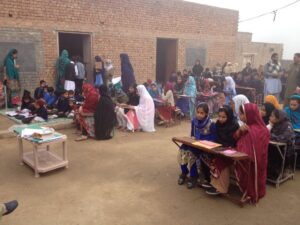
Pakistan’s literacy rate sits at approximately 58%. India’s is 77%. The gap is real and it matters.

But literacy and digital literacy are different things. Mobile penetration in Pakistan exceeds 80%. Jazz and Telenor Pakistan have driven mobile-first access across rural Punjab and Sindh such that hundreds of millions of people who cannot read a newspaper navigate WhatsApp voice notes, YouTube, and TikTok without difficulty. This is the pattern across the entire Global South, from Indonesia to Nigeria. Bombay Badshah cited Jio as evidence of Indian exceptionalism. The irony is that Jio proves the opposite of his point; that device access decouples from literacy across developing economies.
The only serious comparison for Pakistan is longitudinal. In 1990 literacy was approximately 35%. Today it is 58%; twenty-three percentage points in thirty-five years. Slow, uneven, insufficient. But real. The harder questions are structural: why public education absorbs only 2.4% of GDP against the military’s 4%; why the parallel madrassah system educates an estimated 2.5 million children outside state frameworks; why telecom dynamism never translated into educational reform.
The reflex comparison to India, always framed to India’s advantage, always carrying a faint note of triumph, answers none of these. The only metric that actually matters for Pakistan is whether Pakistan is better than Pakistan was.
Everything else is theatre.
India Had the Perfect Middle East Strategy. Modi Is Torching It.
For decades India managed a triangulation that most countries could not have sustained: Israel, the Arab world, and Iran, simultaneously.
There is a reason the great goddess Durga is depicted with eight arms, each bearing a different weapon, each gifted by a different god, each serving a different purpose and yet she moves as one. She does not drop the lotus to raise the sword. She does not choose between the conch and the trident. The power is precisely in the multiplicity, held in perfect balance, each hand an expression of a different divine necessity operating simultaneously. That is not contradiction. That is sovereignty.

India at its best has governed its foreign policy the same way.
One hand holds Israel, defence co-production, cybersecurity, intelligence cooperation that long predates formal relations. Another holds Palestine, UN votes, the Jawaharlal Nehru Award to Arafat in 1975, Modi’s own Grand Collar of the State received in 2018, one of the few leaders honoured by both sides of that divide. A third holds Iran; Chabahar, energy, a civilisational continuum stretching back millennia, the Persian-Indic exchange that predates Islam in both countries. A fourth holds the Arab world; trade, diaspora, the six million Indians in the Gulf whose remittances underpin entire Indian state economies. A fifth holds the Global South; the voice of multipolarity, the inheritor of Nehru’s non-aligned vision, the country that speaks for the world that neither Washington nor Beijing fully owns.

Each hand has its own logic. Each hand serves Bharat. The deity functions because all hands move independently, without contradiction, without collision.
This was not hypocrisy. It was realism. Non-alignment was never passivity it was the disciplined management of contradiction in India’s favour.
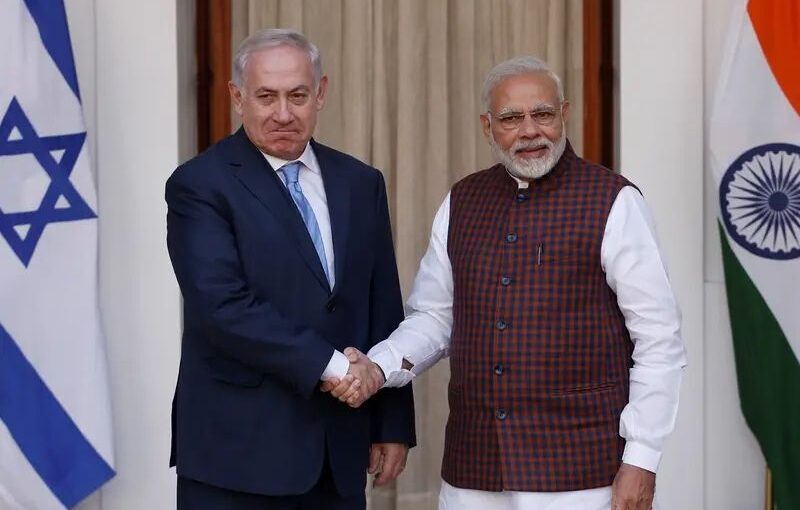
Yesterday in Jerusalem something shifted. Modi became the first Indian leader ever to address the Knesset, told parliament that India stands with Israel “with full conviction,” and received a standing ovation. Netanyahu, who has lost significant credibility across the Global South, called him “more than a friend, a brother.” One week earlier, India had signed a UN statement condemning Israel’s de facto West Bank expansion, a day later than most signatories, suggesting considerable internal hesitation. The Israeli opposition boycotted the speech entirely. Netanyahu separately floated a “hexagon” alliance; Israel, India, Greece, Cyprus, and unnamed others, framed explicitly against “radical” Sunni and Shia nations. India has neither endorsed nor rejected it. That silence is its own statement.
The Palestinian cause commands deep and broad support across the Global South; from Jakarta to Johannesburg to Brasília. India has 200 million Muslim citizens. The geometry of sympathy is not complicated.
None of this means India should not engage Israel. The technology and security partnership is substantive; defence co-production, AI, quantum computing all on the table this visit. That relationship has its own logic and value independent of Gaza.

But when all the hands move in the same direction, Durga is no longer Durga.
The question is not whether India can stand with Israel; Bharat is well on its way to becoming the great balancing power between the US-China rivalry, the civilisational superpower that the twenty-first century has been waiting for. That destiny is not served by full legibility to any single bloc. It is served by exactly the sovereign multiplicity that made India indispensable in the first place.
Strategic ambiguity is a shield. Predictability is a liability. When a state becomes fully legible, it becomes tradable.
That asset, once spent, does not regenerate easily.
Muslims Turn Fasting Into a Party. Why Don’t We?
The Bahá’í Fast begins this Monday, falling inside Ramadan. The proximity, while coincidental (we fast to Naw-Rúz), is also genealogical.

The Bahá’í Faith emerged from a Shi’a Persian milieu in Shiraz in 1844. The Báb was a merchant steeped in Quranic literacy and Shi’a devotional tradition. Bahá’u’lláh declared his mission in Baghdad in 1863, having spent years in the holy cities of Najaf and Karbala before his exile westward. The Fast, nineteen days of abstinence from sunrise to sunset, ending at Naw-Rúz on March 20th, carries the direct imprint of that inheritance, shaped further by the Zoroastrian solar calendar that gives Naw-Rúz its ancient date. Persian, Arab, Shi’a, pre-Islamic: all compressed into nineteen days.
What is striking about Ramadan is not the abstinence. It is the architecture. Iftar is communal; a nightly anchor, the day’s discipline releasing into shared tables every evening. From Marrakech to Dhaka to Boston, Ramadan is social infrastructure. The fast is structure; Iftar is renewal. 1.8 billion people inhabit this framework fully and joyfully every year.

The Bahá’í calendar contains its own extraordinary architecture. Nineteen months, nineteen days, names layered upon names; Bahá, Splendour; Jalál, Glory; Jamál, Beauty; ‘Adl, Justice; ‘Ilm, Knowledge. The nineteenth day of the Fast lands on the name Bahá again, completing the cycle. The number nineteen carries the numerological value of wáhid, unity, in the abjad system running through classical Arabic and Persian sacred thought. The Báb chose it deliberately. The structure is not incidental. It is cosmological.
Nineteen evenings. Nineteen households. Nineteen gatherings, each carrying a name from the calendar. The framework already exists.
The difference between abstraction and civilisation is use.
The Rules Apply to Me Too. Full Stop.
Brown Pundits works when standards are consistent; when Hinduism and Islam are held to the same lens, when Pakistan is assessed structurally rather than comparatively, when India’s strategy is examined without reflexive alignment.
The standards apply to everyone.
Including me.
:max_bytes(150000):strip_icc()/GettyImages-165717552-5c5e31c0c9e77c00010a4901.jpg)
Am Yisrael Chai 🙂
?
It’s pretty clear that “Ram D Nag” is someone’s “sock puppet”. I wouldn’t engage with him.
BB?
That would be my guess.
Naah.
I agree.
who do you guess?
I do not know, but its clearly someone trolling.
Japanese supporters of Israel arriving in Israel singing “Am Yisrael Chai”
Koreas Moonie Church aka The Family Federation for World Peace and Unification and Israel still going strong
Am Yisrael Chai (עַם יִשְׂרָאֵל חַי) is a Hebrew phrase meaning “The People of Israel Live.”
https://web.facebook.com/reel/1412185293269663
oh ok thank you
Geopolitical shifts are driven – not unlike human behavior – by incentives, and constraints.
As elegant as the ..multi-armed metaphor you make, regarding India’s ME policy is, the geopolitical realities that India is facing demand hard accounting.
The blunt reality is that inspite of Pakistan perpetually teetering on the edge of economic failure, its very clear that the PakMil will continue to be effectively equipped by the CCP, and is overtly hostile to the Indian Republic. The CCP on the East, is not only hostile, but has achieved superpower status, and not only has a disputed border frontier with India that stretches for thousands of miles, it even refuses to disclose what it considers its claims.
As India slowly rises from its economic slumber of the latter half of the 20th century, it finds itself import dependent when it comes to critical defence tech – and Israel has, since the 1999 Kargil conflict been an invaluable supplier. This is a non-trivial issue for India – not one that can be wished away under the emotional dialogue of supporting the oppressed, or maintaining some sort of magical non-alignment that it could afford in the 1980s.
The Russians, for all their historical support, are fading. And Umreeka, has shown itself to be just as unreliable as the Indian old guard feared. The Europeans or the Japanese are not going to be able to step up. What choice, but to double down on Israel?
The Russians, for all their historical support, are fading. And Umreeka, has shown itself to be just as unreliable
What choice, but to double down on Israel?
You left out China.
The US has doubled down on Israel.
Not turned out too well for the US.
Specially AIPAC controlling US politics
Umm, the CCP is not really an option for India to either ally with or source defence tech from. Its a hostile adversary.
So not sure what your point is.
Its a hostile adversary.
Hostile adversary by choice.
Choices can be change.
Keep in mind Nehru liked China
The Man from Ceylon. Nehru’s greatest irritant came from a restive member of his own Colombo powers, Ceylon’s Sir John Kotelawala.
Nehru, his carefully fostered illusions of coexistence rudely shattered, was furious. “Bloody fool,” spluttered Krishna Menon. Demanded Nehru: “Why didn’t you ask me before you did a thing like this?” Retorted Sir John: “Do you ask me for permission before you make a move?” Scowling, China’s Chou rose and demanded an opportunity to reply.
That night the Indians assiduously passed the word that Sir John was not too bright and was overeager for headlines.
Time Magazine Monday, May. 02, 1955
Upset at Bandung
https://wilpattuhouse.com/MiscStuff/time_before66/19550502_UpsetatBandung.html
> Nehru liked China
And how did that turn out for Nehru?
how much land did India lose in 1965?
in 1965, none. in 1962, A big ole’ chunk.
oops sorry
And how did that turn out for Nehru?
You need to state specifics and I can answer if possible
I wonder who would be considered India’s best PM..
Fascinating piece!
Reading that article through the hindsight of cold war history makes its ….propaganda aspects very palpable.
also tinge of white supremacy. Pakistan was already a disruptor then haha
You……..really have a lot of reading to do on India-China history.
Modi pulled out all the stops and personally reached out to Xi Jinping, in an effort to defuse the hostility. Hosted him in Ahmedabad, and Chennai – plenty of photos around. In return, Xi unleashed PLA special forces in Galwan when the Indian army was demobilized during Covid. Violating border agreements that had stood valid for almost 3 decades.
It is abundantly clear that the CCP does not want to reduce hostility with India. Rest is diplomatic kabuki.
Remember when India annexed Kashmir in 2019? China made clear there would be consequences.
and they were? Kashmir seems firmly Indian now
Galwan was the consequence.
ohhh
This is quite inaccurate. Galwan was preceded by almost a decade long PLA salami-slicing project that pre-dated not just the J&K annexation, but even Modi being elected. What led to Galwan was the fact that Modi after coming to power, injected a 30% increase in India’s ‘catch-up’ efforts in border infrastructure along the LAC and elsewhere. Which led to increasing friction, and the Chinese thought they could attempt bullying India into a fait accompli by escalating at a time when the Indian army was under a Covid lockdown.
Linking Galwan to J&K annexation is a Pakistani fantasy.
CCP’s warning was relevant only so far as its own claims on the Aksai Chin portion of J&K state, and also signalling its intent to deter any potential Indian advances to shift the LoC further west-ward. If and when India does that, it risks the viability of the Pakistani nation-state, and the CCP does not want to see its….cat’s paw diminished.
LOC should become the border now and be done with it
I agree, has been Indian position (not out loud) since the Shimla agreement.
Unfortunately, if that happens, the Pakistani military will no longer get to hoover down the vastly disproportionate resources of the Pakistani nation-state it claims to defend. And here we are.
It is not a coincidence that every time some momentum has built towards Ind-Pak rapprochement, a terror incident has taken place in India. 26/11, Pathankot, Uri, Pahalgam. The pattern is unmistakable.
China is Pakistan’s strongest ally.
in the 50’s complete inverse.
I edited the last repetitive lines.
yes why is CCP so hostile
yes why is CCP so hostile
Sounds like the Americans claimin CCP is hostile because they are doing better in many area. Loosing in competitive arena
and again, you embarrass yourself. The CCP is overtly hostile to India by literally claiming vast tracts of Indian land – including inhabited state like Arunachal Pradesh. Not only does it claim Indian territory, it even refuses to release a demarcated claim map that would disclose exactly how much Indian land it claims as its own.
If thats not hostility, what is?
Do you really think that your silly childish jibe of “looosing” (sic) is going to annoy me? Its hilarious, and not just for the spelling error.
The CCP is overtly hostile to India by literally claiming vast tracts of Indian land – including inhabited state like Arunachal Pradesh.
Tall claims by you RNJ without and links or documentation.
Just like that “skirmish” in Gawan was claimed be “unleashed” hostility
Lol, are you seriously so loudly proclaim your own ignorance of basic issues between India and China? While still spouting off?
Xi unleashed PLA special forces in Galwan when the Indian army was demobilized
Really you consider that skirmish “unleashed”. Just bored hot head soldiers fight each other.
I would say the India UNLEASHED terrorist on Sri Lanka in the 70’s. And then then again in 1987 and the IPKF
You yet again betray your lack of information on Galwan. Another topic where you wish to spout off opinions without bothering to read up.
I urge you, read up on it a bit, and then you will understand my reference to ‘special forces unleashed’.
You yet again betray your lack of information on Galwan
So why dont you give a summary of deaths incurred by the Indian Army etc.,
Again, an attempt at being provocative by referring to dead Indian soldiers. Pathetic really. Try harder.
Being disrespectful like this will not provoke me, it only serves to hurt your own credibility. Keep going.
Again, an attempt at being provocative by referring to dead Indian soldiers. Pathetic really. Try harder.
So no Indians died in the “unleashed” hostility by CCP..
We know how many IPKF died in the SL hostilities. Specially in the hand of their own trained terrorist LTTE
Again, an attempt at being provocative by referring to dead Indian soldiers. Pathetic really. Try harder.
Being disrespectful like this will not provoke me,
Is this “disrespect” some thing like the Anti Semitic laws in the US. Hide the truth. People went to war and some died. The truth should be told.
Is it “disrespectful” to say 60,000+ have been killed by Zionist Israel in Gaza. Mainly women and children.
we were discussing IND-CHN and zionist uncle wandered off the ranch again.
And I was pointing out your claim of “mentioning dead Indian soldiers Being disrespectful”
So how many Indian Soldiers died in Gawan skirmish.
Anything close to the 1,200 killed by the Indian Trained LTTE. The biggest loss to India in Modern History.
Nothing close to the 60,000+ been killed by Zionist Israel in Gaza. Mainly women and children
I’m not going to entertain your whataboutism tangents. Good night.
I’m not monitoring this exchange; I don’t tend to moderate Sbarrkum as a rule unless one of his counterparts asks me to weigh in.
what’s the hostility based on exactly?
are you asking about IND-CHN hostility? To paraphrase, its about the CCP wanting India to ‘know their place’ and keep them locked into the subcontinent, prevent them from rising to become an eventual potential rival.
China will lose 300 million people in the next 30 years, India will gain 300 million more.
By end century it will be 1.5 billion – 600 million.
If both countries are rich first world countries, India will just dominate due to more people.
That’s the Chinese fear.
There’s …dozens of ways India gets in its own way before this can play out like you are fantasizing. India has managed to be incredibly consistent in that since independence.
The “Hindu” rate of growth this century has been astronomical fwiw (7-11% annually).
Maybe if Pakistan became more Hindu, we’d also have the “Hindu” rate of growth
The “Hindu” rate of growth this century has been astronomical fwiw (7-11% annually).
It is the less “Hindu” regions like Tamil Nadu and Kerala that are growing.
Indo Aryan “Hindu” regions baggage will keep them back.
Gujarat, Haryana, Delhi and Maharashtra are definitely Hindu. Partially true for Karnataka as well, because the BJP has ruled over Karnataka a couple of times. Western and Southern states of India are doing well. That includes Western UP. Most Western and some southern states are “Hindu” by your standard. Kindly do your homework first.
you are engaging with someone who intentionally ignores facts and data. Its…kindof a waste of time.
I should
Probably write a introductory guide for new commentators explaining BP
Welcome to BP
I feel such straight line demographics do not really predict the course of history always
makes no sense tbh; India naturally dominates the Indian Ocean Region, which is the third Ocean.
I see India as a Sea Power more than Land (Himalaya is a big blocker)
Power in the 21st century is economics and ‘tech’ driven. Capabilities overcome geography. China is – geographically a food insecure nation-state, and energy import dependent. So is Japan.
Not saying geography doesn’t matter, but great power efficacy in today’s era is about economic capacity. India….is behind, but its demography, especially relative to ROW, gives it an opportunity. Problem is India has squandered plenty of windows of opportunity, repeatedly. Before my lifetime and during. So optimism tends to be cautious.
Its like cricket – Indian fans carry PTSD scars from the 1990s and earlier, and even when the Indian team is doing well and dominant, skepticism abounds. We are all …conditioned by prior experiences even though we know not to extrapolate…
a very important question to ask if India does join the Western Alliance; what is its role going to be?
For instance China competes in the AI race..
India is attempting to take baby steps and join the AI race.
India has a role to play, but not as an alliance partner. Let’s see how it goes. We live in interesting times.
paraphrase, its about the CCP wanting India to ‘know their place’ and keep them locked into the
I dont see that. India know its place, China does not need to remind them.
What I see is India wanting to keep its smaller neighbors in its place, using subversive tactics like sponsoring terrorism.
2 Elephants were strolling through the jungle. A couple of ants were on a tree branch above. The first ant, slips and falls onto one of the Elephant’s back. The other ant yells down from the tree branch – Dabaaa de saale ko. (T: Crush that fool!)
Its …a lot punchier and funnier in Hindi. 🙂
US foreign policy is a hot mess
US foreign policy is a hot mess
Has been a mess for decades.
The Republicans wanted cheap labor
Democrats waned immigrants who voted Democrat.
What has changed is those Brown Immigrants of a few decades ago have come of age and are now in the halls of power (eg Ilhan Omar). Worse they tend to be Pro Palestine.
So that flood of Immigrants need to be stopped or the Pro Israel Lobby is going to lose influence.
We will find out in 2026 Nov Mid Term elections. If some or many of those who get AIPAC funding lose we know the tide has changed for the Pro Israel Lobby
young Jewish Americans tend to be more non-Zionist than Zionist
Its not about Jewish, Its about the general public that was at onetime sympathetic to Israel.
Now with the Genocide that appears to have changes. Mid term elections will show.
there are many ways to be allies
I’m not particularly bothered by the link to Manu Pillai’s interview being removed. That’s your editorial call though I think it is hyper censorship.
But I want to clarify that I would never use “Islamophobia” to attempt to stop a serious intellectual discussion with a credentialed scholar. That’s an unfair accusation to make.
I decry “Islamophobia” on here when it is addressed to me personally. When words like “taqqiya” are used, when I am called an “Islamist” (another slanderous accusation). These examples are hurtful and slanderous.
I have never attempted to shut down a genuine intellectual discussion.
On India and Israel: Azad Essa has published an entire book entitled “Hostile Homelands: The New Alliance Between India and Israel”.
Finally, it is a coincidence that this year Eid ul Fitr and Nowrouz are both on March 20.
yes it hasn’t happened like this since 1863; which incidentally was the year Bahá’u’lláh proclaimed himself to Be the Promised One of the Ages
https://www.facebook.com/news.kalerbarta/posts/for-the-first-time-since-1863-ramadan-lent-and-lunar-new-year-are-all-taking-pla/122240368190140002/
I don’t know about Eid & Norouz coincident but that Islamic New Year, Lunar New Year & Lent all overlapped (Lent is usually calculated from the Spring Equinox if I’m not mistaken)
All traditions are constructed.
As are all religions, human consructs
Agreed
are you an atheist?
I wouldn’t say “atheist”. More like agnostic.
I intellectually recognize that religion is a social construct (as is nationalism etc).
Obviously, practicing Muslims believe that the Quran is literally the word of God and was revealed to the Prophet Muhammad (peace be upon him). Non-Muslims don’t have to believe this.
The academic explanation for the rise of Islam would be that the Prophet was inspired by Judaism and Christianity (both of which he would have been aware of since he was a merchant) and used them to develop his new ideology, which was certainly more progressive than what the Arabs were doing at the time. Islam, for example, gives women the right to divorce–which I don’t think pre-Islamic Arab culture did.
It’s not rational to believe in “divinely revealed” scriptures but religion is obviously an important part of most people’s framework.
you fervently defend Pakistan even though you don’t accept it’s foundational layer?
I think it’s a bit more nuanced than that.
I am a patriotic Pakistani. I was born in Pakistan. My parents were born in Pakistan. I love my country.
I believe Pakistan has a right to exist. Our sovereignty and territorial integrity are non-negotiable.
None of this has anything to do with religion. There are very patriotic Pakistanis who happen to be non-Muslim.
When it comes to my own religious beliefs (or lack thereof), I was raised in a very secular environment. My parents are pretty non-practicing. Some of my other relatives however are quite religious.
However–whatever I may or may not believe– legally I remain a Muslim. I have a Muslim name etc.
you have made ur nation your deity alas
I don’t think so.
I’m on record criticizing the misuse of the blasphemy laws.
https://kabiraltaf.substack.com/p/the-assassination-of-salman-taseer
I’m a US citizen. I love the US. But that doesn’t stop me from criticizing President Trump’s actions for instance.
it’s only when it gets so egregious
No. It doesn’t.
context?
depends
As are all religions, human constructs
Give me an example of a religion that is not a human construct
They all are. Even the concept of “God” is a human construct.
hmm
I won’t go into that th
NED is the regime change Department of the US
Damon Wilson, the head of the National Endowment for Democracy (NED), was interrupted by a member of Congress during a House oversight hearing on Tuesday after revealing that his agency “began supporting the deployment [and] operation of about 200 Starlinks early on” amid the violence which swept through Iran last month.
Before he could finish the sentence, he was cut off by the ranking member of the House Subcommittee on State, Foreign Operations, and Related Programs, Rep. Lois Frankel, who told Wilson: “You know what, I’m going to interrupt you – we’d better not talk about it.”
The National Endowment for Democracy was founded in 1982 under the auspices of then-CIA Director William Casey to topple socialist and independent governments through the direct sponsorship of NGO’s, media organizations and political parties. “A lot of what we do today was done covertly 25 years ago by the CIA,” NED co-founder Allen Weinstein said of the Endowment’s work in 1991.
https://www.zerohedge.com/markets/watch-congressional-testimony-abruptly-cut-after-covert-iran-ops-revealed
US Winning Big according to Trump
State of the Union address
https://web.facebook.com/reel/919143971072368
only 38% really liked the speech?
I think Trump’s favorability numbers are generally down to 38% (or something like it).
Presumably, if the US gets entangled in Iran those numbers will go down further. However, if it is a military success maybe it’ll give him a boost.
unlikely – Iraq was a “military success.”
And Bush II got an initial boost from succeeding in Iraq.
It went downhill later.
oh I don’t remember that; just remember it being an endless Quagmire
Bush got re-elected in 2004. He was a wartime president and I guess that had something to do with his re-election.
That was the first election I voted in. Of course, I voted for John Kerry.
LW in the US
RW in Pakistan
I am not “Right-Wing”. I deeply resent that.
PML-N is a centrist party.
My views are always firmly within the centrist spectrum.
ur jingoism is not lefty tho’
I don’t think it’s fair to call me “jingoistic”.
My views on Pakistan are always firmly within the centrist consensus. I almost never disagree with anything written in DAWN.
No Pakistani will ever stand for attacks on our sovereignty and territorial integrity.
Your unqualified full-throated support of the ‘Pak Fauj’ as you call them, in spite of their authoritarian and arguably criminal domination of Pakistan, says otherwise.
Don’t get personal with me. I would appreciate it if you do not respond to me.
You are not a Pakistani and thus not a judge of Pakistani patriotism.
My views have ALWAYS been within the Pakistani centrist consensus and they always will be.
My mother’s relatives served in Pak Fauj, I have immense respect for that institution.
Calling Pak Fauj “criminal” is unnecessarily offensive.
@XTM: I have asked RNJ to please desist from baiting me for the umpteenth time.
unlikely – Iraq was a “military success.”
Yeah, replaced Sunni Leadership with Shia.
A gift for Iran.
How is that a military success.
that’s my point; it did the initial goal, “regime change.”
that’s my point; it did the initial goal, “regime change.”
I dont think the “regime change” the US ended up with was the original intent.
Remember Saddam was a US pawn that was used to fight Iran. Then the “regime change” ended up giving the leadership to the Shia, allies of Iran
Koreas Moonie Church aka The Family Federation for World Peace and Unification and Israel still going strong
https://web.facebook.com/reel/4334039356842759
I don’t get the link
Moons Church becomes key funder for Christian Zionism in Asia. Korea identified as third Israel. Forges direct ties with Netanyahu and the Likud Party. In 2003 Launches Jerusalem Summit and brings together Evangelicals and Israeli hardliners.
https://www.brownpundits.com/2026/02/19/japan-war-criminal-dynasty-and-moonies/#more-22510
are these alliances really worth all that much?
INC benefits from left + liberal ecosystem across politics and media in the west. BJP tried establishing some channels with right wing conservatives in the west. But the prevailing anti-immigrant sentiment acted as impediment. Good relations with Israel provide an alternative channel to powers that be in the west.
Ofc the pro Israeli lobby within the rw would want over hypes the generosity of the Israeli help and underplays the one-way buyer-seller relationship. I hope the balance is maintained going forward.
It is hypocritical on the part of the left+liberal cabal to expect India to wage a lonely anti-imperialist and anti-capitalist battle against the west while the intelligentsia is cocooned in western universities and all middle eastern regimes cooperate with west for their mutual benefit.
Welcome back!
Modi has been mentioned in the Epstein Files.
Has Modi been coerced by Mossad/Israel
in what context?
I think it’s one of Modi’s ministers (not sure which one) that has been mentioned in the Epstein Files.
yes doesn’t feel too indictable – shocking re Bill Gates tho’
I think the issue is India giving diplomatic cover to Israel during the Gaza genocide.
India is one of the world’s largest importers of Israeli weapons.
Also, I don’t think that one can deny that–at least among the Hindutva crowd– a lot of the “pro-Israel” attitudes is based on shared antipathy to Muslims. Never mind that all Palestinians are not Muslim and that it is not really a religious struggle but a nationalist/anti-colonial one.
exact
lol, the entire Arab world + Indonesia and Malaysia (?) lined up to support trump’s board of peace for Gaza. Was that not providing diplomatic cover? In contrast GOI still supports the 2 state solution and modi did not line up to bend the knee on board of peace.
You can look at the record of UN resolutions and see how India has voted. It’s very clear that GOI doesn’t want to offend Israel.
As for “supporting the Two State solution”– I’m sure India’s stance on that really gives comfort to the Palestinians.
but even so staying consistent to TSS is a big deal.
also condemning Hamas, who are sworn enemies of the PLO, doesn’t hurt India-Israel or India-Palestine relations.
The “Two State Solution” is a joke. Israel has made it completely impossible.
Israel is annexing more West Bank land as we speak. On what land is there supposed to be a Palestinian state?
India did sign that condemnation
good point..
“The only metric that actually matters for Pakistan is whether Pakistan is better than Pakistan was.” – Lots of Pakistanis don’t feel that way though.
If you get richer by 2x but your former classmate/neighbour who was your equal gets rich by 10x it pricks.
You can see it in cricket especially. Pakistan’s issue is not that they are not one of the power brokers in cricket (they never have been). It’s that India has become the biggest one and the earlier bosses England/Australia are basically India’s sidekicks.
I’ll writing on this
XTM: I had allowed this comment but now will edit it out.
I’m not enjoying the information asymmetry; where you are googling on known commentators and authors but at the same time hiding behind an entirely anonymous profile.
It feels VERY invasive. I will be moderating this closer for now; please note if going forward you comment on K’s personal life or anyone else’s you will have your Authorship privileges removed.
XTM: BB you are kind of showing way too much research interest in members of this blog.
[…] X.T.M on Double Standards, Modi’s Gamble, and Why Ramadan Gets It Right […]
“What’s driving ‘special relationship’ between Israel and India?| Inside Story”
https://www.youtube.com/watch?v=WZYXcGmE27g
tl;dr?
India is the number one importer of Israeli weapons.
Israel is isolated due to Gaza and India is one of the few countries firmly on its side.
This is why it is a big deal for Netanyahu that Modi chose to visit Israel at this time and address the Knesset.
maybe worth writing a piece on it
“What to make of Modi’s address to the Knesset”
By Azad Essa
https://azadessa.substack.com/p/what-to-make-of-modis-address-to
Haha, you commented there too.
it’s a lot harsher than what K would say at BP tbh
is this AE chap Kashmiri?
No. He is South African (of Indian descent obviously).
gotcha
You first buddy. Or are both Israel and US going to look like wimps.
Advisers to President Donald Trump are “privately arguing that an Israeli attack would trigger Iran to retaliate, helping muster support from American voters for a U.S. strike,” the outlet (Politico) writes, citing two people familiar with the discussions.
“The calculus is a political one – that more Americans would stomach a war with Iran if the United States or an ally were attacked first,” Politico continues.
https://www.zerohedge.com/geopolitical/trump-advisers-want-israel-attack-iran-first-better-optics-politico