

Bangladesh completed a whitewash over Pakistan yesterday in the test series they were playing at home, winning it 2-0. This follows the 2-0 whitewash they achieved in the test series before this, in Pakistan two years ago (in Rawalpindi, of all places). Bangladesh have also won the last ODI and T20I series between the two sides.
During my vanvaas, apart from enjoying the IPL (on which I will do a post later, maybe after the final) I also watched a decent chunk of the test series. Test cricket has its own flavour of joy, distinct from the more immediate rush of T20 cricket. Its slower and more meandering pace means you can actually put it on the background while tending to other stuff.
Some thoughts about the series.
Bangladesh has overtaken Pakistan
Bangladesh has been doing economically well over the past few decades and now surpasses Pakistan in most, if not all socioeconomic indicators – higher GDP, higher GDP per capita, higher HDI, lower poverty rate, higher life expectancy, better access to electricity etc.

Diverging HDI between Bangladesh and Pakistan

Diverging GDP pci between Bangladesh and Pakistan
Trend suggest that this gap will grow even more in the future.
Now the thing about these “numbers” are that people who are interested in them will know about them but the average person on the street doesn’t know and/or care. What actually gets their attention is the visible second order effects of these numbers.
The average Pakistani knows that India is better off than them in the present day not because of “HDI” or “GDP per capita” but because of things like the Indian cricket team’s successes (in general and versus Pakistan) or Chandrayaan and the ilk.
Actual visible tangible things rather than abstract numbers.
And just like for India, Bangladesh’s economic rise has led it to becoming a solid team (even if not as good as India) which defeats Pakistan more often that not.
This, the average Pakistani on the street can see.
Pace is pace, yaar
Pakistani cricket fans’ greatest pride is their fast bowling legacy. Usually the preserve of non subcontinental countries, Pakistan was the subcontinental outlier which relied more on pace than spin. Even when Pakistan cricket’s fortunes turned in the 2000s, especially vis a vis India, Pakistani fans still took solace in their “meat-eating” fast bowlers compared to India’s “vegetarian” medium pacers. Of course, this trend has reversed in the last 15 years or so but I’ll leave that for another post someday.
For most of the subcontinent, especially at home – the road to success was through spinners on slow pitches.
India had the spin quartet for most of the 60s and 70s, then Kumble/Harbhajan for most of the 90s and 00s and for the past decade or so relied on Ashwin/Jadeja (although complemented with a very good pace attack unlike earlier spin attacks).
Sri Lanka had Muralitharan wheeling away for nearly twenty years followed by 10-15 years of Herath holding the fort.
Even Pakistan, for all its fast bowling bluster has resorted to this formula for most of this century. Kaneria in the 2000s (incidentally a Hindu), Ajmal in the earlier part of the 2010s, Yasir Shah in the latter part and currently Noman Ali/Sajid Khan (with the help of some industrial fans).
Bangladesh followed this same formula for test success especially over the past decade which saw them win matches vs Australia, England, Sri Lanka etc. Their talisman through most of this era was Shakib Al Hasan, later complemented by Taijul Islam and Mehidy Hasan Miraz, who were part of the current series win.
The first match of the 2024 whitewash (which was Bangladesh’s first test win over Pakistan) did follow this formula. Slow flat subcontinental pitch where Bangladeshi spinners ran through Pakistan when the pitch started assisting spin later.
To avoid this fate, Pakistan prepared a green top in the second match, expecting to overwhelm Bangladesh with their “better” pacers. But it backfired, because Bangladesh was the one with better pacers.
There was a 21 year old kid who got the limelight with a 4fer, troubling the Pakistani lineup with pace and bounce including their best batsman, Babar Azam. This kid was back in the current series making life difficult for Pakistani batsman again, including taking a 5fer in the first match of the series, derailing the Pakistani chase. He was also lethal in the ODI series played a few months ago, including a match where Pakistan was bundled out for 114. In the recent PSL he was part of the title winning team and was very effective in the matches he played including the final (he left midway for international commitments).
So Pakistani fans in a short period have already seen the devastating effects of a “Bangladeshi” fast bowler. Something they could not have imagined in their worst nightmares.
Introducing Nahid Rana.
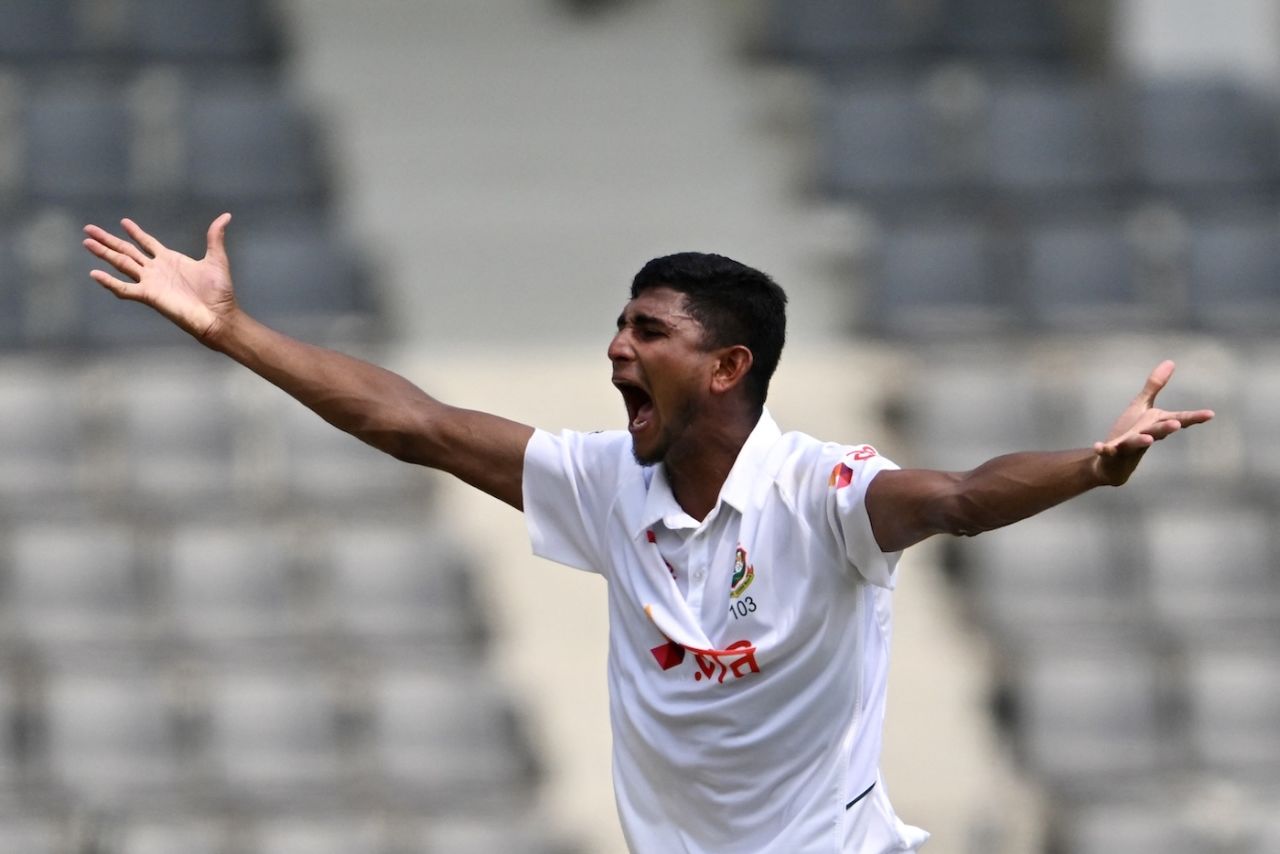
Nahid Rana is a 6’5″ tall bowler who bowls at a high pace often touching 150 kph with lethal bounce. Basically the platonic ideal of a fast bowler which Pakistan has been waiting for since the two W’s hung up their boots many decades ago. And he happens to be Bangladeshi.
Also unlike the subcontinental style of fast bowling which relies on getting wickets by bowling straight and getting bowled/LBW wickets, Nahid has more in common with the South African/Australian style (and in their heyday, the West Indians). Nasty short pitched bowling bowled into the body and this is the kind of bowling Pakistani batsmen absolutely hate.
Pakistan are currently on a run of 17 consecutive matches lost in Australia and their record in South Africa in the 21st century isn’t much better (12L1W) and that is mostly due to the complete inability of Pakistani batsmen to play bounce.
Even more modest bowlers with this style have run through Pakistani batsmen including Hardik Pandya and Andre Russell.
To make matters worse, the Pakistani bowlers were barely able to muster any pace, huffing and puffing at 130kph before ending the day at 120kph. They had become the bhaagte huye spinners they used to mock.

First match – Low speeds of the Pakistani pacers
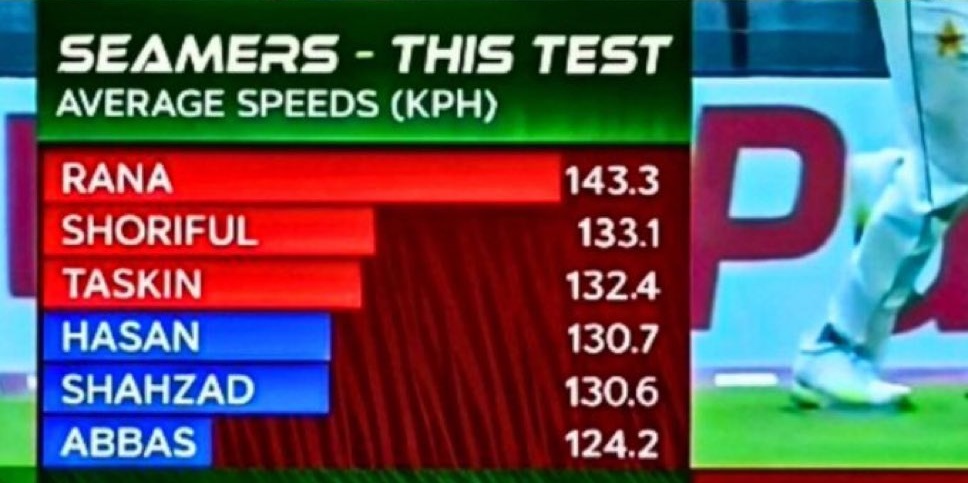
Second match – Fastest Pakistani still slower than the slowest Bangladeshi
CricInfo has carried an article showing how Pakistani pacers are the second worst in the world, only ahead of Ireland who barely play tests.
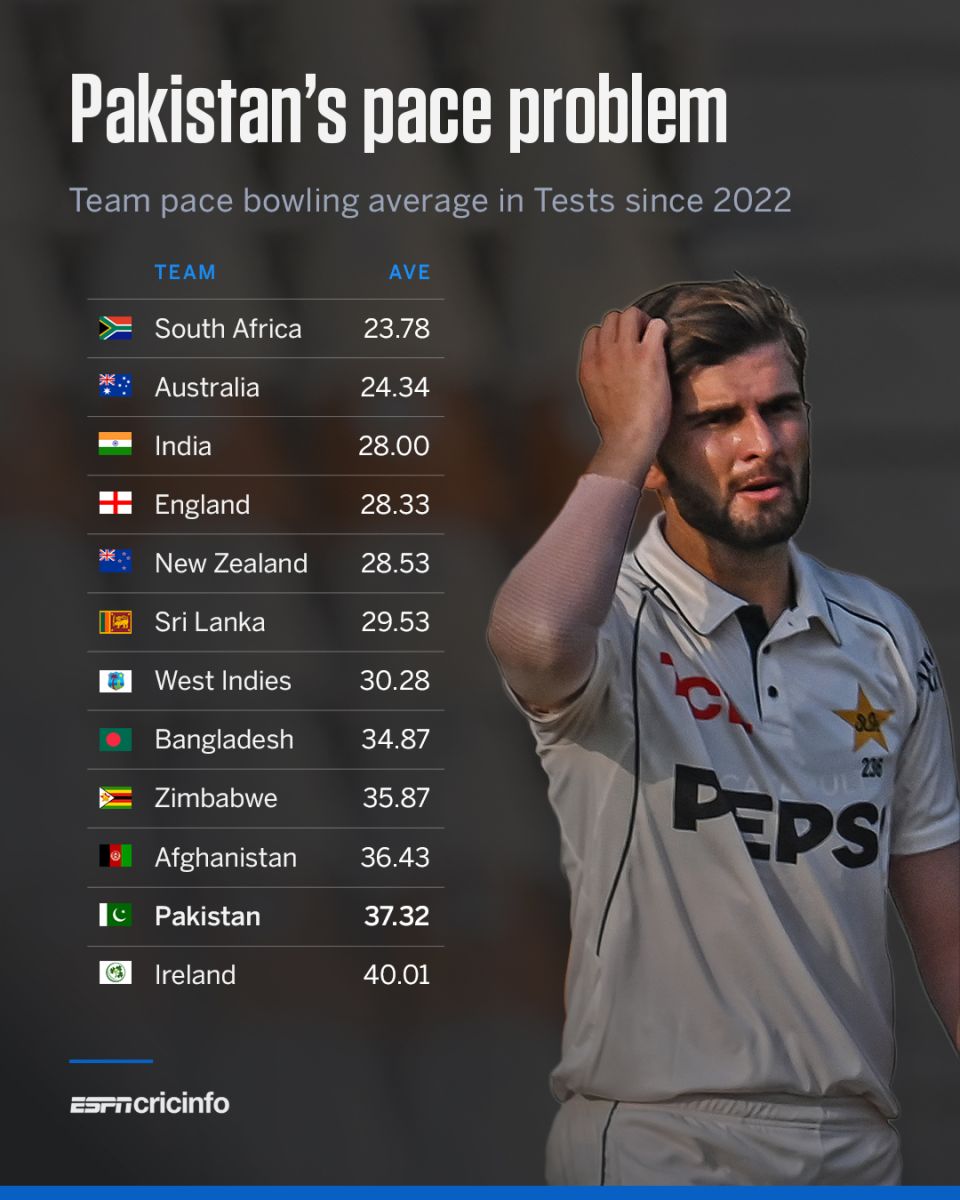
While the general decline of Pakistani cricket must be hurtful to their fans, the decline in pace bowling stocks adds a bit more salt.
The Hindu angle
Another commonality between the two test series was that both of the second matches had the same Bangladesh batsman as the man of the match, who had similar rescue efforts in both games.
In the 2nd match of the 2024 series, Bangladesh were reduced to 26-6 in reply to Pakistan’s 274. Batting with the tail, this batsman scored 138 to get Bangladesh to 262, cutting the first innings deficit to only 12.
In the 2nd match of the current series, Bangladesh were 116-6 in the first innings after which this batsman with the help of the tail got Bangladesh to 278. He also hit a quick 69 in the second innings.
He is a Hindu – Litton Kumar Das.
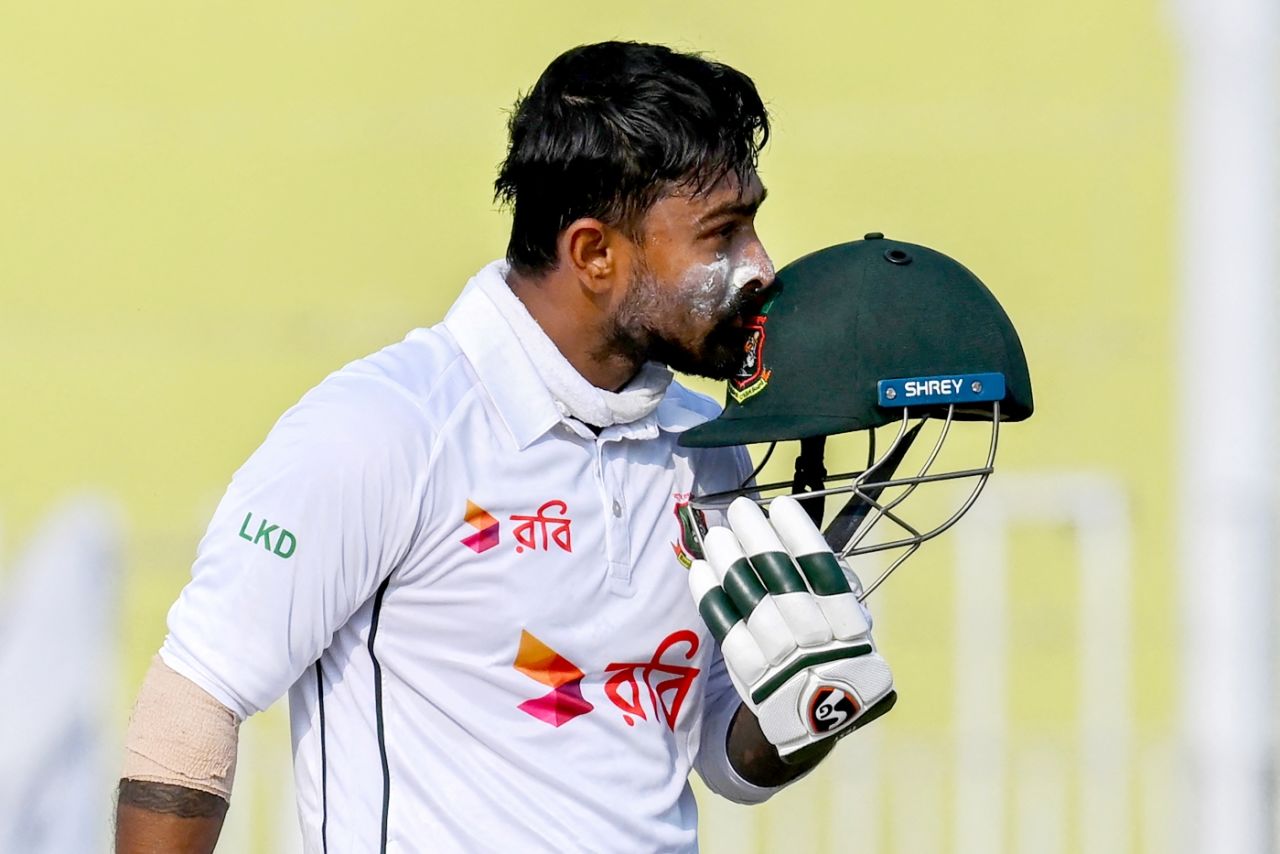
Rawalpindi, 2024
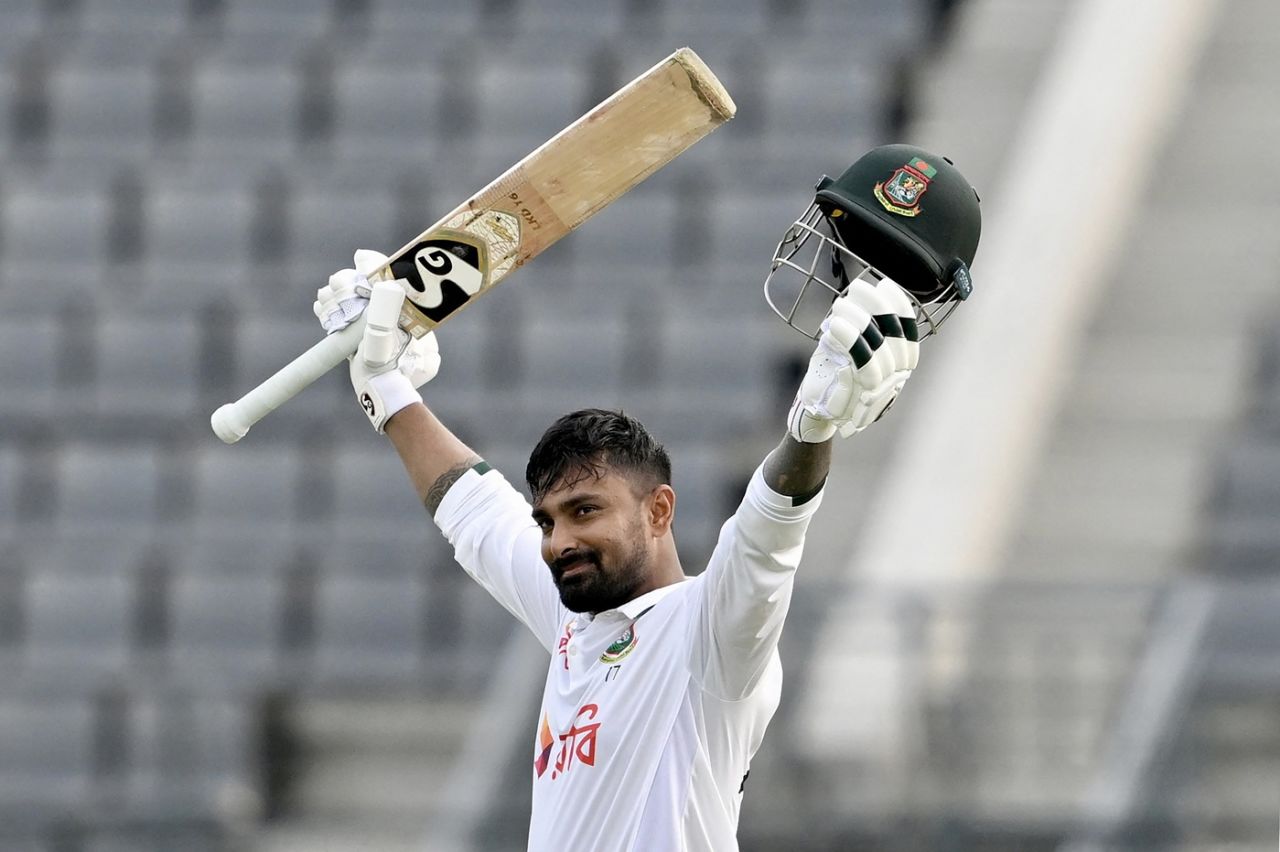
Sylhet, 2026
While any defeat to India or Bangladesh might be galling for Pakistani fans due to historical reasons (add Afghanistan to this mix too now), when the cause of that defeat is by an Indian Muslim or a Bangladeshi Hindu, it hurts a bit more. Indian Muslims whose culture they appropriate and whose existence dilutes their “inheritance”. Bangladeshi Hindus who were once “Pakistani Hindus” and who faced disproportionate violence during 1971.
Brothers Irfan and Yusuf were part of the team that defeated Pakistan in the inaugural T20 World Cup final. Irfan was man of the match and also had seminal contributions in 2004 when India defeated Pakistan away from home for the first time in both ODIs and tests.
A new reality
For an “upset” or “fluke” to happen in cricket where a weaker team defeats a stronger team, it often depends on the format.
T20 being the shortest is often the most upset-friendly as one good short performance can flip the game (the current Indian team’s dominance in this most volatile of formats speaks to its excellence).
ODIs less common but they still do happen – India and Pakistan’s exits at the hands of Bangladesh and Ireland in the 2007 World Cup being the most famous.
Tests it is very difficult because you need to sustain excellence across five whole days. Weaker teams often win a session here and there but stronger teams generally make a comeback and win.
Winning a test is hard enough for a weaker team. Winning a series whitewashing the opponent is even harder. Winning two series whitewashes over two years and in two countries is pure dominance.
The uncomfortable truth for Pakistani cricket fans is that Pakistan is the “weaker” team now.
While the first series win was genuinely an upset with fans being shocked by it, the second one had fans/analysts conceding it would be very even with Bangladesh starting as favourites. And the ensuing results validate those predictions.
A growing realization has now dawned in Pakistani cricketing circles that the current state of things might no longer be a momentary “bump” before revival, but a more permanent decline.
I have often commented on how India, the country they separated from, doing well and peeling away from them would lead to self-reflection amongst Pakistanis and a subsequent re-calibration regarding their priorities. Would Bangladesh, the country that separated from them doing the same accelerate this process?
Because as it stands, Pakistan is very much in danger of becoming the Randhir Kapoor of the subcontinent.
Something that struck me while watching IPL highlights – fairly high representation of Muslim players despite no Pakistanis. Everyone from a Caribbean Muslim (Akeal Hossein) to a slew of Afghanis doing well and not to mention a rising crop of young Indian Muslim talents. India league is the go to for Muslims looking to make it big – except those who choose to leave because they thought they were better off being not Indian.
Even regarding Pakistani Muslims, the IPL has a ban only on those who represent Pakistan. Both Pakistani players who shifted elsewhere (Imran Tahir, Azhar Mahmood, Ali Khan) as well as Pakistani origin players (Adil Rashid, Mooen Ali) have played in the IPL for many years.
I think it is a good step as it incentivizes Pakistani cricketers to leave Pakistan.
USA and UAE are attractive propositions with their first world amenities and IPL owned leagues which are more lucrative than PSL. Of course, abandoning Pakistan also means getting access to the IPL and the “other” IPL owned leagues.
As the economic gap widens even further and the IPL gets bigger both in terms of teams and money, I expect more Pakistanis to switch sides.
Also, I expect Bangladeshi players to start appearing from next year too considering the diplomatic reset. Nahid Rana should be getting a contract.
Now that Bangladesh has started becoming better than Pakistan, time to make Afghanistan better too.
Ek aur zakhm
Its…unfortunate how some of the top Pakistani cricketers have missed out on millions of dollars in potential income due to the perfidies of their governing kleptocrats. Same for Pakistani musicians and other artists.
Mainstream Indians, and even muslim Indians support the Indian government’s attempt to fashion a stick out of those potential carrots, in order to induce a policy change from the Pakistani government on terrorism and hostility towards India.
Unfortunately for India and Pakistan’s ‘awaam’ those who control Pakistani policy don’t really care that much about the negative impact their policy choices create for their nation or citizens. As long as they get to ‘klept’ away, they will keep selling and sustaining the Hate India chooran. Their incentives are not aligned with the public.
This is why Op Sindoor, and its direct assault on PakMil assets is hoped to be a stronger deterrent for future “misadventures” like Pahalgam. At a minimum, Munir and PakMil’s calculus has to factor in future hits like the ones they took last May. ‘Next time’, they may not get away with potemkin victories.
An eventual “East Germany” moment is coming for Pakistan. Pakistanis, unlike North Koreans cannot shut off the rest of the world.
Their existing problems are amplified by their former countrymen doing relatively well.
It has always been a choice for independent Pakistan whether they chose to be a Canada, or a Mexico, or a Cuba to the United States of India.
The parallel may be a bit of a stretch, but it holds. The only difference is that Cuba’s benefactor (USSR) crumbled a few decades ago. If and when the Chinese Communist Party crumbles – as most totalitarian setups eventually do, it is eminently possible that their funding of the Pakistani ‘nuisance’ towards India may dry up. What will Pakistan do then?
But of course, this is unlikely to be Munir’s problem, either the PHailed Marshal has retired to a cushy villa in Dubai, or has moved on to the afterlife. And as always, it will be the IMF and Pakistani awaam that will be left to pay the tab.
China and USA can support them geopolitically, not economically and not in the fields of cricket and Hindi/Punjabi media where India is the USA/China combined.
Not sure about this. The rise of BJP/ Modi made atleast some Indian muslims that may be the Muslim League was right after all
“Indian muslims” are a hugely diverse mix. Anecdotally, all the Indian muslims I personally know are derisive towards Pakistan and feel that their ancestors ‘chose the right side’ of the Durand line.
That is why I said some. Here in Lucknow this sentiment has been expressed during family gatherings and drawing rooms…
Sure about what?
That may be Muslim League was right after all.
And yet not a single Indian Muslim will migrate to Sub-saharan African tier Pakistan, especially hell on earth Karachi where most Mohajirs live.
Deeds matter, not words.
And the economic gap is widening.
https://www.imf.org/external/datamapper/PPPPC@WEO/IND/PAK/SSQ
That is true. But there is a perception that the situation will only get worser here in India . ‘Bahar janay ki koshish karo’ is the most common advice given to every young cousin.
People emigrate anyway. It will be a drop in the ocean. More Hindus leave than Muslims for economic reasons.
Indian Muslims will remain in India.
There might be some attacks on the more conservative elements of Muslim society (UCC, temple reclamation etc) but there is no appetite for anything more extreme.
Are you Muslim by any chance? Specifically Shia?
Such regressive thinking is why I think partition and the creation of Pakistan as a living near-dead Zombie witness to what grandiose delusional Islamic ‘othering’ leads to, is a silver lining for India and Indians, especially muslim Indians.
And the creation of Bangladesh too.
partition includes both East and West Pakistan.
The fate of “Islamic” Indians when choosing to let their governance be dominated by Islam speaks for itself.
Obviously, this is not to gloss over, or at all condone increasingly overt anti-Islam behavior in Indian society today. But India remains constitutionally secular and even-handed to its muslim citizens – room for improvement certainly. But still orders of magnitude the ‘better’ choice by any objective metric.
Now does that mean that you won’t have a random few resentful ‘grass is greener’ sentiments on occasion, especially when underwritten by a strong orthodox religious bent? Sure. And that’s just human nature.
Point is that the Bangladeshis kicked out the Islamic identity and adopted a Bengali one and are doing relatively well, jamaat shenanigans not withstanding.
If both the country you separated from and the country that separated from you are doing better, that means your country itself is wrong.
Like I have mentioned in my post, apart from India doing well, Bangladesh doing well also reflects poorly on Pakistan.
There are shades of that i would imagine. Maybe AIML was right that the congress was monopolized by elite caste hindu interests, but wrong on partition, which fractured the single largest social group into 2 and eventually 3 challenging predicaments.
very high signal post – thanks Humza.. loved the detail and hard to disagree with your conclusions tbh
Afghanistan next.
They have no interest in red ball, but can become a solid white ball outfit. They have been doing decently well since the last few years with their development accelerated with access to the leagues.
And they are not as mild mannered as Bangladeshis/Indians.
Afghan fans frequently get into fistfights with Pakistani ones.
When Afghanistan defeated Pakistan in the last ODI WC, the Man of the Match explicitly dedicated it to the Afghan refugees being kicked of Pakistan to the Pakistani presenter who quickly changed the topic.
https://www.dawn.com/news/1783807
we feel that constantly writing off Pakistan is a disappoint since Pakistan has a habit of a trump card..
it is a toxic symbiosis; the Indo-Pak mutual love affair
Yes, occasional blips here and there but the trend is downwards.
As an aside, Pakistan are streaming their Australia series for free on an app. This is after streaming series for free on YouTube.
This does point to the lack of interest in broadcast rights for Pakistan cricket.
premature to write off Pakistan..
Not writing them off. They are a big country after all. But they cannot both be “Prussia” as well as succeed economically.
With their population and craze for cricket, they do have it in them to be a top team once again but that will require a certain level of economic impetus so that there can be systemic changes (better nutrition, facilities, coaching, injury management etc). And that will require them to make sacrifices elsewhere.
Also the “sanctions” by India don’t help – Pakistanis have been frozen out of IPL as well as the IPL owned leagues (which is most of the leagues) as well as lack of bilateral cricket whether international (along with the money that comes from it) or lower level A tours, lack of access to Indian coaches/facilities etc etc.
[…] Bombay Badshah on Bangladesh whitewash Pakistan again […]
The best thing about posts like this is that it illustrates how little Indians know about Pakistanis.