
What’s going on? COVID-19 in India, the Middle East conflict, etc. I can’t wait for “white boy summer” to really start. Too much news.
Author: Razib Khan
BAPS!

I don’t have much to add, but of course, the word “caste” is used but not “class.” I think we’ll expect more of this…
Open Thread – 05/08/2021 – Brown Pundits
New Browncast up. It’s about the ’71 genocide (if you haven’t, please subscribe on a podcast app). I haven’t talked up the Patreon in a while, but all the hosting/editing (we need more than the usual storage since sometimes there are 4-5 podcasts in a month!) is supported by that, so if you like what we’re doing, please chip in. I usually post episodes early for patrons.
 My first steppe piece on Indo-Europeans is up at my Substack. It, and the subsequent steppe pieces are going to be paid.
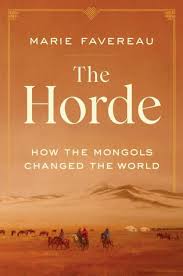
Unherd will be posting a review of The Horde: How the Mongols Changed the World on Monday.
Also, I think it is high time I spotlight some work/projects of BP contributors: The Emissary and Meru Media.
Make sure to follow me on Clubhouse and the Brown Pundits Club. We’ve been doing a lot of impromptu discussions on the club, so once it opens up to Android you’ll want to join.
West Bengal, TMC wins!!!
Modi’s BJP Suffers Setback in West Bengal State Elections:
Indian Prime Minister Narendra Modi’s party fell far short in its attempt to win control in a fiercely contested state election, one in which its aggressive efforts to get out the vote have been criticized as worsening the country’s surge in Covid-19 infections.
Official results coming in early Monday showed Mr. Modi’s Bharatiya Janata Party was poised to win as many as 77 seats in the West Bengal state legislature—a sharp pickup from its previous showings but well short of a majority of the 292 seats being contested.
The state’s governing Trinamool Congress party was on track to win as many as 213 seats. The party is led by Mamata Banerjee, a powerful regional politician who has at times been an outspoken critic of Mr. Modi.
– Does the TMC have an ideology?
– It’s weird that this is a state with 90 million people. India is so populous!
– Are regional parties going to have a lock on the south and east?
Open Thread – 04/30/2021 – Brown Pundits
Readers of BP will be interested in a free piece I have on my Substack (I’m writing this before I send it so not a direct link). It’s brown-related.
Multiple hearths of agriculture in ancient South Asia
Patrick Wyman’s Tides of History podcast is tackling South Asia and prehistory. He wrote up a Substack for it too, Ancient South Asia – Farming and People in India and Pakistan. I agree with Patrick here, though my confidence is low:
…It seems unlikely that a group living 1400 miles to the east would have chosen precisely the same suite of domesticated plants and animals as their related brethren in the Fertile Crescent. It’s intriguing that a fourth distinct group, as yet unsampled by geneticists, might have been living in the Fertile Crescent alongside their relatives 10,000 years ago or more. But the most likely, in my opinion, is that the group ancestral to later South Asians was living somewhere between the Indus Valley and the Zagros, perhaps on the Iranian Plateau: close enough to adopt some pieces of the Fertile Crescent farming package, close enough to head a short distance east, through the Bolan Pass, and into South Asia.
My confidence in this part is higher:
Yet they were not alone in South Asia, nor were they the only ones engaged in farming. Further to the east, along the Ganges River, the indigenous foragers were also experimenting with plant cultivation. In fact, there were no fewer than five places in South Asia where we see evidence of independent plant domestication. Mung bean, urd bean, horsegram, several varieties of millet, and rice were all cultivated extensively. These crops had the benefit of being able to grow during the summer monsoon season. South Asia was actually home to multiple Neolithics of its own.
In Southeast Asia and Europe, the hunter-gatherer populations contributed 20% or less to the ancestry of modern groups, who descend mostly from farmers and pastoralists. In South Asia the “Ancient Ancestral South Indian” (AASI) ancestry is ~50%. What’s the difference? I think the likelihood is that AASI populations were moving toward agriculture is a likely reason why they were much more demographically robust and impactful.
Open Thread – 4/24/2021 – Brown Pundits
My piece on India was hated by the Left and far Right (“Trad” Twitter). Both were pretty incoherent and smug too.
Open Thread – 4/17/2021
What’s going on brownz?
To the victors go the glory!
I have written an introductory post (it’s free), Entering Steppelandia: pop. 7.7 billion, to a series of posts (mostly paid) that I will write about the Eurasian steppe. So I’m thinking and reading a lot about this topic. This is relevant to “Brown Pundits” because we subcontinental people have been stamped by the steppe.
First, there were the Indo-Aryans. About 15% of the ancestry of modern South Asians comes from these people (averaged across region and caste). Then there were the Iron Age Iranian pastoralists, Scythians, and assorted other related groups. There is no strong evidence right now of a major genetic impact, but I think the statistical power is not such that I can definitively ignore this possibility.
Finally, there are the Muslims. They had the least impact. But they are most reviled. Why?
They lost. The lesson is to not lose. The rest is commentary.
Open Thread – 04/10/2021 – Brown Pundits
What’s going on?