 Some of you are probably not amused by the jokes I try to make about AIT and Lord Indra. I hope it’s pretty clear I’m not serious about all of this…it’s just that people take these issues so seriously.
I’ve changed my mind on the “peopling of India” question several times since I began to take a genetic interest in the topic around the year 2000. That’s because the genetic and archaeogenetic technology and data has gotten better and better with every passing year. We can answer questions with power and precision that we couldn’t even imagine asking a few years ago.
Some of you are asking questions that are already answered in the supplements of the Narasimhan paper. From page 260:
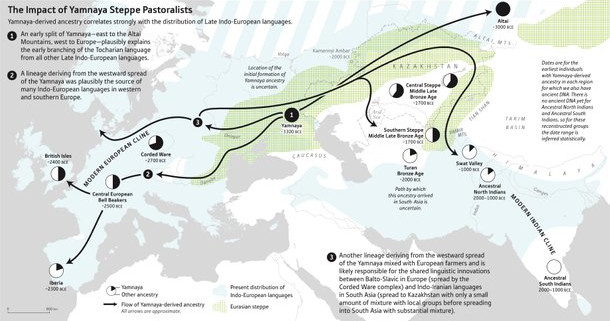
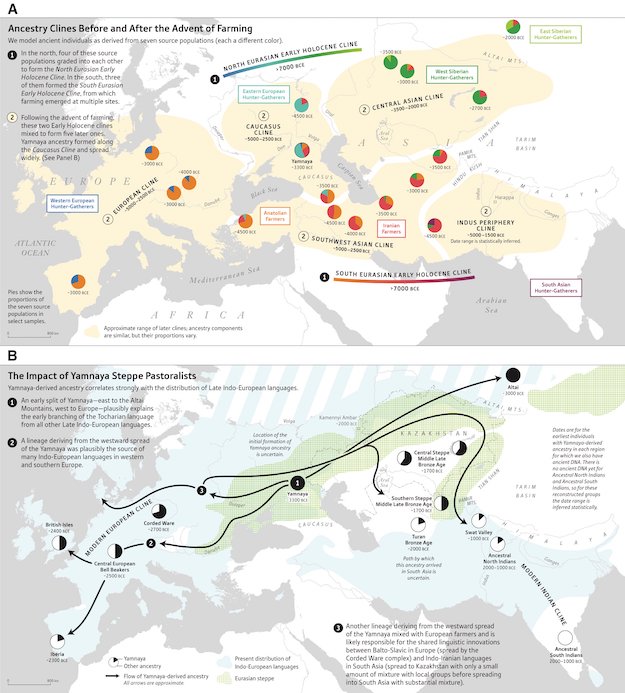
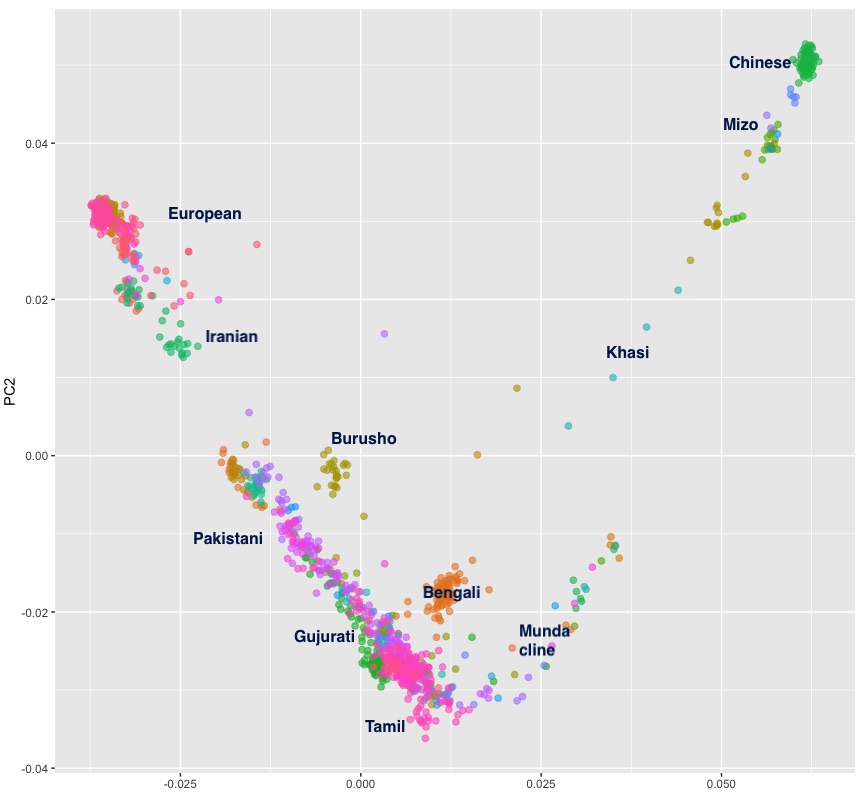
With respect to South Asia, our key finding is that people with ancestry like the Kushan individuals can be excluded as important sources of the Steppe pastoralist-related ancestry that is widespread in South Asia today. In particular, the East Asian-related admixture (via Steppe_LBA ancestors) that characterized the Kushan individuals is nearly absent in South Asia. We formally confirmed this inference through qpAdm modeling that excludes the Kushan individuals, as well as nearly all the other Iron Age and historical period individuals from other cultural contexts that were published in two recent studies (29, 30) as plausible sources for the Steppe pastoralist-related ancestry in South Asia (Fig S 50).
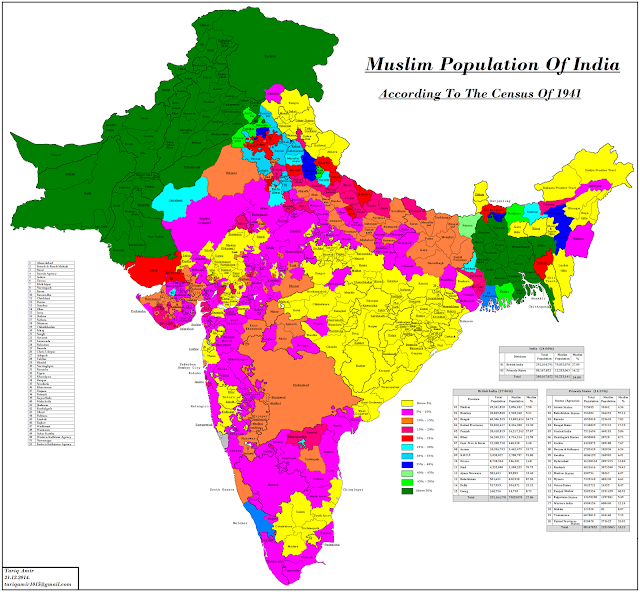
Though culturally and historically significant, like the Muslims, the earlier steppe people that are prominent in Indian history don’t seem to have made a major genetic impact.
The question has been answered. And that’s good.
In the comments below some readers are asking about whether arguments have been won. Knowledge and science proceed through argument. But let me be clear here: I am not invested in a particular outcome, I am haunted by the possibility that we can know the truth of things. As a child, I was fascinated by history, but I always knew that I was going to go into science, because science progresses, while history circles in argumentation. What ancient DNA has done has been to illuminate the darkness of the demographic past. This is not the totality of human history, but it serves to provide a critical and precise scaffold on the questions we ask and the answers we come to.
The American Academy is so ideologically blinkered and biased that I am not going to throw stones any longer when I see people in other nations engaging in this sort of behavior. This is the world we live in. Knowledge is not furthered through institutions in anything more than a proximal manner. The results, the data, are out there. We need to grasp them and interpret them for ourselves. The truth is ours. If we choose to take it.

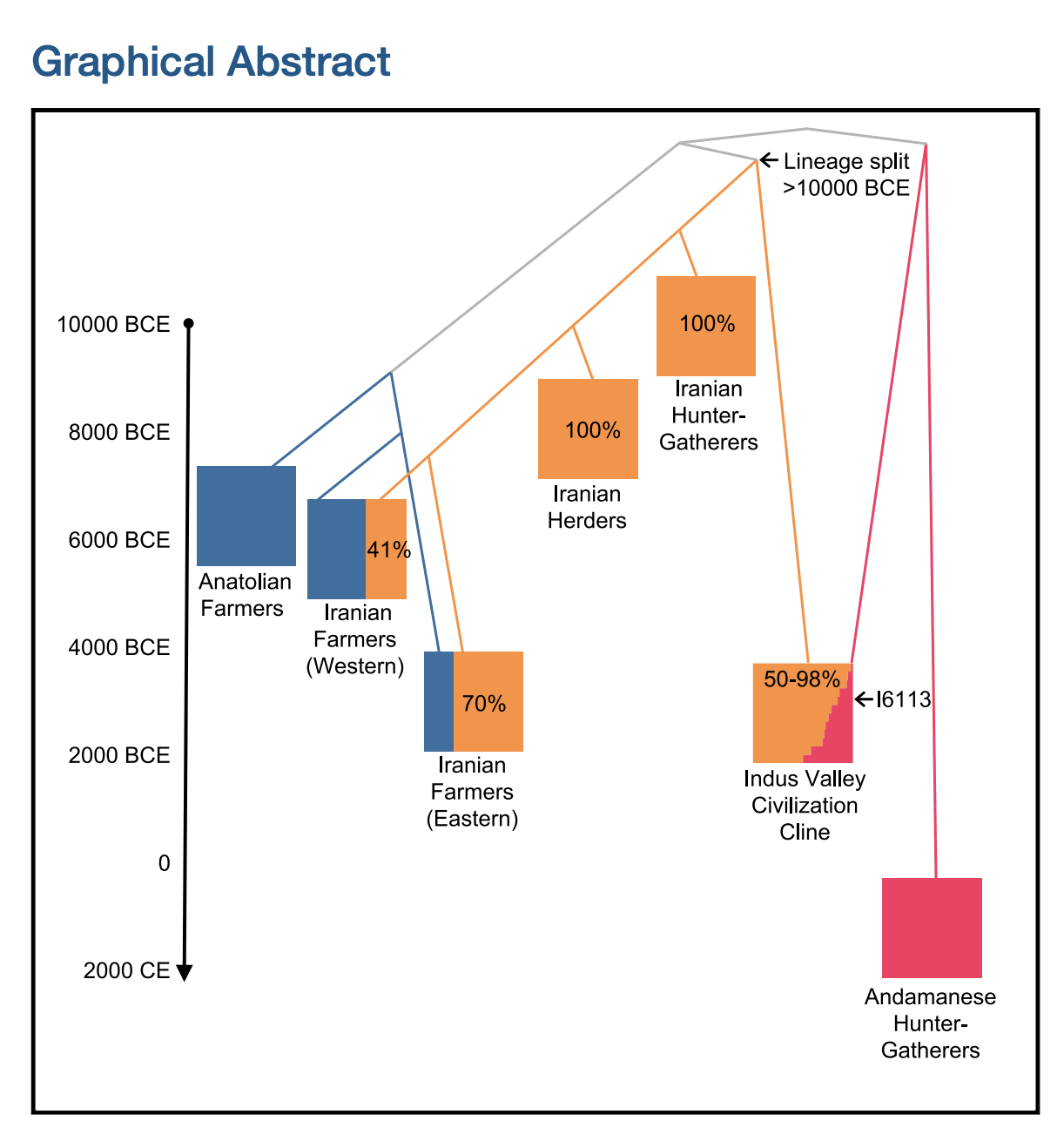
 In ~48 hours I will be recording a podcast with Vagheesh Narasimhan, first author of The formation of human populations in South and Central Asia, and the second author of An Ancient Harappan Genome Lacks Ancestry from Steppe Pastoralists or Iranian Farmers. We’ll have lots to talk about but open to taking questions from readers as well.