Browncast into June….

Thanks to everyone who is a patron on the Browncast. I’ll be posting a few more in there today (or very early tomorrow). We won’t be posting anything in public until June 1st. Our podcasts tend to go longer, rather than shorter. Perhaps it’s a brown thing? In any case, regular podcasts of 1+ hours mean that our month quota gets used up regularly.

I won’t be recording too many podcasts for the next month (I may jump on one here and there depending on my availability), but that’s fine because there are already several in the pipeline. Here is a preview:

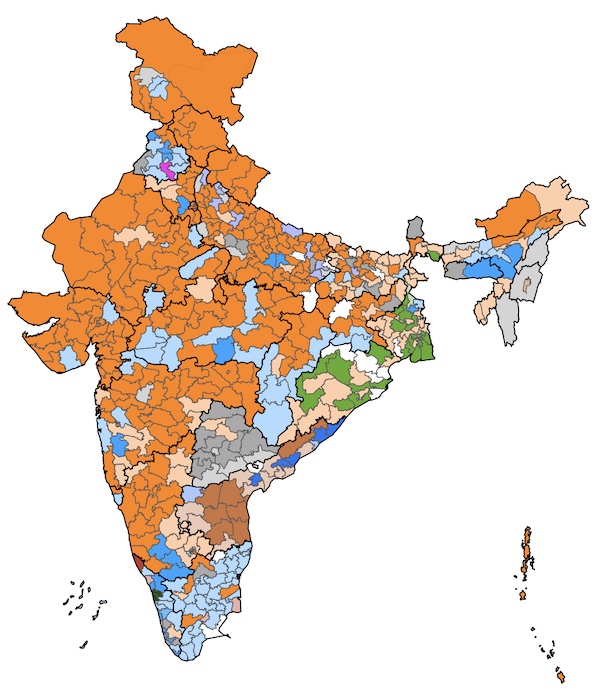
  • Discussion about the Indian elections. Kushal and Zach almost get into a (friendly) shouting match on this one
  • I talk about Game of Thrones, fantasy, and neuroscience, with Adam Calhoun
  • A discussion with an Israeli American about living in Israel, and perceptions of Israel abroad.
  • A discussion about open science with “data thug” Jordan Anaya
  • A discussion between me and two young millennial tech-bro browns about navigating American society
  • A discussion of Game of Thrones with a historian and a geneticist (this is not recorded yet)

One of the reasons I’ll be taking a break is that I’ve been podcasting pretty intensively recently. I’ve been putting out a podcast every week for my main science one since the end of January, and have gotten about 2 months ahead there (that’s what recording on weekends and two or three times a week sometimes will do).

I will be focusing on other projects for a bit, and not podcasting will make my schedule more flexible.

How Indians invented the universal religion

One of my favorite podcasts is Two for Tea, which tends toward “centrist-edgelordism”. The latest guest is, Armin Navabi, who I have nicknamed the Ayatollah. Armin is literally one of the most logical people I have ever known of, at least in the domain of those who are not visibly already extremely at one end of the spectrum. His views on religion come from this rationalist perspective, and that is where I part ways with him because I don’t see rationality as powerful a force as he does in shaping human behavior.

But in this post, I want to disagree with something Armin said in relation to the history of religion: that universalism and post-tribal religion was invented by Christianity and the Abrahamic tradition. This is clearly false.

From Ashoka’s Edict 13, put down in the 3rd century before Christ:

Now, it is the conquest by the Dharma that the Beloved of the Gods considers as the best conquest. And this one (the conquest by the Dharma) was won here, on the borders, and even 600 yojanas (leagues) from here, where the king Antiochos reigns, and beyond where reign the four kings Ptolemy, Antigonos, Magas and Alexander, likewise in the south, where live the Cholas, the Pandyas, and as far as Tamraparni.

Continue reading How Indians invented the universal religion

Pakistani women, Chinese men, the continuing story….

The New York Times has a follow-up story with some nuance, She Thought She’d Married a Rich Chinese Farmer. She Hadn’t.

Now there is coverage of Muslim girls going to China. The model is the same as the Christian girls, rural Chinese men who aren’t as wealthy as they present themselves, go through nominal conversions or affirmations of faith, and take the women back. Here for me is the interesting part:

Then, after a four-hour drive past fields of wheat and corn, they arrived at Dongzhang village in Shandong Province, where she saw her husband’s duck farm. It was not the sprawling operation of a wealthy man that she had envisioned, but a modest family farm where he lived with his parents and two brothers.

The New York Times was unable to independently verify Mr. Zhang’s income. But on a recent visit to the Zhang family home, a Times’ reporter found a newly built housing compound with multiple bedrooms and shiny tile floors.

Outside the family home, Mr. Zhang’s mother, who is in her 60s, recalled being puzzled by Ms. Kanwal’s reactions.

ā€œShe is religious, so when she came here I went out of my way not to give her any pork,ā€ she said, as a small guard dog barked nearby. ā€œI stir-fried chicken and made egg omelets for her. But no matter what I served her, she just refused to eat.ā€

Some of the more sordid stories of prostitution are likely true. And, it seems from the story above that some of the girls who moved to China are pregnant, and reasonably happy where they are. But many of the stories are grayer and not so clear.

The mother-in-law above seems well-meaning, after a fashion, but one can see the perspective of a young Muslim girl from Pakistan, encountering a world filled with pork, dogs, and without the washing facilities she was used to. Additionally, the reporters seem to agree that the farmer was prosperous, if not necessarily wealthy. With no real linguistic common ground, it’s pretty easy to imagine that wires could get crossed her. The huge cultural chasm, where most Chinese do not take religion that seriously, is probably almost impossible for a Pakistani girl from a non-cosmopolitan background to fathom.

Right now these stories are exotic. But if more and more girls stay and settled down in China, that will result in positive word of mouth. The precedent with other Asian countries is tragic and horrible stories will continue. But that may not be the whole, or the main, story.

Vital stats in South Asia

A bunch of vital stats from South Asia from Google Data Explorer. Since Zach and I started looking at these data since the early 2000s Pakistan and Bangladesh have diverged, unfortunately. I don’t understand what’s going on with Bangladesh’s anomalously high adolescent fertility though. This could be a function of variation among women as they age, with those entering the labor force delaying childbirth and the number of children so much that it brings the whole average down.

And of course, the whole comparison between India and the other countries is difficult since the Indian statistics average together many different regions.

Continue reading Vital stats in South Asia

Browncast Ep 42: American Arranged Marriage

Another BP Podcast is up. You can listen onĀ Libsyn, Apple,Ā Spotify, and Stitcher. Probably the easiest way to keep up the podcast since we don’t have a regular schedule is toĀ subscribeĀ at one of the links above.

You can also support the podcast as aĀ patronĀ (the primary benefit now is that you get the podcasts considerably earlier than everyone else…this podcast was posted a week ago).

Probably the number #1 reason that the “Browncast” is of interest to me is that I can talk to people who are different from me in some deep and important manner. This podcast is a conversation with Amit, an Indian American who is doing a medical residency. Raised on the “best coast” of the USA, after some conventional dating travails, he has decided he will go the route of an “arranged” matched.

If you listen, you will see that the process has been a positive one for Amit, and it includes much more flexibility and volition than most Americans might imagine.

I went into the discussion mildly skeptical and came out of it with an appreciation for how people can make different choices, but those choices are probably the best for them.

I would really appreciate if regular readers/commenters would leave more positive feedback/ratings, especially on Apple and Stitcher.

The decline of the bee


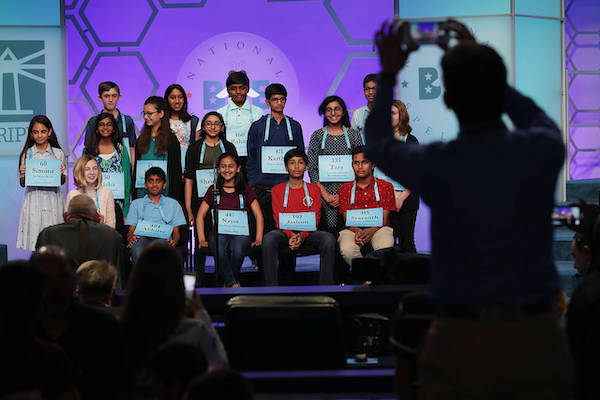
At the Spelling Bee, a New Word Is M-O-N-E-Y – Elite spellers now can pay to get a spot in the national event. For this generation of zealous competitors, it just means another chance to shine:

An extra factor driving the stakes for this generation of spellers is a concerted effort by non-U.S.-born parents, particularly Indian-Americans, to make a mark on the competition. In 1985, Balu Natarajan was the first child of immigrants to win the Scripps bee. Of the 33 contests since then, fellow Indian-Americans have won 17 more, including the last 11 straight.

Indian-Americans, just 1% of the U.S. population, have established their own minor-league spelling bee circuit that adds opportunities to hone on-stage performance. They have led the way in paying for coaching, buying or developing proprietary study software and traveling to participate in more bees. Many spellers’ parents came to the U.S. via the Immigration Act of 1990 that admitted exceptionally skilled immigrants who specialize in STEM topics. It is no mystery that they would value education—and recognition of it—above all else; it is the very thing that gave them access to this country.

Reminds me of the stuff in Jerry Muller’s The Tyranny of Metrics. Now that the national bee is going in this direction it will be impossible to reverse the trend and make it a test of childhood exuberance and passion, as it was until recently. Rather, it will be just another part of the meritocratic conveyer belt, another notch in one’s resume or c.v.

And, unfortunately, it illustrates one of the effects of the rise of Asian American immigrant parents, who come from extremely competitive societies, and so bring the same ethos to the United States. Childhood in the old sense is disappearing, as people begin to prepare their children for adult roles in the economy before they enter elementary school.

Was India ever really “secular”?

Anton Wessels, a Reformed Christian professor of “missiology”, wrote a book many years ago, Europe: Was It Ever Really Christian? The title reflects on the fact that a secular ‘post-Christian’ Europe may never have been very Christian at all, at least in Wessels’ telling.

Wessels writes from a Reformed Protestant perspective. This tradition has taken a very dim view historically of ‘popular folk religion’ during the medieval period in much of Northern Europe. Wessels’ catalog of non-Christian beliefs and practices before and during the Reformation emphasize that from the perspective of a confessing Reformed Protestant it may actually be a fact that most of the population never truly internalized in the gospel, even if they made outward show of affiliation with the Christian religion. Christendom was nominal, not substantive.

There are many arguments one can bring to bear to critique Wessels’ views. In particular, some historians of religion assert that in fact, late medieval piety resulted in the spread of genuine deeply held Christianity to the peasantry of much of Europe. The argument then is that this sincere Christianity is actually one reason that the Reformation occurred when it did. Additionally, even granting Wessels’ contention about the medieval period, the competition between Protestants and Catholics after 1500 guaranteed attention to popular beliefs and practices for several centuries before secularization. The suppression of pagan practices among Lithuanian peasants occurred during the period when Catholic clerics were fighting off the expansion of Protestants.

And yet I think we need to give the nod to some element of Wessels’ thesis: that popular Christianity was quite distinct and different from the faith promulgated from on high, and officially claimed as the ideological basis of Western societies. Perhaps the rise of modern secularism is in some ways the proletarianization of European culture?

What does this have to do with India? In the comments below, and in the media, some Indians are bemoaning the death of secular India. But was India ever secular truly?Ā Nehru was an agnostic. His great-grandchildren now make a show of attending Hindu temples and asserting their Brahmin lineage.

I grew up in the United States of Ameria with the children of elite Indian Americans, who left in the 1960s and 1970s. These people were all urbane, and most of them were not particularly religious. But, like my own parents, they were all very self-conscious of their “communal” identity. These were people who grew up in a “secular India”, and moved through good universities. Because of the times, and when they left, many still retained socialist sympathies (as my own parents do). But, these were not liberal cosmopolitans. Most of their children were absorbed into American culture, but they were products of something very alien to liberal individualism.

The India that people are mourning was a weird chimera. Traditional, collectivist, and communal on the broad level. But ruled by a small English-speaking elite with cosmopolitan pretentions, Macaulay’s children. Generations of secularism and socialist rule did not erode the ancient foundations of Indian society, with caste and community reigning paramount.

What we are seeing is the death of the chimera and the revolt of the middle class. True change and secularization are going to occur only with broad-based prosperity and urbanization. Secular socialist India couldn’t bring that, and so nothing changed on the fundamental structural level. Its failure laid down the seed-bed for the emergence of the Hindu Right, which draws deeply at the well of communal sentiment which is stitched throughout the fabric of Indian society.

Aladdin!

Disney’s Aladdin is likely to be a hit. And Naomi Scott is likely to be the break-out star. The half-English and half-Guju British chatterbox is also going to play Elena Houghlin in this fall’s reboot of Charlie’s Angels.

The casting of the mixed Scott, of white and Indian ancestry, as Jasmine created some silly backlash online. But one thing that strikes me about the Jasmine she depicts is that her sartorial style has a definite South Asian rather than Near Eastern tincture.

Brown Pundits