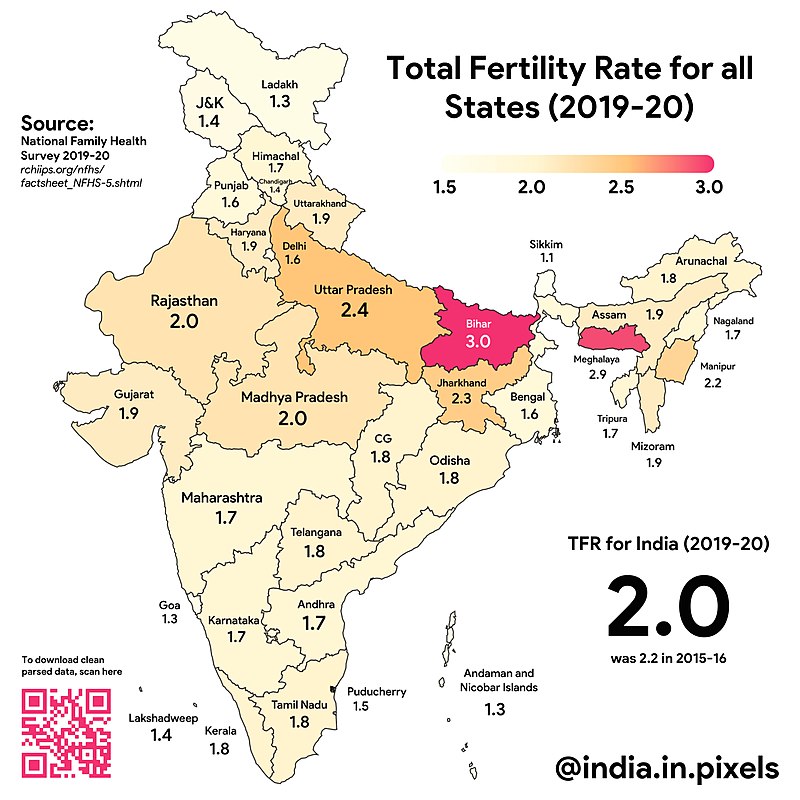
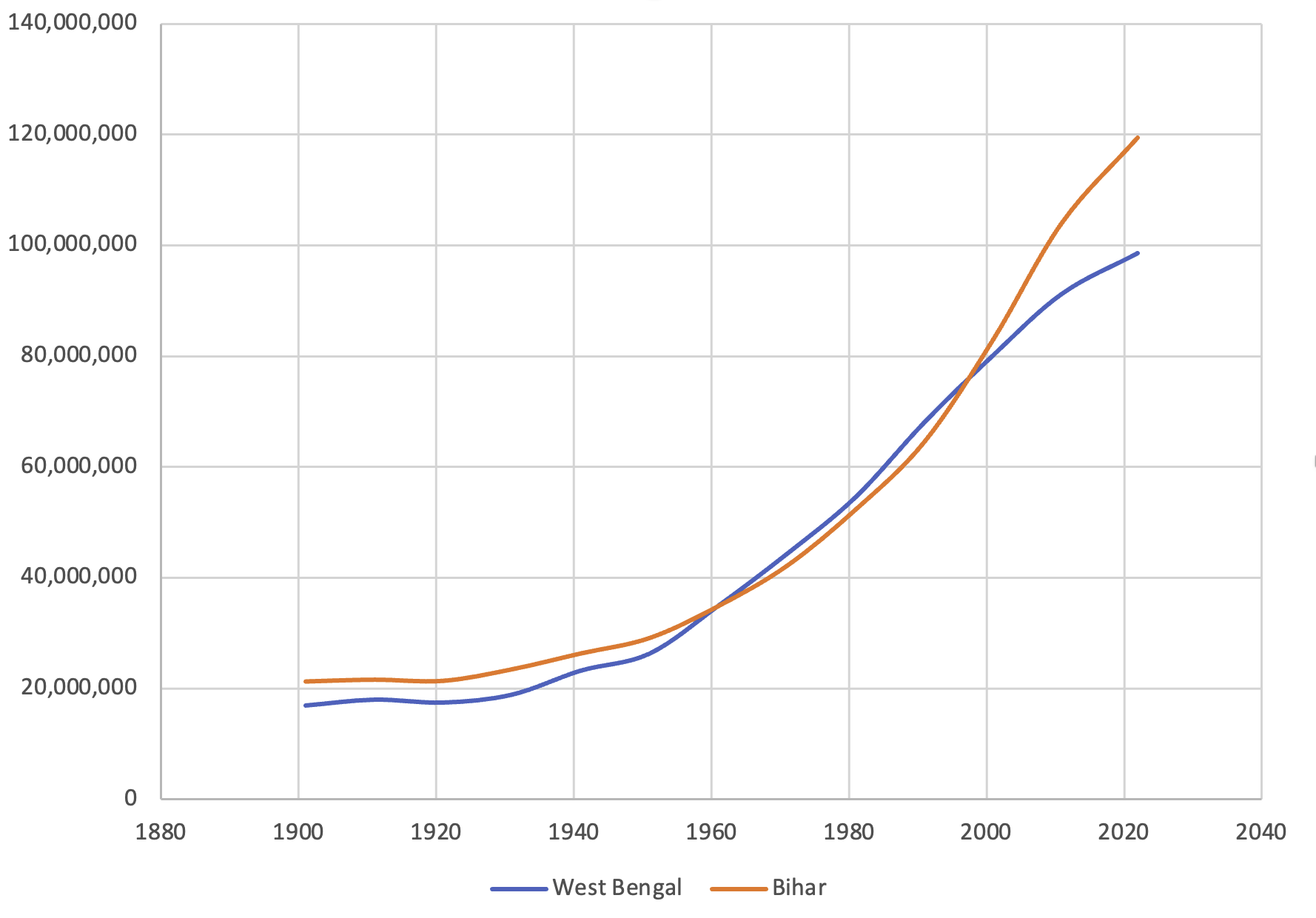
I’ve fascinated by regions that border each other and have very different fertilities. For example, Saudi Arabia has a TFR of 2.2 and Yemen one of 4. Today it looks like Bihar has a fertility of around 3.0 and West Bengal 1.6. Bihar surpassed West Bengal in the late 1990’s, and is still more populous even without Jharkhand. But the data below suggest to me that West Bengal experienced a “windfall” population growth with the arrival of Hindus from East Pakistan and Bangladesh in the decades after partition, and we’re sort of reverting back to the mean…
Author: Razib Khan
Is track and field more popular in South India?
interestingly (or not?) these guys are from kerala, while the other guy is from tamil nadu. is track and field stuff just more popular in south india? https://t.co/KwRTTpQvLv
— Razib 🥥 Khan 🧬 📘✍️📱 (@razibkhan) September 3, 2023
Sri Lanka Genetics
Reconstructing the population history of Sinhalese, the major ethnic group in Śrī Laṅkā:
Interestingly, we found an unexpected excess of smaller chunks sharing between Marāṭhā and Sinhala (>16%) than the Marāṭhā and STU, thus supporting the linguistic hypothesis of Geiger, Turner and van Driem. To confirm the excess sharing, we looked for the population which was sharing maximum IBD with Sinhala and STU.
Looks like confirmation of Sinhala western Indian origins rather than eastern Indian origins.
Female labor force participation in India
A quite repetitive piece in The Wall Street Journal, What’s Holding Back India’s Economic Ambitions? Just 24% of women in India are working or looking for work. In the American upper-middle-class women not working is a sign of affluence a conscious choice to focus on investing in child-rearing rather than consumption. But this section jumped out at me:
In neighboring Bangladesh, female workers have played a crucial role in helping develop the garment industry—although the country’s factories have drawn charges of safety issues and worker exploitation. Bangladesh had a female labor-force participation rate of 38% last year, up from 28% in 2000. Its GDP per capita has surpassed India’s since 2019.
Economists say compared with India, Bangladesh has looser labor laws that have allowed factories to expand quickly and doesn’t have as many strong caste rules that encourage social conformity.
Reading about what has happened in urban Bangladesh due to the employment of young women in textiles is like reading about New England towns in the early 19th century. It’s basically history repeating itself. As I was reading the article I did wonder about caste and communalism; in many nations worries about who young women would meet at factories in particular was and is a massive concern. Could this really be an issue?
(China’s female labor force participation is 60%)

Open Thread – 08/11/2023 – Brown Pundits
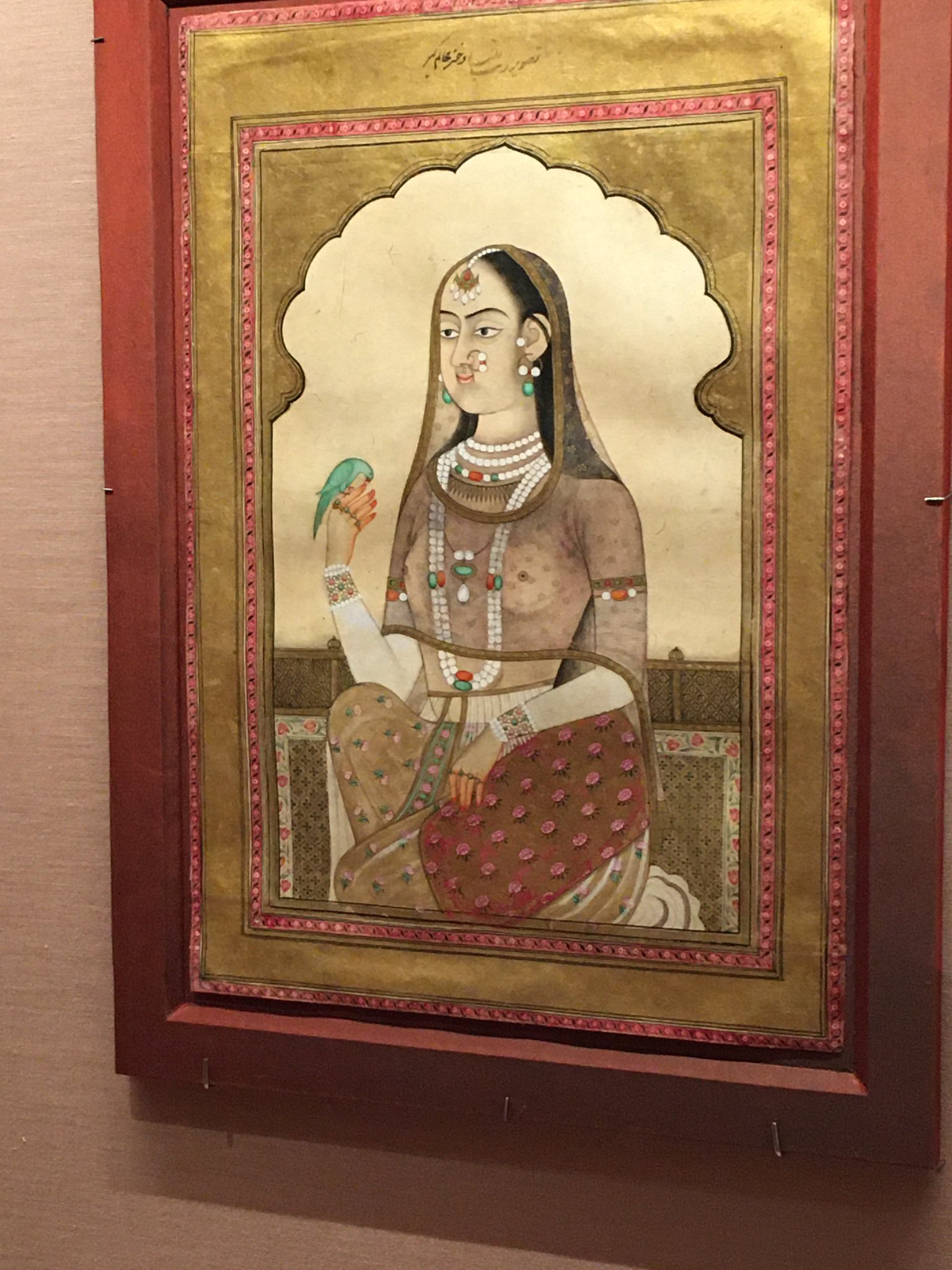
Aurangzeb’s daughter

Posted by Peter Nemetz.
The 100th Brownpundits Browncast

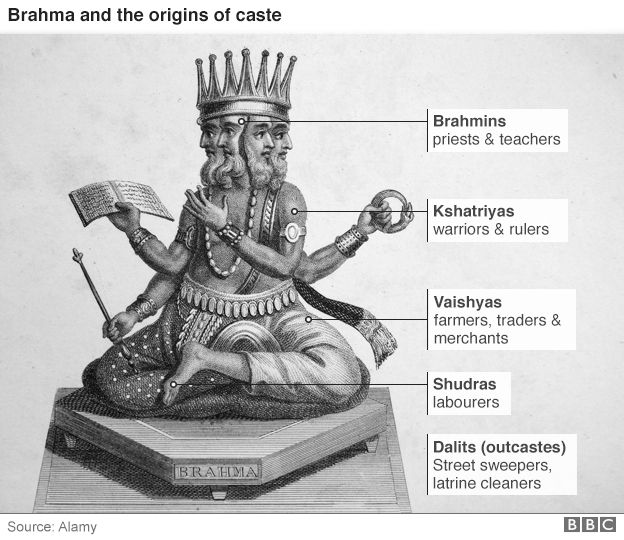
The 100th Browncast! Razib and Mukunda talk to Pushpita Prasad and Sudha Jagannathan of the Coalition of the Hindus of North America to talk about where we stand on the “caste question” in the US today. There are lots of different opinions here between the four guests, and platform of Dalits and Bahujan.
Also submitted for your approval, (1) Who is behind the caste legislations in North America? A peek into their track record – YouTube. The UCSD Ethnic Studies link about hiring only Dalits and Muslims: Commentaries (ucsd.edu)
Ertugrul is badass
I watched a few episodes of Ertugrul and it’s pretty good. I would prefer less of a Marvel-comics style character…Ertugrul and his alps basically are just killing machines who never get injured while taking down dozens of Christian knights. But it is good for what it intends to be, a dramatic rendering of the origins of the Ottoman mythology.
What’s the Indian equivalent? I assume a Shijavi TV series, but is there something with good production values?
Open Thread – 07/13/2023 – Brown Pundits
Vivek Ramaswamy and Hinduism
Vivek Ramaswamy Leans Into His Hindu Faith to Court Christian Voters:
Swami Vivekananda, who represented Hinduism at the Parliament of the World’s Religions in Chicago in 1893, took pains to depict his faith as monotheistic, in contrast to the stereotypes of its followers as “heathen” polytheists. Although the faith has many deities, they are generally subordinate to one ultimate “reality.” Many Hindus and scholars say its theology is too complex to be described as either wholly monotheistic or wholly polytheistic.
“The polytheism hurdle is the first thing that has to be addressed” for many American Christian audiences, Mr. Altman said. He sees Mr. Ramaswamy’s pitch against “wokeism” as a way to counter stereotypes associating Hinduism with hippies, yoga and vegetarianism.