BrownCast Podcast episode 16: Native Americans and a globalized world

Another BP Podcast is up. You can listen on Libsyn, iTunes and Stitcher. Probably the easiest way to keep up the podcast since we don’t have a regular schedule is to subscribe at one of the links above. You can also support the podcast as a patron (the primary benefit now is that you get the podcasts considerably earlier than everyone else…). Would appreciate more positive reviews.

This week we’re doing something different…but also something you are going to have to expect. The “BrownCast” and “Brown Pundits” are labeled “brown” because the founders of this weblog are brown. We are obviously interested in Indian/South Asian/Desi topics…but that’s not all we are. In fact, the three original founders, myself, Zach, and Omar, are confirmed dilettantes.

One of the “privileges” of being white is that you are interested in whatever you want to be interested in. You don’t just opine on “white” topics, you opine on the world because the world is your canvas. In the year 2019, my own opinion is that more nonwhites need to decolonize their minds, get over white people and their fraught relationship with a race which dictated the terms of the 19th and 20th centuries and grasp the chaotic, polycentric, and globalized 21st century with two hands.

Cross the threshold. Step into the future. It’s interesting…if sometimes a bit too interesting.

The conversation in this podcast starts out with specific concerns and questions about how Native Americans in the USA are reacting to the candidacy of Elizabeth Warren. Brett Chapman lays out the concerns of his own people rather well. He is a lawyer, so that is to be expected! But, the conversation moves to issues relating to Catalan and Scottish independence, and reconsiderations of the sacrosanct nature of the Eurocentric Westphalian system.

Native American experiences are not just particular, they’re universal, and global.

This is 2019 and the 21st century. Two Americans, one a brown 1.5 generation semi-immigrant, one a Native American, and a brown Briton, get together and have a discussion about continental European politics. It’s our business. The world is our business. And our business is the world.
Pakistan’s #1 in newborn mortality rates!?!?!


Sometimes you read things you need to double check on. World is failing newborn babies:

1. Pakistan: 1 in 22
2. Central African Republic: 1 in 24
3. Afghanistan: 1 in 25
4. Somalia: 1 in 26
5. Lesotho: 1 in 26
6. Guinea-Bissau: 1 in 26
7. South Sudan: 1 in 26
8. CĂŽte d’Ivoire: 1 in 27
9. Mali: 1 in 28
10. Chad: 1 in 28

Let’s let that sink in. Pakistan has worst mortality rate for newborns than Afghanistan, South Sudan, and the Central African Republic. Nations riven by conflict, warfare, and general underdevelopment.

I wouldn’t mind if someone pointed out how there is an artifactual bias in the above analysis. The numbers are horrifying, especially in light of the fact that Pakistan is more prosperous than most of those countries.

You shall judge a nation by how it treats the least amongst us.

Why do South Asians have heart disease?


Why Do South Asians Have Such High Rates of Heart Disease?:

Some of the most striking findings to come out of Masala relate to body composition. Using CT scans, Dr. Kanaya and her colleagues found that South Asians have a greater tendency to store body fat in places where it shouldn’t be, like the liver, abdomen and muscles. Fat that accumulates in these areas, known as visceral or ectopic fat, causes greater metabolic damage than fat that is stored just underneath the skin, known as subcutaneous fat.

…. Cardiovascular risks tended to be highest in two groups: those who maintained very strong ties to traditional South Asian religious, cultural and dietary customs, and those who vigorously — embraced a Western lifestyle. Those with lower risk are what the researchers call bicultural, maintaining some aspects of traditional South Asian culture while also adopting some healthy Western habits.

This discrepancy plays out in their dietary behaviors. Almost 40 percent of Masala participants are vegetarian, a common practice in India that is widely regarded in the West as heart healthy. But vegetarians who eat traditional South Asian foods like fried snacks, sweetened beverages and high-fat dairy products were found to have worse cardiovascular health than those who eat what the researchers call a “prudent” diet with more fruits, vegetables, nuts, beans and whole grains (and, for nonvegetarians, fish and chicken). People who eat a Western style diet with red and processed meat, alcohol, refined carbohydrates and few fruits and vegetables were also found to have more metabolic risk factors.

I think one of the issues with the “traditional” lifestyle combined with modern affluence is that they aren’t actually eating like their (our) ancestors would eat. Though fried snacks and sweetened beverages are acceptable in vegetarian diets, I doubt that this was on the menu for many Indians who lived on vegetarian diets in the past. The two “bad” dietary options are really converging on modern processed/high cal diets from different pathways.

What to read if you don’t want to read Guha

In the podcast with Kushal Mehra he made an offhand comment that it was strange that conservative American intellectual Ben Shapiro was reading India After Gandhi to understand his country. Mehra’s confusion is simply that Shapiro is on the Right, but he is reading from the perspective of Indian Left to understand India. Though probably hyperbolic, perhaps it would be like a Hindu nationalist reading Howard Zinn’s A Peoples History of the United States to understand America.

I know there are issues India After Gandhi. My friend Reihan Salam thought that Amardeep Singh was entirely too uncritical when he blogged the book many years ago. Since I have no read the book I will not hazard to offer an opinion.

But, the question then remains: what books on Indian history should an American read to offer up some balance? This is a live issue, as an American conservative friend was himself considering reading  India After Gandhi before being taken aback by Mehra’s comment about Shapiro and his reading habits.

Please leave book recommendations!

On the difficulties of cross-cultural communication

I speak English. But I speak a certain type of American English. I’m brown. But my culture is American.

On a blog like this, these structural problems give rise to particular issues. I actually saw it on the old Sepia Mutiny blog first. Indian English is a distinct dialect not only in accent and lexicon but also in idiosyncrasies in its idioms.

When we speak and write to the audience of this weblog, Indian and American (or British) audiences may actually infer different implications of the things we say. The easiest way to illustrate this is the use of the word “secularist.” The word is rich and pregnant with connotation and association for the Indian audience, but not so much for the American one, where it denotes something clear, distinct, and delimited. For the Indian audience, I avoid using the word “secularist” and “secular”, because I don’t want to get involved in a stupid argument that I have a marginal investment in.

I really can’t fix this issue of semiotics and linguistics. Sometimes confusions will ensue, and I will point out the reason.

But, there are two problems with some Indian commenters of this weblog that I want to highlight:

  1. Throwing up a “wall of text” in lieu of a concise argument.
  2. Obvious bad-faith posturing.

On my posts, if you engage in this behavior I may just delete your comments without warning. Those of you who have engaged in #2, I know exactly who you are, and I may delete your comments without warning too. Talking with a friend who is Indian but not raised in the United States, it could simply be that this behavior is taken for granted as normal by Indians (Hindu nationalist repurposing of SJW talking points without any shame suggests to me that this may be the case). That’s fine. But not on my posts.

I am not going to manage the posts of others. So perhaps my posts will become deserts of commentary. I am at peace with that.

BrownCast Podcast episode 15: conversations with a Carvaka

Another BP Podcast is up. You can listen on Libsyn, iTunes and Stitcher. Probably the easiest way to keep up the podcast since we don’t have a regular schedule is to subscribe at one of the links above. You can also support the podcast as a patron (the primary benefit now is that you get the podcasts considerably earlier than everyone else…this podcast has been up for nearly a week on the patron page).

As far as show notes go, just check out Kushal Mehra’s YouTube page.

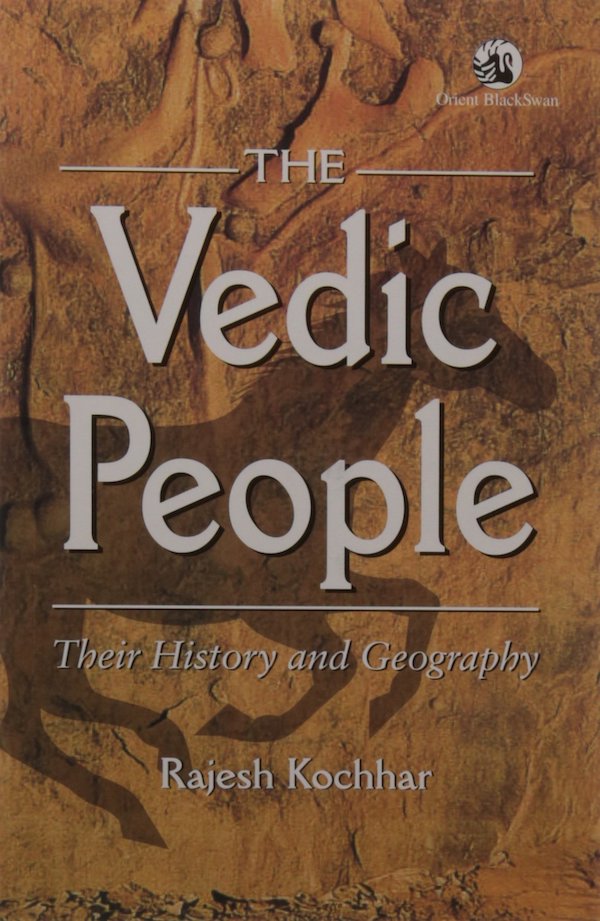
We are all Aryans now

Last year I contributed a chapter to a book soon to be published in India, Which of Us are Aryans? In answer to the question, the straightforward answer is that almost all of us are Aryans. That is, the thin but persistent layer of Indo-Aryan (“steppe”) ancestry is present across the subcontinent. In higher fractions among Brahmins and Kshatriyas than in Dalits, in the northwest than the southeast, and among Indo-European speakers than Dravidians. But this ancestral component and its cultural correlates are found across southern Asia.

Secondarily, there has been some discussion about the negative valence in the West about the term “Aryans.” In particular, its “cultural appropriation” by German Nazis by way of Theosophy and various spiritual and quasi-spiritual movements in the early 20th century.

As an American to see the word “Aryan” bandied about like this is strange and a bit uncomfortable. But there are now more than 1 billion Indians, so I don’t believe we in the West are a position dictate in terms of the lexicon that we borrowed from Indians in the first place, often without clear attribution (most Americans and Europeans would be surprised that “Aryan” is an Indian and Iranian term).

BrownCast Podcast episode 14: conversation with a Hindu nationalist

Another BP Podcast is up. You can listen on Libsyn, iTunes and Stitcher. Probably the easiest way to keep up the podcast since we don’t have a regular schedule is to subscribe at one of the links above. You can also support the podcast as a patron (the primary benefit now is that you get the podcasts considerably earlier than everyone else…this podcast has been up for nearly a week on the patron page).

I asked our interlocuter for some reading material. Here’s what he suggested:

Essentials of Hindutva

Hindu Society Under Siege

Who is a Hindu?

– The Sarva-Darsana-Samgraha Review of the Different Systems of Hindu Philosophy

Obviously, there wasn’t going to be any resolution after an hour and a half long conversation. Instead, questions and confusions were clarified. Disagreements were aired. That being said, I did leave the discussion crystal clear about what Pinaka opposed, rather than what he supported. At least in the specifics. I would hold that one reason that this is so is that it is easier to say what Hindu culture and religion is not more than what it is.

Brown Pundits