If you have a hammer, everything is a nail


The reaction to my piece on caste by the Indian and Indian American Left has been interesting, and fraught with confusion.

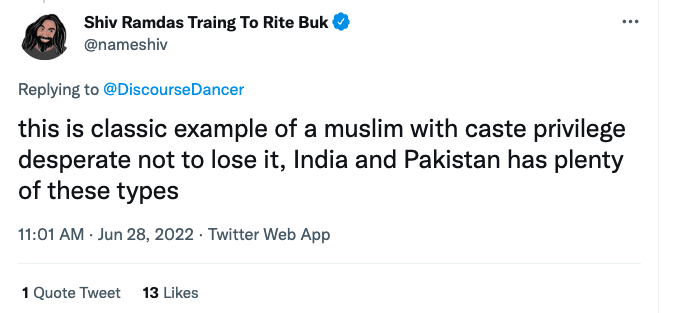
First, the reaction by this Indian (now in America) Leftist is to accuse me of being an upper-caste Muslim. This is not that far from how Hindu nationalists react to me, which illustrates that certain mentalities are general, and the specific instantiations simply flavors on top of the common base. Most Indians are “identitarian” in such a deep way, whatever their ideology, that Americans would have to be impressed (if they are cultural liberals and racialists). If you scratch an Indian Leftist they aren’t that different from a Indian Hindu nationalist in their cultural presuppositions.

I am not an upper-caste Muslim in a literal sense, because a quick scan of my genome will show I’m a generic eastern Bengali, and more concretely caste is not a thing in Bangladesh anymore. I do have ancestors who are Hindu, as all people of subcontinental Muslim background do, and all I know is that most were Kayastha (on my mom’s side) and my paternal grandmother’s father was from a lineal Bengal Brahmin family (her father was very young when his father converted the family from what I recall, so he did not remember being a Hindu, though he did pass on some Hindu customs to my grandmother like the utilization of separate dishes). My paternal lineage, from where I get “Khan,” were landholders in their region of Bengal for a long time, and traditionally provided the ulema for the villages in the locality. We also funded the construction of many of the oldest extant masjids in the area.

It’s hard to deny that I have class privilege, given that my family was present in the professions or owned land for centuries. This, despite the fact that partible inheritance means that my “ancestral desh” (which I have never physically been to, I was born in Dhaka, and my mother’s ancestral village was far closer) is populated by many poor relatives who barely have any land-holdings to speak of left. People in my family who are economically advantaged all migrated to Dhaka in the 20th century. This migration was enabled by privileges accrued from the past, as we were literate, and had some assets that we could presumably turn into cash to finance a move to Dhaka. But once we got to Dhaka no one cared we were big shit in rural Comilla. Arguably, to a mild extent, we were second-class citizens, being migrants from a rural area, though this is the norm in Dhaka so I don’t think it was a big deal.

The migration to Dhaka from rural Comilla anticipates later migrations, as branches of my family on both my maternal and paternal side reside in the US, UK, Japan, Northern Europe, and the Middle East (with sojourns in Latin America; hi cousin Pablo!). The reason we were able to make these journeys was due to a combination of financial means and educational qualifications. These emerge from our class background. But once in the US, UK, let alone the Middle East, no one gave a shit that we were “Khans.” I am socioeconomically an upper-middle-class American, but that’s not because anyone gave me privileges because I was an “upper-caste Muslim.” Most of the people who were in a position to advance me happen to be white, and to them, I was just another brown person. Perhaps it was even a demerit that I was an “upper-caste Muslim,” since that just meant I was a brown person.

This truth is generalizable. 99% of Americans do not care at all if you are an Iyer or a Mehta or a Reddy. They don’t even know what that means. You are just a brown person to them. Suhag Shukla once told me that when she went to Congress in the 2000’s to lobby for Hindu American rights, hill staff asked if they were “Sunni or Shia.” This is to illustrate that Americans don’t give a shit about what your background is and barely understand it. Malcolm X’s quip about a black man with a Ph.D. isn’t totally applicable, as America isn’t that racist anymore, but it gets to the heart of the fact that in America brown is brown, caste no consideration.

Second, there is the issue that people who are brown in America often do benefit from caste privileges and hierarchy ancestrally. This is a problem and confusion, because it seems obvious, but it gets conflated with the situation in America. The American immigration system is not caste-conscious because Americans barely understand this, but 80% of Hindu Indian Americans are from the 25% of Hindu Indians who are upper-caste. I personally get annoyed with Indian Americans whose families were elite back in India who bring up their stories of discrimination and penury in the US, because their experience is distinct from the social, cultural and human capital they inherit to various degrees from their families. On some level, caste does matter who gets to America, but that is not because the US is caste-conscious, but because Indians are. The US immigration system values particular education and skills that are not equitably distributed among Indians. There are also “push” factors like reservations that mean some upper-caste professionals have far better opportunities abroad, so they leave (this is, for example, a much bigger dynamic in medicine than software engineering, from what I have heard).

Third, the trend now is to argue that Indian caste dynamics are replicating themselves in the US. I don’t think this is true, and I explained why in the UnHerd piece. The minority of Indian Americans raised in the US barely understand what caste is beyond an abstraction. One of the contributors to this weblog proudly asserts their “sudra” status half-seriously, but Indians have told me that usage of that term is somewhat taboo in the subcontinent. The difference here is context, as varna categories are mostly academic, and outside of a few communities (Jats and perhaps, some Patels) jati doesn’t really exist as lived experience. Caste isn’t really a serious matter in America, so who cares if you are a sudra? No one else really does who matters.

It might be somewhat different for the majority of Indians who migrated to the US in the last few decades, as they grew up in a country where caste does matter, and some of their attitudes do replicate. I do assume that most of these people are prejudiced against Muslims and “lower castes” to some degree like the Leftists Indian Americans say (who are usually upper-caste Hindu by background, and so are aware of what things are said “behind the veil”), but these people rarely operationalize their biases because the American racial and social context is totally different from India. When I go to buy alcohol at Indian-owned mini-marts sometimes I get mild third-degree from the owners when they see my last name on the ID, and sometimes it gets to the point I have to tell them I’m an atheist and stop bothering me (this seems a problem during Ramadan in particular, but I often don’t know when it’s Ramadan so don’t blame me). But this is only an inconvenience, and guess what, I can buy alcohol from places without overly curious Indian aunties minding the counter.

Finally, there is the issue of caste discrimination in Silicon Valley, the one place where people argue Indian cultural dynamics are replicating due to the critical mass of immigrants from the subcontinent. People bring up the Cisco case as is if it’s case-closed, but it’s a single case, and the reality is that we don’t really know everything about the dynamics of the case and there’s been no verdict. Believe it or not, not all allegations of discrimination are found to be valid.

But many non-Indians (white people) now routinely tell me there is caste-discrimination in Silicon Valley, this is just a “truth” that is “known.” I’ll be candid that I think some prejudices naturally imbibed from high school, where the caste system is widely taught as constitute to Indians, along with Leftist media narratives about Indian American caste discrimination, are coloring peoples’ perceptions. The reason I wrote the UnHerd piece is that this is becoming the standard narrative and accepted truth for third parties who don’t have any biases or priors on the issue.

For example, when people say there is pervasive discrimination against Dalits in the Valley, I have to ask, what Dalits? Dalits are 15% of Indians, but 1% of Hindu Indian Americans. It could be possible that this 1% is suffering pervasive discrimination from the non-Dalit majority, 25% of whom are Brahmin and 80% as a whole are upper-caste, but there are opportunities in the US to work for non-Indians who won’t care or know. Indian American society, when it is caste conscious, is overwhelmingly upper-caste and privileged, so they’d have to discriminate against each other!

Yes, there is a level of nepotism and clannishness among Indian Americans, but this is not unique to them. Mark Zuckerburg famously recruited from his dorm and Harvard, and if you are not part of particular elite educational or professional circles you are on the “outside” in the startup world. The same seems true of Indian American entrepreneurs, but their particular ingroup preferences are always reified as “caste.” Though I”ve heard of the “Telugu mafia,” this seems to be the exception, not the rule. And, it is not uncommon for Indian Americans to have some affinity for each other (the majority born and raised in the US still marry Indians), but often this cross-cuts region and caste, rather than reinforcing them.

Additionally, what caste consciousness there is going to be transient. If you are an Indian immigrant to the US, and you are raising children here, there is a 50% chance your grandchildren will have non-Indian ancestry. There is a far lower chance that all four of their grandparents will be from the same jati-varna, in large part because a lot of Indian immigrants themselves are couples in “mixed” marriages (I put the quotations there because in the US Census the marriage of a Tamil Brahmin and a Punjabi Khatri is endogamous).

I will end with an exhortation: the US is a country where you can be reborn anew. Do not buy into the regnant narrative and recreate yourself as a victim. Grasp the world with both hands and make of yourself what you want to be. Some Leftists are trying to replicate Indian dynamics with oppressive upper-castes and oppressed lower-castes in a racial and ethnic context where it’s irrelevant. But some upper-caste Indians are also embracing victim status, whether because they were persecuted in Tamil Nadu (Brahmins), or because they were subject to racial discrimination in the US. I know it’s easy. But I don’t believe it’s the path of honor. Sometimes you do the right thing, even if it’s the harder thing, the socially less acceptable thing. Whatever your caste, religious or regional background, you’re American now. You are now part of a different, great, national project. Make your own narrative, don’t recycle old ones or adopt new ones.

Reactions to caste piece in UnHerd

It’s out, America’s fake caste war.

Quick thoughts

– The piece is illustrated with a photo of Aziz Ansari, an atheist from a Tamil Muslim background. This shows you that caste-in-the-West is a racial issue, and non-subcontinental people will view it as such.

– Some people of Caribbean and other Diasporic backgrounds are complaining that I ignored them. Yes, I did. This is focused on the overwhelming majority of Indian-origin people in the US, who are mostly immigrants from India.

– Some Indians are complaining I don’t talk about caste in India. Yes, I don’t talk about it except as a baseline or starting-off point because this is about Indians in America.

– Some upper-caste people are complaining that I make them seem privileged and submitting that there are poor temple priests who are Brahmin. These sorts of objections disabuse me of the notion that upper-caste people are more intelligent because this is a stupid point. Upper caste people who complain about their persecution in India and how “actually they’re underprivileged” get tiresome for a whole host of reasons, and I wish you people wouldn’t engage in the oppression Olympics, but I guess it’s just too tempting. Do some math. There are even good Indian statisticians.

– Some people are complaining that Indian Americans who are immigrants are often conscious of caste, and they care. I don’t disagree with that, though it varies (guess what, someone who is an extremely caste-conscious Hindu is probably less likely on the whole to immigrate to a whole new country where beef is the luxury meat of choice). My point is that the structural institutions and norms that allow for the salience of caste identity and privilege are just not operative in the US. To a great extent, this is true in places like Guayana too, and there the Indian-origin population is more than an order of magnitude larger than in the US. Gujarati Patels might have enough critical mass to create a marriage market that’s endogamous, but few other groups do.

– Some people are saying I’m totally denying discrimination. I’m not. I’m just pointing out that anti-Dalit discrimination is rate-limited in the US because there are hardly any Dalits here. The 1% of Indian Americans who are Dalits are more likely to interact with Indians than the average person, but there are many (most) situations where they’ll interact with non-Indians who don’t know/care.

– Finally, over time the native-born Indian population is going to get much larger. This will change the balance of cultural power within the community, and so the saliency of caste will decline even further. I know several people who are even in mixed religious (Muslim/Hindu) marriages who are raising their children “spiritual.” This sort of thing in America is much rarer in India, but “communal” identities in the US that are salient are white, black, etc., not the particular religious ones.

Epoche and detachment in analysis

I want to make a short and quick comment about a style of argumentation that I’ve noticed in people from the Indian subcontinent (though not exclusive to them). In addition to verbosity, there tends to be an aggressive hyperbolic emotionality. That’s fine if you want to scream on cable television, but it’s really hot air that doesn’t move a conversation forward.

I’ll bring up the class example with the Mughals.

Muslims in the subcontinent admire the Mughals, on the whole, and take pride in their accomplishments. Whether you think that that pride is warranted or not, it is there, and it makes it difficult for Indian Muslims to evaluate the Mughals with any degree of detachment. The fundamental reality is to a great extent the Mughals were a colonial and alien power that control the subcontinent for centuries. To some extent, they were more foreign than some of the post-Delhi Sultanate Muslim kingdoms. The Mughals imported Turkic warriors and Persian bureaucrats for many centuries, and for decades continued to speak Chagatai Turk among themselves. Up until Aurangzeb, they were keen on conquering their ‘ancestral’ homeland. The Mughals had a racial caste system, and continued to differentiate between the foreign Muslims, and those of native subcontinental stock (arguably native Indian Muslims did better under some of the Delhi Sultanate successor states).

But what about Hindus? Whereas Muslims get very defensive about their “Mughal ancestors,” many Hindus detest them because they were colonial interlopers. I think it is a reasonable assertion, but then Hindus take a step further. Along with their precursors, the Delhi Sultanate the Mughals killed millions and engaged in a campaign of mass rape and murder. Often if the Hindus are talking verbally there is a lot of emotion in their voice, and I wonder if they are going to cry. The reality is the genetics is clear that Hindus have almost no West Asian ancestry, and the fraction of Indian Muslims is quite small. If the Mughals were raping a lot, they were quite sterile.

The reality is it seems to me that though the Mughals synthesized themselves with India, for much of their early and mature period they were more a colonial skein over the substrate of India, the vast majority of which remained loyal to its indigenous religious traditions. This means that their interaction with the natives was mostly a matter of resource extraction, that is, rents.

I don’t know if more discussion with help India resolves its internecine religious fractures. Probably not. But I wish people would comport themselves like they were actually trying to discuss, rather than emotionally screaming at each other.

Browncast episode 194: Caste, Hindus in America and Hinduphobia


On this episode of the Brown Pundits Browncast I had a long conversation with  Nikunj Trivedi and Pushpita Prasad of the Coalition of Hindus of North America. One of the things we talked extensively about during this podcast is the Carnegie Endowment study Social Realities of Indian Americans: Results From the 2020 Indian American Attitudes Survey. The survey is rich with data that might surprise (for example, there are as many Bengali speakers as Punjabi speakers in the US, though I suspect this might be due to many ethnic Punjabis putting Hindi down as their mother tongue). But for the purposes of this episode, we were interested in caste identity, and how it relates to Hindus in America.

The Carnegie study takes a shot at the 2018 Equality Labs survey that argues for the pervasiveness of caste discrimination:

A 2018 survey of 1,500 South Asian Americans found that many low-caste members of numerous diaspora communities had endured firsthand experience of caste discrimination. However, the study is not based on a representative sample, raising questions about the generalizability of its findings.

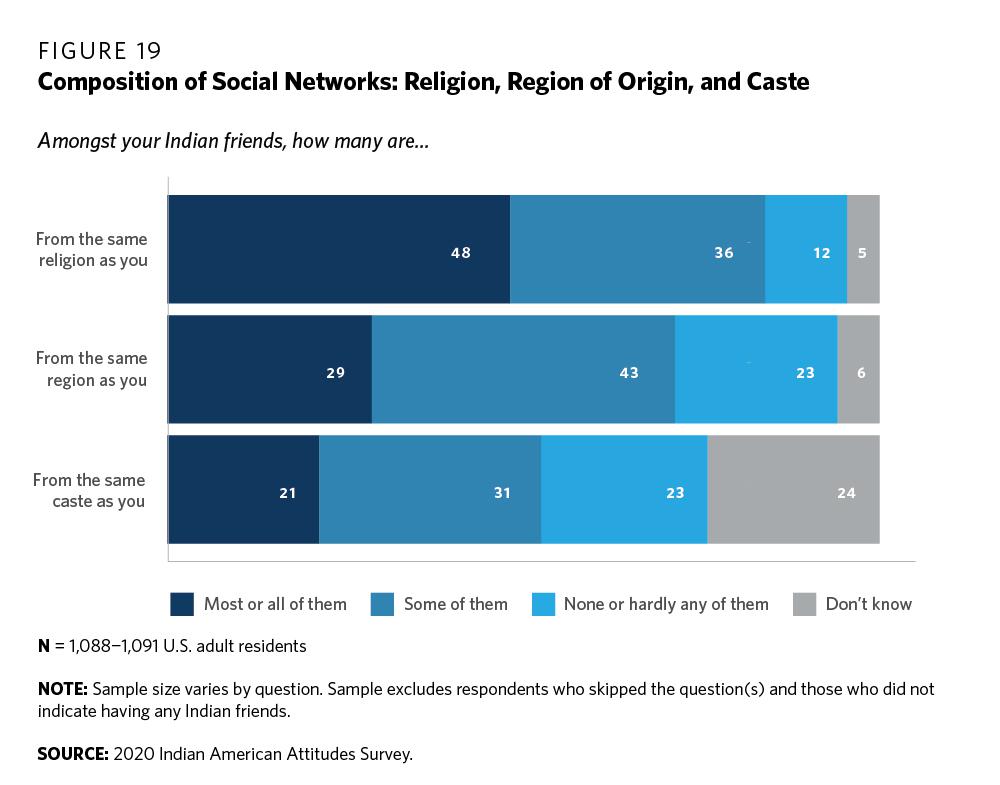
The figure above shows that most Hindu Indian Americans do not live in a caste-homogeneous environment. There are reasons for this. From the text:

Forty-seven percent of Hindu respondents report identifying with a caste, which means the majority (53 percent) said that they do not personally identify with a caste group of any kind. However, there is marked variation by place of birth. Whereas 53 percent of foreign-born Hindu Indian Americans affiliate with a caste group, 34 percent of U.S.-born Hindu Indian Americans do the same.

…Overall, there are 632 respondents in the IAAS sample who belong to the Hindu faith but only 293 who report identifying with a caste group. Of this latter group, the overwhelming majority—83 percent—categorize themselves as General or upper caste. Sixteen percent identify as a member of OBC and 1 percent each identify as Adivasi/Scheduled Tribe (ST) or Dalit/Scheduled Caste (SC).

The latter number, that about 80 percent of Hindu Indian Americans are not OBC, Dalit or Adivasi is exactly what I’ve seen in other data. But perhaps a more important aspect is that large numbers of Hindus in America don’t “affiliate” with a caste group. Some of the American-born individuals may not actually even know their caste group, though the foreign-born ones clearly know their origins as noted in the text:

Figure 21 looks more closely at the caste composition of social networks among Hindus. Seventy-four percent of Hindu respondents who report not identifying with a caste nevertheless know enough to be able to identify the caste identities of their social networks. Only 26 percent of Hindus who do not identify with a caste respond to questions about the caste composition of their social networks by answering “don’t know.” This indicates that even though a large proportion of Hindu respondents say they do not identify with a caste, only a small fraction are unaware of the caste composition of their networks.

What is also striking is how relatively small the differences are between respondents who identify with a caste versus those who do not. While the former report that a slightly higher share of their social network comprises people of the same caste, if one sets aside the “don’t know” responses, the relative differences between caste identifiers and non-identifiers is marginal. For instance, 27 percent of Hindu respondents who identify with a caste report that all or most of their Indian friends share their caste affiliation. Nineteen percent of those who do not identify with a caste group answer similarly. Respondents who acknowledge a caste identity are only slightly more likely to report that some of their social network is made up of people of the same caste (41 percent versus 33 percent for those without a caste identity).

So here is the subtle point: people who do not identify with a caste group nevertheless can often assess whether their social circle is mostly of their caste group or not. The dynamic here is that people are proactively disavowing or denying caste identity personally, but they clearly still know the provenance of their own lineage and that of their friends.

The landscape of caste and America is complex. Nevertheless, today’s social justice activists are trying to reframe it as just another black-white dichotomy, with oppressed Dalits, etc., against oppressive Brahmins.

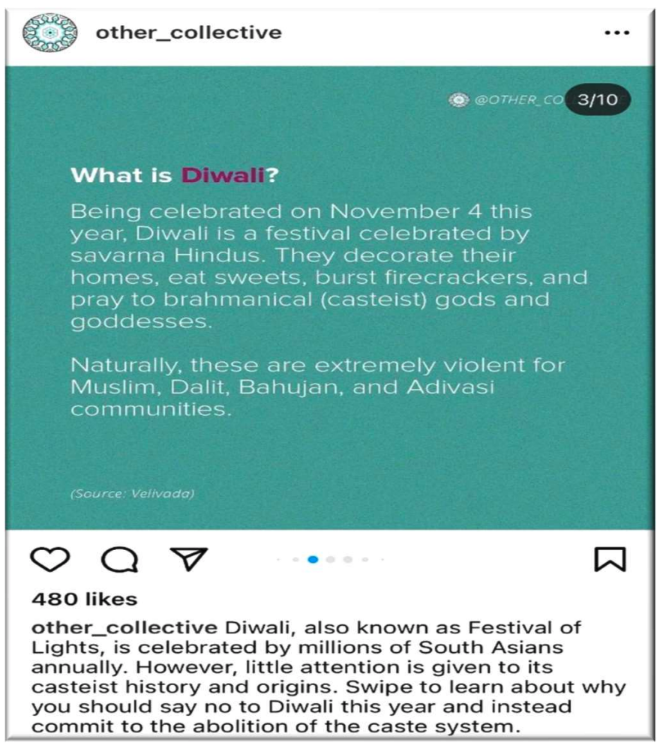
Finally, we discuss the casual and not-so-casual anti-Hindu comments that are spreading across mainstream discourse. For example, an organization at UC Davis called the Other Collective has said some really bizarre things about Diwali:

Stop trying to make ‘caste happen’

Google’s plan to talk about caste bias led to ‘division and rancor’:

In April, Thenmozhi Soundararajan, the founder and executive director of Equality Labs — a nonprofit that advocates for Dalits, or members of the lowest-ranked caste — was scheduled to give a talk to Google News employees for Dalit History Month. But Google employees began spreading disinformation, calling her “Hindu-phobic” and “anti-Hindu” in emails to the company’s leaders, documents posted on Google’s intranet and mailing lists with thousands of employees, according to copies of the documents as well as interviews with Soundararajan and current Google employees who spoke on the condition of anonymity because of concerns about retaliation.

Soundararajan appealed directly to Google CEO Sundar Pichai, who comes from an upper-caste family in India, to allow her presentation to go forward. But the talk was canceled, leading some employees to conclude that Google was willfully ignoring caste bias. Tanuja Gupta, a senior manager at Google News who invited Soundararajan to speak, resigned over the incident, according to a copy of her goodbye email posted internally Wednesday and viewed by The Washington Post.

A few points

– This is a big deal in the US right now because a few clueless progressive foundations gave money to Equality Labs. I say clueless because these foundations and granting institutions have zero ability to evaluate the plausibility of systemic caste bias in the US. They probably thought it sounded like a bad thing they should work against, so they funded Equality Labs. Once Equality Labs got its money, it was going to find systemic caste bias, because that’s its raison d’etre.

– The journalists who are reporting that “rising Hindu nationalist movement that has spread from India through the diaspora has arrived inside Google, according to employees” are clueless, and driven along by self-serving sources or their own biases. This particular reporter, Nitasha Tiku is an Ivy League-educated Indian American who has worked in online media (mostly tech journalism) for over a decade. She, like other Indian American reporters, has the right appearance and familial origins to cover a story like “caste in America’s Indian immigrant communities” in the eyes of her editors. But most of these people are not really culturally fluent enough to understand any of the subtleties or nuances of Indian caste, so they fall back on uncritically relaying their source’s talking points, or platitudes and cliches. These people are American, not Indian.

– Obviously, caste and jati are huge issues in the Indian subcontinent, and they are socially relevant institutions that have an impact on your life course. But that is not the case in the US. Indian Americans do come from caste backgrounds, though only 1% come from Dalit family backgrounds (again, it’s weird saying you are a “Dalit American” so almost no Amerians know what a Dalit is). But many Indian Americans raised in the US are very vague about their caste (with exceptions, if you are an Iyer or Mukherjee you pretty much know), and many of them grew up in predominantly non-Indian social environments. The kinship/jati networks that smooth the social functioning of Indian society doesn’t exist in the US. There are partial exceptions with Gujuratis who run family businesses, but these are a minority, and many of the children of successful Gujurati businesspeople in the US still go into professions where their world is mostly not Indian. What is really going with “Diversity, Equity and Inclusion” oriented interrogation of caste in the US is that they want to transpose the black-white model of oppressed and oppressors on a different group so as to organize a “progressive stack rank” of virtue/privilege.

– Though Indian Americans of the 1.5 and 2nd generation are prominent culturally and politically, the vast majority of Indian Americans in the US are immigrants, born and raised in India. Most actually arrived after the year 2000! People like Sundar Pichai or Parag Agrawal are socioculturally quite distinct from Neera Tanden or Kal Pe. Indian American Brahmins and Bainyas who barely have any understanding what this caste identity is may be willing to take on the role of “oppressors” so as to obtain performative self-flaggelation points, but it seems that immigrants, who often struggled to gain a foothold in the American economy and society, are not as eager to engage in this behavior. Especially when they are more aware of the reality of caste and jati in the subcontinent.

– There are nepotistic networks among Indians in tech. I’ve heard multiple people (Indian immigrants) talk about the “Telugu mafia.” But these are not the same as what you would see in India as explicitly related to jati. There are networks connected to schools that everyone went to, or a unicorn that a bunch of early employees cashed out of, etc. It’s the typical thing you see in business in general, where relationships go a long way. But there’s no systemic exclusion of Dalits or lower class people because there are hardly any Dalits in the US, and Indian Amerians are strongly selected for skills, education and higher socioeconomic status in the immigration system. I dislike pointing to prejudice to explain things, but the same sort of dynamics you see in the “Paypal Mafia” when it happens with Indian immigrants seems to be depicted as caste-clannishness by outsiders.

– I am not optimistic that DEI will not include caste in its categories of oppression and marginalization. In 5 years I think it is quite likely that a young white women in HR will be evaluating the caste-jati status of brown-skinned applicants to companies to make sure that the subcontiental employee pool is “diverse.”

Hindi Cinema As Visual Political Narrative

It is like writing history with lightning” was claimed to be the response of Woodrow Wilson the president of United States (from 1913 to 1921) on viewing a special screening of D. W. Griffith’s Birth of a Nation. Regardless of the fact that the film in question had racial connotations it does say something about the power of the silver screen to narrate the past of a nation punctiliously albeit with a little embellishment here and there. In this particular piece I have attempted to show four main social occurrences in the history of India written as Wilson stated ‘with lightning’ in the silver screen.  


The Era of Realisation- Late 1950’s to 70’s

After independence in 1947 the first prime minister observed that the bulk of the nation still relied on agrarian works to feed themselves and hence took measures inspired by the ideology of Socialism which he believed would benefit the farmers most. However, in this case though the underdogs were the agriculturalists, the machines were looked upon with suspicion. But all changed as the 50’s came to an end ushering in the 1960’s.  The focus now shifted from agrarian reforms to industrialization due to urbanization gaining more ground as many farmers and rural workers in general realized the limitations of agriculture and advanced towards the city with hopes of earning a living. Also noticeable in the middle of the decade were the technological methods used in the Green Revolution. As more farmers and villagers flocked to the city joining those who were already the underbelly of urbanization the message of socialism reached its most important receiver: The Indian Middle class. 

But even the privileged section of the society started getting influenced by socialist ideals. The villainous machines of the preceding decades became the means of earnings for the underdogs as the factories became the driving force for industrialization with the identified have-nots getting employed to work the machines. The laborers in factories became more vocal than before since they had more importance in the said era compared to the farmers (who were lionized in the fifties).

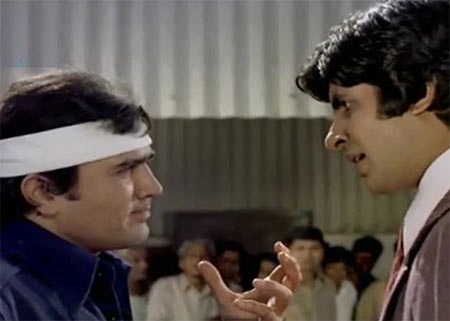
Yet the afflictions remained the same for the have-nots as the oppressors changed from landlords to rich entrepreneurs and the shift to industrialization did not reduce the large gap between rich and poor retaining the same sort of social inequality. To check this inequality or at least reduce them the more cautious and informed workers formed unions with a hierarchy of leaders to counter any injustice brought about by entrepreneurs. Strikes by unions became an expression of dissent by the have-nots who in this context were the factory laborers. The new shift also saw the effects and realities of poverty prevalent nationwide. Now since the union strikes occurred in the urban centers the young urban residents observed the inequalities in their surroundings more thoroughly and some became resolute to apply socialist schemes the government spoke of while becoming disillusioned with the image of their nation simultaneously. The preceding generation of Indians encouraged the youth while having mixed feelings about the disillusionment factor. With this new realization the youngsters were divided into two groups: one group willing to change the prevailing conditions while the other saw the growing consumerism as a way of life. The preceding generation felt the pangs of disappointment as both groups denounced the idealist socialism of the Nehru years creating two extreme poles widened more aggressively in the 1970’s. Veteran director Hrishikesh Mukherjee captured these sentiments in the classic Namak Haram.

C:\Users\Poulasta\Downloads\images.jpg

https://youtube.com/clip/UgkxVBdF8v6sAUFlm7CJ7Sb_eD1b5ZfoLQ2H

Guns replace sickles: 

As 1970’s kicked off the importance swung back to the farmlands in India due to massive economic loss caused by union strikes and catchphrases like ‘cultivators own the land’ were propagated by the Indira Gandhi-led government. The cultivators as well as the farmlands however were still in pitiful conditions.

Unlike the previous decade the new generation of youngsters from privileged backgrounds felt responsible to change society by violent methods if required. These youngsters fell in love with the thought of uprisings and saw parallels in the conditions of their times with that of colonized India. The Cold War events like the wars in Vietnam and uprisings in Cuba spiced their viewpoints more. To the angry youth the state was now a draconian entity determined to repress its own citizens hence it was time to dissolve it by necessary violence. 

Political movements like the satyagraha led by Jayaprakash Narayan in Bihar as well as public opposition to the Indira Gandhi administration made those romancing revolutions more intense. Indira Gandhi’s strident response to free speeches and clamping down on her opponents during the imposition of National Emergency was the final straw. The budding but violent pro-peasant movement fermenting in the small village of Naxalbari in West Bengal had its resonance felt in different parts of the nation due to the activities of the said rebels. Unlike the ideal socialists of the 60’s these revolutionaries believed in do or die philosophy and attempted to bring about a total revolution to enforce their own version of ideals. Revolutionaries Mao Zedong, Trotsky, Kanu Sanyal became the role models of the youth in place of Nehru and toiling peasants. 

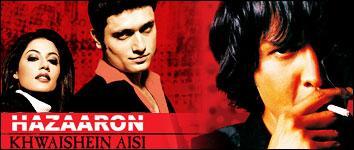
The administration on seeing the intensity of the attacks decided to give an equal violent response. Now the lovers of uprising had a heart attack with the stringent measures administered by the state. And almost all admirers as well as participants of the radical Naxalite movement were punished by the authorities. The end of this saga saw the replacement of the Indira Gandhi government by the Janata Party in the Centre during the 1977 elections as well the beginning of three decade rule of the Left Front in West Bengal. This matter was sensitive for a long period of time but there were few cases of comprehensive documentation done on this barring the ones with heavy political connotations. Same could be said of its visual presentations. However an entertaining yet effective example was seen in 2003 with the release of Hazaaron Khwaishein Aisi directed by Sudhir Mishra.   


C:\Users\Poulasta\Downloads\Hazaaron_Khwaishein_Aisi_D.jpg  


Deteriorating Stagnation: 1980’s to 1990’s:

One thing that was always present in the 60’s and 70’s was the involvement of the students as a group of political advocates. From the days of the freedom movement the students have been the most active participants in any political turmoil. The careers of national leaders like Jawaharlal Nehru, Jayaprakash Narayan and Vinayak Damodar Savarkar started as student leaders. But the rise of Sanjay Gandhi during the emergency era in 1970’s changed the concept of youth leadership as he used the youngsters as cronies for the administration. In the aftermath of Sanjay Gandhi’s death and Indira Gandhi’s assassination India had a charismatic young leader in the form of Rajiv Gandhi becoming the youngest Prime Minister of India. 

However, unfortunately the perception of youth leadership changed from that of young firebrands to petty power seekers as political parties used them for the sake of expanding their base (there were some exceptions though). Such instances were said to have affected the ‘Student Unions’ in states like West Bengal, Andhra Pradesh, and Maharashtra often leading to violence in university campuses hampering the functioning of the institutions. The liberalization of the Indian economy as well as changing of ideologies did have its impact on young political leaders but most of these young guns couldn’t match the charisma of their predecessors. Also many dedicated youngsters had to confront their own mentors, many of whom became either disenchanted or authoritarian. According to some social observers the opening up of the economy made the youngsters more materialistic, taking the political zeal away from their psyche.

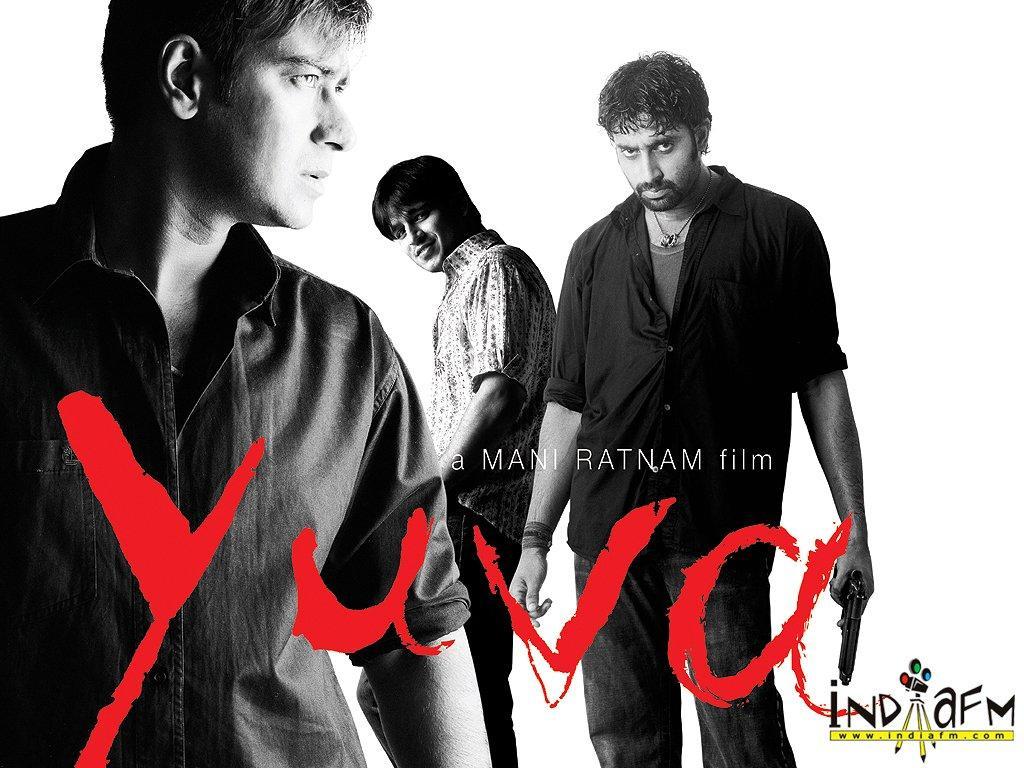
This new era saw the youngsters in three different avatars: those seeking power by hook or by crook; those running after material benefits; and lastly those willing to become agents of change. One can take a look at  Mani Ratnam’s Yuva to see the different shades coming together.

C:\Users\Poulasta\Downloads\Yuva---Bollywood-Movie-925044095-31102-1.jpg


The ever present anti factor: 

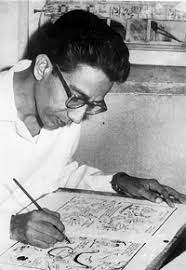
‘To every action there is always an equal and opposite reaction’ Newton’s third law was every bit true in all the three eras mentioned above. There were always forces that consistently rose up against the trend of the era and became a trend by itself. Of all such movements that happened nationwide I have decided to highlight the one established in the nation’s financial as well as entertainment capital Mumbai: the Shiv Sena. Founded on June 19, 1966 by former political caricaturist Bal Keshav Thackeray who stated the party’s avowed intention is to fight the alleged injustice in employment and other matters being faced by the Maharashtrians in Mumbai.


The reason cited for this injustice was the influx into Mumbai of people from other states, amongst whom the Shiv Sena mainly targeted South Indians. Even though this catapulted the Sena into national headlines I believe it was their role as anti-trendsetters that made them unique. During its early years the Shiv Sena was engaged in frequent struggles against the trade unions. Prior to the formation of the Shiv Sena, the Communist Party of India played a dominant role in labour politics in Mumbai. According to journalists of the then era the Shiv Sena was supported by elements inside the Indian National Congress, who hoped that the new organization would be capable of weakening the communist party’s influence on trade unions. 

Soon Shiv Sena cadres were involved in a series of violent conflicts with the communist trade union activists. The Sena saw the union and communism as distractions for the disgruntled local Maharashtrians preferring the youngsters to toil and join the authority to gain an efficient and wholesome lifestyle. This sentiment was narrated by Bal Thackeray in his caustic speeches against trade union leaders and socialist hardliners. Though it was Balasaheb Thackeray’s belief that the “people” were supreme, he argued that the institutions of liberal democracy and the administration were engineered against it. 

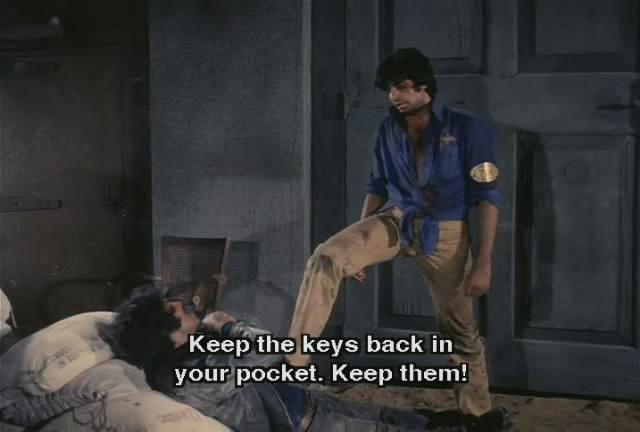
The defense of its interests required direct action:  Laws had to be broken. Violence and intimidation were necessary to bring the people’s enemies to heel. Wake up, wake up, before it is too late,” he would urge his admirers. The educated yet unemployed young men were among the most loyal members of the Sena. It was the triumph of assertive rhetoric over economics. This anger turned local Maharashtrians of Mumbai into angry rebels conflicting with the state machinery. Anything that resembled closely knitted authority like municipalities and trade unions faced the ire of the Shiv Sena. Bal Thackeray’s political rise was fitted together with the cinematic rise of Amitabh Bachchan’s angry young man on the silver screen. This trend of angry young men dominated the political as well as cinematic landscape throughout the last years of 1960’s till 1970’s. 

C:\Users\Poulasta\Downloads\deewar1975dvdrip01.jpg 


https://youtu.be/fYu43KDltVU


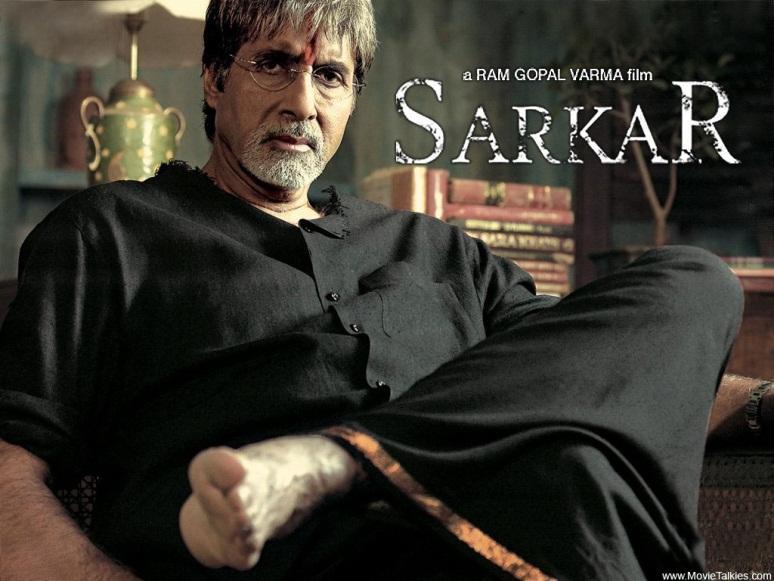
As the 1980’s ushered in and disruptive student politics was taking over, the Sena supremo decided to play defense. But this defense was not to create ideal student leaders as that move did not succeed in the preceding decades but to counter it with the belief that this disruptive system is fit for the privileged section. The underdogs must become more vigilant and ensure that their interests are not exploited by the misguided leadership of privileged students. If necessary resort to ‘goondagiri’ the Senapati opined. It was easily said and done: the students from a certain strata of society came together with the struggling ones in the underbelly of society and acted as a barricade to the inflow of any kind of student movement into their midst. Instead through rowdiness they marked their territory and the unemployed youth became a type of guardian as well as a bully of his area. This was captured in starring actors like Jackie Shroff, Nana Patekar, Anil Kapoor among others donning the role of a popular young vandal. As the economy liberalized the hold of the Sena on Mumbai stayed strong as Bal Thackeray further fortified his role as the sole guardian of the disadvantaged residents of Mumbai carrying out what he felt was correct for them wheedling the government apparatus as he saw fit becoming a definite ‘parallel government’.

C:\Users\Poulasta\Downloads\sarkar.jpg 


References:

  1. Purandhare,V(2012).‘The rise & fall of SHIV SENA’.  Third edition. Mumbai. Roli Books Private limited   
  2. Virdi,J(2003). The Cinematic ImagiNation: Indian Popular Films as Social History.  Second edition. Rutgers University Press.
  3. Rediff Movies (2005, April 15th ). Hazaaron Khwaishein is overwhelming. Retrieved 13th February 2013 from http://www.rediff.com/movies/2005/apr/15hazaaron.htm.
  4. Prasad, M. M (2000). Ideology of the Hindi film: a historical construction. Oxford University Press
  5. Shekhar,M. (2006). Bombay talkies: 2004-2005. Frog Books.
  6. Times of India (2012). With Bal Thackeray’s death, are Shiv Sena’s best days over? Retrieved 13th February 2013 from : http://articles.timesofindia.indiatimes.com/2012-11-20/edit-page/35204690_1_shiv-sena-uddhav-bal-thackeray.

Note: This is an old essay written during the writer’s time in college and has been published in his personal blog also(click here).

The truth still matters

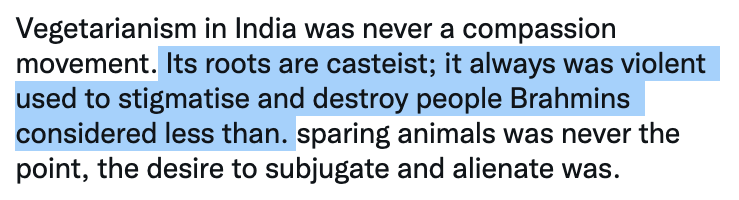
On Twitter I ran into a peculiar argument about vegetarianism and Brahmanism:

This is just factually wrong from what I know. The standard narrative I was taught is that the shift toward vegetarianism was driven by non-Brahmin-led religious movements, in particular the Sramanic sects like Jainism and Buddhism (that seem to have had a Kshatriya and Vaishya “class” base). Rather, post-Vedic Brahmanic ritualism was changed by the influence of these movements, with the Brahmin caste becoming followers and expositors. This probably aligns with the idea that much of late Indian Buddhism was actually incorporated into Advaita, so the idea that Buddhism is a “daughter” religion of Hinduism is actually not correct.

Now, it is totally true that today militant vegetarianism is often correlated with upper castes and is instrumentalized in an exclusionary manner.  But that is the endpoint and operationalization of vegetarianism, not its root. The original commenter was making a political and rhetorical point, so truth was pretty irrelevant. But those of us who value truth need to periodically bring up pedantic aspects because otherwise the lie becomes truth, and that is true perversion.

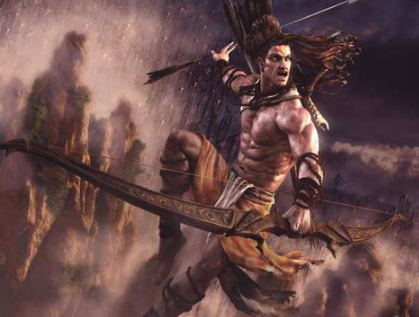
Happy Rama Navami!

A Hindu friend clued me into the fact that this was Lord Rama’s birthday. Since I’m not Hindu or from a Hindu background I had no clue (to be fair, Google calendar is how I know when Ramadan starts). I don’t know much about Rama as I have not read the Ramayana (after all these years I’m only 2/3rd of the way through an English translation of the Mahabharata), but, I’m pretty sure I know which Y haplogroup he was, so much respect!

Against blood quantum as a measure of indigeneity

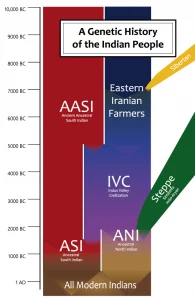
The figure to the right is from a Substack post I wrote last year, Stark Truth About Aryans: a story of India. In it, I posted about the different streams of ancestry that led to the variation in the modern Indian subcontinent. In short, there are three primary threads:

1) Steppe Indo-Aryans who are identical to the Sintashta Culture of the upper Volga ~4,000 and gave rise to the Andronovo Horizon

2) “Ancient Ancestral South Indians,” who have more affinity to the peoples to the east of Eurasia, and are distantly related to a clade of humans that brackets the Negritos of Southeast Asia, the Andamanese, and the people of Australia (this clade diversified between 35 and 45 thousand years ago, so these are not close connections). Though the modern Andamanese are often used as a substitute for AASI, the reality is that they diverged more than 30,000 years earlier and these tribal populations probably derive from modern Burma, rather than India (the Andaman Islands are an extension of the Burmese geological formation).

3) Lastly, there is a component that has been termed by some as “eastern Iranian,” but really defines a little-understood population that represents the easternmost extension of the Zagrosian farmer stock. These eastern people that extended likely into the northwest of the subcontinent are distinctive in that they lack any admixture from Anatolian farmers, which is ubiquitous to the west of Dasht-e-Kavir. Not only do these people not have any Anatolian admixture, but they also have enrichment for Paleo-Siberian ancestry, likely mediated along the pastoralist fringe of Central Asia

The vast majority of subcontinental populations have some thread of ancestry from these three groups. The major difference is proportions. You can see this in an admixture graph I ran a few years ago (yes, I need to update it). In the graph AHG = AASI, while steppe is pretty straightforward. But, the Indus_Periphery group is a mix of “eastern Iranian” and “AASI.” Concretely, I simply picked the highest quality and least AASI samples to capture as much eastern Iranian ancestry as I could. But I would estimate that 10% AASI is still a rational lower-bound (probably not higher than 20%) estimate for my Indus_Periphery construct. This means even the Kalash of Pakistan, who are ~0% AHG in my model, do have AASI ancestry, it’s just mediated through their 70% Indus_Periphery.

In regards to the steppe ancestry, the reality is that it is present across the vast majority of groups. The exceptions are a very few South India tribal and most Munda populations. Groups like Reddys and Nadars will clock in at 5-10% steppe ancestry. This makes sense when you note that Y chromosome R1a1a-Z93 is found in even tribal groups with the exception of the Mundas. There are other details that are curious. Many groups in the Sindh/Gujurat region are very enriched for Indus_Periphery but have very low AHG proportions and less steppe. In contrast, some Gangetic populations have far more steppe than these, but far more AHG.

This brings me to the point of the post: when people say that Dalits or Adivasis are the indigenous people of the subcontinent, I think it does not necessarily have as strong of a human demographic basis as one might think. That is because to a great extent Dalits and almost all Adivasis are made from the same threads as other subcontinental populations, even if the proportions may differ.

Let’s walk it back and understand the ethnogenesis of the subcontinent.

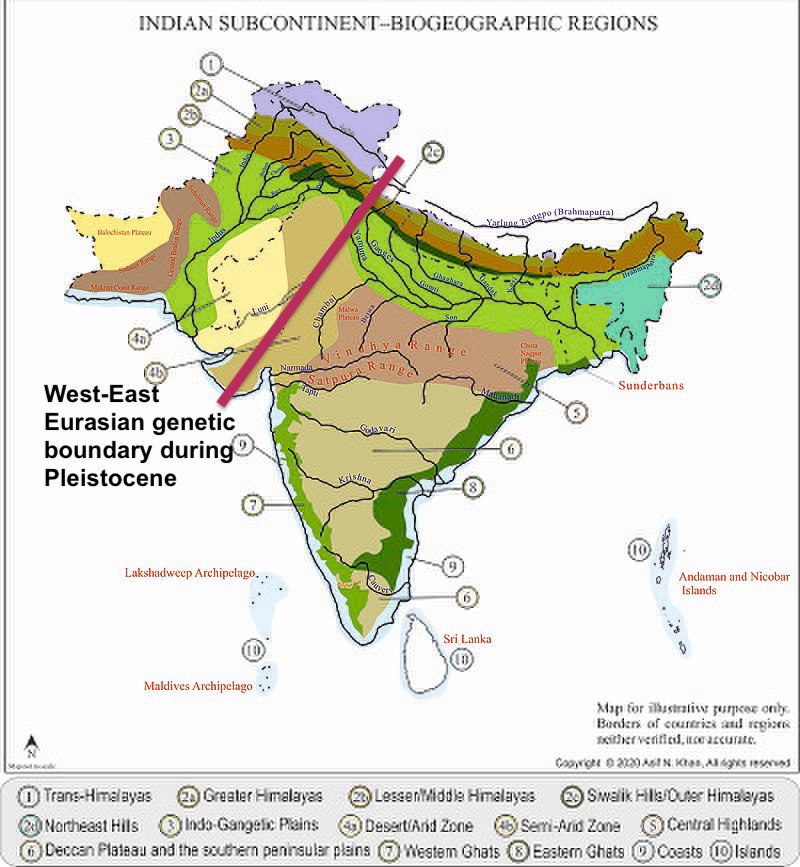
First, it is quite possible that the AASI are not indigenous to the portion of the subcontinent to the north and west of the Thar desert. Their natural ecological locus was likely in the east and the south. Biogeographically the northwest of the subcontinent is somewhat different than the south, center, and east, which resemble Southeast Asia more (albeit at a remove). During the peak of the Last Glacial Maximum, the Thar Desert was drier and larger, serving as a boundary zone between southwest Eurasia and southeast Eurasia.

The ancient DNA from the Swat valley as well as the genetic character of modern Punjabi populations compared to the ancient samples from the IVC make a strong case that AASI ancestry is intrusive to the northwest. By this, I don’t mean that AASI tribes migrated in that direction, rather, as the IVC expanded it clearly mixed with AASI populations to its south and east, and as the IVC was an integrated cultural zone, mixed individuals moved north and west over time.

The Swat transect shows a decrease in IVC proportions between 1000 BC and 0 AD, and increased steppe and AASI ancestry. This is part of what I call the “integration phase” of Indian civilization, as gene flow occurred not just from the northwest with Indo-Aryan expansion, but Indo-Aryan reflux migration must have occurred into the west. These eastern Indo-Aryans mixed extensively with indigenous people in the Gangetic valley, explaining why Brahmin populations in this region have noticeable more steppe ancestry than groups like Sindhis, but also far more AASI ancestry. Indo-Aryan tribes all mixed with IVC people when they arrived in the subcontinent (while there are populations that are ~0 steppe, and others that are ~0 AHG, there are no populations in the subcontinent that are ~0 Indus), but a subset moved east and south fast so that they arrived with a higher steppe fraction when they settled down to mix with indigenous tribes.

Second, even outside of the northwest, it is not entirely clear that the AASI is not a recent early Holocene migration from Southeast Asia. Genetically they are part of the continuum with the indigenous Negrito people of Southeast Asia. I think it is less likely that there was massive Southeast Asia migration during the Holocene, but for most of the Pleistocene, Southeast Asia had many more humans than India because India was far drier.

Finally, outside of exceptional groups like the Munda, whose language and mythology seem derived from the 20-30% of their ancestry than is Austro-Asiatic Southeast Asian (and all-male), almost all subcontinental populations come out of the cultural matrix whereby Indo-Aryans synthesized with indigenous populations (much, but not all of whom, were Dravidian-speaking). The earliest Tamil has a clear Indo-Aryan influence, while the retroflex in Sanskrit is indicative of Indic influence very early on.

Where am I going with this? Genetically a Jat from Haryana is very different from a Dalit from Tamil Nadu. A Jat is 10-20% AASI (aggregating the AHG estimate with the AASH fraction in the Indus_Periphery), and 25-30% steppe. The Dalit is 75% or so AASI (again, aggregate), and only a few percent steppe. This is a massive genetic difference. But culturally it is clear that both come out of an Indian milieu that was shaped in the period between 1500 BC and 500 BC, as the Indus Valley Civilization collapsed, and its remnants were transmuted by Indo-Aryans. The tribes in the north that continued their Indo-Aryan language were clearly transformed, but the Dravidian-speaking polities of the south were also imprinted by the Indo-Aryans. It was reciprocal.

Both light-skinned northern Indians who like to claim “actually” they are “Iranian” and dark-skinned South Indians who claim to be “indigenous” emerge out of this process, this dynamic. And they share equally within it. India came out of the mixing of many disparate elements which then disaggregated in various ways, but all went through the same sieve.

Brown Pundits