
Please keep the other posts on topic. Use this for talking about whatever you want to talk about.
Category: Open Thread
Open Thread
Please keep the other posts on topic. Use this for talking about whatever you want to talk about.
Open Thread
Please keep the other posts on topic. Use this for talking about whatever you want to talk about.
Intellectual Dark Web
I would define the “intellectual dark web” as the confluence and convergence of leaders from classical European enlightenment, hard sciences, technology (including neuroscience, bio-engineering, genetics, artificial intelligence), and east philosophy streams. Among the intellectual dark web’s many members are Dr. Richard Haier, Jordan Peterson, Jonathan Haidt, Ben Shapiro, Weinstein brothers, Sam Harris, Glenn Loury, John McWhorter, Yuval Noah Harari, Thomas Friedman, Maajid Nawaz, Neil deGrasse Tyson, Michio Kaku , Dr. VS Ramachandran, Steven Pinker, Armin Navabi, Ali Rizvi, Farhan Qureshi, Peter Beinart, Gad Saad, Nassim Nicholas Taleb, Dave Rubin, Joe Rogan, Russell Brand. If Steve Jobs were still alive, I would include him among them. They defy easy labels and are high on openness. I hesitate to label others without their permission, but our very own Razib Khan strikes me as a potential leader of the “intellectual dark web”; although I will withdraw this nomination if he wishes. 😉
Some see the intellectual dark web as the primary global resistance to post modernism. I don’t agree. Rather I see them as ideation and intuition leaders thinking different:
BP Round-Up / Open Thread
I am doing a round-up of the past 10 posts excluding my own since ordinarily I tend to write more. I try to judge the tempo of BP and when it’s moving on it’s own momentum I hum down and do other stuff. Incidentally I have excerpted the last twenty articles (the pages display ten articles at a time) and I was surprised that in 3 days we generated so much content.
Beyond cultural parochialism: Razib tells us what to read, which is a good thing because he reads alot. I don’t know how he does it!
Revisiting Somnath–A Review: Kabir revisits Somnath academically and I do agree that British historiography somehow intensified Hindu-Muslim political rivalry. Of course it was a complex equation but I’m surprised no one senses the nefarious hands of Imperialism!
Jaydeepsinh Rathod on the historocity of Sanskriti: AnAn compiles all of JR’s thoughts on the historocity of Sanskriti. In the Aryan threads there are some very knowledgeable comments; I remember Allama Iqbal ending his thesis that the reason Hinduism survived and Zoroastrianism did not was because the Brahmins obsessively discussed every detail of their philosopy and mythology whereas the Magis did not. I sometimes feel like my Magian ancestors and I like to hold on to my cherished notions..
Toxic textbooks and social engineering in Pakistan: AMA investigates how the Pakistani psychosis came to be. I myself of course thoroughly indoctrinate in the Pakistani psychosis; I am rather a bit too proud of my Hijazi camel trader ancestors (nos ancetres les Hijazis sounds a lot less glamorous than the Moghuls).
Madeeha Gauhar, Pakistan’s most famous Theatre Director passes away: Kabir mourns the passing of Madeeha Gauhar, I had remembered Ajoka Theatre coming to London for Dara Shikoh but I didn’t watch the play on principle. When I was in London I used to go to the theatre weekly (sometimes twice or thrice a week) but I got annoyed when I saw all the Pakis rushing to the National Theatre. I am quite white in my inclinations (I am a pretty good rock climber, love a good Oxbridge formal and enjoy the theatre – ergo I have to interact with far too many liberal Wasps). RIP Madeeha Khanum and thank you for your services to Pak Theatre!!!
Why do Indians care about OIT/AIT: Good question by Razib; 89 comments later in we don’t have a clear answer?
The water rises and Canute drowns: Razib writes a short piece touching on Genes, Aryans & India. Result, one of our viral threads. I don’t really know too much to comment on the matter; it’s sad how ill-informed I am about Indus Valley Civ and anything before Mo Bin Qasim. Pakistani psychosis and all that!
The Ministry of Utmost Happiness: A Look into the Underbelly of Modern India: Kabir reposts his review of Ms. Roy’s latest novel. As an aside I think Kabir writes excellent reviews, a nod to his English Lit major.
Echo Chambers and Epistemic Bubbles: The Aeon article essentially states that the Echo chamber is a “soft conditioning.”
Modern Love: AMA writes a Part Fiction, Part Memoir short story about Moving to America.
Race Stereotypes in Medieval Islam (and some lines on cousin marriage): Omar reproduces a short note from Irfan Muzammil about how medieval Muslims pondered over the various races they encountered. ZackThought: Race in Islam is a nebulous concept though colour is not.
Rajneesh and Sheela Ambalal Patel, a question by sbarrkum, on the new Netflex docuseries about the Rajneeshess cult. I’m shocked to realise that Osho is actually no more; I thought he was still alive! ZackThought: I was pondering over this that the older a religion, the more reliant it is on charismatic individuals (gurus, popes, Imams) to guide the religion. The younger the religion the more institutionalized it is (Protestantism, Mormonism, Ahmediyyah, Sikhism, Baha’i Faith).
Why do Indians care about OIT/AIT
From my blog:
Razib: I follow your super feed and read your postings here and on Brown Pundits. The subject of the ancestry of South Asians comes up frequently. It seems to have a political valence that I, as an outsider, do not understand.
Can you explain it? or point us to an explanation?
My response is “British colonialism and modern-day culture wars.” I could say more, but honestly, I don’t care that much. The science is more interesting to me, and it’s a lot to keep track of. Can readers comment?
(Related: there are some Pakistanis who try and pretend as if they are descended from Persians, Turks, or even Arabs. The explanation is pretty straightforwardly summarized as “self-hatred”, though we could all elaborate on that).
Ancient Arya Culture
I believe Arya culture is a lot more ancient than Westernized Indology suggests; although how old I do not know. Arya is a culture, civilization, philosophy and faith rather than ethnicity. It was geographically spread from Iran, to the southern former Soviet Republics, Afghanistan, Tibet, Thailand, Vietnam, Loas, Cambodia, Malaysia, Sumatra, Java, Bali, Sri Lanka; although I don’t know what geography it was “founded” from so to speak. Its offshoots are the East Europeans, Germanic tribes, Romans, Greeks. Maybe they are more than offshoots and part of the original civilization.
Given how little modern science and archaeology knows; perhaps Western Indology Oriental dating needs to be reevaluated. Only an almost infinitely small fraction of ancient artifacts have survived father time; including 385,000 year old tools found in South Asia recently. Here are other articles about this.
Recent very fine comments at Brown Pundits have discussed the relationship between Buddhism and Sanathana Dharma. I see the Buddhist family of threads as part of the broader Sanathana Dharma family of families of threads. The great enlightened master Shakyamuni Gautama Buddha revived and enriched far more ancient masters and teachings. Buddha said he was Rama and Kapila reborn. Kapila is the founder of Samkhya, one of the ten schools of Sanathana Dharma:
There are significant similarities between Buddhism, Nagarjuna (founder of Madhyamaka Buddhism–a subset of Mahayana Buddhism), and Alatasanti Prakarana, or the fourth chapter of Gaudapada’s Māṇḍukya Kārikā. Gaudapada is the guru of Govinda, who is the Guru of Shankaracharya. Multiple sourcing from many eastern calendars and records place Shankaracharya’s date of birth at 509 BC, including but not limited to the 5 Shankaracharya maths in India. Since this date comes from so many literary and historical sources from so many places around South Asia, this date might be correct. Which would date the Alatasanti Prakarana significantly before modern historians date Shakyamuni Gautama Buddha. Which is additional evidence that Buddha may have lived before 1000 BC. Some say Buddha lived 1800 BC. If Buddha was a contemporary of Zarathustra, there is some data consistent with Zarathustra being born 1200 BC to 1500 BC.
I suspect but don’t have evidence that Buddha built upon and enriched great existing streams inside Sanathana Dharma. Buddha said he was a reincarnation of Rama and Kapila, the father of Samkhya Darshana and a figure in Jainism. [The Dalai Lama frequently praises Samkhya philosophy.] Some elements of Buddhism do not have similarities with known Samkhya texts. Could it be that Buddhism has embedded within it some ancient now lost strains of Samkhya philosophy? I do not know, but since almost all Samkhya texts have been lost, it is hard to say. This does not take anything away from Buddha and Buddhism. There is a reason that almost all of Buddha’s disciples were Hindu Brahmins (along with a few Kshatriya Hindus) and virtually all South Asian Buddhists regarded themselves as Hindu Buddhists as recently as the 1941 British Indian census. There is a reason that many Hindu temples and individual Hindu Puja rooms worship Buddha; and why most Hindus so venerate Buddha.
How are Nirvana or Shunya different from Brahman? [Article has been edited to suggest Buddha might have been born before 1000 BC.]
Oh to be a Gaud Saraswat Brahmin
I picked this link on Ajit Pai from Razib’s blog.
But he also caught my attention because Ajit Pai is a Konkani Gaud Saraswat Brahmin—and I am, too. In late 2016, I retired an oral history project on Konkani-speaking Brahmins because I mostly recorded versions of the same fabulous origin story, more legend than history—that we were “pure” light-skinned Brahmins of the north, who traveled to southwestern India after the Saraswati River “went underground.”
I had a GSB friend but that’s beside the point. What I have noticed is that there is an almost compulsive need in Indians to name drop their caste, especially if it is a high one.
There was no need for this author to mention her K-GSB origins but then that wouldn’t allow her to flaunt it.
Random Thoughts 5-19-2016; Asian-Americans, Humanities, Trump..
I have been busier than usual, been reading more than before (trying to avoid Jaun Elya’s barb: “he was writing when he should have been reading”) and spending more time on Twitter than ever before, so blog posts have been few and far between. And with “products” due at work, things are not likely to change soon. So I thought I would try something different. Once a week or so, I will do something like an open thread. Just a few short comments on a few stories, most of them copied and pasted from comments I wrote on different internet sites. So here goes..
We Are Not Your Asian American (Political) Sidekick Razib Khan has a post up about “..(using Asian Americans) as a prop, often in a mendacious manner.” . Read the whole thing. When I did, I had a thought about why some Asian-Americans (mostly in left-liberal academia and it’s media periphery) are so eager to embrace a certain “we, the oppressed POCs of America” theme:
I would add that while Asian Americans in general suffer from discreet (or not so discreet) anti-Asian quotas that are put in place to limit their numbers in elite institutions, the kind of Asian-American intellectuals who write books about “POC solidarity” and run blogs called “racialicous” are in a different category; they are net (niche) beneficiaries of the “Asians as picked-upon-POC” framework they promote about Asians in America and this provides an obvious motivation for them to stick to it… For example, it gives them victim status in a social and academic setting where victim status is a very desirable good.
I understand that Asian Americans are not getting jobs on diversity quotas in most places, but the victim status still has clear psychological and social benefits and I strongly suspect that it also protects mediocre work (or whatever passes for work in the social sciences) from criticism OVER AND ABOVE the protection enjoyed by their White colleagues. Imagine 5 equally mediocre bullshitters who happen to be critical studies faculty at a liberal institution. They are not all equally protected. The White faculty member may benefit from connections and “White privilege”, the Jewish faculty from Jewish networking, but what defends the Asian guy? He or she has to rely on the POC card. Maybe they are still at a disadvantage versus equally mediocre Jews or Whites, but it is better than nothing. My point is that this motivation cannot be excluded when we think of WHY some Asian-American intellectual is pushing X or Y crap. In fact, I can think of examples of Indian-American writers and intellectuals who are clearly not being held to very high standards by the New York Times types and I suspect that successful manipulation of White guilt/POC privilege plays a part..
Of course, then there are those (few) intellectuals who are genuinely committed to a specific vision of world revolution and their views about the karma of brown folk follow naturally from that framework. Just to be clear, I am not thinking about them when I think of over-priviliged Asian-American kids blogging on Racialicious. Though both parties are happy to use each other, they are not the same. But truly committed revolutionary Marxists are few and far between. They can be criticized on other grounds, but psychological satisfaction and postmarxist postmodern BS are not their basic framework.
A commentator on another Razib Khan post (a post that touches on the touchy question: “Why Not Close Humanities Departments?”) wondered if shutting down the humanities would not take away a safety valve, one where ” the left was effectively “tamed” in the U.S. They became part of the establishment through being allowed a little safe space away from capitalism. .”
I disagreed as follows:
Your argument rests on the assumption that college humanities departments have no real-world consequences at all, so it is safe to put leftists there and let them spout endless reams of pure bullshit….. But while they may not have immediate consequences, they may still have longer term consequences, no?… after all, they do set the intellectual agenda to some extent. ..it may be enough to matter. (This is my favorite theory for why a smart person like Edward Said spewed so much nonsense; he knew it was nonsense, but he was fighting a war and all is fair in love and war. He was doing nothing less than bringing down Western civilization, opera and all. Samson option)
On the other hand, there is always the possibility that social change happens a few years (at least) ahead of any effort to conceptualize or understand it. So if we are doomed, we are doomed. ..in this theory, it may still be possible for scattered individuals to grasp what is going on in some limited area and take advantage of foreknowledge, but even they only know a few things, not the overall picture.
It is what it is, nobody is in control and nobody can consciously alter the big picture… Fate rules everyone.
It is a cheery thought somehow 🙂
The New York Times has a piece about the rise of the Right (Austria’s Election Is a Warning to the West) which is remarkable for its total lack of self-awareness. The writer seems completely oblivious to the possibility that the endangered liberal consensus may have itself have some issues that have led it to this pass; maybe parts of the liberal framework are not very realistic? (as in “aligned with the world as it actually is”) Could it be that one reason a buffoon like Trump has a serious shot at becoming president is because the mainstream liberal worldview contains some elements that seem far too unreal/laughable/wrong to far too many people?
Anyway, the sky may not be falling. Or at least, not completely so. I remain in the “weirdly optimistic’ camp. There will be crises, but there will also be recoveries and new roads to new places..not necessarily recovery of specific parties or specific forms of liberalism… but the arc of history bends towards individualism and autism and more technology, with decreasing everyday violence in the more developed countries… Some places may crash and burn though…
Last but not the least, the BJP appears to be replacing a moribund Congress as India’s “national” party . I posted this article from respected (liberal, not pro-BJP) columnist Siddharth Vardrajan on Twitter with the comment ” I am not too optimistic abt a soft-landing for Hindutva (not all their fault btw, but bottom line= hard”. I was asked to explain what I meant, so I will try: I mean that the BJP includes many people who are nationalist and pro-capitalist but whose “soft Hindutva” is willing to imagine an India that is a country of laws, where non-Hindus (even Muslims) have rights and protections just like everyone else (though not more than anyone else). This is a vision that could be workable. And I would not mind at all if it was made to work, even imperfectly. But there are many things working against it. An obvious one is the “hard Hindutva” band, who really cannot conceive of an India with 200 million Muslims and X million Christians (the “non-dharmic faiths”) living as equal citizens (of course this group regard this fact as the fault of Muslims and Christians, who are seen as followers of alien ideologies that aim to undermine and eventually replace the ancient (Hindu) civilization of India, etc etc). This group is not easy to keep in check, especially if BJP comes to enjoy greater power, unfettered by alliances with “secular” forces. This particular threat to a peaceful and harmonious Indian future is frequently mentioned and is never too far from the mind of liberal commentators and this alone may prevent a “soft landing”, but there is more; there is the fact that Muslims do in fact include elements who are also unwilling to aim for a truly secular India. There are going to be jihadis and suicide bombers in India’s future, and as we have seen elsewhere, the very presence of groups this bigoted and this willing to kill can shift the entire culture towards sectarian warfare and “back to basics” civil war. There is also a very concerted Christian missionary effort that may not match the transnational loyalties of the ummah, but that does have money, modernity and Western support behind it and trouble (justified or not) is easy to imagine. Then there is capitalist disruption and India’s not so ready for prime-time infrastructure, state and intelligentsia.. and last but not the least, there is India’s Westernized postMarxist Left. Enuff said.
A soft landing will need visionary leadership and lots of luck. Need i say more?
With that cheery thought, i look forward to next week 🙂
PS: Here is Aasem Bakhshi on Lesley Hazelton’s book about the Shia-Sunni split (and about popular history writing in general).
And don’t miss Aqil Shah’s excellent piece, which blows away the “drone blowback” theory so beloved of the regressive Left.

And memories of Josh Malihabadi for fans of Urdu poetry
and to show that I am not completely lacking in self-awareness about what I am doing here, a quote from Nate Silver’s mea culpa about his Trump predictions:
“Without a model as a fortification, we found ourselves rambling around the countryside like all the other pundit-barbarians, randomly setting fire to things…”
Words to live by
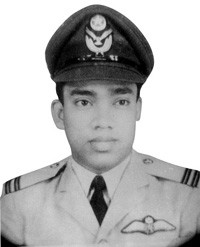
Pilot Officer Rashid Minhas Shaheed and Flt Lt Mati ur Rahman Shaheed. Heroes.


On August 20 1971 Flight Lt Mati ur Rahman and Pilot Officer Rashid Minhas died in the crash of a T-33 jet trainer near the Sindh coastline, 32 miles on the Pakistani side of the border with India. BOTH pilots were awarded the highest gallantry award available. Pakistan awarded the Nishan e Haider to Pilot officer Minhas and (2 years later) the newly independent state of Bangladesh awarded Flt Lt Rahman the Bir Sreshto, the highest gallantry award in BD. Educated Pakistanis are likely to know why Rashid Minhas is a hero (though some of the details they learned are less certain than the popular stories imply). Meanwhile it is my impression that even educated Bangladeshis are not as informed about Matiur as we are about Minhas. So here, as a public service, is what we know about this episode.
When the Pakistani army launched operation Searchlight in March 1971, the aim was to crush the movement for Bengali autonomy with overwhelming and decisive force. As a first step in the crackdown, the Bengali military and paramilitary units in East Pakistan were disarmed (and in several cases, most egregiously in Comilla, massacred en masse in the next few days). Those who got wind of the crackdown revolted and grabbed what territory they could (most successfully in Chittagong, which was mostly overrun by Bengali troops and where Major Zia ur Rahman was able to announce the independence of Bangladesh from the radio station) before the West Pakistani troops were able to bring superior numbers and firepower to bear and drive them out. Those who escaped capture or execution went to India where (with Indian help) they organized the Mukti Bahini and started a guerrilla war in East Pakistan.
Bengalis serving in the armed forces in West Pakistan were not subject to arrest or execution and the steps taken against them varied very widely. But partly because the autonomy movement did have very wide support and partly as a reaction to the extreme harshness of the crackdown, they were also overwhelmingly pro-Bangladesh. A few of them went to great lengths to escape from West Pakistan (e.g. via Kabul, or even by the hazardous route of sneaking across the Kashmir or Sialkot border into India) to join the nascent Bangladeshi resistance in India but given the difficulties involved, most remained, albeit unhappily, on their jobs. Many were reassigned to duties where they would not have access to sensitive materials or weapons, while some continued to perform their usual duties and a few were genuinely loyal to Pakistan and did all they could to convince their superiors of the same and aggressively participated in the West Pakistani war effort when permitted to do so.
Pilots serving in the Air Force were generally reassigned to ground duties. Several Bengali officers serving in Masroor airbase in Karachi were assigned to such duties and were supposed to be kept away from flying. One can get some idea of the intensity of nationalist feeling aroused in them from the fact that the entire group started trying to figure out what, if anything, they could do to play their part in Bengali resistance. They knew there were being watched by intelligence, so they did not discuss politics or make plans in any obvious meeting. Instead, they would discuss plans in short snatches in the course of normal work activities while appearing to be discussing work-related matters. Flt Lt Mati ur Rahman was assigned as deputy flight safety officer, an assignment that allowed him into the flight area a bit more than the others. He and his friends decided that he would try to hijack an aircraft and take it to India. Sneaking into and starting a fighter aircraft without ground crew assistance was practically impossible, so they decided he would hijack a T-33 jet trainer when it was being taken for a solo flight by one of the junior trainees. His fellow officers were to take his wife and infant daughters to the Indian consulate while he carried out his plan (this did not actually happen, the family was arrested but later released and repatriated). They themselves would face whatever consequences came their way. He apparently obtained a replica pistol that was recovered from the wreckage, so it seems that the hijacking was to be carried out using that weapon.
On the morning of the hijacking, young pilot officer Rashid Minhas was going for the second solo flight of his short carrier. As he started to taxi towards the main runway, Matiur drove his Opel Kadett to a point on the taxiway where it was obscured by some bushes and where his actions were not visible to the air-traffic control. No one knows exactly what happened on that taxiway, but it is assumed that he signalled the young officer to stop and seeing the deputy flight safety officer on the taxiway, the young pilot naturally stopped his plane. It is assumed that Matiur than climbed on to the aircraft and got into the instructor’s seat behind Rashid. He may have used his replica pistol to order Rashid to take off. In some versions put out later (for example, in the TV movie made by PTV with Air Force assistance) Rashid is knocked out using chloroform and hit repeatedly by Matiur, but there is no proof of either occurrence.
What we do know is that the plane headed out to the runway with both of them on board and that Rashed was able to send out a message saying he was being hijacked. Given the unexpected nature of the call and the occurrence, it is no surprise that air traffic control took a few minutes to figure out what was happening and by the time the order to scramble interceptors was given, the T-33 had already disappeared flying close to the ground where it was not visible to radar. Matiur was aware of the gaps in radar coverage and may have used that knowledge but nothing is known for sure about what happened on that flight during this time. In any case, the Sabre jets scrambled to intercept the T-33 never caught sight of it.
Ground control and the airborne Sabres did try to radio Rashid to eject, knowing that he could actually eject BOTH pilots (with the rear seat pilot being ejected first) thus ditching the aircraft and bringing an end to the affair. But for whatever reason, he never did that (or never got a chance to do that).
But just 32 miles short of the Indian border, something did happen. According to eyewitnesses on the ground, the aircraft seemed to fly erratically before it crashed into the ground, killing both pilots. Later investigation showed that Rashid went through the instrument panel at the point of the crash, indicating that he had been in his seat inside the aircraft when it hit the ground. But Matiur Rahman’s body was found some distance away and seemed to have been thrown out of the aircraft while it was in flight at high speed. The cockpit canopy was found some distance away and forensic examination indicated that it had flown off in flight and hit the tail section at high speed. This has led to the conjecture that Rashid opened the canopy deliberately, pulling Matiur out of his seat (he was not strapped in because the rear seat harness is locked away during solo flight). That Matiur was squatting on the seat without a cushion may also have impeded his ability to control the aircraft (he was without a seat cushion because in the T-33 the pilot’s parachute IS the seat cushion and he did not have one). The aircraft has dual mechanically linked controls, so neither party can override the other completely without a struggle and both can interfere with the flight.
A few hours later, Karachi airbase learned that their missing plane was down within Pakistan and rescue choppers headed out for the wreckage (and the base commander probably heaved the biggest sigh of relief ever heaved east of Suez). The next day the air chief went to see President Yahya and recommended that Rashid be given a Sitara e Jurat (the third highest gallantry award in Pakistan), to which Yahya replied “Why Sitara e Jurat? Give the boy the Nishan e Haider!”. Meanwhile Matiur Rahman’s body was brought back to Karachi and buried in a graveyard near the airbase. Naturally, he was also vilified as a traitor and backstabber.
It seems as if there was not much notice taken in East Pakistan until 2 years later, when the young Republic of Bangladesh gave him its own highest gallantry award and later named the Jessore airbase in his honor. After a long campaign by a small but determined band of Bangladeshi nationalists, his body was finally brought to Bangladesh in 2006 and buried in the martyred intellectuals graveyard in Dhaka with full honors.
Nobody is certain if a struggle actually occured on that plane. It seems likely that there was a struggle, but there are other theories, including one that says the canopy blew off because the pilots forgot to lock it, this pulled the un-belted (and squatting) Matiur out of the plane and led to a crash, with no need to posit a struggle.
In any case, both were treated as heroes by their respective countries.
Feel free to add comments with information that may change or add to this story.
Much of this account is derived from Kaiser Tufail’s excellent blog post on this topic. which I reproduce below. In addition, i have used a report from Cecil Choudhry (also reproduced below), another usually reliable and relatively objective source.
I remember reading a longish article from (or based on the account of) one of the Bengali officers who was with Matiur at Masroor Airbase, but cannot remember where it was published. If anyone knows what I am talking about, please comment.

The T-33 seat, with and without the parachute used as seat cushion. Explains why Matiur did not have an easy flying job ahead of him.

Matiur Rahman’s daughter prays at his grave in Pakistan in the 1990s.

Khaleda Zia at the state funeral in 2006

another picture of Rashid Minhas
“Bluebird-166 is Hijacked” By Kaiser Tufail
“Why only a Sitara-i-Jur’at? The boy deserves nothing less than a Nishan-i-Haider,” retorted President Yahya Khan as PAF’s C-in-C, Air Marshal A Rahim Khan informed him of the hijacking incident that had taken place hours before.[1] The Air Chief, who was hosting the President at lunch in Peshawar on 20 Aug, 1971, had recommended the lesser award, but was pleased to know that the PAF was being honoured with its first Nishan-i-Haider.[2] The same day, announcement of the highest gallantry award was made. In deference to the hallowed nature of the award, the Board of Inquiry into the aircraft accident was suspended and, eventually scrapped without finalisation. The final moments of the flight of the hijacked T-33 have, therefore, been open to more than one interpretation over the years. This write-up looks at some officially recorded vital bits of evidence (indicated in bold-face text), to reconstruct what really happened.
In the aftermath of the military crackdown that started in East Pakistan on 25 March 1971, the Bengali pilots in the PAF were grounded for fear of an adverse reaction. As the situation became more complex and war clouds started gathering, it was felt prudent to withdraw the flying clothing and equipment of Bengali aircrew, with hijacking of aircraft being precisely one of the fears.
The Bengali pilots at PAF Base Masroor (Karachi), sensed the surveillance cover of Intelligence Units and agreed not to meet collectively. It was decided that a charade of friendly relations with the Base personnel would be maintained, and any kind of protest avoided to the utmost. In the meantime, short, meaningful meetings would be conducted in the course of normal activities. The consensus on hijacking an aircraft to India emerged in no time, with the underlying thought being that the incident would call world attention to the cause of Bangladesh freedom movement. It was also agreed that the backlash of the hijacking would be borne with fortitude by the remaining Bengalis.[3]
At first, the Bengalis mulled hijacking one or more F-86 Sabres, but the mere presence of a Bengali pilot on the tarmac would have been viewed with suspicion. Besides, starting up a jet aircraft without help from ground crew and support equipment was a difficult proposition. How about sneaking into an already started one – a two-seater being flown by a single pilot? The idea sounded enticing, because gullible students going for their solo missions in the T-33 at No 2 Squadron seemed easy prey. Students would surely obey any instructor’s command from outside, especially if it had something to do with aircraft safety. A visual signal for a fuel or hydraulic leak, a flat tyre, even a finger pointed generally at the aircraft would get an immediate response from the student. Chances were that the student could be sufficiently alarmed through hand signals about some external malfunction with the aircraft, and he would stop to find out more about the problem.
Flt Lt Matiur-Rehman had been an instructor in No 2 Squadron till he and his Bengali colleagues were grounded soon after the start of the counter insurgency operation in March. He was, however, given charge of the Ground Safety Officer with a mandate to check malpractices in aircraft maintenance and operations, thus authorising him to move around on the flight lines and tarmacs in an official transport. Given his affability and, his wife’s friendliness with neighbourhood ladies, Matiur-Rehman was considered the least likely of the Bengalis to arouse suspicion. He fitted the plot perfectly. Apprehensions about the safety of his wife and two daughters were allayed by his Bengali colleagues when it was decided that the family would be moved, with prior coordination, to the Indian Consulate in Karachi, before the Hijack Day.[4]
Relaxing in the squadron crew room, Minhas ordered his Mess breakfast to be heated. He could take his time to eat comfortably as he was not scheduled to fly that day, the visibility being poor for solo flying by students. Those scheduled for dual flying were busy checking their mission details, so as to prepare the briefing boards and get the pre-mission briefing from their instructors. One of them noted the scheduling officer adding Minhas’ name on the scheduling board for a ‘Solo Consolidation’ mission.[5] The change in scheduling took place as the visibility had improved and students were cleared to fly solo. This was conveyed to Minhas who was waiting for his breakfast in the Squadron tea bar. He jumped up, half-excited, half-prepared and proceeded to get the mission details. After being briefed by his instructor Flt Lt Hasan Akhtar, Minhas quickly gathered his flying gear. Breakfast had to wait, but Minhas hastily gobbled up a couple of gulaab jamans, the pilots’ favourite high-energy snack. He also shared a few swigs of a cold drink with his course-mate Plt Off Tariq Qureshi, before he headed to the flight lines to make good his 1130 hrs take-off time. “That was the last we saw of him, munching snacks on his way out,” recalls Qureshi. Preliminaries and start-up was uneventful as the T-33, with the call sign ‘Bluebird-166,’ taxied out of the main tarmac.
In the meantime Matiur-Rehman, who had earlier checked the students’ flying schedule during a brief visit to the squadron, sped off in his private Opel Kadett car to the north-eastern taxi track that led out of the main tarmac. The sides of the taxi-track had thick growth of bushes, which concealed his position both from the ATC tower as well as the tarmac. As the aircraft approached, he was able to stop it on some pretext, as expected. Seeing the instructor gesturing, Minhas must have thought that some urgent instruction was to be conveyed. After all, his mission had been scheduled as an after-thought, and something might have gone amiss in the haste. He expected Matiur-Rehman to plug in his headset and talk to him on the aircraft inter-com. Not encumbered by his flying gear (parachute, anti-G suit, life jacket and helmet), Matiur-Rehman easily stepped on to the wing and slipped into the rear cockpit through the open canopy.[6]
Squatting on a seat without a parachute (which also doubled as a seat cushion), Matiur-Rehman was in an awkward position to properly control the aircraft himself.[7] To compel the student to follow his instructions would have required the threat of use of lethal force; else, the student could have turned back, or just switched-off the aircraft. A replica pistol recovered later from the wreckage explains Minhas’ predicament.[8]
At 1128 hrs, ATC Tower received Minhas’ call: “Bluebird-166 is hijacked!” In the rough-and-tumble that followed, the T-33 got airborne from Runway 27 (heading 270°), at 1130 hrs. The aircraft turned left, (a non-standard turn out of traffic) and started steering 120°. It was seen to be descending down to low level and, in no time, disappeared from view. Two more frantic calls, “166 is hijacked,” were the last that were heard from the T-33.
Not sure if he had heard it right, Flt Lt Asim Rasheed, the duty ATC officer understood what was going on only when the aircraft did an abnormal turn out of traffic and ducked down very low. Asim called up the Sector Operations Sector (SOC) to inform about the unusual incident; however, when the Sector Commander started asking for details, a quick-witted Asim dropped the phone to save precious time and called up the Air Defence Alert (ADA) hut. “A T-33 is being hijacked. Scramble!” he ordered. Wg Cdr Shaikh Saleem, OC of No 19 Squadron, who had just arrived in the ADA hut after inspecting the flight lines, immediately rushed to the nearby F-86s along with his wingman, Flt Lt Kamran Qureshi. Kamran, the sprightlier of the two, got airborne first, with the leader following closely; the pair was airborne within the stipulated time. The SOC had, however, no clue about the T-33’s position as it had descended to the tree tops and was not visible on radar. In any case, about eight minutes had already elapsed since the T-33’s take-off, and the scrambled pair of F-86s would not have been able to catch up before the border, even at full speed. Some more critical time was also wasted when the F-86 pair was mistakenly vectored onto a B-57 recovering from Nawabshah after a routine mission.[9]
After a while, another pair of F-86s led by Flt Lt Abdul Wahab with Flt Lt Khalid Mahmood as his wingman, was scrambled. Wahab, who had been watching the unusual departure of the T-33 from outside the pilots’ standby hut, recalled later, “We knew something was wrong, we had seen the aircraft taxiing dangerously fast. After we got airborne, there was a lot of confusion. Nonetheless, we gave fake calls on ‘Guard’ channel that the F-86s were behind the T-33 and, it would be shot down if it did not turn back. However, with no real prospects of scaring Matiur-Rehman with warning bursts from the F-86’s guns, the only option that remained was to order Minhas to eject. A flurry of radio calls then started, asking Bluebird-166 to eject. There was no response, but the calls continued for several minutes, being repeatedly transmitted by the F-86s, as well as the SOC.”[10]
Crash site is roughly in centre of picture
The situation remained confused and it was apprehended that the hijack might have been successful. The prevailing uncertainty was cleared up in the afternoon, when a phone call was received from Shah Bandar that a plane had crashed nearby and the aircrew had not survived. The Base search and rescue helicopter was launched immediately and it was able to locate the wreckage at a distance of 64 nautical miles from Masroor, on a heading of 130°. The tail of the T-33 showing its number 56-1622 could be seen sticking out in water-logged, soft muddy terrain at the mouth of Indus River, just 32 nautical miles short of the border. Estimated time of the crash was 1143 hrs.
Minhas’ body was found still strapped in the seat, 100 yards ahead of the wreckage, while Matiur-Rehman’s body was found clear of the seat, lying further ahead. Both ejection seats had been thrown clear of the aircraft on impact and, there seemed no sign of ejection. The location of Matiur-Rehman’s body away from the ejection seat indicates that he was not strapped up, having being unable to free the stowed harnesses after he had hurriedly stormed into the cockpit.[11]
Investigators were baffled when the canopy was found to have a prominent scrape mark of the tailplane, while the tailplane was correspondingly dented by the canopy. Normally, during ejection sequence or jettison of canopy alone, the canopy would have been rocketed up and, would have cleared the tail by a wide margin (this being the very purpose of the rocket thruster). Now it seemed that the canopy had merely inched up into the airflow and had been blown into the tailplane. Could Minhas have actuated the canopy opening lever to throw the unstrapped rear seat occupant overboard, and then safely recover the aircraft?[12] A proper procedure, though, would have been to use the canopy jettison lever which would have rocketed the canopy well clear of the tailplane. In the heat of the moment, it seems that Minhas did what came naturally to him.[13]
The massive canopy hitting the elevator would have deflected it downwards, causing a sudden nose-down attitude at a precariously low height. Minhas would have then yanked back on the controls to prevent the aircraft from going into the ground. The sudden and violent pitch-up – which was confirmed by eyewitnesses – resulted in the aircraft stalling out. This is partially corroborated by the wreckage report of aircraft flaps found in the down position, implying a desperate need for vital lift to prevent stalling. The rather flat attitude in which the aircraft fell, as well as the compact spread of the wreckage, also confirms the stalled condition of the aircraft.
Confronted with a very complex situation requiring quick thinking and steel nerves, Minhas was eventually able to counter Matiur-Rehman’s cunning design. Despite having the option of ejecting safely, and in the course of action also tossing out the hijacker who did not have a parachute, Minhas ostensibly tried to save the aircraft. Sadly, the unusual attempt at opening the canopy had resulted in a chain of uncontrollable events that eventually caused the crash. Nonetheless, Minhas did manage to prevent the aircraft from being hijacked to an enemy country, laying down his life in the process. He was destined to become the youngest star on Pakistan’s firmament of valiant heroes. May Allah bless his soul and may his Nishan-i-Haider be an inspiration for the future defenders of Pakistan.
A few months back I had the opportunity along with a friend to spend an evening with Group Captain (R) Cecil Chaudry. Obviously the time was spent discussing his experiences. As it turned out Cecil was responsible for investigating the Rashid Minhas crash back in 1971 and told us a some details which are not known publicly.
The episode has become controversial over the past few decades with some people claiming that the Nishan-e-Haider award was politically motivated and perhaps the young Pilot Officer never deserved it. Also the media and school books information/portrayal of this episode has created some factual distortions. In the interest of hi story I am reproducing here substantially what Cecil told me about the incident. Obviously given that this discussion took place quite sometime back I do not remember his narration word to word but am reproducing the essential information. Also, I do not claim to have done any independent investigation but I believe that Cecil’s narration of events is an important input.
Now coming to the story,
It is important to remember that Rashid Minhas was a very young and inexperienced pilot. The crash took place during his second solo flight on T-33 aircraft. In the run up to the 1971 crisis the PAF had grounded all East Pakistani pilots in PAF and had assigned them ground jobs. As part of this Flt Lt Mati ur Rehman was made the Deputy flight safety officer of the base. The Flight Safety Officer was Flt Lt Basit (if I remember the name correctly).
Flt Lt Basit as FSO used to on occasions do surprise checks on the OCU students at the base. As part of this he used to stop these students while they were taxing out on a sortie and check if they had correctly stowed equipment in the cockpit or would query them on emergency checklists etc. As one would expect the student would get reprimanded if he was found wanting on any of this.
On the day of the crash when Rashid Minhas was taxing out on a dusk training sortie and saw Flt Lt Mati ur Rehman (Deputy Flight safety officer) signalling him to stop he naturally assumed that the purpose was to do a similar check. Therefore, he not only stopped but his attention shifted to the cockpit. This allowed Flt Lt Mati ur Rehman to enter the instructor seat and initiate roll for take off. By the time Rashid Minhas realized this the aircraft was well into the take off sequence. On this Rashid gave a call to the ATC saying that the aircraft is being hijacked. Now this was 1971, aircraft hijacking was not considered an imminent possibility that too in Pakistan and at an air force base. The ATC requested confirmation of the call and got one from Rashid. On this fighters on ADA were scrambled to intercept the aircraft Again as hostilities were not imminent at that time the fighters were not at the highest ADA level (I forget exactly the ADA level Cecil mentioned but I think that it was 10 minutes). However given that Mati ur Rehman knew where the Radar gaps were (being till recently an active pilot) and the dusk conditions an interception was not made.
No further information became available till late at night when the PAF base got a call from a police station near the Indian border stating that an aircraft had crashed near a village bordering India. Next morning a team was dispatched to the crash site. Following this an investigation into the incident was launched.
Now coming to the factors that led Cecil to believe that a struggle for control took place and the crash was perhaps intentional.
As the aircraft overflew a number of villages some eyewitnesses were available. According to them the aircraft was not flying straight and level but was banking or pitching up and down. If Mati ur Rehman had been in complete control of the aircraft this would have resulted in a straight and level flight. Only a struggle resulted in an erratic flight with probably Rashid Minhas trying to control the aircraft in one way and Mati ur Rehman counter acting.
Fl Lt Mati ur Rehmans body was found some distance before the crash site while Rashid Minhas body was at the crash site, had gone through the instrument panel and in the nose of the aircraft. The aircraft had crashed nose first. Mati ur Rehmans body also had a sand blasting type effect on one side which indicated that he was blown off from the aircraft and dragged quite a bit on the desert surface.
This evidence linked in with the earlier events. The manner in which Mati ur Rehman took over the aircraft did not allow him time to strap on. During the likely struggle for aircraft control he used his greater experience to counter Rashids efforts. Also he was sitting on the instructors seat and could over ride some of Rashid Minhass actions. However, the option to jettison off the canopy in an emergency was available with both pilots. Near the point of crash Rahid Minhas in his efforts, either intentionally or accidentally, jettisoned the canopy. As Mati ur Rehman was not strapped on he was blown off explaining the way his body was injured and the fact that it was found before the crash site.
This resulted in sudden force on the controls of the aircraft in one direction, as force applied by Mati ur Rehman to control the aircraft was removed. This along with perhaps the effect caused by the loss of canopy, low level and Rashid Minhass inexperience resulted in the crash of the aircraft.
I hope this clarifies some of the issues regarding this incident. Personally I would like to get hold of the PAF official investigation report into the incident which should be more detailed and should also shed more light into the incident.
———————————————————————————————-